1100 Aluminium cirkel kookgerei: De ultieme gids van atomaire structuur tot de mondiale tabel
I. Invoering: De mondiale reis van een metalen schijf
Temidden van het tij van de mondialisering, een kosteneffectieve pan met antiaanbaklaag zou op een productielijn in Vietnam kunnen worden gestempeld, gespoten met coating in Duitsland, en uiteindelijk op een keukenfornuis geplaatst in de Verenigde Staten. En het uitgangspunt van dit alles is vaak: 1100 Aluminium cirkel uit China of Zuidoost-Azië.
Met de stijgende mondiale vraag naar hoge thermische geleidbaarheid, lichtgewicht ontwerp, en snel koken, 1100 Aluminium Circle is de onbetwiste steunpilaar geworden van de moderne kookgerei-industrie. Volgens schattingen van de industrie worden er jaarlijks tientallen miljarden aluminium cirkels in verschillende soorten kookgerei gestempeld.
Deze gids neemt je mee voorbij de oppervlakte, het verkennen van alles, van de microwereld van de materiaalwetenschap tot het macrolandschap van mondiale toeleveringsketens, het biedt een volledige deconstructie van dit magische metaal dat keukens over de hele wereld verandert.
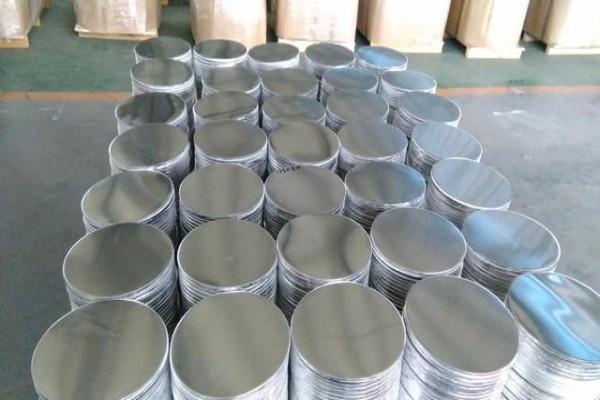 Extra dikke warmgewalste aluminiumplaten
II. Diepe duik: De “Genetische code” en materiaalkunde van 1100 Aluminium
Om echt te begrijpen waarom 1100 aluminium cirkels zijn zo geschikt voor kookgerei, we moeten ons verdiepen in de microscopische wereld van materialen.
2.1 De magie van ≥99,0% zuiverheid
1100 behoort tot de 1xxx-serie van commercieel puur aluminium. In de metallurgie, wat doet een zuiverheid van over 99.0% betekenen?
- Een carnaval van vrije elektronen (Thermisch & Elektrische geleidbaarheid):Warmtegeleiding in metalen is afhankelijk van de beweging van vrije elektronen. Hoe hoger de zuiverheid, hoe minder onzuiverheidsatomen er zijn die de elektronenstroom belemmeren. Dit is de reden waarom de thermische geleidbaarheid van 1100 aluminium (~218 W/m·K) overtreft ruimschoots die van roestvrij staal (~16 W/m·K), waardoor kookgerei onmiddellijk opwarmt en aanzienlijke energie wordt bespaard.
- Natuurlijk antioxidatieschild (Corrosiebestendigheid):Aluminium is een actief metaal, maar eenmaal blootgesteld aan lucht, het oppervlak reageert onmiddellijk met zuurstof en vormt een dichte en hardnekkige passieve film aluminiumoxide (Al₂O₃). Slechts nanometer dik, deze laag blokkeert resoluut verdere erosie door vocht en oxidatie. Vanwege de hoge zuiverheid, 1100 aluminium vormt een meer uniforme en continue oxidefilm, waardoor het kookgerei langdurige roestbestendigheid krijgt.
2.2 De subtiele rol van sporenelementen (Het delicate evenwicht van Fe, En, Cu)
Hoewel 1100 heeft een hoge zuiverheid, de overige <1% sporenelementen (voornamelijk ijzer Fe, Silicium Ja, en Koper-Cu) Zijn “kruiden” zorgvuldig gekalibreerd door materiaalwetenschappers:
- Ijzer (Fe) en Silicium (En):Deze bestaan doorgaans in de vorm van intermetaalverbindingen (bijv., Al₃Fe, a-AlFeSi). Geschikte hoeveelheden van deze elementen kunnen de korrelstructuur verfijnen en de herkristallisatietemperatuur verhogen, waardoor de sterkte van de aluminium cirkel wordt vergroot zonder de plasticiteit aanzienlijk in gevaar te brengen.
- Koper (Cu):Vergeleken met 1060 puur aluminium, 1100 bevat sporen van koper. De toevoeging van koper zorgt voor een effectieve versterking van de vaste oplossing, geven 1100 betere kreukbestendigheid en oppervlakteglans met behoud van uitstekende dieptrekeigenschappen.
2.3 Waarom “Gezichtsgecentreerde kubus” Maakt van dieptrekken een wonder
Metallurgisch, aluminium bezit een Gezichtsgecentreerde kubus (FCC) kristal structuur. De FCC-structuur beschikt over een groot aantal slipsystemen (12 in totaal), dat wil zeggen dat onder invloed van buitenaf (zoals stempelen en strekken), atoomlagen kunnen heel gemakkelijk langs elkaar glijden zonder te breken. Dit verklaart waarom 1100 aluminium is bestand tegen extreme vervorming wanneer het in diepe potten wordt uitgerekt zonder te barsten.
III. Mondiaal perspectief: De vraag-en-aanbodkaart van 1100 Aluminium cirkels
Het begrijpen van uw positie in het mondiale coördinatensysteem is een voorwaarde voor het nemen van goede zakelijke beslissingen.
- Productie hub (Azië, vooral China):China is verantwoordelijk voor het overgrote deel van de mondiale productiecapaciteit voor aluminiumcirkels. Vertrouwend op een complete elektrolytische aluminiumindustrieketen, volwassen walstechnologie, en concurrerende energiekosten, Van Chinese makelij 1100 aluminiumcirkels worden continu wereldwijd geëxporteerd.
- Groeimotoren (Zuidoost-Azië & Zuid-Azië):Met de opkomst van de productie in landen als Vietnam, Thailand, en India, en de groei van hun middenklasse, In deze regio's ontstaan talloze fabrieken voor de assemblage van kookgerei. Vraag naar middenklasse 1100 aluminium cirkels zijn hier robuust.
- Premium-markten (Europa & Noord-Amerika):Hoewel het totale marktvolume groot is, deze regio's stellen extreem hoge eisen aan de naleving van de materiële voorschriften (bijv., FDA, LFGB-certificeringen), oppervlakte kwaliteit (voor hoogwaardig anodiseren), en maatwerk (bijv., samengestelde basissen).
- Uitdagingen op het gebied van handelsbarrières:De afgelopen jaren, sommige landen en regio's zijn antidumpingonderzoeken tegen Chinese aluminiumproducten gestart. Vervolgens, slimme multinationale kookgereibedrijven adopteren een “China+1” strategie: het behouden van leveranciers van hoge kwaliteit in China en het opzetten van secundaire toeleveringsketens in Zuidoost-Azië.
 Rond blad van aluminium
IV. Productie ontgrendeld: De transformatiereis van aluminiumcirkel naar serviesgoed
A 1100 aluminium cirkel het verlaten van de staalfabriek is slechts de eerste stap; zijn fantastische reis in een kookgereifabriek is nog maar net begonnen.
4.1 Stap één: Precisie stempelen & Dieptrekken
De aluminium cirkels komen in multi-station progressieve matrijzen of hydraulische dieptrekmachines.
- De uitdaging:Tijdens dit proces, de buitenrand van de cirkel vormt golvende uitsteeksels als gevolg van plastische vervorming. Dit is de zgn “Oorbel.”Oorbellen verspillen niet alleen materiaal (steeds meer snoeiafval) maar resulteert ook in een ongelijkmatige potrand. Hoge kwaliteit 1100 aluminium cirkels, door strikte textuurcontrole, kan de oorbelfrequentie tot een zeer laag niveau onderdrukken (bijv., <3%).
4.2 Stap twee: Schoonmaak & Oppervlakteconditionering
De gestempelde potschaal is bedekt met stempelolie en metaalresten.
- Ontvetten & Schoonmaak:Er moeten gespecialiseerde industriële reinigingsmiddelen worden gebruikt om ervoor te zorgen dat de resterende olie op het oppervlak onder de specifieke normen blijft (bijv., <50mg/m²), anders zal de daaropvolgende coating gaan borrelen en afbladderen.
- Nano-conditionering:Sommige high-end productielijnen voeren na het reinigen een nano-keramische conversiecoatingbehandeling uit, wat de hechtsterkte tussen het substraat en de coating verder verbetert.
4.3 Stap Drie: Oppervlaktetechniek - Het kookgerei zijn ziel geven
Dit is de cruciale stap die de waardepropositie van het kookgerei bepaalt. Hier, 1100 aluminiumcirkels tonen een sterke compatibiliteit:
- PTFE (Teflon) Coating:De meest voorkomende toepassing. De goede thermische geleidbaarheid van 1100 aluminium zorgt voor een gelijkmatige verwarming over het gehele panlichaam, het vermijden van plaatselijke hoge temperaturen die de veroudering van de coating versnellen.
- Keramische coating: Categoriseren op de trend van gezondheid en milieuvriendelijkheid. Dit vereist een extreem hoge oppervlakteruwheid (Ra-waarde) van het aluminiumsubstraat, doorgaans moet worden geregeld tussen 0,8 ~ 1,2 μm.
- Hard anodiseren: Elektrochemisch verdikken van het aluminiumoppervlak 20-30 micron. De oxidefilm vormde zich daarop 1100 puur aluminium heeft een uitstekende hechting en een hardheid die reikt tot boven HV400, bereiken “fysieke niet-plakkerigheid.”
4.4 Stap Vier: Base Bonding — Het inductietijdperk omarmen
Pannen van puur aluminium kunnen niet rechtstreeks op inductiekookplaten worden gebruikt. De oplossing is om las een 430 ferritische roestvrijstalen schijf aan de onderkant van de 1100 aluminium pot.
- Dit test de aanpassing van de thermische uitzettingscoëfficiëntvan de 1100 aluminium. Als het niet goed wordt gecontroleerd, de composietbasis kan bij verhitting uitpuilen (algemeen bekend als “kikker buik”). Hoge kwaliteit 1100 aluminium cirkels, vanwege hun stabiele samenstelling, dit probleem effectief op te lossen.
V. Regelgeving & Veiligheid: De “Onzichtbare drempel” voor het oversteken van internationale markten
Als u wilt dat uw kookgerei in de schappen van luxe supermarkten in Europa en Amerika verschijnt, Het toezicht op de materiële veiligheid is een zaak van leven en dood.
- Amerikaanse FDA-normen:De VS. Food and Drug Administration heeft duidelijke regels voor aluminium kookgerei (bijv., 21 CFR 175.300 met betrekking tot harscoatings, en vereisten voor blank aluminium). 1100 aluminium doorstaat gemakkelijk de uitlogingstests van zware metalen (bijv., Lood Pb, Cadmium-cd, Arseen als) vanwege de hoge zuiverheid.
- Duitse LFGB & Franse DGCCRF: Deze Europese normen zijn extreem streng. Ze testen niet alleen zware metalen, maar simuleren ook de migratie van aluminium naar verschillende zure en olieachtige voedingsmiddelen onder extreme temperaturen. Selecteren 1100 Leveranciers van aluminium cirkels gecertificeerd door LFGB is een voorwaarde voor het betreden van de Europese markt.
- Chinees GB 4806.9: Binnenlandse normen voor metalen materialen en producten die met voedsel in contact komen, bepalen ook het gehalte aan zware metalen en totale migratielimieten.
(Opmerking: Toonaangevende leveranciers zoals Huawei Aluminium bieden 1100 aluminiumcirkels vergezeld van gezaghebbende testrapporten voor voedselveiligheid van derden.)
VI. Grensverleggende innovaties: De toekomstige evolutie van 1100 Aluminium cirkels
Gedreven door duurzame ontwikkeling en consumptie-upgrades, 1100 aluminiumcirkels evolueren stilletjes:
- Ultradunne technologie:
Door geoptimaliseerde warm-continu-walsprocessen en geavanceerde online afschriktechnieken, moderne metallurgen kunnen de dikte van 1100 aluminium cirkels tot 0,4 mm of zelfs dunner met behoud van hun dieptrekprestaties. Dit maakt de vervaardiging van extreem lichtgewicht “wolken potten” mogelijk.
- Oppervlaktemicrostructuurcontrole:
Onderzoekers veranderen de microtextuur van het oppervlak van aluminiumcirkels (bijv., met behulp van specifieke rollshot-straaltechnieken) zodat ze een natuurlijke fysieke niet-plakkerigheid bereiken via de Leidenfrost effectzonder enige coatingbehandeling.
- Gesloten kringlooprecycling & Koolstofarm aluminium:
Met mechanismen voor koolstofgrensaanpassing (CBAM) dreigend, productie 1100 aluminium cirkels gebruiken “groen aluminium” geproduceerd uit waterkracht of andere schone energiebronnen, evenals gerecycled aluminium dat opnieuw is gesmolten uit oud kookgerei, zullen industriestandaarden worden. Dit is niet alleen milieuvriendelijk, maar ook een krachtig instrument om internationale handelsbarrières te doorbreken.
 cirkel van aluminiumplaat
VII. Masterclass: Hoe te selecteren 1100 Aluminiumcirkels als een Senior Supply Chain Director
Voor kopers en bazen, kopen aluminium cirkels gaat nooit alleen over “hoeveel per ton,” maar over het berekenen van de Totale eigendomskosten (Totale eigendomskosten).
7.1 Waar u op moet letten tijdens fabrieksaudits? (Verborgen mijnenvelden vermijden)
Bij een bezoek aan de fabriek van een leverancier, luister niet alleen naar verkooppraatjes; focus op deze drie punten:
- Is de smeltoven voorzien van raffinage-inrichtingen voor ontgassing en slakverwijdering?? (Heeft een directe invloed op de pinhole-snelheid en oppervlaktekwaliteit.)
- Is de koudwalserij een 4-hoog of 6-hoog type?? Heeft het AGC? (Automatische metercontrole)? (Bepaalt de diktetolerantie en vlakheid.)
- Is het cirkelschaarapparaat guillotineschaar of roterend mestype? (Bepaalt of de cirkelrand bramen en omkantelen vertoont.)
7.2 “Duivel in de details” Monster testen
Na ontvangst van monsters, Zorg ervoor dat u de volgende extreme tests uitvoert:
- Aceton-veegtest: Veeg het oppervlak van de aluminium cirkel krachtig af met een doek gedrenkt in aceton. Als de doek zwart wordt, dit duidt op een teveel aan resterende walsolie, die later uiterst moeilijk schoon te maken is en coatingkraters kan veroorzaken (vis ogen).
- Erichsen Cupping-test: Gebruik professionele instrumenten om een halfbolvormige vorm te persen en kijk of de korrelgrootte bij de breuk uniform is.
7.3 Onderhandelingshefboomwerking en voorraadstrategie
- Vastleggen van de basisprijs van aluminium staven: De prijs van aluminiumcirkels = Spotprijs van aluminium staven + verwerkingskosten. Leer trends op de London Metal Exchange volgen (LME) of Shanghai Futures Exchange (SHFE), en langetermijncontracten met leveranciers ondertekenen om de basisprijzen vast te leggen wanneer de aluminiumprijzen laag zijn.
- VMI (Door de leverancier beheerde voorraad) Model:Onderhandel met kernleveranciers om een minimagazijn in de buurt van uw fabriek te bouwen. Je tekent materialen naar behoefte en rekent af op basis van verbruik, waardoor uw kapitaalbezetting aanzienlijk wordt verminderd.
VIII. Ultieme veelgestelde vragen
Q1: Onder een microscoop, Hoe werkt de korrelmorfologie van hoge kwaliteit vs. inferieur 1100 aluminium cirkels verschillen?
A: Hoge kwaliteit 1100 aluminium (vooral warmgewalste O-temper) uniform vertoont, gelijkassige herkristalliseerde korrels van gemiddelde grootte (bijv., ASTM-kwaliteit 5-7) onder een metallografische microscoop. Inferieure materialen bevatten vaak grove kolomvormige kristallen of ononderbroken dendrietarmen, wat kan leiden tot ernstige oorbel- of asymmetrische vervorming tijdens het dieptrekken.
Vraag 2: Hoe kun je het dieptrekpotentieel van een aluminium cirkel beoordelen door middel van eenvoudige tests op locatie??
A:U kunt gebruik maken van de Swift Cup-testof de Fukui Conische Cup-test. Simpel gezegd, klem de cirkel in een set standaardmatrijzen en oefen spanning uit totdat deze scheurt, het meten van de hoogte van het kopje of de maximaal vereiste belasting. Hoe hoger de hoogte en hoe vloeiender de belastingscurve, hoe beter de beperkende tekenverhouding van het materiaal (LDR).
Q3: Op welke omgevingsfactoren moet worden gelet tijdens de opslag van 1100 aluminium cirkels om bederf te voorkomen?
A:Hoewel aluminium corrosiebestendig is, 1100 puur aluminium is uiterst gevoelig voor Chloride-ionen (Cl⁻). De opslagomgeving moet droog en geventileerd zijn, en mag absoluut niet naast zout water worden opgeslagen, bleekmiddel, of bepaalde zure chemicaliën. Aanvullend, overmatig stapelgewicht kan leiden tot “blokkeren” (hechting) tussen cirkels uit de lagere laag; het wordt aanbevolen om papieren opvulmateriaal tussen de verpakkingen te plaatsen en de buitenverpakking in vochtbestendig papier te wikkelen.
Q4: Waarom goed doen, soms verschijnen er dichte scheuren op de randen van gestempeld kookgerei?
A:Dit is meestal “Brancardspanningsmarkeringen” (of Lüders-bands). De reden is dat het materiaal na het walsen te lang is opgeslagen, ondergaat een lichte natuurlijke verouderingsverharding. De oplossing is om te vragen “voorgerekte nivellering” behandeld materiaal van de leverancier, of voer een lichte secundaire koudwalsing uit (bijv., 1-2% vervorming) vóór het stempelen om het opbrengstplateau te elimineren.
IX. Conclusie: Het grote universum binnen een kleine cirkel
Het beoordelen van de volledige tekst, het is niet moeilijk om dat te zien 1100 Aluminium cirkel kookgereiis veel meer dan alleen een eenvoudig stuk metaal. Het is een meesterwerk van de materiaalkunde, precisie productie, oppervlaktetechniek, en mondiale logistiek gecombineerd.
Het beschermt de kleur, aroma, en smaak van voedsel met zijn uitstekende thermische geleidbaarheid, tolereert het wilde stampen van industriële machines met zijn verbazingwekkende ductiliteit, en drijft de keukenrevolutie aan in honderden miljoenen huishoudens over de hele wereld met zijn bescheiden en betaalbare kosten.
In de komende dagen, met de voortdurende vooruitgang van de materiaaltechnologie en steeds strengere eisen op het gebied van milieubescherming, 1100 aluminiumcirkels zullen ongetwijfeld blijven evolueren. Voor fabrikanten van kookgerei, het kiezen van een partner zoals Huawei-aluminium– een die de onderliggende logica van de metallurgie begrijpt, beschikt over een mondiaal complianceperspectief, en een stabiele kwaliteitscontrole garandeert – zal uw verstandigste investering zijn in het opbouwen van een merkgracht te midden van de rode oceaan van concurrentie.

