1050 Aluminium cirkel kookgerei: Zeer zuivere aluminium oplossing voor de moderne productie van keukengerei
I. Invoering: Het hoeksteenmateriaal en de thermodynamische kern van de productie van kookgerei
In de fel concurrerende kookgerei-industrie, de keuze van het basismateriaal is niet langer louter een kostenkwestie; het bepaalt direct het eindproduct thermische efficiëntie, levensduur, opbrengstpercentage vormen, en concurrentievermogen op de markt. Geconfronteerd met consumenten’ meerdere eisen voor “antiaanbaklaag,” “lichtgewicht,” En “snelle verwarming,” materiaalingenieurs moeten de optimale balans vinden tussen de fysische eigenschappen en chemische stabiliteit van metalen. Onder de verschillende metalen materialen die worden gebruikt voor de productie van keukengerei, 1050 Aluminium cirkels zijn het favoriete basismateriaal geworden voor wereldwijde kookgereifabrikanten vanwege hun extreme thermische geleidbaarheid die dicht bij puur aluminium ligt, uitstekende dieptrekprestaties, en zeer kosteneffectieve verwerkingseigenschappen.
Met de voortdurende groei van de mondiale vraag naar lichtgewicht, energiezuinig, en duurzaam kookgerei, vooral in Azië en opkomende markten, fabrikanten geven er steeds meer de voorkeur aan 1050 aluminium cirkels om te produceren:
- Chinese wokken & Koekenpannen: Maak gebruik van hun snelle warmtegeleidingseigenschappen.
- Voorraadpotten & Steelpannen: Vertrouwend op hun uitstekende dieptrekmogelijkheden.
- Snelkookpanlichamen:Vereist stabiliteit onder hoge druk.
- Elektrische rijstkoker & Snelkookpanvoeringen:Veeleisende oppervlakken die bevorderlijk zijn voor coating en uniforme warmteverdeling.
- Diverse keukengerei: Zoals ketels, stoomboten, enz.
Dankzij de aluminiumzuiverheid tot wel 99.5%, 1050 aluminium cirkels zijn bijzonder geschikt voor grote vervormingsprocessen die nodig zijn bij de moderne productie van kookgerei, zoals Kracht spinnen, Meertraps stempelen, En Dieptrekken-sleuteltechnieken voor het vervaardigen van modern kookgerei met complexe vormen.
 1050 aluminium cirkel
II. Wat is 1050 Aluminium cirkel kookgerei?
1050 Aluminium Circle Cookware verwijst specifiek naar ronde aluminium schijven vervaardigd uit de 1050 aluminium legering, een halffabrikaatvorm speciaal ontworpen voor de productie van kookgerei en keukengerei.
“1050” behoort tot de aluminiumlegeringen van de 1xxx-serie, waarvan het kernkenmerk commercieel zuiver aluminium is. De materiaaleigenschappen komen volledig tegemoet aan de speciale behoeften van de kookgereiproductie:
- Extreem hoge aluminiumzuiverheid (≥99,5%):Dit impliceert een maximale elektrische en thermische geleidbaarheid.
- Uitstekende ductiliteit:Zorgt ervoor dat het materiaal in complexe vormen kan worden uitgerekt zonder te breken.
- Uitstekende corrosiebestendigheid: Stabiele prestaties bij contact met voedsel en wasmiddelen.
- Niet-magnetisch & Geurloos:Het waarborgen van de voedselveiligheid.
De typische chemische samenstelling van 1050 aluminium omvat:
- Minimum 99.5% Aluminium inhoud, terwijl de rest sporenhoeveelheden ijzer zijn, silicium, en andere elementen.
Vanwege de relatief zachte textuur (vooral in het O-temper) en sterk vormingsvermogen, 1050 aluminium cirkels worden veel gebruikt in kookgereiproductieprocessen die ernstige plastische vervorming vereisen:
- Dieptrekken: Het uitrekken van een platte schijf in verticale potwanden.
- Spinnen: Fabricage van halfronde potbodems (bijv., Chinese wokken) via snelle rotatie en extrusie.
- Rekvorming
- Anodiseren: Vorming van een harde oxidelaag via elektrolyse om de slijtvastheid te verbeteren.
- Compatibiliteit met antiaanbaklaag: Dient als een ideaal substraat voor PTFE (Teflon) of keramische coatings.
Vergeleken met kookgerei van koolstofarm staal of roestvrij staal, 1050 aluminium cirkels bieden ongeveer een derde van het gewicht en bijna tien keer de thermische diffusiteit, waardoor de kookervaring en het energieverbruik van de gebruiker direct worden verbeterd.
III. Diepgaande analyse van chemische samenstelling en voedselveiligheid
Hoge zuiverheid is het grootste voordeel van 1050 aluminium in de productie van kookgerei, niet alleen betrekking hebben op fysieke prestaties, maar ook rechtstreeks verband houden met Voedselcontactveiligheid.
| Element |
Typische inhoud (%) |
Diepgaande functionele analyse |
| Aluminium (Al) |
≥99,5 |
Basismetaal.Hoe hoger de zuiverheid, hoe meer vrije elektronen er zijn, wat resulteert in een grotere thermische geleidbaarheidscoëfficiënt, snellere verwarming, en een meer uniforme warmteverdeling. Tegelijkertijd, Hoogzuiver aluminium impliceert een extreem laag risico op migratie van zware metalen, volledig voldoend aan FDA en GB 4806.9 normen voor materiaal dat in contact komt met voedsel. |
| Ijzer (Fe) |
≤0,40 |
Primaire onzuiverheid. Bestaat doorgaans als naaldachtige Al₃Fe-fasen in zuiver aluminium. Geschikt Fe kan de herkristallisatietemperatuur verhogen, maar overmatige hoeveelheden verminderen de ductiliteit en verhogen het risico op scheuren tijdens dieptrekken. |
| Silicium (En) |
≤0,25 |
Onzuiverheidscontrole.Er moet streng gecontroleerd worden. Si vermindert de taaiheid en lasbaarheid van aluminium en veroorzaakt vergrijzing tijdens het anodiseren. |
| Koper (Cu) |
≤0,05 |
Strikt beperkt.Hoewel Cu de sterkte kan vergroten, het vermindert de corrosieweerstand aanzienlijk (gemakkelijk putcorrosie veroorzaken, vooral in zure voedingsmiddelen) en is schadelijk voor het menselijk lichaam. Vandaar, Aluminium van kookgereikwaliteit moet het kopergehalte strikt controleren. |
| Mangaan (Mn) |
≤0,05 |
Traceer toevoegingen voor versterking van de solide oplossing, maar in zeer kleine hoeveelheden aanwezig in 1050. |
| Magnesium (mgr) |
≤0,05 |
Sporenversterkingselement. |
| Zink (Zn) |
≤0,05 |
Controleert het onzuiverheidsgehalte om intergranulaire corrosie te voorkomen. |
| Titanium (Van) |
≤0,03 |
Graanverfijner. Voorkomt grove korrels tijdens het gieten en warmwalsen, zorgen voor microstructurele uniformiteit. |
Het hoge aluminiumgehalte zorgt voor een uitstekende thermische geleidbaarheid en verwerkbaarheid, vormen de basis voor kookgerei om snel te reageren op warmteveranderingen.
IV. Productieprocesstroom: Van aluminium staaf tot blanco kookgerei
Het produceren van hoogwaardige aluminium cirkels voor kookgerei is een systeemtechnisch project waarbij metallurgie betrokken is, thermodynamica, en precisiemechanische controle.
Smeltend & Gieten
Alles begint met zeer zuivere A00 aluminium blokken.
- Het smelten van grondstoffen:Aluminium blokken en conform schroot worden in een galmoven gevoerd om te smelten.
- Aanpassing van de legeringssamenstelling:Nauwkeurige aanpassing van sporenelementen volgens 1050 normen.
- Ontgassen & Zuivering: Stikstof of argon wordt door de smelt geblazen om waterstof te verwijderen (gaatjes later voorkomen) en keramische filters worden gebruikt om insluitsels te verwijderen.
- Continugieten of semi-continugieten (DC-casting): Transformeren van vloeibaar aluminium in vlakke platen, het regelen van de koelsnelheid om fijne korrels te verkrijgen.
Heet walsen
De gegoten plaat ondergaat scalperen (oppervlakte frezen) om oppervlakteoxiden te verwijderen voordat de warmwalsfase wordt ingegaan.
- Doel: Het verpletteren van de grove dendritische structuur die ontstaat tijdens het gieten bij hoge temperaturen, het elimineren van interne porositeit en poriën, en het verbeteren van de korrelgrootte.
- Voordelen:Warmgewalste aluminiumcirkels hebben betere dieptrekprestaties en isotropie (uniforme mechanische eigenschappen in alle richtingen), waardoor ze het favoriete basismateriaal zijn voor hoogwaardig kookgerei om ongelijkmatig uitrekken te voorkomen.
Koudwalsen
De warmgewalste spoel ondergaat koudwalsen in meerdere doorgangen om de dikte te verminderen.
- Diktecontrole:De typische dikte van kookgerei varieert van 0.5 mm – 6.0 mm.
- Oppervlaktekwaliteitscontrole: Koudwalsen levert een gladder oppervlak op, geschikt voor achteraf anodiseren of fijncoaten, hoewel er interne restspanning kan bestaan.
Cirkel snijden
Verwerking van grote aluminiumplaten of -spoelen tot nauwkeurige ronde plano's.
- Proces:Gebruik van zeer nauwkeurige stansmatrijzen, CNC-ponsmachines, of volautomatische cirkelsnijmachines.
- Precisievereisten: De snijkanten moeten glad en braamvrij zijn, en maattoleranties moeten minimaal zijn. Dit minimaliseert het optreden van “oorbel” (rand rimpelen) tijdens dieptrekken, waardoor de opbrengst en de kwaliteit van het uiterlijk aanzienlijk worden verbeterd.
Gloeiende warmtebehandeling
Koudgewalst aluminium heeft door verharding een hoge hardheid en kan niet direct voor dieptrekken worden gebruikt.
- Proces: Herkristallisatie-gloeien bij 350°C-450°C.
- Resultaat: Herstelt de zachtheid (O-temper) en ductiliteit van het materiaal, waardoor het bestand is tegen ernstige rekvervormingen zonder te barsten.

V. Diepgaande analyse van de kernprestatiekenmerken van 1050 Aluminium cirkels
Uitstekende thermische geleidbaarheid
Dit is het grootste verkoopargument van 1050 aluminium voor kookgerei en wordt bepaald door de fysieke essentie ervan.
- Thermische geleidbaarheidscoëfficiënt:Ongeveer 237 met(m·K), ver overtreffend roestvrij staal (ca. 16 met(m·K)) en gietijzer (ca. 50 met(m·K)).
- Voordeelanalyse:
- Extreem snelle verwarming: Korte thermische responstijd bespaart kooktijd en energie.
- Uniforme temperatuurverdeling:Vanwege de hoge thermische diffusie, het temperatuurverschil over de potbodem is minimaal, waardoor de verschroeiing veroorzaakt door lokale oververhitting aanzienlijk wordt verminderd (Hotspots).
- Nauwkeurige temperatuurregeling:Snelle reactie op veranderingen in de vuurkracht, geschikt voor Chinese kooktechnieken zoals roerbakken.
Superieure dieptrekprestaties
1050 aluminium heeft een hoge reksnelheid (Verlenging > 35%).
- Sollicitatie: Stelt fabrikanten in staat diepe potlichamen te produceren (bijv., voorraad potten, snelkookpanvoeringen) met een hoge trekverhouding in één bewerking zonder insnoering of barsten.
- Beperk de tekenverhouding (LDR):Hoogzuiver aluminium heeft doorgaans een hoge LDR, wat betekent dat er van een kleinere schijf een grotere pot kan worden gemaakt, materiaal besparen.
Lichtgewicht structuur
- Dichtheidsvergelijking:De dichtheid van aluminium is slechts 2.7 g/cm³, een derde van die van ijzer.
- Gebruikerservaring:Zelfs wokken of bouillonpotten met een grote diameter blijven licht van gewicht, het roerbakken vergemakkelijken, afhandeling, en wassen, vooral geschikt voor vrouwelijke en oudere gebruikersgroepen.
Uitstekende corrosiebestendigheid
- Natuurlijke oxidefilm: Aluminium genereert snel een dicht aluminiumoxide (Al₂O₃) film in de lucht. Deze laag is chemisch stabiel en beschermt het onderliggende metaal tegen verdere oxidatie of corrosie.
- Oppervlakteversterking:Door middel van een anodisatiebehandeling, de dikte van de oxidelaag kan worden vergroot van enkele microns tot tientallen microns, Verbetert de slijtage en zuur-/alkali-corrosieweerstand aanzienlijk, waardoor de levensduur van het kookgerei wordt verlengd.
Goede oppervlakteafwerking
- Kenmerken: 1050 aluminium is zacht en gemakkelijk mechanisch of chemisch te polijsten.
- Sollicitatie:Geschikt voor spiegelpolijsten (Spiegelafwerking, voor hoogwaardige sierpotten), geborstelde afwerking (Geborstelde afwerking, voor modern kookgerei in minimalistische stijl), en als basislaag voor antiaanbaklagen, zorgt voor een sterke hechting van de coating.
VI. Tabel met technische specificaties
| Item |
Typische specificatie & Beschrijving |
| Legering Benaming |
1050 (Al ≥ 99.5%) |
| Woedeaanval |
O (Zacht, voor dieptrekken) / H12 (1/4 Moeilijk) / H14 (Half moeilijk) |
| Dikte bereik |
0.5 mm – 6.0 mm (Aanpasbaar, tolerantie ±0,02 mm) |
| Diameterbereik |
100 mm – 1200 mm (Van kleine steelpannen tot grote woks) |
| Oppervlaktebehandeling |
Molen afwerking / Voorgepolijst / Met olie gecoat ter voorkoming van roest |
| Verwerkingsmethode |
Warmgewalst (Voorkeur voor dieptrekken) / Koudgewalst |
| Verlenging |
≥35% (O-temper) |
| Treksterkte |
65–95 MPa |
| Verpakkingsmethode |
Export-standaard gegaste houten pallets + Vochtbestendig papier + Kraftpapier + Rekfolie |
VII. Toepassing Panorama van 1050 Aluminium cirkels
Koekenpannen & Wok
- Vraag: Snelle warmtegeleiding, lichtgewicht, natuurlijke kromming.
- Geschiktheid:De uitstekende spinprestaties van 1050 aluminium cirkels maken ze ideaal voor het vervaardigen van de gebogen bodems van Chinese wokken, waardoor een snelle accumulatie en afvoer van warmte mogelijk is.
Kookpotten & Stoomboten
- Vraag:Sterk dieptrekvermogen, structurele stabiliteit, gelijkmatige verwarming.
- Geschiktheid:Gebruikmakend van de hoge rekbaarheid, diepe potlichamen worden gevormd via meertrapstrekken, met minimaal vervormingsrisico.
Snelkookpannen
- Vraag:Materiaal moet thermische cycli onder hoge temperatuur en druk kunnen weerstaan, met snelle warmtegeleiding om plaatselijke oververhitting te voorkomen.
- Geschiktheid: 1050 De goede thermische geleidbaarheid van aluminium zorgt voor een gelijkmatige warmteverdeling in de pot, werken met het ontwerp van de afdichtring om de kookveiligheid te garanderen.
Binnenpotten voor rijstkokers
- Vraag:Glad oppervlak, gemakkelijke hechting van de coating, uniforme warmtegeleiding, roestvrij.
- Geschiktheid: O-temper aluminium cirkels, na hard anodiseren, bieden een hoge oppervlaktehardheid en esthetiek, waardoor ze een reguliere keuze zijn voor hoogwaardige rijstkokervoeringen.
Ander keukengerei
Omvat in grote lijnen aluminium ketels, bakvormen, pizzapannen, stoomboten, deksels van potten, enz., gebruik te maken van hun gemakkelijke vervormbaarheid en lichtgewicht karakter.

VIII. Diepgaande vergelijking tussen warmgewalste en koudgewalste aluminium cirkels
| Functie |
Warmgewalste aluminium cirkels |
Koudgewalste aluminium cirkels |
Diepgaande vergelijkende analyse |
| Dieptrekprestaties |
Uitstekend |
Gemiddeld |
Warmgewalst materiaal heeft herkristallisatie ondergaan, resulterend in lage anisotropie en minimale oorvorming tijdens dieptrekken. |
| Oppervlakteafwerking |
Medium (Kan een lichte schaal hebben) |
Uitstekend (Zacht & Prima) |
Koudgewalste oppervlakken zijn beter voor spiegelpolijsten of fijn borstelen; warmgewalste oppervlakken vereisen meestal frezen of beitsen. |
| Interne structuur |
Stabiel, geen restspanning |
Resterende stress door verharding van het werk |
Warmgewalst materiaal is beter geschikt voor diepgetrokken onderdelen om vervorming na de bewerking te voorkomen. |
| Scheurbestendigheid |
Uitstekend |
Goed |
Warmgewalst materiaal heeft de voorkeur voor hoogwaardig kookgerei (bijv., aluminium kernen in meerlaags beklede potten). |
| Marktpositionering |
Hoogwaardig kookgerei / Exporteren |
Standaard kookgerei / Gebruiksvoorwerpen |
Warmgewalste cirkels zijn doorgaans iets duurder, maar hebben vaak lagere totale kosten vanwege de hogere opbrengstpercentages. |
Conclusie:Voor hoogwaardige kookgereiproductie, vooral diepgetrokken producten, Warmgewalste aluminium cirkelszijn over het algemeen de eerste keuze.
IX. Concurrentievoordelen van 1050 Aluminiumcirkels voor kookgerei
Kosteneffectief materiaal
- Lage grondstofkosten: Vergeleken met koper en roestvrij staal, aluminium is overvloedig aanwezig in de aardkorst, een groter prijsconcurrentievermogen bieden.
- Hoge verwerkingsefficiëntie:Zacht aluminium is gemakkelijk te snijden en te vormen, met lage gereedschapsslijtage en hoge stempelsnelheden, geschikt voor massa-geautomatiseerde productie.
- Geschikt voor massaproductie: In staat om te voldoen aan de enorme orderbehoefte van apparaatgiganten (bijv., Midea, Veronderstellen, Panasonic).
Uitstekende verwerkingsprestaties
Het materiaal presteert uitzonderlijk goed in de volgende processen:
- CNC-draaien: Gladde vorming zonder sinaasappelschileffect.
- Hydraulische tekening: Hoge limiet tekenverhouding.
- Precisie stempelen: Hoge maatnauwkeurigheid.
- Spiegel polijsten: Hoge helderheid, geen gaatjes.
- Hard anodiseren: Uniforme en dichte oxidefilm.
Energie-efficiëntie
Het gebruik van aluminium kookgerei om te koken kan ongeveer besparen 30%-50% in gas- of elektriciteitsverbruik in vergelijking met gietijzeren potten. Dit betekent aanzienlijke kostenbesparingen voor commerciële keukens en langdurig huishoudelijk gebruik, aansluiten bij de mondiale energiebesparingstrends.
Recycleerbaarheid
Aluminium wel 100% recyclebaar, en de energie die wordt verbruikt bij recycling is slechts 5% van wat nodig is voor de productie van primair aluminium. Het gebruik van aluminium kookgerei is in lijn met de wereldwijde ESG (Milieu, Sociaal, en Bestuur) normen en voordelen voor het opbouwen van een groen imago voor bedrijven.
X. Opties voor oppervlaktebehandeling: Dubbele verbetering van functie en esthetiek
Om de duurzaamheid en esthetiek te verbeteren, kookgerei aluminium cirkels kunnen verschillende oppervlaktebehandelingen ondergaan:
Anodiseren
- Beginsel: Genereren van een harde aluminiumoxide-keramische laag op het aluminiumoppervlak via elektrolyse.
- Effecten:
- De oppervlaktehardheid kan HV300-500 bereiken, dichtbij saffier, waardoor het slijtvast en krasbestendig is.
- Vormt een dichte oxidelaag die nooit loslaat, veilig en niet-giftig.
- Kan in diverse kleuren geverfd worden (bijv., hard geanodiseerd zwart, goud, bronzen) om de productkwaliteit te verhogen.
Antiaanbaklaag
- Proces: PTFE spuiten (Teflon) of keramische coatings, meestal in combinatie met een primer.
- Effecten:
- Zeer lage oppervlaktespanning, voorkomen dat voedsel blijft plakken, waardoor gezonder koken met minder olie mogelijk wordt.
- Gemakkelijk schoon te maken, moeiteloos rommel wegvegen.
Polijsten
- Effecten:
- Spiegel polijsten:Glanzend als een spiegel, zeer decoratief, gebruikelijk in high-end westers kookgerei.
- Mechanisch polijsten/borstelen: Het bereiken van een fijne matte of heldere draadtextuur, presenteert een moderne industriële stijl.
XI. Markttrends en vooruitzichten voor de ontwikkeling van de sector
De wereldwijde kookgerei-industrie richt zich op de volgende richtingen:
- Lichtgewicht ontwerp: Het gewicht van kookgerei verminderen zonder in te boeten aan sterkte, gericht op vergrijzende samenlevingen en vrouwelijke consumenten.
- Hoog rendement energiebesparing: Ontwikkelen van bodemcomposietstructuren (bijv., aluminium + roestvrijstalen bekleding of composietvoeten) om de magnetische geleidbaarheid en de thermische efficiëntie op inductiekookplaten te verbeteren.
- Milieuvriendelijke productie: Bevordering van chroomvrije passivatiebehandelingen en milieuvriendelijke coatings op waterbasis om de VOC-uitstoot tijdens de productie te verminderen.
- Hoogwaardige antiaanbaksystemen: Onderzoek naar slijtvaster, PFOA-vrije coatingtechnologieën om de levensduur van kookgerei te verlengen.
Vervolgens, vraag naar hoge kwaliteit 1050 aluminiumcirkels blijven wereldwijd groeien.
Belangrijkste groeimarkten:
- Zuidoost-Azië:Snel opkomende productiebases en consumentenmarkten (bijv., Vietnam, Thailand).
- Midden-Oosten: Grote vraag naar aluminium potten, geeft de voorkeur aan ontwerpen met een dikke bodem.
- Europa: Markt gericht op eco-design en hoogwaardig kookgerei met antiaanbaklaag.
- Zuid-Amerika & Afrika: Opkomende markten met een hoge prijsgevoeligheid.
XII. Conclusie
1050 Aluminiumcirkels zijn een van de belangrijkste basisgrondstoffen in de moderne kookgereiproductie. Ze combineren perfect de extreme thermische geleidbaarheid die wordt veroorzaakt door de hoge zuiverheid van aluminium, uitstekende dieptrekmogelijkheden, een lichtgewicht maar duurzame structuur, goede corrosiebestendigheid, en zeer concurrerende verwerkingskosten.
Of het nu gaat om wokken en soeppannen voor thuiskeukens of om snelkookpannen en rijstkokerpannen voor commerciële keukens, 1050 aluminium cirkels bieden onvervangbare prestatieondersteuning. Terwijl de kookgerei-industrie lichtgewicht blijft nastreven, duurzaam, en energiezuinige oplossingen, 1050 Aluminiumcirkels zullen ongetwijfeld een centrale rol blijven spelen in de mondiale productie van kookgerei, die de vooruitgang van de culinaire cultuur stimuleert.
Veelgestelde vragen (Veelgestelde vragen)
Q: Waarom is 1050 aluminium dat zo populair is bij de productie van kookgerei?
A:De belangrijkste reden ligt in zijn extreme kosteneffectiviteit. Het biedt uitstekend thermische geleidbaarheid (snel koken, geen verbrande plekken), dieptrekprestaties (geschikt voor het maken van diepe potten), En lichtgewichteigenschappen, terwijl de grondstofkosten veel lager zijn dan die van roestvrij staal en koper, waardoor het ideaal is voor grootschalige industriële productie.
Q: Wat is de beste temperatuur voor kookgerei aluminium cirkels?
A: O-temper (Zacht karakter)wordt het meest gebruikt. Omdat het vervaardigen van potlichamen aanzienlijke rekvervormingen vereist, O-temper aluminium heeft de hoogste rek (>35%), voorkomen van scheuren tijdens het stempelen. H14 (half hard) wordt soms gebruikt voor ondiep getrokken voorwerpen zoals pizzapannen of platte deksels.
Q: Kan 1050 aluminium cirkels worden geanodiseerd?
A:Absoluut, en de resultaten zijn uitstekend. 1050 is een zeer zuiver aluminium, en na het anodiseren, de filmlaag is uniform en transparant, waardoor het perfect is voor hard geanodiseerd kookgerei of geverfde decoratieve onderdelen, met een hardheid vergelijkbaar met roestvrij staal.
Q: Wat is het gebruikelijke diktebereik voor aluminium cirkels voor kookgerei? Hoe moet ik selecteren?
A:Meestal tussen 0.5 mm en 6.0 mm. Dunne platen (0.5-1.5mm) worden meestal gebruikt voor kleine koekenpannen, bakplaten, of deksels; middeldikke platen (2.0-3.0mm) worden gebruikt voor wokken en voorraadpotten; dikke platen (4.0-6.0mm) worden gebruikt voor voorraadpotten met dikke bodem, commerciële wokken, of composiet bodemplaten voor inductiekookplaten.
Q: Wat is het verschil tussen warmgewalste en koudgewalste aluminiumcirkels? Hoe moet ik kiezen?
A:Als je produceert hoogwaardig diepgetrokken kookgerei (zoals diepe voorraadpotten of snelkookpannen), kies alstublieft warm gewalst cirkels omdat hun interne structuur stabieler is, waardoor het risico op barsten of kreuken van de randen wordt verminderd. Als je produceert ondiep getrokken of plat keukengerei (zoals pizzapannen of platte pannendeksels), koudgewalst cirkels zijn een economischere keuze vanwege hun gladdere oppervlak.
Eigenschappen van de aluminium cirkel:
Aluminium cirkel is geschikt voor vele markten, inclusief kookgerei, auto- en verlichtingsindustrie, enz., dankzij goede producteigenschappen:
- Lage anisotropie, wat het dieptrekken vergemakkelijkt
- Sterke mechanische eigenschappen
- Hoge en homogene warmteverspreiding
- Mogelijkheid om te emailleren, bedekt met PTFE (of anderen), geanodiseerd
- Goede reflectiviteit
- Hoge sterkte-gewichtsverhouding
- Duurzaamheid en weerstand tegen corrosie
Aluminium cirkels proces
Ingots/Master-legeringen — Smeltoven – Houdoven — DC. Caster — Plaat —- Scalper — Warmwalserij – Koudwalserij – Ponsen – Gloeioven — Eindinspectie – verpakking — Levering
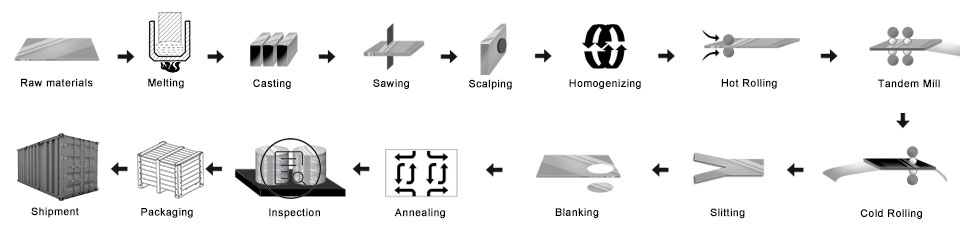
- Bereid de masterlegeringen voor
- Smeltoven: plaats de legeringen in de smeltoven
- D.C. gegoten aluminium staaf: Om de moederbaar te maken
- Frees de aluminium staaf: om het oppervlak en de zijkant glad te maken
- Verwarming oven
- Warmwalserij: de moederspoel gemaakt
- Koudewalserij: de moederspoel werd gerold in de dikte die u wilt kopen
- Ponsen proces: word de maat die je wilt
- Gloeioven: verander het humeur
- Eind inspectie
- Inpakken: houten kist of houten pallet
- Levering
Kwaliteitscontrole
Zekerheid Onderstaande inspectie zal tijdens de productie worden uitgevoerd.
- A. straal detectie—RT;
- B. ultrasoon testen—UT;
- C. Magnetische deeltjestesten-MT;
- D. penetratietesten-PT;
- e. wervelstroomfoutdetectie-ET
1) Wees vrij van olievlekken, Deuk, Inclusie, Krassen, Vlek, Oxideverkleuring, Pauzes, Corrosie, Rolmarkeringen, Vuil strepen, en andere gebreken die het gebruik hinderen.
2) Oppervlak zonder zwarte lijn, zuiver gesneden, periodieke vlek, defecten bij het afdrukken van rollen, zoals andere interne controlenormen van de gko.
Aluminium schijven verpakking:
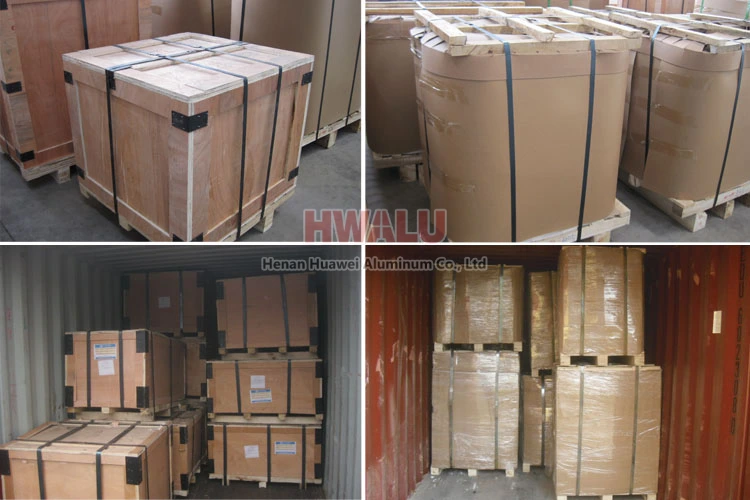
Aluminiumcirkels kunnen volgens exportnormen worden verpakt, bedekken met bruin papier en plastic folie. Eindelijk, de Aluminium Round wordt op een houten pallet/houten kist bevestigd.
- Plaats de drogers naast de aluminium cirkel, houd de producten droog en schoon.
- Gebruik schoon plastic papier, pak de aluminium cirkel in, goede afdichting behouden.
- Gebruik het slangenleerpapier, pak het oppervlak van het plastic papier in, goede afdichting behouden.
- Volgende, Er zijn twee manieren van verpakken: Eén manier is het verpakken van houten pallets, gebruik het knapperige papier dat het oppervlak bedekt; Een andere manier is het verpakken van houten kistjes, met behulp van de houten kist die het oppervlak inpakt.
- Eindelijk, leg de stalen riem op het oppervlak van de houten kist, het houden van de houten kistvastheid en veiligheid.
Aluminium cirkel van Henan Huawei Aluminium. voldoen aan de exportnorm. Plastic folie en bruin papier kunnen naar wens van de klant worden afgedekt. Bovendien, Er wordt een houten kist of houten pallet gebruikt om producten tijdens de levering tegen schade te beschermen. Er zijn twee soorten verpakkingen, die oog in oog staan met de muur of oog naar de lucht. Klanten kunnen voor hun gemak een van beide kiezen. In het algemeen, er zijn 2 ton in één pakket, en laden 18-22 ton in 1×20′ container, En 20-24 ton in 1×40′ container.
Waarom voor ons kiezen?
Om met de tijd mee te gaan, HWALU blijft de modernste apparatuur en techniek introduceren om zijn concurrentiepositie te verbeteren. Houd u altijd eerst aan de bedrijfsfilosofie van kwaliteit als centrum en klant, om producten uit de aluminium schijfcirkelserie van de hoogste kwaliteit aan alle delen van de wereld te leveren. Meer …

