1050 Kreisförmiges Kochgeschirr aus Aluminium: Hochreine Aluminiumlösung für die moderne Küchengeräteherstellung
ICH. Einführung: Das Grundsteinmaterial und der thermodynamische Kern der Kochgeschirrherstellung
In der hart umkämpften Kochgeschirrherstellungsbranche, Die Wahl des Grundmaterials ist nicht mehr nur eine Kostenfrage; es bestimmt direkt das Endprodukt thermischer Wirkungsgrad, Lebensdauer, Formungsausbeute, und Marktwettbewerbsfähigkeit. Konfrontiert mit Verbrauchern’ mehrere Anforderungen an “antihaftbeschichtet,” “leicht,” Und “schnelles Aufheizen,” Materialingenieure müssen das optimale Gleichgewicht zwischen den physikalischen Eigenschaften und der chemischen Stabilität von Metallen finden. Zu den verschiedenen Metallmaterialien, die für die Herstellung von Küchengeräten verwendet werden, 1050 Aluminiumkreise sind aufgrund ihrer extremen Wärmeleitfähigkeit, die der von reinem Aluminium nahe kommt, zum bevorzugten Grundmaterial für globale Kochgeschirrhersteller geworden, hervorragende Tiefziehleistung, und äußerst wirtschaftliche Verarbeitungseigenschaften.
Angesichts der kontinuierlich steigenden weltweiten Nachfrage nach Leichtbauprodukten, energieeffizient, und langlebiges Kochgeschirr, insbesondere in Asien und den Schwellenländern, Hersteller bevorzugen zunehmend die Verwendung 1050 Aluminiumkreise herzustellen:
- Chinesische Woks & Bratpfannen: Nutzen Sie ihre schnellen Wärmeleitungseigenschaften.
- Suppentöpfe & Töpfe: Verlassen Sie sich auf ihre hervorragenden Tiefziehfähigkeiten.
- Schnellkochtopfgehäuse: Stabilität unter hohem Druck erforderlich.
- Elektrischer Reiskocher & Schnellkochtopfeinlagen: Anspruchsvolle Oberflächen, die eine Beschichtung und eine gleichmäßige Wärmeverteilung begünstigen.
- Verschiedene Küchenutensilien: Zum Beispiel Wasserkocher, Dampfer, usw.
Dank seiner Aluminiumreinheit von bis zu 99.5%, 1050 Aluminiumkreise eignen sich besonders für große Verformungsprozesse, die in der modernen Kochgeschirrherstellung erforderlich sind, wie zum Beispiel Power-Spinning, Mehrstufiges Stempeln, Und Tiefziehen– Schlüsseltechniken zur Herstellung komplex geformter moderner Kochgeschirre.
 1050 Aluminiumkreis
II. Was ist 1050 Kreisförmiges Kochgeschirr aus Aluminium?
1050 Unter „Aluminium Circle Cookware“ versteht man speziell kreisförmige Aluminiumscheiben, die aus Aluminium hergestellt werden 1050 Aluminiumlegierung, eine Halbzeugform, die speziell für die Herstellung von Kochgeschirr und Küchenutensilien entwickelt wurde.
“1050” gehört zu den Aluminiumlegierungen der 1xxx-Serie, dessen Kernmerkmal handelsüblich reines Aluminium ist. Seine Materialeigenschaften sind voll auf die besonderen Anforderungen der Kochgeschirrherstellung abgestimmt:
- Extrem hohe Aluminiumreinheit (≥99,5 %):Dies bedeutet maximale elektrische und thermische Leitfähigkeit.
- Ausgezeichnete Duktilität: Ermöglicht das Strecken des Materials in komplexe Formen, ohne dass es bricht.
- Hervorragende Korrosionsbeständigkeit: Stabile Leistung bei Kontakt mit Lebensmitteln und Reinigungsmitteln.
- Nicht magnetisch & Geruchlos: Gewährleistung der Lebensmittelsicherheit.
Die typische chemische Zusammensetzung von 1050 Aluminium umfasst:
- Minimum 99.5% Aluminiumgehalt, Der Rest sind Spuren von Eisen, Silizium, und andere Elemente.
Aufgrund seiner relativ weichen Textur (besonders im O-Temperament) und starke Umformfähigkeit, 1050 Aluminiumkreise werden häufig in Prozessen zur Herstellung von Kochgeschirr verwendet, die eine starke plastische Verformung erfordern:
- Tiefziehen: Eine flache Scheibe in senkrechte Topfwände spannen.
- Spinnen: Herstellung halbkugelförmiger Topfböden (z.B., Chinesische Woks) durch Hochgeschwindigkeitsrotation und Extrusion.
- Streckformen
- Eloxieren: Bildung einer harten Oxidschicht durch Elektrolyse zur Verbesserung der Verschleißfestigkeit.
- Kompatibilität mit Antihaftbeschichtungen: Dient als ideales Substrat für PTFE (Teflon) oder Keramikbeschichtungen.
Im Vergleich zu Kochgeschirrmaterialien aus kohlenstoffarmem Stahl oder Edelstahl, 1050 Aluminiumkreise bieten etwa ein Drittel des Gewichts und fast das Zehnfache der Wärmeleitfähigkeit, Dadurch wird das Kocherlebnis und die Energienutzung des Benutzers direkt verbessert.
III. Eingehende Analyse der chemischen Zusammensetzung und Lebensmittelsicherheit
Hohe Reinheit ist der größte Vorteil von 1050 Aluminium in der Kochgeschirrherstellung, Dies betrifft nicht nur die körperliche Leistungsfähigkeit, sondern auch einen direkten Bezug dazu Sicherheit bei Lebensmittelkontakt.
| Element |
Typischer Inhalt (%) |
Eingehende Funktionsanalyse |
| Aluminium (Al) |
≥99,5 |
Unedles Metall. Je höher die Reinheit, desto mehr freie Elektronen gibt es, was zu einem höheren Wärmeleitfähigkeitskoeffizienten führt, schnellere Erwärmung, und gleichmäßigere Wärmeverteilung. Gleichzeitig, Hochreines Aluminium weist ein äußerst geringes Risiko einer Schwermetallmigration auf, Vollständige Übereinstimmung mit FDA und GB 4806.9 Normen für Lebensmittelkontaktmaterialien. |
| Eisen (Fe) |
≤0,40 |
Primäre Verunreinigung. Liegt typischerweise als nadelartige Al₃Fe-Phasen in reinem Aluminium vor. Durch geeignetes Fe kann die Rekristallisationstemperatur erhöht werden, Zu große Mengen verringern jedoch die Duktilität und erhöhen das Risiko von Rissen beim Tiefziehen. |
| Silizium (Und) |
≤0,25 |
Verunreinigungskontrolle. Muss streng kontrolliert werden. Si verringert die Zähigkeit und Schweißbarkeit von Aluminium und neigt dazu, beim Eloxieren eine Vergrauung zu verursachen. |
| Kupfer (Cu) |
≤0,05 |
Streng limitiert. Obwohl Cu die Festigkeit erhöhen kann, es verringert die Korrosionsbeständigkeit erheblich (leicht zu Lochfraß führen, vor allem in säurehaltigen Lebensmitteln) und ist schädlich für den menschlichen Körper. Somit, Bei Aluminium in Kochgeschirrqualität muss der Kupfergehalt streng kontrolliert werden. |
| Mangan (Mn) |
≤0,05 |
Spurenzusätze zur Festigung fester Lösungen, aber in sehr geringen Mengen vorhanden 1050. |
| Magnesium (Mg) |
≤0,05 |
Spurenstärkungselement. |
| Zink (Zn) |
≤0,05 |
Kontrolliert den Gehalt an Verunreinigungen, um interkristalline Korrosion zu verhindern. |
| Titan (Von) |
≤0,03 |
Getreideverfeinerer. Verhindert grobe Körner beim Gießen und Warmwalzen, Gewährleistung der mikrostrukturellen Gleichmäßigkeit. |
Der hohe Aluminiumanteil sorgt für eine hervorragende Wärmeleitfähigkeit und Verarbeitbarkeit, Sie bilden die Grundlage dafür, dass Kochgeschirr schnell auf Hitzeveränderungen reagieren kann.
IV. Ablauf des Herstellungsprozesses: Vom Aluminiumbarren zum Kochgeschirrrohling
Die Herstellung hochwertiger Kochgeschirr-Aluminiumkreise ist ein systemtechnisches Projekt mit Beteiligung der Metallurgie, Thermodynamik, und präzise mechanische Steuerung.
Schmelzen & Casting
Alles beginnt mit hochreinen A00-Aluminiumbarren.
- Rohstoffschmelze: Aluminiumbarren und nachgiebiger Schrott werden zum Schmelzen einem Flammofen zugeführt.
- Anpassung der Legierungszusammensetzung: Präzise Einstellung der Spurenelemente nach 1050 Standards.
- Entgasung & Reinigung: Stickstoff oder Argon wird durch die Schmelze geblasen, um Wasserstoff zu entfernen (verhindert später Nadellöcher) Zur Entfernung von Einschlüssen werden Keramikfilter eingesetzt.
- Strangguss oder halbkontinuierliches Gießen (DC-Casting): Umwandlung von flüssigem Aluminium in flache Brammen, Steuerung der Abkühlgeschwindigkeiten, um feine Körner zu erhalten.
Warmwalzen
Die Gussplatte wird geschält (Flächenfräsen) um Oberflächenoxide vor dem Warmwalzen zu entfernen.
- Zweck: Zerkleinern der groben dendritischen Struktur, die beim Gießen bei hohen Temperaturen entsteht, Beseitigung innerer Porosität und Poren, und Verbesserung der Korngröße.
- Vorteile: Warmgewalzte Aluminiumkreise weisen eine bessere Tiefziehleistung und Isotropie auf (gleichmäßige mechanische Eigenschaften in alle Richtungen), Damit sind sie das bevorzugte Grundmaterial für hochwertiges Kochgeschirr, um eine ungleichmäßige Dehnung zu verhindern.
Kaltwalzen
Das warmgewalzte Coil wird zur Dickenreduzierung in mehreren Durchgängen kaltgewalzt.
- Dickenkontrolle:Die typische Dicke von Kochgeschirr reicht von 0.5 mm – 6.0 mm.
- Kontrolle der Oberflächenqualität: Kaltwalzen ergibt eine glattere Oberfläche, Geeignet zum anschließenden Eloxieren oder Feinbeschichten, obwohl innere Restspannungen vorhanden sein können.
Kreisschneiden
Verarbeitung großer Aluminiumbleche oder -coils zu präzisen Ronden.
- Verfahren: Verwendung hochpräziser Stanzwerkzeuge, CNC-Stanzmaschinen, oder vollautomatische Kreisschneidemaschinen.
- Präzisionsanforderungen: Die Schnittkanten müssen glatt und gratfrei sein, und Maßtoleranzen müssen minimal sein. Dies minimiert das Auftreten von “Ohrring” (Kantenfalten) beim Tiefziehen, Erhebliche Verbesserung der Ausbeute und der Erscheinungsbildqualität.
Glühwärmebehandlung
Kaltgewalztes Aluminium weist aufgrund der Kaltverfestigung eine hohe Härte auf und kann nicht direkt zum Tiefziehen verwendet werden.
- Verfahren: Rekristallisationsglühen bei 350°C-450°C.
- Ergebnis: Stellt die Weichheit wieder her (O-Temperament) und Duktilität des Materials, Dadurch kann es starken Dehnungsverformungen standhalten, ohne dass es zu Rissen kommt.

V. Eingehende Analyse der Kernleistungsmerkmale von 1050 Aluminiumkreise
Ausgezeichnete Wärmeleitfähigkeit
Dies ist das größte Verkaufsargument von 1050 Aluminium für Kochgeschirr und wird durch seine physikalische Beschaffenheit bestimmt.
- Wärmeleitfähigkeitskoeffizient: Ungefähr 237 W/(m·K), weit über Edelstahl hinaus (ca. 16 W/(m·K)) und Gusseisen (ca. 50 W/(m·K)).
- Vorteilsanalyse:
- Extrem schnelles Aufheizen: Kurze thermische Reaktionszeit spart Kochzeit und Energie.
- Gleichmäßige Temperaturverteilung: Aufgrund der hohen Temperaturleitfähigkeit, Der Temperaturunterschied am Topfboden ist minimal, Dadurch wird die durch lokale Überhitzung verursachte Verbrennung erheblich reduziert (Hotspots).
- Präzise Temperaturregelung: Schnelle Reaktion auf Änderungen der Feuerkraft, Geeignet für chinesische Kochtechniken wie Pfannenrühren.
Überlegene Tiefziehleistung
1050 Aluminium hat eine hohe Dehnungsrate (Verlängerung > 35%).
- Anwendung: Ermöglicht Herstellern die Herstellung tiefer Topfkörper (z.B., Suppentöpfe, Schnellkochtopfauskleidungen) mit einem hohen Ziehverhältnis in einem einzigen Arbeitsgang ohne Einschnürung oder Rissbildung.
- Zeichnungsverhältnis begrenzen (LDR): Hochreines Aluminium hat typischerweise einen hohen LDR, Das bedeutet, dass aus einer kleineren Scheibe ein größerer Topf hergestellt werden kann, Materialeinsparung.
Leichte Struktur
- Dichtevergleich: Die Dichte von Aluminium beträgt nur 2.7 g/cm³, ein Drittel so viel wie Eisen.
- Benutzererfahrung:Selbst Woks oder Suppentöpfe mit großem Durchmesser bleiben leicht, erleichtert das Braten, Handhabung, und waschen, Besonders geeignet für weibliche und ältere Nutzergruppen.
Ausgezeichnete Korrosionsbeständigkeit
- Natürlicher Oxidfilm: Aluminium erzeugt schnell ein dichtes Aluminiumoxid (Al₂O₃) Film in der Luft. Diese Schicht ist chemisch stabil und schützt das darunter liegende Metall vor weiterer Oxidation oder Korrosion.
- Oberflächenverstärkung: Durch Eloxierungsbehandlung, Die Dicke der Oxidschicht kann von einigen Mikrometern auf Dutzende Mikrometer erhöht werden, deutliche Verbesserung der Verschleiß- und Säure-/Laugen-Korrosionsbeständigkeit, Dadurch wird die Lebensdauer des Kochgeschirrs verlängert.
Gute Oberflächenbeschaffenheit
- Eigenschaften: 1050 Aluminium ist weich und lässt sich leicht mechanisch oder chemisch polieren.
- Anwendung: Geeignet zum Spiegelpolieren (Hochglanzpoliert, für hochwertige Dekotöpfe), gebürstete Oberfläche (Gebürstete Oberfläche, für modernes Kochgeschirr im minimalistischen Stil), und als Basisschicht für Antihaftbeschichtungen, sorgt für eine starke Beschichtungshaftung.
VI. Tabelle mit technischen Daten
| Artikel |
Typische Spezifikation & Beschreibung |
| Legierungsbezeichnung |
1050 (Al ≥ 99.5%) |
| Temperament |
O (Weich, zum Tiefziehen) / H12 (1/4 Hart) / H14 (Halb schwer) |
| Dickenbereich |
0.5 mm – 6.0 mm (Anpassbar, Toleranz ±0,02 mm) |
| Durchmesserbereich |
100 mm – 1200 mm (Zum Abdecken von kleinen Töpfen bis hin zu großen Woks) |
| Oberflächenbehandlung |
Mühlenfinish / Vorpoliert / Zum Schutz vor Rost mit Öl beschichtet |
| Verarbeitungsmethode |
Warmgewalzt (Bevorzugt zum Tiefziehen) / Kaltgewalzt |
| Verlängerung |
≥35 % (O-Temperament) |
| Zugfestigkeit |
65–95 MPa |
| Verpackungsmethode |
Begaste Holzpaletten nach Exportstandard + Feuchtigkeitsbeständiges Papier + Kraftpapier + Stretchfolie |
VII. Anwendungspanorama von 1050 Aluminiumkreise
Bratpfannen & Woks
- Nachfrage: Schnelle Wärmeleitung, leicht, natürliche Krümmung.
- Eignung: Die hervorragende Spinnleistung von 1050 Aluminiumkreise eignen sich ideal für die Herstellung der gewölbten Böden chinesischer Woks, Ermöglicht eine schnelle Wärmespeicherung und -ableitung.
Kochtöpfe & Dampfer
- Nachfrage: Starke Tiefziehfähigkeit, strukturelle Stabilität, gleichmäßige Erwärmung.
- Eignung: Ausnutzung seiner hohen Dehnung, Durch mehrstufiges Ziehen werden tiefe Topfkörper geformt, mit minimalem Verformungsrisiko.
Schnellkochtöpfe
- Nachfrage:Das Material muss thermischen Zyklen unter hoher Temperatur und hohem Druck standhalten, mit schneller Wärmeleitung, um lokale Überhitzung zu verhindern.
- Eignung: 1050 Die gute Wärmeleitfähigkeit von Aluminium sorgt für eine gleichmäßige Wärmeverteilung im Topf, Arbeiten mit dem Dichtungsringdesign, um die Kochsicherheit zu gewährleisten.
Innentöpfe für Reiskocher
- Nachfrage: Glatte Oberfläche, einfache Beschichtungshaftung, gleichmäßige Wärmeleitung, rostfrei.
- Eignung: O-gehärtete Aluminiumkreise, nach harteloxieren, bieten eine hohe Oberflächenhärte und Ästhetik, Damit sind sie eine gängige Wahl für hochwertige Reiskochauskleidungen.
Andere Küchenutensilien
Dazu gehören im Großen und Ganzen Wasserkocher aus Aluminium, Backformen, Pizzapfannen, Dampfer, Topfdeckel, usw., Sie nutzen ihre einfache Formbarkeit und ihr geringes Gewicht aus.

VIII. Detaillierter Vergleich zwischen warmgewalzten und kaltgewalzten Aluminiumkreisen
| Besonderheit |
Warmgewalzte Aluminiumkreise |
Kaltgewalzte Aluminiumkreise |
Eingehende vergleichende Analyse |
| Tiefziehleistung |
Exzellent |
Durchschnitt |
Warmgewalztes Material wurde einer Rekristallisation unterzogen, Dies führt zu einer geringen Anisotropie und einer minimalen Zackenbildung beim Tiefziehen. |
| Oberflächenbeschaffenheit |
Medium (Kann leichte Schuppen aufweisen) |
Exzellent (Glatt & Bußgeld) |
Kaltgewalzte Oberflächen eignen sich besser zum Hochglanzpolieren oder Feinbürsten; Warmgewalzte Oberflächen müssen in der Regel gefräst oder gebeizt werden. |
| Interne Struktur |
Stabil, keine Eigenspannung |
Restspannung durch Kaltverfestigung |
Warmgewalztes Material eignet sich besser für Tiefziehteile, um Verformungen nach der Bearbeitung zu vermeiden. |
| Rissbeständigkeit |
Exzellent |
Gut |
Warmgewalztes Material ist die bevorzugte Wahl für hochwertiges Kochgeschirr (z.B., Aluminiumkerne in mehrschichtig verkleideten Töpfen). |
| Marktpositionierung |
Hochwertiges Kochgeschirr / Export |
Standardkochgeschirr / Utensilien |
Warmgewalzte Kreise sind in der Regel etwas teurer, haben aber aufgrund der höheren Ausbeute oft niedrigere Gesamtkosten. |
Abschluss: Für die Herstellung hochwertiger Kochgeschirre, insbesondere tiefgezogene Produkte, Warmgewalzte Aluminiumkreise sind in der Regel die erste Wahl.
IX. Wettbewerbsvorteile von 1050 Aluminiumkreise für Kochgeschirr
Kostengünstiges Material
- Niedrige Rohstoffkosten: Im Vergleich zu Kupfer und Edelstahl, Aluminium ist in der Erdkruste reichlich vorhanden, bietet eine größere preisliche Wettbewerbsfähigkeit.
- Hohe Verarbeitungseffizienz:Weiches Aluminium lässt sich leicht schneiden und formen, mit geringem Werkzeugverschleiß und hohen Prägegeschwindigkeiten, Geeignet für die automatisierte Massenproduktion.
- Geeignet für die Massenproduktion: In der Lage, die enormen Bestellanforderungen der Gerätegiganten zu erfüllen (z.B., Midea, Vermuten, Panasonic).
Hervorragende Verarbeitungsleistung
Das Material leistet in den folgenden Prozessen eine außerordentlich gute Leistung:
- CNC-Spinnen: Sanftes Formen ohne Orangenhauteffekt.
- Hydraulische Zeichnung: Hohes Grenzziehverhältnis.
- Präzisionsstanzen: Hohe Maßgenauigkeit.
- Spiegelpolieren: Hohe Helligkeit, keine Nadellöcher.
- Hartanodisieren: Gleichmäßiger und dichter Oxidfilm.
Energieeffizienz
Durch die Verwendung von Kochgeschirr aus Aluminium zum Kochen können Sie ca. sparen 30%-50% im Gas- oder Stromverbrauch im Vergleich zu Gusseisentöpfen. Dies bedeutet erhebliche Kosteneinsparungen für Großküchen und die langfristige Nutzung im Haushalt, Anpassung an globale Energiespartrends.
Recyclingfähigkeit
Aluminium ist 100% recycelbar, und der Energieverbrauch beim Recycling beträgt nur 5% von dem, was für die Primäraluminiumproduktion benötigt wird. Die Verwendung von Kochgeschirr aus Aluminium steht im Einklang mit globalen ESG (Umweltfreundlich, Sozial, und Governance) Standards und Vorteile für den Aufbau eines grünen Unternehmensimages.
X. Optionen zur Oberflächenbehandlung: Doppelte Verbesserung von Funktion und Ästhetik
Zur Verbesserung der Haltbarkeit und Ästhetik, Kochgeschirr-Aluminiumkreise können verschiedenen Oberflächenbehandlungen unterzogen werden:
Eloxieren
- Prinzip: Erzeugung einer harten Aluminiumoxid-Keramikschicht auf der Aluminiumoberfläche durch Elektrolyse.
- Effekte:
- Die Oberflächenhärte kann HV300-500 erreichen, nah an Saphir, dadurch verschleiß- und kratzfest.
- Bildet eine dichte Oxidschicht, die sich nie ablöst, sicher und ungiftig.
- Kann in verschiedenen Farben eingefärbt werden (z.B., hart eloxiert schwarz, Gold, Bronze) um die Produktqualität zu erhöhen.
Antihaftbeschichtung
- Verfahren: Aufsprühen von PTFE (Teflon) oder Keramikbeschichtungen, meist in Verbindung mit einer Grundierung.
- Effekte:
- Sehr niedrige Oberflächenspannung, verhindert das Anhaften von Lebensmitteln, Ermöglicht gesünderes Kochen mit weniger Öl.
- Leicht zu reinigen, wischt Unordnung mühelos weg.
Polieren
- Effekte:
- Spiegelpolieren: Glänzend wie ein Spiegel, sehr dekorativ, häufig in westlichem High-End-Kochgeschirr.
- Mechanisches Polieren/Bürsten: Erzielen einer feinen matten oder hellen Drahtstruktur, präsentiert einen modernen Industriestil.
XI. Markttrends und Branchenentwicklungsaussichten
Die globale Kochgeschirrindustrie konzentriert sich auf die folgenden Richtungen:
- Leichtes Design: Reduziert das Gewicht des Kochgeschirrs ohne Einbußen bei der Festigkeit, Wir richten uns an alternde Gesellschaften und weibliche Konsumenten.
- Hocheffiziente Energieeinsparung: Entwicklung von unteren Verbundstrukturen (z.B., Aluminium + Edelstahlverkleidung oder Verbundsockel) zur Verbesserung der magnetischen Leitfähigkeit und des thermischen Wirkungsgrads auf Induktionskochfeldern.
- Umweltfreundliche Produktion: Förderung chromfreier Passivierungsbehandlungen und umweltfreundlicher wasserbasierter Beschichtungen zur Reduzierung der VOC-Emissionen während der Produktion.
- Hochleistungs-Antihaftsysteme:Forschung verschleißfester, PFOA-freie Beschichtungstechnologien zur Verlängerung der Lebensdauer von Kochgeschirr.
Folglich, Nachfrage nach hoher Qualität 1050 Aluminiumkreise wachsen weltweit weiter.
Wichtige Wachstumsmärkte:
- Südostasien: Rasch aufstrebende Produktionsstandorte und Verbrauchermärkte (z.B., Vietnam, Thailand).
- Naher Osten: Riesige Nachfrage nach Aluminiumtöpfen, bevorzugen Designs mit dickem Boden.
- Europa:Der Markt konzentriert sich auf Ökodesign und hochwertiges Antihaft-Kochgeschirr.
- Südamerika & Afrika: Schwellenmärkte mit hoher Preissensibilität.
XII. Abschluss
1050 Aluminiumkreise sind einer der wichtigsten Grundrohstoffe in der modernen Kochgeschirrherstellung. Sie vereinen perfekt die extreme Wärmeleitfähigkeit, die durch die hohe Reinheit des Aluminiums entsteht, ausgezeichnete Tiefziehfähigkeit, eine leichte und dennoch langlebige Struktur, gute Korrosionsbeständigkeit, und äußerst wettbewerbsfähige Verarbeitungskosten.
Ob Woks und Suppentöpfe für die heimische Küche oder Schnellkochtöpfe und Reiskochereinsätze für die Großküche, 1050 Aluminiumkreise bieten unersetzliche Leistungsunterstützung. Da die Kochgeschirrindustrie weiterhin auf Leichtbau achtet, dauerhaft, und energieeffiziente Lösungen, 1050 Aluminiumkreise werden zweifellos weiterhin eine zentrale Rolle in der weltweiten Kochgeschirrproduktion spielen, Wir treiben die Weiterentwicklung der Esskultur voran.
Häufig gestellte Fragen (FAQs)
Q: Warum ist 1050 Aluminium, das bei der Herstellung von Kochgeschirr so beliebt ist?
A:Der Hauptgrund liegt darin extreme Wirtschaftlichkeit. Es bietet ausgezeichnetes Wärmeleitfähigkeit (schnelles Kochen, keine verbrannten Stellen), Tiefziehleistung (in der Lage, tiefe Töpfe herzustellen), Und leicht Eigenschaften, während die Rohstoffkosten viel niedriger sind als bei Edelstahl und Kupfer, Damit eignet es sich ideal für die industrielle Großproduktion.
Q: Was ist die beste Härte für Kochgeschirr-Aluminiumkreise??
A: O-Temperament (Sanftes Temperament)wird am häufigsten verwendet. Denn die Herstellung von Topfkörpern erfordert eine erhebliche Dehnungsverformung, O-Temper-Aluminium weist die höchste Dehnung auf (>35%), verhindert Rissbildung beim Prägen. H14 (halbhart) wird manchmal für flachgezogene Gegenstände wie Pizzapfannen oder flache Deckel verwendet.
Q: Kann 1050 Aluminiumkreise werden eloxiert?
A: Absolut, und die Ergebnisse sind ausgezeichnet. 1050 ist ein hochreines Aluminium, und nach dem Eloxieren, Die Filmschicht ist gleichmäßig und transparent, Damit eignet es sich perfekt für hartanodisiertes Kochgeschirr oder eingefärbte Dekorationsteile, mit einer Härte, die mit Edelstahl vergleichbar ist.
Q: Was ist der übliche Dickenbereich für Kochgeschirr-Aluminiumkreise?? Wie soll ich auswählen?
A: Typischerweise zwischen 0.5 mm und 6.0 mm. Dünne Platten (0.5-1.5mm) werden meist für kleine Bratpfannen verwendet, Backbleche, oder Deckel; mitteldicke Platten (2.0-3.0mm) werden für Woks und Suppentöpfe verwendet; dicke Platten (4.0-6.0mm) werden für Suppentöpfe mit dickem Boden verwendet, kommerzielle Woks, oder Verbundbodenplatten für Induktionsherde.
Q: Was ist der Unterschied zwischen warmgewalzten und kaltgewalzten Aluminiumkreisen?? Wie soll ich wählen?
A: Wenn Sie produzieren Tiefgezogenes Kochgeschirr der Spitzenklasse (wie tiefe Suppentöpfe oder Schnellkochtöpfe), Bitte wählen Sie warmgewalzt Kreise, weil ihre innere Struktur stabiler ist, Reduzierung des Risikos von Kantenrissen oder Faltenbildung. Wenn Sie produzieren flachgezogene oder flache Utensilien (wie Pizzapfannen oder flache Topfdeckel), kaltgewalzt Kreise sind aufgrund ihrer glatteren Oberfläche eine wirtschaftlichere Wahl.
Eigenschaften des Aluminiumkreises:
Aluminiumkreis ist für viele Märkte geeignet, inklusive Kochgeschirr, Automobil- und Beleuchtungsindustrie, usw., dank guter Produkteigenschaften:
- Geringe Anisotropie, was das Tiefziehen erleichtert
- Starke mechanische Eigenschaften
- Hohe und homogene Wärmeverteilung
- Emaillierbar, mit PTFE überzogen (oder andere), eloxiert
- Gutes Reflexionsvermögen
- Hohes Verhältnis von Festigkeit zu Gewicht
- Haltbarkeit und Korrosionsbeständigkeit
Aluminiumkreisprozess
Barren/Vorlegierungen — Schmelzofen – Warmhalteofen — D.C. Zauberer — Platte —- Scalper — Warmwalzwerk – Kaltwalzwerk – Stanzen – Glühofen — Endkontrolle – Verpackung — Lieferung
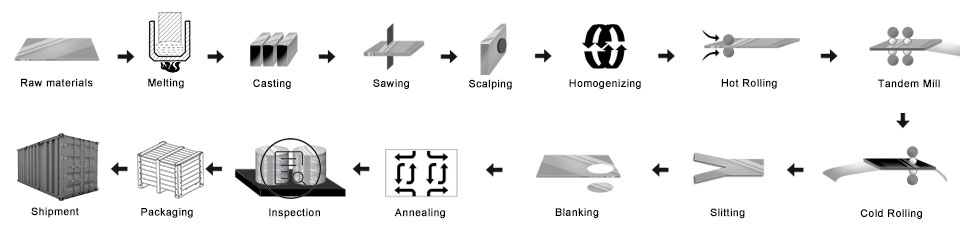
- Bereiten Sie die Vorlegierungen vor
- Schmelzofen: Geben Sie die Legierungen in den Schmelzofen
- Gleichstromguss-Aluminiumbarren: Um den Mutterbarren herzustellen
- Fräsen Sie den Aluminiumbarren: um die Oberfläche und die Seite glatt zu machen
- Heizofen
- Warmwalzwerk: machte die Mutterspule
- Kaltwalzwerk: Die Mutterspule wurde in der Dicke gewalzt, die Sie kaufen möchten
- Stanzvorgang: Werden Sie zu der Größe, die Sie wollen
- Glühofen: die Stimmung ändern
- Endkontrolle
- Verpackung: Holzkiste oder Holzpalette
- Lieferung
Qualitätskontrolle
Sicherheit Die nachstehende Prüfung wird in der Produktion durchgeführt.
- A. Strahlenerkennung—RT;
- B. Ultraschallprüfung—UT;
- C. Magnetpulverprüfung-MT;
- D. Penetrationstests-PT;
- e. Wirbelstrom-Fehlererkennung-ET
1) Seien Sie frei von Ölflecken, Delle, Aufnahme, Kratzer, Fleck, Oxidverfärbung, Pausen, Korrosion, Rollspuren, Schmutzstreifen, und andere Mängel, die die Nutzung beeinträchtigen.
2) Oberfläche ohne schwarze Linie, sauber geschnitten, periodischer Fleck, Mängel beim Walzendruck, wie andere GKO-interne Kontrollstandards.
Verpackung mit Aluminiumscheiben:
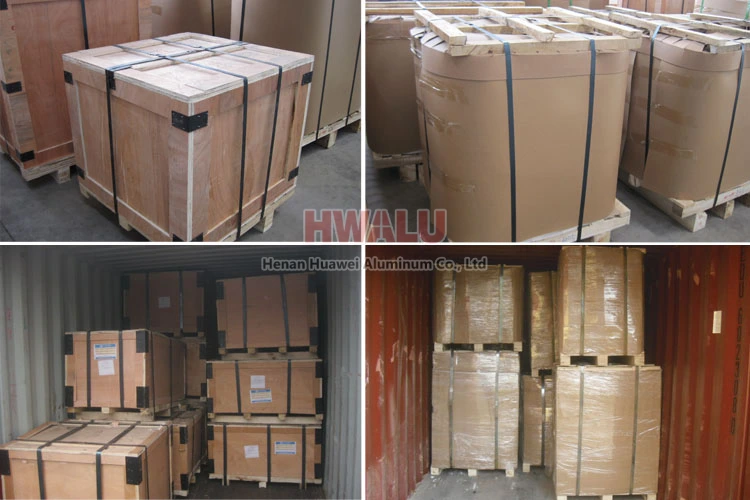
Aluminiumkreise können nach Exportstandards verpackt werden, Mit braunem Papier und Plastikfolie abdecken. Endlich, Das Aluminium Round wird auf einer Holzpalette/Holzkiste befestigt.
- Stellen Sie die Trockner neben den Aluminiumkreis, Halten Sie die Produkte trocken und sauber.
- Verwenden Sie sauberes Plastikpapier, Packen Sie den Aluminiumkreis ein, Halten Sie eine gute Abdichtung.
- Verwenden Sie das Schlangenlederpapier, Packen Sie die Oberfläche des Plastikpapiers ein, Halten Sie eine gute Abdichtung.
- Nächste, Es gibt zwei Arten der Verpackung: Eine Möglichkeit ist die Verpackung auf Holzpaletten, Verwenden Sie das krustige Papier, um die Oberfläche zu verpacken; Eine andere Möglichkeit ist die Verpackung in Holzkisten, Verwenden Sie die Holzkiste, um die Oberfläche zu verpacken.
- Endlich, Legen Sie das Stahlband auf die Oberfläche der Holzkiste, Halten Sie die Holzkiste fest und sicher.
Aluminiumkreis aus Henan Huawei Aluminium. den Exportstandard erfüllen. Kunststofffolie und braunes Papier können je nach Kundenwunsch abgedeckt werden. Was mehr ist, Zum Schutz der Produkte vor Beschädigungen während der Lieferung wird eine Holzkiste oder eine Holzpalette verwendet. Es gibt zwei Arten von Verpackungen, die Auge zur Wand oder Auge zum Himmel sind. Kunden können aus Bequemlichkeit zwischen beiden Optionen wählen. Allgemein gesprochen, es gibt 2 Tonnen in einem Paket, und laden 18-22 Tonnen im 1×20′-Container, Und 20-24 Tonnen im 1×40′-Container.
Warum sollten Sie sich für uns entscheiden??
Um mit der Zeit zu gehen, HWALU führt weiterhin modernste Ausrüstung und Technik ein, um seine Wettbewerbsfähigkeit zu verbessern. Halten Sie sich stets an die Geschäftsphilosophie, dass Qualität im Mittelpunkt steht und der Kunde an erster Stelle steht, um die Produkte der Aluminium-Disc-Circle-Serie in höchster Qualität in alle Teile der Welt zu liefern. Mehr …

