1050 Batterie de cuisine circulaire en aluminium: Solution en aluminium de haute pureté pour la fabrication d'ustensiles de cuisine modernes
je. Introduction: Le matériau clé et le noyau thermodynamique de la fabrication d’ustensiles de cuisine
Dans le secteur extrêmement compétitif de la fabrication d’ustensiles de cuisine, le choix du matériau de base n'est plus seulement une question de coût; il détermine directement le produit final efficacité thermique, durée de vie, taux de rendement de formation, et la compétitivité du marché. Face aux consommateurs’ de multiples demandes de “antiadhésif,” “léger,” et “chauffage rapide,” les ingénieurs en matériaux doivent trouver l'équilibre optimal entre les propriétés physiques et la stabilité chimique des métaux. Parmi les différents matériaux métalliques utilisés pour la production d'ustensiles de cuisine, 1050 Cercles en aluminiumsont devenus le matériau de base préféré des fabricants mondiaux d'ustensiles de cuisine en raison de leur conductivité thermique extrême proche de celle de l'aluminium pur., excellentes performances d'emboutissage profond, et des caractéristiques de traitement très rentables.
Avec la croissance continue de la demande mondiale de produits légers, économe en énergie, et des ustensiles de cuisine durables, surtout en Asie et sur les marchés émergents, les fabricants préfèrent de plus en plus utiliser 1050 cercles en aluminium à produire:
- Woks chinois & Poêles à Frire: Tirer parti de leurs propriétés de conduction thermique rapide.
- Marmites & Casseroles: S'appuyant sur leurs excellentes capacités d'emboutissage profond.
- Corps d'autocuiseur: Exigeant une stabilité sous haute pression.
- Cuiseur à riz électrique & Revêtements pour autocuiseurs: Surfaces exigeantes propices au revêtement et à une répartition homogène de la chaleur.
- Divers ustensiles de cuisine: Comme les bouilloires, bateaux à vapeur, etc..
Grâce à sa pureté d'aluminium allant jusqu'à 99.5%, 1050 les cercles en aluminium sont particulièrement adaptés aux processus de déformation importante requis dans la fabrication d'ustensiles de cuisine modernes, tel que Rotation électrique, Estampage en plusieurs étapes, et Dessin profond—techniques clés pour fabriquer des ustensiles de cuisine modernes de forme complexe.
 1050 cercle en aluminium
II. Qu'est-ce que 1050 Batterie de cuisine circulaire en aluminium?
1050 Les ustensiles de cuisine circulaires en aluminium font spécifiquement référence aux disques circulaires en aluminium fabriqués à partir du 1050 alliage d'aluminium, une forme de produit semi-fini spécialement conçue pour la production d'ustensiles de cuisine et d'ustensiles de cuisine.
“1050” appartient aux alliages d'aluminium de la série 1xxx, dont la caractéristique principale est l'aluminium commercialement pur. Ses propriétés matérielles répondent pleinement aux besoins particuliers de la fabrication d'ustensiles culinaires:
- Pureté de l'aluminium extrêmement élevée (≥99,5 %): Cela implique une conductivité électrique et thermique maximale.
- Excellente ductilité: Permet au matériau d'être étiré dans des formes complexes sans se fracturer.
- Résistance exceptionnelle à la corrosion: Performance stable au contact des aliments et des détergents.
- Non magnétique & Inodore: Assurer la sécurité alimentaire.
La composition chimique typique de 1050 l'aluminium comprend:
- Minimum 99.5% Contenu en aluminium, le reste étant constitué de traces de fer, silicium, et d'autres éléments.
En raison de sa texture relativement douce (surtout dans l'humeur O) et forte capacité de formage, 1050 les cercles en aluminium sont largement utilisés dans les processus de fabrication d'ustensiles de cuisine nécessitant une déformation plastique sévère:
- Dessin profond: Étirer un disque plat dans les parois verticales du pot.
- Filage: Fabrication de fonds de casseroles hémisphériques (par ex., woks chinois) via une rotation et une extrusion à grande vitesse.
- Formage par étirement
- Anodisation:Formation d'une couche d'oxyde dur par électrolyse pour améliorer la résistance à l'usure.
- Compatibilité des revêtements antiadhésifs: Servir de substrat idéal pour le PTFE (Téflon) ou revêtements céramiques.
Par rapport aux matériaux d'ustensiles de cuisine en acier à faible teneur en carbone ou en acier inoxydable, 1050 les cercles en aluminium offrent environ un tiers du poids et près de dix fois la diffusivité thermique, améliorant directement l'expérience culinaire de l'utilisateur et l'utilisation de l'énergie.
III. Analyse approfondie de la composition chimique et de la sécurité alimentaire
La haute pureté est le plus grand avantage de 1050 l'aluminium dans la fabrication d'ustensiles de cuisine, concernant non seulement la performance physique mais aussi directement liée à Sécurité du contact alimentaire.
| Élément |
Contenu typique (%) |
Analyse fonctionnelle approfondie |
| Aluminium (Al) |
≥99,5 |
Métal commun. Plus la pureté est élevée, plus il y a d'électrons libres, résultant en un plus grand coefficient de conductivité thermique, chauffage plus rapide, et une répartition plus uniforme de la chaleur. Simultanément, l'aluminium de haute pureté implique un risque extrêmement faible de migration de métaux lourds, entièrement conforme aux normes FDA et GB 4806.9 normes relatives aux matériaux destinés à entrer en contact avec les aliments. |
| Fer (Fe) |
≤0,40 |
Impureté primaire. Existe généralement sous forme de phases Al₃Fe en forme d'aiguille dans l'aluminium pur. Un Fe approprié peut augmenter la température de recristallisation, mais des quantités excessives réduisent la ductilité et augmentent le risque de fissuration lors de l'emboutissage profond. |
| Silicium (Et) |
≤0,25 |
Contrôle des impuretés. Doit être strictement contrôlé. Le silicium réduit la ténacité et la soudabilité de l'aluminium et a tendance à provoquer un grisonnement lors de l'anodisation.. |
| Cuivre (Cu) |
≤0,05 |
Strictement limité. Bien que le Cu puisse augmenter la force, il réduit considérablement la résistance à la corrosion (provoquant facilement une corrosion par piqûres, surtout dans les aliments acides) et est nocif pour le corps humain. Ainsi, l'aluminium de qualité des ustensiles de cuisine doit contrôler strictement la teneur en cuivre. |
| Manganèse (Mn) |
≤0,05 |
Ajouts de traces pour le renforcement de la solution solide, mais présent en très faible quantité dans 1050. |
| Magnésium (Mg) |
≤0,05 |
Élément de renforcement des traces. |
| Zinc (Zn) |
≤0,05 |
Contrôle la teneur en impuretés pour prévenir la corrosion intergranulaire. |
| Titane (De) |
≤0,03 |
Affineur de grains. Empêche les gros grains lors de la coulée et du laminage à chaud, assurer l'uniformité de la microstructure. |
La teneur élevée en aluminium garantit une excellente conductivité thermique et une excellente maniabilité, constituant la base des ustensiles de cuisine pour réagir rapidement aux changements de chaleur.
IV. Flux de processus de fabrication: Du lingot d’aluminium au blanc d’ustensile de cuisine
La production de cercles en aluminium pour ustensiles de cuisine de haute qualité est un projet d'ingénierie des systèmes impliquant la métallurgie, thermodynamique, et contrôle mécanique de précision.
Fusion & Fonderie
Tout commence avec des lingots d'aluminium A00 de haute pureté.
- Fusion des matières premières: Les lingots d'aluminium et les déchets conformes sont introduits dans un four à réverbère pour être fondus..
- Ajustement de la composition de l'alliage: Ajustement précis des oligo-éléments selon 1050 normes.
- Dégazage & Purification:De l'azote ou de l'argon est soufflé à travers la masse fondue pour éliminer l'hydrogène. (éviter les trous d'épingle plus tard) et des filtres en céramique sont utilisés pour éliminer les inclusions.
- Coulée continue ou coulée semi-continue (Casting DC): Transformer l'aluminium liquide en dalles plates, contrôler les vitesses de refroidissement pour obtenir des grains fins.
Laminage à chaud
La dalle coulée subit un scalpage (fraisage superficiel) pour éliminer les oxydes de surface avant d'entrer dans l'étape de laminage à chaud.
- But: Écrasement de la structure dendritique grossière formée lors de la coulée à haute température, éliminant la porosité interne et les pores, et améliorer la taille des grains.
- Avantages:Les cercles en aluminium laminés à chaud possèdent de meilleures performances d'emboutissage profond et une meilleure isotropie (propriétés mécaniques uniformes dans toutes les directions), ce qui en fait le matériau de base préféré pour les ustensiles de cuisine haut de gamme afin d'éviter un étirement inégal.
Laminage à froid
La bobine laminée à chaud subit un laminage à froid en plusieurs passes pour réduire l'épaisseur.
- Contrôle de l'épaisseur: L'épaisseur typique des ustensiles de cuisine varie de 0.5 mm – 6.0 mm.
- Contrôle de la qualité des surfaces: Le laminage à froid donne une surface plus lisse, convient pour une anodisation ultérieure ou un revêtement fin, bien qu'une contrainte résiduelle interne puisse exister.
Coupe de cercle
Transformation de grandes feuilles ou bobines d'aluminium en ébauches circulaires précises.
- Processus: Utilisation de matrices de découpe de haute précision, Poinçonneuses CNC, ou machines de découpe de cercles entièrement automatiques.
- Exigences de précision: Les bords coupés doivent être lisses et sans bavures, et les tolérances dimensionnelles doivent être minimes. Cela minimise l'apparition de “boucle” (rides des bords) pendant l'emboutissage profond, améliorant considérablement les taux de rendement et la qualité de l'apparence.
Traitement thermique de recuit
L'aluminium laminé à froid a une dureté élevée en raison de l'écrouissage et ne peut pas être utilisé directement pour l'emboutissage profond.
- Processus: Recuit de recristallisation à 350°C-450°C.
- Résultat: Restaure la douceur (O-température) et la ductilité du matériau, lui permettant de résister à de fortes déformations d'étirement sans se fissurer.

V. Analyse approfondie des principales caractéristiques de performance de 1050 Cercles en aluminium
Excellente conductivité thermique
C'est le principal argument de vente de 1050 aluminium pour les ustensiles de cuisine et est déterminé par son essence physique.
- Coefficient de conductivité thermique: Environ 237 Avec(m·K), dépassant largement l'acier inoxydable (environ. 16 Avec(m·K)) et en fonte (environ. 50 Avec(m·K)).
- Analyse des avantages:
- Chauffage extrêmement rapide: Un temps de réponse thermique court permet d'économiser du temps de cuisson et de l'énergie.
- Répartition uniforme de la température: Grâce à une diffusivité thermique élevée, la différence de température au fond du pot est minime, réduisant considérablement les brûlures causées par une surchauffe locale (Points chauds).
- Contrôle précis de la température: Réponse rapide aux changements de puissance de feu, convient aux techniques de cuisine chinoise comme les sautés.
Performance supérieure d’emboutissage profond
1050 l'aluminium a un taux d'allongement élevé (Élongation > 35%).
- Application: Permet aux fabricants de produire des corps de cuve profonds (par ex., marmites, doublures pour autocuiseur) avec un taux d'étirage élevé en une seule opération sans striction ni fissuration.
- Ratio de tirage limite (LDR):L'aluminium de haute pureté a généralement un LDR élevé, ce qui signifie qu'un pot plus grand peut être fabriqué à partir d'un disque plus petit, économiser du matériel.
Structure légère
- Comparaison de densité: La densité de l'aluminium est seulement 2.7 g/cm³, un tiers de celui du fer.
- Expérience utilisateur: Même les woks ou les marmites de grand diamètre restent légers, faciliter les sautés, manutention, et le lavage, particulièrement adapté aux groupes d'utilisateurs féminins et âgés.
Excellente résistance à la corrosion
- Film d'oxyde naturel: L'aluminium génère rapidement un oxyde d'aluminium dense (Al₂O₃) filmer dans l'air. Cette couche est chimiquement stable et protège le métal sous-jacent d’une oxydation ou d’une corrosion ultérieure..
- Renforcement des surfaces: Grâce à un traitement d'anodisation, l'épaisseur de la couche d'oxyde peut être augmentée de quelques microns à des dizaines de microns, améliorant considérablement la résistance à l'usure et à la corrosion acide/alcali, prolongeant ainsi la durée de vie des ustensiles de cuisine.
Bonne finition de surface
- Caractéristiques: 1050 l'aluminium est doux et facile à polir mécaniquement ou chimiquement.
- Application: Convient pour le polissage miroir (Finition miroir, pour pots décoratifs haut de gamme), finition brossée (Finition brossée, pour une batterie de cuisine de style minimaliste moderne), et comme couche de base pour les revêtements antiadhésifs, offrant une forte adhérence du revêtement.
VI. Tableau des spécifications techniques
| Article |
Spécification typique & Description |
| Désignation de l'alliage |
1050 (Al ≥ 99.5%) |
| Caractère |
Ô (Doux, pour l'emboutissage profond) / H12 (1/4 Dur) / H14 (Moitié dur) |
| Plage d'épaisseur |
0.5 mm – 6.0 mm (Personnalisable, tolérance ±0,02 mm) |
| Plage de diamètre |
100 mm – 1200 mm (Couvrir les petites casseroles des grands woks) |
| Traitement de surface |
Finition du moulin / Pré-poli / Enduit d'huile pour prévenir la rouille |
| Méthode de traitement |
Laminé à chaud (Préféré pour l’emboutissage profond) / Laminé à froid |
| Élongation |
≥35% (O-température) |
| Résistance à la traction |
65–95 MPa |
| Méthode d'emballage |
Palettes en bois fumigées standard pour l'exportation + Papier résistant à l'humidité + Papier kraft + Film étirable |
VII. Panorama des applications de 1050 Cercles en aluminium
Poêles à Frire & Woks
- Demande:Conduction thermique rapide, léger, courbure naturelle.
- Pertinence: Les excellentes performances de filage de 1050 les cercles en aluminium les rendent idéaux pour fabriquer les fonds incurvés des woks chinois, permettant une accumulation et une dissipation rapides de la chaleur.
Marmites & Cuiseurs à vapeur
- Demande:Forte capacité d'emboutissage profond, stabilité structurelle, chauffage uniforme.
- Pertinence: Utilisant son allongement élevé, les corps de pot profonds sont formés par étirage en plusieurs étapes, avec un risque de déformation minimal.
Autocuiseurs
- Demande: Le matériau doit résister aux cycles thermiques sous haute température et pression, avec conduction thermique rapide pour éviter une surchauffe locale.
- Pertinence: 1050 la bonne conductivité thermique de l'aluminium assure une répartition uniforme de la chaleur à l'intérieur du pot, travailler avec la conception de la bague d'étanchéité pour garantir la sécurité de la cuisson.
Pots intérieurs pour cuiseur à riz
- Demande:Surface lisse, adhérence facile du revêtement, conduction thermique uniforme, antirouille.
- Pertinence: Cercles en aluminium O-temper, après anodisation dure, offrent une dureté de surface et une esthétique élevées, ce qui en fait un choix courant pour les revêtements de cuiseurs à riz haut de gamme.
Autres ustensiles de cuisine
Comprend largement les bouilloires en aluminium, moules à pâtisserie, moules à pizza, bateaux à vapeur, couvercles de casseroles, etc., tirant parti de leur facilité de formage et de leur légèreté.

VIII. Comparaison approfondie entre les cercles en aluminium laminés à chaud et à froid
| Fonctionnalité |
Cercles en aluminium laminés à chaud |
Cercles en aluminium laminés à froid |
Analyse comparative approfondie |
| Performances d'emboutissage profond |
Excellent |
Moyenne |
Le matériau laminé à chaud a subi une recristallisation, ce qui entraîne une faible anisotropie et une déformation minimale lors de l'emboutissage profond. |
| Finition de surface |
Moyen (Peut avoir une légère échelle) |
Excellent (Lisse & Bien) |
Les surfaces laminées à froid conviennent mieux au polissage miroir ou au brossage fin; les surfaces laminées à chaud nécessitent généralement un fraisage ou un décapage. |
| Structure interne |
Écurie, pas de stress résiduel |
Contrainte résiduelle due à l'écrouissage |
Le matériau laminé à chaud est mieux adapté aux pièces embouties afin d'éviter toute déformation post-traitement.. |
| Résistance aux fissures |
Excellent |
Bien |
Le bouillon laminé à chaud est le choix préféré pour les ustensiles de cuisine haut de gamme (par ex., noyaux en aluminium dans des pots plaqués multicouches). |
| Positionnement sur le marché |
Batterie de cuisine haut de gamme / Exporter |
Batterie de cuisine standard / Ustensiles |
Les cercles laminés à chaud sont généralement légèrement plus chers mais ont souvent un coût global inférieur en raison de taux d'élasticité plus élevés.. |
Conclusion: Pour une fabrication d'ustensiles de cuisine de haute qualité, produits particulièrement emboutis, Cercles en aluminium laminés à chaud sont généralement le premier choix.
IX. Avantages compétitifs de 1050 Cercles en aluminium pour ustensiles de cuisine
Matériau économique
- Faible coût des matières premières: Par rapport au cuivre et à l'acier inoxydable, l’aluminium est abondant dans la croûte terrestre, offrant une plus grande compétitivité des prix.
- Efficacité de traitement élevée: L'aluminium souple est facile à couper et à former, avec une faible usure des outils et des vitesses d'estampage rapides, adapté à la production automatisée de masse.
- Convient à la production de masse: Capable de répondre aux demandes de commandes massives des géants de l'électroménager (par ex., Midéa, Supposer, Panasonic).
Excellentes performances de traitement
Le matériau se comporte exceptionnellement bien dans les processus suivants:
- Filature CNC: Formage lisse sans effet peau d'orange.
- Dessin hydraulique: Rapport de tirage limite élevée.
- Estampage de précision: Haute précision dimensionnelle.
- Polissage miroir:Haute luminosité, pas de trous d'épingle.
- Anodisation dure: Film d'oxyde uniforme et dense.
Efficacité énergétique
L’utilisation d’ustensiles de cuisine en aluminium pour cuisiner peut permettre d’économiser environ 30%-50% en consommation de gaz ou d'électricité par rapport aux marmites en fonte. Cela représente des économies significatives pour les cuisines commerciales et pour une utilisation domestique à long terme., s'aligner sur les tendances mondiales en matière d'économie d'énergie.
Recyclabilité
L'aluminium est 100% recyclable, et l'énergie consommée pour le recyclage est seulement 5% de celui requis pour la production d’aluminium primaire. L’utilisation d’ustensiles de cuisine en aluminium s’aligne sur l’ESG mondial (Environnemental, Sociale, et gouvernance) normes et avantages construction d’une image verte de l’entreprise.
X. Options de traitement de surface: Double amélioration de la fonction et de l'esthétique
Pour améliorer la durabilité et l’esthétique, Les cercles en aluminium des ustensiles de cuisine peuvent subir divers traitements de surface:
Anodisation
- Principe: Génération d'une couche céramique dure d'oxyde d'aluminium sur la surface de l'aluminium par électrolyse.
- Effets:
- La dureté de surface peut atteindre HV300-500, proche du saphir, ce qui le rend résistant à l'usure et aux rayures.
- Forme une couche d'oxyde dense qui ne se décolle jamais, sûr et non toxique.
- Peut être teint en différentes couleurs (par ex., noir anodisé dur, or, bronze) pour élever la qualité du produit.
Revêtement antiadhésif
- Processus: Pulvérisation de PTFE (Téflon) ou revêtements céramiques, généralement en conjonction avec un apprêt.
- Effets:
- Très faible tension superficielle, empêcher les aliments de coller, permettant une cuisine plus saine avec moins d’huile.
- Facile à nettoyer, essuyer les dégâts sans effort.
Polissage
- Effets:
- Polissage miroir:Brillant comme un miroir, très décoratif, courant dans les ustensiles de cuisine occidentaux haut de gamme.
- Polissage/brossage mécanique: Obtenir une fine texture métallique mate ou brillante, présentant un style industriel moderne.
XI. Tendances du marché et perspectives de développement de l’industrie
L’industrie mondiale de fabrication d’ustensiles de cuisine se concentre sur les orientations suivantes:
- Conception légère: Réduire le poids des ustensiles de cuisine sans sacrifier la résistance, répondre aux besoins des sociétés vieillissantes et des consommatrices.
- Économie d'énergie à haut rendement: Développer des structures composites de fond (par ex., aluminium + bardage inox ou bases composites) pour améliorer la conductivité magnétique et l'efficacité thermique des tables de cuisson à induction.
- Production respectueuse de l'environnement: Promouvoir les traitements de passivation sans chrome et les revêtements écologiques à base d'eau pour réduire les émissions de COV pendant la production.
- Systèmes antiadhésifs haute performance: Recherche de produits plus résistants à l'usure, Technologies de revêtement sans PFOA pour prolonger la durée de vie des ustensiles de cuisine.
Par conséquent, exigence de haute qualité 1050 les cercles d'aluminium continuent de croître à l'échelle mondiale.
Principaux marchés en croissance:
- Asie du Sud-Est: Des bases manufacturières et des marchés de consommation en émergence rapide (par ex., Viêt Nam, Thaïlande).
- Moyen-Orient: Forte demande de pots en aluminium, préférant les modèles à fond épais.
- Europe: Marché axé sur l'éco-conception et les articles culinaires antiadhésifs haut de gamme.
- Amérique du Sud & Afrique: Marchés émergents à forte sensibilité aux prix.
XII. Conclusion
1050 Les cercles en aluminium sont l'une des matières premières les plus importantes dans la fabrication d'ustensiles de cuisine modernes.. Ils combinent parfaitement l'extrême conductivité thermique apportée par la haute pureté de l'aluminium, excellente capacité d'emboutissage profond, une structure légère mais durable, bonne résistance à la corrosion, et des coûts de traitement très compétitifs.
Qu'il s'agisse de woks et de marmites à soupe pour les cuisines domestiques ou d'autocuiseurs et de revêtements de cuiseurs à riz pour les cuisines commerciales., 1050 les cercles en aluminium offrent un support de performance irremplaçable. Alors que l'industrie des ustensiles de cuisine continue de rechercher la légèreté, durable, et des solutions économes en énergie, 1050 Les cercles en aluminium continueront sans aucun doute à jouer un rôle central dans la production mondiale d'ustensiles de cuisine, faire progresser la culture culinaire.
Foire aux questions (FAQ)
Q: Pourquoi 1050 l'aluminium si populaire dans la fabrication d'ustensiles de cuisine?
UN: La raison principale réside dans son rentabilité extrême. Il offre un excellent conductivité thermique (cuisson rapide, pas de points brûlés), performances d'emboutissage profond (capable de faire des pots profonds), et légerpropriétés, tandis que les coûts des matières premières sont bien inférieurs à ceux de l'acier inoxydable et du cuivre, ce qui le rend idéal pour la production industrielle à grande échelle.
Q: Quelle est la meilleure trempe pour les cercles en aluminium des ustensiles de cuisine?
UN: O-température (Caractère doux)est le plus couramment utilisé. Parce que la fabrication de corps de pots nécessite une déformation par étirement importante, L'aluminium O-temper a l'allongement le plus élevé (>35%), empêchant les fissures lors de l'estampage. H14 (à moitié dur) est parfois utilisé pour les articles peu profonds comme les moules à pizza ou les couvercles plats.
Q: Peut 1050 les cercles en aluminium sont anodisés?
UN: Absolument, et les résultats sont excellents. 1050 est un aluminium de haute pureté, et après anodisation, la couche de film est uniforme et transparente, ce qui le rend parfait pour les ustensiles de cuisine anodisés durs ou les pièces décoratives teintes, avec une dureté comparable à l'acier inoxydable.
Q: Quelle est la plage d'épaisseur courante pour les cercles en aluminium des ustensiles de cuisine? Comment dois-je sélectionner?
UN:Généralement entre 0.5 mm et 6.0 mm. Plaques fines (0.5-1.5mm) sont principalement utilisés pour les petites poêles à frire, plaques à pâtisserie, ou couvercles; plaques d'épaisseur moyenne (2.0-3.0mm) sont utilisés pour les woks et les marmites; plaques épaisses (4.0-6.0mm) sont utilisés pour les marmites à fond épais, woks commerciaux, ou plaques de base composites pour plaques à induction.
Q: Quelle est la différence entre les cercles en aluminium laminés à chaud et à froid? Comment dois-je choisir?
UN: Si vous produisez batterie de cuisine emboutie haut de gamme (comme des marmites profondes ou des autocuiseurs), veuillez choisir laminé à chaud cercles car leur structure interne est plus stable, réduisant le risque de fissuration ou de froissement des bords. Si vous produisez ustensiles peu profonds ou plats (comme des plats à pizza ou des couvercles de casseroles plats), laminé à froid les cercles sont un choix plus économique en raison de leur surface plus lisse.
Propriétés du cercle en aluminium:
Le cercle en aluminium convient à de nombreux marchés, y compris les ustensiles de cuisine, industries de l'automobile et de l'éclairage, etc., grâce aux bonnes caractéristiques du produit:
- Faible anisotropie, ce qui facilite l'emboutissage profond
- Fortes propriétés mécaniques
- Diffusion thermique élevée et homogène
- Possibilité d'être émaillé, recouvert de PTFE (ou d'autres), anodisé
- Bonne réflectivité
- Rapport résistance/poids élevé
- Durabilité et résistance à la corrosion
Processus de cercles en aluminium
Lingots/alliages maîtres — Four de fusion – Four de maintien — DC. Roulette — Dalle —- Scalpeur — Laminoir à chaud – Laminoir à froid – Poinçonnage – Four de recuit — Inspection finale – Emballage — Livraison
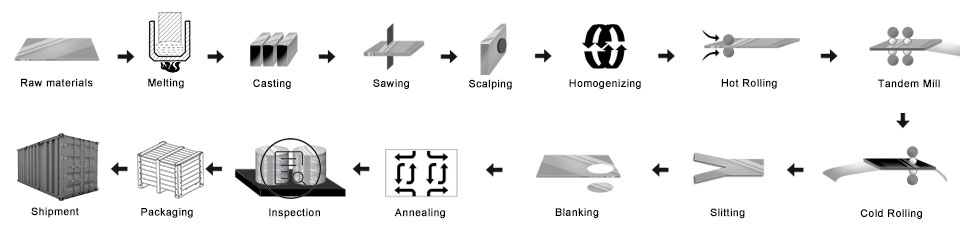
- Préparer les alliages maîtres
- Four de fusion: mettre les alliages dans le four de fusion
- Lingot d'aluminium moulé D.C.: Pour fabriquer le lingot mère
- Broyer le lingot d'aluminium: pour rendre la surface et le côté lisses
- Four de chauffage
- Laminoir à chaud: fait la bobine mère
- Laminoir à froid: la bobine mère a été roulée selon l'épaisseur que vous souhaitez acheter
- Processus de poinçonnage: deviens la taille que tu veux
- Four de recuit: changer d'humeur
- Inspection finale
- Emballage: caisse en bois ou palette en bois
- Livraison
Contrôle de qualité
Assurance L'inspection ci-dessous sera effectuée dans la production.
- un. détection de rayons—RT;
- b. test par ultrasons—Utah;
- c. Test de particules magnétiques-MT;
- d. tests d'intrusion-PT;
- e. détection de défauts par courants de Foucault-ET
1) Soyez exempt de taches d'huile, Bosse, Inclusion, Rayures, Tache, Décoloration d'oxyde, Pauses, Corrosion, Marques de rouleau, Traces de saleté, et autres défauts qui gêneront l'utilisation.
2) Surface sans ligne noire, coupe nette, tache périodique, défauts d'impression au rouleau, comme d'autres normes de contrôle interne de gko.
Emballage de disques en aluminium:
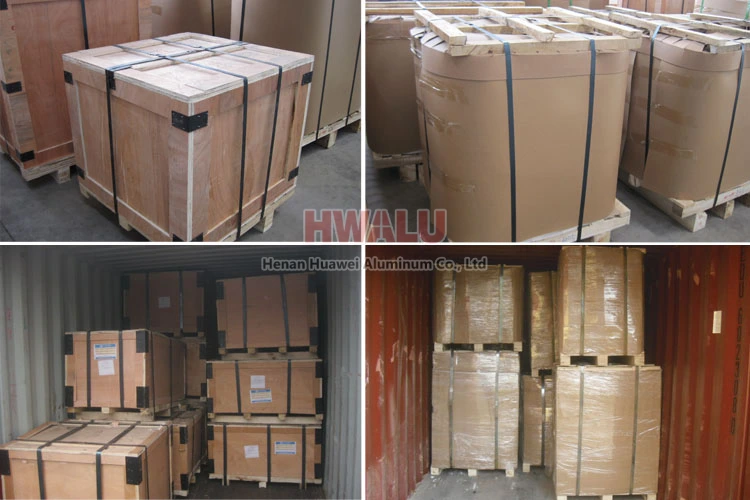
Les cercles en aluminium peuvent être emballés selon les normes d'exportation, recouvrir de papier kraft et de film plastique. Enfin, le rond en aluminium est fixé sur une palette en bois/caisse en bois.
- Placer le côté séchoir du cercle en aluminium, garder les produits secs et propres.
- Utilisez du papier plastique propre, emballer le cercle en aluminium, garder une bonne étanchéité.
- Utilisez le papier peau de serpent, emballer la surface du papier plastique, garder une bonne étanchéité.
- Suivant, il y a deux façons d'emballer: L’emballage de palettes en bois est une solution, en utilisant le papier croustillant emballant la surface; Une autre façon est l'emballage dans des caisses en bois, en utilisant la caisse en bois emballant la surface.
- Enfin, poser la ceinture en acier sur la surface de la caisse en bois, garder la solidité et la sécurité de la boîte en bois.
Cercle en aluminium de Henan Huawei Aluminium. répondre à la norme d'exportation. Le film plastique et le papier brun peuvent être recouverts selon les besoins des clients. De plus, une caisse en bois ou une palette en bois est adoptée pour protéger les produits contre les dommages lors de la livraison. Il existe deux types d'emballage, qui sont les yeux contre le mur ou les yeux vers le ciel. Les clients peuvent choisir l'un ou l'autre pour leur commodité. En général, il y a 2 tonnes dans un seul colis, et chargement 18-22 tonnes dans un conteneur 1×20′, et 20-24 tonnes dans un conteneur 1×40′.
Pourquoi nous choisir?
Pour évoluer avec son temps, HWALU continue d'introduire des équipements et des techniques de pointe pour améliorer sa compétitivité. Adhérez toujours à la philosophie d'entreprise de la qualité en tant que centre et client d'abord, fournir des produits de la série de cercles de disques en aluminium de la plus haute qualité dans toutes les régions du monde. Plus …

