1050 Panelas circulares de alumínio: Solução de alumínio de alta pureza para fabricação de utensílios de cozinha modernos
EU. Introdução: O material fundamental e o núcleo termodinâmico da fabricação de panelas
Na ferozmente competitiva indústria de fabricação de utensílios de cozinha, a escolha do material base não é mais apenas uma questão de custo; determina diretamente o produto final eficiência térmica, vida útil, formando taxa de rendimento, e competitividade do mercado. Confrontado com os consumidores’ múltiplas demandas por “antiaderente,” “leve,” e “aquecimento rápido,” os engenheiros de materiais devem encontrar o equilíbrio ideal entre as propriedades físicas e a estabilidade química dos metais. Entre os diversos materiais metálicos utilizados na produção de utensílios de cozinha, 1050 Círculos de Alumínio tornaram-se o material de base preferido para fabricantes globais de utensílios de cozinha devido à sua extrema condutividade térmica próxima ao alumínio puro, excelente desempenho de estampagem profunda, e características de processamento altamente econômicas.
Com o crescimento contínuo da procura global por produtos leves, energeticamente eficiente, e panelas duráveis, especialmente na Ásia e nos mercados emergentes, os fabricantes preferem cada vez mais usar 1050 círculos de alumínio para produzir:
- Woks Chineses & Frigideiras:Aproveitando suas propriedades de rápida condução de calor.
- Estoques & Panelas: Contando com suas excelentes capacidades de estampagem profunda.
- Corpos para panelas de pressão:Exigindo estabilidade sob alta pressão.
- Panela elétrica de arroz & Forros para panelas de pressão:Superfícies exigentes propícias ao revestimento e distribuição uniforme de calor.
- Vários utensílios de cozinha: Como chaleiras, vaporizadores, etc..
Graças à sua pureza de alumínio de até 99.5%, 1050 os círculos de alumínio são particularmente adequados para processos de grande deformação exigidos na fabricação moderna de utensílios de cozinha, como Poder giratório, Estampagem em vários estágios, e Desenho Profundo—técnicas-chave para a fabricação de panelas modernas de formato complexo.
 1050 círculo de alumínio
II. O que é 1050 Panelas circulares de alumínio?
1050 Panelas circulares de alumínio referem-se especificamente a discos circulares de alumínio fabricados a partir do 1050 liga de alumínio, uma forma de produto semiacabado projetada especificamente para a produção de panelas e utensílios de cozinha.
“1050” pertence às ligas de alumínio da série 1xxx, cuja principal característica é o alumínio comercialmente puro. Suas propriedades de material atendem totalmente às necessidades especiais de fabricação de utensílios de cozinha:
- Pureza de alumínio extremamente alta (≥99,5%): Isso implica máxima condutividade elétrica e térmica.
- Excelente ductilidade: Permite que o material seja esticado em formas complexas sem fraturar.
- Excelente resistência à corrosão:Desempenho estável quando em contato com alimentos e detergentes.
- Não magnético & Inodoro:Garantir a segurança alimentar.
A composição química típica de 1050 alumínio inclui:
- Mínimo 99.5% Conteúdo de alumínio, com o restante sendo vestígios de ferro, silício, e outros elementos.
Devido à sua textura relativamente macia (especialmente no temperamento O) e forte capacidade de formação, 1050 os círculos de alumínio são amplamente utilizados em processos de fabricação de panelas que exigem deformação plástica severa:
- Desenho Profundo:Esticando um disco plano nas paredes verticais do vaso.
- Fiação:Fabricação de fundos de panela hemisféricos (por exemplo, woks chineses) através de rotação e extrusão de alta velocidade.
- Formação de estiramento
- Anodizando:Formando uma camada de óxido duro por meio de eletrólise para aumentar a resistência ao desgaste.
- Compatibilidade com revestimento antiaderente:Servindo como substrato ideal para PTFE (Teflon) ou revestimentos cerâmicos.
Em comparação com materiais de panelas de aço com baixo teor de carbono ou aço inoxidável, 1050 círculos de alumínio oferecem aproximadamente um terço do peso e quase dez vezes a difusividade térmica, melhorando diretamente a experiência culinária do usuário e a utilização de energia.
III. Análise aprofundada da composição química e segurança alimentar
Alta pureza é a maior vantagem de 1050 alumínio na fabricação de panelas, diz respeito não apenas ao desempenho físico, mas também diretamente relacionado ao Segurança em contato com alimentos.
| Elemento |
Conteúdo típico (%) |
Análise Funcional Aprofundada |
| Alumínio (Al) |
≥99,5 |
Metal básico.Quanto maior a pureza, quanto mais elétrons livres houver, resultando em um maior coeficiente de condutividade térmica, aquecimento mais rápido, e distribuição de calor mais uniforme. Simultaneamente, o alumínio de alta pureza implica um risco extremamente baixo de migração de metais pesados, em total conformidade com FDA e GB 4806.9 padrões de materiais em contato com alimentos. |
| Ferro (Fé) |
≤0,40 |
Impureza Primária. Tipicamente existe como fases de Al₃Fe semelhantes a agulhas em alumínio puro. O Fe apropriado pode aumentar a temperatura de recristalização, mas quantidades excessivas reduzem a ductilidade e aumentam o risco de rachaduras durante a estampagem profunda. |
| Silício (E) |
≤0,25 |
Controle de Impurezas.Deve ser rigorosamente controlado. O Si reduz a tenacidade e a soldabilidade do alumínio e tende a causar envelhecimento durante a anodização. |
| Cobre (Cu) |
≤0,05 |
Estritamente limitado.Embora o Cu possa aumentar a força, reduz significativamente a resistência à corrosão (causando facilmente corrosão por pite, especialmente em alimentos ácidos) e é prejudicial ao corpo humano. Por isso, o alumínio para panelas deve controlar estritamente o teor de cobre. |
| Manganês (Mn) |
≤0,05 |
Adições de rastreamento para fortalecimento de soluções sólidas, mas presente em quantidades muito baixas em 1050. |
| Magnésio (mg) |
≤0,05 |
Elemento de fortalecimento de traços. |
| Zinco (Zn) |
≤0,05 |
Controla o conteúdo de impurezas para evitar corrosão intergranular. |
| Titânio (De) |
≤0,03 |
Refinador de grãos. Evita grãos grossos durante fundição e laminação a quente, garantindo uniformidade microestrutural. |
O alto teor de alumínio garante excelente condutividade térmica e trabalhabilidade, formando a base para que os utensílios de cozinha respondam rapidamente às mudanças de calor.
4. Fluxo do Processo de Fabricação: Do lingote de alumínio ao molde para panelas
Produzir círculos de alumínio para panelas de alta qualidade é um projeto de engenharia de sistemas envolvendo metalurgia, termodinâmica, e controle mecânico de precisão.
Fusão & Fundição
Tudo começa com lingotes de alumínio A00 de alta pureza.
- Derretimento de matérias-primas: Lingotes de alumínio e sucata compatível são alimentados em um forno reverberatório para fusão.
- Ajuste de composição de liga: Ajuste preciso de oligoelementos de acordo com 1050 padrões.
- Desgaseificação & Purificação: Nitrogênio ou argônio é soprado através do fundido para remover o hidrogênio (evitando furos mais tarde) e filtros cerâmicos são usados para remover inclusões.
- Fundição Contínua ou Fundição Semi-Contínua (Elenco DC): Transformando alumínio líquido em lajes planas, controlando as taxas de resfriamento para obter grãos finos.
Laminação a Quente
A laje fundida sofre escalpelamento (fresagem de superfície) para remover óxidos superficiais antes de entrar na fase de laminação a quente.
- Propósito:Esmagamento da estrutura dendrítica grosseira formada durante a fundição em altas temperaturas, eliminando porosidade interna e poros, e melhorando o tamanho do grão.
- Vantagens:Círculos de alumínio laminado a quente possuem melhor desempenho de estampagem profunda e isotropia (propriedades mecânicas uniformes em todas as direções), tornando-os o material de base preferido para panelas de alta qualidade para evitar estiramento irregular.
Laminação a Frio
A bobina laminada a quente passa por laminação a frio de múltiplas passagens para redução de espessura.
- Controle de Espessura:A espessura típica das panelas varia de 0.5 milímetros – 6.0 milímetros.
- Controle de qualidade de superfície:A laminação a frio produz uma superfície mais lisa, adequado para anodização subsequente ou revestimento fino, embora possa existir tensão residual interna.
Corte circular
Processamento de grandes folhas ou bobinas de alumínio em peças circulares precisas.
- Processo:Usando matrizes de corte de alta precisão, Puncionadeiras CNC, ou máquinas de corte circular totalmente automáticas.
- Requisitos de precisão: As bordas cortadas devem ser lisas e sem rebarbas, e as tolerâncias dimensionais devem ser mínimas. Isso minimiza a ocorrência de “brinco” (enrugamento das bordas) durante a estampagem profunda, melhorando significativamente as taxas de rendimento e a qualidade da aparência.
Tratamento térmico de recozimento
O alumínio laminado a frio tem alta dureza devido ao endurecimento por trabalho e não pode ser usado diretamente para estampagem profunda.
- Processo: Recozimento de recristalização a 350°C-450°C.
- Resultado: Restaura a suavidade (O-temperamento) e ductilidade do material, permitindo-lhe suportar deformações de estiramento severas sem rachar.

V. Análise aprofundada das principais características de desempenho de 1050 Círculos de Alumínio
Excelente condutividade térmica
Este é o maior ponto de venda de 1050 alumínio para panelas e é determinado pela sua essência física.
- Coeficiente de Condutividade Térmica:Aproximadamente 237 C/(m·K), muito superior ao aço inoxidável (aprox.. 16 C/(m·K)) e ferro fundido (aprox.. 50 C/(m·K)).
- Análise de vantagem:
- Aquecimento extremamente rápido: O curto tempo de resposta térmica economiza tempo e energia de cozimento.
- Distribuição Uniforme de Temperatura:Devido à alta difusividade térmica, a diferença de temperatura no fundo da panela é mínima, reduzindo significativamente a queimadura causada pelo superaquecimento local (Pontos quentes).
- Controle preciso de temperatura:Resposta rápida a mudanças no poder de fogo, adequado para técnicas de culinária chinesa, como refogar.
Desempenho superior de estampagem profunda
1050 o alumínio tem uma alta taxa de alongamento (Alongamento > 35%).
- Aplicativo: Permite que os fabricantes produzam corpos de vasos profundos (por exemplo, potes de estoque, forros de panela de pressão) com uma alta taxa de estiramento em uma única operação, sem estrangulamentos ou rachaduras.
- Limitar proporção de desenho (LDR): O alumínio de alta pureza normalmente tem um alto LDR, o que significa que um pote maior pode ser feito a partir de um disco menor, economizando material.
Estrutura Leve
- Comparação de densidade:A densidade do alumínio é apenas 2.7 g/cm³, um terço do ferro.
- Experiência do usuário: Mesmo woks ou caldeirões de grande diâmetro permanecem leves, facilitando o refogado, manuseio, e lavar, especialmente adequado para grupos de usuários femininos e idosos.
Excelente resistência à corrosão
- Filme de Óxido Natural: O alumínio gera rapidamente um óxido de alumínio denso (Al₂O₃) filme no ar. Esta camada é quimicamente estável e protege o metal subjacente de oxidação ou corrosão adicional.
- Fortalecimento de Superfície:Através de tratamento de anodização, a espessura da camada de óxido pode ser aumentada de alguns mícrons para dezenas de mícrons, melhorando significativamente a resistência ao desgaste e à corrosão ácida/alcalina, prolongando assim a vida útil dos utensílios de cozinha.
Bom acabamento superficial
- Características: 1050 o alumínio é macio e fácil de polir mecanicamente ou quimicamente.
- Aplicativo:Adequado para polimento de espelho (Acabamento espelhado, para vasos decorativos de alta qualidade), acabamento escovado (Acabamento escovado, para panelas modernas de estilo minimalista), e como camada base para revestimentos antiaderentes, proporcionando forte adesão ao revestimento.
VI. Tabela de Especificações Técnicas
| Item |
Especificação típica & Descrição |
| Designação de liga |
1050 (Al ≥ 99.5%) |
| Temperamento |
Ó (Macio, para estampagem profunda) / H12 (1/4 Duro) / H14 (Meio difícil) |
| Faixa de espessura |
0.5 milímetros – 6.0 milímetros (Personalizável, tolerância ±0,02 mm) |
| Faixa de diâmetro |
100 milímetros – 1200 milímetros (Cobrindo panelas pequenas em woks grandes) |
| Tratamento de superfície |
Acabamento do moinho / Pré-polido / Revestido a óleo para prevenção de ferrugem |
| Método de processamento |
Laminado a quente (Preferido para estampagem profunda) / Laminado a Frio |
| Alongamento |
≥35% (O-temperamento) |
| Resistência à tracção |
65–95 MPa |
| Método de embalagem |
Paletes de madeira fumigada padrão de exportação + Papel à prova de umidade + Papel kraft + Filme extensível |
VII. Aplicação Panorama de 1050 Círculos de Alumínio
Frigideiras & Woks
- Demanda:Condução de calor rápida, leve, curvatura natural.
- Adequação: O excelente desempenho de fiação de 1050 círculos de alumínio os tornam ideais para a fabricação de fundos curvos de woks chineses, permitindo rápida acumulação e dissipação de calor.
Panelas & Vaporizadores
- Demanda:Forte capacidade de estampagem profunda, estabilidade estrutural, aquecimento uniforme.
- Adequação: Utilizando seu alto alongamento, corpos de vasos profundos são formados por meio de trefilação em vários estágios, com risco mínimo de deformação.
Panelas de Pressão
- Demanda: O material deve suportar ciclos térmicos sob alta temperatura e pressão, com rápida condução de calor para evitar superaquecimento local.
- Adequação: 1050 a boa condutividade térmica do alumínio garante distribuição uniforme de calor dentro da panela, trabalhando com o design do anel de vedação para garantir a segurança no cozimento.
Panelas internas da panela de arroz
- Demanda:Superfície lisa, fácil adesão do revestimento, condução de calor uniforme, à prova de ferrugem.
- Adequação:Círculos de alumínio com têmpera O, após anodização dura, oferecem alta dureza superficial e estética, tornando-os uma escolha popular para revestimentos de panelas de arroz de alta qualidade.
Outros utensílios de cozinha
Inclui amplamente chaleiras de alumínio, formas para assar, panelas de pizza, vaporizadores, tampas de panela, etc., aproveitando sua fácil conformabilidade e natureza leve.

VIII. Comparação aprofundada entre círculos de alumínio laminados a quente e laminados a frio
| Recurso |
Círculos de alumínio laminado a quente |
Círculos de alumínio laminado a frio |
Análise comparativa aprofundada |
| Desempenho de estampagem profunda |
Excelente |
Média |
O material laminado a quente sofreu recristalização, resultando em baixa anisotropia e brinco mínimo durante a estampagem profunda. |
| Acabamento de superfície |
Médio (Pode ter ligeira escala) |
Excelente (Suave & Multar) |
Superfícies laminadas a frio são melhores para polimento espelhado ou escovação fina; superfícies laminadas a quente geralmente requerem fresagem ou decapagem. |
| Estrutura Interna |
Estável, sem tensão residual |
Estresse residual do endurecimento do trabalho |
O material laminado a quente é mais adequado para peças repuxadas profundas para evitar deformação pós-processamento. |
| Resistência a rachaduras |
Excelente |
Bom |
O caldo laminado a quente é a escolha preferida para utensílios de cozinha de alta qualidade (por exemplo, núcleos de alumínio em potes revestidos multicamadas). |
| Posicionamento de mercado |
Panelas de última geração / Exportar |
Panelas padrão / Utensílios |
Os círculos laminados a quente são geralmente um pouco mais caros, mas geralmente têm um custo geral mais baixo devido às taxas de rendimento mais altas. |
Conclusão: Para fabricação de panelas de alta qualidade, especialmente produtos repuxados, Círculos de alumínio laminado a quentegeralmente são a primeira escolha.
IX. Vantagens Competitivas de 1050 Círculos de alumínio para panelas
Material econômico
- Baixo custo de matéria-prima:Em comparação com cobre e aço inoxidável, o alumínio é abundante na crosta terrestre, oferecendo maior competitividade de preços.
- Alta eficiência de processamento: O alumínio macio é fácil de cortar e moldar, com baixo desgaste da ferramenta e altas velocidades de estampagem, adequado para produção automatizada em massa.
- Adequado para produção em massa: Capaz de atender às enormes demandas de pedidos de gigantes de eletrodomésticos (por exemplo, Midea, Supor, Panasonic).
Excelente desempenho de processamento
O material tem um desempenho excepcionalmente bom nos seguintes processos:
- Fiação CNC:Formação suave sem efeito casca de laranja.
- Desenho Hidráulico:Taxa de desenho de limite alto.
- Estampagem de Precisão:Alta precisão dimensional.
- Polimento de espelho:Alto brilho, sem furos.
- Anodização Dura:Filme de óxido uniforme e denso.
Eficiência Energética
Usar panelas de alumínio para cozinhar pode economizar aproximadamente 30%-50% no consumo de gás ou eletricidade em comparação com panelas de ferro fundido. Isto representa uma economia significativa de custos para cozinhas comerciais e uso doméstico a longo prazo., alinhando-se com as tendências globais de economia de energia.
Reciclabilidade
O alumínio é 100% reciclável, e a energia consumida na reciclagem é apenas 5% do necessário para a produção de alumínio primário. O uso de panelas de alumínio está alinhado com o ESG global (Ambiental, Social, e Governança) padrões e benefícios construção de imagem verde corporativa.
X. Opções de tratamento de superfície: Aprimoramento duplo de função e estética
Para aumentar a durabilidade e a estética, círculos de alumínio para panelas podem passar por vários tratamentos de superfície:
Anodizando
- Princípio: Gerando uma camada cerâmica dura de óxido de alumínio na superfície do alumínio por meio de eletrólise.
- Efeitos:
- A dureza superficial pode chegar a HV300-500, perto de safira, tornando-o resistente ao desgaste e a riscos.
- Forma uma densa camada de óxido que nunca descasca, seguro e não tóxico.
- Pode ser tingido em várias cores (por exemplo, preto anodizado duro, ouro, bronze) para elevar a qualidade do produto.
Revestimento antiaderente
- Processo:Pulverização de PTFE (Teflon) ou revestimentos cerâmicos, geralmente em conjunto com um primer.
- Efeitos:
- Tensão superficial muito baixa, evitando que os alimentos grudem, permitindo uma cozinha mais saudável com menos óleo.
- Fácil de limpar, limpando sujeira sem esforço.
Polimento
- Efeitos:
- Polimento de espelho:Brilhante como um espelho, altamente decorativo, comum em panelas ocidentais de alta qualidade.
- Polimento/escovação mecânica: Alcançando uma textura de fio fina fosca ou brilhante, apresentando um estilo industrial moderno.
XI. Tendências de mercado e perspectivas de desenvolvimento da indústria
A indústria global de fabricação de utensílios de cozinha está se concentrando nas seguintes direções:
- Design leve: Reduzindo o peso dos utensílios de cozinha sem sacrificar a resistência, atendendo sociedades envelhecidas e consumidoras.
- Economia de energia de alta eficiência:Desenvolvendo estruturas compostas de fundo (por exemplo, alumínio + revestimento de aço inoxidável ou bases compostas) para melhorar a condutividade magnética e a eficiência térmica em cooktops de indução.
- Produção Ecologicamente Correta: Promover tratamentos de passivação sem cromo e revestimentos ecológicos à base de água para reduzir as emissões de COV durante a produção.
- Sistemas antiaderentes de alto desempenho: Pesquisando mais resistente ao desgaste, Tecnologias de revestimento sem PFOA para prolongar a vida útil dos utensílios de cozinha.
Consequentemente, demanda por alta qualidade 1050 círculos de alumínio continuam a crescer globalmente.
Principais mercados em crescimento:
- Sudeste Asiático: Bases de produção e mercados consumidores em rápido surgimento (por exemplo, Vietnã, Tailândia).
- Médio Oriente:Enorme demanda por potes de alumínio, preferindo designs de fundo grosso.
- Europa: Mercado focado em design ecológico e panelas antiaderentes de alta qualidade.
- Ámérica do Sul & África: Mercados emergentes com alta sensibilidade ao preço.
XII. Conclusão
1050 Os círculos de alumínio são uma das matérias-primas básicas mais importantes na fabricação moderna de utensílios de cozinha. Eles combinam perfeitamente a extrema condutividade térmica proporcionada pela alta pureza do alumínio, excelente capacidade de estampagem profunda, uma estrutura leve, mas durável, boa resistência à corrosão, e custos de processamento altamente competitivos.
Quer se trate de woks e panelas de sopa para cozinhas domésticas ou panelas de pressão e panelas de arroz para cozinhas comerciais, 1050 círculos de alumínio fornecem suporte de desempenho insubstituível. À medida que a indústria de utensílios de cozinha continua a buscar produtos leves, durável, e soluções energeticamente eficientes, 1050 os círculos de alumínio continuarão, sem dúvida, a desempenhar um papel central na produção global de utensílios de cozinha, impulsionando o avanço da cultura culinária.
Perguntas frequentes (Perguntas frequentes)
P: Por que é 1050 alumínio tão popular na fabricação de panelas?
UM:A principal razão reside na sua extrema relação custo-benefício. Oferece excelente condutividade térmica (cozimento rápido, sem manchas queimadas), desempenho de estampagem profunda (capaz de fazer potes profundos), e levepropriedades, enquanto os custos das matérias-primas são muito inferiores aos do aço inoxidável e do cobre, tornando-o ideal para produção industrial em grande escala.
P: Qual a melhor têmpera para círculos de alumínio em panelas?
UM: O-temperamento (Temperamento suave)é o mais comumente usado. Porque a fabricação de corpos de panelas requer deformação por estiramento significativa, O alumínio temperado tem o maior alongamento (>35%), evitando rachaduras durante a estampagem. H14 (meio duro) às vezes é usado para itens rasos, como formas de pizza ou tampas planas.
P: Pode 1050 círculos de alumínio sejam anodizados?
UM:Absolutamente, e os resultados são excelentes. 1050 é um alumínio de alta pureza, e depois da anodização, a camada de filme é uniforme e transparente, tornando-o perfeito para panelas anodizadas ou peças decorativas tingidas, com dureza comparável ao aço inoxidável.
P: Qual é a faixa de espessura comum para círculos de alumínio para panelas? Como devo selecionar?
UM:Normalmente entre 0.5 milímetros e 6.0 milímetros. Placas finas (0.5-1.5milímetros) são usados principalmente para frigideiras pequenas, assadeiras, ou tampas; placas de espessura média (2.0-3.0milímetros) são usados para woks e panelas; placas grossas (4.0-6.0milímetros) são usados para potes de fundo grosso, woks comerciais, ou placas de base compostas para fogões de indução.
P: Qual é a diferença entre círculos de alumínio laminados a quente e laminados a frio? Como devo escolher?
UM:Se você está produzindo panelas de alta qualidade (como panelas fundas ou panelas de pressão), por favor escolha laminado a quente círculos porque sua estrutura interna é mais estável, reduzindo o risco de rachaduras ou enrugamento nas bordas. Se você está produzindo utensílios rasos ou planos (como panelas de pizza ou tampas planas), laminado a frioOs círculos são uma escolha mais econômica devido à sua superfície mais lisa.
Propriedades do círculo de alumínio:
O círculo de alumínio é adequado para muitos mercados, incluindo panelas, indústrias automotiva e de iluminação, etc., graças às boas características do produto:
- Baixa anisotropia, o que facilita o desenho profundo
- Propriedades mecânicas fortes
- Difusão de calor alta e homogênea
- Capacidade de ser esmaltado, coberto por PTFE (ou outros), anodizado
- Boa refletividade
- Alta relação resistência-peso
- Durabilidade e resistência à corrosão
Processo de Círculos de Alumínio
Lingotes/Ligas Mestres — Forno de fusão – Forno de retenção — DC. Rodízio — Laje —- Escalpador — Laminador a Quente – Laminador a Frio – Puncionamento – Forno de Recozimento — Inspeção Final – Embalagem — Entrega
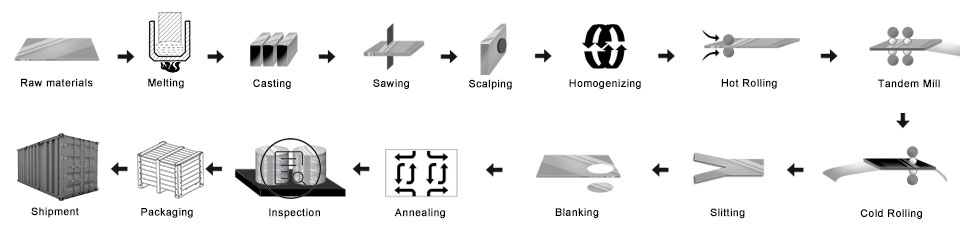
- Prepare as ligas mestres
- Forno de fusão: coloque as ligas no forno de fusão
- Lingote de alumínio fundido DC: Para fazer o lingote mãe
- Fresar o lingote de alumínio: para tornar a superfície e o lado lisos
- Forno de aquecimento
- Laminador a quente: fez a bobina mãe
- Laminador a frio: a bobina mãe foi enrolada conforme a espessura que você deseja comprar
- Processo de perfuração: torne-se do tamanho que você deseja
- Forno de recozimento: mudar o temperamento
- Inspeção final
- Embalagem: caixa de madeira ou palete de madeira
- Entrega
Controle de qualidade
Garantia Abaixo a inspeção será feita na produção.
- um. detecção de raios—TR;
- b. testes ultrassônicos—UT;
- c. Teste de Partículas Magnéticas-MT;
- d. testes de penetração-PT;
- e. detecção de falhas por correntes parasitas-ET
1) Esteja livre de manchas de óleo, Dente, Inclusão, Arranhões, Mancha, Descoloração Óxida, Pausas, Corrosão, Marcas de rolo, Listras de sujeira, e outros defeitos que interferirão no uso.
2) Superfície sem linha preta, limpo, mancha periódica, defeitos de impressão em rolo, como outros padrões de controle interno da gko.
Embalagem de discos de alumínio:
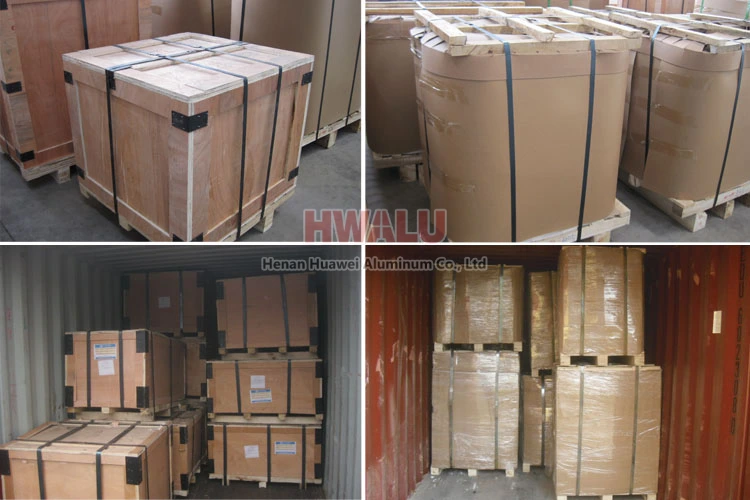
Os círculos de alumínio podem ser embalados de acordo com os padrões de exportação, cobrindo com papel pardo e filme plástico. Finalmente, a Rodada de Alumínio é fixada em um palete de madeira/caixa de madeira.
- Coloque os secadores ao lado do círculo de alumínio, mantenha os produtos secos e limpos.
- Use papel plástico limpo, embale o círculo de alumínio, mantenha uma boa vedação.
- Use o papel de pele de cobra, embale a superfície do papel plástico, mantenha uma boa vedação.
- Próximo, existem duas formas de embalagem: Uma maneira é a embalagem de paletes de madeira, usando o papel crocante embalando a superfície; Outra forma é a embalagem em caixa de madeira, usando a caixa de madeira embalando a superfície.
- Finalmente, coloque a correia de aço na superfície da caixa de madeira, mantendo a solidez e segurança da caixa de madeira.
Círculo de alumínio de Henan Huawei Alumínio. atender ao padrão de exportação. Filme plástico e papel pardo podem ser cobertos de acordo com as necessidades dos clientes. Além do mais, uma caixa de madeira ou palete de madeira é adotada para proteger os produtos contra danos durante a entrega. Existem dois tipos de embalagens, que estão de olho na parede ou de olho no céu. Os clientes podem escolher qualquer um deles para sua conveniência. De um modo geral, há 2 toneladas em um pacote, e carregando 18-22 toneladas em contêiner 1×20′, e 20-24 toneladas em contêiner 1×40′.
Por que nos escolher?
Para acompanhar os tempos, A HWALU continua introduzindo equipamentos e técnicas de última geração para melhorar sua competitividade. Sempre siga a filosofia empresarial de qualidade como centro e cliente em primeiro lugar, fornecer produtos da série de círculo de disco de alumínio da mais alta qualidade para todas as partes do mundo. Mais …

