1050 Aluminum Circle Cookware: Maganin Aluminum mai Tsafta mai Tsafta don Kera Kayan Kayan Abinci na Zamani
I. Shigowa da: Material na Cornerstone da Thermodynamic Core na Masana'antar Cookware
A cikin masana'antar kera kayan girki mai tsananin gasa, Zaɓin kayan tushe ba batun farashi bane kawai; kai tsaye yana ƙayyade samfurin ƙarshe thermal yadda ya dace, Rayuwar Ma'aikata, samar da yawan amfanin ƙasa, da gasa a kasuwa. Fuskanci da masu amfani’ mahara buƙatun ga “rashin sanda,” “mara nauyi,” kuma “sauri dumama,” Dole ne injiniyoyin kayan aiki su nemo madaidaicin ma'auni tsakanin kaddarorin jiki da kwanciyar hankalin sinadarai na karafa. Daga cikin nau'ikan ƙarfe daban-daban da ake amfani da su don samar da kayan dafa abinci, 1050 Aluminum Circlessun zama kayan tushe da aka fi so don masana'antun dafa abinci na duniya saboda matsananciyar zafin zafinsu kusa da tsantsar aluminum, kyakkyawan aikin zane mai zurfi, da halayen sarrafawa masu tsada sosai.
Tare da ci gaba da ci gaban buƙatun duniya don nauyi mai nauyi, makamashi mai inganci, da kayan girki masu ɗorewa, musamman a Asiya da kasuwanni masu tasowa, masana'antun ƙara fi son amfani 1050 aluminum da'irori don samar:
- Sinanci Woks & Frying Pans:Yin amfani da kaddarorin sarrafa zafi mai sauri.
- Hannun Jari & Kayan miya:Dogaro da kyakkyawan damar zane mai zurfi.
- Jikin cooker:Ana buƙatar kwanciyar hankali a ƙarƙashin babban matsin lamba.
- Mai dafa shinkafa shinkafa & Matsakaicin Cooker Liners:Abubuwan da ake buƙata don dacewa da sutura da rarraba zafi iri ɗaya.
- Kayan Abinci Daban-daban:Kamar kettles, masu tururi, da dai sauransu.
Godiya ga tsaftar aluminum har zuwa 99.5%, 1050 da'irar aluminium sun dace musamman don manyan nakasa hanyoyin da ake buƙata a masana'antar dafa abinci na zamani, kamar Ƙarfin Ƙarfi, Stamping Multi-stamping, kuma Zane mai zurfi— mahimmin dabarun kera rikitattun kayan girki na zamani.
 1050 da'irar aluminum
II. Menene 1050 Aluminum Circle Cookware?
1050 Aluminum Circle Cookware musamman yana nufin fayafai na aluminum madauwari da aka ƙera daga cikin 1050 aluminum gami, nau'in samfurin da aka gama da shi wanda aka ƙera musamman don kayan dafa abinci da samar da kayan dafa abinci.
“1050” nasa ne na 1xxx jerin aluminum gami, wanda ainihin halayensa shine aluminium tsantsa na kasuwanci. Kayayyakin kayan sa cikakke suna biyan buƙatu na musamman na masana'antar dafa abinci:
- Tsaftataccen Aluminum Mai Girma (≥99.5%):Wannan yana nuna matsakaicin matsakaicin wutar lantarki da yanayin zafi.
- Kyakkyawan ductility:Yana ba da damar shimfiɗa kayan zuwa rikitattun siffofi ba tare da karyewa ba.
- Babban Juriya na Lalata:Tsayayyen aiki lokacin da ake hulɗa da abinci da kayan wanka.
- Mara Magnetic & Mara wari:Tabbatar da amincin abinci.
A hankula sinadaran abun da ke ciki na 1050 aluminum ya hada da:
- Mafi ƙarancin 99.5% Aluminum abun ciki, tare da ragowar kasancewar adadin ƙarfe, siliki, da sauran abubuwa.
Saboda laushin laushin sa (musamman a cikin O-zafin) da karfi kafa iyawa, 1050 Aluminum da'irori ana amfani da ko'ina a cookware masana'antu tafiyar matakai na bukatar mai tsanani roba nakasawa:
- Zane mai zurfi:Miƙewa faifai lebur cikin ganuwar tukunya a tsaye.
- Juyawa:Manufacturing hemispherical tukunyar gindi (e.g., Sinawa woks) via high-gudun juyawa da extrusion.
- Miqewa Forming
- Anodizing:Ƙirƙirar Layer Oxide mai ƙarfi ta hanyar electrolysis don haɓaka juriya na lalacewa.
- Daidaita Rufin Mara Sanda:Yin hidima azaman madaidaicin substrate don PTFE (Teflon) ko rufin yumbu.
Idan aka kwatanta da ƙananan ƙarfe na carbon ko bakin karfe kayan dafa abinci, 1050 Da'irar aluminium suna ba da kusan kashi ɗaya bisa uku na nauyi da kusan sau goma na ɗumbin yanayin zafi, kai tsaye haɓaka ƙwarewar dafa abinci na mai amfani da amfani da kuzari.
Iii. Bincike mai zurfi na Haɗin Sinadari da Amincewar Abinci
Babban tsarki shine mafi girman amfani 1050 aluminum a cikin masana'antar dafa abinci, game da ba kawai aikin jiki ba har ma da alaƙa kai tsaye Amintaccen Tuntun Abinci.
| Kashi |
Abun ciki na al'ada (%) |
Binciken Ayyuka Mai Zurfafa |
| Aluminum (Al) |
≥99.5 |
Base Metal.Mafi girman tsarki, mafi free electrons akwai, yana haifar da mafi girman ma'auni na thermal Conductivity, sauri dumama, da ƙarin rarraba zafi iri ɗaya. A lokaci guda, tsaftataccen aluminium yana nuna ƙananan haɗarin ƙaura mai nauyi, cikakken yarda da FDA da GB 4806.9 ma'aunin kayan tuntuɓar abinci. |
| Iron (Fe) |
≤0.40 |
Rashin Nasara Na Farko.Yawanci yana kasancewa azaman allura-kamar Al₃Fe a cikin tsantsar aluminum. Dacewar Fe na iya ƙara yawan zafin jiki na recrystallization, amma yawan kima yana rage ductility kuma yana ƙara haɗarin fashewa yayin zane mai zurfi. |
| Siliki (Kuma) |
≤0.25 |
Tsaftace Tsafta.Dole ne a sarrafa shi sosai. Si yana rage taurin aluminum da weldability kuma yana haifar da launin toka yayin anodizing. |
| Copper (Tare da) |
≤0.05 |
Strictly Limited.Kodayake Cu na iya ƙara ƙarfi, yana rage girman juriya na lalata (cikin sauƙin haifar da lalata, musamman a cikin abinci na acidic) kuma yana cutar da jikin mutum. Don haka, Kayan girki-aji aluminum dole ne tsananin sarrafa abun cikin tagulla. |
| Manganese (Mn) |
≤0.05 |
Gano abubuwan da aka tara don ingantaccen bayani mai ƙarfi, amma ba a cikin ƙananan yawa a cikin 1050. |
| Magnesium (Mg) |
≤0.05 |
Abun ƙarfafa alama. |
| Zinc (Zn) |
≤0.05 |
Yana sarrafa abun ciki na ƙazanta don hana lalata intergranular. |
| Titanium (Kai) |
≤0.03 |
Mai tace hatsi.Yana hana ƙayyadaddun hatsi yayin simintin gyare-gyare da kuma birgima mai zafi, tabbatar da daidaituwar microstructural. |
Babban abun ciki na aluminum yana tabbatar da kyakkyawan yanayin zafi da aiki, kafa tushen kayan dafa abinci don amsa da sauri ga canje-canjen zafi.
IV. Gudun Tsarin Masana'antu: Daga Aluminum Ingot zuwa Cookware Blank
Samar da da'irar aluminum mai inganci mai inganci aikin injiniyan tsarin ne wanda ya haɗa da ƙarfe, thermodynamics, da madaidaicin iko na inji.
Narkewa & Yin wasan kwaikwayo
Komai yana farawa da tsaftataccen A00 aluminum ingots.
- Raw Material narkewa:Aluminum ingots da tarkace masu dacewa ana ciyar da su a cikin tanderu mai jujjuyawa don narkewa..
- Daidaita Haɗin Gishiri:Daidaitaccen daidaita abubuwan ganowa bisa ga 1050 ƙa'idoji.
- Degassing & Tsarkakewa:Nitrogen ko argon ana hura ta cikin narke don cire hydrogen (hana pinholes daga baya) kuma ana amfani da matatun yumbu don cire abubuwan da aka haɗa.
- Ci gaba da yin Simintin gyare-gyare ko Semi-Cigabawa Ci gaba (DC Casting):Canza ruwa aluminum zuwa lebur slabs, sarrafa yawan sanyaya don samun hatsi mai kyau.
Hot Rolling
Ƙwararren simintin gyaran kafa yana fuskantar fatar fuska (niƙa saman) don cire oxides saman kafin shigar da matakin mirgina mai zafi.
- Nufi:Murkushe ƙaƙƙarfan tsarin dendritic da aka kafa yayin yin simintin gyare-gyare a yanayin zafi mai girma, kawar da porosity na ciki da pores, da inganta girman hatsi.
- Yan fa'idohu:Da'irar aluminium masu zafi suna da mafi kyawun aikin zane mai zurfi da isotropy (uniform inji Properties a duk kwatance), sanya su kayan tushe da aka fi so don manyan kayan dafa abinci don hana mikewa mara kyau.
Sanyi mirgina
Nada mai zafi mai zafi yana jurewa juzu'in sanyi mai yawa don rage kauri.
- Kula da kauri:Yawan kauri na kayan dafa abinci ya fito daga 0.5 mm - 6.0 mm.
- Kula da ingancin saman:Juyawa mai sanyi yana haifar da mafi santsi, dace da m anodizing ko lafiya shafi, kodayake damuwa na ciki na iya kasancewa.
Yankan Da'irar
Sarrafa manyan zanen aluminum ko coils zuwa madaidaitan madauwari.
- Tsari:Yin amfani da babban madaidaicin blanking ya mutu, Injin naushi CNC, ko cikakken atomatik da'irar yankan inji.
- Madaidaicin Bukatun:Dole ne gefuna da aka yanke su zama santsi ba tare da bursu ba, kuma haƙurin juzu'i dole ne ya zama kaɗan. Wannan yana rage abin da ya faru “'yan kunne” (baki wrinkling) a lokacin zane mai zurfi, muhimmanci inganta yawan amfanin ƙasa rates da kuma bayyanar ingancin.
Maganin Ciwon Zafi
Aluminum mai sanyi yana da tauri mai ƙarfi saboda ƙarfin aiki kuma ba za a iya amfani da shi don zane mai zurfi kai tsaye ba.
- Tsari:Recrystallization annealing a 350°C-450°C.
- Sakamako:Yana dawo da laushi (O-sa fushi) da ductility na kayan, kyale shi yayi tsayin daka mai tsanani ba tare da fasa ba.

V. Zurfin Bincike na Babban Halayen Aiki na 1050 Aluminum Circles
Madalla da Thermal Conductivity
Wannan shine babban wurin siyarwa na 1050 aluminum don kayan dafa abinci kuma an ƙaddara ta ainihin ainihin sa.
- Thermal Conductivity Coefficient:Kimanin 237 W /(MİI K), bakin karfe ya wuce gona da iri (kusan. 16 W /(MİI K)) da jefa baƙin ƙarfe (kusan. 50 W /(MİI K)).
- Binciken Amfani:
- Matsanancin Saurin Dumama:Shortan gajeren lokacin amsawar thermal yana adana lokacin dafa abinci da kuzari.
- Rarraba Zazzabi Uniform:Saboda high thermal diffusivity, bambancin zafin jiki a fadin kasan tukunya kadan ne, yana rage ƙuna sosai sakamakon zafi na gida (Wuraren Zafi).
- Madaidaicin Kula da Zazzabi:Amsa da sauri ga canjin wutar lantarki, dace da dabarun dafa abinci na kasar Sin kamar soyawa.
Babban Ayyukan Zane Mai zurfi
1050 aluminum yana da babban elongation kudi (Tsawaitawa > 35%).
- Aikace -aikace:Yana ba masu sana'a damar samar da jikin tukunya mai zurfi (e.g., hannun jari, matsi mai dafa abinci) tare da babban rabo na zane a cikin aiki guda ɗaya ba tare da wuya ko fashe ba.
- Iyakance Rabo Zane (LDR):Aluminum mai tsafta yawanci yana da babban LDR, ma'ana ana iya yin tukunya mafi girma daga ƙaramin diski, kayan ceto.
Tsari Mai Sauƙi
- Kwatancen Maɗaukaki:Yawan aluminum ne kawai 2.7 g / cm³, kashi ɗaya bisa uku na ƙarfe.
- Kwarewar mai amfani:Hatta woks masu girman diamita ko tukwane masu nauyi suna da nauyi, sauƙaƙe soya, handling, da wanka, musamman dacewa ga ƙungiyoyi masu amfani da mata da tsofaffi.
Kyakkyawan Juriya na Lalata
- Halitta Oxide Film:Aluminum cikin hanzari yana haifar da ƙarancin aluminum oxide (Tono ani) fim a cikin iska. Wannan Layer ɗin yana da ƙarfi ta hanyar sinadarai kuma yana kare ƙarfen da ke ƙarƙashinsa daga ƙarin oxidation ko lalata.
- Ƙarfafawar Sama:Ta hanyar maganin anodizing, za a iya ƙara kauri na oxide daga ƴan microns zuwa ɗimbin microns, sosai inganta lalacewa da acid/alkali lalata juriya, don haka tsawaita rayuwar girki.
Kyakkyawan Ƙarshen Sama
- Halaye: 1050 aluminum yana da taushi kuma mai sauƙin gogewa ta hanyar injiniya ko gogewa.
- Aikace -aikace:Dace da gogewar madubi (Kammala madubi, don manyan tukwane na ado), goge goge (Gama goge goge, na zamani minimalist style cookware), kuma a matsayin tushe mai tushe don suturar da ba ta da tsayi, samar da karfi shafi mannewa.
Vi. Teburin Ƙididdiga na Fasaha
| Abu |
Musamman Musamman & Bayani |
| Ƙwaƙwalwar Ƙwaƙwalwa |
1050 (Al ≥ 99.5%) |
| Mai fushi |
O (Mai taushi, don zane mai zurfi) / H12 (1/4 Mai wuya) / H14 (Rabin Hard) |
| Kewayon farin ciki |
0.5 mm - 6.0 mm (Mai iya daidaitawa, haƙuri ± 0.02mm) |
| Tsawon Diamita |
100 mm - 1200 mm (Rufe ƙananan kwanon rufi zuwa manyan woks) |
| Maganin Sama |
Mill Gama / An riga an goge shi / Mai rufin mai don rigakafin tsatsa |
| Hanyar sarrafawa |
Hot Rolled (An fi so don zane mai zurfi) / Cold Rolled |
| Tsawaitawa |
≥35% (O-sa fushi) |
| Ƙarfin Ƙarfin Ƙarfi |
65- 95 MPa |
| Hanyar Marufi |
Fitar da madaidaicin fakitin katako + Takarda mai hana danshi + Takarda Kraft + Fim ɗin mikewa |
VII. Aikace-aikacen Panorama na 1050 Aluminum Circles
Frying Pans & Woks
- Bukatar:Fast zafi conduction, mara nauyi, na halitta curvature.
- Dace:Kyakkyawan aikin juyi na 1050 Aluminum da'irori ya sa su dace don kera kasan mai lankwasa na woks na kasar Sin, yana ba da damar tarawa da sauri na zafi da tarwatsewa.
Tukwane dafa abinci & Masu shayarwa
- Bukatar:Ƙarfin zurfin zane mai ƙarfi, kwanciyar hankali na tsari, dumama uniform.
- Dace:Yin amfani da high elongation, Giwa mai zurfi ana yin su ta hanyar zane mai matakai da yawa, tare da ƙarancin nakasawa.
Matsakaicin masu dafa abinci
- Bukatar:Dole ne abu ya yi tsayin daka na zagayowar zafi a ƙarƙashin babban zafin jiki da matsa lamba, tare da saurin zafin zafi don hana zafi na gida.
- Dace: 1050 Kyakkyawan yanayin zafi na aluminum yana tabbatar da rarraba zafi iri ɗaya a cikin tukunya, Yin aiki tare da ƙirar zoben hatimi don tabbatar da amincin dafa abinci.
Rice Cooker Tukwane na ciki
- Bukatar:Smooth surface, sauƙi shafi mannewa, uniform zafi conduction, tsatsa-hujja.
- Dace:O-temper aluminum da'irori, bayan tsananin anodizing, bayar da high surface taurin da aesthetics, sanya su zama zaɓi na yau da kullun don manyan injin dafa abinci na shinkafa.
Sauran Kayan Abinci
Ya ƙunshi kettle aluminum, yin burodi molds, pizza pans, masu tururi, tukunyar murfi, da dai sauransu., yin amfani da sauƙin tsari da yanayin nauyi.

VIII. Kwatanta Zurfin Zurfin Tsakanin Zafafan Bidi'o'in Aluminum Da'irori
| Siffar |
Zafafan Girgizar Aluminum |
Cold Rolled Aluminum Circles |
Ƙididdigar Kwatancen Zurfafa |
| Ayyukan Zane Mai Zurfi |
M |
Matsakaicin |
An yi recrystallization abu mai zafi, yana haifar da ƙananan anisotropy da ƙananan kunne a lokacin zane mai zurfi. |
| Ƙarshen Sama |
Matsakaici (Zai iya samun ɗan ma'auni) |
M (Santsi & Lafiya) |
Filaye masu sanyi sun fi kyau don goge madubi ko goge mai kyau; Filaye masu zafi yawanci suna buƙatar niƙa ko tsintsa. |
| Tsarin ciki |
Barga, babu saura damuwa |
Ragowar damuwa daga taurin aiki |
Abun da aka yi da zafi ya fi dacewa da sassan da aka zana mai zurfi don hana lalacewa bayan aiwatarwa. |
| Tsagewar Juriya |
M |
Yayi kyau |
Hannun da aka yi birgima mai zafi shine zaɓin da aka fi so don manyan kayan dafa abinci (e.g., aluminum cores a cikin Multi-Layer clad tukwane). |
| Matsayin Kasuwa |
Cututtuka na tsayi / fitarwa |
Daidaitaccen kayan dafa abinci / Kayan aiki |
Da'irori masu zafi yawanci sun fi ɗan tsada amma galibi suna da ƙarancin farashi gaba ɗaya saboda ƙimar yawan amfanin ƙasa. |
Ƙarshe:Don ƙera kayan dafa abinci masu inganci, musamman samfurori masu zurfi, Zafafan Girgizar AluminumGabaɗaya su ne zaɓi na farko.
IX. Amfanin Gasa na 1050 Aluminum Circles don Cookware
Kayayyakin Tasirin Kuɗi
- Ƙananan Raw Material Cost:Idan aka kwatanta da jan karfe da bakin karfe, aluminum yana da yawa a cikin ɓawon ƙasa, miƙa mafi girma farashin gasa.
- Babban Haɓakawa:Aluminum mai laushi yana da sauƙin yanke da tsari, tare da ƙananan lalacewa na kayan aiki da saurin stamping, dace da taro sarrafa kansa samar.
- Dace da Mass Production:Mai ikon biyan manyan buƙatun ƙattai na kayan aiki (e.g., Midiya, Zata, Panasonic).
Kyakkyawan Ayyukan Gudanarwa
Kayan yana aiki na musamman da kyau a cikin matakai masu zuwa:
- Farashin CNC:Santsi mai laushi ba tare da tasirin kwasfa na orange ba.
- Zane Na Ruwa:High iyaka zane rabo.
- Daidaitaccen Tambari:Daidaitaccen girman girma.
- Gyaran madubi:High haske, babu pinholes.
- Hard Anodizing:Uniform da kuma m oxide fim.
Ingantaccen Makamashi
Yin amfani da kayan dafa abinci na aluminum don dafa abinci na iya ajiyewa kusan 30%-50% a cikin iskar gas ko wutar lantarki idan aka kwatanta da tukwanen simintin ƙarfe. Wannan yana wakiltar babban tanadin farashi don dafa abinci na kasuwanci da amfanin gida na dogon lokaci, daidaitawa da yanayin ceton makamashi na duniya.
Sake dawowa
Aluminum ne 100% sake yin amfani da su, kuma makamashin da ake cinyewa a sake amfani da shi shine kawai 5% na abin da ake buƙata don samar da aluminum na farko. Yin amfani da kayan dafa abinci na aluminum ya yi daidai da ESG na duniya (Muhalli, Zamantakewa, da Mulki) ma'auni da fa'idodin ginin hoto koren kamfani.
X. Zaɓuɓɓukan Jiyya na Sama: Dual Haɓaka Ayyukan Aiki da Ƙawatarwa
Don haɓaka karko da ƙayatarwa, cookware aluminum da'ira iya sha daban-daban surface jiyya:
Anodizing
- Ka'ida:Ƙirƙirar daɗaɗɗen yumbu mai ƙarfi na aluminum oxide akan saman aluminum ta hanyar lantarki.
- Tasiri:
- Taurin saman na iya kaiwa HV300-500, kusa da saffir, sanya shi lalacewa da juriya.
- Yana samar da wani kashin oxide mai yawa wanda baya kwaɓewa, mai lafiya da mara guba.
- Ana iya rina su da launuka daban-daban (e.g., m anodized baki, zinariya, tagulla) don haɓaka darajar samfur.
Rufin Mara Sanda
- Tsari:Farashin PTFE (Teflon) ko rufin yumbu, yawanci a hade tare da firamare.
- Tasiri:
- Ƙananan tashin hankali, hana abinci tsayawa, ba da damar dafa abinci mafi koshin lafiya tare da ƙarancin mai.
- Sauƙi don tsaftacewa, yana share matsuguni da wahala.
goge baki
- Tasiri:
- Gyaran madubi:Shiny kamar madubi, sosai ado, gama gari a cikin manyan kayan dafa abinci na yamma.
- Gyaran Injini/Brushing:Samun kyakkyawan matte ko launi mai haske, gabatar da salon masana'antu na zamani.
XI. Hanyoyin Kasuwa da Ci gaban Masana'antu
Masana'antar kera kayan dafa abinci ta duniya tana mai da hankali kan waɗannan kwatance:
- Zane mara nauyi:Rage nauyin girki ba tare da sadaukar da ƙarfi ba, cin abinci ga al'ummomin da suka tsufa da mata masu amfani.
- Ajiye Makamashi Mai Girma:Haɓaka sifofin haɗaɗɗiyar ƙasa (e.g., aluminum + bakin karfe cladding ko composite bases) don inganta haɓakar maganadisu da ingancin zafi akan dafaffen dafa abinci.
- Samar da Daidaiton Muhalli:Haɓaka jiyya na wucewa na kyauta na chrome da kayan kwalliyar ruwa masu dacewa don rage fitar da VOC yayin samarwa.
- Tsarukan Maɗaukakin Ƙarfafa Mara Sanda:Binciken ƙarin lalacewa, Fasahar shafa mara-kyau ta PFOA don tsawaita tsawon rayuwar girki.
Sakamakon haka, bukatar high quality- 1050 da'irorin aluminum na ci gaba da girma a duniya.
Manyan Kasuwannin Ci Gaba:
- Kudu maso gabashin Asiya:Sansanin masana'antu da kasuwanni masu tasowa masu tasowa cikin sauri (e.g., Vietnam, Tailandia).
- Gabas ta Tsakiya:Babban buƙatun tukwane na aluminum, fi son zane-zane mai kauri.
- Turai:Kasuwa ta mai da hankali kan ƙirar eco da manyan kayan dafa abinci marasa sanda.
- Kudancin Amurka & Afirka:刚需 kasuwanni masu tasowa tare da azancin farashi.
XII. Ƙarshe
1050 Aluminum Circles suna ɗaya daga cikin mahimman albarkatun tushe a masana'antar dafa abinci na zamani. Suna haɗa daidai da matsananciyar ƙayyadaddun yanayin zafi wanda babban tsaftar aluminium ya kawo, m zurfin zane iyawa, tsari mai sauƙi amma mai dorewa, mai kyau lalata juriya, da tsadar farashin sarrafawa.
Ko tukwane da tukwane da miya don dafa abinci na gida ko injin dafa abinci da injin dafa abinci na shinkafa don dafa abinci na kasuwanci., 1050 Aluminum da'irori suna ba da tallafin aikin da ba za a iya maye gurbinsa ba. Yayin da masana'antar dafa abinci ke ci gaba da neman nauyi, m, da mafita masu amfani da makamashi, 1050 Babu shakka da'irar aluminum za su ci gaba da taka muhimmiyar rawa wajen samar da kayan dafa abinci na duniya, tuki da ci gaban dafuwa al'adu.
Tambayoyin da ake yawan yi (FAQs)
Q: Me yasa 1050 aluminum ya shahara sosai a masana'antar girki?
A:Babban dalilin yana cikin ta matsanancin tsada-tasiri. Yana bayar da kyaututtuka thermal watsin (dafa abinci da sauri, babu wuraren konewa), aikin zane mai zurfi (iya yin tukwane mai zurfi), kuma mara nauyidukiya, yayin da farashin albarkatun kasa ya yi ƙasa da bakin karfe da tagulla, sanya shi manufa domin manyan-sikelin masana'antu samar.
Q: Mene ne mafi kyawun zafin da'irar aluminum?
A: O-sa fushi (Taushi mai laushi)shine mafi yawan amfani. Domin masana'anta tukunyar jirgi na buƙatar gagarumin nakasar mikewa, O-temper aluminum yana da mafi girman elongation (>35%), hana tsagewa yayin yin tambari. H14 (rabin-wuya) wani lokaci ana amfani da shi don abubuwan da aka zana marasa zurfi kamar pans pizza ko lebur lebur.
Q: Can 1050 aluminum da'irori zama anodized?
A:Lallai, kuma sakamakon yana da kyau. 1050 aluminum ne mai tsafta, da kuma bayan anodizing, Layer fim ɗin daidai ne kuma a bayyane, yin shi cikakke don kayan dafa abinci masu tauri ko rinayen kayan ado, tare da taurin kwatankwacin bakin karfe.
Q: Menene kewayon kauri na gama gari don da'irar aluminum na cookware? Yaya zan zaba?
A:Yawanci tsakanin 0.5 mm kuma 6.0 mm. Ƙananan faranti (0.5-1.5mm) yawanci ana amfani da su don ƙananan kwanon frying, tiren yin burodi, ko murfi; faranti masu kauri (2.0-3.0mm) ana amfani da woks da tukwane; faranti masu kauri (4.0-6.0mm) ana amfani da tukwane mai kauri mai kauri, kasuwanci woks, ko hadaddiyar faranti don girki na induction.
Q: Menene bambanci tsakanin da'irar aluminum mai zafi da sanyi? Yaya zan zaba?
A:Idan kuna samarwa babban kayan dafa abinci mai zurfi mai zurfi (kamar tukwane mai zurfi ko tukunyar matsa lamba), don Allah zaɓi zafi birgimada'irori saboda tsarinsu na ciki ya fi kwanciyar hankali, rage haɗarin ɓarkewar gefen ko wrinkling. Idan kuna samarwa kayan aiki mara zurfi ko lebur (kamar pans na pizza ko lebur tukunya), sanyi birgimada'irori sun fi zaɓin tattalin arziki saboda mafi santsi.
Abubuwan da'irar aluminum:
Aluminum da'irar ya dace da kasuwanni da yawa, ciki harda kayan girki, masana'antun kera motoci da haske, da dai sauransu., godiya ga kyawawan halaye na samfur:
- Ƙananan anisotropy, wanda ke sauƙaƙe zane mai zurfi
- Strong inji Properties
- Babban kuma daidaituwa zafi watsawa
- Ability don enameled, rufe da PTFE (ko kuma wasu), anodized
- Kyakkyawan tunani
- Babban ƙarfi-zuwa nauyi rabo
- Dorewa da juriya ga lalata
Tsarin Da'irar Aluminum
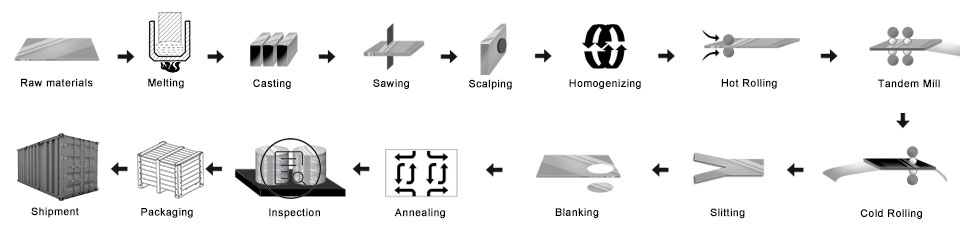
Ingot/Master Alloys — Narka wutar makera - Riƙe wutar makera — D.C. Caster — Wuri —- Scalper — Dandalin Rolling Hot - Mill Rolling Mill - Punching - Annealing Furnace — Binciken Ƙarshe - Shiryawa — Bayarwa
- Shirya babban allo
- Narka wutar makera: sanya gami a cikin tanderun narkewa
- DC watsa aluminum aluminum: Don sa uwar ingot
- Rufe murfin aluminum: don yin farfajiya da gefen santsi
- Tanderun dumama
- Abin birgima: ya sanya uwar murɗa
- Colding mirgina niƙa: an mirgine murfin uwa azaman kaurin da kuke son siyan
- Tsarin bugun: zama girman abin da kuke so
- Ƙona wutar makera: canza yanayin
- Binciken ƙarshe
- Shiryawa: akwati na katako ko pallet na katako
- Bayarwa
Ikon Kulawa
Tabbatarwa da ke ƙasa dubawa za a yi a cikin samarwa.
- a. gano hasken haske—RT;
- b. ultrasonic gwaji—UT;
- c. Gwajin Magnetic Barbashi-MT;
- d. gwajin shiga-PT;
- e. Gano aibi na yanzu-ET
1) Ka zama 'yanci daga Tabon Mai, Haushi, Hada, Scratches, Tabo, Discoloration Oxide, Karya, Lalata, Roll Marks, Datti Streaks, da sauran lahani waɗanda zasu kawo cikas ga amfani.
2) Surface ba tare da layin baki ba, yanke tsafta, tabo na lokaci-lokaci, nadi bugu lahani, kamar sauran ka'idojin Gudanar da ciki na gko.
Aluminum fayafai shiryawa:
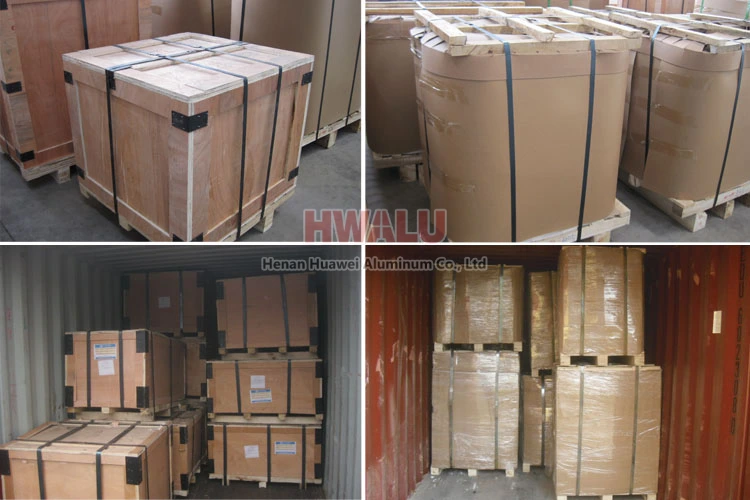
Za a iya tattara da'irar aluminium ta ma'aunin fitarwa, sutura da takarda mai launin ruwan kasa da fim ɗin filastik. Daga karshe, An gyara zagaye na Aluminum a kan katako na katako / katako.
- Sanya driers gefen da'irar aluminum, kiyaye samfuran bushe da tsabta.
- Yi amfani da takarda filastik mai tsabta, shirya da'irar aluminum, kiyaye hatimi mai kyau.
- Yi amfani da takardan fatar maciji, shirya saman takardar filastik, kiyaye hatimi mai kyau.
- Na gaba, akwai hanyoyi guda biyu na marufi: Hanya ɗaya ita ce marufi na katako, ta amfani da ɓawon burodin da ke tattara saman; Wata hanya ita ce marufi na katako, ta yin amfani da akwati na katako shirya farfajiya.
- Daga karshe, sanya bel na karfe a saman akwatin katako, kiyaye akwatin katako da sauri da tsaro.
Aluminum da'irar Henan Huawei Aluminum. hadu da fitarwa. Za a iya rufe fim ɗin filastik da takarda mai launin ruwan kasa a bukatun abokan ciniki. Menene ƙari, ana ɗaukar akwati na katako ko pallet na katako don kare samfuran daga lalacewa yayin bayarwa. Akwai nau'i biyu na marufi, waxanda suke ido da bango ko ido ga sama. Abokan ciniki za su iya zaɓar ɗayansu don dacewarsu. Gabaɗaya magana, akwai 2 ton a cikin fakiti ɗaya, da loading 18-22 ton a cikin akwati 1 × 20., kuma 20-24 ton a cikin akwati 1 × 40..
Me yasa zabar mu?
Domin tafiya da zamani, HWALU yana ci gaba da gabatar da yanayin kayan fasaha da fasaha don haɓaka gasa. Koyaushe riko da falsafar kasuwanci na inganci azaman cibiyar da abokin ciniki na farko, don samar da mafi kyawun samfuran da'irar diski na aluminum zuwa duk sassan duniya. Kara …

