Marin 5052 Cercle en aluminium
1. Introduction
L'industrie maritime évolue dans l'un des environnements les plus exigeants au monde. Exposition constante à l'eau de mer, humidité élevée, et les températures fluctuantes nécessitent des matériaux qui dépassent de loin les spécifications industrielles standards. Dans ce contexte, Marin 5052 Cercle en aluminium est devenu un matériau essentiel pour les constructeurs navals et les fabricants d'équipements océaniques..
Contrairement aux disques en aluminium standards, la qualité marine 5052 cette variante atteint un équilibre optimal entre propriétés légères et résistance exceptionnelle à la corrosion. Cet article explore pourquoi 5052 les cercles en aluminium sont devenus la solution privilégiée pour la construction navale moderne, se concentrer sur leurs performances, composition chimique, procédés de fabrication, et des applications diverses.
 Emballage en tôle ronde en aluminium
2. Qu'est-ce que Marine 5052 Cercle en aluminium?
2.1 Aperçu de 5052 Alliage d'aluminium
5052 l'alliage d'aluminium appartient au Al-Mg (Aluminium-Magnésium) série en alliages d'aluminium inoxydables, largement reconnu pour sa résistance élevée à la fatigue et son excellente résistance à la corrosion atmosphérique marine. L'ajout de magnésium (Mg) est le facteur clé: il fournit un renforcement significatif de la solution solide tout en conservant une bonne ductilité. En tant que “qualité marine” matériel, il est spécialement conçu pour résister à une exposition à long terme à l'eau de mer sans souffrir d'une dégradation rapide.
2.2 Définition de “Qualité marine”
Le terme “Qualité marine” implique le respect de normes strictes pour une utilisation océanique, incluant spécifiquement:
- Résistance au brouillard salin: Capacité à supporter l'érosion à long terme par brouillard salin sans piqûres ni fissures.
- Adaptabilité environnementale: Maintenir des performances stables dans la chaleur tropicale ou dans les eaux polaires glaciales.
- Normes de certification: Généralement requis pour répondre aux exigences de classification d'organismes tels que DNV (La Veritas norvégienne) ou ABS (Bureau américain de la navigation).
2.3 Formulaire de produit: Cercle en aluminium
Un cercle en aluminium (également connu sous le nom de disque en aluminium) est un appartement, flan circulaire découpé à partir de bobines ou de feuilles plus grandes, spécialement conçu pour l'estampage, emboutissage profond, et procédés de filage. Les diamètres courants vont de 100 mm à 1200 mm, s'adaptant à différentes tailles de composants avec une grande polyvalence.
3. Avantages de base en matière de performances
3.1 Résistance exceptionnelle à la corrosion de l’eau de mer
La caractéristique remarquable de 5052 l'alliage d'aluminium est sa résistance à la corrosion par l'eau de mer. Alors que de nombreux métaux succombent à la corrosion galvanique dans les environnements marins, 5052 forme une couche d'oxyde protectrice qui protège le matériau du noyau. Ainsi, il convient parfaitement aux coques et composants constamment immergés ou éclaboussés par l'eau de mer.
3.2 Résistance moyenne à élevée
Avec une résistance à la traction allant de 210 à 260 MPa, 5052 offre un rapport résistance/poids plus élevé que le 1xxx, 3xxx, et même certains alliages d'aluminium de la série 5xxx. Cette intégrité structurelle garantit que les navires restent stables et durables sous la contrainte des vagues et des charges..
3.3 Formabilité supérieure
Marin 5052 les cercles en aluminium présentent d'excellentes propriétés d'emboutissage et de filage. Ils peuvent être transformés en formes complexes (comme les ustensiles de cuisine, abat-jour, ou têtes de réservoir) sans plis ni fissures, ce qui est crucial pour la fabrication de composants marins de précision.
3.4 Bonne soudabilité
Marin 5052 L'alliage d'aluminium démontre une compatibilité exceptionnelle avec TIG (Gaz inerte de tungstène)et MOI (Gaz inerte métallique)soudure. Contrairement à certains alliages à haute résistance, 5052 conserve l'essentiel de sa résistance dans la zone affectée thermiquement après le soudage, assurer l'intégrité des coutures soudées.
3.5 Avantage léger
Remplacement des composants en acier par 5052 les cercles en aluminium peuvent réduire le poids total d'un navire de 50 à 60 %. Cette réduction de poids se traduit directement par une meilleure efficacité énergétique, des vitesses de navigation plus élevées, et une capacité de charge utile accrue.
 1050 cercle en aluminium
4. Composition chimique & Propriétés mécaniques
4.1 Analyse de la composition chimique
La composition chimique précise de 5052 l'alliage d'aluminium lui confère sa qualité de qualité marine, comme détaillé ci-dessous:
| Élément |
Contenu (%) |
Rôle |
| Magnésium (Mg) |
2.2 – 2.8 |
Agent de renforcement primaire; améliore la résistance à la corrosion. |
| Chrome (Cr) |
0.15 – 0.35 |
Améliore la résistance à la corrosion (surtout contre les piqûres) et soudabilité. |
| Fer (Fe) |
≤ 0.4 |
Élément d'impureté; maintenu bas pour maintenir la ductilité. |
| Silicium (Et) |
≤ 0.25 |
Élément d'impureté; contrôlé pour éviter les effets négatifs sur le soudage. |
| Aluminium (Al) |
Reste |
Métal de base offrant légèreté et conductivité. |
4.2 Propriétés mécaniques
| Propriété |
Valeur |
Importance |
| Résistance à la traction |
210 – 260 MPa |
Résistance à la rupture sous tension. |
| Limite d'élasticité |
≥ 130 MPa |
Point à partir duquel le matériau commence à se déformer de façon permanente. |
| Élongation |
≥ 12% |
Capacité à s'étirer avant la fracture (ductilité). |
| Densité |
2.68 g/cm³ |
Beaucoup plus léger que l'acier (7.85 g/cm³). |
4.3 Caractères communs (États)
- Ô (Recuit): Entièrement adouci, offrant une formabilité optimale; idéal pour les processus d'emboutissage profond.
- H32: Durci et stabilisé; allie résistance et formabilité.
- H34: Résistance supérieure au H32, avec une formabilité légèrement inférieure.
- H111: Légèrement écroui à partir de l'état recuit.
5. Processus de production
Pour assurer “Qualité marine” qualité, la production de 5052 les cercles en aluminium suivent un processus rigoureux:
- Sélection des matières premières: Utilisation de lingots d'aluminium primaire de haute pureté.
- Fusion & Fonderie: Contrôle précis de la teneur en magnésium et en chrome de la masse fondue.
- Laminage à chaud & Laminage à froid: Obtenir l'épaisseur souhaitée tout en assurant une structure de grain uniforme.
- Suppression (Estampillage): Utilisation de presses de haute précision pour couper des bobines d'aluminium en cercles parfaits avec un minimum de bavures.
- Traitement de recuit: Élimination des contraintes internes grâce à un traitement thermique pour améliorer la formabilité.
- Traitement de surface & Inspection: Assurer une propreté “Finition du moulin” surface, exempt de taches d'huile, rayures, ou des traces d'oxydation.
 La production de pièces rondes en aluminium est terminée.
6. Spécifications du produit
| Article |
Spécification |
| Alliage |
5052 |
| Caractère |
Ô, H32, H34, H111, H112 |
| Épaisseur |
0.5 mm – 6.0 mm |
| Diamètre |
100 mm – 1200 mm |
| Surface |
Finition du moulin (Personnalisé en relief/enduit disponible) |
| Normes |
ASTMB209, DANS 573, GB/T 3880 |
Spécifications étendues: Contrôle strict de la tolérance d'épaisseur (±0,02 mm) et la précision du diamètre assure une adaptation parfaite lors de l'emboutissage automatisé.
7. Principales applications dans le secteur maritime & Industrie
7.1 Construction navale & Fabrication artisanale
- Composants de coque: Utilisé pour les coques de petits bateaux et les pontons.
- Équipements de pont: Couvertures, écoutilles, et supports structurels.
- Structures intérieures: Cloisons et meubles légers.
7.2 Équipement océanique
- Plateformes offshore: Passerelles, panneaux, et logements.
- Traitement de l'eau de mer: Réservoirs de stockage et composants du système de filtration.
7.3 Batterie de cuisine marine & Conteneurs
- Équipement de cuisine: Pots, des casseroles, et vaisselle utilisés sur les navires (non toxique, antirouille).
- Appareils à pression: Petits réservoirs de stockage de liquides.
7.4 Éclairage & Équipement électronique
- Éclairage marin: Réflecteurs et boîtiers pour phares et feux de pont grâce à une bonne conductivité thermique.
7.5 Transport & Industrie générale
- Camions-citernes: Utilisé pour les têtes de réservoir de carburant (excellente formabilité).
- Équipement anticorrosion: Dispositifs de stockage de produits chimiques en milieu humide.
8. Comparaison concurrentielle
5052 contre. 3003 Cercle en aluminium
| Fonctionnalité |
5052 Qualité marine |
3003 Qualité standard |
| Résistance à la corrosion |
Excellent (Marin) |
Bien (Général) |
| Force |
Plus haut |
Moyen |
| Soudabilité |
Excellent |
Bien |
| Coût |
Plus haut |
Inférieur |
5052 contre. 5083 Plaque d'aluminium
5083 la plaque d'aluminium est la “bête de somme” pour les grandes coques de navires (plaques épaisses). En revanche, 5052 les cercles en aluminium conviennent mieux aux résistances moyennes, filé, ou des pièces estampées - scénarios où l'épaisseur extrême de 5083 est inutile et coûteux.

9. Normes internationales & Certifications
Marin de haute qualité 5052 les cercles en aluminium doivent être conformes aux normes et certifications suivantes:
- ASTMB209 (Spécification standard pour les tôles et plaques d'aluminium et d'alliage d'aluminium).
- DANS 573 (Norme européenne pour les alliages d'aluminium corroyés).
- DNVGL / Certification ABS: Souvent requis pour une utilisation directe dans la construction navale.
- OIN 9001 (Certification du système de gestion de la qualité).
10. Analyse de marché & Tendances
La poussée mondiale en faveur du transport maritime écologique stimule la demande de matériaux légers comme 5052 alliage d'aluminium. Avec des réglementations de plus en plus strictes sur les émissions de carburant, les constructeurs navals remplacent progressivement l'acier par des cercles en aluminium pour construire des matériaux plus légers, des navires plus efficaces. En plus, l'expansion des parcs éoliens offshore crée une nouvelle demande de composants en aluminium résistant à la corrosion.
11. Comment choisir une marine de haute qualité 5052 Cercles en aluminium
Lors de l'approvisionnement de ces produits, considérer les points suivants:
- Vérifier le certificat de test de l'usine (MTC): Assurez-vous que la teneur en magnésium se situe entre 2,2 % et 2,8 %.
- Qualité des surfaces: Optez pour des produits au fini brillant et à la surface lisse, exempt de rayures ou de fissures sur les bords.
- Précision dimensionnelle: Vérifier la planéité; les cercles déformés peuvent causer des problèmes avec les matrices d'estampage.
- Fiabilité des fournisseurs: Choisissez des fournisseurs ayant une expérience en matière d'exportation de matériaux de qualité marine et une connaissance des exigences spécifiques en matière d'emballage. (par ex., emballage navigable) pour éviter les dommages pendant le transport.
12. Foire aux questions (FAQ)
T1: Sont 5052 cercles en aluminium adaptés au contact direct avec l'eau de mer?
A1: Oui. Ils possèdent une excellente résistance à la corrosion par l’eau de mer et conviennent au matériel marin, coques, et structures côtières.
T2: Est 5052 ou 5083 mieux pour la construction navale?
A2: 5083 est généralement utilisé pour les plaques structurelles épaisses (coques). 5052 offre une formabilité supérieure et convient mieux aux pièces formées, composants estampés, et structures légères.
T3: Peut 5052 les cercles en aluminium doivent être soudés?
A3: Oui. C'est l'un des alliages d'aluminium les plus adaptés au soudage TIG ou MIG..
T4: Quelles trempes sont disponibles pour la qualité marine 5052?
A4: Les tempéraments courants incluent O (doux), H32, et H34. La température O est la meilleure pour l'emboutissage profond, tandis que H32/H34 offrent une résistance plus élevée.
Q5: Fait 5052 rouille en alliage d'aluminium?
A5: Non. L'aluminium ne rouille pas (former de l'oxyde de fer) comme l'acier. Dans des environnements extrêmes, il peut subir une corrosion par piqûres, mais ce ne sera pas le cas “rouiller.”
13. Conclusion
Marin 5052 Aluminum Circle représente la référence en matière de composants estampés et filés dans l'industrie maritime. Sa combinaison unique de conception légère, résistance exceptionnelle à la corrosion, et ses propriétés mécaniques stables en font un matériau indispensable pour la construction navale moderne et l'ingénierie océanique..
À mesure que l'industrie maritime évolue vers des appareils plus légers, des navires plus économes en énergie, l'exigence de qualité 5052 les cercles d'aluminium continueront de croître. En sélectionnant certifié, fabriqué avec précision 5052 cercles en aluminium, les fabricants peuvent garantir la durabilité, sécurité, et hautes performances de leurs produits pour applications marines.
Propriétés du cercle en aluminium:
Le cercle en aluminium convient à de nombreux marchés, y compris les ustensiles de cuisine, industries de l'automobile et de l'éclairage, etc., grâce aux bonnes caractéristiques du produit:
- Faible anisotropie, ce qui facilite l'emboutissage profond
- Fortes propriétés mécaniques
- Diffusion thermique élevée et homogène
- Possibilité d'être émaillé, recouvert de PTFE (ou d'autres), anodisé
- Bonne réflectivité
- Rapport résistance/poids élevé
- Durabilité et résistance à la corrosion
Processus de cercles en aluminium
Lingots/alliages maîtres — Four de fusion – Four de maintien — DC. Roulette — Dalle —- Scalpeur — Laminoir à chaud – Laminoir à froid – Poinçonnage – Four de recuit — Inspection finale – Emballage — Livraison
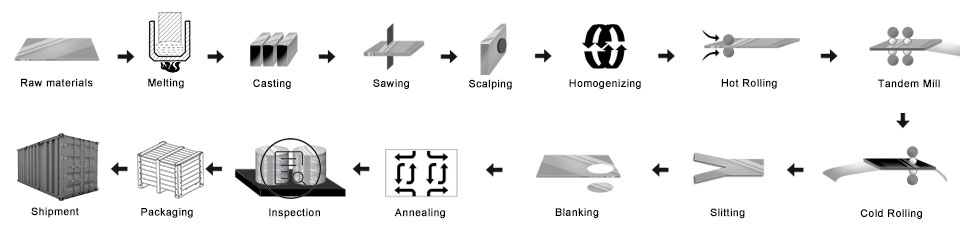
- Préparer les alliages maîtres
- Four de fusion: mettre les alliages dans le four de fusion
- Lingot d'aluminium moulé D.C.: Pour fabriquer le lingot mère
- Broyer le lingot d'aluminium: pour rendre la surface et le côté lisses
- Four de chauffage
- Laminoir à chaud: fait la bobine mère
- Laminoir à froid: la bobine mère a été roulée selon l'épaisseur que vous souhaitez acheter
- Processus de poinçonnage: deviens la taille que tu veux
- Four de recuit: changer d'humeur
- Inspection finale
- Emballage: caisse en bois ou palette en bois
- Livraison
Contrôle de qualité
Assurance L'inspection ci-dessous sera effectuée dans la production.
- un. détection de rayons—RT;
- b. test par ultrasons—Utah;
- c. Test de particules magnétiques-MT;
- d. tests d'intrusion-PT;
- e. détection de défauts par courants de Foucault-ET
1) Soyez exempt de taches d'huile, Bosse, Inclusion, Rayures, Tache, Décoloration d'oxyde, Pauses, Corrosion, Marques de rouleau, Traces de saleté, et autres défauts qui gêneront l'utilisation.
2) Surface sans ligne noire, coupe nette, tache périodique, défauts d'impression au rouleau, comme d'autres normes de contrôle interne de gko.
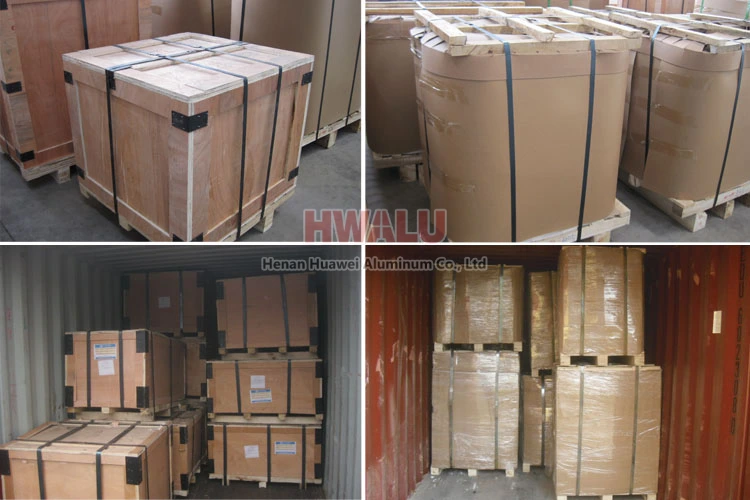
Emballage de disques en aluminium:
Les cercles en aluminium peuvent être emballés selon les normes d'exportation, recouvrir de papier kraft et de film plastique. Enfin, le rond en aluminium est fixé sur une palette en bois/caisse en bois.
- Placer le côté séchoir du cercle en aluminium, garder les produits secs et propres.
- Utilisez du papier plastique propre, emballer le cercle en aluminium, garder une bonne étanchéité.
- Utilisez le papier peau de serpent, emballer la surface du papier plastique, garder une bonne étanchéité.
- Suivant, il y a deux façons d'emballer: L’emballage de palettes en bois est une solution, en utilisant le papier croustillant emballant la surface; Une autre façon est l'emballage dans des caisses en bois, en utilisant la caisse en bois emballant la surface.
- Enfin, poser la ceinture en acier sur la surface de la caisse en bois, garder la solidité et la sécurité de la boîte en bois.
Cercle en aluminium de Henan Huawei Aluminium. répondre à la norme d'exportation. Le film plastique et le papier brun peuvent être recouverts selon les besoins des clients. De plus, une caisse en bois ou une palette en bois est adoptée pour protéger les produits contre les dommages lors de la livraison. Il existe deux types d'emballage, qui sont les yeux contre le mur ou les yeux vers le ciel. Les clients peuvent choisir l'un ou l'autre pour leur commodité. En général, il y a 2 tonnes dans un seul colis, et chargement 18-22 tonnes dans un conteneur 1×20′, et 20-24 tonnes dans un conteneur 1×40′.
Pourquoi nous choisir?
Pour évoluer avec son temps, HWALU continue d'introduire des équipements et des techniques de pointe pour améliorer sa compétitivité. Adhérez toujours à la philosophie d'entreprise de la qualité en tant que centre et client d'abord, fournir des produits de la série de cercles de disques en aluminium de la plus haute qualité dans toutes les régions du monde. Plus …

