1100-H111 Industriële pure aluminium hot-gerolde cirkels: Technische specificaties en industriële toepassingen
1100-H111 industriële warmgewalste aluminium cirkels van puur aluminium vormen een basismateriaal in de lichte industriële sectoren. Ze beschikken over een hoge aluminiumzuiverheid, Uitstekende vormbaarheid, en kosteneffectiviteit. Dit artikel onderzoekt hun technische kenmerken, productieprocessen, toepassingen, en prestatievoordelen in detail.

1. Materiaaldefinitie en legeringskenmerken van 1100-H111 aluminium cirkels
1.1 Kerndefinitie en branchepositionering
1100-H111 aluminium cirkels behoren tot de 1xxx-serie industrieel puur aluminium. Ze bevatten minimaal 99.0% aluminium, met sporenlegeringselementen om de verwerkbaarheid te optimaliseren. De H111-temperatuur verwijst naar een toestand van gedeeltelijk uitgloeien na spanningsharding. Dit humeur brengt ductiliteit en matige sterkte in evenwicht, waardoor de aluminium cirkels geschikt zijn voor vormprocessen met lage spanning, zoals stempelen en spinnen.
Momenteel, deze aluminiumcirkels dienen als belangrijke grondstoffen in het fornuis,elektronische behuizingen, decoratieve onderdelen, en verpakking. Hun jaarlijkse mondiale vraag overtreft 300,000 ton, gedreven door de groei van de sectoren lichte industrie en consumptiegoederen.
1.2 Legeringssamenstelling en elementfuncties
De zuiverheid van 1100-H111 aluminium cirkels heeft rechtstreeks invloed op hun prestaties. De onderstaande tabel beschrijft hun standaard chemische samenstelling en de rol van elk element:
| Chemisch element |
Massafractie (%) |
Technische rol in aluminiumcirkels |
| Aluminium (Al) |
≥99,0 |
Biedt basisductiliteit en elektrische geleidbaarheid |
| Koper (Cu) |
≤0,20 |
Verbetert de gemiddelde sterkte zonder de vervormbaarheid te verminderen |
| Ijzer (Fe) |
≤0,70 |
Controleert de korrelgrootte tijdens warmwalsen om broosheid te voorkomen |
| Silicium (En) |
≤0,25 |
Verbetert de warme verwerkbaarheid en vermindert het risico op scheuren |
| Mangaan (Mn) |
≤0,05 |
Minimaliseert intergranulaire corrosie in vochtige omgevingen |
| Zink (Zn) |
≤0,05 |
Voorkomt verkleuring van het oppervlak tijdens opslag |
| Titanium (Van) |
≤0,05 |
Verfijnt gegoten ingotkorrels voor uniform walsen |
Aluminium fungeert als matrixelement, zorgen voor een hoge ductiliteit voor het vormen van de aluminiumcirkels tot complexe vormen. IJzer en silicium werken samen om het hete walsproces – overtollig ijzer – te stabiliseren (>0.70%) grove FeAl3-fasen zouden vormen, terwijl er onvoldoende silicium is (<0.10%) zou het risico op rolscheuren vergroten. Koper voegt een lichte sterkte toe, waardoor de aluminium cirkels bestand zijn tegen kleine vervorming tijdens het hanteren.
2. Technische kernparameters van 1100-H111 warmgewalste aluminium cirkels
1100-H111-aluminiumcirkels vereisen strikte parametercontrole om aan de industriële toepassingsbehoeften te voldoen. De volgende tabel bevat een overzicht van de kritische technische specificaties en hun betekenis:
| Parametercategorie |
Specificatiebereik |
Tolerantie |
Relevantie voor industrieel gebruik |
| Dikte |
1.0–8,0 mm |
±0,05 mm |
Zorgt voor een uniforme wanddikte voor het stempelen van onderdelen |
| Diameter |
50–1500 mm |
±0,1 mm |
Komt overeen met matrijsafmetingen voor kasten en behuizingen |
| Treksterkte |
90–120 MPa |
±5 MPa |
Bestand tegen vervormen onder lage spanning zonder te breken |
| Opbrengststerkte |
35–55 MPa |
±3 MPa |
Voorkomt blijvende vervorming tijdens het hanteren |
| Verlenging (A50) |
25–35% |
±2% |
Maakt diepdraaien van kommen en containers mogelijk |
| Oppervlakteruwheid (Ra) |
0.4–1,6 μm |
±0,2 μm |
Verbetert de hechting van coatings voor decoratieve onderdelen |
| Elektrische geleidbaarheid |
≥61% IACS |
±2% IACS |
Voldoet aan de eisen voor elektrische onderdelen met lage stroomsterkte |
Diktetolerantie is van cruciaal belang voor stempeltoepassingen. Overmatige variatie (>±0,05 mm) zou ongelijke deelwanden veroorzaken, wat leidt tot productdefecten. Diameterprecisie zorgt ervoor dat de aluminium cirkels in standaard mallen passen, het verminderen van materiaalverspilling. Rekwaarden hierboven 25% laat de aluminium cirkels diep draaien - gebruikelijk bij het maken van aluminium kommen met een diepte-diameterverhouding van 1:2.
3. Heetgewalst productieproces van 1100-H111 aluminium cirkels
Het productieproces van 1100-H111 aluminium cirkels omvat meerdere stappen, elk met strikte parametercontrole. Bovendien, elke stap heeft een directe invloed op de prestaties van het eindproduct.
3.1 Gedetailleerde processtroom en belangrijkste parameters
Stap 1: Ingots gieten
- Grondstoffen: 99.7% zuivere aluminium blokken + sporenlegeringselementen (Cu, Fe, En) met 99.9% zuiverheid.
- Smelttemperatuur: 720–750°C, 25-35 minuten vastgehouden om volledig smelten te garanderen.
- Ontgassen: Stikstof wordt in het gesmolten aluminium geïnjecteerd om het waterstofgehalte te verlagen tot ≤0,12 ml/100 gAl.
- Gieten: Semi-continu gieten wordt gebruikt om blokken van Φ500–1000 mm × 3000–6000 mm te produceren. De koelsnelheid wordt geregeld op 12–18°C/min om segregatie te voorkomen.
Stap 2: Homogenisatiebehandeling
- Temperatuur: 480–520°C gedurende 6–8 uur.
- Koeling: Ovenkoeling tot 200°C vóór luchtkoeling tot kamertemperatuur.
- Doel: Elimineert de interne spanning van de staaf, gelijkmatige verdeling van legeringselementen, en verzacht het materiaal voor het rollen.
Stap 3: Heet walsen
- Verwarming: De blokken worden verwarmd tot 400–430 °C en 1,5–2,5 uur bewaard.
- Rollende passen: 5–7 gangen met een vierhoge omkeerbare walserij.
- Reductietarief: Het reductiepercentage voor de eerste doorgang bedraagt 25-30%; daaropvolgende passen zijn elk 15-20%.
- Eindwalstemperatuur: ≥300°C om de ductiliteit te garanderen en koudescheuren te voorkomen.
- Uitvoer van warmgewalste platen: Dikte 3–10 mm, breedte 800–2000 mm, lengte 5000–12000 mm.
Stap 4: Precisieafwerking en vorming
- Koud trimmen: Warmgewalste platen worden bijgesneden om randdefecten te verwijderen (breedtetolerantie ±1 mm).
- Gloeien: Gedeeltelijk gloeien bij 280–320°C gedurende 2–3 uur om H111-temperatuur te bereiken.
- Snijden: Voor het vervaardigen van aluminium cirkels wordt gebruik gemaakt van CNC-ponsen of lasersnijden. De ponssnelheid bedraagt 50–100 stuks per minuut voor kleine diameters (≤200 mm).
- Oppervlaktebehandeling: Optioneel zuur beitsen (om de oxidefilm te verwijderen) of mechanisch polijsten (om de gladheid te verbeteren).
3.2 Procesbeheersingspunten en preventie van veelvoorkomende defecten
- Ingots gieten: Controleer de smelttemperatuur binnen ±10°C om oververhitting te voorkomen (wat aluminiumoxidatie veroorzaakt) of onderverhitting (waardoor ongesmolten onzuiverheden achterblijven).
- Heet walsen: Houd de roldruk in de gaten (200–300 MPa) om bladvervorming te voorkomen; pas de rolsnelheid aan (1.2–2,5 m/s) gebaseerd op dikte om uniforme reductie te garanderen.
- Snijden: Gebruik scherpe stoten (randradius ≤0,02 mm) om bramen op aluminiumcirkels te voorkomen (de braamhoogte moet ≤0,03 mm zijn).
- Gloeien: Vermijd snelle afkoeling na het uitgloeien, omdat dit de materiaalhardheid zou vergroten en de vervormbaarheid zou verminderen.

4. Mechanische prestaties en functionele eigenschappen van 1100-H111 aluminium cirkels
4.1 Mechanische prestatieparameters en aanpassingsvermogen van toepassingen
De mechanische prestaties van 1100-H111 aluminium cirkels komen overeen met de behoeften van toepassingen in de lichte industrie. De onderstaande tabel vergelijkt hun prestaties met andere gangbare aluminiumcirkelkwaliteiten:
| Mechanische index |
1100-H111 Aluminium cirkels |
3003-H14 Aluminium Cirkels (Al-Mn) |
5052-H34 Aluminium cirkels (Al-Mg) |
Toepassingsgeschiktheid |
| Treksterkte |
90–120 MPa |
160–200 MPa |
230–250 MPa |
Onderdelen met lage spanning (bijv., decoratieve deksels) |
| Opbrengststerkte |
35–55 MPa |
130–150 MPa |
180–200 MPa |
Onderdelen die minimale vervorming vereisen |
| Verlenging (A50) |
25–35% |
10–15% |
15–18% |
Diep vormend (bijv., kommen, ondiepe containers) |
| Hardheid (HB) |
25–35 |
45–50 |
70–75 |
Onderdelen die gemakkelijk moeten worden gesneden (bijv., elektronische pakkingen) |
| Elektrische geleidbaarheid |
≥61% IACS |
≥40% IACS |
≥35% IACS |
Elektrische onderdelen met lage stroomsterkte (bijv., eindplaten) |
1100-H111 aluminium cirkels presteren beter dan 3003-H14 en 5052-H34 wat betreft rek, waardoor ze ideaal zijn voor diepvormen. Hun hoge elektrische geleidbaarheid is geschikt voor toepassingen met lage stroomsterkte, zoals LED-koellichamen. Echter, hun lagere sterktelimieten worden gebruikt in scenario's met hoge spanning (bijv., structurele auto-onderdelen).
4.2 Belangrijkste functionele kenmerken en industriële waarde
- Hoge vervormbaarheid: Met verlenging bovenaan 25%, 1100-H111-aluminiumcirkels kunnen gaan draaien, stempelen, en buigen zonder te barsten. Deze eigenschap is van cruciaal belang voor het maken van complex gevormde onderdelen zoals aluminium kookgereideksels.
- Goede elektrische geleidbaarheid: Bij ≥61% IACS, de aluminium cirkels geleiden elektriciteit efficiënt. Ze worden gebruikt in elektrische laagspanningsbehuizingen en klemmenblokken.
- Uitstekende oppervlakteafwerking: Na het polijsten, de aluminium cirkels bereiken een oppervlakteruwheid van Ra ≤0,4 μm. Dit maakt ze geschikt voor decoratieve onderdelen zoals meubelbekleding en bewegwijzering.
- Chemische stabiliteit: De pure aluminiummatrix is bestand tegen milde corrosie door lucht en zoet water. De aluminium cirkels kunnen 3-5 jaar buiten worden gebruikt zonder noemenswaardige oxidatie (met de juiste schoonmaak).
- Lasbaarheid: Ze kunnen worden gelast met behulp van TIG- of MIG-methoden. Lasverbindingen hebben een treksterkte van 70–90 MPa, voldoen aan de eisen voor kleine structurele onderdelen.
5. Industriële toepassingsscenario's van 1100-H111 aluminium cirkels
1100-H111 aluminium cirkels worden breed gebruikt in sectoren van de lichte industrie. Elke toepassing maakt gebruik van specifieke eigenschappen van het materiaal. In de onderstaande tabel worden de belangrijkste toepassingsgebieden en technische vereisten beschreven:
| Industriesector |
Typische producten |
1100-H111 Specificaties aluminium cirkel |
Kernvoordeel |
| Keukengerei |
Aluminium kommen, ondiepe pannen, dekselafdekkingen |
Dikte 1,2–2,5 mm, diameter 100–300 mm, Ra ≤0,8 μm |
Hoge vervormbaarheid voor het spinnen; niet giftig voor contact met voedsel |
| Elektronica |
Warmteafvoeren (LED, kleine chipjes), eindplaten |
Dikte 0,8–1,5 mm, diameter 20–100 mm, geleidbaarheid ≥61% IACS |
Goede thermische/elektrische geleidbaarheid; gemakkelijk snijden |
| Decoratie |
Meubelbekleding, kunst aan de muur, bewegwijzering bases |
Dikte 1,0–3,0 mm, diameter 50–500 mm, gepolijst oppervlak (Ra ≤0,4 μm) |
Uitstekende oppervlakteafwerking voor schilderen/printen |
| Verpakking |
Kleine metalen blikjes (thee, specerijen), doppen van flessen |
Dikte 0,5–1,0 mm, diameter 30–80 mm, lage restolie (≤3mg/m²) |
Lichtgewicht; gemakkelijk af te dichten; niet-reactief met de inhoud |
| Bouw |
Behuizingen voor verlichtingsarmaturen, decoratieve plafondpanelen |
Dikte 1,5–4,0 mm, diameter 150–800 mm, H111 humeur |
Matige kracht; eenvoudig te installeren; corrosiebestendigheid tegen binnenlucht |
5.1 Toepassingsgeval 1: Productie van keukengerei
Een Chinese fabrikant van keukengerei gebruikt 1100-H111 aluminium cirkels om aluminium kommen met een diameter van 200 mm te produceren:
- Cirkelspecificaties: Dikte 1.8 mm, diameter 200 mm, Ra 0.6 urn.
- Verwerkingsstappen: Spinnen (diepte 50 mm) → trimmen → anodiseren (film dikte 10 urn) → polijsten.
- Prestatieresultaten: De kommen zijn bestand tegen 1000 cycli van 80°C waterwassen zonder vervorming. Het geanodiseerde oppervlak is bestand tegen de hechting van voedselolie, het verminderen van de schoonmaaktijd met 40%.
- Kostenvoordeel: 1100-H111 aluminium cirkels kosten 15% minder dan 3003 aluminium cirkels, verlaging van de productiekosten per eenheid met 8%.
5.2 Toepassingsgeval 2: Elektronische koellichamen
Een Koreaans elektronicabedrijf gebruikt 1100-H111 aluminium cirkels voor koellichamen voor LED-lampen:
- Cirkelspecificaties: Dikte 1.2 mm, diameter 50 mm, geleidbaarheid 63% Iacs.
- Verwerkingsstappen: Stempelen (om vinstructuren te creëren) → boren (voor draadgaten) → warmtegeleidende coating.
- Prestatieresultaten: De temperatuur van het koellichaam stijgt met ≤15°C bij LED-gebruik van 10 W, voldoen aan de vereisten voor thermisch beheer. Het eenvoudige stempelen van de aluminium cirkels verkort de productietijd met 25% vergeleken met koper.
- Marktfeedback: De LED-lampen bereiken een levensduur van 50.000 uur, 20% langer dan die met plastic koellichamen.
6. Vergelijkende voordelen van 1100-H111 aluminiumcirkels ten opzichte van andere materialen
1100-H111 aluminium cirkels bieden duidelijke voordelen ten opzichte van traditionele materialen zoals roestvrij staal, koper, en plastic in toepassingen in de lichte industrie. De onderstaande tabel belicht de belangrijkste vergelijkingen:
| Materiaal |
Sterkte-gewichtsverhouding |
Vervormbaarheid |
Kosten (Relatief) |
Corrosiebestendigheid |
Toepassingsbeperking |
| 1100-H111 Aluminium cirkels |
Hoog (120 MPa/(2.7 g/cm³)) |
Uitstekend |
Laag |
Goed (binnen/buiten milde omgeving) |
Niet voor omgevingen met hoge spanning of sterke corrosie |
| 304 Roestvrij stalen cirkels |
Medium (300 MPa/(7.8 g/cm³)) |
Eerlijk |
Hoog |
Uitstekend |
Zwaar; hoge kosten; moeilijk te vormen |
| Koperen cirkels |
Medium (220 MPa/(8.9 g/cm³)) |
Goed |
Zeer hoog |
Goed |
Hoge kosten; zwaar; lage rek |
| PP-kunststof cirkels |
Laag (30 MPa/(0.9 g/cm³)) |
Goed |
Zeer laag |
Arm (oliën/warmte) |
Lage hittebestendigheid; slechte oppervlakteafwerking |
- Sterkte-gewichtsverhouding: 1100-H111 aluminium cirkels zijn dat wel 70% lichter dan roestvrij staal en 75% lichter dan koper. Dit verlaagt de verzendkosten voor fabrikanten, b.v., een partij van 1000 stuks cirkels met een diameter van 200 mm weegt 85 kg (aluminium) versus. 245 kg (roestvrij staal).
- Vervormbaarheid: Hun hoge rek maakt complexe vormen mogelijk die roestvrij staal niet kan bereiken. Bijvoorbeeld, 1100-H111 aluminium cirkels kunnen in kommen van 50 mm diep worden gesponnen, terwijl 304 roestvrijstalen cirkels met dezelfde dikte barsten op een diepte van 20 mm.
- Kosten: 1100-H111 aluminium cirkels kosten 60% minder dan koper en 40% minder dan 304 roestvrij staal. Dit maakt ze ideaal voor kostengevoelige producten zoals wegwerpverpakkingen.
- Corrosiebestendigheid: Hoewel inferieur aan roestvrij staal in sterke zuren, ze presteren beter dan plastic wat betreft olie- en hittebestendigheid. Ze zijn geschikt voor binnen- en mild buitengebruik zonder extra coatings.
7. Kwaliteitscontrolenormen voor 1100-H111 aluminium cirkels
Strenge kwaliteitscontrole zorgt ervoor dat 1100-H111 aluminium cirkels voldoen aan de industriële eisen. Aanvullend, het naleven van normen voorkomt defecten en zorgt voor consistentie.
7.1 Belangrijke kwaliteitscontrole-items en -methoden
| Kwaliteitscategorie |
Controlevereisten |
Detectiemethode |
Detectiefrequentie |
| Chemische samenstelling |
Al ≥99,0%, Cu ≤0,20%, Fe ≤0,70% |
Optische emissiespectroscopie (OES) |
1 monster per staaf |
| Dimensionale nauwkeurigheid |
Dikte ±0,05 mm, diameter ±0,1 mm |
Laserdiktemeter, Digitale schuifmaat |
5 monsters per partij (1000 stukken) |
| Oppervlaktekwaliteit |
Geen krassen (diepte ≤0,02 mm), geen olievlekken (restolie ≤3 mg/m²) |
Visuele inspectie (Verlichtingssterkte ≥500 lux), Infrarood olietester |
100% volledige inspectie |
| Mechanische prestaties |
Treksterkte 90–120 MPa, verlenging ≥25% |
Universele testmachine (ASTM E8-standaard) |
3 monsters per partij |
| Elektrische geleidbaarheid |
≥61% IACS |
Wervelstroomgeleidbaarheidsmeter |
1 monster per 500 stukken |
| Interne structuur |
Geen holtes, geen grove insluitsels (maat ≤50 μm) |
Metallografische microscoop (200x Vergroting) |
1 monster per staaf |
7.2 Naleving van internationale normen
1100-H111-aluminiumcirkels moeten voldoen aan wereldwijde normen om internationale markten te betreden:
- VS: ASTM B209 (Standaardspecificatie voor plaat en plaat van aluminium en aluminiumlegering) en ASTM F1525 (Standaardspecificatie voor cirkels van aluminium en aluminiumlegeringen voor kookgerei).
- Europa: IN 573-3 (Aluminium en aluminiumlegeringen – Chemische samenstelling en vorm van producten) and EN 485-2 (Aluminium en aluminiumlegeringen – Plaat, Strip en Plaat – Technische leveringsvoorwaarden).
- China: GB/T 3198-2020 (Aluminium- en aluminiumlegeringsfolies voor verpakkingen en containers) en GB/T 3880.2-2022 (Aluminium en aluminiumlegeringen – Smeedproducten – Grenzen aan de chemische samenstelling).
- Voedselcontact: FDA 21 CFR 175.300 (Metaalachtige stoffen voor gebruik als artikelen of componenten van artikelen bedoeld voor gebruik in contact met voedsel) en EU-regelgeving 10/2011.
8. Oppervlaktebehandelingstechnologieën voor 1100-H111 aluminiumcirkels
Oppervlaktebehandelingen verbeteren de prestaties en esthetiek van 1100-H111 aluminium cirkels. Bovendien, behandelingen breiden hun toepassingsbereik uit naar meer veeleisende scenario's.
8.1 Reguliere oppervlaktebehandelingsprocessen
| Behandelingsproces |
Procesparameters |
Prestatieverbetering |
Toepassingsscenario |
| Zuur beitsen |
5% Salpeterzuur oplossing, Kamertemperatuur, 5–10 minuten |
Verwijdert oxidefilm; verbetert de oppervlaktereinheid |
Voorbehandeling bij verven/lassen |
| Anodiseren |
Zwavelzuur (15–20%), 18–22°C, Stroomdichtheid 1–1,5 A/dm², Filmdikte 8–15 μm |
Verbetert de corrosieweerstand (levensduur van zoutnevel ≥300 uur); maakt kleuren mogelijk |
Keukengerei, decoratieve onderdelen |
| Mechanisch polijsten |
Schuurband (400–800 Korrel), Polijstsnelheid 1500–2000 tpm |
Zorgt voor een spiegelafwerking (Ra ≤0,2 μm); verbetert de reflectiviteit |
Bewegwijzering, meubelbekleding |
| Galvaniseren (Nikkel/Chroom) |
Plaatdikte 5–10 μm, Stroomdichtheid 2–3 A/dm² |
Verbetert de slijtvastheid; zorgt voor metaalachtige glans |
Elektronische behuizingen, hardware |
| Poedercoating |
Laagdikte 50–80 μm, Uithardingstemperatuur 180–200°C, Uithardingstijd 15–20 minuten |
Bestand tegen krassen (Hardheid ≥2H); biedt diverse kleuren |
Buitenverlichtingsarmaturen, constructie panelen |
8.2 Opkomende trends op het gebied van oppervlaktebehandeling
- Nanocomposiet coating: Al₂O₃-SiO₂ nanocoatings (dikte 3–5 μm) worden aangebracht via sol-gel-technologie. Ze verbeteren de corrosieweerstand tweemaal in vergelijking met traditioneel anodiseren, geschikt voor decoratieve onderdelen voor buiten.
- Antimicrobiële coating: Zilverion (Ag⁺) Aan anodiseeroplossingen worden antimicrobiële middelen toegevoegd. De behandelde aluminiumcirkels bereiken een antimicrobieel percentage van ≥99% tegen E. coli en Staphylococcus aureus, Ideaal voor keukengerei dat met voedsel in contact komt.
- Hydrofobe coating: Coatings op fluorbasis creëren een oppervlaktecontacthoek van ≥150°. Ze stoten water en olie af, vermindering van de schoonmaakfrequentie voor keukengerei en buitenpanelen.
9. Supply Chain Management en selectieaanbevelingen voor 1100-H111 aluminium cirkels
9.1 Evaluatiecriteria voor leveranciers van hoge kwaliteit
| Evaluatiedimensie |
Kernvereisten |
Verificatiemethoden |
| Kwalificatiecertificeringen |
ISO 9001 (Kwaliteit), ISO 14001 (Milieu), FDA/LFGB (Voedselcontact) |
Beoordeel de originelen van de certificaten; verifiëren bij certificeringsinstanties |
| Productiecapaciteit |
Jaarlijkse productie ≥50.000 ton; mogelijkheid om een diameter van 50–1500 mm te produceren |
Inspectie ter plaatse van productielijnen; de leveringsgegevens van bestellingen controleren |
| Kwaliteitscontrolesysteem |
Uitgerust met OES, universele testmachine, zoutsproeitestkamer |
Kwaliteitscontroleprocessen controleren; controleer testrapporten |
| Technische ondersteuning |
Biedt legeringskeuze- en vormingsprocesadvies; biedt after-sales probleemoplossing |
Communiceren van technische behoeften; evalueer de reactiesnelheid op vragen |
| Leveringscyclus |
Routinespecificaties (bijv., 1100-H111 φ200mm) binnen geleverd 5 dagen; aangepaste specificaties binnen 12 dagen |
Bekijk eerdere leveringstermijnen; bevestig de doorlooptijden voor proefbestellingen |
9.2 Kostenanalyse en economische voordelen
- Materiaalkosten: 1100-H111 aluminium cirkels (dikte 2 mm, diameter 200 mm) kosten ongeveer \(2.5–)3.0 per stuk. Dit is 40% lager dan 3003-H14-cirkels (\(4.0–)4.5 per stuk) En 60% lager dan koperen cirkels (\(6.0–)7.0 per stuk).
- Verwerkingskosten: Hun hoge vervormbaarheid vermindert het stansafvalpercentage tot ≤2%, vergeleken met 5% voor roestvrij staal. Dit verlaagt de verwerkingskosten met 15-20%.
- Levenscycluskosten: Bij binnentoepassingen, 1100-H111 aluminium cirkels hebben een levensduur van 8–10 jaar. Dit is 2x langer dan kunststof, het verminderen van de vervangingsfrequentie en de totale kosten.
9.3 Selectietips voor verschillende toepassingen
- Keukengerei (Voedselcontact): Kies 1100-H111 aluminium cirkels met weinig restolie (≤3mg/m²) en FDA-certificering. Kies voor geanodiseerde of antimicrobiële coatings voor hygiëne.
- Elektronica (Warmteafvoeren): Geef prioriteit aan cirkels met een hoge elektrische geleidbaarheid (≥62% IACS) en vlak oppervlak (Ra ≤0,6 μm) voor goed thermisch contact.
- Decoratie (Bewegwijzering/versiering): Selecteer gepolijste cirkels (Ra ≤0,4 μm) of gepoedercoate cirkels met kleurechtheid (ΔE ≤1,0 na 1000 uur UV-testen).
- Verpakking (Kleine blikjes): Gebruik dunne cirkels (0.5–1,0 mm) met nauwe diktetolerantie (±0,03 mm) om een uniforme afdichting te garanderen.
10. Toekomstige ontwikkelingstrends en innovatierichtingen van 1100-H111 aluminiumcirkels
10.1 Materiële innovatie
- Hoge zuiverheid 1100 Legering: Ontwikkelen 1100 legering met Al ≥99,5% om de elektrische geleidbaarheid te verbeteren (≥65% IACS). Dit richt zich op uiterst nauwkeurige elektronische onderdelen zoals sensorbehuizingen.
- Aluminium-Scandium (Al-Sc) Samengestelde cirkels: Voeg 0,1–0,2% scandium toe om de sterkte te vergroten (treksterkte ≥140 MPa) terwijl de rek behouden blijft (≥28%). Deze cirkels zijn geschikt voor hoogwaardige decoratieve onderdelen.
10.2 Procesupgrades
- Continu warmwalsen + Lasersnijden-integratie: Gebruik eindeloze walstechnologie om warmgewalste platen van onbeperkte lengte te produceren. Combineer met uiterst nauwkeurig lasersnijden (tolerantie ±0,02 mm) om de productie-efficiëntie te verhogen door 35%.
- Intelligente kwaliteitsinspectie: Gebruik AI visuele inspectiesystemen om oppervlaktedefecten te detecteren (krassen, olie vlekken) met 99.8% nauwkeurigheid. Dit vervangt handmatige inspectie, arbeidskosten verlagen met 50%.
10.3 Uitbreiding van toepassingen
- Nieuwe energiesector: Gebruik 1100-H111 aluminium cirkels voor decoratieve onderdelen van het zonnepaneelframe. Hun lichtgewicht en corrosiebestendigheid komen overeen met de vereisten voor apparatuur op het gebied van hernieuwbare energie.
- Medische apparaten: Ontwikkel 1100-H111 aluminium cirkels met een ultralaag gehalte aan zware metalen (Pb ≤0,001%, CD ≤0,0005%). Deze voldoen aan de normen voor medische apparatuur (ISO 10993) voor niet-implanteerbare onderdelen zoals instrumentbehuizingen.
11. Conclusie
1100-H111 industriële warmgewalste aluminium cirkels van puur aluminium dienen als een kritisch materiaal in de lichte industrie. Hun hoge zuiverheid, Uitstekende vormbaarheid, en kosteneffectiviteit komen tegemoet aan de behoeften van 厨具,elektronica, decoratie, en verpakkingssectoren.
De belangrijkste sterke punten van deze aluminium cirkels zijn onder meer::
- Hoge rek (25–35%) waardoor diepvormen van complexe onderdelen mogelijk wordt;
- Goede elektrische/thermische geleidbaarheid, geschikt voor elektronische en warmtebeheertoepassingen;
- Lage kosten vergeleken met gelegeerd aluminium en non-ferrometalen zoals koper;
- Veelzijdige oppervlaktebehandelingen die het gebruik uitbreiden naar decoratieve en corrosiegevoelige scenario's.
Toekomstige innovaties in materialen, processen, en toepassingen zullen hun waarde verder vergroten. Zeer zuivere varianten en intelligente productie zullen nieuwe markten openen in de elektronica en medische apparatuur. Terwijl de lichte industrie groeit, 1100-H111 aluminium cirkels blijven kosteneffectief, hoogwaardige keuze voor industriële toepassingen wereldwijd.
Bijlage: Verklarende woordenlijst met sleutelbegrippen
- 1xxx-serie aluminium: Industrieel zuiver aluminium met Al-gehalte ≥99,0%, bekend om hoge ductiliteit en geleidbaarheid.
- H111 Temp: Een tempertoestand die wordt bereikt door gedeeltelijk uitgloeien na spanningsharden, balans tussen sterkte en vervormbaarheid.
- Heet walsen: Een metaalvormproces waarbij aluminium bij hoge temperaturen wordt gevormd (boven herkristallisatietemperatuur) om de ductiliteit te verbeteren.
- Verlenging (A50): De procentuele toename in lengte van een testmonster vóór breuk, gemeten over een meetlengte van 50 mm.
- Iacs (Internationale norm voor gegloeid koper): Een maatstaf voor elektrische geleidbaarheid, met puur koper gedefinieerd als 100% Iacs.
- Anodiseren: Een elektrochemisch proces dat een beschermende oxidelaag op aluminium oppervlakken creëert om de corrosieweerstand en esthetiek te verbeteren.
Samenvatting van nalevingsnormen
| Regio/Industrie |
Standaard nummer |
Belangrijkste vereisten |
| Globaal |
ASTM B209 |
Chemische samenstelling en mechanische eigenschappen voor aluminium platen/platen |
| Europa |
IN 573-3 |
Grenzen aan de chemische samenstelling van aluminiumlegeringen |
| China |
GB/T 3198-2020 |
Aluminiumfolie voor verpakking en container |
| Voedselcontact |
FDA 21 CFR 175.300 |
Veiligheidseisen voor metalen materialen die met voedsel in contact komen |
| Elektronica |
IEC 60695 |
Brandgevaartesten voor elektronische behuizingen |
Eigenschappen van de aluminium cirkel:
Aluminium cirkel is geschikt voor vele markten, inclusief kookgerei, auto- en verlichtingsindustrie, enz., dankzij goede producteigenschappen:
- Lage anisotropie, wat het dieptrekken vergemakkelijkt
- Sterke mechanische eigenschappen
- Hoge en homogene warmteverspreiding
- Mogelijkheid om te emailleren, bedekt met PTFE (of anderen), geanodiseerd
- Goede reflectiviteit
- Hoge sterkte-gewichtsverhouding
- Duurzaamheid en weerstand tegen corrosie
Aluminium cirkels proces
Ingots/Master-legeringen — Smeltoven – Houdoven — DC. Caster — Plaat —- Scalper — Warmwalserij – Koudwalserij – Ponsen – Gloeioven — Eindinspectie – verpakking — Levering
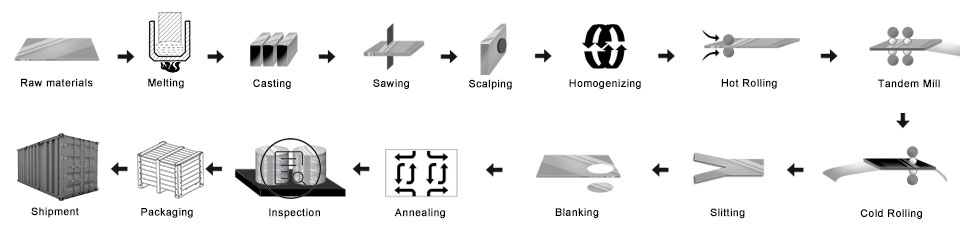
- Bereid de masterlegeringen voor
- Smeltoven: plaats de legeringen in de smeltoven
- D.C. gegoten aluminium staaf: Om de moederbaar te maken
- Frees de aluminium staaf: om het oppervlak en de zijkant glad te maken
- Verwarming oven
- Warmwalserij: de moederspoel gemaakt
- Koudewalserij: de moederspoel werd gerold in de dikte die u wilt kopen
- Ponsen proces: word de maat die je wilt
- Gloeioven: verander het humeur
- Eind inspectie
- Inpakken: houten kist of houten pallet
- Levering
Kwaliteitscontrole
Zekerheid Onderstaande inspectie zal tijdens de productie worden uitgevoerd.
- A. straal detectie—RT;
- B. ultrasoon testen—UT;
- C. Magnetische deeltjestesten-MT;
- D. penetratietesten-PT;
- e. wervelstroomfoutdetectie-ET
1) Wees vrij van olievlekken, Deuk, Inclusie, Krassen, Vlek, Oxideverkleuring, Pauzes, Corrosie, Rolmarkeringen, Vuil strepen, en andere gebreken die het gebruik hinderen.
2) Oppervlak zonder zwarte lijn, zuiver gesneden, periodieke vlek, defecten bij het afdrukken van rollen, zoals andere interne controlenormen van de gko.
Aluminium schijven verpakking:
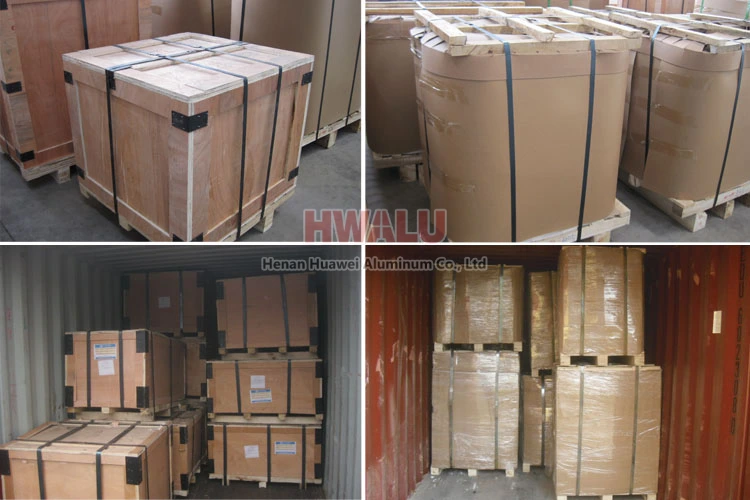
Aluminiumcirkels kunnen volgens exportnormen worden verpakt, bedekken met bruin papier en plastic folie. Eindelijk, de Aluminium Round wordt op een houten pallet/houten kist bevestigd.
- Plaats de drogers naast de aluminium cirkel, houd de producten droog en schoon.
- Gebruik schoon plastic papier, pak de aluminium cirkel in, goede afdichting behouden.
- Gebruik het slangenleerpapier, pak het oppervlak van het plastic papier in, goede afdichting behouden.
- Volgende, Er zijn twee manieren van verpakken: Eén manier is het verpakken van houten pallets, gebruik het knapperige papier dat het oppervlak bedekt; Een andere manier is het verpakken van houten kistjes, met behulp van de houten kist die het oppervlak inpakt.
- Eindelijk, leg de stalen riem op het oppervlak van de houten kist, het houden van de houten kistvastheid en veiligheid.
Aluminium cirkel van Henan Huawei Aluminium. voldoen aan de exportnorm. Plastic folie en bruin papier kunnen naar wens van de klant worden afgedekt. Bovendien, Er wordt een houten kist of houten pallet gebruikt om producten tijdens de levering tegen schade te beschermen. Er zijn twee soorten verpakkingen, die oog in oog staan met de muur of oog naar de lucht. Klanten kunnen voor hun gemak een van beide kiezen. In het algemeen, er zijn 2 ton in één pakket, en laden 18-22 ton in 1×20′ container, En 20-24 ton in 1×40′ container.
Waarom voor ons kiezen?
Om met de tijd mee te gaan, HWALU blijft de modernste apparatuur en techniek introduceren om zijn concurrentiepositie te verbeteren. Houd u altijd eerst aan de bedrijfsfilosofie van kwaliteit als centrum en klant, om producten uit de aluminium schijfcirkelserie van de hoogste kwaliteit aan alle delen van de wereld te leveren. Meer …

