Ao usar 3003 folhas de alumínio para fabricação de tampas mecânicas e juntas de suporte, as áreas de concentração de tensão das chapas estarão propensas a rachaduras por fadiga após serem estampadas e dobradas?
1. Introdução: Valor da aplicação e riscos de fadiga do 3003 Processo de fabricação de discos de alumínio para produtos mecânicos
Tampas mecânicas (por exemplo, tampas de extremidade do motor, tampas de extremidade de válvula hidráulica) e juntas de suporte (por exemplo, juntas do suporte do motor, juntas de absorção de choque) usar principalmente 3003 discos de alumínio como principal matéria-prima. O 3003 disco de alumínio processo de fabricação de produtos mecânicos inclui principalmente “corte de disco de alumínio bruto → estampagem (contorno/perfuração) → processamento de dobra (flanges/bordas de suporte) → pós-processamento (rebarbação/recozimento) → montagem do produto acabado”. Este processo representa aproximadamente 35% do setor de fabricação mecânica devido ao seu “natureza leve e alta taxa de qualificação (≥95%)”.
No entanto, as etapas de estampagem e dobra no 3003 processo de fabricação de disco de alumínio para produtos mecânicos causa facilmente concentração de tensão nas bordas, cantos, e furos de tampas mecânicas e juntas de suporte. Como 3003 a liga de alumínio é uma liga de Al-Mn reforçada, não tratável termicamente, com alta sensibilidade ao desempenho de fadiga, trincas por fadiga tendem a iniciar nesses locais. As estatísticas mostram que 60% das falhas de componentes mecânicos decorrem de problemas de fadiga causados por este processo, e 80% de trincas por fadiga concentram-se em zonas de tensão formadas por estampagem e flexão durante o processo. Portanto, analisando a correlação entre o 3003 processo de fabricação de disco de alumínio para produtos mecânicos e trincas por fadiga são cruciais para melhorar a confiabilidade de produtos mecânicos.

2. Impacto do 3003 Processo de fabricação de discos de alumínio para produtos mecânicos em estado de tensão do material
Os dois estágios principais – estampagem e dobra – no 3003 processo de fabricação de disco de alumínio para produtos mecânicos alterar diretamente o estado de tensão local do material, colocando riscos ocultos para rachaduras por fadiga:
(1) Estágio de estampagem: Mudanças de tensão durante a perfuração e formação de contorno
Na fase de estampagem do 3003 processo de fabricação de disco de alumínio para produtos mecânicos, as principais tarefas são fazer furos para parafusos em tampas mecânicas e cortar contornos de juntas de suporte:
- Durante a perfuração (por exemplo, 10mm furos para parafusos nas tampas das extremidades), a borda do buraco sofre 8%-12% deformação plástica por encolhimento radial, formando tensão de tração residual radial de 80-100MPa (perto do limite de fadiga 3003 liga de alumínio, 80-90MPa). Esta é a principal fonte de concentração de tensão no processo;
- Durante a estampagem de contorno (por exemplo, contornos retangulares de juntas), raio de filete insuficiente (R < 1milímetros) leva a um fator de concentração de tensão Kt de 2.5-3.0, estabelecendo as bases para a superposição de tensões no estágio de flexão subsequente. Isso destaca a importância de estampar o controle de parâmetros no 3003 processo de fabricação de disco de alumínio para produtos mecânicos.
(2) Estágio de flexão: Superposição de tensões durante a formação de formas
Como um estágio chave de formação no 3003 processo de fabricação de disco de alumínio para produtos mecânicos, flexão (por exemplo, 90° flanges para tampas, 120° bordas de suporte para juntas) intensifica ainda mais a concentração de estresse:
- O lado externo do ângulo de flexão está em tensão (taxa de alongamento 5%-7%), enquanto o lado interno está em compressão (taxa de encolhimento 3%-5%). Tensão de tração residual tangencial de 60-80MPa se forma no ângulo, acompanhado de endurecimento por trabalho (a dureza aumenta de HV45 para HV60), reduzindo a capacidade de deformação plástica local;
- Se as direções de tensão de estampagem e dobra estiverem alinhadas no 3003 processo de fabricação de disco de alumínio para produtos mecânicos (por exemplo, bordas de furos sobrepostas e ângulos de curvatura), ocorre superposição de tensões. A tensão real local pode chegar a 100-120MPa, excedendo em muito o limite de fadiga, induzindo diretamente microfissuras.

3. Mecanismo de iniciação de trincas por fadiga no 3003 Processo de fabricação de discos de alumínio para produtos mecânicos
Tensão residual e defeitos de processamento introduzidos pelo 3003 processo de fabricação de disco de alumínio para produtos mecânicos acelerar a evolução de fissuras por fadiga durante o serviço de produtos mecânicos (sob cargas alternadas), que pode ser dividido em três etapas:
(1) Formação de Site de Iniciação: Sinergia entre defeitos de processo e propriedades de materiais
A fase de estampagem do 3003 processo de fabricação de disco de alumínio para produtos mecânicos produz facilmente rebarbas nas bordas do furo (altura 10-20μm), e o estágio de flexão tende a formar microfissuras superficiais (profundidade 5-8μm). Esses defeitos combinam-se com precipitados de Al₆Mn nos limites dos grãos de 3003 liga de alumínio para se tornarem locais de iniciação de trincas por fadiga. Os testes mostram que a vida útil de início de trinca em amostras de furos com rebarbas é apenas 58% daquele de amostras sem rebarbas, confirmando o efeito acelerador dos defeitos do processo na fadiga.
(2) Propagação de Microfissuras: Superposição de tensão e carga do processo
Cargas alternadas durante a manutenção de produtos mecânicos (por exemplo, R=-1 cargas de vibração para tampas, R = 0,1 tensão de compressão para juntas) sobrepor com a tensão de tração residual remanescente do 3003 processo de fabricação de disco de alumínio para produtos mecânicos, aumentando a faixa do fator de intensidade de estresse ΔK. A taxa de propagação de fissuras segue a equação de Paris (m≈3,5):
- Superposição de tensão de tração residual (80-100MPa) de furos estampados no processo e cargas de vibração aumenta ΔK em 40% em comparação com o estado livre de estresse, acelerando a taxa de propagação em 1.8 vezes;
- Se nenhum tratamento de alívio do estresse for realizado no 3003 processo de fabricação de disco de alumínio para produtos mecânicos, umidade, óleo, ou gases corrosivos no ambiente penetram em microfissuras, desencadeando fadiga por corrosão sob tensão e aumentando ainda mais a taxa de propagação por 2-3 vezes.

4. Verificação Experimental do Desempenho da Fadiga no 3003 Processo de fabricação de discos de alumínio para produtos mecânicos
Para quantificar o impacto da 3003 processo de fabricação de disco de alumínio para produtos mecânicos em fissuras por fadiga, amostras simuladas foram preparadas de acordo com o processo e testadas:
(1) Preparação de Amostras: Seguindo as etapas reais do processo
- Matéria-prima: 3003 discos de alumínio (3mm de espessura, 150mm de diâmetro, Temperamento H14), compatível com GB/T 3880.2-2012;
- Replicação de processos:
-
- Amostra A (simulação de limite final): Concluído “10estampagem de furo mm (rebarba ≤5μm) → Flexão do flange em 90° (R1mm)” de acordo com o 3003 processo de fabricação de disco de alumínio para produtos mecânicos;
-
- Amostra B (simulação de junta): Concluído “estampagem de contorno retangular (R2mm) → Dobra da borda do suporte em 120°” de acordo com o processo;
- Grupo de controle: Suave 3003 folhas de alumínio, excluindo as etapas de estampagem e dobra do processo.
(2) Resultados do teste: Correlação entre as etapas do processo e a vida em fadiga
| Tipo de amostra |
Nível de estresse (MPa) |
Vida de iniciação de crack (×10⁴ ciclos) |
Localização da rachadura |
Correlação com Processo |
| Amostra A (Feito por processo) |
80 |
42 |
Bordas do furo (95%) |
Superposição de tensão de tração residual de estampagem e tensão de flexão |
| Amostra B (Feito por processo) |
70 |
58 |
Dobrando cantos (90%) |
Tensão de tração residual tangencial de flexão |
| Grupo de controle (Nenhum processo) |
80 |
≥500 |
Nenhum |
Sem concentração de tensão induzida por estampagem/flexão |
Os resultados indicam que as etapas de estampagem e dobra no 3003 processo de fabricação de disco de alumínio para produtos mecânicos reduzir a vida útil de iniciação de trincas das amostras em mais de 90%, tornando-os a principal causa dos riscos de fadiga.
5. Estratégias de otimização para o 3003 Processo de fabricação de discos de alumínio para produtos mecânicos
Para resolver problemas de fadiga causados por estampagem e flexão no 3003 processo de fabricação de disco de alumínio para produtos mecânicos, soluções são propostas a partir de dois aspectos: otimização da etapa do processo e pós-processamento:
(1) Otimização da Etapa do Processo: Reduzindo a concentração de estresse
- Otimização de estampagem (melhoria fundamental no 3003 processo de fabricação de disco de alumínio para produtos mecânicos):
-
- Adotar “design de furo escalonado” para perfuração (transição de 10mm para 12mm, filé R0,5mm), reduzindo o fator de concentração de tensão Kt de 2.0 para 1.3 e tensão de tração residual por 30%;
-
- Aumente o raio do filete dos contornos estampados para R≥2mm para evitar a superposição de tensões na dobra subsequente.
- Otimização de dobra (adaptando-se às características do processo):
-
- Usar “flexão gradual” para flanges de tampa final (transição gradual de 0° a 90°) em vez de flexão de 90° em uma etapa, reduzindo a tensão de tração residual tangencial de 60-80MPa para 30-40MPa;
-
- Ajuste o ângulo de curvatura das bordas de suporte da junta de 120° a 135°, reduzindo a taxa de deformação por tração externa de 7% para 4%.
(2) Pós-processamento do processo: Eliminando Estresse e Defeitos Residuais
- Recozimento de alívio de tensão: Adicione um “280-320℃ preservação do calor por 1-2h” estágio (para GB/T 12608-2023) depois de estampar e dobrar no 3003 processo de fabricação de disco de alumínio para produtos mecânicos, reduzindo a tensão de tração residual para 30-40MPa e aumentando a vida em fadiga por 2-3 vezes;
- Controle de rebarbas: Adicionar “eletropolimento” (10-15A/dm², 5-10min) ao processo para reduzir rebarbas nas bordas do furo para ≤1μm, eliminando locais de iniciação de trincas por fadiga;
- Fortalecimento de superfície: Executar “shot peening” (0.4-0.6MPa, tiros de aço inoxidável) em peças-chave de produtos acabados (bordas do furo, ângulos de flexão) feito pelo processo, formando uma camada de tensão de compressão superficial de 50-100 μm para compensar a tensão de tração residual.

6. Conclusão: Lógica de gerenciamento de risco de fadiga para o 3003 Processo de fabricação de discos de alumínio para produtos mecânicos
Embora o 3003 processo de fabricação de disco de alumínio para produtos mecânicos (disco de alumínio → estampagem → dobra → pós-processamento) é um método eficiente para produzir tampas mecânicas e juntas de suporte, os estágios de estampagem e dobra no processo causam facilmente concentração de tensão e trincas por fadiga. A lógica de gerenciamento central é a seguinte:
- Adapte as etapas do processo às propriedades do material: Otimize o raio de filete de furos estampados e ângulos de curvatura no processo de acordo com o baixo limite de fadiga (80-90MPa) de 3003 liga de alumínio para evitar que o estresse exceda o limite;
- Fortalecer o pós-processamento para compensar deficiências: Adicione estágios de recozimento e shot peening ao processo para compensar a tensão de tração residual introduzida pela estampagem e dobra, e eliminar defeitos de processamento;
- Monitore o processo para garantir confiabilidade: Adicionar teste de estresse (por exemplo, Analisador de estresse de raios X) em nós principais (depois de carimbar, depois de dobrar) no 3003 processo de fabricação de disco de alumínio para produtos mecânicos para garantir tensão residual ≤40MPa, controlando os riscos de fadiga da origem do processo.
No futuro, “Previsão de parâmetros de IA” pode ser ainda mais integrado no 3003 processo de fabricação de disco de alumínio para produtos mecânicos para ajustar dinamicamente a pressão de estampagem e a velocidade de dobra, alcançando o controle em tempo real da concentração de tensão e promovendo a atualização de produtos mecânicos em direção “baixo risco de fadiga e longa vida útil”.
Propriedades do círculo de alumínio:
O círculo de alumínio é adequado para muitos mercados, incluindo panelas, indústrias automotiva e de iluminação, etc., graças às boas características do produto:
- Baixa anisotropia, o que facilita o desenho profundo
- Propriedades mecânicas fortes
- Difusão de calor alta e homogênea
- Capacidade de ser esmaltado, coberto por PTFE (ou outros), anodizado
- Boa refletividade
- Alta relação resistência-peso
- Durabilidade e resistência à corrosão
Processo de Círculos de Alumínio
Lingotes/Ligas Mestres — Forno de fusão – Forno de retenção — DC. Rodízio — Laje —- Escalpador — Laminador a Quente – Laminador a Frio – Puncionamento – Forno de Recozimento — Inspeção Final – Embalagem — Entrega
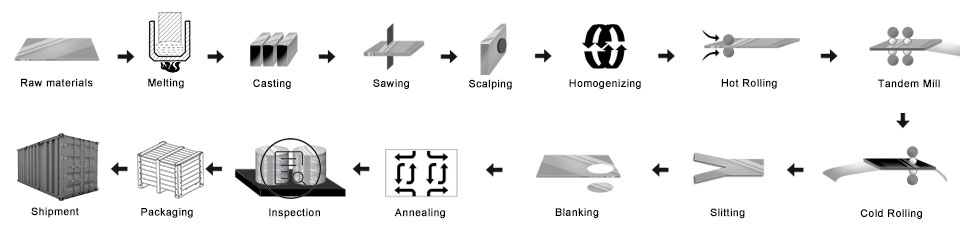
- Prepare as ligas mestres
- Forno de fusão: coloque as ligas no forno de fusão
- Lingote de alumínio fundido DC: Para fazer o lingote mãe
- Fresar o lingote de alumínio: para tornar a superfície e o lado lisos
- Forno de aquecimento
- Laminador a quente: fez a bobina mãe
- Laminador a frio: a bobina mãe foi enrolada conforme a espessura que você deseja comprar
- Processo de perfuração: torne-se do tamanho que você deseja
- Forno de recozimento: mudar o temperamento
- Inspeção final
- Embalagem: caixa de madeira ou palete de madeira
- Entrega
Controle de qualidade
Garantia Abaixo a inspeção será feita na produção.
- um. detecção de raios—TR;
- b. testes ultrassônicos—UT;
- c. Teste de Partículas Magnéticas-MT;
- d. testes de penetração-PT;
- e. detecção de falhas por correntes parasitas-ET
1) Esteja livre de manchas de óleo, Dente, Inclusão, Arranhões, Mancha, Descoloração Óxida, Pausas, Corrosão, Marcas de rolo, Listras de sujeira, e outros defeitos que interferirão no uso.
2) Superfície sem linha preta, limpo, mancha periódica, defeitos de impressão em rolo, como outros padrões de controle interno da gko.
Embalagem de discos de alumínio:
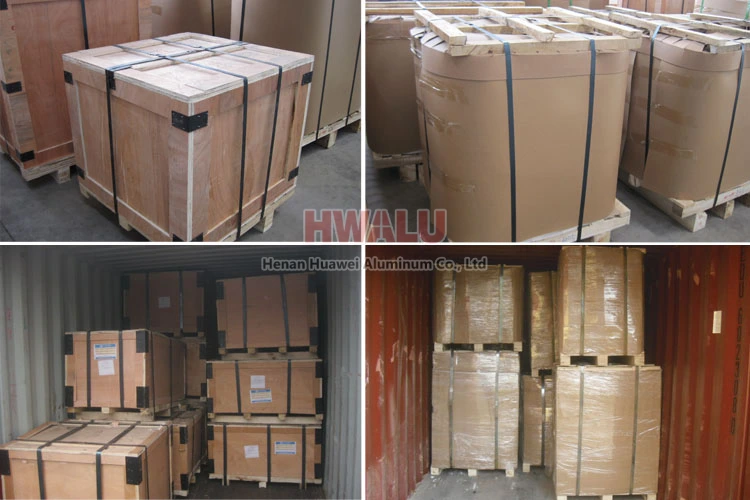
Os círculos de alumínio podem ser embalados de acordo com os padrões de exportação, cobrindo com papel pardo e filme plástico. Finalmente, a Rodada de Alumínio é fixada em um palete de madeira/caixa de madeira.
- Coloque os secadores ao lado do círculo de alumínio, mantenha os produtos secos e limpos.
- Use papel plástico limpo, embale o círculo de alumínio, mantenha uma boa vedação.
- Use o papel de pele de cobra, embale a superfície do papel plástico, mantenha uma boa vedação.
- Próximo, existem duas formas de embalagem: Uma maneira é a embalagem de paletes de madeira, usando o papel crocante embalando a superfície; Outra forma é a embalagem em caixa de madeira, usando a caixa de madeira embalando a superfície.
- Finalmente, coloque a correia de aço na superfície da caixa de madeira, mantendo a solidez e segurança da caixa de madeira.
Círculo de alumínio de Henan Huawei Alumínio. atender ao padrão de exportação. Filme plástico e papel pardo podem ser cobertos de acordo com as necessidades dos clientes. Além do mais, uma caixa de madeira ou palete de madeira é adotada para proteger os produtos contra danos durante a entrega. Existem dois tipos de embalagens, que estão de olho na parede ou de olho no céu. Os clientes podem escolher qualquer um deles para sua conveniência. De um modo geral, há 2 toneladas em um pacote, e carregando 18-22 toneladas em contêiner 1×20′, e 20-24 toneladas em contêiner 1×40′.
Por que nos escolher?
Para acompanhar os tempos, A HWALU continua introduzindo equipamentos e técnicas de última geração para melhorar sua competitividade. Sempre siga a filosofia empresarial de qualidade como centro e cliente em primeiro lugar, fornecer produtos da série de círculo de disco de alumínio da mais alta qualidade para todas as partes do mundo. Mais …