Bij gebruik 3003 aluminiumplaten voor de vervaardiging van mechanische eindkappen en steunpakkingen, Zullen de spanningsconcentratiegebieden van de platen gevoelig zijn voor vermoeiingsscheuren nadat ze zijn gestempeld en gebogen??
1. Invoering: Toepassingswaarde en vermoeidheidsrisico's van de 3003 Productieproces van aluminium schijven voor mechanische producten
Mechanische eindkappen (bijv., eindkappen van motoren, eindkappen voor hydraulische kleppen) en beugelpakkingen (bijv., pakkingen van de motorbeugel, schokabsorberende pakkingen) voornamelijk gebruiken 3003 aluminiumschijven als hun belangrijkste grondstof. De 3003 aluminium schijf productieproces voor mechanische producten omvat vooral “ruw aluminium schijfsnijden → stempelen (contour/perforeren) → buigbewerking (flenzen/steunranden) → nabewerking (ontbramen/gloeien) → assemblage van eindproducten”. Dit proces bedraagt ongeveer 35% van de mechanische productiesector vanwege zijn “lichtgewicht karakter en hoog kwalificatiepercentage (≥95%)”.
Echter, de stempel- en buigfasen in de 3003 productieproces van aluminium schijven voor mechanische producten veroorzaken gemakkelijk spanningsconcentratie aan de randen, hoeken, en gaten van mechanische eindkappen en beugelpakkingen. Als 3003 aluminiumlegering is een niet-warmtebehandelbare, versterkte Al-Mn-legering met een hoge gevoeligheid voor vermoeidheidsprestaties, Vermoeiingsscheuren hebben de neiging om op deze plaatsen te ontstaan. Statistieken tonen dat aan 60% van de mechanische componentstoringen is het gevolg van vermoeidheidsproblemen die door dit proces worden veroorzaakt, En 80% De meeste vermoeiingsscheuren concentreren zich in spanningszones die tijdens het proces worden gevormd door stampen en buigen. Daarom, het analyseren van de correlatie tussen de 3003 productieproces van aluminium schijven voor mechanische producten en vermoeiingsscheuren zijn cruciaal voor het verbeteren van de betrouwbaarheid van mechanische producten.

2. Impact van de 3003 Productieproces van aluminium schijven voor mechanische producten op materiaalspanningstoestand
De twee kernfasen – stempelen en buigen – in de 3003 productieproces van aluminium schijven voor mechanische producten rechtstreeks de lokale spanningstoestand van het materiaal veranderen, het leggen van verborgen risico's voor vermoeiingsscheuren:
(1) Stempelfase: Spanningsveranderingen tijdens het perforeren en contourvormen
In de stempelfase van de 3003 productieproces van aluminium schijven voor mechanische producten, de belangrijkste taken zijn het ponsen van boutgaten in mechanische eindkappen en het snijden van contouren van beugelpakkingen:
- Tijdens het perforeren (bijv., 10mm boutgaten in eindkappen), de rand van het gat ondergaat 8%-12% radiale krimp plastische vervorming, het vormen van radiale resterende trekspanning van 80-100 MPa (dicht bij de vermoeidheidsgrens van 3003 aluminium legering, 80-90MPa). Dit is de belangrijkste bron van stressconcentratie in het proces;
- Tijdens contourstempelen (bijv., rechthoekige contouren van pakkingen), onvoldoende afrondingsradius (R < 1mm) leidt tot een spanningsconcentratiefactor Kt van 2.5-3.0, het leggen van de basis voor spanningssuperpositie in de daaropvolgende buigfase. Dit benadrukt het belang van stempelparametercontrole in de 3003 productieproces van aluminium schijven voor mechanische producten.
(2) Buigende fase: Stress-superpositie tijdens het vormen van vormen
Als een belangrijke vormgevende fase in de 3003 productieproces van aluminium schijven voor mechanische producten, buigen (bijv., 90° flenzen voor eindkappen, 120° steunranden voor pakkingen) versterkt de stressconcentratie verder:
- De buitenzijde van de buighoek staat onder spanning (verlengingssnelheid 5%-7%), terwijl de binnenkant onder druk staat (krimppercentage 3%-5%). Tangentiële resttrekspanning van 60-80 MPa vormt zich onder de hoek, gepaard met verharding van het werk (de hardheid neemt toe van HV45 naar HV60), het verminderen van de lokale plastische vervormingscapaciteit;
- Als de spanningsrichtingen van het stempelen en buigen op één lijn liggen 3003 productieproces van aluminium schijven voor mechanische producten (bijv., overlappende gatranden en buighoeken), Er vindt superpositie van stress plaats. De lokale werkelijke spanning kan 100-120 MPa bereiken, ver boven de vermoeidheidsgrens, direct inducerende microscheuren.

3. Vermoeidheidsscheurinitiatiemechanisme in de 3003 Productieproces van aluminium schijven voor mechanische producten
Reststress en verwerkingsfouten geïntroduceerd door de 3003 productieproces van aluminium schijven voor mechanische producten versnellen de evolutie van vermoeiingsscheuren tijdens de service van mechanische producten (onder wisselende belasting), die in drie fasen kan worden verdeeld:
(1) Initiatieplaatsformatie: Synergie tussen procesfouten en materiaaleigenschappen
De stempelfase van de 3003 productieproces van aluminium schijven voor mechanische producten produceert gemakkelijk bramen aan de randen van de gaten (hoogte 10-20μm), en de buigfase heeft de neiging microscheuren aan het oppervlak te vormen (diepte 5-8μm). Deze defecten worden gecombineerd met Al₆Mn-precipitaties aan de korrelgrenzen van 3003 aluminiumlegering om initiatieplaatsen voor vermoeiingsscheuren te worden. Uit tests blijkt dat de levensduur van gatmonsters met bramen slechts scheurinitiatie bedraagt 58% van die van braamvrije monsters, wat het versnellende effect van procesdefecten op vermoeidheid bevestigt.
(2) Voortplanting van microscheuren: Superpositie van processtress en belasting
Wisselende belastingen tijdens de service van mechanische producten (bijv., R=-1 trillingsbelastingen voor eindkappen, R=0,1 drukspanning voor pakkingen) gesuperponeerd met de resterende trekspanning die overblijft van de 3003 productieproces van aluminium schijven voor mechanische producten, het vergroten van het spanningsintensiteitsfactorbereik ΔK. De scheurvoortplantingssnelheid volgt de vergelijking van Parijs (m≈3,5):
- Superpositie van resterende trekspanning (80-100MPa) van gestempelde gaten in het proces en trillingsbelastingen nemen toe met ΔK 40% vergeleken met de stressvrije toestand, het versnellen van de voortplantingssnelheid door 1.8 keer;
- Als er geen stressverlichtingsbehandeling wordt uitgevoerd in de 3003 productieproces van aluminium schijven voor mechanische producten, vocht, olie, of corrosieve gassen in de omgeving dringen microscheuren binnen, het veroorzaken van spanningscorrosievermoeidheid en het verder verhogen van de voortplantingssnelheid door 2-3 keer.

4. Experimentele verificatie van vermoeidheidsprestaties in de 3003 Productieproces van aluminium schijven voor mechanische producten
Om de impact van de 3003 productieproces van aluminium schijven voor mechanische producten op vermoeiingsscheuren, gesimuleerde monsters werden volgens het proces bereid en getest:
(1) Monstervoorbereiding: Volgende feitelijke procesfasen
- Grondstof: 3003 aluminium schijven (3mm dik, 150mm diameter, H14 humeur), volgzaam met GB/T 3880.2-2012;
- Procesreplicatie:
-
- Voorbeeld A (eindkap simulatie): Voltooid “10mm gaten stempelen (braam ≤5μm) → 90° flensbuiging (R1mm)” volgens de 3003 productieproces van aluminium schijven voor mechanische producten;
-
- Voorbeeld B (pakking simulatie): Voltooid “rechthoekige contourstempel (R2mm) → 120° steunrandbuiging” volgens het proces;
- Controlegroep: Zacht 3003 aluminiumplaten met uitzondering van de stempel- en buigfasen van het proces.
(2) Testresultaten: Correlatie tussen procesfasen en vermoeidheidsleven
| Voorbeeldtype |
Stressniveau (MPa) |
Crack Initiatie Leven (×10⁴ cycli) |
Crack-locatie |
Correlatie met proces |
| Voorbeeld A (Procesgemaakt) |
80 |
42 |
Randen van gaten (95%) |
Superpositie van resterende trekspanning door stempel- en buigspanning |
| Voorbeeld B (Procesgemaakt) |
70 |
58 |
Buigende hoeken (90%) |
Tangentiële resttrekspanning door buigen |
| Controlegroep (Geen proces) |
80 |
≥500 |
Geen |
Geen door stampen/buigen veroorzaakte spanningsconcentratie |
De resultaten geven aan dat de stamp- en buigfasen in de 3003 productieproces van aluminium schijven voor mechanische producten verkort de scheurinitiatieduur van monsters met meer dan 90%, waardoor ze de belangrijkste oorzaak zijn van vermoeidheidsrisico’s.
5. Optimalisatiestrategieën voor de 3003 Productieproces van aluminium schijven voor mechanische producten
Om vermoeidheidsproblemen aan te pakken die worden veroorzaakt door stampen en buigen in de 3003 productieproces van aluminium schijven voor mechanische producten, Er worden oplossingen voorgesteld vanuit twee aspecten: procesfase-optimalisatie en nabewerking:
(1) Optimalisatie van procesfasen: Vermindering van stressconcentratie
- Optimalisatie van stempelen (kernverbetering in de 3003 productieproces van aluminium schijven voor mechanische producten):
-
- Adopteren “ontwerp met getrapte gaten” voor het perforeren van gaten (overgang van 10 mm naar 12 mm, filet R0,5mm), het verminderen van de spanningsconcentratiefactor Kt 2.0 naar 1.3 en resterende trekspanning door 30%;
-
- Vergroot de afrondingsradius van gestempelde contouren tot R≥2 mm om spanningssuperpositie bij daaropvolgende buigingen te voorkomen.
- Optimalisatie van buiging (aanpassen aan proceseigenschappen):
-
- Gebruik “geleidelijke buiging” voor eindkapflenzen (geleidelijke overgang van 0° naar 90°) in plaats van in één stap 90° buigen, het verminderen van de tangentiële resttrekspanning van 60-80 MPa naar 30-40 MPa;
-
- Pas de buighoek van de steunranden van de pakking aan van 120° tot 135°, het verminderen van de buitenste trekvervormingssnelheid van 7% naar 4%.
(2) Proces naverwerking: Het elimineren van resterende stress en defecten
- Stressverlichting gloeien: Voeg een toe “280-320℃ hittebehoud gedurende 1-2 uur” fase (voor GB/T 12608-2023) na het stempelen en buigen in de 3003 productieproces van aluminium schijven voor mechanische producten, het verminderen van de resterende trekspanning tot 30-40 MPa en het verlengen van de levensduur tegen vermoeidheid 2-3 keer;
- Braamcontrole: Toevoegen “elektrolytisch polijsten” (10-15A/dm², 5-10min) aan het proces om bramen aan de rand van gaten te verminderen tot ≤1 μm, het elimineren van vermoeiingsscheurinitiatielocaties;
- Oppervlakteversterking: Presteren “shot peen” (0.4-0.6MPa, roestvrijstalen schoten) op belangrijke onderdelen van eindproducten (randen van gaten, hoeken buigen) gemaakt door het proces, het vormen van een oppervlaktedrukspanningslaag van 50-100 μm om de resterende trekspanning te compenseren.

6. Conclusie: Vermoeidheidsrisicobeheerlogica voor de 3003 Productieproces van aluminium schijven voor mechanische producten
Hoewel de 3003 productieproces van aluminium schijven voor mechanische producten (aluminium schijf → stempelen → buigen → nabewerking) is een efficiënte methode voor het produceren van mechanische eindkappen en beugelpakkingen, de stamp- en buigfasen in het proces veroorzaken gemakkelijk spanningsconcentratie en vermoeiingsscheuren. De kernlogica van het management is als volgt:
- Pas procesfasen aan de materiaaleigenschappen aan: Optimaliseer daarbij de afrondingsradius van gestanste gaten en buighoeken volgens de lage vermoeiingsgrens (80-90MPa) van 3003 aluminiumlegering om te voorkomen dat de spanning de limiet overschrijdt;
- Versterk de nabewerking om tekortkomingen te compenseren: Voeg gloei- en kogelstraalfasen toe aan het proces om de resterende trekspanning te compenseren die wordt veroorzaakt door stampen en buigen, en elimineer verwerkingsfouten;
- Bewaak het proces om de betrouwbaarheid te garanderen: Voeg stresstests toe (bijv., Röntgenstressanalysator) op belangrijke knooppunten (na het stempelen, na het buigen) in de 3003 productieproces van aluminium schijven voor mechanische producten om restspanning ≤40 MPa te garanderen, het beheersen van vermoeiingsrisico's vanaf de procesbron.
In de toekomst, “Voorspelling van AI-parameters” kan verder worden geïntegreerd in de 3003 productieproces van aluminium schijven voor mechanische producten om de stempeldruk en buigsnelheid dynamisch aan te passen, het bereiken van real-time controle van de spanningsconcentratie en het bevorderen van de verbetering van mechanische producten in de richting van “laag vermoeidheidsrisico en lange levensduur”.
Eigenschappen van de aluminium cirkel:
Aluminium cirkel is geschikt voor vele markten, inclusief kookgerei, auto- en verlichtingsindustrie, enz., dankzij goede producteigenschappen:
- Lage anisotropie, wat het dieptrekken vergemakkelijkt
- Sterke mechanische eigenschappen
- Hoge en homogene warmteverspreiding
- Mogelijkheid om te emailleren, bedekt met PTFE (of anderen), geanodiseerd
- Goede reflectiviteit
- Hoge sterkte-gewichtsverhouding
- Duurzaamheid en weerstand tegen corrosie
Aluminium cirkels proces
Ingots/Master-legeringen — Smeltoven – Houdoven — DC. Caster — Plaat —- Scalper — Warmwalserij – Koudwalserij – Ponsen – Gloeioven — Eindinspectie – verpakking — Levering
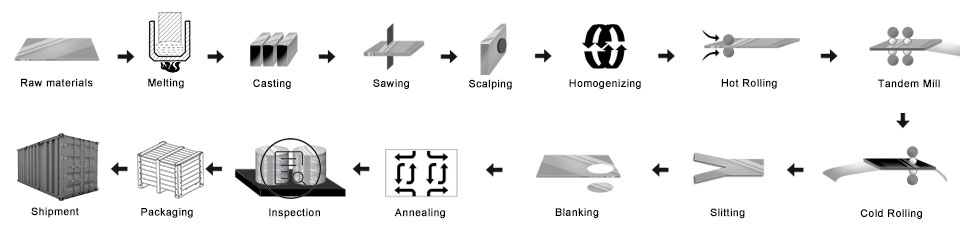
- Bereid de masterlegeringen voor
- Smeltoven: plaats de legeringen in de smeltoven
- D.C. gegoten aluminium staaf: Om de moederbaar te maken
- Frees de aluminium staaf: om het oppervlak en de zijkant glad te maken
- Verwarming oven
- Warmwalserij: de moederspoel gemaakt
- Koudewalserij: de moederspoel werd gerold in de dikte die u wilt kopen
- Ponsen proces: word de maat die je wilt
- Gloeioven: verander het humeur
- Eind inspectie
- Inpakken: houten kist of houten pallet
- Levering
Kwaliteitscontrole
Zekerheid Onderstaande inspectie zal tijdens de productie worden uitgevoerd.
- A. straal detectie—RT;
- B. ultrasoon testen—UT;
- C. Magnetische deeltjestesten-MT;
- D. penetratietesten-PT;
- e. wervelstroomfoutdetectie-ET
1) Wees vrij van olievlekken, Deuk, Inclusie, Krassen, Vlek, Oxideverkleuring, Pauzes, Corrosie, Rolmarkeringen, Vuil strepen, en andere gebreken die het gebruik hinderen.
2) Oppervlak zonder zwarte lijn, zuiver gesneden, periodieke vlek, defecten bij het afdrukken van rollen, zoals andere interne controlenormen van de gko.
Aluminium schijven verpakking:
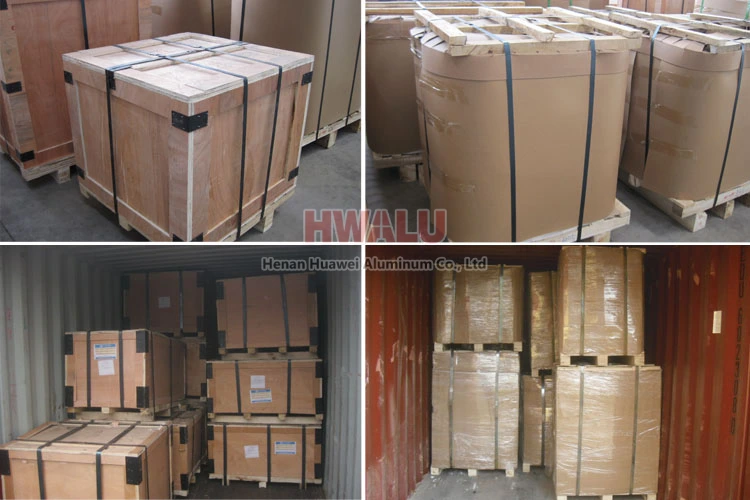
Aluminiumcirkels kunnen volgens exportnormen worden verpakt, bedekken met bruin papier en plastic folie. Eindelijk, de Aluminium Round wordt op een houten pallet/houten kist bevestigd.
- Plaats de drogers naast de aluminium cirkel, houd de producten droog en schoon.
- Gebruik schoon plastic papier, pak de aluminium cirkel in, goede afdichting behouden.
- Gebruik het slangenleerpapier, pak het oppervlak van het plastic papier in, goede afdichting behouden.
- Volgende, Er zijn twee manieren van verpakken: Eén manier is het verpakken van houten pallets, gebruik het knapperige papier dat het oppervlak bedekt; Een andere manier is het verpakken van houten kistjes, met behulp van de houten kist die het oppervlak inpakt.
- Eindelijk, leg de stalen riem op het oppervlak van de houten kist, het houden van de houten kistvastheid en veiligheid.
Aluminium cirkel van Henan Huawei Aluminium. voldoen aan de exportnorm. Plastic folie en bruin papier kunnen naar wens van de klant worden afgedekt. Bovendien, Er wordt een houten kist of houten pallet gebruikt om producten tijdens de levering tegen schade te beschermen. Er zijn twee soorten verpakkingen, die oog in oog staan met de muur of oog naar de lucht. Klanten kunnen voor hun gemak een van beide kiezen. In het algemeen, er zijn 2 ton in één pakket, en laden 18-22 ton in 1×20′ container, En 20-24 ton in 1×40′ container.
Waarom voor ons kiezen?
Om met de tijd mee te gaan, HWALU blijft de modernste apparatuur en techniek introduceren om zijn concurrentiepositie te verbeteren. Houd u altijd eerst aan de bedrijfsfilosofie van kwaliteit als centrum en klant, om producten uit de aluminium schijfcirkelserie van de hoogste kwaliteit aan alle delen van de wereld te leveren. Meer …

