Por que são 5052 Liga de alumínio preferida 3003 para tanques de ar de caminhão? – Uma análise abrangente baseada na correspondência de desempenho e nos requisitos da aplicação
EU. Introdução: Posicionamento funcional de tanques de ar de caminhão e a lógica de seleção de materiais de liga de alumínio
Tanques de ar para caminhões (cientificamente denominado “Tanques de armazenamento de ar comprimido”) são a principal fonte de energia para sistemas de travagem de veículos comerciais, suspensões de ar, e controle de porta. Eles precisam resistir a pressões de trabalho de longo prazo 0.8-1.2 MPa (com picos de pressão atingindo 1.5 MPa) e suportar condições operacionais complexas: ① Corrosão ambiental (água da chuva, sais descongelantes, poeira industrial); ② Flutuações de temperatura (-40°C a 60 °C, cobrindo regiões frias até os trópicos); ③ Vibração e impacto (solavancos na estrada durante o transporte de longa distância).
De acordo com GB150.4-2011 “Vasos de pressão – Papel 4: Fabricação, Inspeção, e Aceitação”, materiais para tanques de ar de caminhões devem atender a requisitos como “Resistência à tração ≥200 MPa, Resistência ao escoamento ≥110 MPa, Alongamento ≥12%”, e possuem excelente soldabilidade e resistência à corrosão sob tensão. No mercado atual, 5052 círculos de alumínio para tanques de ar de caminhão representam mais 85% do total de material utilizado em tanques de ar de caminhões, enquanto a taxa de utilização de 3003 liga de alumínio é menor que 5%. Embora ambas sejam ligas de alumínio à prova de ferrugem comumente usadas, por que o 5052 círculo de alumínio para tanques de ar de caminhões se tornou o mainstream absoluto? Isso requer análise baseada na lógica de correlação composição-desempenho-aplicação.

II. Diferenças de composição entre 5052 e 3003 Ligas de alumínio: A raiz da divergência de desempenho
Ambas as ligas pertencem ao “alumínio à prova de ferrugem” categoria, mas seus principais elementos de liga e design de composição são fundamentalmente diferentes, determinando diretamente sua base de desempenho (em conformidade com GB/T 3880.1-2012 “Placa de alumínio e liga de alumínio, Folha, e tira”):
- Diferença Central: 5052 usa magnésio (mg) como o principal elemento de fortalecimento, melhorando as propriedades mecânicas através “fortalecimento de solução sólida.” Simultaneamente, cromo (Cr) refina grãos e inibe a corrosão intergranular, habilitando 5052 círculos de alumínio para tanques de ar de caminhões para lidar com ambientes corrosivos de alta pressão. 3003 usa manganês (Mn) como o principal elemento de liga, alcançar a força básica apenas através “endurecimento por deformação,” sem design específico de elemento resistente à corrosão. Esta diferença de composição leva a uma divergência significativa nas três propriedades principais do “força, resistência à corrosão, e soldabilidade,” afetando diretamente a confiabilidade dos tanques de ar dos caminhões.
III. Comparação de desempenho principal: Por que 5052 é mais adequado para requisitos de tanque de ar de caminhão
Os requisitos de material para tanques de ar de caminhão podem ser resumidos como “três altos e uma estabilidade”: resistência de alta pressão, alta resistência à corrosão, alta confiabilidade de soldagem, e adaptabilidade ambiental estável. 5052 círculos de alumínio para tanques de ar de caminhões apresentam desempenho superior 3003 de forma abrangente nessas quatro dimensões.
(1) Propriedades Mecânicas: A alta resistência de 5052 Atende às necessidades de suporte de pressão
Como vasos de pressão, tanques de ar requerem ambos “força suficiente para resistir à pressão interna” e “certa plasticidade para lidar com o impacto.” Comparação de propriedades mecânicas chave (Estado H112, estado de fornecimento comum para tanques de ar):
- Impacto Principal:
- A força de rendimento de 3003 (40-60 MPa) está muito abaixo do requisito do tanque (≥110 MPa). Mesmo se for fortalecido pelo trabalho a frio (por exemplo, Estado H18), a resistência ao escoamento aumenta para 110 MPa, mas o alongamento cai para 5%-8%, tornando-o propenso a fraturas frágeis sob vibração e impacto.
- A resistência à tração de 5052 círculos de alumínio para tanques de ar de caminhão (230-260 MPa) é 1.8 vezes que de 3003, permitindo-lhe resistir “impactos de estresse instantâneo” em pressões máximas de 1.5 MPa. Testes realizados por uma empresa automotiva mostraram: tanques de ar feitos de 5052 círculos de alumínio não apresentaram deformação plástica em um 1.8 Teste hidrostático MPa, enquanto 3003 tanques inchados em 1.3 MPa.
(2) Resistência à corrosão: A capacidade anticorrosiva de 5052 Lida com ambientes complexos
Os riscos de corrosão para tanques de ar de caminhões vêm principalmente de dois aspectos: ① Ambiente externo (IC- da água da chuva, sais descongelantes); ② Meio interno (umidade no ar comprimido formando condensado ácido). Comparação da resistência à corrosão entre as duas ligas:
- Análise do Mecanismo:
- O elemento Cr em 5052 círculos de alumínio para tanques de ar de caminhões podem formar um “filme denso de óxido composto Cr₂O₃-Al₂O₃” na superfície, prevenção de IC- penetração. Em contraste, o filme de óxido de 3003 é principalmente Al₂O₃, e os elementos Mn tendem a segregar nos limites dos grãos, acelerando a corrosão intergranular (Sob condições de sal de degelo no inverno, 3003 tanques normalmente vazam dentro 2-3 anos em média, enquanto tanques feitos de 5052 círculos de alumínio podem durar 5-8 anos).
- Depois de soldar, a zona afetada pelo calor (HAZ) de 3003 é propenso a “segregação de manganês,” reduzindo a resistência à corrosão por 50%. Em contraste, a ZTA de 5052 círculos de alumínio retém 85% de sua resistência à corrosão devido ao efeito estabilizador do Cr.
(3) Desempenho de soldagem: A integridade da soldagem de 5052 Garante a vedação do tanque
Os tanques de ar de caminhões são formados principalmente usando “soldagem a arco submerso” ou “Soldagem TIG.” A resistência da costura de solda e a vedação determinam diretamente a segurança do tanque. Comparação do desempenho de soldagem entre as duas ligas:
- Questões Práticas:3003 é propenso a “Inclusões de MnO₂” durante a soldagem, levando a alta porosidade de solda. Pós-solda “recozimento de alívio de tensão” (340-360°C, 2h) muitas vezes é necessário, custos crescentes. Em contraste, 5052 círculos de alumínio para tanques de ar de caminhão podem atender aos requisitos de pressão diretamente após a soldagem, sem recozimento. Dados de um fabricante de tanques mostram: a taxa de passagem de soldagem usando 5052 círculos de alumínio alcançam 98%, enquanto é apenas 82% para 3003.

(4) Adaptabilidade Ambiental: O desempenho em ampla faixa de temperatura de 5052 é mais estável
Os caminhões operam dentro de uma faixa de temperatura de -40°C (regiões frias do norte) a 60°C (verões do sul). Comparação do desempenho em baixa e alta temperatura entre as duas ligas:
- Impacto Principal:A energia de impacto de 3003 a -40°C é apenas 12J, tornando-o suscetível a “fratura frágil a baixa temperatura.” Em contraste, a energia de impacto de baixa temperatura de 5052 círculos de alumínio para tanques de ar de caminhões atingem 25J, permitindo-lhe suportar temperaturas extremas de regiões frias. Também mantém maior retenção de resistência em altas temperaturas, evitando o risco de protuberâncias sob exposição no verão.
4. Verificação Prática de Aplicação: Confiabilidade e vantagens econômicas de 5052 Tanques
(1) Comparação de vida útil
Dados de rastreamento de um grupo de veículos comerciais em tanques de ar de 1000 caminhões (ambiente operacional: condições de estrada mista, incluindo rotas com sais descongelantes):
- Tanques feitos de 5052 círculos de alumínio para tanques de ar de caminhão:Vida útil média 7.2 anos, primeira falha (vazamento, corrosão) ocorreu em 5.8 anos.
- 3003 tanques:Vida útil média 3.5 anos, primeira falha ocorreu em 2.1 anos (principalmente vazamento de corrosão de solda).
(2) Análise Custo-Benefício
Embora o preço da matéria-prima 5052 círculos de alumínio para tanques de ar de caminhão (aprox.. 26,000 RMB/tonelada) é sobre 23% superior a 3003 (aprox.. 21,000 RMB/tonelada), considerando o custo total do ciclo de vida (ao longo de um ciclo operacional de 10 anos):
- Conclusão: Embora o custo inicial do material dos tanques feitos de 5052 círculos de alumínio é um pouco mais alto, devido ao processamento mais simples, vida útil mais longa, e menos falhas, o custo total do ciclo de vida de 10 anos é 45.7% inferior ao de 3003 tanques, indicando uma relação custo-eficácia significativamente melhor.
V. Limitações de 3003 Adequação da liga de alumínio: Por que não é adequado para tanques de ar de caminhões
3003 não é “mau desempenho,” mas seus cenários vantajosos não atendem aos requisitos dos tanques de ar para caminhões:
- Adequado para cenários de baixa pressão: 3003 pode ser usado para vasos de baixa pressão (≤0,3 MPa), como tanques de armazenamento de purificador de água doméstico, mas a pressão de trabalho dos tanques de ar do caminhão (0.8-1.2 MPa) excede em muito o seu limite de carga.
- Adequado para cenários de baixa corrosão: 3003 pode ser usado em seco, Cl–ambientes livres (por exemplo, tanques tampão de ar comprimido de oficina), mas não consegue suportar a complexa corrosão externa enfrentada pelos caminhões.
- Adequado para peças estruturais sem pressão: 3003 é frequentemente usado para “capa externa protetora” de tanques de ar (sem exigência de pressão), mas não pode servir como material do corpo do tanque., o “baixa resistência, resistência à corrosão moderada” características de 3003 são adequados apenas para cargas leves e ambientes amenos. O “alta pressão, corrosão forte, ampla faixa de temperatura” demandas de tanques de ar de caminhões exigem o “força elevada, alta resistência à corrosão, alta estabilidade” desempenho apoiado por 5052 círculos de alumínio para tanques de ar de caminhão.

VI. Conclusão: A lógica central por trás 5052 Tornando-se o material principal para tanques de ar para caminhões
A preferência por 5052 círculos de alumínio para tanques de ar de caminhões 3003 essencialmente ferve até “correspondência precisa das propriedades do material com os requisitos da aplicação”:
- Partida de desempenho:A alta resistência (Tração: 230-260 MPa) de 5052 círculos de alumínio atendem aos requisitos de pressão; alta resistência à corrosão (taxa de corrosão por névoa salina ≤0,02 mm/ano) lida com ambientes complexos; excelente soldabilidade garante vedação.
- Correspondência Econômica:O custo total do ciclo de vida dos tanques feitos de 5052 círculos de alumínio é 45.7% inferior ao de 3003 tanques, evitando perdas operacionais devido a substituições e reparos frequentes.
- Correspondência Padrão: 5052 os círculos de alumínio atendem totalmente aos requisitos para materiais de vasos de pressão em padrões como GB150.4 e GB/T3880, enquanto 3003 não pode atender aos requisitos mínimos de resistência e resistência à corrosão.
No futuro, à medida que os tanques de ar dos caminhões se desenvolvem em direção “leveza e maior pressão” (por exemplo, 1.5 Tanques de alta pressão MPa), versões melhoradas de 5052 círculos de alumínio para tanques de ar de caminhão (por exemplo, 5052-H32, com o limite de escoamento aumentado para 160 MPa) consolidarão ainda mais a sua posição dominante. Enquanto isso, 3003 permanecerá confinado a baixa pressão, estruturas não críticas de baixa corrosão, e os limites de aplicação entre os dois no setor de veículos comerciais continuarão a ser claramente diferenciados.
Propriedades do círculo de alumínio:
O círculo de alumínio é adequado para muitos mercados, incluindo panelas, indústrias automotiva e de iluminação, etc., graças às boas características do produto:
- Baixa anisotropia, o que facilita o desenho profundo
- Propriedades mecânicas fortes
- Difusão de calor alta e homogênea
- Capacidade de ser esmaltado, coberto por PTFE (ou outros), anodizado
- Boa refletividade
- Alta relação resistência-peso
- Durabilidade e resistência à corrosão
Processo de Círculos de Alumínio
Lingotes/Ligas Mestres — Forno de fusão – Forno de retenção — DC. Rodízio — Laje —- Escalpador — Laminador a Quente – Laminador a Frio – Puncionamento – Forno de Recozimento — Inspeção Final – Embalagem — Entrega
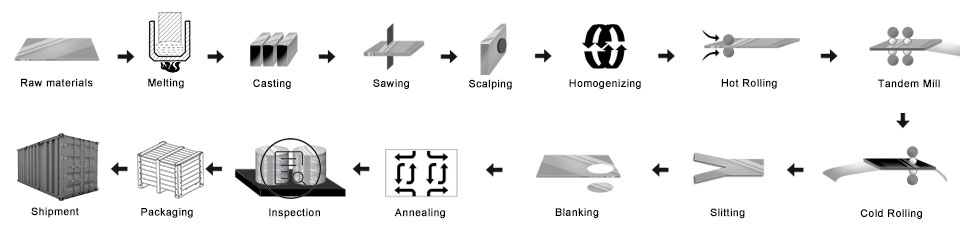
- Prepare as ligas mestres
- Forno de fusão: coloque as ligas no forno de fusão
- Lingote de alumínio fundido DC: Para fazer o lingote mãe
- Fresar o lingote de alumínio: para tornar a superfície e o lado lisos
- Forno de aquecimento
- Laminador a quente: fez a bobina mãe
- Laminador a frio: a bobina mãe foi enrolada conforme a espessura que você deseja comprar
- Processo de perfuração: torne-se do tamanho que você deseja
- Forno de recozimento: mudar o temperamento
- Inspeção final
- Embalagem: caixa de madeira ou palete de madeira
- Entrega
Controle de qualidade
Garantia Abaixo a inspeção será feita na produção.
- um. detecção de raios—TR;
- b. testes ultrassônicos—UT;
- c. Teste de Partículas Magnéticas-MT;
- d. testes de penetração-PT;
- e. detecção de falhas por correntes parasitas-ET
1) Esteja livre de manchas de óleo, Dente, Inclusão, Arranhões, Mancha, Descoloração Óxida, Pausas, Corrosão, Marcas de rolo, Listras de sujeira, e outros defeitos que interferirão no uso.
2) Superfície sem linha preta, limpo, mancha periódica, defeitos de impressão em rolo, como outros padrões de controle interno da gko.
Embalagem de discos de alumínio:
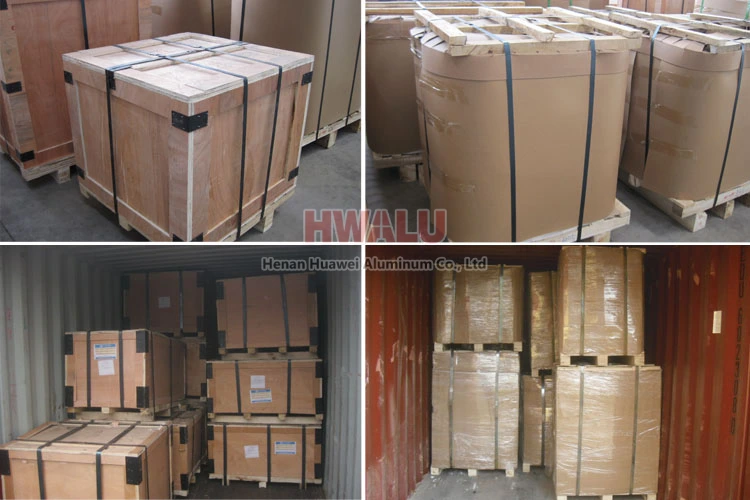
Os círculos de alumínio podem ser embalados de acordo com os padrões de exportação, cobrindo com papel pardo e filme plástico. Finalmente, a Rodada de Alumínio é fixada em um palete de madeira/caixa de madeira.
- Coloque os secadores ao lado do círculo de alumínio, mantenha os produtos secos e limpos.
- Use papel plástico limpo, embale o círculo de alumínio, mantenha uma boa vedação.
- Use o papel de pele de cobra, embale a superfície do papel plástico, mantenha uma boa vedação.
- Próximo, existem duas formas de embalagem: Uma maneira é a embalagem de paletes de madeira, usando o papel crocante embalando a superfície; Outra forma é a embalagem em caixa de madeira, usando a caixa de madeira embalando a superfície.
- Finalmente, coloque a correia de aço na superfície da caixa de madeira, mantendo a solidez e segurança da caixa de madeira.
Círculo de alumínio de Henan Huawei Alumínio. atender ao padrão de exportação. Filme plástico e papel pardo podem ser cobertos de acordo com as necessidades dos clientes. Além do mais, uma caixa de madeira ou palete de madeira é adotada para proteger os produtos contra danos durante a entrega. Existem dois tipos de embalagens, que estão de olho na parede ou de olho no céu. Os clientes podem escolher qualquer um deles para sua conveniência. De um modo geral, há 2 toneladas em um pacote, e carregando 18-22 toneladas em contêiner 1×20′, e 20-24 toneladas em contêiner 1×40′.
Por que nos escolher?
Para acompanhar os tempos, A HWALU continua introduzindo equipamentos e técnicas de última geração para melhorar sua competitividade. Sempre siga a filosofia empresarial de qualidade como centro e cliente em primeiro lugar, fornecer produtos da série de círculo de disco de alumínio da mais alta qualidade para todas as partes do mundo. Mais …