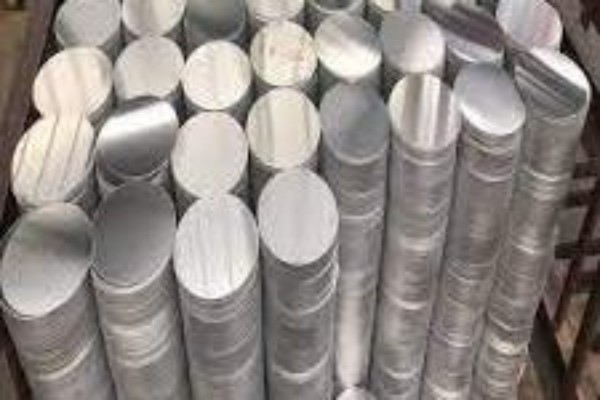
열연 알루미늄 디스크의 중심 기공 발생 원인 분석 및 개선 방안

Hot-rolled aluminum discs are critical intermediate products in the aluminum processing industry chain, widely used in high-end fields such as cookware, 가전제품, 자동차, and aerospace. Their internal quality directly determines the mechanical properties, 성형성, and service life of the final products. Center porosity​ is one of the most common internal defects in hot-rolled aluminum discs, manifested as fine, scattered pores or loose structures in the central area. It significantly reduces the material’s density, 힘, and plasticity, and can easily become a source of cracks in subsequent processes like stamping, 그림, and welding, leading to increased product rejection rates and production costs. 그러므로, a systematic analysis of the formation mechanism of center porosity and the development of scientific improvement measures are of great engineering value for enhancing product quality and strengthening the market competitiveness of enterprises.


알루미늄 반사판-조명용 디스크-4

1. Analysis of the Causes of Center Porosity in Hot-Rolled Aluminum Discs

Center porosity is the result of the combined effects of processes and microstructural evolution throughout the entire production chain, 포함 melting/casting, 열간 압연, 그리고 냉각. Its causes can be summarized into the following four categories:

1.1 Inheritance and Retention of Original Defects in the Ingot

The feedstock for hot-rolled discs is semi-continuously cast aluminum ingots. Original porosity within the ingot is the primary source:

  1. Insufficient Feeding for Solidification Shrinkage

    Aluminum alloys undergo a volume contraction of approximately 6%–7% during solidification. If the final solidification of the ingot’s center is hindered by the already solidified shell, the residual liquid between the dendrites becomes isolated, and the shrinkage cavities cannot be filled, 형성 shrinkage porosity—the most dominant form.

  2. Gas Evolution and Entrapment

    Molten 알류미늄 readily absorbs hydrogen during melting and holding. Upon solidification, hydrogen solubility drops sharply, and supersaturated hydrogen precipitates as bubbles. If bubbles cannot float out in time and are blocked by the dendritic network, gas porosity​ forms, exacerbating defects when combined with shrinkage porosity.

  3. Non-Uniform Solidification Structure

    During semi-continuous casting, the ingot surface cools rapidly while the center cools slowly, forming a structure offine grains on the surface, coarse grains in the center.The coarse grains and developed dendrites in the center hinder feeding and gas venting, and lead to difficulty in porosity healing during hot rolling due to uneven deformation.

  4. Effects of Inclusions and Segregation

    포함사항 (예를 들어, alumina) in the molten aluminum can act as nucleation sites for bubbles and impede melt flow. 분리 (예를 들어, solute enrichment) in the central region alters the local solidification behavior, further increasing the tendency for porosity.

1.2 Unreasonable Hot Rolling Process Parameters

Hot rolling is the key process for healing porosity. Improper parameters can not only fail to eliminate original defects but also induce new ones:

  1. Insufficient Total Reduction

    A total rolling reduction that is too low (일반적으로 <60%) results in insufficient deformation in the center, inadequate metal flow, and prevents the original porous cavities from being compacted and healed, leading directly to their retention.

  2. Unbalanced Distribution of Pass Reductions

    Excessive reductions in early passes and insufficient ones later, or deformation concentrated only on the surface, prevent the center from receiving adequate triaxial compressive stress; insufficient reductions in later passes can also leave porosity unhealed.

  3. Improper Rolling Temperature Control
    • Temperature too low: Aluminum alloy plasticity decreases, deformation resistance increases, making deformation in the center difficult, leading to poor healing effects and a tendency to cause work hardening and cracking.
    • Temperature too high: Grain coarsening occurs, and excessive metal fluidity may lead to “타고 있는” or structural inhomogeneity in the center, which is detrimental to porosity repair.
  4. Unreasonable Rolling Speed and Lubrication

    Excessive rolling speed shortens deformation time, preventing sufficient flow in the center; insufficient lubrication increases friction, causing greater surface deformation than the center, aggravating deformation inhomogeneity.

3003 조리기구용 알루미늄원형-1

1.3 Defects in Cooling and Heat Treatment Processes

Post-rolling cooling and subsequent heat treatments directly affect the healed state and stability of the structure:

  1. Non-Uniform Cooling Rate

    Excessive cooling (예를 들어, direct water quenching) causes rapid surface contraction while the center lags, generating high internal stresses that may re-open healed pores. Slow cooling can lead to grain coarsening, reducing density.

  2. Insufficient Homogenization Annealing

    Homogenization annealing of the ingot before hot rolling aims to eliminate dendritic segregation and improve microstructural uniformity. If the annealing temperature is too low or the holding time is insufficient, non-equilibrium phases are not fully dissolved, and original porosity and segregation are inherited by the hot-rolled disc.

  3. Improper Cooling After Annealing

    Rapid cooling generates internal stresses and provides insufficient time for atomic diffusion; excessively slow cooling may cause grain coarsening.

1.4 Equipment and Operational Factors

Equipment precision and operational standardization indirectly affect porosity control:

  1. Insufficient Mill Rigidity

    Low rigidity of the rolling mill stand leads to significant elastic deformation during rolling, resulting in uneven slab thickness and insufficient deformation in the center.

  2. Uneven Heating of the Slab

    Temperature control deviations in the reheating furnace or improper slab placement cause temperature gradients across the ingot cross-section, leading to uneven deformation during rolling.

  3. Non-standardized Operations

    Issues such as slab wandering during rolling, excessive temperature loss between passes, or uneven application of lubricant can all exacerbate deformation non-uniformity, affecting the improvement of porosity.


2. Systematic Improvement Measures for Center Porosity in Hot-Rolled Aluminum Discs

A comprehensive improvement plan is required, addressing the entire process from melting/casting source, hot rolling process optimization, cooling/heat treatment improvement, to equipment and management.

2.1 Melting and Casting Stage: Reducing Original Ingot Porosity at Source

The core objective is to improve melt cleanliness, optimize the solidification process, and enhance feeding and degassing.

2.1.1 Optimize Melt Refining Process

  • Enhanced Degassing: 사용 rotary inert gas (Ar/N₂) injection degassing, controlling time (15-25 분), rotor speed (200-300 rpm), and gas flow (0.5-1.0 m³/h) to ensure hydrogen content is reduced to below 0.12 mL/100g. Add efficient degassing agents (예를 들어, 헥사클로로에탄) 필요한 경우.
  • Strict Dross Removal and Filtration: Let the melt settle for ≥30 min​ after melting; 사용 ceramic foam filters (30-50 ppi)​ or deep bed filtration to remove non-metallic inclusions.
  • Control Melting and Holding Parameters: 녹는 온도: 720-750℃; 개최시간: ≤2 h; Use flux cover or inert gas protection throughout.

2.1.2 Optimize Casting Process

  • Control Casting Temperature and Speed: Casting temperature: 50-80℃ above the liquidus; Adjust casting speed according to ingot size (slower for larger ingots).
  • Optimize Cooling System: 입양하다 uniform cooling technology​ to minimize the cooling rate difference between surface and center. For large ingots, segmented cooling​ 사용할 수 있다.
  • Enhance Feeding Design: 사용 insulating or exothermic risers, following the principle ofdirectional solidification”. Electromagnetic stirring​ can be used to fragment dendrites and promote melt flow.
  • Add Grain Refiners: 추가하다 Al-Ti-B or Al-Ti-C refiners, controlling Ti content to 0.05-0.25%.

2.1.3 Perfect Ingot Homogenization Annealing

  • 어닐링 온도: 0.9-0.95 of the solidus temperature​ (예를 들어, ~580-600℃ for 1050 합금).
  • 보유 시간: 4-8 시간​ (depending on ingot size and alloy type).
  • 냉각방식: Furnace cooling or air cooling​ after annealing.

테이블 1: Key Control Points in the Melting and Casting Process

Control Area 주요 매개변수 Target / 제어 범위
Melt Refining 녹는점 720-750℃
Post-Degassing H₂ Content ≤0.12 mL/100g
Settling Time ≥30 minutes
Filtration Precision 30-50 ppi Ceramic Filter
Casting Process Casting Temperature Liquidus Temp. + (50-80℃)
Grain Refiner (의) 0.05-0.25%
Cooling Control Uniform Cooling, Segmented for Large Ingots
Feeding Measures Insulating/Exothermic Risers, EMS
균질화 어닐링 온도 0.9-0.95 x Solidus Temp.
보유 시간 4-8 시간
냉각방식 Furnace Cool / Air Cool
1060 알루미늄 웨이퍼 재활용
1060 알루미늄 웨이퍼 재활용

2.2 열간압연단계: Optimizing the Process for Effective Porosity Healing

The core is to apply sufficient triaxial compressive stress to the center through reasonable reduction, 온도, and speed control.

2.2.1 Rational Distribution of Reduction Rate

  • 총 절감량: 보장하다 ≥70%​ (예를 들어, from 200mm ingot to ≤60mm disc). For 7XXX series alloys, ≥75%​ is recommended.
  • Pass Reduction Optimization: Adopt the principle ofsmall initially, large in the middle, stable at the end“:
    • Initial Passes: 10-15%, to break surface coarse grains and reduce resistance.
    • Middle Passes: 20-30%, to apply strong deformation to the center, promoting healing.
    • Final Passes: 5-10%, to control dimensional accuracy and surface finish.
  • High-Reduction Rolling: Increase single-pass reduction where equipment permits to enhance hydrostatic pressure in the center.

2.2.2 Precise Control of Rolling Temperature

  • Initial Rolling Temperature: 450–500℃​ (adjusted per alloy, 예를 들어, 460–480℃ for 3XXX series).
  • Finishing Rolling Temperature: 300–350℃​ to avoid work hardening (too low) or grain coarsening (too high). Reheating between passes is needed to maintain uniform cross-sectional temperature.

2.2.3 Optimize Rolling Speed and Lubrication

  • Rolling Speed Strategy: “Low speed for biting, medium speed for rolling, high speed for delivery”.
  • 매끄럽게 하기: 사용 efficient hot rolling lubricants​ sprayed evenly to reduce friction and ensure uniform deformation.

테이블 2: Optimization of Core Hot Rolling Process Parameters

프로세스 매개변수 Recommended Control Range / 전략 핵심 목표
총 절감량 ≥70% (≥75% recommended for 7XXX series) Ensure sufficient deformation in the center
Pass Reduction Distribution Initial: 10-15%
가운데: 20-30%
결정적인: 5-10%
FollowSmall Initially, Large in Middle, Stable at End
Initial Rolling Temp. 450-500℃ (alloy-dependent) Ensure material is in the optimal plasticity range
Finishing Rolling Temp. 300-350℃ Prevent work hardening and grain coarsening
Rolling Speed Strategy Low bite, Medium rolling, High delivery Ensure sufficient deformation and production rhythm
매끄럽게 하기 Use efficient hot rolling lubricant, spray evenly Reduce friction, promote uniform deformation

2.3 Cooling and Heat Treatment: Stabilizing the Structure, Preventing Porosity Recurrence

2.3.1 Control Post-Rolling Cooling Rate

  • 입양하다 slow and uniform cooling​ (air cooling or stacking), avoiding direct water/quench cooling to minimize thermal stress that could re-open healed pores.

2.3.2 Perfect Subsequent Heat Treatment

  • 가열 냉각 (예를 들어, 350-400℃ for 3XXX series) can be applied as needed to relieve stress, stabilize the structure, and further heal residual porosity. Cool slowly after annealing.

2.4 Equipment and Management: Ensuring Stable Process Execution

  • Equipment Maintenance & 업그레이드: Regularly inspect mills, furnaces, 냉각 시스템. Upgrade to high-precision mills, intelligent furnaces if necessary.
  • Standardized Operations & Process Monitoring: Develop SOPs. Implement online inspection (예를 들어, 초음파 테스트) for real-time internal quality monitoring.
  • 인사교육 & 품질 관리: Enhance operator training. Establish a full-process quality sampling system.

3. Verification of Improvement Effectiveness and Quality Control

Establish a scientific quality inspection and verification system to ensure the effectiveness of improvement measures:

  1. Macrostructural Examination

    Section, etch, and observe the central area. Rate the porosity level according to national standards (예를 들어, GB/T 3246.1), targeting 등급 1 or lower.

  2. Ultrasonic Testing (유타)

    공연하다 100% ultrasonic inspection to ensure no defects exceeding standards.

  3. Mechanical Property Testing

    Test tensile strength, 항복강도, and elongation to verify improvement.

  4. Process Parameter Traceability

    Establish a production parameter database to trace key parameters for each batch, enabling continuous process optimization.

테이블 3: Quality Inspection Methods and Standards for Center Porosity

검사항목 방법 Evaluation Standard / Control Target
Internal Defects Ultrasonic Testing (유타) 100% inspection, no rejectable defects (per internal standard)
Macrostructure Sectioning, Macroetch Observation Porosity rating ≤ Grade 1 (ref. GB/T 3246.1)
기계적 성질 Tensile Test at Room Temperature Meet or exceed national standard for corresponding grade
Process Monitoring Recording & Tracing of Key Process Parameters Establish database, ensure parameters are stable and within window

4. 결론

Improving center porosity in hot-rolled aluminum discs is a systematic project focusing on three key aspects:

  1. Control Defects at the Ingot Source: Strengthen melt refining, optimize solidification and feeding, perfect homogenization annealing.
  2. Core Optimization of Hot Rolling Process: Ensure sufficient total reduction (≥70%), distribute passes rationally, and precisely control temperature and speed.
  3. Stabilize the Structure in Subsequent Cooling: Use uniform slow cooling, combined with appropriate heat treatment to prevent internal stresses and structural defects.

Enterprises should develop customized process plans based on their own equipment, alloy types, and product specifications. Through continuous inspection, 최적화, and full-process fine management, the issue of center porosity can be fundamentally resolved, enabling the production of high-quality, highly stable hot-rolled aluminum discs to meet the increasingly stringent quality requirements of downstream industries.