Bandejas de instrumentos em alumínio: Como selecionar o método de passivação e rugosidade de 3003 folha de liga?
1. Introdução: Histórico do aplicativo e requisitos básicos de 3003 Bandejas para instrumentos em folha de liga de alumínio
3003 liga de alumínio bandejas de instrumentos de folha (bandejas para instrumentos cirúrgicos, bandejas de reagentes de laboratório, bandejas de armazenamento de instrumentos de precisão industrial) são equipamentos auxiliares essenciais na medicina, pesquisa científica, e campos de fabricação de alta qualidade. Eles devem suportar condições de serviço de longo prazo, como “corrosão química (contato com desinfetantes, fluidos/reagentes corporais), atrito mecânico (manuseio de instrumentos), e limpeza frequente (esterilização de alta temperatura e alta pressão)”. Notavelmente, seus principais requisitos de desempenho concentram-se em três aspectos críticos:
- Alta resistência à corrosão: Resistir à erosão causada pelo iodopovidona, álcool, desinfetantes ácidos, etc., para evitar ferrugem oxidativa (ferrugem branca/manchas pretas) do substrato de alumínio, garantindo uma vida útil de ≥3 anos para 3003 bandejas de instrumentos em folha de liga de alumínio;
- Alta limpeza: Sem poros ou depressões na superfície para evitar a adesão de contaminantes (bactérias, resíduos de reagentes), em conformidade com a ISO médica 10993-1 biocompatibilidade e padrões de limpeza de laboratório GLP;
- Desempenho antiderrapante moderado: Os instrumentos não devem deslizar facilmente quando colocados, garantindo a conveniência da limpeza (sem acúmulo de sujeira causado por rugosidade excessiva).
Especificamente, 3003 Liga Al-Mn (contendo 1.0%-1.5% Mn) tornou-se o principal material de base para essas bandejas (contabilizando mais 60%) devido ao seu “força moderada (resistência à tração 140-160MPa, atendendo ao requisito de suporte de carga de 5-10 kg de 3003 bandejas de instrumentos em folha de liga de alumínio), boa conformabilidade (taxa de qualificação de estampagem ≥95%), e custo controlável (15%-20% inferior a 5052)”. No entanto, o filme de óxido natural de 3003 liga (espessura 5-10nm) é fino e poroso, resultando em resistência à corrosão insuficiente; além disso, a seleção inadequada da rugosidade da superfície perturbará diretamente o equilíbrio entre a limpeza e o desempenho antiderrapante da 3003 bandejas de instrumentos em folha de liga de alumínio.
Portanto, a seleção coordenada de métodos de passivação (construindo películas protetoras estáveis) e rugosidade superficial (regulando propriedades da interface) é crucial para determinar o desempenho de 3003 bandejas de instrumentos em folha de liga de alumínio, exigindo projeto preciso com base em condições de serviço específicas.

2. Seleção de Método de Passivação para 3003 Bandejas para instrumentos em folha de liga de alumínio
Para resolver a insuficiente resistência à corrosão de 3003 filme de óxido natural da liga, a tecnologia de passivação é introduzida - seu núcleo é formar um “denso, película protetora fortemente aderente” na superfície de 3003 liga através de métodos químicos/eletroquímicos, bloqueando o contato entre o substrato e o meio corrosivo. Com base nas características do cenário 3003 bandejas de instrumentos em folha de liga de alumínio (por exemplo, conformidade ambiental de nível médico, resistência ao reagente de laboratório), métodos de passivação convencionais são divididos em passivação de cromato (tradicional) e passivação sem cromo (atual mainstream ecologicamente correto). A seleção deve ser feita comparando de forma abrangente o desempenho do filme, conformidade ambiental, e adaptabilidade do processo.
(1) Comparação de desempenho e cenários de aplicação de métodos convencionais de passivação
Fornecer uma base clara para a seleção do método de passivação mais adequado para diferentes tipos de 3003 bandejas de instrumentos em folha de liga de alumínio, os cenários de desempenho e aplicação dessas tecnologias convencionais são comparados em detalhes abaixo:
| Método de Passivação |
Parâmetros de Processo (para 3003 Liga) |
Características do filme |
Resistência à corrosão (Spray de sal neutro conforme ASTM B117) |
Amizade Ambiental |
Tipos aplicáveis de 3003 Bandejas para instrumentos em folha de liga de alumínio |
| Passivação de Cromato (Baseado em Cr⁶⁺) |
Temperatura 25-35°C, tempo 5-8min, CrO₃ 50-80g/L |
Espessura 0,5-1,0μm, amarelo alaranjado, grau de adesão 1 (teste de corte transversal) |
300-400h sem ferrugem branca |
Contém Cr⁶⁺, proibido pela RoHS da UE, restrito em cenários médicos |
Bandejas industriais para ambientes não limpos (por exemplo, armazenamento de peças mecânicas) |
| Passivação sem cromo – À base de fosfato |
Temperatura 30-40°C, tempo 8-12min, H₃PO₄ 30-50g/L + inibidor de corrosão (Zn²⁺) |
Espessura 0,3-0,6μm, transparente, grau de adesão 1 |
150-200h sem ferrugem branca |
Livre de metais pesados, compatível com o meio ambiente |
Bandejas de reagentes gerais de laboratório (cenários de corrosão não fortes) |
| Passivação sem cromo – À base de zircônio-titânio |
Temperatura 40-50°C, tempo 10-15min, Zr(SO₄)₂ 10-15g/L + De(SO₄)₂ 5-8g/L |
Espessura 0,1-0,3μm, incolor, grau de adesão 0 (ideal) |
450-500h sem ferrugem branca |
Livre de metais pesados, atende à certificação médica da FDA |
Bandejas para instrumentos cirúrgicos, bandejas de laboratório de alta limpeza |
| Passivação sem cromo – Tratamento com Silano |
Temperatura 20-25°C, tempo 15-20min, γ-aminopropiltrietoxissilano 2%-5% (fração volumétrica) |
Espessura 0,05-0,1μm, transparente, grau de adesão 0 |
100-150h sem ferrugem branca |
Ecológico, biodegradável |
Carga leve, cenários de baixa corrosão (por exemplo, bandejas pequenas para instrumentos odontológicos) |
(2) Principais pontos de controle de processo para passivação (para 3003 Bandejas para instrumentos em folha de liga de alumínio)
Para que o processo de passivação melhore efetivamente a resistência à corrosão e a vida útil do 3003 bandejas de instrumentos em folha de liga de alumínio, os seguintes pontos-chave de controle de processo devem ser rigorosamente observados durante toda a produção:
- Adaptação pré-tratamento: Antes da passivação, um pré-tratamento de três etapas -”desengordurante (desengraxante alcalino, temperatura 50-60°C, tempo 3-5min) → decapagem (ácido nítrico 10%-15%, temperatura ambiente, tempo 1-2min, remoção de incrustações de óxido) → lavagem com água (água desionizada, pH 6.5-7.5)”-deve ser concluído. Isso garante que nenhuma camada de óleo ou óxido permaneça na superfície do 3003 bandejas de instrumentos em folha de liga de alumínio; de outra forma, o filme de passivação é propenso a furos, peeling, ou cobertura irregular.
- Pós-cura do filme: Dependendo do tipo de passivação, os requisitos de pós-cura variam: após passivação à base de zircônio-titânio, a preservação do calor a 120-150°C por 20-30 minutos é necessária para reticular e densificar as ligações Zr-Ti-O no filme, que pode melhorar a resistência à corrosão de 3003 bandejas para instrumentos em folha de liga de alumínio por 30%-40%; em contraste, a passivação à base de fosfonato requer apenas secagem ao ar à temperatura ambiente, tornando-o mais adequado para bandejas de tamanho grande (por exemplo, 1200bandejas cirúrgicas de ×600mm) que são difíceis de aquecer uniformemente.
- Inspeção de filme: Para 3003 bandejas de instrumentos em folha de liga de alumínio usadas em cenários médicos (a aplicação mais exigente), inspeção rigorosa pós-passivação é obrigatória: eles devem passar “teste de adesão (teste de corte transversal conforme ASTM D3359, nota 0-1), teste de resistência à corrosão (névoa salina neutra ≥400h sem ferrugem branca), e teste de resíduo de íon (Cr⁶⁺, Pb²⁺, etc.. ≤10 ppm)” para garantir a conformidade com os padrões de segurança médica.

3. Seleção de rugosidade para 3003 Bandejas para instrumentos em folha de liga de alumínio
Além da passivação, a rugosidade da superfície é outro fator crítico que impacta diretamente o desempenho central do 3003 bandejas de instrumentos em folha de liga de alumínio -regula não só o comportamento antiderrapante dos instrumentos colocados na bandeja, mas também a facilidade de limpeza e a adesão do filme de passivação. Duas condições extremas de rugosidade devem ser evitadas para tais bandejas, pois comprometem gravemente o desempenho:
- Excessivamente suave (Rá < 0.2μm): O coeficiente de atrito estático entre a superfície da bandeja e os instrumentos (por exemplo, ferramentas cirúrgicas de aço inoxidável) cai abaixo 0.3, fazendo com que os instrumentos deslizem facilmente, mesmo com uma ligeira inclinação de 15°; além disso, a pequena área de contato entre o filme de passivação e o substrato liso reduz a adesão do filme em 30%-50%, levando ao descascamento do filme durante a esterilização frequente.
- Excessivamente áspero (Rá > 1.6μm): A profundidade dos poros da superfície excede 5μm, criando espaços ocultos para contaminantes (por exemplo, resíduos de sangue, gotículas de reagente) acumular – esses resíduos não podem ser completamente removidos durante a limpeza padrão, aumentando a taxa de crescimento bacteriano em 5-8 vezes; adicionalmente, picos ásperos atuam como ânodos em células de corrosão, acelerando a ferrugem local do 3003 substrato de liga de alumínio e encurtando a vida útil da bandeja.
(1) Padrões de seleção de rugosidade para diferentes cenários
Com base na carga variável, frequência de uso, e requisitos de limpeza de 3003 bandejas de instrumentos em folha de liga de alumínio em diferentes campos, os seguintes esquemas de seleção de rugosidade direcionados são estabelecidos para equilibrar desempenho e praticidade:
| Tipo de 3003 Bandeja de instrumentos em folha de liga de alumínio |
Requisitos Básicos |
Valor Ra recomendado (μm) |
Método de controle de rugosidade |
Tratamento de Apoio |
| Bandeja para instrumentos cirúrgicos (carregar 5-10kg) |
Alto antiderrapante, alta limpeza, alta resistência à corrosão |
0.4-0.6 |
Laminação a frio (rolo Ra 0,4μm, taxa de redução de aprovação 15%-20%) + polimento químico (ácido fosfórico + ácido nítrico, tempo 3-5min) |
Após passivação à base de zircônio-titânio, pulverizar revestimento antibacteriano médico (por exemplo, nano-prata) na superfície para aumentar a biocompatibilidade |
| Bandeja de reagentes de laboratório (carregar 2-5kg) |
Antiderrapante moderado, limpeza fácil, resistência à corrosão do reagente |
0.6-0.8 |
Laminação a frio (rolo Ra 0,6μm, taxa de redução de aprovação 20%-25%) + polimento mecânico (roda de lã, velocidade de rotação 1500r/min) |
Passivação à base de fosfato, nenhum revestimento adicional é necessário para evitar contaminação de reagentes |
| Bandeja de instrumentos de precisão industrial (carregar 10-15kg) |
Forte antiderrapante, resistência ao óleo |
1.0-1.2 |
Laminação a frio (rolo Ra 1,0μm, taxa de redução de aprovação 25%-30%) + jato de areia (areia de quartzo, tamanho de partícula 80 malha) |
Passivação de cromato (se permitido pelas regulamentações ambientais) ou passivação à base de zircônio-titânio para maior economia |
(2) Processo de inspeção e controle de rugosidade (Adaptado para 3003 Bandejas para instrumentos em folha de liga de alumínio)
Para garantir rugosidade consistente em lotes de 3003 bandejas de instrumentos em folha de liga de alumínio, os seguintes processos de inspeção e controle devem ser integrados à produção:
- Padrão de inspeção: Use um testador de rugosidade a laser (precisão ±0,02μm) provar 5 pontos uniformes na superfície de cada bandeja (1 ponto central e 1 apontar em cada canto) para ISO 4287 padrões, em seguida, calcule o valor médio de Ra – isso evita erros causados por irregularidades locais da superfície.
- Controle do processo de laminação a frio: A laminação a frio é o elo principal para atingir a rugosidade desejada. Especificamente, a rugosidade do rolo deve ser 0,1-0,2 μm menor que o valor Ra alvo do 3003 bandejas de instrumentos em folha de liga de alumínio (por exemplo, para um Ra alvo de 0,6 μm, o rolo Ra deve ser 0,4 μm); adicionalmente, a velocidade de laminação é controlada em 5-8 m/min para evitar arranhões na superfície ou deformação irregular causada por velocidade excessiva.

4. Verificação Coordenada de Passivação e Rugosidade para 3003 Bandejas para instrumentos em folha de liga de alumínio
Validar empiricamente o efeito sinérgico dos métodos de passivação e rugosidade superficial no desempenho abrangente de 3003 bandejas de instrumentos em folha de liga de alumínio, um conjunto de experimentos controlados foi conduzido usando amostras de bandeja padrão, com métricas de desempenho alinhadas aos requisitos de uso do mundo real.
(1) Projeto de Esquema Experimental
- Preparação de amostra:
-
- Substrato: 3003 folhas de liga de alumínio (Temperamento H14), espessura unificada de 2,0 mm (uma espessura comum para bandejas de instrumentos de carga média);
-
- Tamanho da bandeja: 600×400×50mm (dimensões padrão da bandeja de instrumentos cirúrgicos);
-
- Grupos experimentais: Quatro grupos foram projetados para cobrir as principais combinações de passivação-rugosidade:
-
-
- Grupo 1: Passivação de cromato + Ra 1,2μm;
-
-
- Grupo 2: Passivação à base de fosfato + Ra 0,8μm;
-
-
- Grupo 3: Passivação à base de zircônio-titânio + Ra 0,6μm;
-
-
- Grupo 4: Tratamento com silano + Ra 0,4μm.
- Teste de desempenho:
-
- Resistência à corrosão: Teste de névoa salina neutra de acordo com ASTM B117 (5% Solução de NaCl, 35°C temperatura constante), registrando o momento em que a ferrugem branca aparece pela primeira vez na superfície da bandeja;
-
- Limpeza: Simular procedimentos de limpeza de bandejas cirúrgicas (limpeza com álcool + lavagem com pistola de água de alta pressão a 0,8 MPa), em seguida, detecte proteína residual na superfície usando o método azul brilhante de Coomassie (um indicador chave de limpeza médica);
-
- Desempenho antiderrapante: Teste de inclinação – coloque uma pinça hemostática padrão de aço inoxidável (peso 200g) no centro da bandeja, aumentar gradualmente o ângulo de inclinação, e registre o ângulo em que a pinça hemostática começa a deslizar;
-
- Adesão de filme de passivação: Teste de corte transversal conforme ASTM D3359, usando uma faca para marcar o filme e avaliando o grau de adesão com base na extensão do descascamento do filme.
(2) Resultados Experimentais e Análise
Uma análise dos dados experimentais revela diferenças distintas de desempenho entre os quatro grupos, com implicações claras para a seleção prática de passivação e rugosidade para 3003 bandejas de instrumentos em folha de liga de alumínio:
| Grupo |
Método de Passivação |
Rá (μm) |
Tempo de ferrugem branca em spray de sal (h) |
Proteína Residual (mg/m²) |
Ângulo de inclinação deslizante (°) |
Grau de adesão |
| 1 |
Passivação de Cromato |
1.2 |
380 |
8.5 |
35 |
1 |
| 2 |
Passivação à base de fosfato |
0.8 |
180 |
1.8 |
32 |
1 |
| 3 |
Passivação à base de zircônio-titânio |
0.6 |
480 |
1.2 |
28 |
0 |
| 4 |
Tratamento com Silano |
0.4 |
120 |
0.8 |
15 |
0 |
Principais conclusões tiradas dos resultados:
- Grupo 3 (passivação à base de zircônio-titânio + Ra 0,6μm) exibiu o desempenho abrangente ideal: alcançou a maior resistência à névoa salina (480h sem ferrugem branca), a proteína residual mais baixa (1.2mg/m², bem abaixo do padrão médico de 5mg/m²), e um ângulo de inclinação deslizante moderado (28°, garantindo estabilidade antiderrapante sem comprometer a limpeza). Esta combinação atende totalmente aos rigorosos requisitos de qualidade médica 3003 bandejas de instrumentos em folha de liga de alumínio.
- Grupo 1, apesar de sua boa resistência à corrosão, não atendeu aos padrões ambientais e de limpeza devido ao conteúdo de Cr⁶⁺ e rugosidade excessiva; Grupo 2 não tinha resistência à corrosão suficiente para uso a longo prazo; Grupo 4 teve um desempenho antiderrapante ruim, tornando-o inadequado para cenários que exigem posicionamento estável de instrumentos. Nenhum desses grupos era adequado para aplicações médicas essenciais ou laboratoriais de alta demanda.
5. Recomendações de aplicação de engenharia para 3003 Bandejas para instrumentos em folha de liga de alumínio
Para traduzir os resultados da pesquisa acima em produção industrial prática e garantir o desempenho estável da mesma em escala, as seguintes recomendações de aplicação de engenharia são propostas, com foco no controle de qualidade e otimização de custos.
(1) Processo de inspeção de qualidade de produção em massa
Um rigoroso sistema de inspeção de qualidade é essencial para manter a consistência entre lotes de 3003 liga de alumínio bandejas de instrumentos de folha. O processo deve incluir três links principais:
- Inspeção de qualidade de passivação:
-
- Inspeção visual: Amostra aleatória 10% de bandejas por lote para verificar defeitos no filme (por exemplo, faltando revestimento, diferença de cor, furos), garantindo cobertura uniforme do filme;
-
- Amostragem de resistência à corrosão: Selecione 3 bandejas por lote para um teste de névoa salina neutra de 24 horas – bandejas sem ferrugem branca ou descoloração são consideradas qualificadas (um teste abreviado para equilibrar eficiência e confiabilidade);
-
- Teste de adesão: Realize testes transversais em 2 bandejas por lote, exigindo grau de adesão 0 para bandejas médicas e de qualidade 1 para bandejas industriais/de laboratório.
- Inspeção de rugosidade:
-
- Inspeção de pré-formação: Amostra 5 pontos por rolo de 3003 folhas de alumínio (cabeça, meio, cauda) medir rugosidade, garantindo o desvio do valor Ra ≤0,2 μm do alvo;
-
- Inspeção pós-formação: Concentre-se nas bordas da bandeja (propenso a rebarbas ou deformação durante a estampagem), exigindo borda Ra ≤1,0 μm para evitar arranhões em operadores ou instrumentos.
(2) Estratégia de equilíbrio de custos
Embora as configurações de passivação e rugosidade de alto desempenho melhorem a qualidade da bandeja, o controle de custos continua crítico para a competitividade do mercado. Duas estratégias de otimização de custos são recomendadas:
- Otimização de custos de materiais: 3003 folhas de alumínio com Ra 0,4-0,8μm são 8%-12% mais caro que lençóis comuns (Ra 1,6μm), mas reduzem os custos de limpeza e manutenção a longo prazo, 30%-40% (menos ciclos de esterilização, vida útil mais longa). Para cenários industriais sensíveis ao custo, esta compensação é particularmente valiosa.
- Otimização de custos de processo: A passivação à base de zircônio-titânio é 25%-30% mais caro que a passivação à base de fosfato, mas em cenários médicos, evita substituições dispendiosas de bandejas causadas por corrosão (custo de bandeja médica única: 500-1000 yuan; prolongando a vida útil por 2 anos economiza despesas significativas de substituição). Para aplicações não críticas (por exemplo, bandejas de laboratório de baixa corrosão), a passivação à base de fosfato pode ser usada para reduzir custos sem sacrificar o desempenho essencial.

6. Conclusão
Resumindo, este estudo explora sistematicamente a seleção de métodos de passivação e rugosidade superficial para 3003 bandejas de instrumentos em folha de liga de alumínio, abordando os principais desafios de desempenho da resistência à corrosão, limpeza, e estabilidade antiderrapante. As principais conclusões são as seguintes:
- Seleção do método de passivação: Passivação sem cromo à base de zircônio-titânio (com uma vida útil de névoa salina de ≥450h) é a escolha preferida para cenários médicos e de alta limpeza, pois atende à conformidade ambiental e aos rigorosos requisitos de resistência à corrosão; a passivação à base de fosfato é adequada para cenários laboratoriais gerais devido à sua relação custo-benefício; a passivação de cromato pode ser usada apenas em ambientes industriais não limpos e sem restrições ambientais, acompanhado de tratamento adequado de resíduos de Cr⁶⁺.
- Seleção de rugosidade: Para bandejas de instrumentos cirúrgicos (alta demanda), um valor Ra de 0,4-0,6 μm é recomendado; para bandejas de reagentes de laboratório (demanda moderada), Ra 0,6-0,8μm equilibra as necessidades antiderrapantes e de limpeza; para bandejas de instrumentos industriais de precisão (forte demanda antiderrapante), Ra 1,0-1,2μm fornece atrito suficiente sem risco excessivo de contaminação.
- Otimização sinérgica: A combinação de passivação à base de zircônio-titânio e um valor Ra de 0,4-0,6μm alcança o desempenho abrangente ideal para isso, tornando-o o padrão ouro para aplicações de ponta, como cirurgia médica e laboratórios de precisão.
Olhando para frente, pesquisas futuras podem se concentrar em tecnologias avançadas para superar ainda mais os gargalos de desempenho: “passivação composta (combinando tratamentos à base de zircônio-titânio e silano)” pode aumentar simultaneamente a resistência à corrosão e as propriedades antibacterianas; “microtexturização a laser” pode substituir o controle de rugosidade tradicional, permitindo o design preciso de microestruturas antiderrapantes (por exemplo, micro-saliências) para evitar riscos de contaminação por rugosidade excessiva. Essas inovações promoverão sua aplicação em campos de ponta, como instrumentos cirúrgicos minimamente invasivos e armazenamento de wafers semicondutores.
Propriedades do círculo de alumínio:
O círculo de alumínio é adequado para muitos mercados, incluindo panelas, indústrias automotiva e de iluminação, etc., graças às boas características do produto:
- Baixa anisotropia, o que facilita o desenho profundo
- Propriedades mecânicas fortes
- Difusão de calor alta e homogênea
- Capacidade de ser esmaltado, coberto por PTFE (ou outros), anodizado
- Boa refletividade
- Alta relação resistência-peso
- Durabilidade e resistência à corrosão
Processo de Círculos de Alumínio
Lingotes/Ligas Mestres — Forno de fusão – Forno de retenção — DC. Rodízio — Laje —- Escalpador — Laminador a Quente – Laminador a Frio – Puncionamento – Forno de Recozimento — Inspeção Final – Embalagem — Entrega
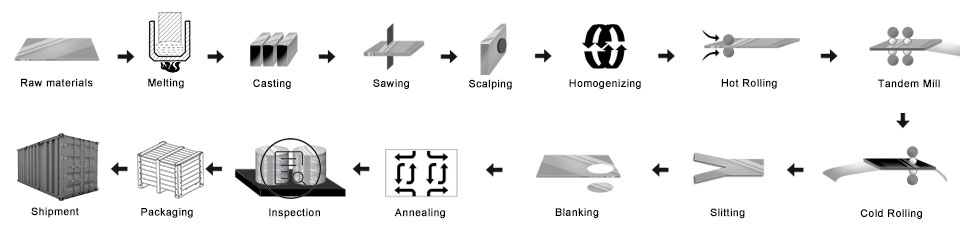
- Prepare as ligas mestres
- Forno de fusão: coloque as ligas no forno de fusão
- Lingote de alumínio fundido DC: Para fazer o lingote mãe
- Fresar o lingote de alumínio: para tornar a superfície e o lado lisos
- Forno de aquecimento
- Laminador a quente: fez a bobina mãe
- Laminador a frio: a bobina mãe foi enrolada conforme a espessura que você deseja comprar
- Processo de perfuração: torne-se do tamanho que você deseja
- Forno de recozimento: mudar o temperamento
- Inspeção final
- Embalagem: caixa de madeira ou palete de madeira
- Entrega
Controle de qualidade
Garantia Abaixo a inspeção será feita na produção.
- um. detecção de raios—TR;
- b. testes ultrassônicos—UT;
- c. Teste de Partículas Magnéticas-MT;
- d. testes de penetração-PT;
- e. detecção de falhas por correntes parasitas-ET
1) Esteja livre de manchas de óleo, Dente, Inclusão, Arranhões, Mancha, Descoloração Óxida, Pausas, Corrosão, Marcas de rolo, Listras de sujeira, e outros defeitos que interferirão no uso.
2) Superfície sem linha preta, limpo, mancha periódica, defeitos de impressão em rolo, como outros padrões de controle interno da gko.
Embalagem de discos de alumínio:
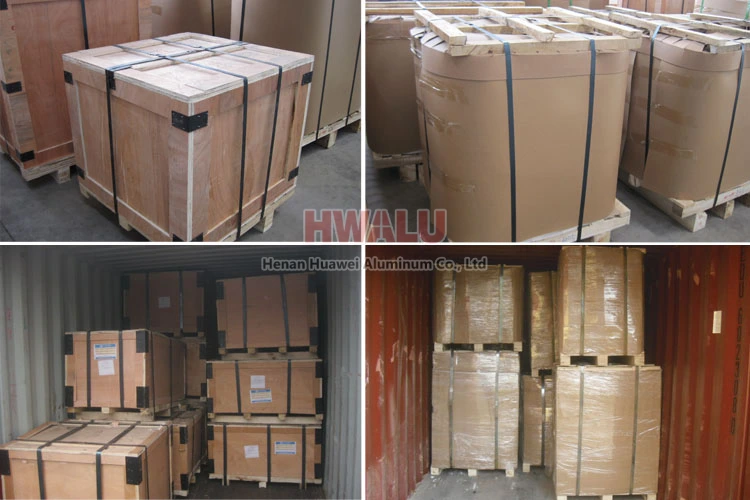
Os círculos de alumínio podem ser embalados de acordo com os padrões de exportação, cobrindo com papel pardo e filme plástico. Finalmente, a Rodada de Alumínio é fixada em um palete de madeira/caixa de madeira.
- Coloque os secadores ao lado do círculo de alumínio, mantenha os produtos secos e limpos.
- Use papel plástico limpo, embale o círculo de alumínio, mantenha uma boa vedação.
- Use o papel de pele de cobra, embale a superfície do papel plástico, mantenha uma boa vedação.
- Próximo, existem duas formas de embalagem: Uma maneira é a embalagem de paletes de madeira, usando o papel crocante embalando a superfície; Outra forma é a embalagem em caixa de madeira, usando a caixa de madeira embalando a superfície.
- Finalmente, coloque a correia de aço na superfície da caixa de madeira, mantendo a solidez e segurança da caixa de madeira.
Círculo de alumínio de Henan Huawei Alumínio. atender ao padrão de exportação. Filme plástico e papel pardo podem ser cobertos de acordo com as necessidades dos clientes. Além do mais, uma caixa de madeira ou palete de madeira é adotada para proteger os produtos contra danos durante a entrega. Existem dois tipos de embalagens, que estão de olho na parede ou de olho no céu. Os clientes podem escolher qualquer um deles para sua conveniência. De um modo geral, há 2 toneladas em um pacote, e carregando 18-22 toneladas em contêiner 1×20′, e 20-24 toneladas em contêiner 1×40′.
Por que nos escolher?
Para acompanhar os tempos, A HWALU continua introduzindo equipamentos e técnicas de última geração para melhorar sua competitividade. Sempre siga a filosofia empresarial de qualidade como centro e cliente em primeiro lugar, fornecer produtos da série de círculo de disco de alumínio da mais alta qualidade para todas as partes do mundo. Mais …

