Aluminium instrumentenbakken: Hoe u de passivatiemethode en ruwheid selecteert 3003 legering blad?
1. Invoering: Toepassingsachtergrond en kernvereisten van 3003 Instrumentenschalen van aluminiumlegering
3003 aluminium legering instrumententrays van bladmateriaal (chirurgische instrumentenbakken, laboratorium reagensbakken, industriële opbergbakken voor precisie-instrumenten) zijn belangrijke hulpapparatuur in de medische wereld, wetenschappelijk onderzoek, en hoogwaardige productievelden. Ze moeten bestand zijn tegen langdurige gebruiksomstandigheden, zoals “chemische corrosie (contact met ontsmettingsmiddelen, lichaamsvloeistoffen/reagentia), mechanische wrijving (omgaan met instrumenten), en veelvuldig schoonmaken (sterilisatie bij hoge temperatuur en hoge druk)”. Opmerkelijk, hun kernprestatie-eisen zijn gericht op drie kritische aspecten:
- Hoge corrosieweerstand: Weersta erosie door povidonjodium, alcohol, zure ontsmettingsmiddelen, enz., om oxidatieve roestvorming te voorkomen (witte roest/zwarte vlekken) van het aluminiumsubstraat, waardoor een levensduur van ≥3 jaar wordt gegarandeerd 3003 Instrumentenschalen van aluminiumlegering;
- Hoge netheid: Geen poriën of depressies op het oppervlak om aanhechting van verontreinigingen te voorkomen (bacteriën, reagensresten), voldoen aan de medische ISO 10993-1 biocompatibiliteit en laboratorium-GLP-reinheidsnormen;
- Matige antislipprestaties: Instrumenten mogen niet gemakkelijk glijden wanneer ze worden geplaatst, terwijl het reinigingsgemak wordt gegarandeerd (geen vuilophoping door overmatige ruwheid).
Specifiek, 3003 Al-Mn-legering (bevattend 1.0%-1.5% Mn) is het mainstream basismateriaal voor dergelijke trays geworden (rekenschap van meer dan 60%) vanwege zijn “matige sterkte (treksterkte 140-160 MPa, Voldoen aan de draagkrachtvereiste van 5-10 kg van 3003 Instrumentenschalen van aluminiumlegering), goede vervormbaarheid (kwalificatiepercentage stempelen ≥95%), en beheersbare kosten (15%-20% lager dan 5052)”. Echter, de natuurlijke oxidefilm van 3003 legering (dikte 5-10nm) is dun en poreus, waardoor er onvoldoende corrosiebestendigheid is; bovendien, Een onjuiste selectie van de oppervlakteruwheid zal de balans tussen zuiverheid en antislipprestaties direct verstoren 3003 Instrumentenschalen van aluminiumlegering.
Daarom, de gecoördineerde selectie van passivatie methoden (het construeren van stabiele beschermende films) En oppervlakteruwheid (het reguleren van interface-eigenschappen) is van cruciaal belang voor het bepalen van de prestaties van 3003 Instrumentenschalen van aluminiumlegering, waarvoor een nauwkeurig ontwerp vereist is op basis van specifieke serviceomstandigheden.

2. Passiveringsmethode Selectie voor 3003 Instrumentenschalen van aluminiumlegering
Om de onvoldoende corrosieweerstand van 3003 natuurlijke oxidefilm van de legering, passivatietechnologie wordt geïntroduceerd – de kern ervan is het vormen van een “gespannen, sterk hechtende beschermfolie” op het oppervlak van 3003 legering via chemische/elektrochemische methoden, blokkeert het contact tussen het substraat en corrosieve media. Gebaseerd op de scenariokenmerken van 3003 Instrumentenschalen van aluminiumlegering (bijv., milieuconformiteit op medisch niveau, weerstand tegen laboratoriumreagens), reguliere passivatiemethoden zijn onderverdeeld in chromaatpassivering (traditioneel) En chroomvrije passivatie (huidige milieuvriendelijke mainstream). De selectie moet worden gemaakt door de filmprestaties uitgebreid te vergelijken, milieu-naleving, en procesaanpassingsvermogen.
(1) Prestatievergelijking en toepassingsscenario's van reguliere passivatiemethoden
Om een duidelijke basis te bieden voor het selecteren van de meest geschikte passivatiemethode voor verschillende soorten 3003 Instrumentenschalen van aluminiumlegering, de prestatie- en toepassingsscenario's van deze reguliere technologieën worden hieronder in detail vergeleken:
| Passiveringsmethode |
Procesparameters (voor 3003 Legering) |
Filmkenmerken |
Corrosiebestendigheid (Neutrale zoutnevel volgens ASTM B117) |
Milieuvriendelijkheid |
Toepasselijke soorten 3003 Instrumentenschalen van aluminiumlegering |
| Chromaatpassivering (Cr⁶⁺-gebaseerd) |
Temperatuur 25-35°C, tijd 5-8min, CrO₃ 50-80 g/l |
Dikte 0,5-1,0 μm, oranje-geel, hechtingsgraad 1 (dwarsdoorsnede proef) |
300-400h zonder witte roest |
Bevat Cr⁶⁺, verboden door EU RoHS, beperkt in medische scenario's |
Industriële niet-schone milieudienbladen (bijv., mechanische onderdelenopslag) |
| Chroomvrij Passiveren – Op fosfaat gebaseerd |
Temperatuur 30-40°C, tijd 8-12min, H₃PO₄ 30-50g/L + corrosieremmer (Zn²⁺) |
Dikte 0,3-0,6 μm, transparant, hechtingsgraad 1 |
150-200h zonder witte roest |
Vrij van zware metalen, eco-conform |
Laden voor algemene laboratoriumreagens (niet-sterke corrosiescenario's) |
| Chroomvrij Passiveren – Op basis van zirkonium-titanium |
Temperatuur 40-50°C, tijd 10-15min, Zr(SO₄)₂ 10-15 g/l + Van(SO₄)₂ 5-8 g/l |
Dikte 0,1-0,3 μm, kleurloos, hechtingsgraad 0 (optimaal) |
450-500h zonder witte roest |
Vrij van zware metalen, voldoet aan de medische FDA-certificering |
Chirurgische instrumententrays, zeer zuivere laboratoriumtrays |
| Chroomvrij Passiveren – Silaanbehandeling |
Temperatuur 20-25°C, tijd 15-20min, y-aminopropyltriethoxysilaan 2%-5% (volumefractie) |
Dikte 0,05-0,1 μm, transparant, hechtingsgraad 0 |
100-150h zonder witte roest |
Milieuvriendelijk, biologisch afbreekbaar |
Lichte belasting, scenario's met weinig corrosie (bijv., tandheelkundige kleine instrumententrays) |
(2) Belangrijke procesbeheersingspunten voor passivatie (voor 3003 Instrumentenschalen van aluminiumlegering)
Om door het passivatieproces de corrosieweerstand en levensduur effectief te verbeteren 3003 Instrumentenschalen van aluminiumlegering, De volgende belangrijke procescontrolepunten moeten tijdens de productie strikt in acht worden genomen:
- Aanpassing vóór de behandeling: Vóór passivatie, een voorbehandeling in drie stappen”ontvetten (alkalische ontvetter, temperatuur 50-60°C, tijd 3-5min) → beitsen (salpeterzuur 10%-15%, kamertemperatuur, tijd 1-2min, het verwijderen van oxidehuid) → waterwassen (gedeïoniseerd water, pH 6.5-7.5)”– moet worden afgerond. Dit zorgt ervoor dat er geen olie- of oxidelaag op het oppervlak achterblijft 3003 Instrumentenschalen van aluminiumlegering; anders, de passivatiefilm is gevoelig voor gaatjes, peeling, of ongelijkmatige dekking.
- Naharding van de film: Afhankelijk van het passivatietype, vereisten voor naharding variëren: na passivatie op basis van zirkonium-titaan, hittebehoud bij 120-150°C gedurende 20-30 minuten is vereist om de Zr-Ti-O-bindingen in de film te vernetten en te verdichten, wat de corrosieweerstand van kan verbeteren 3003 Instrumentenschalen van aluminiumlegering van 30%-40%; in tegenstelling, Op fosfonaat gebaseerde passivatie vereist alleen luchtdrogen bij kamertemperatuur, waardoor het meer geschikt is voor grote dienbladen (bijv., 1200Chirurgische trays van ×600 mm) die moeilijk gelijkmatig te verwarmen zijn.
- Filminspectie: Voor 3003 Instrumententrays van aluminiumlegering die worden gebruikt in medische scenario's (de meest veeleisende toepassing), strikte post-passiveringsinspectie is verplicht: ze moeten passeren “hechtingstest (cross-cut-test volgens ASTM D3359, cijfer 0-1), corrosiebestendigheidstest (neutrale zoutnevel ≥400h zonder witte roest), en ionenresidutest (Cr⁶⁺, Pb²⁺, enz. ≤10 ppm)” om de naleving van de medische veiligheidsnormen te garanderen.

3. Ruwheid Selectie voor 3003 Instrumentenschalen van aluminiumlegering
Voorbij passivatie, oppervlakteruwheid is een andere kritische factor die rechtstreeks van invloed is op de kernprestaties van 3003 Instrumententrays van aluminiumlegering -het regelt niet alleen het antislipgedrag van op de schaal geplaatste instrumenten, maar ook het reinigingsgemak en de hechting van de passivatiefilm. Bij dergelijke trays moeten twee extreme ruwheidsomstandigheden worden vermeden, omdat ze de prestaties ernstig in gevaar brengen:
- Te glad (Ra < 0.2urn): De statische wrijvingscoëfficiënt tussen het schaaloppervlak en de instrumenten (bijv., roestvrijstalen chirurgische instrumenten) zakt naar beneden 0.3, waardoor instrumenten gemakkelijk glijden, zelfs bij een lichte helling van 15°; verder, het kleine contactoppervlak tussen de passivatiefilm en het gladde substraat vermindert de hechting van de film 30%-50%, wat leidt tot het loslaten van de film tijdens frequente sterilisatie.
- Overdreven ruw (Ra > 1.6urn): De poriëndiepte aan het oppervlak is groter dan 5 μm, het creëren van verborgen ruimtes voor verontreinigingen (bijv., bloedresten, druppeltjes reagens) zich ophopen – deze resten kunnen tijdens de standaardreiniging niet volledig worden verwijderd, het verhogen van de bacteriële groeisnelheid met 5-8 keer; aanvullend, ruwe pieken fungeren als anodes in corrosiecellen, het versnellen van lokaal roesten van de 3003 substraat van aluminiumlegering en verkorting van de levensduur van de lade.
(1) Ruwheidsselectienormen voor verschillende scenario's
Gebaseerd op de wisselende belasting, gebruiksfrequentie, en netheidseisen van 3003 Instrumentenschalen van aluminiumlegering op verschillende gebieden, De volgende gerichte selectieschema's voor de ruwheid zijn opgesteld om de prestaties en de bruikbaarheid in evenwicht te brengen:
| Soort van 3003 Instrumentenbakje van aluminiumlegering |
Kernvereisten |
Aanbevolen Ra-waarde (urn) |
Ruwheidscontrolemethode |
Ondersteunende behandeling |
| Chirurgische instrumentenbak (belasting 5-10kg) |
Hoge antislip, hoge netheid, Hoge corrosieweerstand |
0.4-0.6 |
Koudwalsen (rol Ra 0,4 μm, reductiepercentage passeren 15%-20%) + chemisch polijsten (fosforzuur + salpeterzuur, tijd 3-5min) |
Na passivatie op basis van zirkonium-titanium, medische antibacteriële coating spuiten (bijv., nano-zilver) op het oppervlak om de biocompatibiliteit te verbeteren |
| Laboratorium reagensbakje (belasting 2-5kg) |
Matige antislip, eenvoudige reiniging, weerstand tegen corrosie van reagentia |
0.6-0.8 |
Koudwalsen (rol Ra 0,6 μm, reductiepercentage passeren 20%-25%) + mechanisch polijsten (wol wiel, rotatiesnelheid 1500r/min) |
Passivering op basis van fosfaat, er is geen extra coating nodig om contaminatie van reagentia te voorkomen |
| Industrieel precisie-instrumentenbakje (belasting 10-15kg) |
Sterke antislip, olie weerstand |
1.0-1.2 |
Koudwalsen (rol Ra 1,0 μm, reductiepercentage passeren 25%-30%) + zandstralen (kwarts zand, deeltjesgrootte 80 gaas) |
Chromaatpassivering (indien toegestaan door de milieuvoorschriften) of op zirkonium-titanium gebaseerde passivatie voor kosteneffectiviteit |
(2) Ruwheidsinspectie- en controleproces (Aangepast aan 3003 Instrumentenschalen van aluminiumlegering)
Om een consistente ruwheid over batches te garanderen 3003 Instrumentenschalen van aluminiumlegering, de volgende inspectie- en controleprocessen moeten in de productie worden geïntegreerd:
- Inspectie standaard: Gebruik een laserruwheidsmeter (nauwkeurigheid ±0,02 μm) te bemonsteren 5 uniforme punten op het oppervlak van elke lade (1 middelpunt en 1 punt op elke hoek) voor ISO 4287 normen, bereken vervolgens de gemiddelde Ra-waarde – dit voorkomt fouten veroorzaakt door lokale onregelmatigheden in het oppervlak.
- Controle van het koudwalsproces: Koudwalsen is de belangrijkste schakel voor het bereiken van de beoogde ruwheid. Specifiek, de rolruwheid moet 0,1-0,2 μm lager zijn dan de beoogde Ra-waarde van de 3003 Instrumentenschalen van aluminiumlegering (bijv., voor een doel-Ra van 0,6 μm, de rol Ra moet 0,4 μm zijn); aanvullend, de rolsnelheid wordt geregeld op 5-8 m/min om krassen op het oppervlak of ongelijkmatige vervorming veroorzaakt door te hoge snelheid te voorkomen.

4. Gecoördineerde verificatie van passivatie en ruwheid voor 3003 Instrumentenschalen van aluminiumlegering
Om het synergetische effect van passivatiemethoden en oppervlakteruwheid op de uitgebreide prestaties van empirisch te valideren 3003 Instrumentenschalen van aluminiumlegering, er werd een reeks gecontroleerde experimenten uitgevoerd met behulp van standaard schaalmonsters, met prestatiestatistieken die zijn afgestemd op gebruiksvereisten in de praktijk.
(1) Experimenteel schemaontwerp
- Monstervoorbereiding:
-
- Substraat: 3003 platen van aluminiumlegering (H14 humeur), uniforme dikte van 2,0 mm (een gebruikelijke dikte voor instrumententrays met gemiddelde belasting);
-
- Formaat lade: 600×400×50mm (standaardafmetingen van chirurgische instrumententrays);
-
- Experimentele groepen: Er zijn vier groepen ontworpen om reguliere passivatie-ruwheidscombinaties te dekken:
-
-
- Groep 1: Chromaatpassivering + Ra 1,2 μm;
-
-
- Groep 2: Passivering op basis van fosfaat + Ra 0,8 μm;
-
-
- Groep 3: Passivering op basis van zirkonium-titanium + Ra 0,6 μm;
-
-
- Groep 4: Silaan behandeling + Ra 0,4 μm.
- Prestatietesten:
-
- Corrosiebestendigheid: Neutrale zoutsproeitest volgens ASTM B117 (5% NaCl-oplossing, 35°C constante temperatuur), het registreren van de tijd waarop voor het eerst witte roest op het oppervlak van de lade verschijnt;
-
- Netheid: Simuleer chirurgische reinigingsprocedures voor trays (alcohol afvegen + hogedrukwaterpistoolspoeling op 0,8 MPa), detecteer vervolgens resterend eiwit op het oppervlak met behulp van de Coomassie briljante blauwe methode (een belangrijke indicator van medische reinheid);
-
- Antislipprestaties: Kanteltest: plaats een standaard roestvrijstalen hemostaat (gewicht 200g) op het midden van de lade, Vergroot geleidelijk de kantelhoek, en noteer de hoek waaronder de hemostaat begint te glijden;
-
- Passiveringsfilmhechting: Cross-cut-test volgens ASTM D3359, het gebruik van een mes om de film te krassen en het evalueren van de hechtingsgraad op basis van de mate van loslaten van de film.
(2) Experimentele resultaten en analyse
Een analyse van de experimentele gegevens onthult duidelijke prestatieverschillen tussen de vier groepen, met duidelijke implicaties voor de praktische selectie van passivatie en ruwheid voor 3003 Instrumentenschalen van aluminiumlegering:
| Groep |
Passiveringsmethode |
Ra (urn) |
Zoutnevel Witte Roest Tijd (H) |
Resterend eiwit (mg/m²) |
Glijdende kantelhoek (°) |
Hechtingsgraad |
| 1 |
Chromaatpassivering |
1.2 |
380 |
8.5 |
35 |
1 |
| 2 |
Fosfaatgebaseerde passivatie |
0.8 |
180 |
1.8 |
32 |
1 |
| 3 |
Passivering op basis van zirkonium-titanium |
0.6 |
480 |
1.2 |
28 |
0 |
| 4 |
Silaanbehandeling |
0.4 |
120 |
0.8 |
15 |
0 |
Belangrijkste conclusies uit de resultaten:
- Groep 3 (Passivering op basis van zirkonium-titanium + Ra 0,6 μm) vertoonde de optimale uitgebreide prestaties: het bereikte de langste weerstand tegen zoutsproeien (480h zonder witte roest), het laagste resterende eiwit (1.2mg/m², ruim onder de medische norm van 5 mg/m²), en een matige glijdende kantelhoek (28°, zorgt voor antislipstabiliteit zonder de reiniging in gevaar te brengen). Deze combinatie voldoet volledig aan de strenge eisen van medische kwaliteit 3003 Instrumentenschalen van aluminiumlegering.
- Groep 1, ondanks de goede corrosiebestendigheid, voldeed niet aan de milieu- en reinheidsnormen vanwege het Cr⁶⁺-gehalte en de buitensporige ruwheid; Groep 2 ontbrak voldoende corrosieweerstand voor langdurig gebruik; Groep 4 had slechte antislipprestaties, waardoor het ongeschikt is voor scenario's die een stabiele plaatsing van instrumenten vereisen. Geen van deze groepen was geschikt voor medische of veeleisende laboratoriumtoepassingen.
5. Aanbevelingen voor technische toepassingen voor 3003 Instrumentenschalen van aluminiumlegering
De bovenstaande onderzoeksresultaten vertalen naar praktische industriële productie en de stabiele prestaties ervan op schaal garanderen, de volgende technische toepassingsaanbevelingen worden voorgesteld, gericht op kwaliteitscontrole en kostenoptimalisatie.
(1) Kwaliteitsinspectieproces voor massaproductie
Een rigoureus kwaliteitscontrolesysteem is essentieel om de consistentie tussen batches te behouden 3003 aluminium legering instrumententrays van bladmateriaal. Het proces moet drie belangrijke schakels omvatten:
- Passivering kwaliteitscontrole:
-
- Visuele inspectie: Willekeurig monster 10% aantal trays per batch om te controleren op filmdefecten (bijv., ontbrekende coating, kleur verschil, gaatjes), zorgen voor een uniforme filmdekking;
-
- Bemonstering van corrosiebestendigheid: Selecteer 3 trays per batch voor een 24-uurs neutrale zoutsproeitest – trays zonder witte roest of verkleuring worden als gekwalificeerd beschouwd (een verkorte test om efficiëntie en betrouwbaarheid in evenwicht te brengen);
-
- Hechtingstest: Voer cross-cut tests uit op 2 bakken per batch, waarvoor een hechtingsgraad vereist is 0 voor medische dienbladen en kwaliteit 1 voor industriële/laboratoriumtrays.
- Ruwheidsinspectie:
-
- Inspectie vóór het vormen: Steekproef 5 punten per rol van 3003 aluminium platen (hoofd, midden, staart) ruwheid te meten, zorgen voor een afwijking van de Ra-waarde ≤0,2 μm van het doel;
-
- Inspectie na het vormen: Focus op de randen van de lade (gevoelig voor bramen of vervorming tijdens het stempelen), waarbij rand Ra ≤1,0 μm vereist is om krassen op operators of instrumenten te voorkomen.
(2) Strategie voor kostenevenwicht
Terwijl hoogwaardige passivatie- en ruwheidsconfiguraties de kwaliteit van de tray verbeteren, kostenbeheersing blijft van cruciaal belang voor het concurrentievermogen van de markt. Er worden twee kostenoptimalisatiestrategieën aanbevolen:
- Optimalisatie van materiaalkosten: 3003 aluminiumplaten met Ra 0,4-0,8 μm zijn 8%-12% duurder dan gewone lakens (Ra 1,6 μm), maar ze verlagen de schoonmaak- en onderhoudskosten op de lange termijn met 30%-40% (minder sterilisatiecycli, langere levensduur). Voor kostengevoelige industriële scenario's, deze afweging is bijzonder waardevol.
- Optimalisatie van proceskosten: Passivering op basis van zirkonium-titanium is dat wel 25%-30% duurder dan passivatie op basis van fosfaat, maar in medische scenario's, het vermijdt dure vervangingen van trays veroorzaakt door corrosie (kosten voor één medisch dienblad: 500-1000 yuan; levensduur verlengen met 2 bespaart aanzienlijke vervangingskosten). Voor niet-kritische toepassingen (bijv., corrosiearme laboratoriumschalen), Op fosfaat gebaseerde passivatie kan worden gebruikt om de kosten te verlagen zonder dat dit ten koste gaat van de essentiële prestaties.

6. Conclusie
Samengevat, deze studie onderzoekt systematisch de selectie van passivatiemethoden en oppervlakteruwheid voor 3003 Instrumentenschalen van aluminiumlegering, het aanpakken van de belangrijkste prestatie-uitdagingen van corrosieweerstand, netheid, en antislipstabiliteit. De belangrijkste conclusies zijn als volgt:
- Passiveringsmethode selectie: Chroomvrije passivatie op basis van zirkonium-titanium (met een zoutsproeilevensduur van ≥450 uur) is de voorkeurskeuze voor medische en hoge-reinheidsscenario's, omdat het voldoet aan de milieuvoorschriften en strenge eisen op het gebied van corrosiebestendigheid; Passivering op basis van fosfaat is vanwege de kosteneffectiviteit geschikt voor algemene laboratoriumscenario's; chromaatpassivering kan alleen worden gebruikt in industriële, niet-schone omgevingen zonder milieubeperkingen, vergezeld van een goede behandeling van Cr⁶⁺-afval.
- Ruwheid selectie: Voor chirurgische instrumententrays (grote vraag), een Ra-waarde van 0,4-0,6 μm wordt aanbevolen; voor laboratoriumreagenstrays (matige vraag), Ra 0,6-0,8 μm balanceert antislip- en reinigingsbehoeften; voor industriële precisie-instrumentenbakken (sterke antislipvraag), Ra 1,0-1,2μm biedt voldoende wrijving zonder overmatig besmettingsrisico.
- Synergetische optimalisatie: De combinatie van op zirkonium-titanium gebaseerde passivatie en een Ra-waarde van 0,4-0,6 μm bereikt de optimale uitgebreide prestatie daarvoor, waardoor het de gouden standaard is voor hoogwaardige toepassingen zoals medische chirurgie en precisielaboratoria.
Vooruitkijken, toekomstig onderzoek kan zich richten op geavanceerde technologieën om prestatieknelpunten verder te doorbreken: “samengestelde passivatie (combinatie van behandelingen op basis van zirkonium-titanium en silaan)” kan tegelijkertijd de corrosieweerstand en antibacteriële eigenschappen verbeteren; “laser microtextuur” kan de traditionele ruwheidscontrole vervangen, waardoor een nauwkeurig ontwerp van antislipmicrostructuren mogelijk is (bijv., micro-uitsteeksels) om besmettingsrisico's door overmatige ruwheid te voorkomen. Deze innovaties zullen de toepassing ervan bevorderen op geavanceerde gebieden, zoals minimaal invasieve chirurgische instrumenten en de opslag van halfgeleiderwafels..
Eigenschappen van de aluminium cirkel:
Aluminium cirkel is geschikt voor vele markten, inclusief kookgerei, auto- en verlichtingsindustrie, enz., dankzij goede producteigenschappen:
- Lage anisotropie, wat het dieptrekken vergemakkelijkt
- Sterke mechanische eigenschappen
- Hoge en homogene warmteverspreiding
- Mogelijkheid om te emailleren, bedekt met PTFE (of anderen), geanodiseerd
- Goede reflectiviteit
- Hoge sterkte-gewichtsverhouding
- Duurzaamheid en weerstand tegen corrosie
Aluminium cirkels proces
Ingots/Master-legeringen — Smeltoven – Houdoven — DC. Caster — Plaat —- Scalper — Warmwalserij – Koudwalserij – Ponsen – Gloeioven — Eindinspectie – verpakking — Levering
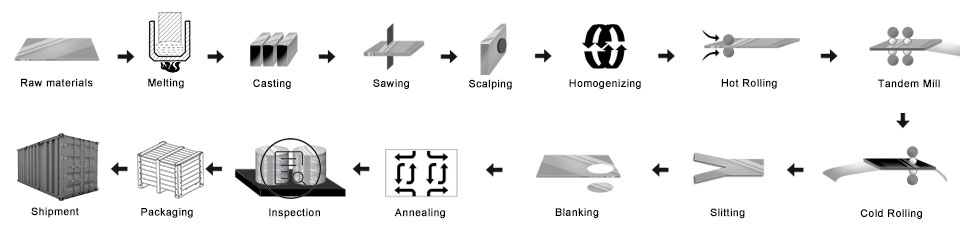
- Bereid de masterlegeringen voor
- Smeltoven: plaats de legeringen in de smeltoven
- D.C. gegoten aluminium staaf: Om de moederbaar te maken
- Frees de aluminium staaf: om het oppervlak en de zijkant glad te maken
- Verwarming oven
- Warmwalserij: de moederspoel gemaakt
- Koudewalserij: de moederspoel werd gerold in de dikte die u wilt kopen
- Ponsen proces: word de maat die je wilt
- Gloeioven: verander het humeur
- Eind inspectie
- Inpakken: houten kist of houten pallet
- Levering
Kwaliteitscontrole
Zekerheid Onderstaande inspectie zal tijdens de productie worden uitgevoerd.
- A. straal detectie—RT;
- B. ultrasoon testen—UT;
- C. Magnetische deeltjestesten-MT;
- D. penetratietesten-PT;
- e. wervelstroomfoutdetectie-ET
1) Wees vrij van olievlekken, Deuk, Inclusie, Krassen, Vlek, Oxideverkleuring, Pauzes, Corrosie, Rolmarkeringen, Vuil strepen, en andere gebreken die het gebruik hinderen.
2) Oppervlak zonder zwarte lijn, zuiver gesneden, periodieke vlek, defecten bij het afdrukken van rollen, zoals andere interne controlenormen van de gko.
Aluminium schijven verpakking:
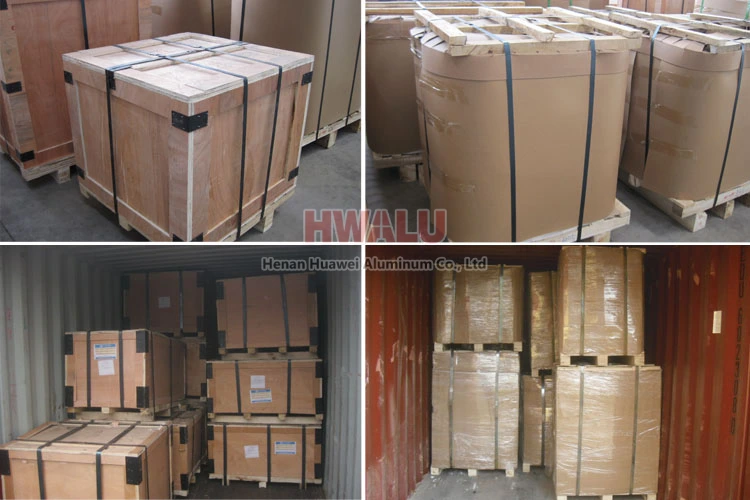
Aluminiumcirkels kunnen volgens exportnormen worden verpakt, bedekken met bruin papier en plastic folie. Eindelijk, de Aluminium Round wordt op een houten pallet/houten kist bevestigd.
- Plaats de drogers naast de aluminium cirkel, houd de producten droog en schoon.
- Gebruik schoon plastic papier, pak de aluminium cirkel in, goede afdichting behouden.
- Gebruik het slangenleerpapier, pak het oppervlak van het plastic papier in, goede afdichting behouden.
- Volgende, Er zijn twee manieren van verpakken: Eén manier is het verpakken van houten pallets, gebruik het knapperige papier dat het oppervlak bedekt; Een andere manier is het verpakken van houten kistjes, met behulp van de houten kist die het oppervlak inpakt.
- Eindelijk, leg de stalen riem op het oppervlak van de houten kist, het houden van de houten kistvastheid en veiligheid.
Aluminium cirkel van Henan Huawei Aluminium. voldoen aan de exportnorm. Plastic folie en bruin papier kunnen naar wens van de klant worden afgedekt. Bovendien, Er wordt een houten kist of houten pallet gebruikt om producten tijdens de levering tegen schade te beschermen. Er zijn twee soorten verpakkingen, die oog in oog staan met de muur of oog naar de lucht. Klanten kunnen voor hun gemak een van beide kiezen. In het algemeen, er zijn 2 ton in één pakket, en laden 18-22 ton in 1×20′ container, En 20-24 ton in 1×40′ container.
Waarom voor ons kiezen?
Om met de tijd mee te gaan, HWALU blijft de modernste apparatuur en techniek introduceren om zijn concurrentiepositie te verbeteren. Houd u altijd eerst aan de bedrijfsfilosofie van kwaliteit als centrum en klant, om producten uit de aluminium schijfcirkelserie van de hoogste kwaliteit aan alle delen van de wereld te leveren. Meer …

