1060 Discos de alumínio para produtos domésticos – um material otimizado para fiação e estamparia
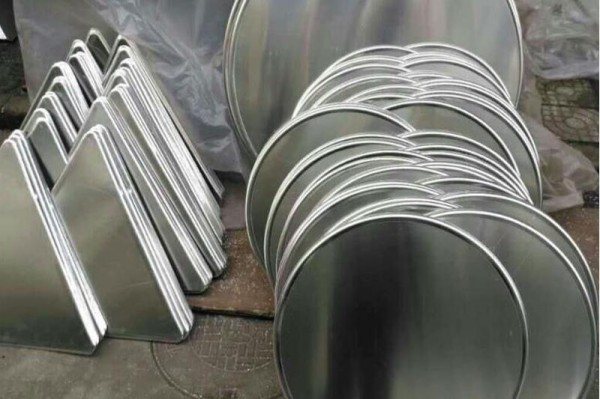
Aluminum has become one of the most widely used metal materials in modern manufacturing due to its excellent formability, resistência à corrosão, e características leves. Dentro da família do alumínio, 1060 alumínio—a high-purity alloy containing more than 99.6% aluminum—plays a crucial role in applications that require outstanding plasticity and exceptional surface quality. When processed into discos de alumínio, this alloy becomes especially suitable for producing a wide variety of household products through spinning and stamping processes. These two forming methods are vital in industries such as cookware, utensílios de cozinha, lighting accessories, recipientes, and daily-use products.
The following article provides an in-depth exploration of why 1060 aluminum discs remain one of the most preferred metal materials for daily-use product manufacturing. It examines their metallurgical characteristics, formando comportamento, propriedades mecânicas, qualidade da superfície, production workflow, and application performance. It also highlights the engineering advantages of using 1060 aluminum discs in spinning and stamping, contrasted with other alloy series such as 1050, 1100, 3003, e 5052. The goal is to give manufacturers, engenheiros, procurement teams, and industry analysts a complete understanding of the material and its processing advantages.
Material Characteristics of 1060 Aluminum and Their Importance in Household Product Manufacturing
The defining feature of 1060 aluminum is its extremely high aluminum content of ≥99,6%, which provides a combination of superb ductility, condutividade, resistência à corrosão, e soft mechanical behavior. Unlike stronger alloys such as 3003 ou 5052, 1060 aluminum is valued not for strength but specifically for its high elongation and ease of deformation.
1. Chemical Composition Overview
| Elemento |
Typical Content (%) |
Functional Influence |
| Alumínio (Al) |
99.6 min |
Base metal providing ductility and corrosion resistance |
| Silício (E) |
≤0,25 |
Contributes to machinability and melt fluidity |
| Ferro (Fé) |
≤0,35 |
Impacts strength and hardness slightly |
| Cobre (Cu) |
≤0,05 |
Minimal, maintains corrosion resistance |
| Manganês (Mn) |
≤0,03 |
Almost negligible in 1060 liga |
| Zinco (Zn) |
≤0,05 |
Helps stability but kept low |
| Outros elementos |
≤0,03 |
Rastreamento |
The high-purity composition ensures:
- excelente condutividade térmica
- excellent reflectivity
- soft texture suited for deep deformation
- resistance to food acids and detergents
- long-term stability in humid kitchen environments
- high recyclability for sustainability demands
Mechanical Properties and Forming Behavior
The key reason why manufacturers prefer 1060 aluminum disc for household products lies in its forming characteristics. During spinning and stamping, the material must be able to undergo severe deformation without tearing, rachaduras, or losing surface quality.
2. Mechanical Performance of 1060 Discos de alumínio
| Propriedade |
Valor típico |
Relevance to Household Products |
| Resistência à tracção |
65–100 MPa |
Soft enough for deep drawing |
| Força de rendimento |
30–50 MPa |
Allows smooth deformation |
| Alongamento |
≥30% |
Critical for spinning cookware |
| Dureza (HB) |
20–30 |
Suitable for stamping shallow or deep shapes |
| Densidade |
2.71 g/cm³ |
Produces lightweight products |
| Condutividade |
Alto |
Useful for cookware heat conductivity |
For cookware such as pots, chaleiras, bacias, and pans, alto alongamento ensures that the aluminum disc can expand from a flat plate into a three-dimensional cooking vessel without surface cracking.
Por que 1060 Aluminum Discs Excel in Spinning
1. Spinning Overview
Metal spinning—also called rotary forming—is a process in which a metal disc rotates rapidly on a lathe while a forming tool applies pressure to transform it into a hollow, symmetrical shape such as:
- potes
- chaleiras
- tigelas
- abajures
- kitchen containers
Durante a rotação, the metal undergoes continuous tensile and compressive deformation. A suitable material must be able to maintain structural stability while elongating significantly.
2. Superior Spinning Behavior of 1060 Alumínio
1060 exposições de alumínio:
- smooth flow of metal during spinning
- no hardening cracks even after multiple passes
- uniform wall thickness distribution
- no orange-peel surface after forming
- excellent lubrication compatibility
Since spinning often requires multiple deep forming cycles, 1060’s pure aluminum microstructure ensures that the metal does not fatigue quickly, unlike stronger or harder alloys.
Por que 1060 Aluminum Discs Are Ideal for Stamping
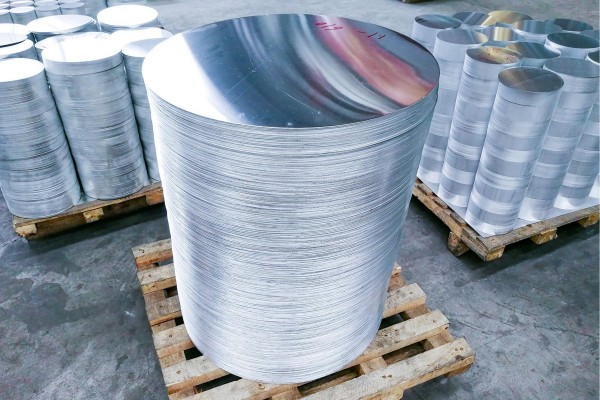
Stamping involves pressing a flat aluminum disc into a desired shape using a punch and die. Daily-use products often require:
- simple shallow stamping (pratos, tampas, bandejas)
- medium-depth stamping (bacias, cookware covers)
- combined stamping and drawing
Stamping Advantages of 1060 Liga
- Baixa resistência ao escoamento → reduces stamping force and die wear
- Alto alongamento → prevents edge cracking or wrinkling
- Uniform grain structure → stable deep-drawing performance
- Highly polishable surface → supports mirror or matte finishing
- Excellent compatibility with anodizing → essential for household cookware aesthetics
1060 aluminum produces stamped parts that are smooth, leve, and resistant to corrosion—key requirements for everyday consumer products.
Typical Household Applications of 1060 Discos de alumínio
1. Indústria de panelas
1060 discs are widely used in:
- frigideiras
- potes de leite
- caldeirões
- tea kettles
- corpos de panela de pressão
- rice cooker inner liners
The excellent thermal conductivity of pure aluminum provides uniform heat distribution, reducing cooking time and energy consumption.
2. Kitchenware and Daily-Use Containers
Household products include:
- wash basins
- food storage containers
- serving bowls
- lunch box shells
- lids and covers
These products require long-term corrosion resistance in humid environments—another advantage of 1060 liga.
3. Lighting Reflectors and Lampshades
Thanks to its natural reflectivity and ability to achieve mirror polishing, 1060 discs are used in:
- decorative lighting
- Refletores LED
- indoor lampshades

Microstructural Stability During Spinning and Drawing
The microstructure of 1060 aluminum—composed primarily of nearly pure aluminum with a limited distribution of iron and silicon constituents—plays a decisive role in defining its predictable forming behavior. Durante a rotação, the material undergoes severe localized deformation, and the grains elongate in the direction of strain. This transformation must remain stable to prevent localized thinning, enrugando, or the formation of stress bands.
1 Grain Structure Response to Rotational Forming
The rotational nature of spinning introduces cyclic plastic deformation. Unlike static deep-drawing, spinning introduces continuous incremental forming forces. Para 1060 alumínio, the material’s innate softness ensures that slip systems activate uniformly across the metal lattice. Como resultado:
- Grain elongation occurs gradually rather than abruptly.
- Localized deformation is minimized, reducing the probability of orange-peel effects.
- The metal maintains surface integrity without sudden yield point elongation.
- Springback remains low, enabling dimensional accuracy for end-use items.
These behaviors are pronounced advantages compared to harder alloys such as 5052 ou 3003, which exhibit greater springback and require stricter lubricant control.
2 Control of Recrystallization Behavior
Heat buildup is inevitable during high-speed spinning. If not managed, thermal accumulation may trigger dynamic recrystallization that alters grain size. Para 1060 círculos de alumínio, controlled annealing prior to spinning stabilizes the grain size between 60–120 μm, balancing ductility and tear resistance.
Manufacturers often adopt:
- Recozimento intermediário to reset grain uniformity after several draw operations.
- Recozimento completo (Ó temperamento) when maximum ductility is needed.
- Process annealing mid-way during multi-stage draws to restore formability.
Proper microstructural control ensures that even severe deformation shapes—deep bowls, tall canisters, curved lamp reflectors, etc.—are formed without edge cracking or strain localization.
Surface Texture, Lubrication Behavior, and Tool Interaction
The forming success of 1060 aluminum circles does not rely solely on intrinsic metal properties; the interaction between the sheet surface, the tooling, and the applied lubricant significantly alters the quality of final household products.
1 Influence of Surface Roughness
A carefully controlled surface roughness (Ra = 0.20–0.40 μm) enhances lubrication retention, improves frictional stability, and ensures consistent metal flow during both spinning and drawing. Too smooth of a surface may cause lubricant starvation; too rough may cause galling or tooling marks.
During household item manufacturing, typical roughness category choices include:
| Acabamento de superfície |
Roughness Range |
Application Relevance |
| Acabamento do moinho |
Ra 0.30–0.50 μm |
Deep-drawn cups, latas |
| Acabamento brilhante |
Ra 0.10–0.20 μm |
Decorative covers, refletores |
| Polished Finish |
Rá < 0.10 μm |
Mirror reflectors, premium goods |
Shapes with large draw ratios particularly benefit from well-balanced roughness, ensuring smooth material flow into the die cavity.
2 Lubricant Compatibility
Desde 1060 aluminum reacts moderately with certain oils, the choice of lubricant affects both the forming stability and the post-processing cleaning effort.
Common lubricants include:
- Emulsion oils for standard drawing
- Synthetic lubricants for high-speed spinning
- Solid lubricants (graphite-based) for extreme reduction ratios
- Food-safe lubricants when manufacturing cookware or kitchen items
A notable advantage of 1060 aluminum is the absence of magnesium, eliminating the risk of surface blackening caused by Mg-oil reactions—an issue common in 5xxx alloys.

Failure Modes in Forming and Their Mitigation
Even with the high ductility associated with 1060 liga, forming failures can occur if manufacturing parameters are not optimized. Understanding these failure modes and implementing preventive strategies is essential for ensuring product consistency.
1 Quebra de borda
Occurs when tensile stresses exceed localized ductility. Mitigation strategies include:
- Increasing blank-holder force gradually
- Reducing spinning feed rate
- Introducing pre-annealing
- Ensuring uniform blank thickness
2 Enrugamento
Common during deep drawing of large-diameter daily-use items such as basins or pot bodies.
Control measures include:
- Proper blank-holder design
- Higher lubrication performance
- Adjusting die entry radius
- Minimizing excessive safety margin on blank size
3 Surface Galling and Tool Marks
Galling is prevented by:
- Polished tooling
- Using hard chrome plating
- Applying suitable lubricant
- Ensuring optimal roughness of both tool and blank
4 Thinning and Breakage
Occurs when draw ratios exceed material limits. Para 1060 alumínio, safe draw ratio is:
- Single draw: 1.8–2,0
- Multi-stage deep draw: até 3.5 with intermediate annealing
Most daily necessities fall within these forming windows, fazendo 1060 circles particularly advantageous.
Manufacturing Workflow Optimization for Household Goods
The consistent production of aluminum household items—from kitchenware to storage vessels—requires managing each process step to maximize throughput and maintain quality.
A typical optimized production sequence is:
- Supressão (corte circular)
- Rebarbação
- Aplicação de lubrificação
- Primary deep drawing
- Recozimento intermediário (se necessário)
- Secondary draw or spinning
- Aparar
- Surface polishing or brushing
- Tratamento de superfície (anodização / revestimento)
- Final inspection and packaging
1 Automation Opportunities
With the rise of industrial robotics, key operations such as circle feeding, aparar, and polishing are being automated. 1060 aluminum circles benefit from automation due to consistent thickness, predictable formability, and low hardness, which reduces tool wear.

Consumer Product Categories That Benefit Most from 1060 Círculos de Alumínio
Daily necessities manufactured from 1060 circles include:
- Utensílios de cozinha: potes, frigideiras, chaleiras
- Storage Items: recipientes, latas, bins
- Household Utensils: tigelas, pratos, bandejas
- Lighting Reflectors: lamp covers, ceiling reflectors
- Decorative Items: vasos, shells, display components
- Cleaning Tools: mop bases, dustpan bodies
- Personal-care Devices: beauty appliance housings
The metal’s combination of durability, conformabilidade, and corrosion resistance ensures that finished products withstand long-term use in variable environments.
Global Market Demand and Commercial Competitiveness
The demand for aluminum household products continues to grow due to global urbanization, sustainability expectations, and consumer preference for long-lasting materials.
1 Custo-benefício
1060 aluminum circles offer the best cost-to-performance ratio among commercially pure aluminum alloys. The absence of expensive alloying elements makes it significantly cheaper than 3xxx or 5xxx series alloys while still meeting the functional requirements of most daily-use products.
2 Sustainability Appeal
Consumers increasingly prefer recyclable materials. Aluminum’s infinite recyclability gives manufacturers a powerful marketing angle. Usando 1060 alloy enhances this narrative since it recycles with minimal alloy separation issues compared to multi-element alloys.
3 Manufacturing Consistency for Large-Scale Production
The uniform mechanical properties and controlled chemical composition of 1060 circles support mass production, making them a preferred choice for global manufacturers exporting to regions such as:
- Sudeste Asiático
- Médio Oriente
- Ámérica do Sul
- África
- Europa Oriental
The demand for cost-efficient, corrosion-resistant household items continues to accelerate in these regions.
Value Added by Post-Processing for Premium Household Items
Beyond forming, the finishing processes significantly raise the product’s market value.
1 Surface Anodizing
Anodizing provides:
- Enhanced corrosion resistance
- Decorative color options
- Harder surface for scratch resistance
Colors commonly applied include silver, ouro, champanhe, preto fosco, vermelho, and natural aluminum.
2 Polishing and Mirror Finishing
Acabamento espelhado 1060 aluminum is a popular choice for:
- Decorative trays
- Luxury bowls
- High-end kitchenware
- Refletores de iluminação
The alloy’s purity enables a reflective finish of >85% reflectivity after mechanical polishing.
3 Protective Coatings
Protective layers such as transparent lacquers or food-contact safe coatings enhance durability and appearance.
The Key Role of Quality Control in 1060 Aluminum Circle Manufacturing
Maintaining tight control throughout production ensures stable forming performance and finished product quality.
Quality control measures focus on:
- Tolerância de espessura within ±0.02–0.03 mm
- Mechanical property uniformity across the coil
- Limpeza de superfície to avoid defects during spinning
- Edge preparation to prevent crack initiation
- Hardness consistency to maintain predictable forming forces
Advanced inspection systems including online Eddy-current defect detection and digital flatness scanners further enhance quality reliability.
Por que 1060 Aluminum Circles Remain the First Choice for Daily Necessities
Summarizing the numerous advantages:
- Exceptional ductility for deep drawing & fiação
- Predictable forming behavior with low springback
- Cost-effective for mass production
- Excellent corrosion resistance for daily-use environments
- Compatible with a wide range of finishes
- Environmentally sustainable with full recyclability
- Stable microstructure supporting extreme forming geometries
- Low tool wear and high forming efficiency
Because of these reasons, manufacturers continually rely on the estampagem profunda 1060 círculo de alumínio as a core material for producing high-quality, durável, and economically attractive daily household products.
Propriedades do círculo de alumínio:
O círculo de alumínio é adequado para muitos mercados, incluindo panelas, indústrias automotiva e de iluminação, etc., graças às boas características do produto:
- Baixa anisotropia, o que facilita o desenho profundo
- Propriedades mecânicas fortes
- Difusão de calor alta e homogênea
- Capacidade de ser esmaltado, coberto por PTFE (ou outros), anodizado
- Boa refletividade
- Alta relação resistência-peso
- Durabilidade e resistência à corrosão
Processo de Círculos de Alumínio
Lingotes/Ligas Mestres — Forno de fusão – Forno de retenção — DC. Rodízio — Laje —- Escalpador — Laminador a Quente – Laminador a Frio – Puncionamento – Forno de Recozimento — Inspeção Final – Embalagem — Entrega
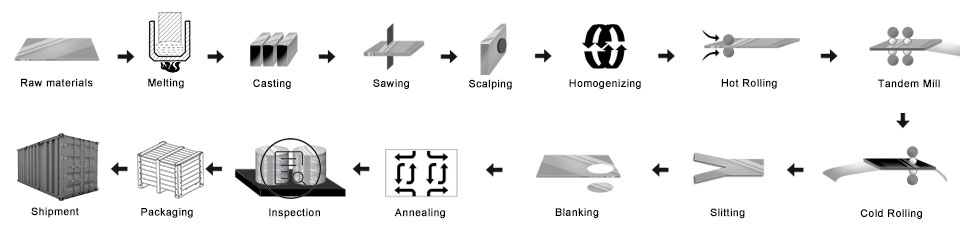
- Prepare as ligas mestres
- Forno de fusão: coloque as ligas no forno de fusão
- Lingote de alumínio fundido DC: Para fazer o lingote mãe
- Fresar o lingote de alumínio: para tornar a superfície e o lado lisos
- Forno de aquecimento
- Laminador a quente: fez a bobina mãe
- Laminador a frio: a bobina mãe foi enrolada conforme a espessura que você deseja comprar
- Processo de perfuração: torne-se do tamanho que você deseja
- Forno de recozimento: mudar o temperamento
- Inspeção final
- Embalagem: caixa de madeira ou palete de madeira
- Entrega
Controle de qualidade
Garantia Abaixo a inspeção será feita na produção.
- um. detecção de raios—TR;
- b. testes ultrassônicos—UT;
- c. Teste de Partículas Magnéticas-MT;
- d. testes de penetração-PT;
- e. detecção de falhas por correntes parasitas-ET
1) Esteja livre de manchas de óleo, Dente, Inclusão, Arranhões, Mancha, Descoloração Óxida, Pausas, Corrosão, Marcas de rolo, Listras de sujeira, e outros defeitos que interferirão no uso.
2) Superfície sem linha preta, limpo, mancha periódica, defeitos de impressão em rolo, como outros padrões de controle interno da gko.
Embalagem de discos de alumínio:
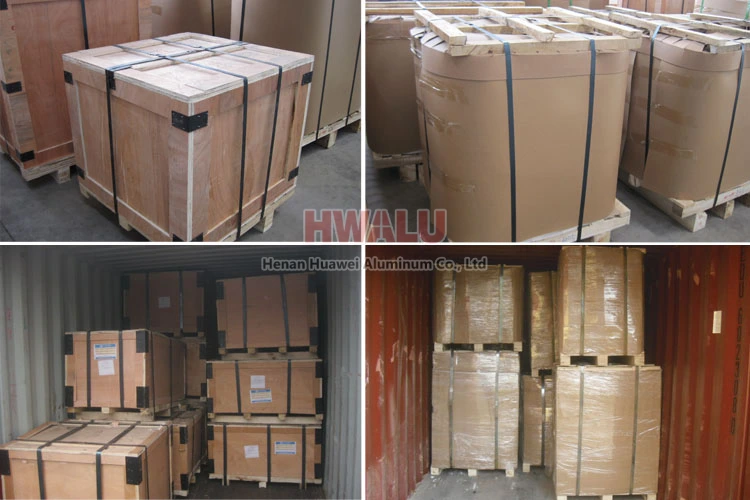
Os círculos de alumínio podem ser embalados de acordo com os padrões de exportação, cobrindo com papel pardo e filme plástico. Finalmente, a Rodada de Alumínio é fixada em um palete de madeira/caixa de madeira.
- Coloque os secadores ao lado do círculo de alumínio, mantenha os produtos secos e limpos.
- Use papel plástico limpo, embale o círculo de alumínio, mantenha uma boa vedação.
- Use o papel de pele de cobra, embale a superfície do papel plástico, mantenha uma boa vedação.
- Próximo, existem duas formas de embalagem: Uma maneira é a embalagem de paletes de madeira, usando o papel crocante embalando a superfície; Outra forma é a embalagem em caixa de madeira, usando a caixa de madeira embalando a superfície.
- Finalmente, coloque a correia de aço na superfície da caixa de madeira, mantendo a solidez e segurança da caixa de madeira.
Círculo de alumínio de Henan Huawei Alumínio. atender ao padrão de exportação. Filme plástico e papel pardo podem ser cobertos de acordo com as necessidades dos clientes. Além do mais, uma caixa de madeira ou palete de madeira é adotada para proteger os produtos contra danos durante a entrega. Existem dois tipos de embalagens, que estão de olho na parede ou de olho no céu. Os clientes podem escolher qualquer um deles para sua conveniência. De um modo geral, há 2 toneladas em um pacote, e carregando 18-22 toneladas em contêiner 1×20′, e 20-24 toneladas em contêiner 1×40′.
Por que nos escolher?
Para acompanhar os tempos, A HWALU continua introduzindo equipamentos e técnicas de última geração para melhorar sua competitividade. Sempre siga a filosofia empresarial de qualidade como centro e cliente em primeiro lugar, fornecer produtos da série de círculo de disco de alumínio da mais alta qualidade para todas as partes do mundo. Mais …

