Análise Técnica de 1060 Discos de alumínio para refletores de iluminação – Compatibilidade com polimento espelhado e vantagens de desempenho
1. Introdução a 1060 Discos de alumínio em aplicações de iluminação
Com a rápida expansão da indústria global de iluminação – desde luminárias LED comerciais até lâmpadas automotivas e iluminação arquitetônica – a demanda por equipamentos leves, alta refletividade, materiais metálicos moldáveis cresceu dramaticamente. O alumínio tornou-se o substrato preferido para refletores devido à sua baixa densidade, resistência à corrosão, relação custo-benefício, e forte compatibilidade com processos de tratamento de superfície.
Entre vários tipos de alumínio, 1060 discos refletores de alumínio se destacaram no segmento de fabricação de refletores. Sua pureza (≥99,6%), excelente ductilidade, e capacidade para acabamento espelhado de alto brilho os tornam amplamente adotados em:
- Refletores de iluminação LED
- Refletores para lâmpadas economizadoras de energia
- Iluminação de palco e estúdio
- Copos de luz interiores automotivos
- Painéis reflexivos decorativos
- Luminárias comerciais e industriais
A suavidade da liga combinada com alta refletividade proporciona um equilíbrio incomparável entre processabilidade e desempenho óptico. Este artigo oferece uma exploração técnica aprofundada do porquê 1060 alumínio discos refletores são a escolha preferida para refletores de iluminação polidos espelhados e como eles superam outros substratos metálicos.

2. Composição do Material e Características Metalúrgicas de 1060 Liga
2.1 Composição Química e Nível de Pureza
1060 liga pertence ao grupo de alumínio forjado da série 1xxx, conhecido pela pureza excepcionalmente alta. Sua composição típica inclui:
- Alumínio (Al): ≥ 99.6%
- Outros elementos: ≤ 0.4% (principalmente Si, Fé, Cu, Mn, Zn, De)
Este nível de pureza resulta em:
- Excelente condutividade elétrica e térmica
- Alta refletividade antes e depois do polimento
- Resistência superior à corrosão
- Alta ductilidade adequada para estampagem profunda e fiação
A ausência de elementos de liga significativos reduz a distorção da rede interna, permitindo uma superfície de base mais lisa, crítica para acabamento espelhado.
2.2 Propriedades mecânicas relevantes para a fabricação de refletores
As principais vantagens mecânicas incluem:
| Propriedade |
Valor típico |
| Resistência à tracção |
60–95 MPa |
| Alongamento |
25–35% |
| Dureza (HB) |
20–30 |
| Força de rendimento |
20–45MPa |
| Densidade |
2.71 g/cm³ |
Essas propriedades beneficiam diretamente as aplicações de refletores, permitindo:
- Desenho profundo sem rachaduras
- Girando e estampando suavemente
- Modelagem estável em geometrias de refletores parabólicos ou cônicos
- Corte fácil, socando, e corte a laser
Sua suavidade mecânica aumenta a capacidade de alcançar superfícies reflexivas de alta precisão.
3. Por que 1060 O alumínio é ideal para refletores de iluminação
3.1 Reflexividade superior em comparação com outras ligas
A reflectância natural 1060 o alumínio normalmente atinge ≥86%, e após procedimentos de polimento, pode exceder 90–95%, dependendo do método de acabamento. Ao contrário de ligas com maior teor de Si ou Mg (por exemplo, 5série xxx ou 6xxx), 1060 mantém a pureza óptica devido a:
- partículas intermetálicas mínimas
- menor espalhamento nos limites dos grãos
- alta suavidade da superfície após laminação
Maior refletividade garante:
- aumento da saída de luz
- distribuição uniforme do feixe
- luminância aprimorada para iluminação LED e CFL
- perda óptica reduzida
3.2 Excelente formabilidade para geometria complexa de refletores
Os refletores de luz geralmente requerem imersão profunda:
- conchas cônicas
- tigelas parabólicas
- copos semi-elípticos
- refletores facetados multi-ângulo
1060 o alongamento e a ductilidade do alumínio permitem a formação sem:
- enrugando
- rasgando
- deformação da casca de laranja
- rachaduras na superfície
Isto é particularmente valioso na produção de refletores usando processos de fiação e estampagem.
3.3 Vantagem de custo em relação a outros metais de iluminação
Comparado com aço inoxidável, cobre, ou ligas 5xxx/6xxx, 1060 fornece:
- menor custo de matéria-prima
- processos de formação mais fáceis
- desgaste reduzido das ferramentas
- menor custo de polimento
- maior eficiência de produção
Esses fatores reduzem significativamente as despesas de produção em massa para os fabricantes de iluminação.
4. Desempenho de polimento de espelho de 1060 Discos refletores de alumínio
4.1 Por que 1060 A liga lustra excepcionalmente bem
O acabamento espelhado requer uma superfície livre de defeitos e descontinuidades de grãos. A matriz de alta pureza de 1060 liga garante:
- pequeno, grãos uniformes
- baixa densidade de inclusão
- partículas mínimas de carboneto ou óxido
- textura consistente após enrolar
Esta consistência microestrutural permite que a liga atinja:
- reflexo de espelho de alto brilho
- qualidade de imagem nítida
- texturas de superfície lisas após polimento
4.2 Tipos de acabamento espelhado adequados para 1060 Discos
(1) Polimento Mecânico
Usando rodas abrasivas, almofadas de polimento, e compostos, rendimentos de polimento mecânico:
- níveis de brilho de 500–700 GU
- refletividade altamente estável
- ideal para refletores industriais decorativos ou padrão
(2) Recozimento Brilhante
O recozimento sob atmosfera controlada de hidrogênio produz:
- melhor nivelamento da superfície
- refletância aprimorada
- microdefeitos reduzidos
(3) Polimento Químico
Cria um uniforme, superfície brilhante com:
- rugosidade reduzida (<0.5 μm)
- acabamento sem oxidação
- dano estrutural mínimo
(4) Eletroquímico (Eletropolimento) Tratamento
Fornece a mais alta qualidade de espelho:
- superfície de nível nano extremamente suave
- refletividade até 95%
- redução da oxidação a longo prazo
- maior resistência à corrosão
4.3 Níveis de classificação de espelho para refletores de iluminação
Os fabricantes de refletores geralmente especificam:
| Nota |
Reflexividade |
Aplicativo |
| Espelho grau A |
> 90% |
LIDERADO / iluminação de alto padrão |
| Espelho grau B |
86–90% |
Lâmpadas padrão, decoração |
| Espelho difuso |
75–85% |
Iluminação suave, design ambiental |
1060 o alumínio é capaz de atingir todas as três categorias dependendo do tratamento.

5. Processos de produção para 1060 Discos refletores de alumínio
5.1 Laminação a quente e a frio
A folha ou folha é enrolada em espessuras tipicamente entre 0.3–1,5mm, garantindo estável:
- planicidade
- propriedades de tração
- orientação dos grãos
5.2 Supressão de Círculo
As puncionadeiras controladas por computador criam discos com tolerâncias estreitas para:
- redondeza do diâmetro
- bordas sem rebarbas
- controle de rendimento consistente
5.3 Desenho profundo e fiação
Esses processos moldam os discos em refletores. 1060 liga garante:
- espessura de parede uniforme
- altas taxas de estiramento
- superfícies lisas adequadas para polimento
5.4 Acabamento de superfície e revestimento protetor
As etapas finais incluem:
- polimento de espelho
- anodização
- laminação de filme protetor
- revestimento anti-oxidação
Essas etapas garantem qualidade óptica e durabilidade a longo prazo.
6. Campos de aplicação de 1060 Discos refletores de alumínio
6.1 Iluminação LED interna e externa
Ideal para:
- Luminárias embutidas LED
- Luzes de teto
- Refletores de holofote
- Refletores de iluminação de túnel
A alta refletividade melhora a saída de lúmen sem aumentar o consumo de energia.
6.2 Refletores decorativos e interiores automotivos
Aplicável em:
- iluminação ambiente do painel
- lâmpadas de leitura
- sistemas de iluminação de cúpula
Polido espelhado 1060 o alumínio oferece uma aparência premium.
6.3 Iluminação e fotografia de palco
Os refletores de palco exigem:
- alta eficiência luminosa
- modelagem precisa do feixe
- superfícies interiores polidas
A liga tem um desempenho excepcional em consistência óptica.
6.4 Painéis Refletores Solares
Quando polido espelhado, 1060 alumínio é usado para:
- concentradores solares
- calhas refletoras
- fogões solares portáteis
Sua refletividade melhora a eficiência da conversão térmica e óptica.
6. Tecnologias de polimento de espelho para 1060 Refletores de alumínio
O polimento espelhado é a principal etapa de valor agregado que transforma o padrão 1060 discos de alumínio em componentes refletores de alto desempenho. Porque a eficiência da iluminação é altamente dependente da qualidade reflexiva, o processo de polimento determina o comportamento óptico do refletor, durabilidade, e aparência. Abaixo estão as principais técnicas industriais usadas para obter superfícies de nível espelhado para 1060 discos de alumínio.
6.1 Polimento Mecânico
O polimento mecânico é a técnica mais antiga e mais amplamente aplicada para refletores de alumínio. Remove defeitos superficiais através de contato abrasivo e pressão.
Vantagens
- Baixo custo e adequado para produção de alto volume
- Capaz de alcançar um brilho quase espelhado (Ra 0,01–0,02 μm)
- Melhora a uniformidade da superfície para etapas subsequentes, como anodização
Limitações
- A consistência da superfície depende da habilidade do operador
- Difícil de eliminar completamente arranhões finos
- Não é adequado para aplicações de iluminação óptica de extrema precisão
O polimento mecânico é geralmente usado para produtos de iluminação de consumo sensíveis ao custo, pequenos eletrodomésticos, e refletores arquitetônicos.
6.2 Polimento Químico
O polimento químico utiliza soluções ácidas (tipicamente à base de fósforo) para dissolver micro-rugosidades e gerar uma superfície lisa, superfície brilhante.
Benefícios Técnicos
- Acabamento altamente uniforme, sem arranhões mecânicos
- Adequado para formas complexas e refletores profundos
- Melhora a refletividade do 1060 alumínio até 82–85%
Cenários de aplicação
- Dispositivos elétricos de iluminação comercial LED
- Refletores de destaque para interiores automotivos
- Grandes refletores curvos onde as máquinas-ferramentas não têm acesso
O polimento químico é valorizado pela sua capacidade de atingir brilho espelhado consistente sem trabalho intensivo.
6.3 Polimento Eletrolítico (Eletropolimento)
O polimento eletrolítico é uma versão mais avançada do polimento químico. Sob um campo elétrico, micropicos se dissolvem mais rápido que microvales, produzindo uma superfície altamente lisa.
Vantagens de desempenho
- Rugosidade extremamente baixa (Ra ≤ 0.005 μm)
- Brilho e clareza rivalizam com o cromado
- Remove detritos incrustados de rolamento ou estampagem
- Fornece a melhor base para anodização espelhada
Por que cabe em refletores de última geração
O eletropolimento é a escolha preferida para:
- Faróis automotivos
- Iluminação industrial LED de alta potência
- Refletores de cinema e iluminação de palco
- Equipamento médico que requer reflexão óptica precisa
O eletropolimento eleva 1060 discos de alumínio, desde componentes reflexivos gerais até refletores de nível óptico premium.
6.4 Anodização de espelho
Após o polimento, a anodização aumenta a dureza da superfície e a refletância óptica. Para 1060 discos de alumínio, o brilho eletrolítico seguido de anodização produz uma camada refletora estável e resistente à corrosão.
Principais recursos
- Refletividade de até 86–90%
- Dureza melhorada para 250–350 HV
- Proteção permanente da superfície
- Disponível em prata, champanhe, ou cores decorativas
A anodização de espelho é a etapa final de acabamento para refletores de iluminação que exigem longevidade, resistência às intempéries, e forte desempenho óptico.
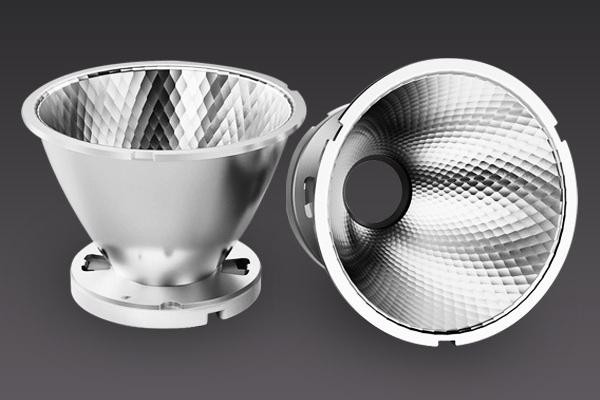
7. Formabilidade e desempenho de estampagem profunda de 1060 Discos de alumínio
Os refletores de iluminação normalmente requerem estampagem profunda ou rotação para formar formas curvas. 1060 as características do material do alumínio o tornam especialmente adequado para esses processos de conformação.
7.1 Fatores que melhoram a capacidade de desenho profundo
- Baixa resistência ao escoamento (de 35–45MPa)
- Alto alongamento (≥ 38% para estado recozido)
- Excelente ductilidade à flexão
- Estrutura de grão estável após recozimento
Esses recursos ajudam a prevenir rachaduras, enrugando, e efeitos de casca de laranja durante estampagem profunda.
7.2 Estabilidade Mecânica Sob Fiação Contínua
A fiação é comumente usada para produzir grandes refletores de lâmpadas, como luzes de hall, lâmpadas de cúpula industriais, e conchas de iluminação de palco.
1060 exposições de alumínio:
- Comportamento suave do fluxo de metal
- Taxa mínima de endurecimento
- Textura uniforme após múltiplas passagens
- Distribuição consistente de espessura
Seu desempenho giratório previsível reduz defeitos de deformação e melhora a precisão do refletor.
8. Vantagens de desempenho óptico para refletores de iluminação
A principal razão pela qual os fabricantes de iluminação escolhem 1060 discos de alumínio é seu excelente comportamento óptico depois de processado em espelho.
8.1 Alta Refletância Total
1060 o alumínio oferece uma das mais altas refletividades entre as ligas de alumínio comerciais:
- Cru (acabamento do moinho): 78–80%
- Polido mecânico & anodizado: 83–87%
- Acabamento espelhado eletropolido: 88–92%
Maior refletividade significa:
- Maior eficiência luminosa
- Menor consumo de energia
- Melhor distribuição de calor
Isso faz 1060 alumínio especialmente adequado para sistemas LED onde a eficiência energética é crítica.
8.2 Reflexão Especular Superior
A reflexão especular determina o quão focado o feixe de luz se torna. Polido espelhado 1060 o alumínio reflete a luz com alta clareza e direcionalidade, apoiando:
- Formação de feixe de holofote
- Iluminação de alto brilho
- Lâmpadas automotivas e de motocicleta
- Caixas de lâmpadas para projetores
Por causa de sua pureza, 1060 o alumínio produz menos dispersão do que ligas contendo silício ou magnésio.
8.3 Estabilidade UV e térmica
Os refletores de iluminação são expostos ao calor prolongado e à radiação UV. Anodizado espelhado 1060 o alumínio tem excelente estabilidade sob ciclagem térmica.
Os benefícios incluem:
- Sem amarelecimento
- Sem desbotamento por oxidação
- Sem descamação ou descamação
Isto aumenta a fiabilidade a longo prazo dos sistemas de iluminação em ambientes exteriores ou industriais.
9. Campos de aplicação do polimento espelhado 1060 Discos refletores de alumínio
9.1 Iluminação Comercial
- Refletores de holofotes LED
- Refletores downlight
- Refletores de painel de teto
- Iluminação de display de varejo
O alumínio altamente especular garante iluminação brilhante e focada para ambientes comerciais.
9.2 Luzes industriais e de armazém
- Refletores de alto brilho
- Sistemas de iluminação de túneis
- Refletores de holofote
1060 a refletividade térmica do alumínio melhora o desempenho térmico e reduz a degradação do equipamento.
9.3 Iluminação automotiva e de motocicleta
Acabamento espelhado 1060 discos são usados para:
- Refletores de cúpula interna
- Lâmpadas auxiliares
- Lâmpadas de sinalização
- Placas refletivas traseiras
Sua refletividade leve e precisa contribui para melhorar a eficiência e a segurança do veículo.
9.4 Iluminação arquitetônica e de instalações públicas
- Iluminação externa de edifícios
- Refletores para instalações esportivas
- Sistemas de iluminação de emergência
O alumínio anodizado resistente à corrosão suporta condições climáticas extremas.
9.5 Filme, Fotografia, e iluminação de palco
Essas aplicações exigem superfícies ópticas de precisão.
1060 espelho de alumínio fornece:
- Limpe os feixes de luz
- Alta estabilidade sob calor
- Superfícies polidas visualmente atraentes

10. Vantagens ambientais do uso 1060 Alumínio para refletores
A sustentabilidade é cada vez mais importante na indústria da iluminação. 1060 o alumínio oferece vários benefícios ambientais:
10.1 100% Reciclabilidade
O alumínio pode ser reciclado indefinidamente sem perder propriedades ópticas ou mecânicas.
10.2 Menor consumo de energia
Eficiência reflexiva significa que as luminárias requerem menos energia elétrica, reduzindo a pegada de carbono operacional.
10.3 Tratamento de superfície mais limpo
A anodização e o eletropolimento produzem menos resíduos prejudiciais ao meio ambiente em comparação com a cromagem tradicional.
Propriedades do círculo de alumínio:
O círculo de alumínio é adequado para muitos mercados, incluindo panelas, indústrias automotiva e de iluminação, etc., graças às boas características do produto:
- Baixa anisotropia, o que facilita o desenho profundo
- Propriedades mecânicas fortes
- Difusão de calor alta e homogênea
- Capacidade de ser esmaltado, coberto por PTFE (ou outros), anodizado
- Boa refletividade
- Alta relação resistência-peso
- Durabilidade e resistência à corrosão
Processo de Círculos de Alumínio
Lingotes/Ligas Mestres — Forno de fusão – Forno de retenção — DC. Rodízio — Laje —- Escalpador — Laminador a Quente – Laminador a Frio – Puncionamento – Forno de Recozimento — Inspeção Final – Embalagem — Entrega
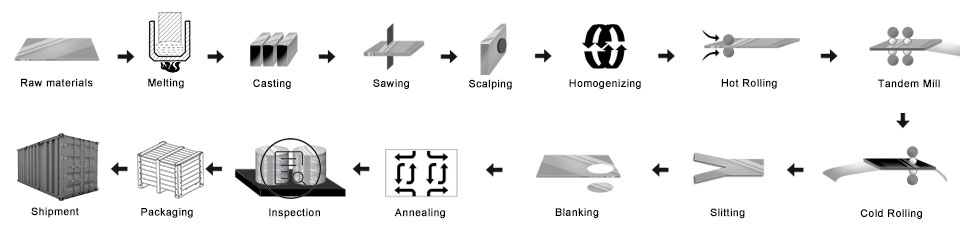
- Prepare as ligas mestres
- Forno de fusão: coloque as ligas no forno de fusão
- Lingote de alumínio fundido DC: Para fazer o lingote mãe
- Fresar o lingote de alumínio: para tornar a superfície e o lado lisos
- Forno de aquecimento
- Laminador a quente: fez a bobina mãe
- Laminador a frio: a bobina mãe foi enrolada conforme a espessura que você deseja comprar
- Processo de perfuração: torne-se do tamanho que você deseja
- Forno de recozimento: mudar o temperamento
- Inspeção final
- Embalagem: caixa de madeira ou palete de madeira
- Entrega
Controle de qualidade
Garantia Abaixo a inspeção será feita na produção.
- um. detecção de raios—TR;
- b. testes ultrassônicos—UT;
- c. Teste de Partículas Magnéticas-MT;
- d. testes de penetração-PT;
- e. detecção de falhas por correntes parasitas-ET
1) Esteja livre de manchas de óleo, Dente, Inclusão, Arranhões, Mancha, Descoloração Óxida, Pausas, Corrosão, Marcas de rolo, Listras de sujeira, e outros defeitos que interferirão no uso.
2) Superfície sem linha preta, limpo, mancha periódica, defeitos de impressão em rolo, como outros padrões de controle interno da gko.
Embalagem de discos de alumínio:
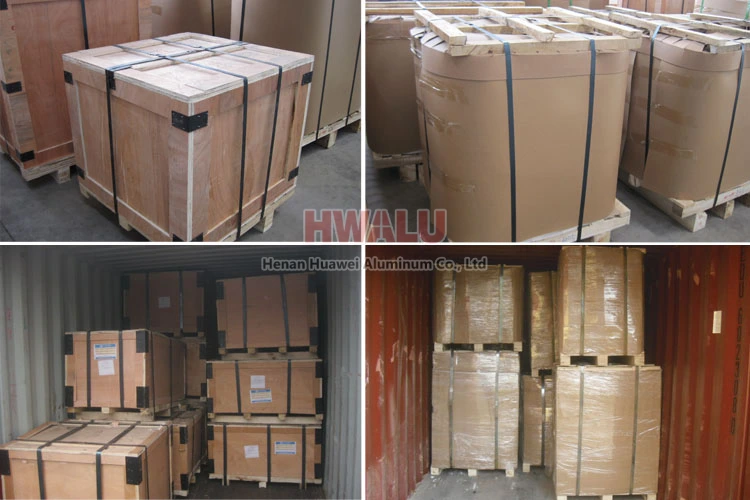
Os círculos de alumínio podem ser embalados de acordo com os padrões de exportação, cobrindo com papel pardo e filme plástico. Finalmente, a Rodada de Alumínio é fixada em um palete de madeira/caixa de madeira.
- Coloque os secadores ao lado do círculo de alumínio, mantenha os produtos secos e limpos.
- Use papel plástico limpo, embale o círculo de alumínio, mantenha uma boa vedação.
- Use o papel de pele de cobra, embale a superfície do papel plástico, mantenha uma boa vedação.
- Próximo, existem duas formas de embalagem: Uma maneira é a embalagem de paletes de madeira, usando o papel crocante embalando a superfície; Outra forma é a embalagem em caixa de madeira, usando a caixa de madeira embalando a superfície.
- Finalmente, coloque a correia de aço na superfície da caixa de madeira, mantendo a solidez e segurança da caixa de madeira.
Círculo de alumínio de Henan Huawei Alumínio. atender ao padrão de exportação. Filme plástico e papel pardo podem ser cobertos de acordo com as necessidades dos clientes. Além do mais, uma caixa de madeira ou palete de madeira é adotada para proteger os produtos contra danos durante a entrega. Existem dois tipos de embalagens, que estão de olho na parede ou de olho no céu. Os clientes podem escolher qualquer um deles para sua conveniência. De um modo geral, há 2 toneladas em um pacote, e carregando 18-22 toneladas em contêiner 1×20′, e 20-24 toneladas em contêiner 1×40′.
Por que nos escolher?
Para acompanhar os tempos, A HWALU continua introduzindo equipamentos e técnicas de última geração para melhorar sua competitividade. Sempre siga a filosofia empresarial de qualidade como centro e cliente em primeiro lugar, fornecer produtos da série de círculo de disco de alumínio da mais alta qualidade para todas as partes do mundo. Mais …

