Analyse technique de 1060 Disques en aluminium pour réflecteurs d’éclairage – Compatibilité avec le polissage miroir et avantages en termes de performances
1. Introduction à 1060 Disques en aluminium dans les applications d'éclairage
Avec l'expansion rapide de l'industrie mondiale de l'éclairage, allant des luminaires LED commerciaux aux lampes automobiles et à l'éclairage architectural, la demande de produits légers, à haute réflectivité, les matériaux métalliques formables ont connu une croissance spectaculaire. L'aluminium est devenu le substrat préféré pour les réflecteurs en raison de sa faible densité, résistance à la corrosion, rentabilité, et forte compatibilité avec les procédés de traitement de surface.
Parmi les différentes qualités d'aluminium, 1060 disques réflecteurs en aluminium se sont distingués dans le segment de la fabrication de réflecteurs. Leur pureté (≥99,6 %), excellente ductilité, et leur capacité de finition miroir à haute brillance les rendent largement adoptés dans:
- Réflecteurs d'éclairage LED
- Réflecteurs de lampes à économie d'énergie
- Éclairage de scène et de studio
- Coupelles d'éclairage intérieur automobile
- Panneaux réfléchissants décoratifs
- Luminaires commerciaux et industriels
La douceur de l'alliage combinée à une réflectivité élevée offre un équilibre inégalé entre aptitude au traitement et performances optiques.. Cet article propose une exploration technique approfondie des raisons pour lesquelles 1060 aluminium disques réflecteurs sont le choix préféré pour les réflecteurs d'éclairage polis miroir et comment ils surpassent les autres substrats métalliques.

2. Composition matérielle et caractéristiques métallurgiques de 1060 Alliage
2.1 Composition chimique et niveau de pureté
1060 l'alliage appartient au groupe d'aluminium forgé de la série 1xxx, connu pour sa pureté exceptionnelle. Sa composition typique comprend:
- Aluminium (Al): ≥ 99.6%
- Autres éléments: ≤ 0.4% (principalement du Si, Fe, Cu, Mn, Zn, De)
Ce niveau de pureté se traduit par:
- Excellente conductivité électrique et thermique
- Haute réflectivité avant et après polissage
- Résistance supérieure à la corrosion
- Haute ductilité adaptée à l'emboutissage profond et au filage
L'absence d'éléments d'alliage significatifs réduit la distorsion interne du réseau, permettant une surface de base plus lisse, essentielle pour la finition miroir.
2.2 Propriétés mécaniques pertinentes pour la fabrication de réflecteurs
Les principaux avantages mécaniques comprennent:
| Propriété |
Valeur typique |
| Résistance à la traction |
60–95 MPa |
| Élongation |
25–35% |
| Dureté (HB) |
20–30 |
| Limite d'élasticité |
20–45 MPa |
| Densité |
2.71 g/cm³ |
Ces propriétés profitent directement aux applications de réflecteurs en permettant:
- Emboutissage profond sans fissure
- Filage et estampage en douceur
- Mise en forme stable en géométries de réflecteur parabolique ou conique
- Coupe facile, perforation, et découpe laser
Sa douceur mécanique améliore la capacité à réaliser surfaces réfléchissantes de haute précision.
3. Pourquoi 1060 L'aluminium est idéal pour les réflecteurs d'éclairage
3.1 Réflectivité supérieure par rapport aux autres alliages
La réflexion naturelle de 1060 l'aluminium atteint généralement ≥86%, et après les procédures de polissage, ça peut dépasser 90–95%, selon la méthode de finition. Contrairement aux alliages à teneur plus élevée en Si ou en Mg (par ex., 5série xxx ou 6xxx), 1060 maintient la pureté optique grâce à:
- particules intermétalliques minimes
- diffusion plus faible aux joints de grains
- grande douceur de surface après laminage
Une réflectivité plus élevée garantit:
- augmentation du rendement lumineux
- répartition uniforme du faisceau
- luminance améliorée pour l'éclairage LED et CFL
- perte optique réduite
3.2 Excellente formabilité pour les géométries de réflecteurs complexes
Les réflecteurs de lumière nécessitent souvent un enfoncement profond dans:
- coquilles coniques
- bols paraboliques
- coupes semi-elliptiques
- réflecteurs à facettes multi-angles
1060 L'allongement et la ductilité de l'aluminium permettent un formage sans:
- rides
- déchirure
- déformation de la peau d'orange
- fissuration superficielle
Ceci est particulièrement utile dans la production de réflecteurs utilisant des procédés de filage et d'emboutissage..
3.3 Avantage de coût par rapport aux autres métaux d'éclairage
Par rapport à l'acier inoxydable, cuivre, ou alliages 5xxx/6xxx, 1060 fournit:
- coût inférieur des matières premières
- processus de formage plus faciles
- usure réduite des outils
- coût de polissage inférieur
- efficacité de production améliorée
Ces facteurs réduisent considérablement les dépenses de production de masse pour les fabricants d'éclairage.
4. Performance de polissage miroir de 1060 Disques réflecteurs en aluminium
4.1 Pourquoi 1060 L’alliage polit exceptionnellement bien
La finition miroir nécessite une surface exempte de défauts et de discontinuités de grain. La matrice de haute pureté de 1060 l'alliage assure:
- petit, grains uniformes
- faible densité d'inclusion
- particules minimales de carbure ou d'oxyde
- texture homogène après roulage
Cette consistance microstructurale permet à l'alliage d'atteindre:
- reflet miroir brillant
- qualité d'image claire
- textures de surface lisses après polissage
4.2 Types de finition miroir adaptés à 1060 Disques
(1) Polissage mécanique
Utiliser des meules abrasives, tampons de polissage, et composés, rendements du polissage mécanique:
- niveaux de brillance de 500 à 700 GU
- réflectivité très stable
- idéal pour les réflecteurs décoratifs ou industriels standards
(2) Recuit brillant
Le recuit sous atmosphère d'hydrogène contrôlée produit:
- nivellement amélioré de la surface
- réflectance améliorée
- microdéfauts réduits
(3) Polissage chimique
Crée un uniforme, surface brillante avec:
- rugosité réduite (<0.5 µm)
- finition sans oxydation
- dommages structurels minimes
(4) Électrochimique (Électropolissage) Traitement
Fournit la plus haute qualité de miroir:
- surface extrêmement lisse au niveau nanométrique
- réflectivité jusqu'à 95%
- oxydation-réduction à long terme
- résistance améliorée à la corrosion
4.3 Niveaux de qualité miroir pour les réflecteurs d'éclairage
Les fabricants de réflecteurs spécifient généralement:
| Grade |
Réflectivité |
Application |
| Miroir de qualité A |
> 90% |
DIRIGÉ / éclairage haut de gamme |
| Miroir de qualité B |
86–90% |
Lampes standards, décor |
| Miroir diffus |
75–85% |
Éclairage doux, conception ambiante |
1060 l'aluminium est capable d'atteindre les trois catégories en fonction du traitement.

5. Processus de production pour 1060 Disques réflecteurs en aluminium
5.1 Laminage à chaud et à froid
La feuille ou la feuille est roulée à des épaisseurs généralement comprises entre 0.3–1,5mm, assurer la stabilité:
- platitude
- propriétés de traction
- orientation des grains
5.2 Suppression de cercle
Les poinçonneuses contrôlées par ordinateur créent des disques avec des tolérances serrées pour:
- rondeur du diamètre
- bords sans bavures
- contrôle constant du rendement
5.3 Emboutissage et filage
Ces processus façonnent les disques en réflecteurs. 1060 l'alliage assure:
- épaisseur de paroi uniforme
- taux d'étirage élevés
- surfaces lisses adaptées au polissage
5.4 Finition de surface et revêtement protecteur
Les étapes finales comprennent:
- polissage miroir
- Anodisation
- stratification de film protecteur
- revêtement anti-oxydant
Ces étapes garantissent la qualité optique et la durabilité à long terme.
6. Domaines d'application de 1060 Disques réflecteurs en aluminium
6.1 Éclairage intérieur et extérieur LED
Idéal pour:
- Spots LED
- Plafonniers
- Réflecteurs de projecteur
- Réflecteurs d'éclairage de tunnel
La haute réflectivité améliore le rendement lumineux sans augmenter la consommation d'énergie.
6.2 Réflecteurs intérieurs et décoratifs automobiles
Applicable dans:
- éclairage d'ambiance du tableau de bord
- lampes de lecture
- systèmes d'éclairage de dôme
Poli miroir 1060 l'aluminium offre une apparence haut de gamme.
6.3 Éclairage de scène et photographie
Les réflecteurs de scène nécessitent:
- haute efficacité lumineuse
- mise en forme précise du faisceau
- surfaces intérieures polies
L'alliage présente des performances exceptionnelles en termes de cohérence optique.
6.4 Panneaux réflecteurs solaires
Une fois poli miroir, 1060 l'aluminium est utilisé pour:
- concentrateurs solaires
- bacs réflecteurs
- cuiseurs solaires portables
Sa réflectivité améliore l'efficacité de la conversion thermique et optique.
6. Technologies de polissage miroir pour 1060 Réflecteurs en aluminium
Le polissage miroir est l'étape fondamentale à valeur ajoutée qui transforme les normes 1060 disques en aluminium en composants de réflecteur haute performance. Parce que l’efficacité de l’éclairage dépend fortement de la qualité de la réflexion, le processus de polissage détermine le comportement optique du réflecteur, durabilité, et l'apparence. Vous trouverez ci-dessous les techniques industrielles courantes utilisées pour obtenir des surfaces au niveau du miroir pour 1060 disques en aluminium.
6.1 Polissage mécanique
Le polissage mécanique est la technique la plus ancienne et la plus largement appliquée pour les réflecteurs en aluminium.. Il élimine les défauts de surface par contact abrasif et pression.
Avantages
- Faible coût et adapté à la production en grand volume
- Capable d’obtenir une brillance proche du miroir (Ra 0,01–0,02 μm)
- Améliore l'uniformité de la surface pour les étapes ultérieures telles que l'anodisation
Limites
- La consistance de la surface dépend de la compétence de l'opérateur
- Difficile d’éliminer complètement les fines rayures
- Ne convient pas aux applications d'éclairage optique de très haute précision
Le polissage mécanique est généralement utilisé pour les produits d'éclairage grand public sensibles au coût., petit électroménager, et réflecteurs architecturaux.
6.2 Polissage chimique
Le polissage chimique utilise des solutions acides (généralement à base de phosphore) pour dissoudre les micro-rugosités et générer une surface lisse, surface brillante.
Avantages techniques
- Finition très uniforme, pas de rayures mécaniques
- Convient aux formes complexes et aux réflecteurs emboutis
- Améliore la réflectivité de 1060 aluminium jusqu'à 82-85 %
Scénarios d'application
- Luminaires commerciaux à LED
- Réflecteurs d'accent intérieur automobile
- Grands réflecteurs incurvés auxquels les machines-outils ne peuvent pas accéder
Le polissage chimique est apprécié pour sa capacité à atteindre une luminosité de miroir constante sans travail intensif..
6.3 Polissage électrolytique (Électropolissage)
Le polissage électrolytique est une version plus avancée du polissage chimique. Sous un champ électrique, les micro-pics se dissolvent plus rapidement que les micro-vallées, produisant une surface très lisse.
Avantages en termes de performances
- Rugosité extrêmement faible (Ra ≤ 0.005 µm)
- La brillance et la clarté rivalisent avec le chromage
- Élimine les débris incrustés du roulement ou de l'estampage
- Fournit la meilleure base pour une anodisation de qualité miroir
Pourquoi il convient aux réflecteurs haut de gamme
L'électropolissage est le choix préféré pour:
- Phares automobiles
- Éclairage industriel LED haute puissance
- Réflecteurs d'éclairage de cinéma et de scène
- Matériel médical nécessitant une réflexion optique précise
L'électropolissage élève 1060 disques en aluminium, des composants réfléchissants généraux aux réflecteurs de qualité optique haut de gamme.
6.4 Anodisation miroir
Après polissage, l'anodisation améliore la dureté de la surface et la réflectance optique. Pour 1060 disques en aluminium, un avivage électrolytique suivi d'une anodisation produit une couche réfléchissante stable et résistante à la corrosion.
Principales fonctionnalités
- Réflectivité jusqu'à 86-90 %
- Dureté améliorée à 250-350 HV
- Protection permanente des surfaces
- Disponible en argent, Champagne, ou couleurs décoratives
L'anodisation miroir est l'étape de finition ultime pour les réflecteurs d'éclairage qui nécessitent de la longévité, résistance aux intempéries, et de fortes performances optiques.
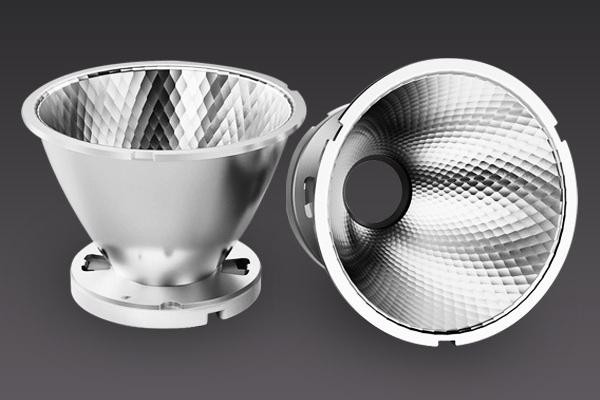
7. Formabilité et performances d'emboutissage profond de 1060 Disques en aluminium
Les réflecteurs d'éclairage nécessitent généralement un emboutissage profond ou une rotation pour former des formes courbes.. 1060 les caractéristiques matérielles de l’aluminium le rendent particulièrement adapté à ces processus de formage.
7.1 Facteurs qui améliorent l'emboutissage en profondeur
- Faible limite d'élasticité (de 35 à 45 MPa)
- Allongement élevé (≥ 38% pour état recuit)
- Excellente ductilité en flexion
- Structure de grain stable après recuit
Ces fonctionnalités aident à prévenir les fissures, rides, et effets peau d'orange lors de l'emboutissage profond.
7.2 Stabilité mécanique en rotation continue
La filature est couramment utilisée pour produire de grands réflecteurs de lampes tels que les luminaires de hall., lampes à dôme industrielles, et coques d'éclairage de scène.
1060 expositions en aluminium:
- Comportement d'écoulement du métal fluide
- Taux d'écrouissage minimal
- Texture uniforme après plusieurs passages
- Répartition constante de l'épaisseur
Ses performances de rotation prévisibles réduisent les défauts de déformation et améliorent la précision du réflecteur.
8. Avantages des performances optiques pour les réflecteurs d'éclairage
La principale raison pour laquelle les fabricants d’éclairage choisissent 1060 les disques en aluminium sont leur comportement optique exceptionnel une fois traités en miroir.
8.1 Réflexion totale élevée
1060 l'aluminium offre une réflectivité parmi les plus élevées parmi les alliages d'aluminium commerciaux:
- Brut (finition du moulin): 78–80%
- Mécanique poli & anodisé: 83–87%
- Finition miroir électropolie: 88–92%
Une réflectivité plus élevée signifie:
- Une plus grande efficacité lumineuse
- Consommation d'énergie réduite
- Meilleure répartition de la chaleur
Cela fait 1060 aluminium particulièrement adapté aux systèmes LED où l'efficacité énergétique est critique.
8.2 Réflexion spéculaire supérieure
La réflexion spéculaire détermine la focalisation du faisceau lumineux. Poli miroir 1060 l'aluminium reflète la lumière avec une grande clarté et directionnalité, justificatif:
- Formation de faisceaux de projecteurs
- Éclairage pour grande hauteur
- Lampes automobiles et motos
- Boîtiers de lampe de projecteur
En raison de sa pureté, 1060 l'aluminium produit moins de diffusion que les alliages contenant du silicium ou du magnésium.
8.3 Stabilité aux UV et à la chaleur
Les réflecteurs d'éclairage sont exposés à une chaleur prolongée et aux rayons UV. Anodisé miroir 1060 l'aluminium a une excellente stabilité sous cycle thermique.
Les avantages incluent:
- Pas de jaunissement
- Pas de décoloration par oxydation
- Pas de pelage ni d'écaillage
Cela améliore la fiabilité à long terme des systèmes d'éclairage dans les environnements extérieurs ou industriels..
9. Domaines d'application du poli miroir 1060 Disques réflecteurs en aluminium
9.1 Éclairage Commercial
- Réflecteurs de spots LED
- Réflecteurs pour downlights
- Réflecteurs de panneaux de plafond
- Éclairage d'affichage de vente au détail
L'aluminium hautement spéculaire assure un éclairage lumineux et ciblé pour les environnements commerciaux.
9.2 Lumières industrielles et d’entrepôt
- Réflecteurs pour grande hauteur
- Systèmes d'éclairage des tunnels
- Réflecteurs de projecteur
1060 la réflectivité thermique de l'aluminium améliore les performances thermiques et réduit la dégradation des luminaires.
9.3 Éclairage automobile et moto
Finition miroir 1060 les disques sont utilisés pour:
- Réflecteurs de dôme intérieur
- Lampes auxiliaires
- Lampes de signalisation
- Plaques de réflexion arrière
Sa légèreté et sa réflectivité précise contribuent à améliorer l'efficacité et la sécurité du véhicule..
9.4 Éclairage des installations architecturales et publiques
- Éclairage extérieur du bâtiment
- Réflecteurs pour sites sportifs
- Systèmes d'éclairage de secours
L'aluminium anodisé résistant à la corrosion résiste aux conditions météorologiques extrêmes.
9.5 Film, Photographie, et éclairage de scène
Ces applications nécessitent des surfaces optiques de précision.
1060 le miroir en aluminium fournit:
- Des faisceaux lumineux propres
- Haute stabilité à la chaleur
- Surfaces polies visuellement attrayantes

10. Avantages environnementaux de l'utilisation 1060 Aluminium pour réflecteurs
La durabilité est de plus en plus importante dans l'industrie de l'éclairage. 1060 l'aluminium offre plusieurs avantages environnementaux:
10.1 100% Recyclabilité
L'aluminium peut être recyclé indéfiniment sans perdre ses propriétés optiques ou mécaniques.
10.2 Consommation d'énergie réduite
L'efficacité réfléchissante signifie que les luminaires nécessitent moins d'énergie électrique, réduire l’empreinte carbone opérationnelle.
10.3 Traitement de surface plus propre
L'anodisation et l'électropolissage produisent moins de résidus nocifs pour l'environnement par rapport au chromage traditionnel.
Propriétés du cercle en aluminium:
Le cercle en aluminium convient à de nombreux marchés, y compris les ustensiles de cuisine, industries de l'automobile et de l'éclairage, etc., grâce aux bonnes caractéristiques du produit:
- Faible anisotropie, ce qui facilite l'emboutissage profond
- Fortes propriétés mécaniques
- Diffusion thermique élevée et homogène
- Possibilité d'être émaillé, recouvert de PTFE (ou d'autres), anodisé
- Bonne réflectivité
- Rapport résistance/poids élevé
- Durabilité et résistance à la corrosion
Processus de cercles en aluminium
Lingots/alliages maîtres — Four de fusion – Four de maintien — DC. Roulette — Dalle —- Scalpeur — Laminoir à chaud – Laminoir à froid – Poinçonnage – Four de recuit — Inspection finale – Emballage — Livraison
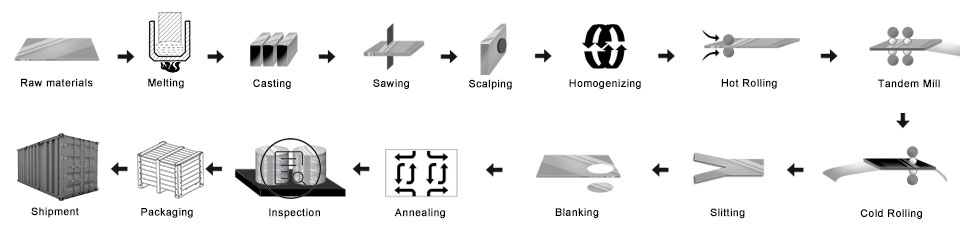
- Préparer les alliages maîtres
- Four de fusion: mettre les alliages dans le four de fusion
- Lingot d'aluminium moulé D.C.: Pour fabriquer le lingot mère
- Broyer le lingot d'aluminium: pour rendre la surface et le côté lisses
- Four de chauffage
- Laminoir à chaud: fait la bobine mère
- Laminoir à froid: la bobine mère a été roulée selon l'épaisseur que vous souhaitez acheter
- Processus de poinçonnage: deviens la taille que tu veux
- Four de recuit: changer d'humeur
- Inspection finale
- Emballage: caisse en bois ou palette en bois
- Livraison
Contrôle de qualité
Assurance L'inspection ci-dessous sera effectuée dans la production.
- un. détection de rayons—RT;
- b. test par ultrasons—Utah;
- c. Test de particules magnétiques-MT;
- d. tests d'intrusion-PT;
- e. détection de défauts par courants de Foucault-ET
1) Soyez exempt de taches d'huile, Bosse, Inclusion, Rayures, Tache, Décoloration d'oxyde, Pauses, Corrosion, Marques de rouleau, Traces de saleté, et autres défauts qui gêneront l'utilisation.
2) Surface sans ligne noire, coupe nette, tache périodique, défauts d'impression au rouleau, comme d'autres normes de contrôle interne de gko.
Emballage de disques en aluminium:
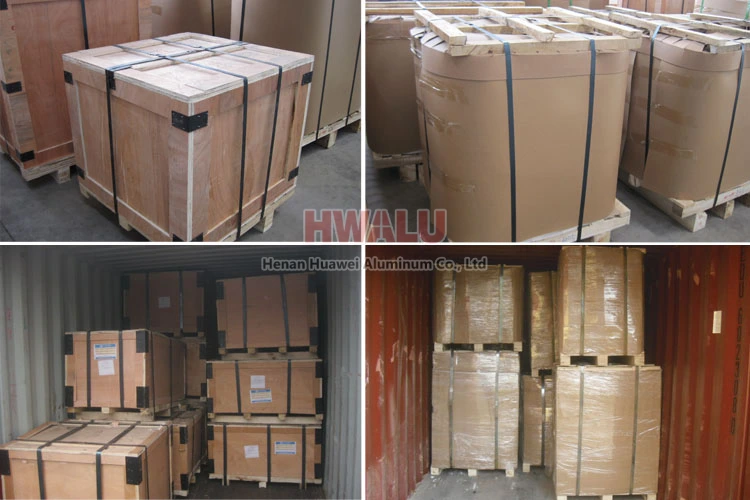
Les cercles en aluminium peuvent être emballés selon les normes d'exportation, recouvrir de papier kraft et de film plastique. Enfin, le rond en aluminium est fixé sur une palette en bois/caisse en bois.
- Placer le côté séchoir du cercle en aluminium, garder les produits secs et propres.
- Utilisez du papier plastique propre, emballer le cercle en aluminium, garder une bonne étanchéité.
- Utilisez le papier peau de serpent, emballer la surface du papier plastique, garder une bonne étanchéité.
- Suivant, il y a deux façons d'emballer: L’emballage de palettes en bois est une solution, en utilisant le papier croustillant emballant la surface; Une autre façon est l'emballage dans des caisses en bois, en utilisant la caisse en bois emballant la surface.
- Enfin, poser la ceinture en acier sur la surface de la caisse en bois, garder la solidité et la sécurité de la boîte en bois.
Cercle en aluminium de Henan Huawei Aluminium. répondre à la norme d'exportation. Le film plastique et le papier brun peuvent être recouverts selon les besoins des clients. De plus, une caisse en bois ou une palette en bois est adoptée pour protéger les produits contre les dommages lors de la livraison. Il existe deux types d'emballage, qui sont les yeux contre le mur ou les yeux vers le ciel. Les clients peuvent choisir l'un ou l'autre pour leur commodité. En général, il y a 2 tonnes dans un seul colis, et chargement 18-22 tonnes dans un conteneur 1×20′, et 20-24 tonnes dans un conteneur 1×40′.
Pourquoi nous choisir?
Pour évoluer avec son temps, HWALU continue d'introduire des équipements et des techniques de pointe pour améliorer sa compétitivité. Adhérez toujours à la philosophie d'entreprise de la qualité en tant que centre et client d'abord, fournir des produits de la série de cercles de disques en aluminium de la plus haute qualité dans toutes les régions du monde. Plus …

