Technical Analysis of 1060 Aluminum Discs for Lighting Reflectors – Mirror-Polishing Compatibility and Performance Advantages
1. Introduction to 1060 Aluminum Discs in Lighting Applications
With the rapid expansion of the global lighting industry—ranging from commercial LED fixtures to automotive lamps and architectural lighting—the demand for lightweight, high-reflectivity, formable metal materials has grown dramatically. Aluminum has become the preferred substrate for reflectors due to its low density, corrosion resistance, cost-effectiveness, and strong compatibility with surface treatment processes.
Among various aluminum grades, 1060 aluminum reflector discs have distinguished themselves in the reflector manufacturing segment. Their purity (≥99.6%), excellent ductility, and capability for high-gloss mirror finishing make them widely adopted in:
- LED lighting reflectors
- Energy‐saving lamp reflectors
- Stage and studio lighting
- Automotive interior light cups
- Decorative reflective panels
- Commercial and industrial luminaires
The alloy’s softness combined with high reflectivity provides an unparalleled balance of processability and optical performance. This article offers an in‐depth technical exploration of why 1060 aluminum reflector discs are the preferred choice for mirror‐polished lighting reflectors and how they outperform other metallic substrates.

2. Material Composition and Metallurgical Characteristics of 1060 Alloy
2.1 Chemical Composition and Purity Level
1060 alloy belongs to the 1xxx‐series wrought aluminum group, known for exceptionally high purity. Its typical composition includes:
- Aluminum (Al): ≥ 99.6%
- Other elements: ≤ 0.4% (mainly Si, Fe, Cu, Mn, Zn, Ti)
This purity level results in:
- Excellent electrical and thermal conductivity
- High reflectivity before and after polishing
- Superior corrosion resistance
- High ductility suitable for deep drawing and spinning
The absence of significant alloying elements reduces internal lattice distortion, enabling a smoother base surface critical for mirror finishing.
2.2 Mechanical Properties Relevant to Reflector Manufacturing
Key mechanical advantages include:
| Property |
Typical Value |
| Tensile strength |
60–95 MPa |
| Elongation |
25–35% |
| Hardness (HB) |
20–30 |
| Yield strength |
20–45 MPa |
| Density |
2.71 g/cm³ |
These properties directly benefit reflector applications by allowing:
- Deep drawing without cracking
- Smooth spinning and stamping
- Stable shaping into parabolic or conical reflector geometries
- Easy trimming, punching, and laser cutting
Its mechanical softness enhances the ability to achieve high‐precision reflective surfaces.
3. Why 1060 Aluminum Is Ideal for Lighting Reflectors
3.1 Superior Reflectivity Compared to Other Alloys
The natural reflectance of 1060 aluminum typically reaches ≥86%, and after polishing procedures, it can exceed 90–95%, depending on finishing method. Unlike alloys with higher Si or Mg content (e.g., 5xxx or 6xxx series), 1060 maintains optical purity due to:
- minimal intermetallic particles
- lower scattering at the grain boundaries
- high surface smoothness after rolling
Higher reflectivity ensures:
- increased light output
- uniform beam distribution
- enhanced luminance for LED and CFL lighting
- reduced optical loss
3.2 Excellent Formability for Complex Reflector Geometry
Light reflectors often require deep drawing into:
- conical shells
- parabolic bowls
- semi‐elliptical cups
- multi‐angle faceted reflectors
1060 aluminum’s elongation and ductility allow forming without:
- wrinkling
- tearing
- orange peel deformation
- surface cracking
This is particularly valuable in reflector production using spinning and stamping processes.
3.3 Cost Advantage Over Other Lighting Metals
Compared with stainless steel, copper, or 5xxx/6xxx alloys, 1060 provides:
- lower raw material cost
- easier forming processes
- reduced tooling wear
- lower polishing cost
- improved production efficiency
These factors significantly reduce mass‐production expenses for lighting manufacturers.
4. Mirror Polishing Performance of 1060 Aluminum Reflector Discs
4.1 Why 1060 Alloy Polishes Exceptionally Well
Mirror finishing requires a surface free of defects and grain discontinuities. The high‐purity matrix of 1060 alloy ensures:
- small, uniform grains
- low inclusion density
- minimal carbide or oxide particles
- consistent texture after rolling
This microstructural consistency enables the alloy to achieve:
- high gloss mirror reflection
- clear imaging quality
- smooth surface textures after buffing
4.2 Types of Mirror Finishing Suitable for 1060 Discs
(1) Mechanical Polishing
Using abrasive wheels, buffing pads, and compounds, mechanical polishing yields:
- gloss levels of 500–700 GU
- highly stable reflectivity
- ideal for decorative or standard industrial reflectors
(2) Bright Annealing
Annealing under a controlled hydrogen atmosphere produces:
- improved surface leveling
- enhanced reflectance
- reduced micro‐defects
(3) Chemical Polishing
Creates a uniform, glossy surface with:
- reduced roughness (<0.5 μm)
- oxidation‐free finishing
- minimal structural damage
(4) Electrochemical (Electropolishing) Treatment
Provides the highest mirror quality:
- extremely smooth nano‐level surface
- reflectivity up to 95%
- long‐term oxidation reduction
- enhanced corrosion resistance
4.3 Mirror Grade Levels for Lighting Reflectors
Reflector manufacturers commonly specify:
| Grade |
Reflectivity |
Application |
| Mirror grade A |
> 90% |
LED / high-end lighting |
| Mirror grade B |
86–90% |
Standard lamps, décor |
| Diffuse mirror |
75–85% |
Soft lighting, ambient design |
1060 aluminum is capable of achieving all three categories depending on treatment.

5. Production Processes for 1060 Aluminum Reflector Discs
5.1 Hot and Cold Rolling
The foil or sheet is rolled to thicknesses typically between 0.3–1.5 mm, ensuring stable:
- flatness
- tensile properties
- grain orientation
5.2 Circle Blanking
Computer‐controlled punch presses create discs with tight tolerances for:
- diameter roundness
- burr-free edges
- consistent yield control
5.3 Deep Drawing and Spinning
These processes shape the discs into reflectors. 1060 alloy ensures:
- uniform wall thickness
- high drawing ratios
- smooth surfaces suitable for polishing
5.4 Surface Finishing and Protective Coating
Final steps include:
- mirror polishing
- anodizing
- protective film lamination
- anti‐oxidation coating
These steps guarantee optical quality and long-term durability.
6. Application Fields of 1060 Aluminum Reflector Discs
6.1 LED Indoor and Outdoor Lighting
Ideal for:
- LED downlights
- Ceiling lights
- Floodlight reflectors
- Tunnel lighting reflectors
High reflectivity enhances lumen output without increasing power consumption.
6.2 Automotive Interior and Decorative Reflectors
Applicable in:
- dashboard ambient lighting
- reading lamps
- dome lighting systems
Mirror-polished 1060 aluminum offers a premium appearance.
6.3 Stage Lighting and Photography
Stage reflectors require:
- high luminous efficiency
- accurate beam shaping
- polished interior surfaces
The alloy performs exceptionally in optical consistency.
6.4 Solar Reflector Panels
When mirror-polished, 1060 aluminum is used for:
- solar concentrators
- reflector troughs
- portable solar cookers
Its reflectivity improves thermal and optical conversion efficiency.
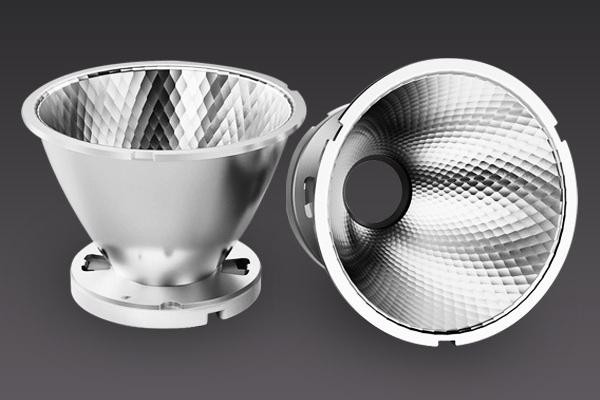
6. Mirror Polishing Technologies for 1060 Aluminum Reflectors
Mirror polishing is the core value-added step that transforms standard 1060 aluminum discs into high-performance reflector components. Because lighting efficiency is highly dependent on reflective quality, the polishing process determines the reflector’s optical behavior, durability, and appearance. Below are mainstream industrial techniques used to achieve mirror-level surfaces for 1060 aluminum discs.
6.1 Mechanical Polishing
Mechanical polishing is the earliest and most widely applied technique for aluminum reflectors. It removes surface defects through abrasive contact and pressure.
Advantages
- Low cost and suitable for high-volume production
- Capable of achieving near-mirror gloss (Ra 0.01–0.02 μm)
- Improves surface uniformity for subsequent steps such as anodizing
Limitations
- Surface consistency depends on operator skill
- Hard to eliminate fine scratches completely
- Not suitable for extremely high-precision optical lighting applications
Mechanical polishing is generally used for cost-sensitive consumer lighting products, small appliances, and architectural reflectors.
6.2 Chemical Polishing
Chemical polishing uses acidic solutions (typically phosphorus-based) to dissolve micro-roughness and generate a smooth, bright surface.
Technical Benefits
- Highly uniform finish, no mechanical scratches
- Suitable for complex shapes and deep-drawn reflectors
- Enhances the reflectivity of 1060 aluminum up to 82–85%
Application Scenarios
- LED commercial lighting fixtures
- Automotive interior accent reflectors
- Large curved reflectors where machine tools cannot access
Chemical polishing is valued for its ability to reach consistent mirror brightness without intensive labor.
6.3 Electrolytic Polishing (Electropolishing)
Electrolytic polishing is a more advanced version of chemical polishing. Under an electrical field, micro-peaks dissolve faster than micro-valleys, producing a highly smooth surface.
Performance Advantages
- Extremely low roughness (Ra ≤ 0.005 μm)
- Gloss and clarity rival chrome plating
- Removes embedded debris from rolling or stamping
- Provides the best base for mirror-grade anodizing
Why It Fits High-End Reflectors
Electropolishing is the preferred choice for:
- Automotive headlights
- High-power LED industrial lighting
- Film and stage lighting reflectors
- Medical equipment requiring precise optical reflection
Electropolishing elevates 1060 aluminum discs from general reflective components to premium optical-grade reflectors.
6.4 Mirror Anodizing
After polishing, anodizing enhances surface hardness and optical reflectance. For 1060 aluminum discs, electrolytic brightening followed by anodizing produces a stable and corrosion-resistant reflector layer.
Key Features
- Reflectivity up to 86–90%
- Hardness improved to 250–350 HV
- Permanent surface protection
- Available in silver, champagne, or decorative colors
Mirror anodizing is the ultimate finishing step for lighting reflectors that require longevity, weather resistance, and strong optical performance.
7. Formability and Deep-Drawing Performance of 1060 Aluminum Discs
Lighting reflectors typically require deep drawing or spinning to form curved shapes. 1060 aluminum’s material characteristics make it especially suitable for these forming processes.
7.1 Factors That Enhance Deep-Drawability
- Low yield strength (from 35–45 MPa)
- High elongation (≥ 38% for annealed state)
- Excellent bending ductility
- Stable grain structure after annealing
These features help prevent cracking, wrinkling, and orange-peel effects during deep drawing.
7.2 Mechanical Stability Under Continuous Spinning
Spinning is commonly used for producing large lamp reflectors such as hall lights, industrial dome lamps, and stage lighting shells.
1060 aluminum exhibits:
- Smooth metal flow behavior
- Minimal work-hardening rate
- Uniform texture after multiple passes
- Consistent thickness distribution
Its predictable spinning performance reduces deformation defects and improves reflector precision.
8. Optical Performance Advantages for Lighting Reflectors
The core reason lighting manufacturers choose 1060 aluminum discs is their outstanding optical behavior once mirror processed.
8.1 High Total Reflectance
1060 aluminum offers some of the highest reflectivity among commercial aluminum alloys:
- Raw (mill finish): 78–80%
- Mechanical polished & anodized: 83–87%
- Electropolished mirror finish: 88–92%
Higher reflectivity means:
- Greater luminous efficiency
- Lower power consumption
- Better heat distribution
This makes 1060 aluminum especially suitable for LED systems where energy efficiency is critical.
8.2 Superior Specular Reflection
Specular reflection determines how focused the light beam becomes. Mirror-polished 1060 aluminum reflects light with high clarity and directionality, supporting:
- Spotlight beam formation
- High-bay lighting
- Automotive and motorcycle lamps
- Projector lamp housings
Because of its purity, 1060 aluminum produces less scattering than alloys containing silicon or magnesium.
8.3 UV and Heat Stability
Lighting reflectors are exposed to prolonged heat and UV radiation. Mirror-anodized 1060 aluminum has excellent stability under thermal cycling.
Benefits include:
- No yellowing
- No oxidation fading
- No peeling or flaking
This enhances the long-term reliability of lighting systems in outdoor or industrial environments.
9. Application Fields of Mirror-Polished 1060 Aluminum Reflector Discs
9.1 Commercial Lighting
- LED spotlight reflectors
- Downlight reflectors
- Ceiling panel reflectors
- Retail display illumination
High-specular aluminum ensures bright and focused lighting for commercial environments.
9.2 Industrial and Warehouse Lights
- High-bay reflectors
- Tunnel lighting systems
- Floodlight reflectors
1060 aluminum’s heat reflectivity improves thermal performance and reduces fixture degradation.
9.3 Automotive and Motorcycle Lighting
Mirror-finished 1060 discs are used for:
- Interior dome reflectors
- Auxiliary lamps
- Signal lamps
- Rear reflection plates
Its lightweight and precision reflectivity contribute to improved vehicle efficiency and safety.
9.4 Architectural and Public Facility Lighting
- Outdoor building illumination
- Sports venue reflectors
- Emergency lighting systems
Corrosion-resistant anodized aluminum withstands extreme weather.
9.5 Film, Photography, and Stage Lighting
These applications require precision optical surfaces.
1060 mirror aluminum provides:
- Clean light beams
- High stability under heat
- Visually appealing polished surfaces

10. Environmental Advantages of Using 1060 Aluminum for Reflectors
Sustainability is increasingly important in the lighting industry. 1060 aluminum offers several environmental benefits:
10.1 100% Recyclability
Aluminum can be recycled indefinitely without losing optical or mechanical properties.
10.2 Lower Energy Consumption
Reflective efficiency means lighting fixtures require less electrical energy, reducing operational carbon footprint.
10.3 Cleaner Surface Treatment
Anodizing and electropolishing produce fewer environmentally harmful residues compared to traditional chrome plating.
Properties of the aluminum circle:
Aluminum circle is suitable for many markets, including cookware, automotive and lighting industries, etc., thanks to good product characteristics:
- Low anisotropy, which facilitates deep drawing
- Strong mechanical properties
- High and homogeneous heat diffusion
- Ability to be enameled, covered by PTFE (or others), anodized
- Good reflectivity
- High strength-to-weight ratio
- Durability and resistance to corrosion
Aluminum Circles Process
Ingot/Master Alloys — Melting Furnace – Holding Furnace — D.C. Caster — Slab —- Scalper — Hot Rolling Mill – Cold Rolling Mill – Punching – Annealing Furnace — Final Inspection – Packing — Delivery
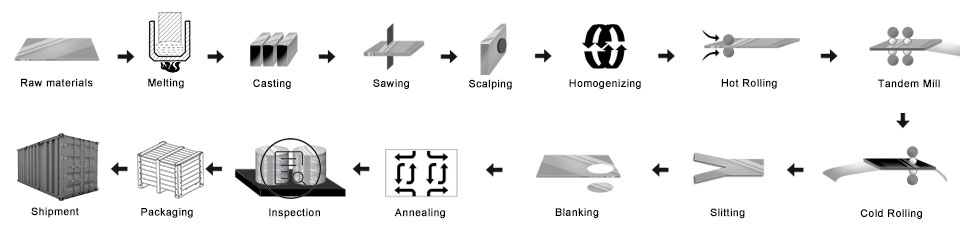
- Prepare the master alloys
- Melting furnace: put the alloys into the melting furnace
- D.C.cast aluminum ingot: To make the mother ingot
- Mill the aluminum ingot: to make the surface and side smooth
- Heating furnace
- Hot rolling mill: made the mother coil
- Colding rolling mill: the mother coil was rolled as the thickness you want to buy
- Punching process: become the size what you want
- Annealing furnace: change the temper
- Final inspection
- Packing: wooden case or wooden pallet
- Delivery
Quality Control
Assurance Below inspection will be done in the production.
- a. ray detection—RT;
- b. ultrasonic testing—UT;
- c. Magnetic Particle Testing-MT;
- d. penetration testing-PT;
- e. eddy current flaw detection-ET
1) Be free from Oil Stain, Dent, Inclusion, Scratches, Stain, Oxide Discoloration, Breaks, Corrosion, Roll Marks, Dirt Streaks, and other defects which will interfere with use.
2) Surface without black line, clean-cut, periodic stain, roller printing defects, such as other gko internal Control standards.
Aluminum discs packing:
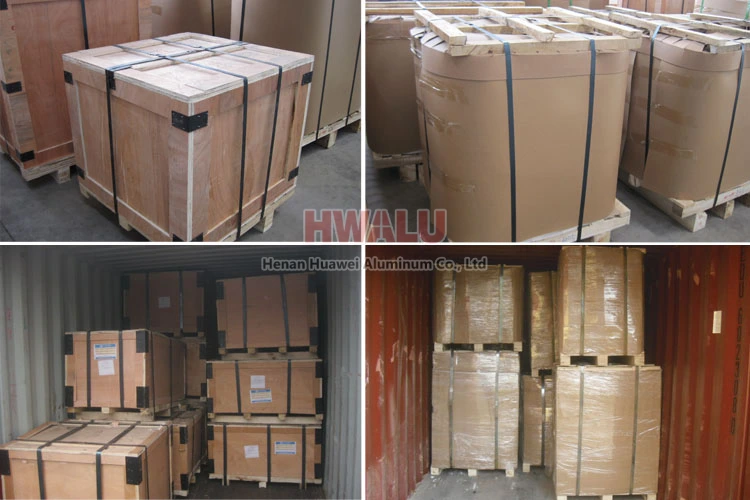
Aluminum circles can be packed by export standards, covering with brown paper and plastic film. Finally, the Aluminium Round is fixed on a wooden pallet/wooden case.
- Put the driers side the aluminum circle, keep the products dry and clean.
- Use clean plastic paper, pack the aluminium circle, keep good sealing.
- Use the snakeskin paper, pack the surface of the plastic paper, keep good sealing.
- Next, there are two ways of packaging: One way is wooden pallet packaging, using the crusty paper packing the surface; Another way is wooden case packaging, using the wooden case packing the surface.
- Finally, lay the steel belt on the wooden box’s surface, keeping the wooden box fastness and secure.
Aluminum circle of Henan Huawei Aluminum. meet the export standard. Plastic film and brown paper can be covered at customers’ needs. What’s more, a wooden case or wooden pallet is adopted to protect products from damage during delivery. There are two kinds of packaging, which are eye to wall or eye to the sky. Customers can choose either of them for their convenience. Generally speaking, there are 2 tons in one package, and loading 18-22 tons in 1×20′ container, and 20-24 tons in 1×40′ container.
Why choose us?
In order to move with the times, HWALU keeps introducing the state of the art equipment and technique to improve its competitiveness. Always adhere to the business philosophy of quality as the center and customer first, to provide the highest quality aluminum disc circle series products to all parts of the world. More …

