1060 Aluminum Circle Cookware: The Ultimate Guide to Performance, Manufacturing, and Applications
1. Introduction
In the ever-evolving landscape of modern kitchenware manufacturing, the quest for materials that balance lightweight design, superior thermal conductivity, and cost-efficiency is never-ending. Enter 1060 Aluminum Circle Cookware—the unsung hero and foundational material behind millions of high-performance pots, pans, and kitchen utensils worldwide.
As a high-purity industrial aluminum material, the 1060 aluminum disc has become the gold standard for cookware suppliers and OEMs. But what exactly makes it so indispensable?
This comprehensive guide will take you on a deep dive into the world of 1060 aluminum circles. We will explore:
- The fundamental material properties that make 1060 the top choice for cookware.
- Advanced manufacturing processes, from melting to precision stamping.
- Detailed comparisons with other common alloys (1050, 3003).
- Actionable insights on how to select the right specifications for your production line.
- Quality control benchmarks to ensure zero-defect manufacturing.
Whether you are a procurement officer seeking a reliable supplier, an engineer optimizing deep-drawing processes, or a business owner evaluating material costs, this guide—backed by the expertise of Huawei Aluminum—will equip you with the knowledge to make informed, profitable decisions.
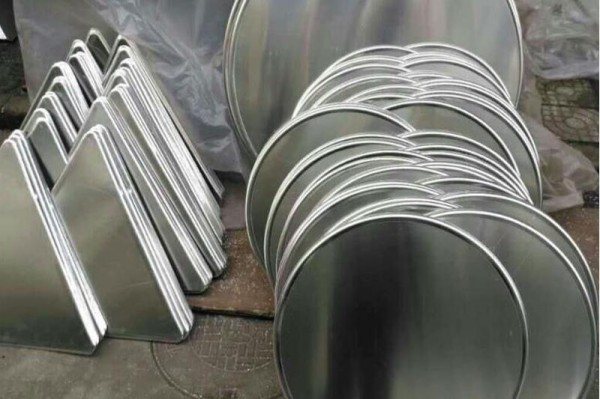
2. Understanding 1060 Aluminum Circle: The Pure Performance Alloy
2.1 Chemical Composition and Material Definition
The 1060 aluminum circle belongs to the prestigious 1000 series of industrial pure aluminum. With an aluminum content of ≥99.6%, it stands out for its exceptional purity. This high concentration of aluminum is the primary driver behind its outstanding physical properties, distinguishing it from more complex alloys.
2.2 Why 1060 is the Perfect Match for Cookware
Cookware manufacturing is demanding. It requires a material that can withstand extreme thermal shock, rapid heating, and aggressive mechanical shaping (deep drawing). 1060 aluminum circles fit the bill perfectly because they offer a unique combination of formability and thermal response. Unlike brittle materials that crack under stress, 1060 bends and stretches, making it the ultimate canvas for creating durable, high-quality kitchenware.
3. The Core Advantages of 1060 Aluminum Circle in Cookware Manufacturing
3.1 Unmatched Thermal Conductivity for Culinary Excellence
Ask any professional chef, and they will tell you that even heat distribution is the secret to perfect cooking. 1060 aluminum boasts a thermal conductivity rate significantly higher than stainless steel, cast iron, or carbon steel.
- Rapid Heating: Cooks food faster, saving energy.
- No Hot Spots: Ensures that delicate sauces don’t scorch and meats brown evenly.
- Energy Efficiency: Ideal for induction-compatible bases when paired with a ferromagnetic layer.
3.2 Superior Deep Drawing and Spinning Performance
In the world of metal stamping, “elongation” is king. 1060 aluminum circles possess an incredibly high elongation rate, allowing them to be stretched into deep, complex shapes without tearing. This makes them the premier choice for manufacturing deep stockpots, high-walled pressure cookers, and seamless rice cooker inner pots.
3.3 Pristine Surface Quality and Aesthetic Versatility
The visual appeal of cookware is a massive selling point. High-quality 1060 circles feature a remarkably smooth, mill-finish surface free from scratches, roller marks, or oxidation. This pristine surface acts as the perfect foundation for:
- Non-Stick Coatings: Ensuring maximum adhesion and longevity of Teflon or ceramic layers.
- Anodizing: Creating a hard, scratch-resistant, and elegant matte finish.
- Polishing: Achieving a brilliant, mirror-like shine for high-end serveware.
3.4 Cost-Effectiveness Without Compromise
While high-strength alloys like 3003 or 5052 have their place, they come with a higher price tag and more complex processing requirements. 1060 offers the sweet spot of performance and economy. Its excellent workability translates to higher yield rates and lower rejection rates on the production line, ultimately boosting your bottom line.
4. Technical Specifications and Parameters
To ensure seamless integration into your manufacturing process, here are the standard specifications for 1060 aluminum circles:
| Parameter |
Specification |
Notes |
| Alloy/Temper |
1060 (O, H12, H14, H16, H18) |
O-temper is highly recommended for deep drawing. |
| Thickness Range |
0.4 mm – 6.0 mm |
Custom gauges available upon request. |
| Diameter Range |
80 mm – 1200 mm |
Precision-cut to +/- 0.1mm tolerance. |
| Surface Finish |
Mill Finish (Bright/Matte) |
Free of oil, stains, and scratches. |
| Manufacturing Route |
Hot Rolled / Cold Rolled |
Chosen based on final application depth. |
| Standard Packing |
Seaworthy export wooden pallets |
Interleaved with protective paper. |

5. Behind the Scenes: The Manufacturing Process of 1060 Aluminum Circles
Creating the perfect aluminum circle is a science. At Huawei Aluminum, we adhere to a rigorous, multi-step production process to guarantee consistency.
5.1 Melting and Continuous Casting
Everything starts with purity. We use high-grade aluminum ingots, which are melted in energy-efficient furnaces. To achieve the ≥99.6% purity standard, we meticulously control the levels of iron (Fe) and silicon (Si). The molten aluminum is then subjected to degassing and filtration to remove impurities before being cast into thick slabs using advanced continuous casting technology.
5.2 Homogenization Heat Treatment
Before rolling, the cast slabs undergo a homogenization process. This involves heating the slabs to a specific temperature and holding them there for a set period. This critical step eliminates internal stresses, refines the grain structure, and prepares the metal for optimal workability.
5.3 Hot Rolling vs. Cold Rolling: Choosing the Right Path
Depending on the final application, the aluminum slabs are processed using one of two methods:
- Hot Rolling: The slab is heated above its recrystallization temperature and passed through heavy rollers. Hot-rolled circles have a uniform, refined grain structure, making them exceptionally ductile. Best for: Deep-drawn cookware like pressure cookers and tall stockpots.
- Cold Rolling: The metal is rolled at room temperature. This process increases the strength and hardness of the aluminum and results in a much smoother, brighter surface finish. Best for: Shallow pans, pot lids, and general utensils.
5.4 Precision Blanking (Stamping)
The rolled coils are fed into high-speed, CNC-controlled blanking presses. Using custom-made progressive dies, we stamp out perfect circles. Our equipment ensures clean, burr-free edges and extremely tight diameter tolerances, which are crucial for automated cookware production lines.
6. Rigorous Quality Control: Our Promise to You
A single batch of defective aluminum circles can halt an entire production line. That’s why we employ a multi-point quality control system:
- Dimensional Accuracy: We use laser micrometers to verify thickness and diameter tolerances continuously.
- Surface Inspection: High-intensity lighting and human expertise are combined to detect even the slightest scratches or roller marks.
- Mechanical Properties Testing: Tensile testers measure the exact yield strength, tensile strength, and elongation percentage.
- Earring Rate Analysis: We conduct simulated deep-drawing tests to measure the “earring” (material wrinkling at the top edge). Our 1060 circles consistently deliver low earring rates, maximizing your material savings.
7. Real-World Applications: Where 1060 Aluminum Circles Shine
The versatility of 1060 aluminum circles allows them to be the backbone of countless kitchen products:
- Non-Stick Frying Pans & Woks: The superb thermal conductivity ensures quick heat-up times, while the lightweight nature makes the pans easy to handle.
- Pressure Cookers: Requires the extreme deep-drawing capabilities of hot-rolled, O-temper 1060 to form the body without ruptures.
- Rice Cooker Inner Pots: The excellent surface quality allows for easy cleaning and provides a perfect base for non-stick or ceramic coatings.
- Stockpots and Soup Pots: Cold-rolled 1060 provides the perfect balance of strength and thermal performance for large-volume cooking.
- Baking Trays and Pizza Pans: Offers even heat distribution for consistent baking results.
8. Alloy Showdown: 1060 vs. 1050 vs. 3003
Choosing the right alloy can be confusing. Here is a straightforward comparison to help you decide:
| Feature |
1060 (Pure Aluminum) |
1050 (Pure Aluminum) |
3003 (Al-Mn Alloy) |
| Aluminum Purity |
≥99.6% |
≥99.5% |
~96.5% |
| Thermal Conductivity |
Excellent |
Excellent |
Good |
| Deep Drawing Capability |
Excellent (Best choice) |
Very Good |
Moderate |
| Tensile Strength |
Lower (Soft) |
Lowest |
Higher (Stronger) |
| Primary Use Case |
High-end cookware, Deep drawing |
General utensils, Lighting |
Heavy-duty cookware, Road signs |
The Verdict: If your priority is deep drawing, thermal efficiency, and a flawless surface for coatings, 1060 is the undisputed champion. If you need a stronger, stiffer pot that doesn’t dent easily, 3003 might be considered, though it sacrifices thermal conductivity and formability.

9. The Procurement Guide: Selecting the Right 1060 Aluminum Circles
Navigating the procurement process requires attention to detail. Here is what you need to specify when placing an order:
9.1 Choosing the Right Thickness
- 0.5 mm – 1.0 mm: Ideal for small saucepans, pot lids, and lightweight baking trays.
- 1.0 mm – 3.0 mm: The sweet spot for standard frying pans, woks, and stockpots.
- 3.0 mm – 6.0 mm: Reserved for heavy-duty pressure cookers, commercial stockpots, and multi-layer induction bases.
9.2 Selecting the Temper
- O-Temper (Annealed): The softest state. Offers maximum ductility and is the default choice for deep drawing.
- H12 / H14 (Strain Hardened): Slightly stronger and less ductile. Used when the cookware requires more structural rigidity without extreme shaping.
9.3 Surface Requirement
Clearly communicate your end-use to your supplier. If you plan to polish the aluminum to a mirror finish, you will need a higher-grade bright surface. If you are applying a dark non-stick coating, a standard mill finish will suffice.
10. Why Partner with Huawei Aluminum?
At Huawei Aluminum, we don’t just supply raw materials; we provide manufacturing solutions.
- Decades of Expertise: Our team understands the nuances of metallurgy and cookware manufacturing.
- State-of-the-Art Facilities: From advanced rolling mills to precision blanking presses, our technology ensures unparalleled consistency.
- Customization: We offer tailor-made solutions, from specific diameters and thicknesses to custom packaging.
- Global Logistics Network: We guarantee safe, timely, and cost-effective delivery to ports worldwide.
- Commitment to Quality: Our ISO-certified quality management system ensures that every single circle meets international standards.
11. Frequently Asked Questions (FAQ)
Q1: Can 1060 aluminum circles be used for induction cooktops?
A: Pure aluminum is not magnetic, so it won’t work on induction cooktops on its own. However, 1060 is frequently used as the core layer in tri-ply or multi-clad induction cookware, sandwiched between layers of magnetic stainless steel.
Q2: What is the typical lead time for an order?
A: Lead times vary based on volume and customization requirements, but typically range from 15 to 30 days after deposit confirmation.
Q3: How do you prevent the aluminum circles from oxidizing during sea freight?
A: We use completely sealed, waterproof packaging with desiccant packs inside the wrapping. The circles are interleaved with anti-rust paper and secured on sturdy wooden pallets.
Q4: Can I get a sample before placing a bulk order?
A: Absolutely. We encourage testing. We can provide small sample batches so you can verify the dimensions, surface quality, and deep-drawing performance in your own facility.
12. Conclusion: Elevate Your Cookware Production with 1060 Aluminum
The 1060 Aluminum Circle is more than just a piece of metal; it is the foundation of high-performance, durable, and beautiful cookware. Its unparalleled combination of thermal conductivity, formability, and economic value makes it the smart choice for manufacturers aiming to optimize their production and delight their customers.
By partnering with an experienced and reliable supplier like Huawei Aluminum, you ensure that your production line runs smoothly, your material costs are optimized, and your final products stand out in a competitive market.
Ready to elevate your cookware manufacturing? Contact Huawei Aluminum today to request a quote or speak with one of our material experts. Let’s build the future of cookware together.

