Corrosion-Resistant 5052 Aluminum Circles
5052 aluminum circles are classic Al-Mg series anti-rust aluminum blanks widely used in the global manufacturing industry. Offering excellent corrosion resistance, moderate structural strength, superb deep drawing capabilities, and stable anodizing results, they are the preferred raw material for cookware manufacturing, lighting accessories, traffic signs, marine components, and outdoor industrial equipment.
Compared to traditional 1000-series and 3003 aluminum circles, 5052 alloy achieves a perfect balance between mechanical strength, formability, and environmental adaptability, ensuring long-term stability in humid, salt spray, and corrosive working conditions.
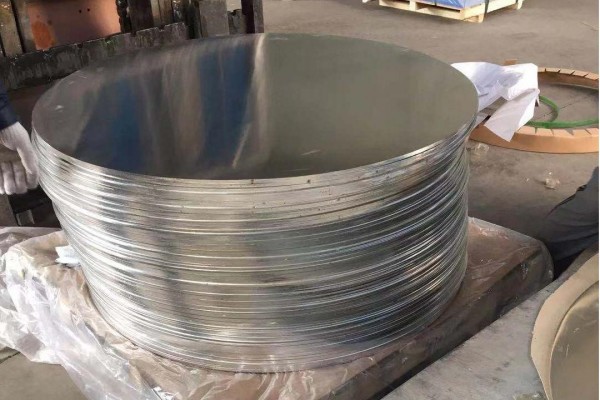
 Aluminum cooking pot
1. Product Overview and Core Advantages
Corrosion-resistant 5052 aluminum circles are circular aluminum materials made from high-quality 5052 aluminum alloy, manufactured through precision rolling, annealing, and slitting processes.
Unlike ordinary pure aluminum circles, 5052 circles are specifically optimized for rust and corrosion resistance, demonstrating exceptional stability in outdoor, marine, and humid industrial environments. The product combines lightweight properties, high fatigue resistance, and excellent secondary processing performance, accommodating various processing techniques such as spinning, deep drawing, bending, and anodizing.
Core advantages of 5052 aluminum circles include:
- Excellent overall corrosion resistance
- Adaptability to marine environments
- High fatigue strength
- Stable deep drawing and spinning performance
- Smooth, clean surface finish
- Superior anodizing effects
- Long service life
2. 5052 Aluminum Alloy Chemical Composition and Characteristics
5052 aluminum belongs to the typical Al-Mg anti-rust alloy series. The scientific proportioning of magnesium (Mg) and chromium (Cr) significantly enhances the alloy’s oxidation resistance and structural stability. Its anti-rust performance surpasses that of ordinary 3003 aluminum, while its structural strength is higher than 1000-series pure aluminum.
2.1 Chemical Composition
| Alloy Element |
Content Range |
| Magnesium (Mg) |
2.2% – 2.8% |
| Chromium (Cr) |
0.15% – 0.35% |
| Aluminum (Al) |
Remainder |
2.2 Mechanical Properties
Leveraging the rational ratio of Mg and Cr, 5052 alloy exhibits outstanding comprehensive performance. Its corrosion and rust resistance are superior to 3003, while its mechanical strength and structural rigidity exceed those of 1060 pure aluminum. It also boasts excellent weldability and fatigue resistance, fully adapting to complex and changing industrial application scenarios.
| Performance Indicator |
Typical Parameter |
| Tensile Strength |
170 – 305 MPa |
| Yield Strength |
≥90 MPa |
| Elongation |
10% – 20% |
| Density |
2.68 g/cm³ |
Thanks to its excellent mechanical property ratio, 5052 aluminum circles offer strong processing adaptability, superb deep drawing performance, high crack resistance, and stable spinning results. In mass production, it features a low earring rate and high finished product yield.
3. Manufacturing Process and Technological Advantages
5052 aluminum circles are produced using a mature, standardized industrial flow: Aluminum Ingot → Hot Rolling → Cold Rolling → Annealing → Circling (Blanking) → Surface Treatment → Precision Inspection → Export Packaging.
Different rolling processes impart differentiated properties to meet diverse customer production needs:
- Hot-Rolled 5052 Circles: Offer better comprehensive mechanical properties, uniform internal structure, low deep-drawing earring rates, and excellent stretching performance. Ideal for high-end cookware and demanding deep-drawn products.
- Cold-Rolled 5052 Circles: Feature higher surface flatness, more precise dimensional accuracy, and better surface finish, meeting the conventional processing and surface decoration needs of most industrial products.
4. Surface Quality and Processing Performance
High-quality 5052 aluminum circles feature high-standard surface quality: free of oil stains, scratches, oxidation spots, and black lines, with uniform overall thickness. The smooth, flat surface provides a reliable foundation for subsequent anodizing, spraying, polishing, and deep drawing.
In the field of secondary processing, 5052 circles hold an irreplaceable position. Their excellent deep drawing performance makes them the core raw material for cookware like non-stick pans, frying pans, and pressure cookers. Stable spinning performance allows for the mass production of lampshades, reflectors, and various spun hardware parts with high forming yield and good batch stability.
5. Core Industrial Applications and Scene Adaptability
As a classic Al-Mg series anti-rust industrial base material, 5052 aluminum circles leverage their comprehensive characteristics: excellent corrosion resistance, medium structural strength, extreme deep drawing/spinning formability, weldability, and weather/fatigue resistance.
Breaking through the limitations of traditional aluminum materials, they are widely adapted to harsh industrial scenarios such as high humidity, salt spray, chemical corrosion, and long-term outdoor service. They serve as core precision forming materials in cookware, lighting, transportation, marine engineering, general industrial equipment, new energy, electronics, electrical appliances, and construction industries. Their industrial utility and adaptability far exceed ordinary 1060 and 3003 aluminum materials.
5.1 Cookware and Light Industry
The cookware industry is the most mature and largest application field for 5052 circles. Benefiting from uniform material structure, extremely low forming crack rates, and food-grade safety attributes, this material can be deeply drawn or spun into various civil and commercial cookware, including non-stick pans, heavy-duty frying pans, pressure cookers, stockpots, steamers, and full sets of daily hardware kitchenware.
The surface is clean and impurity-free, stably accommodating subsequent coatings (non-stick), anodizing, or polishing. The formed walls are uniform, wrinkle-free, and crack-free, while offering good high-temperature resistance and anti-vapor corrosion. It resists oxidation darkening, deformation, and rust over long-term use, fully meeting hygiene and durability standards.
5.2 Lighting and Decoration Industry
In the lighting industry, 5052 circles—with their smooth surface, excellent reflectivity, and flexible spinning capability—are core raw materials for high-end lighting accessories.
They can be integrally spun into various LED lampshades, industrial/mining lamp reflectors, road lamp reflective panels, decorative lighting housings, and special-shaped lighting decorations. Compared to ordinary aluminum, 5052 forms more regular arcs, higher surface flatness, and more uniform light reflection. Its excellent outdoor weather resistance ensures it does not oxidize, fade, peel, or deform under long-term sun and humidity exposure, suiting outdoor engineering lighting, municipal beautification, and industrial plant lighting.

5.3 Traffic Signs and Outdoor Transportation
5052 circles feature superior outdoor weather resistance, acid rain corrosion resistance, and UV aging resistance, making them specialized base materials for traffic safety industries. They are widely used for municipal road signs, highway reflective markers, sign substrates, traffic indicators, and warning signs.
With moderate strength and deformation resistance, they withstand long-term erosion from wind, sand, rain, and temperature fluctuations, eliminating issues like rusting, peeling, and embrittlement common with standard sign materials. This significantly reduces maintenance and replacement costs for outdoor traffic facilities.
5.4 Marine Engineering and Coastal Industries
As a high-end anti-rust aluminum base material, 5052 circles possess industry-leading salt spray and seawater corrosion resistance, making them the preferred choice for marine and coastal industrial equipment. Main applications include ship auxiliary parts, deck sheet metal components, cabin decorative covers, offshore platform light protective parts, coastal machinery housings, and marine fluid equipment end caps.
In high-salt spray and high-humidity marine conditions, the material exhibits an extremely low corrosion rate and outstanding fatigue resistance, enabling long-term stable service. This solves the industry pain points of carbon steel rusting and ordinary aluminum’s insufficient seawater corrosion resistance.
5.5 General Industrial Equipment and Chemical Apparatus
For humid and micro-corrosive industrial conditions in chemical, food processing, refrigeration, and fluid equipment, 5052 circles are ideal for processing various industrial equipment parts: light storage tank end caps, pressure vessel heads, equipment protective housings, mechanical sheet metal parts, refrigeration equipment end plates, fluid pipe fittings, and food processing hardware.
The material resists industrial atmospheric corrosion and weak acid/alkali media erosion. Its excellent processability allows for bending, punching, and stretch forming, adapting to various non-standard precision machining needs. Additionally, its lightweight nature effectively reduces overall equipment weight and improves operational stability.
5.6 New Energy and Electronic Appliances
Relying on lightweight, formability, weldability, and corrosion resistance, 5052 circles are widely used in new energy and electronic appliance industries. They can be processed into new energy vehicle auxiliary parts, battery protective covers, charging pile housings, photovoltaic equipment decorative sheet metal, electrical enclosures, heat sinks, and equipment shields.
Compared to steel, the weight reduction is significant. Compared to pure aluminum, the structural strength is higher, and deformation resistance is stronger, suiting long-term dynamic load scenarios in electrical equipment while balancing heat dissipation, protection, and durability.
5.7 Construction Supporting Industry
In construction, 5052 circles are often used for decorative sheet metal, ceiling accessories, curtain wall decorations, outdoor lamp brackets, and building hardware connectors.
The material resists acid rain and aging, suiting outdoor architectural scenarios. Rich forming processes meet various special-shaped decorative needs, balancing aesthetics, weather resistance, and structural stability for commercial, municipal, and industrial projects.

5.8 Summary of Core Industrial Adaptability
5052 circles cover full-category industrial scenarios due to multi-dimensional performance adaptation:
- Strong Corrosion Resistance: Adapts to marine, chemical, and outdoor high-corrosion environments.
- Superior Formability: Supports complex shaping with high yield rates.
- Moderate Structural Strength: Balances lightweight with deformation/fatigue resistance.
- Excellent Surface Technology: Accommodates anodizing, spraying, polishing, etc.
- Safety & Stability: Non-hazardous, anti-aging, low maintenance, suitable for civilian, industrial, and engineering mass production.
6. Alloy Comparison and Product Positioning
The current mainstream aluminum circle materials are 5052, 3003, and 1060. Horizontal comparison clarifies the performance advantages and positioning of 5052.
6.1 5052 vs. 3003
| Comparison Item |
5052 Aluminum Circle |
3003 Aluminum Circle |
| Corrosion Resistance |
Excellent |
Good |
| Structural Strength |
Higher |
Lower |
| Deep Drawing |
Excellent |
Good |
| Market Price |
Higher |
Lower |
6.2 5052 vs. 1060
| Comparison Item |
5052 Aluminum Circle |
1060 Aluminum Circle |
| Hardness & Strength |
Higher |
Softer |
| Corrosion Resistance |
Superior |
Average |
| Application Scope |
Wide |
Limited |
In summary, 1060 pure aluminum circles are mostly used for simple stretching and low-demand decoration, while 3003 suits general anti-rust scenarios. 5052 circles, with higher strength and superior corrosion resistance, are precisely positioned for high-end cookware, marine equipment, outdoor facilities, and precision forming fields, making them the mainstream preferred product for high-standard anti-rust aluminum circles.
7. Product Specifications and Customization Services
5052 aluminum circles offer comprehensive specifications and support personalized customization to meet diverse production needs across industries.
| Parameter |
Specification Range |
| Thickness |
0.5mm – 6.0mm |
| Diameter |
100mm – 1200mm |
| Temper |
O / H12 / H14 / H32 |
Beyond standard specs, special diameters and thicknesses are supported. Value-added services like surface filming and custom export packaging are available. O-temper is ideal for deep drawing and spinning, while H-series tempers suit products requiring hardness and structural stability.
8. Frequently Asked Questions (FAQ)
Q1: Why does 5052 aluminum circle have excellent corrosion resistance?
The scientifically proportioned Magnesium and Chromium in the 5052 alloy form a dense, stable oxide protective layer on the surface, effectively resisting oxidation, moisture, salt spray, and industrial chemical corrosion, providing lasting rust-proof capability.
Q2: Is 5052 aluminum circle suitable for marine environments?
Yes. 5052 alloy offers excellent salt spray resistance and adaptability to marine environments, making it the preferred aluminum material for coastal and ship auxiliary equipment.
Q3: Can 5052 aluminum circle be anodized?
Yes. The material has a uniform internal structure and clean surface, enabling high-quality anodizing, coloring, and surface decoration effects.
Q4: Which temper is best for deep drawing?
O-temper 5052 aluminum circles offer excellent ductility and low cracking rates, making them the optimal choice for deep drawing and spinning.
Q5: Is 5052 aluminum material environmentally friendly and recyclable?
Yes, it is environmentally friendly and 100% recyclable. Aluminum alloy recycling consumes low energy, produces no pollution, and aligns with global green manufacturing and sustainable development concepts.
Conclusion
With its excellent anti-corrosion performance, moderate structural strength, outstanding forming capabilities, and high-end surface quality, 5052 corrosion-resistant aluminum circles are highly competitive in the aluminum processing industry.
They fully meet the stringent production requirements of cookware manufacturing, lighting decoration, traffic signage, marine equipment, and industrial anti-corrosion components. Against the backdrop of ongoing global upgrades in lightweight and eco-friendly manufacturing, 5052 aluminum circles will continue to leverage their irreplaceable material advantages, serving as a core foundational material supporting high-quality development across various industrial fields.
Properties of the aluminum circle:
Aluminum circle is suitable for many markets, including cookware, automotive and lighting industries, etc., thanks to good product characteristics:
- Low anisotropy, which facilitates deep drawing
- Strong mechanical properties
- High and homogeneous heat diffusion
- Ability to be enameled, covered by PTFE (or others), anodized
- Good reflectivity
- High strength-to-weight ratio
- Durability and resistance to corrosion
Aluminum Circles Process
Ingot/Master Alloys — Melting Furnace – Holding Furnace — D.C. Caster — Slab —- Scalper — Hot Rolling Mill – Cold Rolling Mill – Punching – Annealing Furnace — Final Inspection – Packing — Delivery
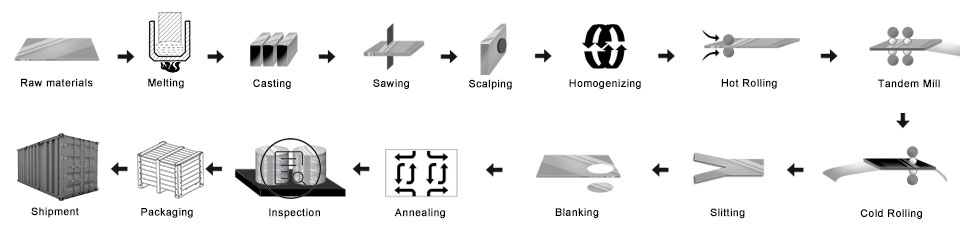
- Prepare the master alloys
- Melting furnace: put the alloys into the melting furnace
- D.C.cast aluminum ingot: To make the mother ingot
- Mill the aluminum ingot: to make the surface and side smooth
- Heating furnace
- Hot rolling mill: made the mother coil
- Colding rolling mill: the mother coil was rolled as the thickness you want to buy
- Punching process: become the size what you want
- Annealing furnace: change the temper
- Final inspection
- Packing: wooden case or wooden pallet
- Delivery
Quality Control
Assurance Below inspection will be done in the production.
- a. ray detection—RT;
- b. ultrasonic testing—UT;
- c. Magnetic Particle Testing-MT;
- d. penetration testing-PT;
- e. eddy current flaw detection-ET
1) Be free from Oil Stain, Dent, Inclusion, Scratches, Stain, Oxide Discoloration, Breaks, Corrosion, Roll Marks, Dirt Streaks, and other defects which will interfere with use.
2) Surface without black line, clean-cut, periodic stain, roller printing defects, such as other gko internal Control standards.
Aluminum discs packing:
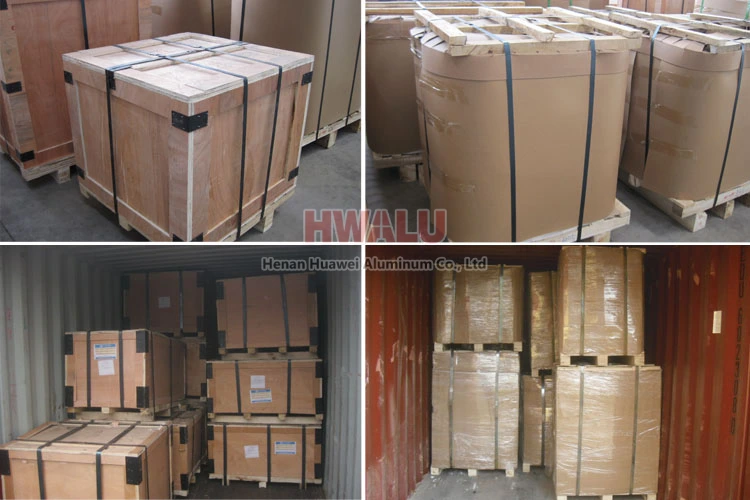
Aluminum circles can be packed by export standards, covering with brown paper and plastic film. Finally, the Aluminium Round is fixed on a wooden pallet/wooden case.
- Put the driers side the aluminum circle, keep the products dry and clean.
- Use clean plastic paper, pack the aluminium circle, keep good sealing.
- Use the snakeskin paper, pack the surface of the plastic paper, keep good sealing.
- Next, there are two ways of packaging: One way is wooden pallet packaging, using the crusty paper packing the surface; Another way is wooden case packaging, using the wooden case packing the surface.
- Finally, lay the steel belt on the wooden box’s surface, keeping the wooden box fastness and secure.
Aluminum circle of Henan Huawei Aluminum. meet the export standard. Plastic film and brown paper can be covered at customers’ needs. What’s more, a wooden case or wooden pallet is adopted to protect products from damage during delivery. There are two kinds of packaging, which are eye to wall or eye to the sky. Customers can choose either of them for their convenience. Generally speaking, there are 2 tons in one package, and loading 18-22 tons in 1×20′ container, and 20-24 tons in 1×40′ container.
Why choose us?
In order to move with the times, HWALU keeps introducing the state of the art equipment and technique to improve its competitiveness. Always adhere to the business philosophy of quality as the center and customer first, to provide the highest quality aluminum disc circle series products to all parts of the world. More …

