Por que são 1060 e 3003 ligas frequentemente usadas em discos de alumínio para utensílios de cozinha? Quais são as diferenças nas propriedades dos materiais entre as diferentes peças?
HW-A. Introdução: O papel central dos discos de alumínio para panelas
ligas de disco de alumínio para panelas para panelas servem como material de base para panelas moldadas por estampagem (woks, caldeirões, frigideiras, etc.). A seleção da liga determina diretamente a uniformidade da condutividade térmica, dificuldade de formação, vida útil, e desempenho de segurança de utensílios de cozinha. Atualmente, 1060 (Série 1 alumínio puro) e 3003 (Série 3 liga de alumínio-manganês) conta por mais 90% da participação de mercado como opções principais para este material. Adicionalmente, a diferença material entre o fundo e o corpo dos potes é um design refinado baseado no princípio de “adaptação da zona funcional,” que juntos formam o sistema técnico de materiais à base de alumínio para panelas.

HW-B. Principais razões para escolher 1060 e 3003 Ligas para panelas Discos de alumínio
As propriedades de 1060 e 3003 as ligas são altamente compatíveis com os requisitos de fabricação de utensílios de cozinha, e oferecem um melhor equilíbrio de “desempenho-custo-processo” em comparação com outras ligas de alumínio (por exemplo, 5052, 6061). As razões específicas podem ser analisadas a partir de três aspectos:
(UM) Propriedades inerentes da liga: Alinhando-se com os principais requisitos de utensílios de cozinha
| Grau de liga |
Composição Central (Fração de Massa) |
Principais parâmetros de desempenho (GB/T 3880.2-2022) |
Requisitos de panelas adaptáveis |
| 1060 |
Al≥99,6%, Impurezas≤0,4% |
Resistência à tração σb=95-120MPa, Alongamento δ10≥30%, Condutividade térmica λ=230W/(m·K) (20℃) |
1. Alta ductilidade: Atende à formação de estiramento de corpos de vasos (por exemplo, transições de arco de estoques profundos); 2. Condutividade térmica uniforme: λ está próximo do alumínio puro (237C/(m·K)), evitando o superaquecimento local durante o cozimento; 3. Alta atividade de superfície: Fácil para oxidação anódica e revestimento antiaderente (por exemplo, PTFE) aplicativo, com excelente textura de aparência |
| 3003 |
Al≥96,5%, Mn=1,0-1,5%, Cu≤0,2% |
Resistência à tração σb=120-150MPa (30% superior a 1060), Alongamento δ10≥20%, Condutividade térmica λ=190W/(m·K) (20℃), Resistência à corrosão (>500h teste de névoa salina sem ferrugem branca) |
1. Alta resistência: Resiste à deformação do fundo dos potes por alta temperatura (por exemplo, estresse de expansão térmica durante aquecimento em chama aberta); 2. Excelente resistência à corrosão: Resiste à corrosão do óleo de cozinha, detergentes (ingredientes especialmente ácidos); 3. Estabilidade em altas temperaturas: Nenhuma degradação significativa da resistência durante o uso a longo prazo a 150°C (adaptando-se a temperaturas de cozimento de 200-300°C para woks) |
(B) Compatibilidade do material do disco de alumínio com processos de fabricação de panelas
- Compatibilidade de processos de formação:
-
- Como material para estes discos de panelas, 1060alto alongamento (δ10≥30%) permite “formação de estiramento único,” adequado para superfícies curvas complexas de corpos de vasos (por exemplo, uma wok com diâmetro de 32 cm tem altura de esticar a parede da panela >8cm). Além disso, não exibe nenhum retorno óbvio após a formação, com precisão dimensional de até ±0,1 mm;
-
- Para 3003, sua resistência e ductilidade equilibradas (δ10≥20%) torná-lo ideal para “espessamento de estampagem” processo de fundo de panela (por exemplo, carimbar um disco de alumínio de 2 mm em um fundo de panela de 3 mm para aumentar a capacidade de carga). Notavelmente, mantém a estabilidade da forma sem recozimento após a estampagem - ao contrário 1060, que requer recozimento a 300°C por 1h para eliminar o estresse interno após o alongamento.
- Adaptabilidade pós-processamento:
-
- O filme de óxido (Al₂O₃) na superfície dos discos de panelas à base de 1060 é uniforme e fácil de colorir, tornando-o adequado para corpos de vasos coloridos anodizados (por exemplo, preto fosco, champanhe ouro) com uma espessura de filme de 10-15μm (conforme exigido por GB/T 8013.1);
-
- Para discos de panelas baseados em 3003, sua superfície é fácil de soldar ou compor com outros materiais (por exemplo, camada magnética de aço inoxidável, camada térmica de cobre). Além disso, a resistência à corrosão nas juntas soldadas não diminui significativamente, atendendo aos requisitos de compatibilidade do fogão de indução de “composto de alumínio-aço” fundo de panela.
(C) Lógica para excluir outras ligas de aplicações de discos para panelas
Por que as ligas são como 5052 (Série 5 Liga Al-Mg) e 6061 (Série 6 Liga Al-Mg-Si) não escolhido para este material de panela? O núcleo está em “excedente de desempenho” ou “incompatibilidade funcional”:
- 5052: Sua resistência à tração (σb=230MPa) é muito superior ao de 1060/3003, mas seu baixo alongamento (δ10≤25%) causa rachaduras durante o alongamento, tornando-o incapaz de formar corpos complexos de vasos. Adicionalmente, seu alto teor de magnésio (2.2-2.8%) leva à precipitação de Mg₂Si em temperaturas >180℃, resultando em condutividade térmica irregular;
- 6061: Possui alta dureza (HB≥95) mas baixa condutividade térmica (λ=160W/(m·K)), apenas 69.6% daquele de 1060, causando facilmente “pontos quentes locais” durante o cozimento (por exemplo, superaquecimento no centro inferior da panela e baixa temperatura nas bordas). Além disso, sua baixa ductilidade após o endurecimento por envelhecimento o torna inadequado para estampagem;
- 1100 (Série 1 alumínio puro): Sua pureza (Al≥99,0%) é inferior a 1060, e sua condutividade térmica (λ=223W/(m·K)) é um pouco mais baixo. Sua resistência à corrosão (ferrugem branca aparece após 300h de teste de névoa salina) é inferior a 3003, por isso só é usado em panelas de baixo custo (por exemplo, potes de alumínio descartáveis) e não pode servir como material de disco de alumínio para panelas convencionais.

HW-C. Diferenças materiais entre diferentes peças de panelas: Aplicação em Zona Funcional de Discos de Alumínio para Panelas
Fundos e corpos de panelas enfrentam condições de trabalho significativamente diferentes (temperatura, estresse, ambiente de corrosão), então há diferenças óbvias na seleção, projeto de espessura, e tratamento de processo do material do disco de alumínio para panelas. As comparações específicas são as seguintes:
(UM) Diferença Central: Requisitos funcionais determinam a seleção de materiais para discos de panelas
| Dimensão de comparação |
Fundo do pote (Zona de aquecimento) |
Corpo do pote (Zona sem aquecimento) |
| Condições Básicas de Trabalho |
1. Exposição prolongada a altas temperaturas (200-350℃ para chamas abertas, 180-250℃ para fogões de indução); 2. Sustentando o estresse mecânico (fricção de espátula wok, peso dos alimentos); 3. Contato com água, detergentes, e ingredientes ácidos (por exemplo, vinagre, tomates) |
1. Temperaturas normais a médias (<150℃, calor conduzido do fundo da panela); 2. Principalmente sustentando o estiramento formando estresse (sem atrito mecânico de alta frequência); 3. Enfatizando a aparência e a sensação da mão (contato com as mãos dos usuários) |
| Principais requisitos de desempenho |
Resistência a altas temperaturas, resistência à corrosão, estabilidade de condutividade térmica, resistência ao desgaste |
Alta ductilidade (para formar), estética de superfície, leve |
| Seleção de liga convencional |
3003-discos de panelas baseados (85% Quota de mercado), ou 3003 + camada composta (por exemplo, aço inoxidável, cobre) |
1060-discos de panelas baseados (90% Quota de mercado), com 1050 (maior pureza) usado em algumas panelas de alta qualidade |
(B) Detalhes do material: Espessura e aprimoramento de processo de discos de alumínio para panelas
- Design de material do fundo do pote:
-
- Material base: 3003-discos para panelas com espessura de 2-3 mm (50-100% mais grosso que o corpo da panela). Razões: ① O espessamento reduz a densidade do fluxo de calor (Q=λ×ΔT/δ; aumento de δ diminui gradiente de temperatura local), evitando “queimando”; ② Aumenta a rigidez para evitar deformação em alta temperatura (por exemplo, empenamento do fundo do pote);
-
- Aprimoramento composto: Panelas de médio a alto padrão adotam uma estrutura composta de “3003-discos de panelas baseados + camada magnética” (por exemplo, “3003 (2milímetros) + 430 aço inoxidável (0.5milímetros)”) para resolver o problema não magnético do alumínio puro (incompatível com fogões de indução). A camada de aço inoxidável melhora a resistência ao desgaste (430 o aço inoxidável tem uma dureza de HB≥170, o dobro do que 3003);
-
- Tratamento de superfície: O fundo dos potes geralmente é jateado (Ra = 1,6-3,2 μm) para aumentar o atrito com fogões (evitando deslizamento) e evite descascar o revestimento antiaderente em altas temperaturas (revestimentos antiaderentes tendem a se decompor quando a temperatura do fundo da panela excede 260 ℃).
- Design de material do corpo do pote:
-
- Material base: 1060-discos para panelas com espessura de 1-1,5 mm. Vantagens: ① Leve (15-20% mais leve que 3003 para o corpo do vaso do mesmo tamanho), proporcionando uma sensação de mão mais confortável; ② Suportes de alta ductilidade “desenho profundo” (por exemplo, profundidade do caldeirão >15cm) sem rugas após a formação;
-
- Tratamento de superfície: A oxidação anódica é o principal processo (70% taxa de aplicação) com uma espessura de filme de óxido de 8-12μm, apresentando: ① Resistência a arranhões (HB≥3H, resiste a arranhões leves de espátulas wok); ② Resistência a manchas (poros superficiais fechados, evitando resíduos de óleo). Por exemplo, alguns utensílios de cozinha de alta qualidade usam revestimentos cerâmicos (baseado em discos de panelas baseados em 1060) com uma espessura de 20-30μm para melhorar a resistência a altas temperaturas (suportando queima seca de curto prazo a 400 ℃);
-
- Adaptação estrutural: A área de conexão entre o corpo da panela e o fundo (por exemplo, “pescoço de panela”) adota “1060-baseado + emenda de disco de panelas local com base em 3003.” A razão é que a área de conexão precisa suportar o calor e o estresse conduzido pelo fundo da panela., e a força de 3003 evita rachaduras (A soldagem TIG é usada para emendas, com resistência à tração de solda ≥100MPa).
(C) Casos Práticos: Aplicação de discos de alumínio para panelas de marcas convencionais
- Supor “Ponto quente vermelho” Wok:
-
- Fundo do pote: 3003-discos de panelas baseados (2.5mm de espessura) + 430 camada magnética de aço inoxidável (0.4mm de espessura). O processo composto é “laminação a quente” (resistência de laminação ≥50N/cm), resolvendo problemas de compatibilidade de fogão de indução e deformação em alta temperatura;
-
- Eu posso usar body: 1060-discos de panelas baseados (1.2mm de espessura) com “oxidação anódica + revestimento nano-cerâmico” na superfície. Seu alongamento atinge 32%, habilitando “formação de estiramento de uma peça” (parede de vaso perfeita).
- GÊMEO “Movimento” Caldeirão:
-
- Fundo do pote: 3003-discos de panelas baseados (3mm de espessura) + núcleo de cobre puro (0.8mm de espessura, λ=401W/(m·K)). O núcleo de cobre melhora a condutividade térmica (o dobro do puro 3003 fundo de panela), adequado para fervura rápida de sopa;
-
- Eu posso usar body: 1060-discos de panelas baseados (1.5mm de espessura) com “oxidação anódica escovada” na superfície (Ra=0,8μm), melhorando a textura da aparência e a resistência às impressões digitais.

HW-D. Tendências da indústria: Atualização de discos de alumínio para panelas e expansão de aplicações de materiais compósitos
Com o refinamento dos requisitos funcionais dos utensílios de cozinha (por exemplo, culinária com baixo teor de açúcar, compatibilidade de indução, design leve), a aplicação de discos de alumínio em panelas (baseado em 1060 e 3003) também está atualizando, com as principais direções, incluindo:
- Otimização da composição da liga:
-
- “Impureza ultrabaixa” versão de discos de panelas baseados em 1060 (Fe≤0,15%, Si≤0,10%) com condutividade térmica aumentada para 235W/(m·K), adequado para panelas de precisão de alta qualidade (por exemplo, potes de comida para bebê);
-
- “Micro-liga” 3003-discos de panelas baseados (adicionando 0.1-0.2% Zr) com resistência a altas temperaturas (σb≥80MPa a 300℃) 15% mais alto que o normal 3003, adequado para woks usados para cozimento prolongado em chama aberta.
- Estrutura Composta Multicamadas:
-
- Estrutura de quatro camadas: “1060-discos de panelas baseados (eu posso corpo) + 3003-discos de panelas baseados (camada de transição) + 430 aço inoxidável (fundo externo do pote) + núcleo de cobre (centro).” Equilibra a condutividade térmica, resistência à corrosão, magnetismo, e aparência, e tem sido aplicado em panelas de alta qualidade com preços superiores a 10,000 yuan.
- Adaptação de Processo Ecologicamente Correta:
-
- Ambos 1060 e os discos de panelas baseados em 3003 estão em conformidade com a RoHS da UE 2.0 e EUA. Padrões de contato com alimentos da FDA (FDA 21 CFR 175.300), e pode ser 100% reciclado (o desempenho do alumínio reciclado é apenas 5-8% inferior ao alumínio primário), alinhando com o “panelas verdes” tendência.
HW-E. Conclusão
A seleção de 1060 e 3003 para panelas discos de alumínio é essencialmente um equilíbrio de “propriedades da liga – requisitos de panelas – custo do processo”: 1060-os discos com base adaptam-se aos requisitos de formação e aparência dos corpos dos potes com alta ductilidade e condutividade térmica uniforme, enquanto os discos baseados em 3003 se adaptam às condições de alta temperatura e estresse dos fundos dos potes com alta resistência e resistência à corrosão. Em contraste, a diferença material entre o fundo e o corpo das panelas é uma aplicação refinada desses discos para panelas com base em “zoneamento funcional.” Através da seleção de liga, ajuste de espessura, e aprimoramento composto, o desempenho geral ideal dos utensílios de cozinha é alcançado. No futuro, com o avanço dos materiais compósitos e otimização de ligas, 1060 e 3003 continuarão sendo as principais opções de liga para discos de alumínio de panelas, enquanto surgirão soluções mais atualizadas que se adaptam a cenários segmentados.
Propriedades do círculo de alumínio:
O círculo de alumínio é adequado para muitos mercados, incluindo panelas, indústrias automotiva e de iluminação, etc., graças às boas características do produto:
- Baixa anisotropia, o que facilita o desenho profundo
- Propriedades mecânicas fortes
- Difusão de calor alta e homogênea
- Capacidade de ser esmaltado, coberto por PTFE (ou outros), anodizado
- Boa refletividade
- Alta relação resistência-peso
- Durabilidade e resistência à corrosão
Processo de Círculos de Alumínio
Lingotes/Ligas Mestres — Forno de fusão – Forno de retenção — DC. Rodízio — Laje —- Escalpador — Laminador a Quente – Laminador a Frio – Puncionamento – Forno de Recozimento — Inspeção Final – Embalagem — Entrega
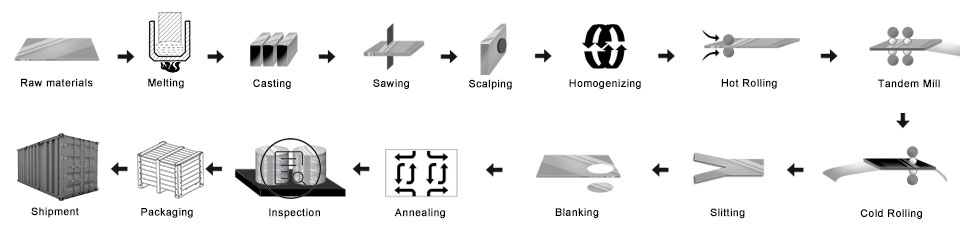
- Prepare as ligas mestres
- Forno de fusão: coloque as ligas no forno de fusão
- Lingote de alumínio fundido DC: Para fazer o lingote mãe
- Fresar o lingote de alumínio: para tornar a superfície e o lado lisos
- Forno de aquecimento
- Laminador a quente: fez a bobina mãe
- Laminador a frio: a bobina mãe foi enrolada conforme a espessura que você deseja comprar
- Processo de perfuração: torne-se do tamanho que você deseja
- Forno de recozimento: mudar o temperamento
- Inspeção final
- Embalagem: caixa de madeira ou palete de madeira
- Entrega
Controle de qualidade
Garantia Abaixo a inspeção será feita na produção.
- um. detecção de raios—TR;
- b. testes ultrassônicos—UT;
- c. Teste de Partículas Magnéticas-MT;
- d. testes de penetração-PT;
- e. detecção de falhas por correntes parasitas-ET
1) Esteja livre de manchas de óleo, Dente, Inclusão, Arranhões, Mancha, Descoloração Óxida, Pausas, Corrosão, Marcas de rolo, Listras de sujeira, e outros defeitos que interferirão no uso.
2) Superfície sem linha preta, limpo, mancha periódica, defeitos de impressão em rolo, como outros padrões de controle interno da gko.
Embalagem de discos de alumínio:
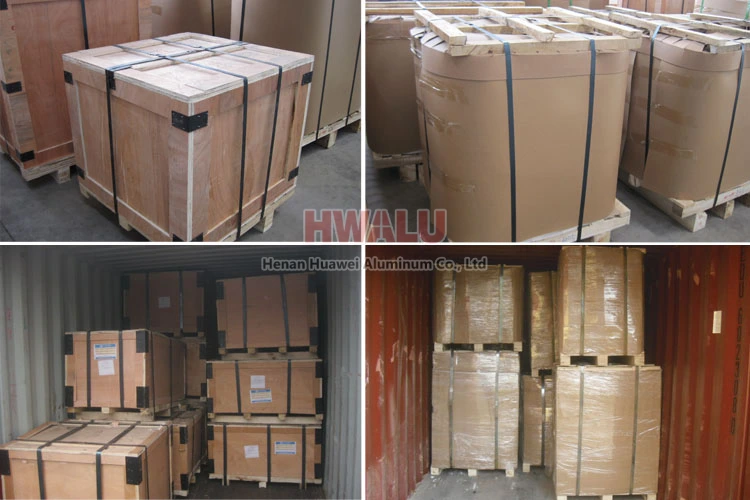
Os círculos de alumínio podem ser embalados de acordo com os padrões de exportação, cobrindo com papel pardo e filme plástico. Finalmente, a Rodada de Alumínio é fixada em um palete de madeira/caixa de madeira.
- Coloque os secadores ao lado do círculo de alumínio, mantenha os produtos secos e limpos.
- Use papel plástico limpo, embale o círculo de alumínio, mantenha uma boa vedação.
- Use o papel de pele de cobra, embale a superfície do papel plástico, mantenha uma boa vedação.
- Próximo, existem duas formas de embalagem: Uma maneira é a embalagem de paletes de madeira, usando o papel crocante embalando a superfície; Outra forma é a embalagem em caixa de madeira, usando a caixa de madeira embalando a superfície.
- Finalmente, coloque a correia de aço na superfície da caixa de madeira, mantendo a solidez e segurança da caixa de madeira.
Círculo de alumínio de Henan Huawei Alumínio. atender ao padrão de exportação. Filme plástico e papel pardo podem ser cobertos de acordo com as necessidades dos clientes. Além do mais, uma caixa de madeira ou palete de madeira é adotada para proteger os produtos contra danos durante a entrega. Existem dois tipos de embalagens, que estão de olho na parede ou de olho no céu. Os clientes podem escolher qualquer um deles para sua conveniência. De um modo geral, há 2 toneladas em um pacote, e carregando 18-22 toneladas em contêiner 1×20′, e 20-24 toneladas em contêiner 1×40′.
Por que nos escolher?
Para acompanhar os tempos, A HWALU continua introduzindo equipamentos e técnicas de última geração para melhorar sua competitividade. Sempre siga a filosofia empresarial de qualidade como centro e cliente em primeiro lugar, fornecer produtos da série de círculo de disco de alumínio da mais alta qualidade para todas as partes do mundo. Mais …

