Os discos de alumínio usados em utensílios de cozinha são propensos a problemas como “rachaduras” e “enrugando” durante a operação. Como evitá-los?
1. Introdução: Pontos problemáticos da indústria e impactos de defeitos de processamento em discos de alumínio para utensílios de cozinha
Discos de alumínio para utensílios de cozinha (comumente usado em vasos, frigideiras, talheres, etc.) são feitos principalmente de 3003, 5052, e 1100 ligas de alumínio. Seus processos de estampagem e desenho exigem “formação de paredes finas + precisão dimensional + aparência sem defeitos”-no entanto, “rachaduras” (tensão local excedendo a resistência à tração do material) e “enrugando” (acumulação local causada por fluxo irregular de material) são dois defeitos principais, levando diretamente a:
- Taxa de aprovação reduzida (taxa média de defeitos da indústria: 8%-15%, alcançando 20% para utensílios de cozinha embutidos);
- Custos crescentes (desperdício de matéria-prima + os custos de manutenção de moldes aumentam em mais de 30%);
- Riscos de desempenho (rachaduras causam facilmente deformação durante o uso de utensílios de cozinha, enquanto o enrugamento afeta a condução uniforme de calor).
Formular soluções práticas de prevenção, as causas raízes dos defeitos devem ser analisadas com precisão em três dimensões: propriedades dos materiais, parâmetros de processo, e projeto de molde. Notavelmente, A prevenção de problemas com discos de alumínio usados em utensílios de cozinha tornou-se um foco principal para os fabricantes melhorarem a eficiência da produção e a qualidade do produto.

2. Análise da causa principal de “Rachadura” e “Enrugamento” Defeitos
(1) Rachadura: Efeito sobreposto de sobrecarga de tensão e ductilidade insuficiente do material
- Principais gatilhos relacionados ao material
-
- Seleção incorreta de liga: Por exemplo, usando 5052 Temperamento H18 (resistência à tracção: 260MPa, alongamento: 10%) em vez de 3003 Ó temperamento (resistência à tracção: 110MPa, alongamento: 25%) para vasos estampados – ductilidade insuficiente leva a rachaduras;
-
- Defeitos materiais internos: Discos de alumínio com listras rolantes (profundidade >0.02milímetros) ou inclusões (Conteúdo Fe >0.7% forma facilmente partículas duras) tornam-se pontos de concentração de tensão durante o desenho;
-
- Tratamento térmico inadequado: Recozimento inadequado (por exemplo, 3003 discos de alumínio recozidos em <340℃ para <1h) deixa o estresse interno não eliminado, causando um aumento repentino na tensão local durante a trefilação.
- Principais gatilhos relacionados ao processo e ao molde
-
- Proporção de desenho excessiva: Primeira proporção de desenho (diâmetro do produto acabado/diâmetro em branco) >2.2 (limite para 3003 Ó temperamento) e proporção de desenho subsequente >1.8, resultando em taxa de desbaste local superior 35% (valor crítico para fratura do material);
-
- Filete de molde muito pequeno: Raio de filete de punção R <5t (t = espessura do disco de alumínio; por exemplo, R <10mm quando t=2mm), aumentando o fator de concentração de tensão de 1.2 para 2.5 e aumentando drasticamente o risco de rachaduras;
-
- Falha de lubrificação: Carbonização de lubrificante (por exemplo, lubrificante à base de óleo com ponto de inflamação <180℃) durante a trefilação em alta temperatura (temperatura do molde >60℃), aumentando o coeficiente de atrito de 0.05 a 0,15 – a tensão local excede o limite de suporte de carga do material.
(2) Enrugamento: Resultado inevitável do fluxo de materiais desequilibrado e restrições insuficientes
- Parâmetros de processo desequilibrados
-
- Força insuficiente do suporte do blank: Força de suporte vazio F < K×t×D (K = coeficiente, 1.2-1.5 para 3003 alumínio; t = espessura; D = diâmetro da peça bruta). Por exemplo, F <3600N quando t=1,5mm e D=200mm – nenhuma restrição efetiva na borda bruta, causando fluxo excessivo de material na cavidade e enrugamento;
-
- Velocidade de desenho anormal: Velocidade >2EM (0.5-1.2m/s recomendado para estampagem profunda) não deixa tempo para deformação uniforme do material, levando à acumulação local; velocidade <0.3m/s causa facilmente o amolecimento local do material devido ao acúmulo de calor por fricção, resultando em fluxo irregular.
- Defeitos de molde e design em branco
-
- Liberação de molde irracional: Folga da matriz de punção unilateral <1.05t (por exemplo, <2.1mm quando t=2mm) aumenta a resistência ao fluxo de material; liberação >1.2t deixa suporte material insuficiente, causando rugas;
-
- Desvio dimensional em branco: Erro de circularidade do disco de alumínio >0.1milímetros (por exemplo, >0.2desvio mm para diâmetro de 200 mm) leva a tensão desigual durante o desenho, com um >20% diferença na velocidade do fluxo de material de borda;
-
- Escape ruim: Sem orifícios de ventilação (diâmetro <φ1 mm) na cavidade do molde ou aberturas bloqueadas formam pressão negativa (<-0.02MPa) dentro da cavidade durante o desenho, dificultando o fluxo de material e causando enrugamento local.

3. Soluções de prevenção sistemática: Otimização Colaborativa de Material, Processo, e Molde
(1) Fim do material: Seleção precisa e controle de pré-tratamento (Fundação Central de Prevenção)
- Combinação de liga-temperamento (Classificado por tipo de panela)
| Tipo de panela |
Liga recomendada |
Temperamento recomendado |
Principais parâmetros de desempenho (Garantindo a formabilidade) |
| Vasos profundos (profundidade >50milímetros) |
3003 |
Ó |
Resistência à tracção: 100-120MPa, Alongamento ≥24% |
| Frigideiras rasas (profundidade <30milímetros) |
5052 |
H14 |
Resistência à tracção: 170-190MPa, Alongamento ≥15% |
| Talheres de parede fina (grossura <1milímetros) |
1100 |
Ó |
Resistência à tracção: 90-100MPa, Alongamento ≥28% |
- Principais processos de pré-tratamento de materiais
-
- Recozimento (eliminando o estresse interno): 3003 os discos de alumínio são isolados a 340-360°C por 1,5-2h, então resfriado em forno para <100℃ antes de ser lançado (remoção do forno), garantindo dureza ≤HV30 (Dureza Vickers); 5052 A têmpera H14 precisa primeiro ser recozida para a têmpera O (370-390℃ por 2h), depois envelhecido até H14 conforme necessário;
-
- Tratamento de superfície: Controle a espessura do filme de óxido do disco de alumínio em 5-8μm (filme >12μm causa facilmente rachaduras), contaminação por óleo ≤5mg/m² (temperatura de secagem: 60-80℃ após limpeza com solvente), e rugosidade superficial Ra ≤0,8μm (evitando resistência ao atrito desigual);
-
- Inspeção em branco: Teste de correntes parasitas para inclusões internas (área de inclusão única <0.5mm²), medidor de espessura a laser para desvio de espessura ± 5% (por exemplo, ±0,1mm quando t=2mm), e erro de circularidade ≤0,08 mm.
(2) Fim do Processo: Otimização de parâmetros quantitativos e regulação dinâmica
- Padrões quantitativos para parâmetros essenciais do processo (Tirando 3003 Ó temperamento, t = discos de alumínio de 2 mm como exemplo)
| Tipo de processamento |
Faixa de proporção de desenho |
Força de suporte em branco (F) Método de cálculo |
Velocidade de desenho |
Tipo de lubrificante |
Controle de temperatura do molde |
| Primeiro desenho profundo |
1.8-2.2 |
F=1,5×t×D (D = diâmetro em branco) |
0.8-1.0EM |
Lubrificante à base de óleo de extrema pressão (ponto de inflamação ≥220℃) |
40-50℃ |
| Desenho secundário |
1.5-1.8 |
F=1,2×t×D (D = diâmetro do produto acabado anterior) |
1.0-1.2EM |
Lubrificante à base de água (com aditivo de extrema pressão) |
50-60℃ |
| Formação de desenho raso |
1.2-1.5 |
F=1,0×t×D |
1.2-1.5EM |
Lubrificante seco (Baseado em PTFE) |
30-40℃ |
- Estratégias de Regulação Dinâmica
-
- Monitoramento em tempo real: Use sensores de força (precisão ±1%) para monitorar a força de estampagem; quando a força instantânea excede 1.2 vezes a resistência à tração do material, reduzir automaticamente a velocidade de desenho em 20%-30%;
-
- Reabastecimento de lubrificante: Reaplique o lubrificante a cada 500-800 pedaços; usar “spray + limpando” para estampagem profunda para garantir uma espessura de revestimento de 5-10 μm (espessura excessiva causa facilmente enrugamento);
-
- Intervalos de processo: Parar a operação por 10 minutos a cada 2 horas durante o processamento contínuo para resfriar o molde até a faixa de temperatura definida (evitando o amolecimento do material devido ao superaquecimento).
(3) Extremidade do molde: Otimização Estrutural e Controle de Precisão
- Principais parâmetros de projeto estrutural
-
- Filé perfurado: Projeto por “R=5t-8t” (R=10-16mm quando t=2mm); usar limite superior (R=14-16mm) para estampagem profunda e limite inferior (R=10-12mm) para desenho raso; garantir a rugosidade da superfície do filete Ra ≤0,4μm (reduzindo a concentração de estresse);
-
- Controle de liberação: Folga unilateral = 1,05t-1,15t (2.1-2.3mm quando t=2mm); usar limite superior (2.2-2.3milímetros) para estampagem profunda e limite inferior (2.1-2.2milímetros) para desenho raso;
-
- Sistema de exaustão: Furar 2-4 Furos de ventilação de φ1,2-1,5 mm na projeção máxima da cavidade do molde, com uma profundidade de furo de 5-8 mm - garanta uma pressão da cavidade ≤-0.005MPa durante o desenho (evitando obstrução de fluxo induzida por pressão negativa).
- Precisão e manutenção de moldes
-
- Precisão na fabricação de moldes: Coaxialidade da matriz perfurada ≤0,02 mm, planicidade ≤0,01 mm/100 mm – evita tensão irregular do material devido à má centralização;
-
- Manutenção regular: Após o processamento 1,000 pedaços, reparar filetes de molde com rebolos diamantados (removendo marcas de desgaste) e limpe os orifícios de ventilação com ondas ultrassônicas (evitando o bloqueio de cavacos de alumínio); garantir que não haja arranhões na superfície do molde (profundidade <0.01milímetros).
Nesta fase, A prevenção de problemas com discos de alumínio utilizados em utensílios de cozinha depende muito da sinergia da seleção de materiais, regulação de processo, e otimização de moldes – cada link complementa os outros para minimizar riscos de defeitos.
4. Sistema de controle de qualidade de processo completo: Interceptação de defeitos desde a origem até o produto acabado
(1) Inspeção de entrada de matéria-prima (Indicadores-chave)
- Análise de composição: Use espectrômetros de leitura direta para testar Mn (1.0%-1.5%) e Si (≤0,6%) em 3003 alumínio, e mg (2.2%-2.8%) em 5052 alumínio - garanta a conformidade com GB/T 3880.2-2022 (Padrão Nacional da República Popular da China para Alumínio e Ligas de Alumínio – Papel 2: Composição Química de Produtos Forjados);
- Propriedades mecânicas: Amostra 5 peças por lote para testes de tração (GB/T 228.1-2021); rejeitar todo o lote se o alongamento for 10% inferior ao valor padrão;
- Inspeção de aparência: Use inspeção visual CCD (precisão 0,01 mm) para identificar arranhões e inclusões superficiais; retrabalho se a taxa de defeito exceder 2%.
(2) Monitoramento em tempo real durante o processamento
- Inspeção on-line: Instale câmeras industriais (frequência de disparo 30 quadros/s) para identificar rugas em tempo real (altura das rugas >0.5milímetros) e rachaduras (comprimento da fissura >1milímetros); pare imediatamente para ajuste se forem encontrados defeitos;
- Gravação de parâmetros: Armazenar força de desenho, força do suporte em branco, e dados de velocidade para cada produto via MES (Sistema de Execução de Fabricação) para formar uma cadeia de rastreabilidade de processos; acionar um alerta se a flutuação do parâmetro exceder ±10%.
(3) Inspeção do produto acabado antes da entrega
- Aparência: Visual + inspeção tátil – sem rachaduras ou rugas visíveis (saliência local ≤0,2 mm), e sem rebarbas nas bordas (altura ≤0,1 mm);
- Dimensões: Use uma máquina de medição por coordenadas para testar o diâmetro acabado (desvio ±0,2 mm), profundidade (desvio ±0,1mm), e uniformidade da espessura da parede (desvio máximo ≤10%);
- Verificação mecânica: Testes de pressão de amostra (0.3Pressão MPa mantida por 30s sem deformação para vasos) e testes de queda (1.2m altura de queda sem rachaduras).

5. Casos de aplicação na indústria: Otimização de 18% Taxa de defeito para 3%
Caso 1: Potes embutidos com 3003 Discos de alumínio temperado (Profundidade 60 mm, t = 2,5 mm) em uma fábrica de utensílios de cozinha
- Problemas originais: 12% taxa de rachadura e 6% taxa de enrugamento – causada pela taxa de estiramento excessiva (2.4), filé de molde muito pequeno (R=8mm), e força insuficiente do suporte do blank (4,500N);
- Soluções de otimização:
-
- Ajuste de processo: Divida a proporção de desenho em dois estágios (primeiro 2.0, secundário 1.6); aumentar a força do suporte do blank para 6.000N (calculado como F=1,5×2,5×200);
-
- Melhoria do molde: Aumente o filete R para 15mm (7t), definir a folga unilateral para 2,7 mm (1.08t), e adicione 4 Orifícios de ventilação de φ1,5 mm;
- Resultados: Taxa de defeitos reduzida para 3% (0.8% rachaduras, 2.2% enrugando), taxa de aprovação aumentada em 15 pontos percentuais, e o custo unitário diminuiu em 22%.
Caso 2: Frigideiras rasas com 5052 Discos de alumínio de têmpera H14 (Profundidade 25mm, t = 1,8 mm)
- Problema original: 10% taxa de enrugamento - causada por força insuficiente do suporte do blank (2,000N) e velocidade excessiva de desenho (2.5EM);
- Soluções de otimização: Ajuste a força do suporte do blank para 2.700N (F=1,0×1,8×150), reduzir a velocidade para 1,2 m/s, e mude para lubrificante seco;
- Resultados: Taxa de enrugamento reduzida para 0, e a eficiência da produção aumentou em 30% (de 120 peças/h para 156 peças/h).
6. Tendências Futuras: Integração aprofundada de tecnologia inteligente e inovação de materiais
- Regulação inteligente de processos: Introduzir a inspeção visual de IA (precisão de reconhecimento 0,05 mm) + sistemas de controle adaptativos para ajustar em tempo real a força e a velocidade do suporte do blank (tempo de resposta <0.1é), formando um “auto-otimização de parâmetros de previsão de defeitos” circuito fechado;
- Atualização de materiais: Desenvolver “3003 + rastrear Zr” ligas de alumínio compostas (alongamento aumentou para 28%, resistência à tração mantida em 115MPa) para se adaptar a proporções de desenho maiores (primeira proporção de desenho 2.4);
- Inovação em tecnologia de moldes: Adote moldes impressos em 3D (Impressão metálica SLM, rugosidade superficial Ra ≤0,2μm) para obter a formação integrada de cavidades complexas e reduzir a resistência ao fluxo de material.
A prevenção de problemas com discos de alumínio utilizados em utensílios de cozinha irá alavancar ainda mais tecnologias inteligentes e inovadoras para alcançar maior eficiência e menores taxas de defeitos no futuro.

7. Conclusão
A prevenção de “rachaduras” e “enrugando” na estampagem e desenho de discos de alumínio para utensílios de cozinha centra-se na colaboração de seleção de materiais e pré-tratamento, otimização quantitativa de parâmetros de processo, e design preciso da estrutura do molde. É necessário levar “combinando propriedades da liga com requisitos de processamento” como a base, “regulação dinâmica de parâmetros de processo” como o núcleo, e “controle de qualidade de processo completo” como a garantia. Enquanto isso, a integração de tecnologia inteligente e inovação de materiais resolverá fundamentalmente os problemas da indústria e alcançará o objetivo de “alta taxa de aprovação + baixo custo + alto desempenho” em processamento.
Propriedades do círculo de alumínio:
O círculo de alumínio é adequado para muitos mercados, incluindo panelas, indústrias automotiva e de iluminação, etc., graças às boas características do produto:
- Baixa anisotropia, o que facilita o desenho profundo
- Propriedades mecânicas fortes
- Difusão de calor alta e homogênea
- Capacidade de ser esmaltado, coberto por PTFE (ou outros), anodizado
- Boa refletividade
- Alta relação resistência-peso
- Durabilidade e resistência à corrosão
Processo de Círculos de Alumínio
Lingotes/Ligas Mestres — Forno de fusão – Forno de retenção — DC. Rodízio — Laje —- Escalpador — Laminador a Quente – Laminador a Frio – Puncionamento – Forno de Recozimento — Inspeção Final – Embalagem — Entrega
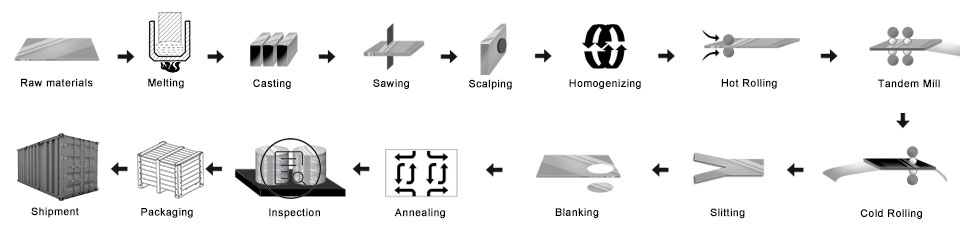
- Prepare as ligas mestres
- Forno de fusão: coloque as ligas no forno de fusão
- Lingote de alumínio fundido DC: Para fazer o lingote mãe
- Fresar o lingote de alumínio: para tornar a superfície e o lado lisos
- Forno de aquecimento
- Laminador a quente: fez a bobina mãe
- Laminador a frio: a bobina mãe foi enrolada conforme a espessura que você deseja comprar
- Processo de perfuração: torne-se do tamanho que você deseja
- Forno de recozimento: mudar o temperamento
- Inspeção final
- Embalagem: caixa de madeira ou palete de madeira
- Entrega
Controle de qualidade
Garantia Abaixo a inspeção será feita na produção.
- um. detecção de raios—TR;
- b. testes ultrassônicos—UT;
- c. Teste de Partículas Magnéticas-MT;
- d. testes de penetração-PT;
- e. detecção de falhas por correntes parasitas-ET
1) Esteja livre de manchas de óleo, Dente, Inclusão, Arranhões, Mancha, Descoloração Óxida, Pausas, Corrosão, Marcas de rolo, Listras de sujeira, e outros defeitos que interferirão no uso.
2) Superfície sem linha preta, limpo, mancha periódica, defeitos de impressão em rolo, como outros padrões de controle interno da gko.
Embalagem de discos de alumínio:
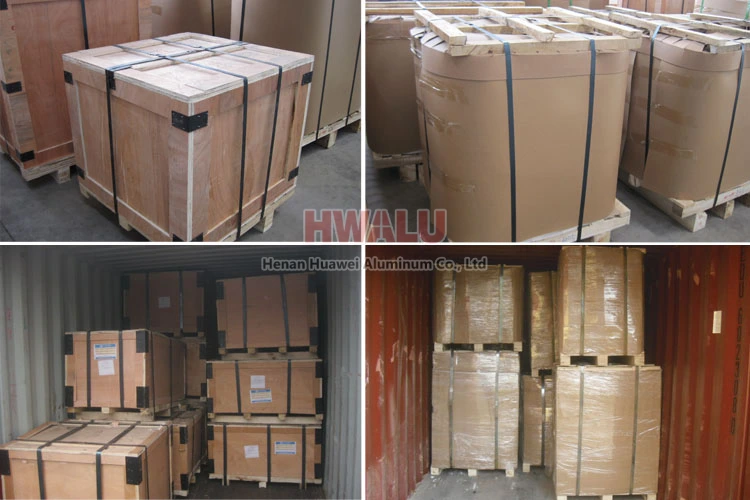
Os círculos de alumínio podem ser embalados de acordo com os padrões de exportação, cobrindo com papel pardo e filme plástico. Finalmente, a Rodada de Alumínio é fixada em um palete de madeira/caixa de madeira.
- Coloque os secadores ao lado do círculo de alumínio, mantenha os produtos secos e limpos.
- Use papel plástico limpo, embale o círculo de alumínio, mantenha uma boa vedação.
- Use o papel de pele de cobra, embale a superfície do papel plástico, mantenha uma boa vedação.
- Próximo, existem duas formas de embalagem: Uma maneira é a embalagem de paletes de madeira, usando o papel crocante embalando a superfície; Outra forma é a embalagem em caixa de madeira, usando a caixa de madeira embalando a superfície.
- Finalmente, coloque a correia de aço na superfície da caixa de madeira, mantendo a solidez e segurança da caixa de madeira.
Círculo de alumínio de Henan Huawei Alumínio. atender ao padrão de exportação. Filme plástico e papel pardo podem ser cobertos de acordo com as necessidades dos clientes. Além do mais, uma caixa de madeira ou palete de madeira é adotada para proteger os produtos contra danos durante a entrega. Existem dois tipos de embalagens, que estão de olho na parede ou de olho no céu. Os clientes podem escolher qualquer um deles para sua conveniência. De um modo geral, há 2 toneladas em um pacote, e carregando 18-22 toneladas em contêiner 1×20′, e 20-24 toneladas em contêiner 1×40′.
Por que nos escolher?
Para acompanhar os tempos, A HWALU continua introduzindo equipamentos e técnicas de última geração para melhorar sua competitividade. Sempre siga a filosofia empresarial de qualidade como centro e cliente em primeiro lugar, fornecer produtos da série de círculo de disco de alumínio da mais alta qualidade para todas as partes do mundo. Mais …

