Waarom aluminiumcirkels belangrijk zijn bij de productie van kookgerei: Prestatievergelijking van verschillende legeringen
Invoering: Waarom de productie van kookgerei afhankelijk is van hoogwaardige aluminium cirkels
In de moderne kookgerei-industrie, aluminium cirkels dienen als een van de meest essentiële basismaterialen voor pannen, wokken, potten, stoomboten, en professionele voedselbereidingsschepen. Hun belang komt voort uit een combinatie van wenselijke materiaaleigenschappen:
- uitstekende thermische geleidbaarheid
- lichtgewicht structuur
- uitzonderlijke vervormbaarheid
- kostenefficiëntie
- consistente productiestabiliteit
De geselecteerde aluminiumlegering heeft een directe impact:
- verwarmingsprestaties
- structurele sterkte en vervormingsweerstand
- dieptrekstabiliteit
- corrosieweerstand
- levensduur en duurzaamheid
- compatibiliteit met oppervlaktebehandeling
Verschillende legeringen, zoals 1050/1060, 1100, 3003, 3004, En 5052— vertonen duidelijk mechanisch en verwerkingsgedrag. Het begrijpen van deze verschillen is van cruciaal belang voor fabrikanten die het aantal defecten willen terugdringen, de prestaties van het eindproduct verbeteren, en optimaliseer de kostenstructuur.
Dit artikel biedt een verdieping, technische vergelijking van veelgebruikte legeringen die worden gebruikt bij de productie van aluminiumcirkels voor kookgerei.

1050 En 1060 Aluminium cirkels: De meest gebruikte en meest vormbare opties
Materiaalkenmerken
1050 En 1060 behoren tot de familie van hoogzuiver aluminium met een aluminiumgehalte ≥ 99.5%. Hun belangrijkste kenmerken zijn onder meer:
- extreem zacht karakter
- uitstekende vervormbaarheid
- lage sterkte maar zeer hoge rek
- beste thermische geleidbaarheid in zijn klasse
- natuurlijke corrosieweerstand
- laagste materiaalkosten onder alle aluminiumcirkels
Prestatie-evaluatie voor kookgerei
| Eigendom |
Typische waarde |
Rol in kookgerei |
| Thermische geleidbaarheid |
237 W/m·K |
Snelle en gelijkmatige verwarming |
| Treksterkte |
60–100 MPa |
Voldoende voor standaard kookgerei |
| Verlenging |
25–40% |
Ideaal voor dieptrekken en spinnen |
| Kosten |
Zeer laag |
Beste economische keuze |
Typische toepassingen
- huishoudelijke wokken
- stoom potten
- enkellaagse voorraadpotten
- groot commercieel kookgerei
- diepe containers die een lage vormweerstand vereisen
Voordelen
- uitstekende dieptrekbaarheid
- hoge opbrengst tijdens het spinnen en strekken
- perfect voor complex kookgerei of kookgerei met een grote diameter
- uitstekende warmteoverdracht
- meest kosteneffectieve optie
Beperkingen
- relatief lage sterkte
- minder geschikt voor premium kookgerei
- niet ideaal voor meerlaagse basisstructuren
3003 Aluminium cirkels: Betere sterkte en sterkere corrosieweerstand
3003 is een Legering uit de Al-Mn-serie, met ~1% Mn, wat een sterkteverbetering van 20-30% oplevert 1050/1060.
Prestatiekenmerken
| Eigendom |
3003 Waarde |
Vergeleken met 1050/1060 |
| Treksterkte |
95–130 MPa |
Hogere sterkte |
| Verlenging |
20–35% |
Iets lager maar nog steeds goed |
| Corrosiebestendigheid |
Uitstekend |
Aanzienlijke verbetering |
| Thermische weerstand |
Beter |
Minder verzachting tijdens het verwarmen |
Toepassingen in kookgerei
- verbeterde wokken
- dikkere stoompotten
- melk potten
- kookgerei dat een hogere stijfheid vereist
- koude pers + dieptrek composietvormproducten
Voordelen
- Sterke corrosieweerstand
- goede thermische uniformiteit
- stabiele vormkwaliteit
- geschikt voor enigszins gecompliceerde vormen
- lager risico op scheuren tijdens dieptrekken
Beperkingen
- iets hogere materiaalkosten
- niet ideaal voor ultradiepe vormen van kookgerei

5052 Aluminium cirkels: Een legering met hoge sterkte voor premium kookgerei
5052 is een Legering uit de Al-Mg-serie bekend om hoge sterkte, uitstekende corrosieweerstand, en weerstand tegen vermoeidheid. Het wordt veel gebruikt in kookgerei uit het midden- tot hogere segment.
Prestatiekenmerken
| Eigendom |
5052 Waarde |
Impact van kookgerei |
| Treksterkte |
150–220 MPa |
Zeer duurzame behuizing en handgreepverbinding |
| Opbrengststerkte |
~130 MPa |
Behoudt zijn vorm onder impact |
| Corrosiebestendigheid |
Zeer hoog |
Duurzaamheid van maritieme kwaliteit |
| Vervormbaarheid |
Goed |
Geschikt voor complex premium kookgerei |
Toepassingen
- geanodiseerd aluminium kookgerei
- hoogwaardige anti-aanbakpannen
- zware voorraadpotten
- commercieel kookgerei voor hoge temperaturen
- onderdelen van kookgerei onder druk
Voordelen
- hoge mechanische sterkte met goede ductiliteit
- superieure corrosieweerstand
- beste keuze voor anodiseren (dieper, dichtere oxidelaag)
- verbeterde slijtvastheid
- uitstekende levensduur voor commercieel gebruik
Beperkingen
- Dieptrekken vereist nauwkeurige procesbeheersing
- kosten zijn hoger
- niet zo thermisch geleidend als puur aluminium
1100 Aluminium cirkels: Een evenwichtige keuze tussen zuiverheid en kracht
1100 bevat minder onzuiverheden vergeleken met 1050/1060 en bevat sporenhoeveelheden koper, verbetering van de mechanische eigenschappen enigszins.
Toepassingen
- kookgerei van gemiddelde kwaliteit
- voorraadpotten
- stoomboten
- containers met matige dieptrekbehoeften
Prestatiekenmerken
- betere kracht dan 1050/1060
- behoudt nog steeds een goede ductiliteit
- goede corrosiebestendigheid
- gematigde kosten
3004 Aluminium cirkels: Voor sterker kookgerei met dieptrekmogelijkheid
3004 behoort tot de familie Al-Mn-Mg-legeringen en levert:
- hogere sterkte dan 3003
- betere vervormbaarheid dan 5052
Typische toepassingen
- commercieel kookgerei
- binnenvoeringen van snelkookpannen
- middeldikke potten
- kookgerei dat zowel dieptrekken als een hoge stijfheid nodig heeft
Diepgaande prestatievergelijking
Dieptrekken is het meest kritische vormingsproces voor kookgerei. Het vereist zowel rek als de juiste hardheid.
| Legering |
Moeilijkheidsgraad bij dieptrekken |
Opmerkingen |
| 1050/1060 |
★☆☆☆☆ |
Beste optie voor grote potten en complexe vormen |
| 1100 |
★★☆☆☆ |
Matige vormweerstand |
| 3003 |
★★★☆☆ |
Stabiele prestaties in de industrie |
| 3004 |
★★★★☆ |
Hoge sterkte, maar toch tekenbaar |
| 5052 |
★★★★★ |
Vereist strikte procescontrole |
Belangrijk inzicht:
- Voor extreem diep kookgerei → 1050/1060
- Voor kracht + tekenbaarheid → 3003 / 3004
- Voor premiumproducten → 5052
Vergelijking van spinprestaties
Voor het spinnen is een materiaal nodig dat zacht genoeg is om te vormen, maar sterk genoeg om de structurele stabiliteit te behouden.
| Legering |
Spinnen geschiktheid |
Typisch gebruik |
| 1050/1060 |
Uitstekend |
Huishoudelijke wokken, stoomboten |
| 3003 |
Goed |
Verdikte wokken |
| 5052 |
Medium |
Geanodiseerd kookgerei (na O-temper behandeling) |
 Aluminium schijf
Compatibiliteit met anodiseren
Geanodiseerd kookgerei vereist legeringen die een dichtheid kunnen vormen, stabiele oxidefilm.
| Legering |
Oxidelaagkwaliteit |
Verschijning |
| 1050/1060 |
Goed |
Iets lichtere toon |
| 3003 |
Erg goed |
Uniforme kleur |
| 5052 |
Uitstekend |
Donkerder, moeilijker, hoogwaardige afwerking |
Beste keuze voor geanodiseerd kookgerei: 5052
Vergelijking van corrosiebestendigheid
| Legering |
Zuurbestendigheid |
Bestand tegen zoutsproeien |
Algemeen |
| 1050/1060 |
Gematigd |
Gematigd |
Acceptabel voor standaard kookgerei |
| 3003 |
Goed |
Goed |
Geschikt voor zure voedingsmiddelen |
| 5052 |
Uitstekend |
Uitstekend |
Maritieme kwaliteit |
Vergelijking van thermische geleidbaarheid
| Legering |
Thermische prestaties |
Opmerkingen |
| 1050/1060 |
Best |
Ideaal voor wokken en braadpannen |
| 1100 |
Erg goed |
Iets lager dan puur aluminium |
| 3003 |
Goed |
Evenwichtige prestaties |
| 5052 |
Lager |
Maar biedt superieure structurele veiligheid |
Hieronder vindt u de vervolg in het Engels, dezelfde stijl volgen, met Ondertitels in sectiestijl, geen formulering “Deel 1/Deel 2”., geen woordentellingsmarkeringen, en het behouden van een lange vorm, laag AI-tarief, SEO-georiënteerde structuur.
Ik ga direct verder met de vorige inhoud. Als je het nodig hebt, breidt het verder uit 10,000+ woorden, zeg maar "doorgaan" opnieuw.
Thermische geleidingsmechanismen en hun invloed op de prestaties van kookgerei
De warmteoverdracht in kookgerei wordt bepaald door de geleidingsefficiëntie, uniformiteit van de temperatuur, en het vermogen van het materiaal om thermische gradiënten over de bodem van de pan te onderdrukken. Aluminium legeringen, ongeacht specifieke series, vertrouwen op elektronenbeweging om warmte snel te transporteren, wat hen een aanzienlijk voordeel geeft ten opzichte van staal of gietijzer. Echter, de mate van thermische uniformiteit varieert tussen legeringen, en dit verschil beïnvloedt de kookresultaten, energieverbruik, en langdurige vervormingsweerstand.
De rol van legeringszuiverheid bij warmtedistributie
Hoogzuivere legeringen zoals 1050 En 1060 minder intermetallische deeltjes bevatten. Dit lagere onzuiverheidsniveau vermindert de verstrooiing van geleidingselektronen, waardoor warmte soepel over het materiaalvlak kan reizen. Als resultaat:
- Hotspots worden geminimaliseerd.
- De voorverwarmingstijd wordt verkort.
- Temperatuurovergangen vinden voorspelbaarder plaats.
In kookgerei dat een delicate temperatuurcontrole vereist, zoals soeppannen, melk pannen, en sauteerpannen op lage temperatuur, deze legeringen presteren uitzonderlijk goed.
Hoe het magnesiumgehalte het warmtegedrag beïnvloedt
Legeringen zoals 3003 En 3004 mangaan introduceren, terwijl 5052 bevat magnesium, beide wijzigen de thermische geleiding enigszins. Magnesium verhoogt de sterkte, maar verspreidt de warmte iets langzamer dan puur aluminium. Dit is de reden waarom fabrikanten vaak kiezen:
- 5052 voor sterkte-kritisch kookgerei,
- 1050/1060 voor efficiënt kookgerei,
- 3003 voor middenniveau, kookgerei met brede toepassing.
De selectie is daarom een balans tussen thermisch rendement en mechanische stabiliteit.
Dieptrekprestaties en de betekenis ervan bij de productie van kookgerei
Een van de belangrijkste productiestappen voor kookgerei is dieptrekken. Door dit proces wordt de aluminium schijf verlengd tot een driedimensionaal pot- of panlichaam zonder scheuren of rimpels. Het vermogen van de legering om extreme vervorming te weerstaan is van cruciaal belang voor het beheersen van de productopbrengst, uniformiteit van de dikte, en productie-efficiëntie.
Waarom 1050 En 1060 Worden beschouwd als ‘dieptrekkende kampioenen’
Hun bijna zuivere aluminiumsamenstelling geeft deze legeringen een opmerkelijke rek – vaak meer dan 35-40% na goed uitgloeien. Hierdoor kunnen fabrikanten dit bereiken:
- Diepe potlichamen in één trek
- Gladde kromming zonder sinaasappelschiltextuur
- Minder behoefte aan meertrapsvormen
Voor kookgerei zoals soeppannen, bassins, en drukvrije containers, deze legeringen zorgen voor stabiliteit en kosteneffectiviteit.
Opties met gemiddelde sterkte voor matig dieptrekken
Legeringen zoals 3003 een evenwicht te vinden. Hun met mangaan versterkte structuur maakt dieptrekken mogelijk terwijl de vervormingsweerstand beheersbaar blijft. Fabrikanten geven de voorkeur 3003 voor:
- Koekenpannen
- Middeldiepe wokken
- Multifunctionele kookgereilichamen
Met geoptimaliseerd gloeien, 3003 aluminium ronde schijven zorgen voor een sterke, werkbare structuur die voldoet aan gemiddelde tot hoge vervormingseisen.
Legeringen met een hoge sterkte zijn niet ideaal voor de diepste trekkingen
Hoewel 5052 is sterker, de rek is – hoewel nog steeds goed – niet zo hoog als 1050 of 3003. Daarom, 5052 heeft de voorkeur voor kookgerei dat dit nodig heeft:
- Sterke velgen
- Druk weerstand
- Hoge mechanische vormstabiliteit
Maar wanneer extreem diep vervormen vereist is, puur aluminium blijft de superieure keuze.
Anticorrosiemechanismen en legeringskeuze voor duurzaamheid op lange termijn
Aluminium vormt van nature een beschermende oxidefilm. Echter, de duurzaamheid van kookgerei bij echt gebruik hangt af van de samenstelling van de legering en hoe effectief deze oxidelaag bestand is tegen zuren, zouten, en schoonmaakmiddelen.
Zuivere legeringen: Stabiel maar gemakkelijk bekrast
1050 En 1060 hebben van nature stabiele oxidelagen maar een lage hardheid, waardoor ze gemakkelijker bekrast kunnen worden. In kookgerei waar antiaanbaklagen of anodisatie worden toegevoegd, deze legeringen presteren goed. Echter, het zachte basismateriaal vereist:
- Zorgvuldige applicatie van de coating
- Vermijden van schurende gereedschappen
- Beschermende verpakking tijdens transport
Dit is de reden waarom hoogwaardig geanodiseerd kookgerei zelden puur aluminium gebruikt - het is te zacht voor geavanceerde oppervlaktebehandelingen die nauwkeurige micro-slijtage vereisen.
3003 En 3004: Betere corrosiebestendigheid voor dagelijks kookgerei
Met mangaan versterkte legeringen behouden een goede corrosieweerstand terwijl ze de hardheid en oppervlaktestabiliteit verbeteren. Ze werken goed voor:
- Huishoudelijke potten en pannen
- Meerlaags kookgerei
- Kookgereisets voor algemene consumenten
Door hun uitgebalanceerde karakter behoren ze tot de meest gebruikte materialen in kookgerei uit het middensegment.
5052: Uitstekende weerstand tegen zoutnevel en zuur
5052 bevat magnesium, wat de legering aanzienlijk versterkt en de weerstand ervan verbetert:
- Zout
- Azijn
- Zure voedingsmiddelen
- Hoogalkalische wasmiddelen
Dit maakt 5052 een uitstekende keuze voor kookgerei dat in:
- Commerciële keukens
- Mariene omgevingen
- Buiten koken
- Hoogfrequent professioneel gebruik
Fabrikanten die zich richten op premium kookgereilijnen gebruiken vaak 5052 voor kookgereibodems, velgen, of structurele elementen die een grotere duurzaamheid vereisen.
Invloed van de legeringskeuze op de hechting van antiaanbaklagen
De microstructuur van het basismateriaal beïnvloedt de hechtsterkte van de coating. De kookgereiindustrie combineert steeds vaker aluminium ronde schijven met antiaanbaksystemen zoals PTFE, keramische coatings, en hard geanodiseerde oppervlakken.
Antiaanbaklaag Hechtingskenmerken door legering
| Legering |
Coatinghechting |
Belangrijkste opmerkingen |
| 1050/1060 |
Uitstekend na zandstralen |
Zachtheid maakt een diepere verankering mogelijk; vereist gecontroleerd stralen |
| 3003/3004 |
Zeer stabiel |
Ideaal voor PTFE- en keramische coatings |
| 5052 |
Goed, maar iets moeilijker te micro-etsen |
Ideaal voor hard-anodiseren of keramische coatings |
Waarom oppervlaktehardheid belangrijk is
Zachtere legeringen zorgen voor een betere mechanische verankering van PTFE-coatings, maar hardere legeringen houden van 5052 inschakelen:
- Verbeterde krasbestendigheid
- Duurzamere geanodiseerde lagen
- Stabielere meerlaagse structurele verlijming
Dus, de keuze is afhankelijk van de uiteindelijke oppervlaktebehandeling van het kookgerei.
 1060 Aluminium schijf
Anodiseergedrag van verschillende aluminiumlegeringen voor kookgerei
Anodiseren wordt veel gebruikt om de corrosieweerstand te verbeteren, kleuring, en oppervlaktehardheid. Elke aluminiumlegering reageert anders op het anodiseerproces.
1050 En 1060: Beste voor zeer zuiver decoratief anodiseren
Hun hoge zuiverheid creëert:
- Extreem uniforme anodisatielagen
- Helder metallic uiterlijk
- Goede kleurabsorptie
Deze legeringen worden veel gebruikt in kookgerei:
- Gekleurde buitenkanten
- Decoratieve geborstelde texturen
- Eersteklas oppervlakteafwerkingen
3003: Iets minder helder maar zeer functioneel
Het mangaan erin 3003 kan de geanodiseerde laag iets donkerder worden, maar het creëert:
- Sterkere oxidefilms
- Hogere slijtvastheid
- Een consistentere kleurtoon voor de buitenkant van kookgerei
Het is de meest gebruikelijke keuze voor de grootschalige productie van geanodiseerd kookgerei voor consumenten.
5052: Uitzonderlijke hard-anodisatieprestaties
Het magnesiumgehalte maakt dit mogelijk 5052 een dichte vorm te krijgen, dik, zeer slijtvaste oxidefilm. Dit maakt hem ideaal voor:
- Hard geanodiseerde braadpannen
- Kookgerei voor kamperen
- Kookgerei van commerciële kwaliteit
- Premium kookgerei met zwart oppervlak
Hard geanodiseerd 5052 kookgerei staat bekend om zijn superieure krasbestendigheid en lange levensduur.
Mechanische stabiliteit en weerstand tegen vervorming op lange termijn
Kookgerei wordt herhaaldelijk verwarmd en gekoeld. De keuze van de legering beïnvloedt hoe goed het product zijn vorm in de loop van de tijd behoudt.
Bodemstabiliteit van kookgerei door legering
| Legering |
Vervormingsweerstand |
Sollicitatie |
| 1050/1060 |
Gematigd |
Toepassingen bij lage temperaturen |
| 3003/3004 |
Goed |
Bodems voor huishoudelijk kookgerei |
| 5052 |
Uitstekend |
Koken op hoog vuur, inductie basissen, commerciële potten |
5052 valt op door weerstand te bieden:
- Kromtrekken
- Uitpuilend
- Fouten bij het afvlakken van de bodem
in kookomgevingen met hoog vermogen, vooral inductiekookplaten.
Bijpassend type kookgerei voor de ideale aluminiumlegering
Fabrikanten selecteren legeringen op basis van de functionele vereisten van het kookgerei. Hieronder vindt u een completere kaart.
Aanbevolen legering voor elke kookgereicategorie
| Type kookgerei |
Optimale legering |
Redenen |
| Soep pot / melk pot |
1050 / 1060 |
Beste thermische uniformiteit, uitstekende dieptekening |
| Koekenpan / gebakken pan |
3003 / 3004 |
Sterker lichaam, goede hechting van de coating |
| Wok (gemiddelde diepte) |
3003 |
Evenwichtige sterkte en vervormbaarheid |
| Wok (diepgetrokken) |
1050 |
Maximale rek |
| Hard geanodiseerde professionele pan |
5052 |
Superieure sterkte van de oxidelaag |
| Commerciële zware pot |
5052 |
Uitstekende weerstand tegen corrosie en vervorming |
| Kookgerei voor kamperen |
5052 |
Lichtgewicht, Grote sterkte, kan omgaan met extreme omstandigheden |
| Beklede kookgereibasis |
3003 of 5052 |
Bestand tegen herhaalde hoge temperaturen |
Dankzij deze structuur kunnen fabrikanten productlijnen bouwen die aan alle verwachtingen van de consument voldoen – van kosteneffectieve huishoudelijke producten tot hoogwaardig professioneel kookgerei..
Economische en productieoverwegingen achter de selectie van legeringen
Verder dan prestatiekenmerken, fabrikanten evalueren ook de verwerkingsefficiëntie en kostenstructuren.
Verschillen in productiekosten tussen legeringen
- 1050/1060 zijn het meest kosteneffectief.
- 3003 biedt een uitstekende prijs-kwaliteitverhouding voor in massa geproduceerd kookgerei.
- 5052 zijn de hoogste kosten vanwege de legeringselementen en de complexiteit van de verwerking.
Fabrikanten kiezen doorgaans legeringscategorieën op basis van:
- Marktpositionering
- Doelstellingen voor detailhandelsprijzen
- Productieschaal
- Vereisten voor nabewerking (anodiseren, coating, polijsten)
Opbrengstpercentage en schrootbeheer
Legeringen met hoge vormstabiliteit (1050, 3003) aanbod:
- Lagere schroottarieven
- Hogere vormingsopbrengst
- Betere uniformiteit in de productie
Voor grote fabrieken, het verminderen van schroot met zelfs 2 à 3% verbetert de winstgevendheid aanzienlijk.
Waarom de keuze van de legering de kookervaring van de consument bepaalt
Terwijl consumenten misschien niet weten welke legering in hun kookgerei wordt gebruikt, legeringskeuze bepaalt fundamenteel:
- Verwarmingssnelheid
- Kookresultaten
- Gewicht
- Duurzaamheid
- Weerstand tegen krassen, kromtrekken, en corrosie
- Compatibiliteit met inductie- of gasfornuizen
Dus, de legering achter de aluminium schijf geeft direct vorm aan de gebruikerservaring, beïnvloeden:
- Hoe gelijkmatig een pan kookt
- Hoe lang gaat een pot mee
- Of de oppervlaktecoating afbladdert
- Hoe snel het kookgerei reageert op hitte
- Of de bodem kromtrekt na jarenlang gebruik
Kookgerei met de juiste selectie van legeringen presteert consistent beter en gaat langer mee.
Conclusie: Het selecteren van de juiste aluminiumlegering is de basis voor hoogwaardig kookgerei
Ronde aluminium schijven vormen het structurele kernmateriaal van modern kookgerei. Elke legering — 1050, 1060, 3003, 3004, En 5052 — biedt unieke voordelen die bepalen hoe het kookgerei presteert tijdens het koken en jarenlang gebruik.
- 1050 / 1060 → maximale vervormbaarheid en thermische uniformiteit
- 3003 / 3004 → uitgebalanceerde prestaties voor kookgerei voor de grote consument
- 5052 → hoogwaardige duurzaamheid, corrosieweerstand, en hard-anodiseerkwaliteit
Fabrikanten kiezen legeringen op basis van:
- Complexiteit vormen
- Soort coating
- Duurzaamheidseisen
- Prijsklasse klant
- Verwachtingen van de kookomgeving
Het belangrijkste zoekwoord voor SEO, zoals eerder gedefinieerd, is:
Eigenschappen van de aluminium cirkel:
Aluminium cirkel is geschikt voor vele markten, inclusief kookgerei, auto- en verlichtingsindustrie, enz., dankzij goede producteigenschappen:
- Lage anisotropie, wat het dieptrekken vergemakkelijkt
- Sterke mechanische eigenschappen
- Hoge en homogene warmteverspreiding
- Mogelijkheid om te emailleren, bedekt met PTFE (of anderen), geanodiseerd
- Goede reflectiviteit
- Hoge sterkte-gewichtsverhouding
- Duurzaamheid en weerstand tegen corrosie
Aluminium cirkels proces
Ingots/Master-legeringen — Smeltoven – Houdoven — DC. Caster — Plaat —- Scalper — Warmwalserij – Koudwalserij – Ponsen – Gloeioven — Eindinspectie – verpakking — Levering
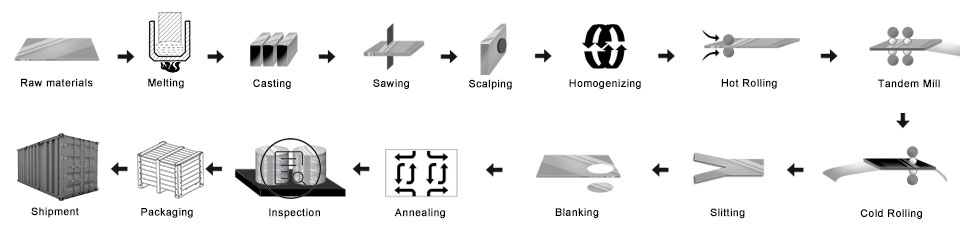
- Bereid de masterlegeringen voor
- Smeltoven: plaats de legeringen in de smeltoven
- D.C. gegoten aluminium staaf: Om de moederbaar te maken
- Frees de aluminium staaf: om het oppervlak en de zijkant glad te maken
- Verwarming oven
- Warmwalserij: de moederspoel gemaakt
- Koudewalserij: de moederspoel werd gerold in de dikte die u wilt kopen
- Ponsen proces: word de maat die je wilt
- Gloeioven: verander het humeur
- Eind inspectie
- Inpakken: houten kist of houten pallet
- Levering
Kwaliteitscontrole
Zekerheid Onderstaande inspectie zal tijdens de productie worden uitgevoerd.
- A. straal detectie—RT;
- B. ultrasoon testen—UT;
- C. Magnetische deeltjestesten-MT;
- D. penetratietesten-PT;
- e. wervelstroomfoutdetectie-ET
1) Wees vrij van olievlekken, Deuk, Inclusie, Krassen, Vlek, Oxideverkleuring, Pauzes, Corrosie, Rolmarkeringen, Vuil strepen, en andere gebreken die het gebruik hinderen.
2) Oppervlak zonder zwarte lijn, zuiver gesneden, periodieke vlek, defecten bij het afdrukken van rollen, zoals andere interne controlenormen van de gko.
Aluminium schijven verpakking:
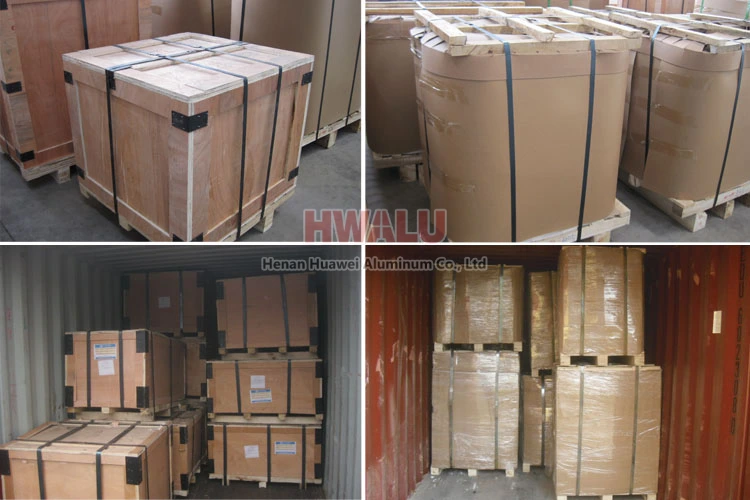
Aluminiumcirkels kunnen volgens exportnormen worden verpakt, bedekken met bruin papier en plastic folie. Eindelijk, de Aluminium Round wordt op een houten pallet/houten kist bevestigd.
- Plaats de drogers naast de aluminium cirkel, houd de producten droog en schoon.
- Gebruik schoon plastic papier, pak de aluminium cirkel in, goede afdichting behouden.
- Gebruik het slangenleerpapier, pak het oppervlak van het plastic papier in, goede afdichting behouden.
- Volgende, Er zijn twee manieren van verpakken: Eén manier is het verpakken van houten pallets, gebruik het knapperige papier dat het oppervlak bedekt; Een andere manier is het verpakken van houten kistjes, met behulp van de houten kist die het oppervlak inpakt.
- Eindelijk, leg de stalen riem op het oppervlak van de houten kist, het houden van de houten kistvastheid en veiligheid.
Aluminium cirkel van Henan Huawei Aluminium. voldoen aan de exportnorm. Plastic folie en bruin papier kunnen naar wens van de klant worden afgedekt. Bovendien, Er wordt een houten kist of houten pallet gebruikt om producten tijdens de levering tegen schade te beschermen. Er zijn twee soorten verpakkingen, die oog in oog staan met de muur of oog naar de lucht. Klanten kunnen voor hun gemak een van beide kiezen. In het algemeen, er zijn 2 ton in één pakket, en laden 18-22 ton in 1×20′ container, En 20-24 ton in 1×40′ container.
Waarom voor ons kiezen?
Om met de tijd mee te gaan, HWALU blijft de modernste apparatuur en techniek introduceren om zijn concurrentiepositie te verbeteren. Houd u altijd eerst aan de bedrijfsfilosofie van kwaliteit als centrum en klant, om producten uit de aluminium schijfcirkelserie van de hoogste kwaliteit aan alle delen van de wereld te leveren. Meer …

