Stempelen en tekenverwerking van aluminium schijven: Analyse van de belangrijkste oorzaken van barsten en kreuken van aluminium schijven voor keukengerei
Aluminium schijf stempel- en tekenverwerking is de kerntechnologie voor het stempelen en strekken van aluminiumschijven voor keukengerei (basismaterialen voor wokken en soeppannen) in holtestructuren. Echter, frequent “kraken” En “rimpels” defecten tijdens de verwerking verminderen het kwalificatiepercentage van het eindproduct tot slechts 75%-85%, waardoor de productiekosten aanzienlijk stijgen. Gefocust op het principe van het stempelen en tekenen van aluminium schijven, dit artikel analyseert systematisch de oorzaken van defecten door materiaaleigenschappen van aluminiumlegeringen te combineren, procesparametercontrole, en matrijsontwerpvereisten: Scheurvorming komt voort uit onvoldoende materiaalaanpassingsvermogen, onevenwichtige procesparameters, schimmelspanningsconcentratie, en gebrek aan voorbehandeling tijdens de verwerking; Rimpelen houdt rechtstreeks verband met de ineffectieve krachtbeperking van de planohouder, niet-overeenkomende tekenverhouding, materiële geometrische afwijking, en matrijspositioneringsfouten tijdens de verwerking. Het artikel onthult de interactieve effecten van verschillende factoren door middel van kwantitatieve experimentele gegevens (bijv., Het aantal defecten verandert onder verschillende verwerkingsparameters) en stelt gerichte optimalisatieschema's voor voor het stempelen en tekenen van aluminium schijven, het bieden van technische ondersteuning voor het verbeteren van de processtabiliteit.

1. Invoering
Als een koud plastisch vervormingsproces, Het stempelen en tekenen van aluminium schijven speelt een sleutelrol bij het transformeren van aluminium schijven voor keukengerei (2.0-4.0mm dik) in holtestructuren. Bijvoorbeeld, om een wok te maken met een diameter van 30 cm, dit proces is nodig om de aluminium schijf uit te rekken tot een boogvormige holte met een diepte van 12-15 mm; om een platte pan te maken, stempelen is nodig om randvouwen en afvlakking van de onderkant te bereiken. Momenteel, dit proces duurt meer dan 80% van het totale verwerkingsvolume van aluminium schijven voor keukengerei en dient als de kernschakel voor de massaproductie van keukengerei van aluminiumlegeringen uit het midden- tot het lage segment.
Echter, “kraken” (meestal voorkomend ter hoogte van de rand van de bodem van de spouw en in het midden van de zijwand) En “rimpels” (geconcentreerd in het randovergangsgebied en de lokale zijwand) defecten zijn prominent aanwezig bij het stempelen en tekenen van aluminium schijven. Uit gegevens uit de sector blijkt dat de kraaksnelheid van gewone productielijnen gelijk is 8%-12% en de rimpelsnelheid is 5%-8%. De combinatie van deze twee gebreken leidt tot een uitvalpercentage van halffabrikaten van meer dan 15%, met een dagelijks verlies van meer dan 20,000 RMB per productielijn. Momenteel, de industrie vertrouwt vooral op empirische aanpassingen (bijv., handmatige fijnafstemming van procesparameters) gebreken af te handelen, het ontbreken van een systematische analyse van de essentie van het stempelen en tekenen van aluminium schijven. Daarom, Een diepgaand onderzoek naar de kernoorzaken van defecten in dit proces is cruciaal voor het optimaliseren van de verwerkingsstroom en het verlagen van de kosten.
2. Kenmerken en defectmanifestaties van het stempelen en tekenen van aluminium schijven
2.1 Kenmerken van kernprocessen
Het stempelen en tekenen van aluminium schijven moet aan twee kernvereisten voldoen: “integriteit vormen” En “mechanische stabiliteit”. Bij de eerste zijn na verwerking geen scheuren of rimpels in de holte nodig, met een maattolerantie van ≤±0,5 mm; dit laatste vereist geen overmatige uitharding van het aluminiumsubstraat na verwerking (om vervorming tijdens later gebruik te voorkomen). Tijdens verwerking, aluminium schijven voor keukengerei worden blootgesteld aan gecombineerde spanningen van “kracht van de blanco houder (randstroom beperken) – trekkracht (materiaal in de vormholte drijven) – wrijvingskracht (gegenereerd door materiaal-schimmel contact)”. De uniformiteit van de spanningsverdeling bepaalt direct of er defecten optreden – dit is het kernkenmerk dat het stempelen en trekken van aluminium schijven onderscheidt van andere aluminiumverwerkingstechnologieën.
2.2 Typische defectmanifestaties
- Krakendefecten: Ingedeeld per locatie in het stempelen en tekenen van aluminium schijven, zij omvatten “bodem barst” (bij schimmelfilets, met scheurlengtes van 1-5 mm, meestal indringend) En “barsten in de zijwand” (in het midden van de zijwand of het overgangsgebied, longitudinaal niet-penetrerend). Ingedeeld op oorzaak, zij omvatten “broos kraken” (overmatige materiaalhardheid tijdens de verwerking, met platte scheurranden) En “kunststof scheuren” (verwerkingsspanning die de treksterkte van het materiaal overschrijdt, met trekvervorming aan de scheurranden).
- Rimpeldefecten: Geclassificeerd op basis van morfologie bij het stempelen en tekenen van aluminium schijven, zij omvatten “rand rimpelen” (aluminium schijfranden die niet worden beperkt door de blanco houder, het vormen van ringvormige rimpels met een hoogte van 0,3-1 mm) En “rimpeling van de zijwand” (materiaalophoping op de zijwand, het vormen van longitudinale of diagonale rimpels die de hechting van de coating beïnvloeden). Ingedeeld op oorzaak, zij omvatten “compressie kreuken” (dwarse materiaalcompressie die de verbruikscapaciteit van het trekken tijdens de verwerking overschrijdt) En “schuifrimpeling” (ongelijkmatige materiaalstroomsnelheid die lokale schuifspanning veroorzaakt tijdens de verwerking).

3. Belangrijkste oorzaken van scheuren bij het stempelen en tekenen van aluminium schijven
3.1 Onvoldoende materiaalaanpassingsvermogen: Mismatch tussen verwerking en kwaliteitkenmerken
Het stempelen en tekenen van aluminium schijven stelt strenge eisen aan de materiaalprestaties. De verschillen in verwerkingsaanpasbaarheid van gangbare aluminiumschijven voor keukengerei (1050 puur aluminium, 3003 aluminium-mangaan legering) heeft direct invloed op het scheurrisico, met specifieke parameters weergegeven in tabel 1:
Tafel 1 Vergelijking van prestaties en aanpassingsvermogen van gangbare soorten aluminium schijven voor keukengerei bij het stempelen en tekenen van aluminium schijven
| Aluminiumlegering |
Zuiverheid (%) |
Treksterkte (MPa) |
Verlenging (%) |
Geschikte verwerkingsscenario's voor het stempelen en tekenen van aluminium schijven |
Verwerkingsscenario's die gevoelig zijn voor barsten |
| 1050 (Zuiver aluminium) |
≥99,5 |
≥75 |
≥35 |
Ondiepe tekening (diepte ≤5mm, bijv., platte pannen) |
Dieptrekken (bijv., wokken), tekenverhouding >1:1.5 |
| 3003 (Al-Mn-legering) |
≥99,0 |
≥110 |
≥20 |
Dieptrekken (diepte 5-15 mm, bijv., wokken) |
Kracht blanco houder >0.6MPa, onvoldoende gloeien |
- Onjuiste cijferselectie: Bij het stempelen en tekenen van aluminium schijven, 1050 puur aluminium heeft een lage treksterkte en is alleen geschikt voor ondiep trekken. Indien gebruikt voor dieptrekken van wokken, de zijwand is gevoelig voor scheuren omdat de trekspanning groter is dan de draagkracht van het materiaal. Hoewel 3003 aluminium-mangaanlegering is geschikt voor dieptrekken, overmatige kracht van de planohouder tijdens de verwerking veroorzaakt randverharding, waardoor scheuren in het overgangsgebied ontstaan.
- Gebreken in de materiaalzuiverheid: Als aluminium schijven voor keukengerei overmatige onzuiverheden bevatten (Al₂O₃, SiO₂ >0.5% of Fe, Cu >0.3%), deze onzuiverheden worden “spanningsconcentratiepunten” tijdens de verwerking. Bijvoorbeeld, de Al₃Fe-verbinding (Vickers-hardheid (HV) 150) gevormd door Fe en Al is veel harder dan het aluminiumsubstraat (HV 30). Tijdens het stempelen en tekenen, Er vormen zich gemakkelijk microscheuren rond onzuiverheden en deze breiden zich verder uit tot macroscheuren. Experimenten tonen aan dat wanneer het onzuiverheidsgehalte toeneemt 0.2% naar 0.8%, de scheursnelheid bij het stempelen en trekken van aluminium schijven stijgt 5% naar 18%.
3.2 Ongebalanceerde procesparameters: Uit de hand gelopen stressverdeling tijdens verwerking
De coördinatie van kernparameters (tekensnelheid, kracht van de blanco houder, tekenverhouding) bij het stempelen en tekenen van aluminium schijven heeft dit een directe invloed op de spanningsverdeling, en parameteronbalans is de belangrijkste oorzaak van scheuren:
- Te hoge tekensnelheid: Het redelijke tekensnelheidsbereik voor het stempelen en tekenen van aluminium schijven is 50-80 mm/s (gebaseerd op 1050/3003 cijfers). Als de snelheid hoger is dan 100 mm/s, materiaalvervorming kan niet gelijkmatig worden overgedragen, en lokale gebieden zoals schimmelfilets zijn gevoelig voor scheuren als gevolg van “momentane stresspieken” (2-3 maal hoger dan de vloeigrens van het materiaal). Bijvoorbeeld, wanneer een fabriek verwerkt 3003 aluminium schijven (3mm dik) en verhoogde de snelheid van 70 mm/s naar 120 mm/s, het scheurpercentage van de zijwanden steeg van 8% naar 25%.
- Onredelijke blanco houderkracht: Tijdens verwerking, de kracht van de planohouder moet in evenwicht zijn “beperkende randen” En “het vermijden van verplettering”, met een redelijk bereik van 0,3-0,5 MPa (voor aluminium schijven met een diameter van 20-35 cm). Onvoldoende kracht van de planohouder veroorzaakt overmatige randvloeiing, waardoor de zijwand dunner wordt (afwijking >20%) en lokale spanningsconcentratiescheuren. Wanneer de kracht van de blanco houder groter is dan 0,6 MPa, de materiaalranden harden uit (HV stijgt van 35 naar 50) en de ductiliteit neemt af, resulterend in scheuren in het overgangsgebied tijdens het tekenen.
- Te grote tekenverhouding: Bij het stempelen en tekenen van aluminium schijven, de tekenverhouding (diameter aluminium schijf / openingsdiameter van het bewerkte werkstuk) moet overeenkomen met de materiaalrek – de maximale trekverhouding is 1:1.5 voor 1050 puur aluminium en 1:1.8 voor 3003 aluminium-mangaanlegering. Als de tekenverhouding de limiet overschrijdt (bijv., 3003 legering gebruikt 1:2.0 verwerking), de verdunningssnelheid van de zijwanden overschrijdt 30%, en barsten treedt gemakkelijk op als gevolg van “onvoldoende dikte – stress-overbelasting”.
3.3 Gebreken in het matrijsontwerp: Abnormale stressoverdracht tijdens verwerking
Mallen zijn de spanningsoverdrachtsdragers bij het stempelen en tekenen van aluminium schijven, en ontwerpfouten veroorzaken direct scheuren:
- Te kleine filetradius: De filets op de malbodem en de zijwandovergang zijn spanningsconcentratiegebieden tijdens de verwerking. De redelijke straal zou moeten zijn 3-5 maal de dikte van de aluminium schijf (bijv., ≥7,5 mm voor aluminium schijven van 2,5 mm dik). Als de straal is <5mm (bijv., 3mm), de buigspanning neemt sterk toe wanneer het materiaal doorstroomt (stressconcentratiefactor stijgt van 1.2 naar 2.5), waardoor het risico op bodemscheuren toeneemt. Simulatie-experimenten laten zien dat wanneer de afrondingsradius afneemt van 8 mm naar 4 mm, de bodemscheursnelheid tijdens de verwerking stijgt 4% naar 16%.
- Ongelijkmatige speling en overmatige ruwheid: De redelijke speling tussen de matrijsstempel en de matrijs is 1.05-1.1 maal de dikte van de aluminium schijf (bijv., 2.1-2.2mm voor schijven van 2 mm dik). Als de speling ongelijk is (bijv., 2.0mm aan de ene kant en 2,4 mm aan de andere kant), het vervormingsverschil tussen de twee zijden van het materiaal groter is 15% tijdens de verwerking, en de dunnere kant is gevoelig voor scheuren als gevolg van overmatig trekken. Wanneer de oppervlakteruwheid Ra >1.6urn, de wrijvingscoëfficiënt neemt toe van 0.15 naar 0.3, waardoor een ongelijkmatige materiaalstroomweerstand en barsten in de zijwand ontstaan “trek stress”.
3.4 Gebrek aan voorbehandeling: Materiële toestand onder de maat vóór verwerking
Voorbehandeling vóór het stempelen en tekenen van aluminium schijven heeft een directe invloed op de vormprestaties. De voorbehandelingsprocessen en het aanpassingsvermogen van de verwerking van verschillende kwaliteiten worden weergegeven in de tabel 2:
Tafel 2 Gloeiprocesparameters en vormprestaties van aluminiumschijven vóór het stempelen en tekenen
| Aluminiumlegering |
Gloeitemperatuur (℃) |
Tijd vasthouden (H) |
Koelmethode |
Hardheid na gloeien (HV) |
Verlenging na gloeien (%) |
Risico op barsten indien ondermaats tijdens de verwerking |
| 1050 (Zuiver aluminium) |
300-320 |
1.0-1.5 |
Luchtkoeling |
≤35 |
≥35 |
De brosheidssnelheid neemt toe met 15% wanneer hardheid >40 |
| 3003 (Al-Mn-legering) |
320-350 |
1.5-2.0 |
Luchtkoeling |
≤45 |
≥20 |
De scheursnelheid van plastic neemt toe met 12% bij verlenging <18% |
- Onvoldoende gloeien: Aluminium schijven hebben “werk verhardend” na het rollen, en uitgloeien is vereist om interne spanning te elimineren. Als 1050 puur aluminium wordt slechts 0,5 uur bij 250 ℃ uitgegloeid, de materiaalhardheid stijgt naar HV 45 tijdens de verwerking, waardoor het gevoelig is voor brosse scheurvorming. Als de houdtijd voor 3003 aluminium-mangaanlegering is minder dan 1 uur, de verlenging daalt naar beneden 18%, wat leidt tot barsten in de zijwand als gevolg van onvoldoende plasticiteit tijdens de verwerking.
- Oppervlakteverontreiniging: Resterende walsolie (>5mg/m²) of stof (>1urn) op het aluminium schijfoppervlak vormt een “isolatielaag” tijdens de verwerking. Walsolie vermindert de wrijvingscoëfficiënt, waardoor de lokale materiaalstroom te snel is en er scheuren in de zijwand ontstaan; stof vormt inkepingen op het materiaaloppervlak, het beginpunt van kraken worden.

4. Belangrijkste oorzaken van kreuken bij het stempelen en tekenen van aluminium schijven
4.1 Ineffectieve beperking van de kracht van de blanco houder: Uit de hand gelopen randstroom tijdens verwerking
De kracht van de blanco houder is de kernparameter voor het onderdrukken van randplooien bij het stempelen en tekenen van aluminium schijven, en ineffectieve beperkingen leiden direct tot defecten:
- Forceer blanco houder onder kritische waarde: Tijdens verwerking, de randen van de aluminium schijf produceren “dwarse drukvervorming” vanwege “radiale trekspanning”. Als de kracht van de planohouder de kritische waarde niet bereikt (berekeningsformule: F=k×t×D, waarbij k de materiaalcoëfficiënt is, t is dikte, en D is de diameter), randmateriaal hoopt zich op en vormt ringvormige rimpels. Bijvoorbeeld, de kritische blancohouderkracht voor 3003 aluminium schijven (2.5mm dik, 30cm diameter) bedraagt 0,35 MPa; wanneer de kracht van de blanco houder afneemt tot 0,2 MPa, de randrimpelsnelheid tijdens de verwerking stijgt 3% naar 22%.
- Concentriciteitsafwijking van blanco houder: Als de concentriciteitsafwijking tussen de planohouder en de matrijs groter is dan 0,1 mm, de lokale planohouderkracht is onvoldoende tijdens de verwerking (bijv., 0.2MPa aan de ene kant en 0,4 MPa aan de andere kant). Materiaal in het onvoldoende gebied stroomt overmatig, vormen “plaatselijke randrimpeling”, waarbij de rimpelrichting consistent is met de afwijkingsrichting.
4.2 Niet-overeenkomende tekenverhouding: Overmatig materiaaloverschot tijdens verwerking
Een te kleine tekenverhouding bij het stempelen en tekenen van aluminiumschijven “te groot verschil tussen het oppervlak van de aluminium schijf en het bewerkte werkstukoppervlak”. Het overtollige materiaal kan niet door vervorming worden geconsumeerd, wat leidt tot rimpels:
- Te kleine diameterverhouding: Bijvoorbeeld, bij de productie van een wok met een diameter van 25 cm, als er een aluminium schijf met een diameter van 28 cm wordt gebruikt (diameter verhouding 1:1.12), wat veel lager is dan de redelijke diameterverhouding (1:1.8) voor 3003 legering verwerking, het overtollige materiaal vormt longitudinale rimpels op de zijwand. Experimenten tonen aan dat wanneer de diameterverhouding afneemt van 1:1.8 naar 1:1.2, de rimpelsnelheid van de zijwand tijdens de verwerking stijgt 4% naar 19%.
- Lokale onbalans in de tekenverhouding veroorzaakt door ongelijkmatige dikte: Als de dikteafwijking van de aluminium schijf groter is dan ±5% (bijv., standaard 2 mm, werkelijke 1,8 mm / 2,2 mm), de trekverhouding neemt toe in het dunne gebied (materiaal volledig vervormd) en neemt af in het dikke gebied (materiaal onvoldoende vervormd) tijdens de verwerking. Het dikke gebied vormt zich “ophoping rimpels”.
4.3 Mold-positioneringsfout: Onevenwichtige materiaalspanning tijdens verwerking
De nauwkeurigheid van de matrijspositionering bij het stempelen en tekenen van aluminium schijven heeft rechtstreeks invloed op de uniformiteit van de materiaalspanning. De relatie tussen positioneringsafwijking en kreukelsnelheid wordt weergegeven in de tabel 3:
Tafel 3 Effect van afwijking van de schimmellocatiepin op de rimpelsnelheid van 3003 Aluminium schijven (2.5mm dik, 30cm Diameter) in stempel- en tekenverwerking
| Pinafwijking lokaliseren (mm) |
Concentriciteit tussen aluminium schijf en mal |
Rimpelsnelheid tijdens verwerking (%) |
Rimpelende positie |
Manifestatie van defecten |
| ≤0,05 |
Goed (afwijking <0.1mm) |
≤3 |
Geen duidelijke kreukels |
Vlak spouwoppervlak, geen randaccumulatie |
| 0.1-0.2 |
Gematigd (afwijking 0,1-0,2 mm) |
8-12 |
Eenzijdige rand |
Lokale ringvormige rimpels, hoogte ≤0,5 mm |
| 0.2-0.3 |
Arm (afwijking 0,2-0,3 mm) |
20-25 |
Eenzijdige zijwand + rand |
Longitudinale zijwandrimpels, duidelijke randaccumulatie |
| >0.3 |
Zeer slecht (afwijking >0.3mm) |
>30 |
Bilaterale zijwand + rand |
Rimpels met een groot oppervlak, niet verder kunnen verwerken |
- Pinafwijking lokaliseren: Als de afwijking van de positioneerpen tijdens de verwerking groter is dan 0,2 mm, het midden van de aluminium schijf is niet coaxiaal met het midden van de mal. Materiaal aan één kant is overgetrokken (hoge spanning) en aan de andere kant samengedrukt (weinig stress), waardoor er kreukels ontstaan aan de samengedrukte zijde. Bijvoorbeeld, wanneer de positioneerpen van een productielijn 0,3 mm afwijkt, het eenzijdige kreukpercentage tijdens de verwerking is bereikt 30%.
- Slijtage geleidebussen: Slijtage van de geleidebus veroorzaakt een ongelijkmatige speling tussen stempel en matrijs (bijv., 2.1mm aan de ene kant en 2,3 mm aan de andere kant). Tijdens verwerking, materiaal stroomt sneller in het gebied met grotere speling en langzamer in het gebied met kleinere speling, wat leidt tot materiaalophoping en kreuken aan de langzamere kant.
5. Interactieve effecten van scheuren en kreuken bij het stempelen en tekenen van aluminium schijven
Barsten en kreuken zijn niet onafhankelijk bij het stempelen en tekenen van aluminium schijven, maar vertonen interactieve effecten “overdracht van stressonbalans”. Specifieke kwantitatieve gegevens worden getoond in Tabel 4:
Tafel 4 Barst- en rimpelpercentages van 3003 Aluminium schijven (2.5mm dik, 30cm Diameter) Onder verschillende blanco-houderkrachten bij het stempelen en tekenen
| Lege houderkracht (MPa) |
Tekensnelheid (mm/sec) |
Scheursnelheid tijdens verwerking (%) |
Rimpelsnelheid tijdens verwerking (%) |
Belangrijkste defecttype |
Oorzaak Analyse |
| 0.2 |
70 |
5 |
22 |
Vooral kreukels aan de randen |
Onvoldoende kracht van de blancohouder, ophoping van randmateriaal |
| 0.35 |
70 |
8 |
3 |
Geen duidelijke gebreken |
Redelijke blanco houderkracht, uniforme materiaalstroom |
| 0.5 |
70 |
18 |
2 |
Vooral zijwandscheuren |
Overmatige kracht van de blancohouder, verhoogde materiaalhardheid |
| 0.35 |
100 |
25 |
4 |
Vooral scheuren in de bodem |
Te hoge tekensnelheid, lokale stress-overbelasting |
| 0.35 |
40 |
6 |
15 |
Vooral kreukels in de zijwand |
Te lage tekensnelheid, ongelijkmatige materiaalstroom |
Zoals weergegeven in Tabel 4, in het stempelen en tekenen van aluminium schijven, het defectpercentage is het laagst (totale defectpercentage 11%) wanneer de blanco houderkracht 0,35 MPa is en de treksnelheid 70 mm/s is. Wanneer de kracht van de blancohouder afwijkt van het redelijke bereik of de snelheid abnormaal is, de scheur- en kreukpercentages zijn zichtbaar “omgekeerde veranderingen” – onvoldoende kracht van de planohouder verhoogt de kreuksnelheid en verlaagt de scheursnelheid, terwijl overmatige kracht van de planohouder de scheursnelheid verhoogt en de kreukelsnelheid verlaagt. Dit weerspiegelt in wezen de overdracht van onbalans in de spanningsverdeling tijdens de verwerking.
6. Optimalisatiestrategieën voor het stempelen en tekenen van aluminium schijven
6.1 Materiaal- en voorbehandelingsoptimalisatie
- Nauwkeurige materiaalkeuze: Bij het stempelen en tekenen van aluminium schijven, 1050 puur aluminium wordt geselecteerd voor ondiep tekenen (platte pannen, diepte ≤5mm), En 3003 aluminium-mangaanlegering wordt geselecteerd voor dieptrekken (wokken, diepte 10-15 mm). Het materiaal moet een onzuiverheidsgehalte van ≤0,2% en een dikteafwijking van ≤±3% hebben.
- Gestandaardiseerde voorbehandeling: Raadpleeg het proces in Tabel 2 – 1050 puur aluminium wordt gedurende 1,2 uur gegloeid bij 300-320 ℃ met luchtkoeling, En 3003 aluminium-mangaanlegering wordt gedurende 1,8 uur gegloeid bij 330-350 ℃ met luchtkoeling. “Alkalische reiniging (2% NaOH, 50℃, 30S) + waterzuivering + drogen met hete lucht” wordt gebruikt om ervoor te zorgen dat het oliegehalte aan het oppervlak ≤1mg/m² en stof ≤0,5μm is.
6.2 Gecoördineerde regeling van procesparameters
- Tekensnelheid: Regel de verwerkingssnelheid op 60-70 mm/s voor 1050 puur aluminium en 50-60 mm/s voor 3003 aluminium-mangaanlegering, met een snelheidsfluctuatie van ≤±5 mm/s.
- Berekening van de kracht van de blanco houder: Bereken met de formule F=0,35×t×D (t = dikte, D = diameter, eenheid: mm). Bijvoorbeeld, de blanco houderkracht voor 3003 aluminium schijven (2.5mm dik, 30cm diameter) bedraagt 0,35×2,5×300=262,5N (ongeveer 0,36 MPa), met een feitelijk aanpassingsbereik van ±0,02 MPa.
- Controle van tekenverhouding: De diameterverhouding voor 1050 pure aluminiumverwerking is ≤1:1.5, en voor 3003 aluminium-mangaanlegering is ≤1:1.8. De dikteverhouding (minimale dikte na verwerking / originele dikte) is ≥0,7 om overmatig trekken te voorkomen.
6.3 Verbetering van de schimmelstructuur
- Filet- en opruimingsontwerp: De onderste afrondingsradius = 4×t (t = dikte van de aluminium schijf), en de straal van de overgangsafronding van de zijwand = 3×t (bijv., 10mm bodemfilet en 7,5 mm overgangsfilet voor 2,5 mm dikke aluminium schijven). De speling tussen de stempel en de matrijs = 1,08 × t (±0,02 mm).
- Positionering en oppervlaktebehandeling: Raadpleeg de vereisten in de tabel 3 – de concentriciteitsafwijking tussen de paspen en de mal is ≤0,05 mm, en de slijtage van de geleidebus is ≤0,03 mm (inspecteer en vervang versleten onderdelen elke keer 5,000 werkstukken verwerkt). De ruwheid van het werkoppervlak van de mal Ra ≤0,6 μm, met een ruwheidsverschil van ≤0,2 μm tussen verschillende gebieden.

7. Conclusie
Bij het stempelen en tekenen van aluminium schijven, het barsten en kreuken van aluminium schijven voor keukengerei zijn het resultaat van de gecombineerde werking van “materiaal aanpassingsvermogen – procesparameters – vorm ontwerp – voorbehandeling”. De belangrijkste oorzaken van scheuren zijn een onjuiste materiaalkeuze, onevenwichtige parameters, schimmelspanningsconcentratie, en gebrek aan voorbehandeling tijdens de verwerking; De belangrijkste oorzaken van kreuken zijn de ineffectieve krachtbeperkingen van de planohouder, niet-overeenkomende tekenverhouding, en afwijkingen in de positionering van de matrijs tijdens de verwerking. De twee defecten werken op elkaar in “overdracht van stressonbalans”, het risico op defecten verder vergroten.
Door gerichte optimalisatie – waardoor verwerkingsaanpassingen aan de materiaalzijde worden gegarandeerd, het realiseren van parametercoördinatie aan de proceszijde, verbetering van de positionering en geometrische nauwkeurigheid aan de matrijszijde, en het standaardiseren van gloeien en reinigen aan de voorbehandelingszijde – de scheursnelheid bij het stempelen en trekken van aluminium schijven kan tot onder het niveau worden teruggebracht 5%, de rimpelsnelheid naar beneden 3%, en het totale defectpercentage tot binnen 8%. In de toekomst, het combineren van AI visuele inspectie (realtime defectidentificatie tijdens de verwerking) en eindige-elementensimulatie (het voorspellen van de verdeling van verwerkingsstress) kan de nauwkeurigheid van de procescontrole verder verbeteren en de intelligente ontwikkeling van het stempelen en tekenen van aluminium schijven bevorderen.
Eigenschappen van de aluminium cirkel:
Aluminium cirkel is geschikt voor vele markten, inclusief kookgerei, auto- en verlichtingsindustrie, enz., dankzij goede producteigenschappen:
- Lage anisotropie, wat het dieptrekken vergemakkelijkt
- Sterke mechanische eigenschappen
- Hoge en homogene warmteverspreiding
- Mogelijkheid om te emailleren, bedekt met PTFE (of anderen), geanodiseerd
- Goede reflectiviteit
- Hoge sterkte-gewichtsverhouding
- Duurzaamheid en weerstand tegen corrosie
Aluminium cirkels proces
Ingots/Master-legeringen — Smeltoven – Houdoven — DC. Caster — Plaat —- Scalper — Warmwalserij – Koudwalserij – Ponsen – Gloeioven — Eindinspectie – verpakking — Levering
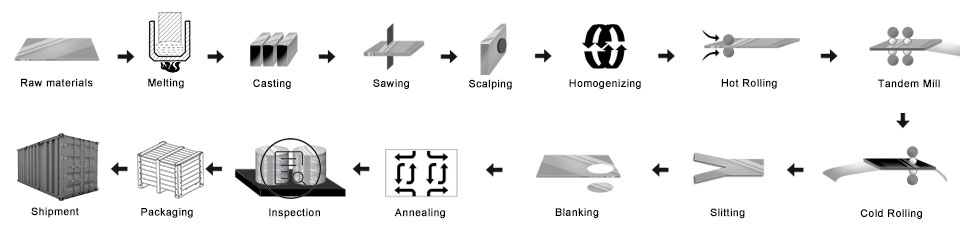
- Bereid de masterlegeringen voor
- Smeltoven: plaats de legeringen in de smeltoven
- D.C. gegoten aluminium staaf: Om de moederbaar te maken
- Frees de aluminium staaf: om het oppervlak en de zijkant glad te maken
- Verwarming oven
- Warmwalserij: de moederspoel gemaakt
- Koudewalserij: de moederspoel werd gerold in de dikte die u wilt kopen
- Ponsen proces: word de maat die je wilt
- Gloeioven: verander het humeur
- Eind inspectie
- Inpakken: houten kist of houten pallet
- Levering
Kwaliteitscontrole
Zekerheid Onderstaande inspectie zal tijdens de productie worden uitgevoerd.
- A. straal detectie—RT;
- B. ultrasoon testen—UT;
- C. Magnetische deeltjestesten-MT;
- D. penetratietesten-PT;
- e. wervelstroomfoutdetectie-ET
1) Wees vrij van olievlekken, Deuk, Inclusie, Krassen, Vlek, Oxideverkleuring, Pauzes, Corrosie, Rolmarkeringen, Vuil strepen, en andere gebreken die het gebruik hinderen.
2) Oppervlak zonder zwarte lijn, zuiver gesneden, periodieke vlek, defecten bij het afdrukken van rollen, zoals andere interne controlenormen van de gko.
Aluminium schijven verpakking:
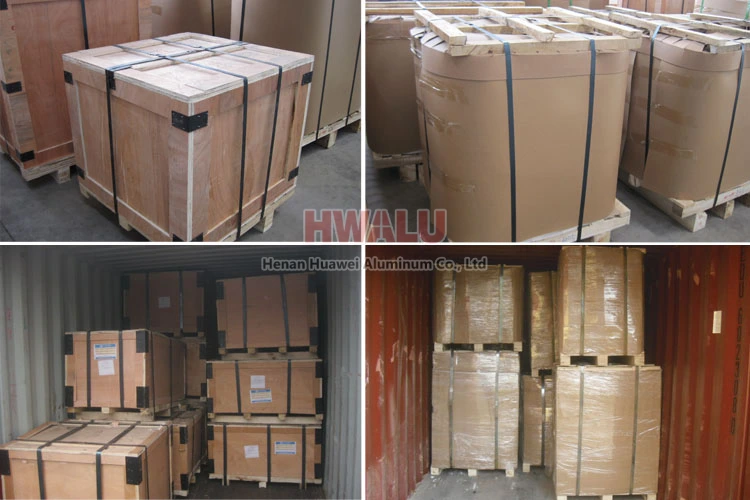
Aluminiumcirkels kunnen volgens exportnormen worden verpakt, bedekken met bruin papier en plastic folie. Eindelijk, de Aluminium Round wordt op een houten pallet/houten kist bevestigd.
- Plaats de drogers naast de aluminium cirkel, houd de producten droog en schoon.
- Gebruik schoon plastic papier, pak de aluminium cirkel in, goede afdichting behouden.
- Gebruik het slangenleerpapier, pak het oppervlak van het plastic papier in, goede afdichting behouden.
- Volgende, Er zijn twee manieren van verpakken: Eén manier is het verpakken van houten pallets, gebruik het knapperige papier dat het oppervlak bedekt; Een andere manier is het verpakken van houten kistjes, met behulp van de houten kist die het oppervlak inpakt.
- Eindelijk, leg de stalen riem op het oppervlak van de houten kist, het houden van de houten kistvastheid en veiligheid.
Aluminium cirkel van Henan Huawei Aluminium. voldoen aan de exportnorm. Plastic folie en bruin papier kunnen naar wens van de klant worden afgedekt. Bovendien, Er wordt een houten kist of houten pallet gebruikt om producten tijdens de levering tegen schade te beschermen. Er zijn twee soorten verpakkingen, die oog in oog staan met de muur of oog naar de lucht. Klanten kunnen voor hun gemak een van beide kiezen. In het algemeen, er zijn 2 ton in één pakket, en laden 18-22 ton in 1×20′ container, En 20-24 ton in 1×40′ container.
Waarom voor ons kiezen?
Om met de tijd mee te gaan, HWALU blijft de modernste apparatuur en techniek introduceren om zijn concurrentiepositie te verbeteren. Houd u altijd eerst aan de bedrijfsfilosofie van kwaliteit als centrum en klant, om producten uit de aluminium schijfcirkelserie van de hoogste kwaliteit aan alle delen van de wereld te leveren. Meer …

