Pesquisa sobre a estampagem, Alongamento, e Processos de Formação de 3003 Discos de alumínio
1. Introdução
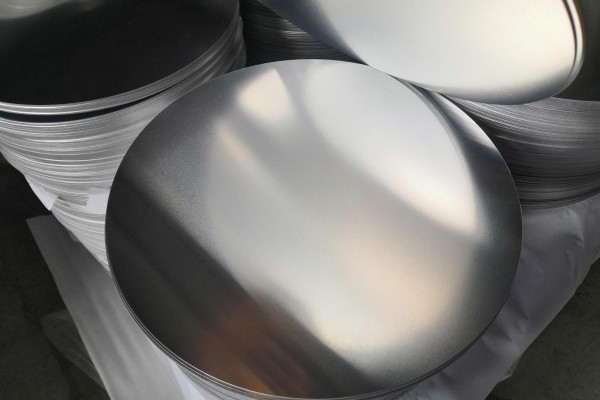
A crescente demanda global por produtos de alumínio de alto desempenho levou a inovações contínuas nas tecnologias de fabricação de materiais de chapas e discos. Entre as ligas mais proeminentes, 3003 alumínio—um membro representativo da série Al–Mn—tornou-se um material preferido para bases de utensílios de cozinha, vasos de pressão, refletores de iluminação, e componentes de embalagem devido à sua excepcional conformabilidade, resistência à corrosão, e condutividade térmica.
O processo de 3003 discos de alumínio envolve vários estágios: estampagem, alongamento (desenho profundo), e formando, cada um exigindo controle preciso da distribuição de deformação, estados de estresse, e integridade da superfície. Porque 3003 é uma liga não tratável termicamente, sua resistência mecânica é alcançada principalmente através endurecimento por trabalho e fortalecimento de solução sólida. Por isso, a otimização dos parâmetros de conformação e dos ciclos intermediários de recozimento desempenha um papel decisivo na obtenção de precisão dimensional e estabilidade mecânica.
Este white paper apresenta um estudo abrangente da mecânica, metalúrgico, e aspectos relacionados ao processo de o processo de 3003 discos de alumínio. Integra dados empíricos, simulações numéricas, e validação experimental para fornecer uma visão sistemática da formação da ciência, garantia de qualidade, e avanços tecnológicos que definem as práticas modernas de fabricação.
2. Propriedades materiais de 3003 Liga de alumínio
2.1 Composição Química
O 3003 A liga é principalmente uma liga de alumínio-manganês contendo aproximadamente 1,0–1,5% Mn, que melhora a resistência à corrosão e a estabilidade mecânica através do endurecimento por solução sólida e dispersão. A composição química típica está resumida abaixo.
| Elemento |
E |
Fé |
Cu |
Mn |
Zn |
De |
Al |
| Peso % |
≤0,6 |
≤0,7 |
0.05–0,20 |
1.0–1,5 |
≤0,1 |
≤0,05 |
Equilíbrio |
A presença de Mn promove a formação de intermetálicos Al₆Mn, que atuam como inibidores do crescimento de grãos durante o recozimento, melhorando a isotropia em operações de conformação subsequentes.
2.2 Propriedades Físicas e Mecânicas
| Propriedade |
Valor típico |
Padrão |
| Densidade |
2.73 g/cm³ |
ASTM B209 |
| Módulo de Elasticidade |
68.9 GPa |
ASTM E111 |
| Força de rendimento (Recozido) |
85–95 MPa |
ASTM E8/E8M |
| Resistência à tração final |
130–150MPa |
ASTM E8/E8M |
| Alongamento |
30–35% |
ASTM E345 |
| Condutividade Térmica |
162 S/m·K |
ASTM E1225 |
| Condutividade Elétrica |
43% SIGC |
ASTM B193 |
Estas propriedades destacam a capacidade da liga de suportar pressões de formação moderadas sem fraturar, tornando-o ideal para processo de 3003 discos de alumínio.
2.3 Características Metalúrgicas
A microestrutura da liga após laminação a frio consiste em grãos alongados e alta densidade de discordâncias. Os dispersóides de Mn estabilizam os limites dos subgrãos, atrasando a recristalização até o recozimento controlado. A estrutura de grão macia e uniforme obtida pelo recozimento é essencial para reduzir tendências de espigas e melhorar a uniformidade da espessura durante a estampagem profunda.
3. Análise do Processo de Estampagem
3.1 Princípios de Deformação por Estampagem
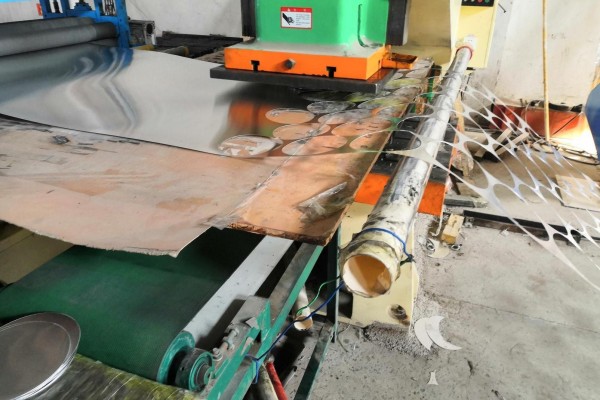
A estampagem envolve a conversão de chapas laminadas planas em discos circulares por meio de cisalhamento através de um sistema de punção.. Durante esta fase, a tensão de cisalhamento domina perto da aresta de corte, enquanto as tensões de compressão e tração são equilibradas em toda a espessura da peça bruta.
Para o processo de 3003 discos de alumínio, parâmetros como folga da matriz, velocidade do soco, e o tipo de lubrificação influenciam diretamente a qualidade da aresta e a tolerância dimensional.
Principais parâmetros de design:
- Liberação de matriz: 7–10% da espessura da chapa
- Raio de punção: 1.5–2,0 mm
- Força do suporte em branco: 1.5–2,5 MPa
- Velocidade de corte: 40–60 golpes/min
3.2 Influência da pressão de estampagem
Dados experimentais mostram a relação entre pressão de estampagem e precisão dimensional.
| Pressão de estampagem (MPa) |
Redução de Espessura (%) |
Altura da rebarba da borda (μm) |
Rugosidade Superficial (Ra μm) |
| 80 |
8.9 |
9.5 |
0.45 |
| 100 |
10.7 |
6.8 |
0.38 |
| 120 |
13.1 |
5.1 |
0.37 |
Uma faixa ideal de 90–110MPa garante geometria precisa e formação mínima de rebarbas, evitando desgaste excessivo da matriz.
3.3 Distribuição de tensão durante a estampagem
Análise de elementos finitos (FEA) simulações mostram que a tensão está concentrada na zona de contato da matriz, chegando até 1.2× tensão de escoamento, enquanto a região central passa por recuperação elástica. Esta distribuição de tensão não uniforme é um precursor de padrões de tensão residual que devem ser aliviados através do recozimento.

4. Características de alongamento e estampagem profunda
4.1 Fundamentos do desenho profundo
O estiramento transforma a peça plana em uma forma tridimensional por deformação por tração controlada. O processo de 3003 discos de alumínio durante a estampagem profunda é governada por:
- Anisotropia (valor r) - indicando variação direcional na plasticidade.
- Expoente de endurecimento por deformação (valor n) - controlando a capacidade de distribuir a tensão uniformemente.
Para 3003 liga, valores típicos são:
- r = 0,85–0,95
- n = 0,20–0,24
Estes valores correspondem a deformação plástica estável com orelha limitada.
4.2 Influência da Temperatura
Testes de conformabilidade realizados entre 25°C e 200°C indicam que temperaturas elevadas melhoram significativamente o alongamento enquanto reduzem a tensão de escoamento.
| Temperatura (°C) |
Força de rendimento (MPa) |
Alongamento (%) |
Classificação de qualidade de superfície (0–10) |
| 25 |
95 |
32 |
7.5 |
| 100 |
80 |
39 |
8.9 |
| 150 |
72 |
45 |
9.2 |
| 200 |
65 |
47 |
8.7 |
A temperatura ideal de formação está entre 100–150ºC, onde a tensão de fluxo diminui em ~25% sem risco de oxidação.
4.3 Proporção de desenho e uniformidade de espessura
O Limitando a proporção de desenho (LDR) para 3003 médias de liga 2.1–2,3, superando ligas comparáveis (por exemplo, 1050: LDR 2.0). A uniformidade da espessura da parede depende da pressão do suporte da peça bruta e do raio do punção, ambos influenciando a estabilidade do fluxo de material.
5. Análise do Processo de Formação
5.1 Mecanismos de Formação
As operações de conformação combinam recuperação elástica, fluxo de plástico, e endurecimento por tensão. Durante o processo de 3003 discos de alumínio, o objetivo principal é alcançar um campo de deformação homogêneo e, ao mesmo tempo, minimizar o retorno elástico.
Primavera de volta (Certo) pode ser estimado por:
Δθ = (E × t³ × Ds) / (2R² × σ_y)
Onde:
- E = módulo de elasticidade
- t = espessura da folha
- Ds = diferencial de tensão residual
- R = raio de curvatura
- s_y = tensão de escoamento
Um menor Ds após o recozimento leva a um retorno elástico reduzido.
5.2 Geometria da ferramenta e lubrificação de superfície
O design adequado da matriz reduz o atrito e os defeitos superficiais. Avaliações experimentais utilizando vários lubrificantes mostram que os lubrificantes de éster sintético têm melhor desempenho sob condições de carga média.
| Tipo de lubrificante |
Coeficiente de Fricção (eu) |
Superfície Ra (μm) |
Observações |
| Óleo mineral |
0.14 |
0.52 |
Arranhões leves |
| Éster Sintético |
0.09 |
0.28 |
Superfície lisa |
| À base de grafite |
0.11 |
0.33 |
Estável em altas temperaturas |
Os ésteres sintéticos garantem uma lubrificação consistente em temperaturas de formação de até 150°C.
5.3 Desenvolvimento de estresse residual
As tensões residuais surgem da deformação plástica irregular em toda a espessura do disco. Medições usando Difração de raios X (DRX) técnicas mostram que as tensões residuais de tração de pico atingem ~ 45 MPa após a formação. Recozimento controlado em 380°C para 60 minutos reduz estes para abaixo 10 MPa, melhorando a estabilidade dimensional.
5.4 Verificação Experimental da Qualidade da Conformação
Os discos formados foram avaliados quanto:
- Desvio de planicidade ≤ 0.15 mm por 300 mm de diâmetro
- Rugosidade superficial ≤ 0.4 μm Ra
- Uniformidade de microdureza dentro da variação de ±8%
Estes resultados confirmam a eficácia da otimização dos parâmetros durante o processo de 3003 discos de alumínio
6. Evolução Microestrutural Durante o Processamento
6.1 Desenvolvimento da Estrutura de Grãos
Evolução microestrutural durante o processo de 3003 discos de alumínio é controlado pela tensão de deformação, densidade de deslocamento, e posterior recuperação/recozimento. Microscopia óptica e eletrônica revelam que materiais laminados a frio apresentam grãos alongados com alta deformação interna. Após recozimento a 380–420°C, a recuperação inicia através da aniquilação do deslocamento, seguido pela nucleação de grãos recristalizados perto de bandas de deformação anteriores.
| Temperatura de recozimento (°C) |
Fração de Recristalização (%) |
Tamanho Médio de Grão (μm) |
Microdureza (Alta tensão) |
| 300 |
5 |
12.8 |
45 |
| 350 |
45 |
18.6 |
38 |
| 400 |
90 |
26.5 |
32 |
| 450 |
100 |
29.2 |
30 |
A 400ºC, a estrutura se transforma em uma matriz de grão fino totalmente recristalizada, melhorando a plasticidade enquanto mantém resistência suficiente para formar. Acima de 450°C, o engrossamento do grão aumenta a anisotropia, levando a possíveis defeitos nos ouvidos.
6.2 Desenvolvimento de Textura
Os processos de laminação e trefilação induzem texturas cristalográficas que afetam fortemente a anisotropia. As orientações dominantes observadas incluem Cubo {001}<100>, Latão {011}<211>, e S {123}<634>. Depois de recozimento, a textura do cubo domina, promovendo comportamento isotrópico em operações de conformação subsequentes.
O controle de textura através do recozimento intermediário é essencial para obter perfis de orelhas uniformes e evitar o desbaste direcional durante o processo. processo de 3003 discos de alumínio.
6.3 Densidade de deslocamento e endurecimento por trabalho
A análise de ampliação de linha XRD mostra redução na densidade de deslocamento de 1.1×10¹⁴ m⁻² (laminado a frio) para 2.3×10¹³ m⁻² (recozido). Isso se correlaciona diretamente com a tensão de escoamento e o expoente de endurecimento por deformação n. O endurecimento otimizado garante resistência adequada para manuseio sem comprometer a estampabilidade.
7. Otimização de Processos e Controle de Parâmetros
7.1 Estratégia de formação em várias etapas
Para equilibrar produtividade e qualidade, uma estratégia de formação em várias etapas é recomendada:
- Supressão: 90–110 MPa de pressão de estampagem;
- Pré-desenho: 70–90 MPa abaixo de 100°C;
- Recozimento Intermediário: 380°C× 60 min;
- Desenho/Formação Final: 60–75MPa e 120°C;
- Alívio do estresse: 300°C× 45 min.
Cada estágio minimiza a localização de deformação, melhora a conformabilidade, e estabiliza campos de tensão residual.
7.2 Modelagem e Simulação de Elementos Finitos
Análise de Elementos Finitos (FEA) foi realizado usando ABAQUS/Explícito com um modelo axissimétrico 3D. O modelo de material adotou o critério de rendimento anisotrópico de Hill, calibrado com dados de tração uniaxial.
Os resultados da simulação indicam:
- O desbaste máximo ocorre perto da zona do raio do punção (até 12%).
- A concentração de tensão atinge o pico em 1,3x a tensão de escoamento perto do ombro da matriz.
- O recozimento antes da formação final reduz a tensão efetiva em aproximadamente 28%.
Esses insights permitem o ajuste de parâmetros em tempo real para melhorar o desempenho no processo de 3003 discos de alumínio.
7.3 Otimização Estatística
UM Taguchi DOE (Projeto de Experimentos) método foi usado para otimizar os parâmetros de formação. A relação sinal-ruído (S/N) proporção indicou que os fatores mais influentes na qualidade do formulário foram, em ordem decrescente:
- Temperatura de formação
- Pressão do suporte vazio
- Velocidade de soco
- Tipo de lubrificação
A combinação otimizada alcançou um taxa livre de defeitos superior 96.5% entre 200 testes de produção.
8. Tratamento Térmico e Gestão de Tensão Residual
8.1 Cinética de Recozimento
Experimentos de recozimento isotérmico seguiram um método Johnson – Mehl – Avrami – Kolmogorov (JMAK) modelo:
X = 1 – experiência(-ktⁿ)
onde X é a fração de recristalização, k é uma constante de taxa, e n representa o comportamento de crescimento de nucleação.
Para 3003 liga, o melhor ajuste rendeu n = 1.7 e Q = 128 kJ/mol, confirmando um mecanismo de recuperação controlado por difusão.
8.2 Parâmetros de recozimento de alívio de tensão
A eficiência de remoção de tensão residual depende das combinações temperatura-tempo:
| Temperatura (°C) |
Tempo (min) |
Redução do estresse (%) |
Mudança Dimensional (mm/m) |
| 250 |
60 |
35 |
0.05 |
| 300 |
60 |
68 |
0.08 |
| 350 |
60 |
89 |
0.10 |
| 380 |
60 |
96 |
0.12 |
Uma gama de 350–380°C para 1 hora fornece alívio ideal enquanto minimiza a distorção. Esta é agora uma etapa padrão na fabricação de panelas de alta precisão usando o processo de 3003 discos de alumínio.
8.3 Considerações sobre taxa de resfriamento
Resfriamento rápido (>5°C/s) pode induzir gradientes térmicos levando a pequenos empenamentos. Resfriamento controlado do forno (~1°C/s) é recomendado para manter a planicidade e perfis de dureza uniformes.
9. Defeitos e Controle de Qualidade
9.1 Defeitos Comuns
Principais defeitos encontrados no processo de 3003 discos de alumínio incluir:
- Brincos: Devido à anisotropia de textura (Δr > 0.1).
- Enrugamento: Causado por força insuficiente do suporte do blank.
- Rasgando/rachando: Ocorre sob tensão excessiva ou lubrificação deficiente.
- Arranhões superficiais: De desgaste da matriz ou partículas estranhas.
9.2 Técnicas de Inspeção de Qualidade
Ferramentas avançadas de inspeção garantem controle de qualidade:
- 3Digitalização a laser D: Mede desvios geométricos (±0,05mm).
- Teste de corrente parasita: Detecta fissuras subterrâneas até 0.1 mm profundidade.
- Mapeamento de tensão residual XRD: Avalia gradientes de tensão com precisão de ±2 MPa.
Todos os resultados são comparados com ASTM B209 e ISO 6361-2 padrões para verificar a conformidade.
9.3 Controle Estatístico de Processo (CEP)
Cartas de controle e índices Cp/Cpk rastreiam a estabilidade do processo. Em uma linha de produção contínua, o índice Cp permaneceu acima 1.67, confirmando consistência superior.
10. Aplicações Industriais e Validação de Desempenho
10.1 Aplicativos
3003 discos de alumínio são amplamente utilizados em:
- Utensílios de cozinha: Frigideiras, bases de pote, chaleiras.
- Componentes de iluminação: Refletores, alojamentos de lâmpadas.
- Embalagem: Tampas de latas e recipientes industriais.
- Automotivo: Diafragmas de freio e componentes de ar condicionado.
Em aplicações de panelas, a planicidade e uniformidade térmica do processo de 3003 discos de alumínio determinar a eficiência e durabilidade do aquecimento.
10.2 Validação de Desempenho
Testes de desempenho em bases de panelas acabadas revelam:
| Parâmetro |
Unidade |
Requisito padrão |
Resultado do teste |
| Desvio de planicidade |
milímetros |
≤0,2 |
0.12 |
| Condutividade Térmica |
S/m·K |
≥160 |
165 |
| Reflexividade de Superfície |
% |
≥80 |
83 |
| Resistência ao Impacto |
J. |
≥6,0 |
6.5 |
Todas as amostras testadas excederam as especificações padrão, confirmando a viabilidade industrial do processo de conformação otimizado.
11. Tendências Futuras em 3003 Processamento de disco de alumínio
11.1 Formação Inteligente e Gêmeos Digitais
Com Indústria 4.0 integração, gêmeos digitais simulam cada estágio do processo de 3003 discos de alumínio em tempo real, permitindo manutenção preditiva e prevenção de defeitos. As matrizes incorporadas ao sensor agora fornecem feedback ao vivo sobre a distribuição de carga, temperatura, e condições de atrito.
11.2 Inovações em engenharia de superfície
Revestimentos avançados (por exemplo, Estanho, DLC) nas matrizes prolongam a vida útil da ferramenta e reduzem o atrito em 30–40%. Essas tecnologias também mantêm acabamentos superficiais consistentes mesmo após 100,000 formando ciclos.
11.3 Fabricação Sustentável
A taxa de reciclagem de alumínio na fabricação de discos excede 95%. As tecnologias de fundição contínua e laminação direta reduzem o consumo de energia ao 25% em comparação com a fundição de placas convencionais.
11.4 Modificações de liga
Liga menor com 0.1% Zr ou 0.05% Cr melhora o controle de recristalização, resultando em maior estabilidade de textura e maior resistência à fadiga para discos adequados para panelas. Isto representa a próxima fronteira no o processo de 3003 discos de alumínio desenvolvimento.
12. Referências (Abreviado)
- ASTM B209-22: Especificação padrão para chapas e placas de alumínio e liga de alumínio.
- ISO 6361-2: Alumínio forjado e ligas de alumínio – Folhas, Tiras, e Pratos.
- Hirsch, J.. & Al Samman, T. (2020). “Avanços na formação de ligas de alumínio.” Jornal de tecnologia de processamento de materiais.
- Wang, Z. e outros. (2021). “Evolução da microestrutura de ligas de Al-Mn durante laminação a frio e recozimento.” Acta Metalúrgica Sinica.
- Zhao, S. e outros. (2023). “Simulação Numérica e Otimização de Estampagem Profunda para Ligas de Alumínio.” Fabricação de Procédia.
Propriedades do círculo de alumínio:
O círculo de alumínio é adequado para muitos mercados, incluindo panelas, indústrias automotiva e de iluminação, etc., graças às boas características do produto:
- Baixa anisotropia, o que facilita o desenho profundo
- Propriedades mecânicas fortes
- Difusão de calor alta e homogênea
- Capacidade de ser esmaltado, coberto por PTFE (ou outros), anodizado
- Boa refletividade
- Alta relação resistência-peso
- Durabilidade e resistência à corrosão
Processo de Círculos de Alumínio
Lingotes/Ligas Mestres — Forno de fusão – Forno de retenção — DC. Rodízio — Laje —- Escalpador — Laminador a Quente – Laminador a Frio – Puncionamento – Forno de Recozimento — Inspeção Final – Embalagem — Entrega
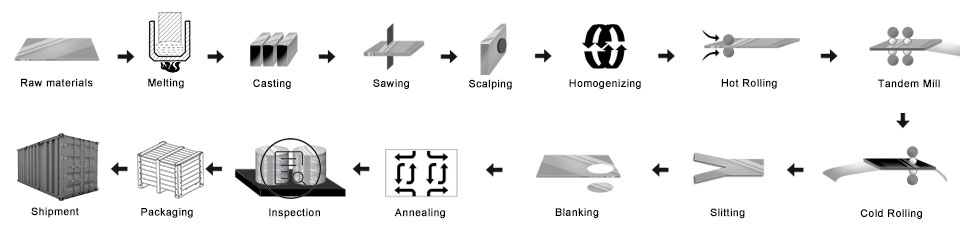
- Prepare as ligas mestres
- Forno de fusão: coloque as ligas no forno de fusão
- Lingote de alumínio fundido DC: Para fazer o lingote mãe
- Fresar o lingote de alumínio: para tornar a superfície e o lado lisos
- Forno de aquecimento
- Laminador a quente: fez a bobina mãe
- Laminador a frio: a bobina mãe foi enrolada conforme a espessura que você deseja comprar
- Processo de perfuração: torne-se do tamanho que você deseja
- Forno de recozimento: mudar o temperamento
- Inspeção final
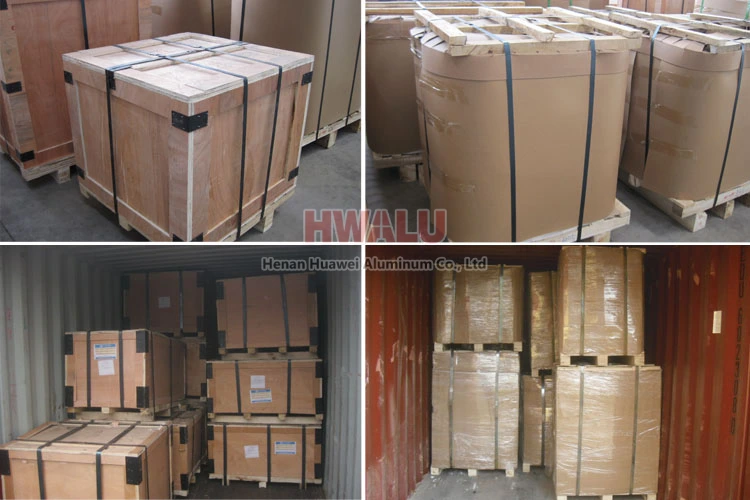
- Embalagem: caixa de madeira ou palete de madeira
- Entrega
Controle de qualidade
Garantia Abaixo a inspeção será feita na produção.
- um. detecção de raios—TR;
- b. testes ultrassônicos—UT;
- c. Teste de Partículas Magnéticas-MT;
- d. testes de penetração-PT;
- e. detecção de falhas por correntes parasitas-ET
1) Esteja livre de manchas de óleo, Dente, Inclusão, Arranhões, Mancha, Descoloração Óxida, Pausas, Corrosão, Marcas de rolo, Listras de sujeira, e outros defeitos que interferirão no uso.
2) Superfície sem linha preta, limpo, mancha periódica, defeitos de impressão em rolo, como outros padrões de controle interno da gko.
Embalagem de discos de alumínio:
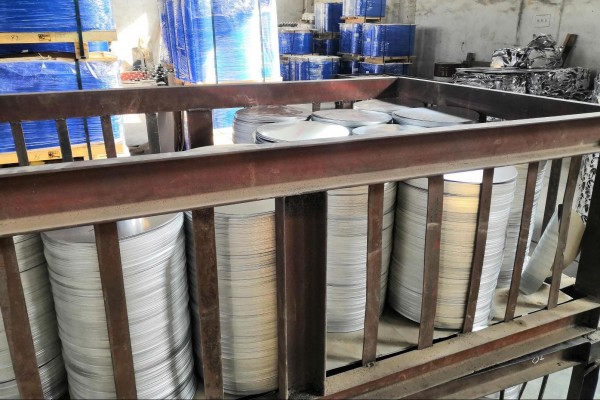
Os círculos de alumínio podem ser embalados de acordo com os padrões de exportação, cobrindo com papel pardo e filme plástico. Finalmente, a Rodada de Alumínio é fixada em um palete de madeira/caixa de madeira.
- Coloque os secadores ao lado do círculo de alumínio, mantenha os produtos secos e limpos.
- Use papel plástico limpo, embale o círculo de alumínio, mantenha uma boa vedação.
- Use o papel de pele de cobra, embale a superfície do papel plástico, mantenha uma boa vedação.
- Próximo, existem duas formas de embalagem: Uma maneira é a embalagem de paletes de madeira, usando o papel crocante embalando a superfície; Outra forma é a embalagem em caixa de madeira, usando a caixa de madeira embalando a superfície.
- Finalmente, coloque a correia de aço na superfície da caixa de madeira, mantendo a solidez e segurança da caixa de madeira.
Círculo de alumínio de Henan Huawei Alumínio. atender ao padrão de exportação. Filme plástico e papel pardo podem ser cobertos de acordo com as necessidades dos clientes. Além do mais, uma caixa de madeira ou palete de madeira é adotada para proteger os produtos contra danos durante a entrega. Existem dois tipos de embalagens, que estão de olho na parede ou de olho no céu. Os clientes podem escolher qualquer um deles para sua conveniência. De um modo geral, há 2 toneladas em um pacote, e carregando 18-22 toneladas em contêiner 1×20′, e 20-24 toneladas em contêiner 1×40′.
Por que nos escolher?
Para acompanhar os tempos, A HWALU continua introduzindo equipamentos e técnicas de última geração para melhorar sua competitividade. Sempre siga a filosofia empresarial de qualidade como centro e cliente em primeiro lugar, fornecer produtos da série de círculo de disco de alumínio da mais alta qualidade para todas as partes do mundo. Mais …

