Processo de produção detalhado de 1050 Discos de alumínio: Rolando, Estampagem, e tecnologias de recozimento
1. Introdução
1050 os discos de alumínio são amplamente reconhecidos por seu excelente resistência à corrosão, alta ductilidade, e condutividade térmica, tornando-os indispensáveis em diversas aplicações industriais e de consumo. De panelas, componentes elétricos, e recipientes de produtos químicos para peças arquitetônicas e automotivas, 1050 discos de alumínio fornecem um confiável, leve, e solução de material reciclável.
A produção de produtos de alta qualidade 1050 discos de alumínio requerem um combinação precisa de compreensão metalúrgica, processamento mecânico, e técnicas de acabamento superficial. Cada etapa – desde a preparação da matéria-prima até a laminação, estampagem, e recozimento – afeta as propriedades mecânicas do disco, integridade da superfície, e precisão dimensional.
Este artigo fornece um guia completo para engenheiros e profissionais industriais entenderem o processo de produção de 1050 discos de alumínio, incluindo parâmetros de processo, controle de defeitos, e estratégias de otimização microestrutural.

2. Preparação de matéria-prima e características da liga
2.1 Composição Química de 1050 Liga de alumínio
1050 o alumínio pertence ao 1série xxx, que é essencialmente uma liga de alumínio de alta pureza (≥99,5% Al). Sua simplicidade na liga resulta em excelente resistência à corrosão, conformabilidade superior, e boa condutividade elétrica e térmica. Pequenas adições de Fe, E, e outros oligoelementos melhoram a resistência mecânica sem comprometer significativamente a ductilidade.
| Mesa 1 – Composição Química Típica de 1050 Liga de alumínio (%) |
|
| Alumínio (Al) |
≥99,5 |
| Ferro (Fé) |
0.4 máx |
| Silício (E) |
0.25 máx |
| Cobre (Cu) |
0.05 máx |
| Manganês (Mn) |
0.05 máx |
| Magnésio (mg) |
0.05 máx |
| Zinco (Zn) |
0.05 máx |
| Titânio (De) |
0.03 máx |
| Outros (cada) |
0.03 máx |
| Outros (total) |
0.10 máx |
O alto teor de alumínio garante excelente resistência à corrosão, particularmente em ambientes marinhos ou quimicamente agressivos. Sua alta ductilidade (alongamento >30% em temperamento O) torna-o altamente adequado para operações de estampagem profunda e estampagem.
2.2 Propriedades Mecânicas e Físicas
Principais propriedades mecânicas e físicas de 1050 alumínio em vários temperamentos incluem:
- O-temperamento (recozido): Alta ductilidade, menor resistência à tração (~70MPa)
- H14/H18 (endurecido por tensão): Força moderada (~90–120MPa), alongamento reduzido (~10–15%)
- Densidade: 2.71 g/cm³
- Ponto de fusão: ~660°C
- Condutividade Térmica: 230–235 W/m·K
Esta combinação de alta ductilidade, boa condutividade térmica, e resistência à corrosão constitui a base para a produção de discos que podem suportar estampagem, desenho profundo, e operações de recozimento sem falha.
2.3 Preparação de lingotes e tarugos
O processo de produção começa com lingotes ou tarugos de alumínio de alta pureza, qualquer lançado diretamente ou fundido novamente a partir de alumínio reciclado. As principais etapas incluem:
- Derretimento e Refino: Fusão em forno rotativo ou reverberatório; desgaseificação com gases inertes (argônio) para reduzir a porosidade do hidrogênio.
- Fundição: Resfriamento contínuo ou direto (CC) fundição produz tarugos com microestrutura uniforme.
- Homogeneização: Aquecimento de tarugos a 400–500 °C durante várias horas para reduzir a segregação e garantir uma composição química uniforme em toda a secção transversal.
Composição uniforme e impurezas mínimas são cruciais para evitar defeitos superficiais (poços, arranhões) e rachaduras internas durante operações subsequentes de laminação e estampagem.
3. Processo de Laminação e Controle Mecânico
Rolar é o etapa de modelagem primária na produção de discos de alumínio. Reduz a espessura do tarugo e confere as propriedades mecânicas desejadas através endurecimento por trabalho e refinamento de grãos.
3.1 Laminação a Quente
A laminação a quente normalmente é realizada quando o tarugo é pré-aquecido a 450–500 °C. Os principais aspectos incluem:
- Propósito: Reduza a espessura do tarugo de ~50–100 mm para ~5–10 mm enquanto promove tamanho de grão uniforme.
- Passes rolantes: Múltiplos passes usando suportes de desbaste e acabamento; temperatura controlada para evitar oxidação da superfície ou rachaduras nas bordas.
- Efeitos Microestruturais: A recristalização dinâmica ocorre durante a laminação a quente, produzindo um estrutura de grão fino que aumenta a ductilidade.
| Mesa 2 – Parâmetros de laminação a quente para 1050 Alumínio |
|
| Tipo de passe |
Desbaste / Intermediário / Acabamento |
| Temperatura (°C) |
450–500 |
| Redução por passe (%) |
20–35 |
| Velocidade de rolamento (m/meu) |
5–15 |
| Lubrificação |
Resfriamento leve a óleo ou à base de água |
| Método de resfriamento |
Controlado por pulverização de ar ou água |
A chapa laminada a quente é então enrolada ou cisalhada em placas adequadas para laminação a frio.
3.2 Laminação a Frio
A laminação a frio reduz ainda mais a espessura do alumínio para o espessura final do disco (normalmente 1–5 mm para discos grandes). Este processo aumenta a força através endurecimento por deformação e produz uma superfície mais lisa adequada para estampagem.
Os principais fatores para laminação a frio incluem:
- Taxa de redução por passagem: 5–15% para minimizar o estresse interno.
- Lubrificação: Óleos de emulsão para evitar arranhões.
- Controle de tensão: A tensão precisa evita a formação de ondas nas bordas e espessura irregular.
A laminação a frio também prepara o material para recozimento, que restaura a ductilidade perdida durante o endurecimento por deformação.
3.3 Controle de Propriedade Mecânica
Através de uma combinação cuidadosa de laminação a quente e a frio, engenheiros podem alcançar o desejado resistência à tracção, alongamento, e dureza. O disco típico de têmpera O manterá alta ductilidade, enquanto as têmperas H14/H18 são ideais para componentes pré-estampados ou estampados

4. Técnicas de estampagem e conformação
4.1 Processo de estampagem profunda
O desenho profundo é um dos métodos mais comuns para transformar 1050 discos de alumínio em xícaras, bandejas, ou conchas de contêineres. Sua alta ductilidade permite grandes reduções sem fissuras.
Principais considerações em estampagem profunda:
- Diâmetro em branco: Normalmente 1,5–2 vezes o diâmetro final da peça.
- Design de perfuração e matriz: Arestas arredondadas com raio de filete ideal reduzem a concentração de tensão de tração.
- Lubrificação: Grafite ou óleo sintético garantem um fluxo suave do metal.
- Velocidade de desenho: Controlado para minimizar rasgos; velocidades lentas a moderadas (10–50mm/s) recomendado.
O O-temperamento 1050 alumínio é ideal para desenho em um único estágio devido ao seu alto alongamento, enquanto Têmperas H14/H18 pode exigir recozimento intermediário para trefilação em vários estágios.
4.2 Estampagem Progressiva
Para componentes que exigem vários recursos (flanges, gravação em relevo, ou costelas), matrizes de estampagem progressiva estão empregados. Cada estação forma gradualmente o disco sem exceder o limite de deformação do material.
- Vantagens: Alta precisão, repetibilidade, e desperdício mínimo.
- Fatores Críticos: Tolerâncias no alinhamento da matriz, consistência de lubrificação, e velocidade de soco.
- Microestrutura resultante: Ocorre um ligeiro endurecimento por trabalho, aumentando a força localmente, mas a ductilidade geral é preservada.
4.3 Corte e acabamento de bordas
Depois de carimbar, os discos são cortados nas dimensões finais. As técnicas incluem:
- Cisalhamento Mecânico: Rápido, adequado para produção de alto volume.
- Corte a laser: Fornece bordas precisas com rebarbas mínimas.
- Rebarbação ou Chanframento: Reduz a concentração de tensão na borda e melhora a qualidade da superfície para processos ou revestimentos subsequentes.
Henan Huawei Alumínio Co., Ltda aplicado 1050 círculos de alumínio (Temperamento H16, espessura 1,0–1,5 mm, diâmetro 100–200 mm) para tampas internas da panela de arroz, com foco na resistência à corrosão superficial por meio de anodização. A principal questão era garantir uma espessura uniforme da película de óxido em superfícies curvas de alumínio..
Inovações de processo: 1) Círculos pré-tratados com desengorduramento ultrassônico (50–55℃, 15–20 minutos) para remover óleo de rolamento, reduzindo defeitos de filme por 90%; 2) Anodização de corrente constante adotada (1.2–1,5A/dm², concentração de ácido sulfúrico 180–200g/L) para formar um filme de óxido de 12–15 μm de espessura (dureza ≥120 HV); 3) Taxa de resfriamento controlada (5–8℃/min) após anodização para evitar rachaduras no filme.
As coberturas acabadas passaram no teste de névoa salina neutra de 48 horas (sem ferrugem), com fornecimento anual de 1.2 milhões de peças. Marcas de eletrodomésticos não relataram nenhuma reclamação sobre distorção térmica ou descamação da superfície, e os custos das matérias-primas foram 15% menor do que usar 3003 alumínio.

5. Recozimento e Otimização de Microestrutura
5.1 Objetivo do Recozimento
O trabalho a frio durante a laminação e estampagem aumenta a resistência, mas diminui a ductilidade. O recozimento restaura a ductilidade, alivia tensões internas, e refina a estrutura do grão.
Efeitos do recozimento em 1050 alumínio:
- Reduz o estresse residual, minimizando empenamento em discos estampados.
- Produz microestrutura uniforme para melhor conformabilidade.
- Aumenta a resistência à corrosão estabilizando a camada de óxido superficial.
5.2 Temperatura e duração do recozimento
- O-temperamento (Recozimento Completo): 350–400 °C durante 1–2 horas; garante máxima ductilidade.
- Recozimento Parcial (H14/H18): 200–300 °C durante 30–60 minutos; restaura a conformabilidade, mantendo alguma dureza.
| Mesa 3 – Parâmetros de recozimento e alterações de propriedades mecânicas |
|
| Temperamento |
Temperatura de recozimento (°C) |
| O-temperamento |
350–400 |
| H14 |
250–300 |
| H18 |
200–250 |
5.3 Controle de Microestrutura
Recozimento promove recristalização, formando grãos equiaxiais que eliminam bandas de deformação. Grãos finos melhoram a ductilidade, enquanto a distribuição intermetálica uniforme aumenta a resistência e evita rasgos localizados durante a estampagem.
5.4 Métodos de resfriamento
- Resfriamento de ar: Lento, evita distorção, adequado para discos maiores.
- Têmpera forçada com ar ou água: Mais rápido, mas risco de deformar; usado seletivamente dependendo do tamanho do disco e da aplicação final.
6. Controle e inspeção de qualidade de superfície
6.1 Defeitos de Superfície a Monitorar
1050 discos de alumínio podem apresentar defeitos superficiais devido ao rolamento, estampagem, ou manuseio:
- Arranhões e arranhões
- Poços ou porosidade na superfície
- Rebarbas ou ondas nas bordas
- Estrias de oxidação
6.2 Técnicas de Inspeção
- Inspeção Visual e Tátil: Identifica arranhões e amassados óbvios.
- Sistemas Ópticos Automatizados: Detecte microarranhões e inconsistências em superfícies reflexivas.
- Medidores de espessura: Garanta que os discos atendam às tolerâncias rigorosas (±0,01mm).
- Medição de rugosidade superficial: Ra ≤ 0.3 μm típico para discos de alta qualidade.
6.3 Limpeza e desengorduramento
O desengorduramento remove óleos de rolamento, impressões digitais, e resíduos de oxidação. Métodos comuns:
- Banhos alcalinos suaves
- Limpeza ultrassônica
- Enxaguar com água quente e secar ao ar
Superfícies limpas são essenciais para revestimento subsequente, anodização, ou aplicação direta na comida, químico, ou indústrias eletrônicas.
7. Defeitos e soluções comuns
| Defeito |
Causa |
Mitigação |
| Rachaduras nas bordas |
Overdrawing ou raio de punção inadequado |
Otimize o design da matriz, pré-recozer espaços em branco mais grossos |
| Arranhões superficiais |
Lubrificação inadequada durante laminação ou estampagem |
Use lubrificantes de qualidade, manter a superfície do rolo |
| Deformação ou ovalização |
Recozimento ou têmpera irregular |
Temperatura controlada, resfriamento lento do ar |
| Furos ou porosidade |
Impurezas no tarugo ou desgaseificação inadequada |
Matérias-primas refinadas, desgaseificação com gás inerte |
| Fragilidade induzida pelo endurecimento por trabalho |
Trabalho a frio excessivo |
Recozimento intermediário |
8. Aplicações e tendências de mercado
8.1 Aplicativos
1050 discos de alumínio são altamente versáteis:
- Utensílios de cozinha: Tampas, panelas, bandejas
- Embalagem: Bonés, fechamentos, e recipientes
- Componentes Elétricos: Dissipadores de calor, condutores
- Peças Industriais: Recipientes químicos, refletores
Sua excelente conformabilidade e resistência à corrosão os tornam adequados para componentes estampados e estampados.
8.2 Tendências de mercado
- Crescente demanda em embalagens de alimentos e utensílios de cozinha devido ao peso leve, discos resistentes à corrosão.
- Expansão em energia renovável e eletrônica para dissipadores de calor de alumínio e componentes de bateria.
- Aumento da adoção de ecológico, alumínio reciclável sobre plásticos em vários setores.
8.3 Avanços Tecnológicos
- Linhas automatizadas de laminação e estampagem reduzir o erro humano e melhorar a uniformidade.
- Sistemas de inspeção guiados por laser detectar defeitos em tempo real.
- Fornos de recozimento avançados fornecem controle preciso de temperatura e atmosfera para evitar oxidação e manter a qualidade da superfície.
| Mesa 4 – Comparação de desempenho mecânico e de conformação de 1050 Discos de alumínio |
|
| Propriedade |
O-temperamento |
| Força de rendimento (MPa) |
70 |
| Resistência à tracção (MPa) |
110 |
| Alongamento (%) |
>35 |
| Dureza (Alta tensão) |
25 |
| Formabilidade |
Excelente |
| Aplicativos |
Desenho profundo, estampagem |

9. Conclusão
O processo de produção de 1050 discos de alumínio combina seleção cuidadosa de ligas, rolamento preciso, estampagem controlada, e recozimento para fornecer discos com excelente conformabilidade, alta resistência à corrosão, e estabilidade dimensional.
Através laminação a quente e a frio, engenheiros controlam espessura, estrutura de grãos, e qualidade da superfície. Técnicas de estampagem permitem geometrias complexas, enquanto o recozimento restaura a ductilidade e alivia o estresse interno. A inspeção de superfície e o controle de defeitos garantem uma qualidade consistente do produto, adequada para uma ampla gama de aplicações industriais.
Com os avanços tecnológicos na laminação automatizada, recozimento, e sistemas de inspeção, 1050 discos de alumínio continuam sendo um material chave em panelas, embalagem, elétrica, e setores industriais, e espera-se que a sua procura cresça ainda mais com as tendências de produção orientadas para a sustentabilidade
Propriedades do círculo de alumínio:
O círculo de alumínio é adequado para muitos mercados, incluindo panelas, indústrias automotiva e de iluminação, etc., graças às boas características do produto:
- Baixa anisotropia, o que facilita o desenho profundo
- Propriedades mecânicas fortes
- Difusão de calor alta e homogênea
- Capacidade de ser esmaltado, coberto por PTFE (ou outros), anodizado
- Boa refletividade
- Alta relação resistência-peso
- Durabilidade e resistência à corrosão
Processo de Círculos de Alumínio
Lingotes/Ligas Mestres — Forno de fusão – Forno de retenção — DC. Rodízio — Laje —- Escalpador — Laminador a Quente – Laminador a Frio – Puncionamento – Forno de Recozimento — Inspeção Final – Embalagem — Entrega
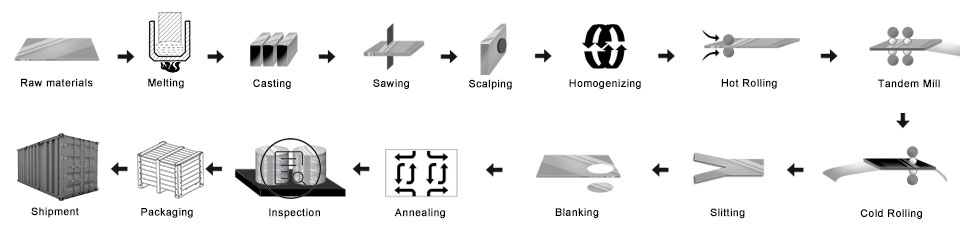
- Prepare as ligas mestres
- Forno de fusão: coloque as ligas no forno de fusão
- Lingote de alumínio fundido DC: Para fazer o lingote mãe
- Fresar o lingote de alumínio: para tornar a superfície e o lado lisos
- Forno de aquecimento
- Laminador a quente: fez a bobina mãe
- Laminador a frio: a bobina mãe foi enrolada conforme a espessura que você deseja comprar
- Processo de perfuração: torne-se do tamanho que você deseja
- Forno de recozimento: mudar o temperamento
- Inspeção final
- Embalagem: caixa de madeira ou palete de madeira
- Entrega
Controle de qualidade
Garantia Abaixo a inspeção será feita na produção.
- um. detecção de raios—TR;
- b. testes ultrassônicos—UT;
- c. Teste de Partículas Magnéticas-MT;
- d. testes de penetração-PT;
- e. detecção de falhas por correntes parasitas-ET
1) Esteja livre de manchas de óleo, Dente, Inclusão, Arranhões, Mancha, Descoloração Óxida, Pausas, Corrosão, Marcas de rolo, Listras de sujeira, e outros defeitos que interferirão no uso.
2) Superfície sem linha preta, limpo, mancha periódica, defeitos de impressão em rolo, como outros padrões de controle interno da gko.
Embalagem de discos de alumínio:
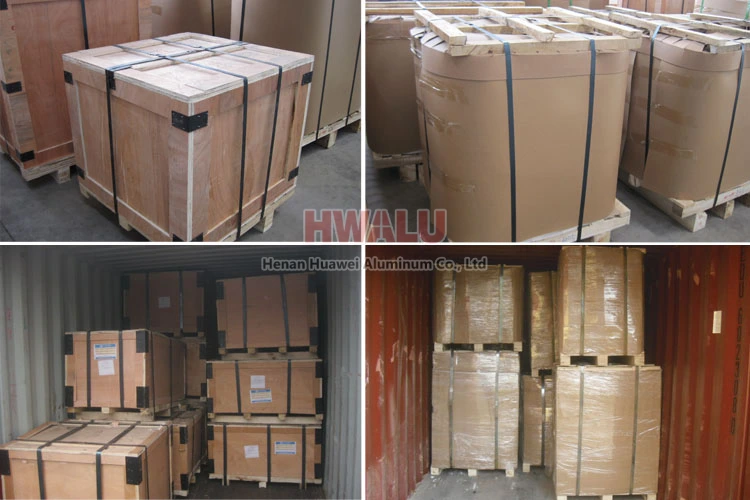
Os círculos de alumínio podem ser embalados de acordo com os padrões de exportação, cobrindo com papel pardo e filme plástico. Finalmente, a Rodada de Alumínio é fixada em um palete de madeira/caixa de madeira.
- Coloque os secadores ao lado do círculo de alumínio, mantenha os produtos secos e limpos.
- Use papel plástico limpo, embale o círculo de alumínio, mantenha uma boa vedação.
- Use o papel de pele de cobra, embale a superfície do papel plástico, mantenha uma boa vedação.
- Próximo, existem duas formas de embalagem: Uma maneira é a embalagem de paletes de madeira, usando o papel crocante embalando a superfície; Outra forma é a embalagem em caixa de madeira, usando a caixa de madeira embalando a superfície.
- Finalmente, coloque a correia de aço na superfície da caixa de madeira, mantendo a solidez e segurança da caixa de madeira.
Círculo de alumínio de Henan Huawei Alumínio. atender ao padrão de exportação. Filme plástico e papel pardo podem ser cobertos de acordo com as necessidades dos clientes. Além do mais, uma caixa de madeira ou palete de madeira é adotada para proteger os produtos contra danos durante a entrega. Existem dois tipos de embalagens, que estão de olho na parede ou de olho no céu. Os clientes podem escolher qualquer um deles para sua conveniência. De um modo geral, há 2 toneladas em um pacote, e carregando 18-22 toneladas em contêiner 1×20′, e 20-24 toneladas em contêiner 1×40′.
Por que nos escolher?
Para acompanhar os tempos, A HWALU continua introduzindo equipamentos e técnicas de última geração para melhorar sua competitividade. Sempre siga a filosofia empresarial de qualidade como centro e cliente em primeiro lugar, fornecer produtos da série de círculo de disco de alumínio da mais alta qualidade para todas as partes do mundo. Mais …

