Gedetailleerd productieproces van 1050 Aluminium schijven: Rollend, Stempelen, en gloeitechnologieën
1. Invoering
1050 aluminium schijven worden algemeen erkend vanwege hun uitstekende corrosieweerstand, hoge ductiliteit, en thermische geleidbaarheid, waardoor ze onmisbaar zijn in verschillende industriële en consumententoepassingen. Van kookgerei, elektrische componenten, en chemische containers tot architecturale en auto-onderdelen, 1050 aluminium schijven zorgen voor een betrouwbare, lichtgewicht, en recycleerbare materiaaloplossing.
De productie van hoge kwaliteit 1050 aluminium schijven vereisen een nauwkeurige combinatie van metallurgisch inzicht, mechanische verwerking, en oppervlakteafwerkingstechnieken. Elke fase: van de voorbereiding van de grondstoffen tot het walsen, stempelen, en uitgloeien: beïnvloedt de mechanische eigenschappen van de schijf, oppervlakte-integriteit, en maatnauwkeurigheid.
Dit artikel biedt een uitgebreide gids voor ingenieurs en industriële praktijkmensen om de productieproces van 1050 aluminium schijven, inclusief procesparameters, defectcontrole, en microstructurele optimalisatiestrategieën.

2. Grondstofvoorbereiding en legeringskenmerken
2.1 Chemische samenstelling van 1050 Aluminiumlegering
1050 aluminium behoort tot de 1xxx-serie, wat in wezen een aluminiumlegering met een hoge zuiverheid is (≥99,5% Al). De eenvoud bij het legeren resulteert in een uitstekende corrosieweerstand, superieure vervormbaarheid, en goede elektrische en thermische geleidbaarheid. Kleine toevoegingen van Fe, En, en andere sporenelementen verbeteren de mechanische sterkte zonder de ductiliteit aanzienlijk in gevaar te brengen.
| Tafel 1 – Typische chemische samenstelling van 1050 Aluminiumlegering (%) |
|
| Aluminium (Al) |
≥99,5 |
| Ijzer (Fe) |
0.4 maximaal |
| Silicium (En) |
0.25 maximaal |
| Koper (Cu) |
0.05 maximaal |
| Mangaan (Mn) |
0.05 maximaal |
| Magnesium (mgr) |
0.05 maximaal |
| Zink (Zn) |
0.05 maximaal |
| Titanium (Van) |
0.03 maximaal |
| Anderen (elk) |
0.03 maximaal |
| Anderen (totaal) |
0.10 maximaal |
Het hoge aluminiumgehalte zorgt ervoor uitstekende corrosieweerstand, vooral in mariene of chemisch agressieve omgevingen. Zijn hoge ductiliteit (verlenging >30% in O-temper) maakt het uitermate geschikt voor dieptrek- en stempelbewerkingen.
2.2 Mechanische en fysieke eigenschappen
Belangrijkste mechanische en fysieke eigenschappen van 1050 aluminium in verschillende temperaturen omvat:
- O-temper (gegloeid): Hoge ductiliteit, lagere treksterkte (~70 MPa)
- H14/H18 (spanningsgehard): Matige kracht (~90–120 MPa), verminderde rek (~10–15%)
- Dikte: 2.71 g/cm³
- Smeltpunt: ~660 °C
- Thermische geleidbaarheid: 230–235 W/m·K
Deze combinatie van hoge ductiliteit, goede thermische geleidbaarheid, en corrosiebestendigheid vormt de basis voor het produceren van schijven die tegen een stootje kunnen stempelen, diepe tekening, en gloeibewerkingen zonder falen.
2.3 Voorbereiding van ingots en knuppels
Het productieproces begint met zeer zuivere aluminium blokken of knuppels, of direct gegoten of hersmolten uit gerecycled aluminium. Belangrijke stappen omvatten:
- Smelten en verfijnen: Smelten in een roterende of galmoven; ontgassen met inerte gassen (argon) om de waterstofporositeit te verminderen.
- Gieten: Continue of directe koeling (gelijkstroom) gieten produceert knuppels met uniforme microstructuur.
- Homogenisatie: Het verwarmen van knuppels op 400–500 °C gedurende enkele uren om segregatie te verminderen en een uniforme chemische samenstelling over de hele dwarsdoorsnede te garanderen.
Een uniforme samenstelling en minimale onzuiverheden zijn cruciaal om te voorkomen oppervlaktedefecten (kuilen, krassen) En interne scheuren tijdens daaropvolgende wals- en stempelbewerkingen.
3. Walsproces en mechanische controle
Rollen is de primaire vormgevingsstap bij de productie van aluminiumschijven. Het vermindert de dikte van de knuppel en verleent gewenste mechanische eigenschappen werkverharding en korrelverfijning.
3.1 Heet walsen
Heetwalsen wordt doorgaans uitgevoerd wanneer de knuppel is voorverwarmd tot 450–500 °C. Belangrijke aspecten zijn onder meer:
- Doel: Reduceer de dikte van de knuppel van ~50–100 mm naar ~5–10 mm, terwijl een uniforme korrelgrootte wordt bevorderd.
- Rollende passen: Meerdere passages met behulp van voor- en nabewerkingsstandaarden; temperatuurgecontroleerd om oppervlakteoxidatie of randscheuren te voorkomen.
- Microstructurele effecten: Dynamische herkristallisatie vindt plaats tijdens warmwalsen, het produceren van een fijnkorrelige structuur dat verbetert de ductiliteit.
| Tafel 2 – Warmwalsparameters voor 1050 Aluminium |
|
| Pastype |
Voorbewerken / Tussenliggend / Afwerking |
| Temperatuur (°C) |
450–500 |
| Korting per pas (%) |
20–35 |
| Rolsnelheid (m/mijn) |
5–15 |
| Smering |
Lichte koeling op olie- of waterbasis |
| Koelmethode |
Lucht- of watersproeigestuurd |
De warmgewalste plaat wordt vervolgens opgerold of geknipt tot geschikte platen koud walsen.
3.2 Koudwalsen
Bij koudwalsen wordt de aluminiumdikte nog verder verminderd uiteindelijke schijfdikte (typisch 1–5 mm voor grote schijven). Dit proces vergroot de kracht door verharding van de spanning en produceert een gladder oppervlak dat geschikt is voor stempelen.
Belangrijke factoren voor koudwalsen zijn onder meer:
- Reductieverhouding per pas: 5–15% om interne stress te minimaliseren.
- Smering: Emulsie-oliën om krassen te voorkomen.
- Spanningscontrole: Nauwkeurige spanning voorkomt randgolfvorming en ongelijkmatige dikte.
Koudwalsen bereidt het materiaal ook voor gloeien, wat de ductiliteit herstelt die verloren is gegaan tijdens het verharden van de spanning.
3.3 Mechanische eigendomscontrole
Door een zorgvuldige combinatie van warm- en koudwalsen, ingenieurs kunnen het gewenste bereiken treksterkte, verlenging, en hardheid. De typische O-temper-schijf behoudt een hoge ductiliteit, terwijl H14/H18-temperaturen daar ideaal voor zijn voorgestempelde of diepgetrokken componenten

4. Stempel- en vormtechnieken
4.1 Dieptrekproces
Dieptrekken is een van de meest voorkomende methoden om te transformeren 1050 aluminium schijven erin kopjes, dienbladen, of containerschalen. De hoge ductiliteit maakt grote reducties mogelijk zonder scheuren.
Belangrijke overwegingen bij dieptrekken:
- Lege diameter: Typisch 1,5–2 maal de uiteindelijke diameter van het onderdeel.
- Pons- en matrijsontwerp: Afgeronde randen met optimale afrondingsradius verminderen de trekspanningsconcentratie.
- Smering: Grafiet of synthetische olie zorgt voor een soepele metaalstroom.
- Tekensnelheid: Gecontroleerd om scheuren te minimaliseren; langzame tot matige snelheden (10–50 mm/sec) aanbevolen.
De O-temper 1050 aluminium is ideaal voor eenstapstrekken vanwege de hoge rek, terwijl H14/H18 gemoederen kan tussentijds uitgloeien nodig zijn voor meerfasig tekenen.
4.2 Progressief stempelen
Voor componenten die meerdere functies vereisen (flenzen, reliëf, of ribben), progressieve stempelmatrijzen zijn werkzaam. Elk station vormt geleidelijk de schijf zonder de reklimiet van het materiaal te overschrijden.
- Voordelen: Hoge precisie, herhaalbaarheid, en minimaal afval.
- Kritieke factoren: Toleranties bij de uitlijning van de matrijzen, consistentie van de smering, en slagsnelheid.
- Resulterende microstructuur: Er treedt een lichte verharding op, lokaal sterker maken, maar de algehele ductiliteit blijft behouden.
4.3 Trimmen en randafwerking
Na het stempelen, schijven worden op de uiteindelijke afmetingen bijgesneden. Technieken omvatten:
- Mechanisch knippen: Snel, geschikt voor productie in grote volumes.
- Lasersnijden: Zorgt voor nauwkeurige randen met minimale bramen.
- Ontbramen of afschuinen: Vermindert de spanningsconcentratie aan de rand en verbetert de oppervlaktekwaliteit voor daaropvolgende processen of coating.
Henan Huawei Aluminium Co., Ltd toegepast 1050 aluminium cirkels (H16-temper, dikte 1,0–1,5 mm, diameter 100–200 mm) naar de binnendeksels van de rijstkoker, gericht op oppervlaktecorrosieweerstand via anodiseren. Het belangrijkste probleem was het garanderen van een uniforme oxidefilmdikte op gebogen aluminiumoppervlakken.
Procesinnovaties: 1) Voorbehandelde cirkels met ultrasone ontvetting (50–55℃, 15–20 minuten) om walsolie te verwijderen, het verminderen van filmdefecten door 90%; 2) Aangenomen anodiseren met constante stroom (1.2–1,5A/dm², zwavelzuurconcentratie 180–200 g/l) om een oxidefilm van 12–15 μm dik te vormen (hardheid ≥120 HV); 3) Gecontroleerde koelsnelheid (5–8℃/min) na het anodiseren om filmscheuren te voorkomen.
De afgewerkte hoezen hebben een neutrale zoutsproeitest van 48 uur doorstaan (geen roest), met een jaarlijkse aanvoer van 1.2 miljoen stuks. Fabrikanten van huishoudelijke apparaten meldden geen klachten over thermische vervorming of loslaten van het oppervlak, en grondstofkosten waren 15% lager dan gebruiken 3003 aluminium.

5. Gloeien en microstructuuroptimalisatie
5.1 Doel van gloeien
Koudvervormen tijdens walsen en stampen verhoogt de sterkte maar vermindert de ductiliteit. Gloeien herstelt de ductiliteit, verlicht interne spanningen, en verfijnt de korrelstructuur.
Effecten van gloeien op 1050 aluminium:
- Vermindert reststress, minimaliseert kromtrekken in gestempelde schijven.
- Produceert een uniforme microstructuur voor verbeterde vervormbaarheid.
- Verbetert de corrosieweerstand door de oxidelaag aan het oppervlak te stabiliseren.
5.2 Gloeitemperatuur en duur
- O-temper (Volledig gloeien): 350–400 °C gedurende 1–2 uur; zorgt voor maximale ductiliteit.
- Gedeeltelijk gloeien (H14/H18): 200–300 °C gedurende 30–60 minuten; herstelt de vervormbaarheid met behoud van enige hardheid.
| Tafel 3 – Gloeiparameters en veranderingen in mechanische eigenschappen |
|
| Woedeaanval |
Gloeitemperaturen (°C) |
| O-temper |
350–400 |
| H14 |
250–300 |
| H18 |
200–250 |
5.3 Controle van de microstructuur
Gloeien bevordert herkristallisatie, het vormen van gelijkassige korrels die vervormingsbanden elimineren. Fijne korrels verbeteren de taaiheid, terwijl een uniforme intermetallische verdeling de sterkte verbetert en plaatselijk scheuren tijdens het stempelen voorkomt.
5.4 Koelmethoden
- Luchtkoeling: Langzaam, voorkomt vervorming, geschikt voor grotere schijven.
- Geforceerde lucht- of waterquench: Sneller, maar risico op kromtrekken; selectief gebruikt, afhankelijk van de schijfgrootte en de uiteindelijke toepassing.
6. Oppervlaktekwaliteitscontrole en -inspectie
6.1 Oppervlaktedefecten om te monitoren
1050 aluminium schijven kunnen oppervlaktedefecten vertonen als gevolg van rollen, stempelen, of hanteren:
- Krassen en slijtage
- Oppervlakteputjes of porositeit
- Randbramen of golven
- Oxidatie strepen
6.2 Inspectietechnieken
- Visuele en tactiele inspectie: Identificeert duidelijke krassen en deuken.
- Geautomatiseerde optische systemen: Detecteer microkrassen en inconsistenties in reflecterende oppervlakken.
- Diktemeters: Zorg ervoor dat schijven aan strikte toleranties voldoen (±0,01 mm).
- Meting van oppervlakteruwheid: Ra ≤ 0.3 μm typisch voor schijven van hoge kwaliteit.
6.3 Reinigen en ontvetten
Door te ontvetten worden walsoliën verwijderd, vingerafdrukken, en oxidatieresiduen. Gemeenschappelijke methoden:
- Milde alkalische baden
- Ultrasone reiniging
- Spoelen met heet water en drogen aan de lucht
Schone oppervlakken zijn essentieel voor daaropvolgende coating, anodiseren, of directe toepassing bij eten, chemisch, of elektronische industrieën.
7. Veelvoorkomende defecten en oplossingen
| Defect |
Oorzaak |
Verzachting |
| Rand scheuren |
Overtekenen of onjuiste ponsradius |
Optimaliseer het matrijsontwerp, dikkere plano's voorgloeien |
| Oppervlakte krassen |
Onjuiste smering tijdens het walsen of stampen |
Gebruik hoogwaardige smeermiddelen, het roloppervlak behouden |
| Kromtrekken of ovaliteit |
Ongelijkmatig gloeien of afschrikken |
Gecontroleerde temperatuur, langzame luchtkoeling |
| Gaatjes of porositeit |
Onzuiverheden in de knuppel of onjuiste ontgassing |
Geraffineerde grondstoffen, ontgassen met inert gas |
| Door werkverharding veroorzaakte broosheid |
Overmatig koud werk |
Tussentijds gloeien |
8. Toepassingen en markttrends
8.1 Toepassingen
1050 aluminium schijven zijn zeer veelzijdig:
- Kookgerei: Deksels, pannen, dienbladen
- Verpakking: Doppen, sluitingen, en containers
- Elektrische componenten: Warmteafvoeren, geleiders
- Industriële onderdelen: Chemische containers, reflectoren
Hun uitstekende vervormbaarheid en corrosiebestendigheid maken ze geschikt voor zowel diepgetrokken als gestempelde componenten.
8.2 Markttrends
- Groeiende vraag binnen voedselverpakkingen en keukengerei dankzij lichtgewicht, corrosiebestendige schijven.
- Uitbreiding binnen hernieuwbare energie en elektronica voor aluminium koellichamen en batterijcomponenten.
- Toenemende adoptie van milieuvriendelijk, recyclebaar aluminium over kunststoffen in meerdere sectoren.
8.3 Technologische vooruitgang
- Geautomatiseerde wals- en stempellijnen menselijke fouten verminderen en de uniformiteit verbeteren.
- Lasergestuurde inspectiesystemen defecten in realtime detecteren.
- Geavanceerde gloeiovens zorgen voor nauwkeurige temperatuur- en atmosfeercontrole om oxidatie te voorkomen en de oppervlaktekwaliteit te behouden.
| Tafel 4 – Vergelijking van mechanische en vormprestaties van 1050 Aluminium schijven |
|
| Eigendom |
O-temper |
| Opbrengststerkte (MPa) |
70 |
| Treksterkte (MPa) |
110 |
| Verlenging (%) |
>35 |
| Hardheid (HV) |
25 |
| Vervormbaarheid |
Uitstekend |
| Toepassingen |
Dieptrekken, stempelen |

9. Conclusie
De productieproces van 1050 aluminium schijven combineert een zorgvuldige selectie van legeringen, nauwkeurig rollen, gecontroleerd stempelen, en gloeien om schijven mee te leveren Uitstekende vormbaarheid, Hoge corrosieweerstand, en maatvastheid.
Door warm en koud walsen, ingenieurs controleren de dikte, korrelstructuur, en oppervlaktekwaliteit. Stempeltechnieken maken complexe geometrieën mogelijk, terwijl uitgloeien de taaiheid herstelt en interne spanning verlicht. Oppervlakte-inspectie en defectcontrole zorgen voor een consistente productkwaliteit die geschikt is voor een breed scala aan industriële toepassingen.
Met technologische vooruitgang op het gebied van geautomatiseerd rollen, gloeien, en inspectiesystemen, 1050 aluminium schijven blijven a sleutelmateriaal in kookgerei, verpakking, elektrisch, en industriële sectoren, en hun vraag zal naar verwachting verder groeien als gevolg van op duurzaamheid gebaseerde productietrends
Eigenschappen van de aluminium cirkel:
Aluminium cirkel is geschikt voor vele markten, inclusief kookgerei, auto- en verlichtingsindustrie, enz., dankzij goede producteigenschappen:
- Lage anisotropie, wat het dieptrekken vergemakkelijkt
- Sterke mechanische eigenschappen
- Hoge en homogene warmteverspreiding
- Mogelijkheid om te emailleren, bedekt met PTFE (of anderen), geanodiseerd
- Goede reflectiviteit
- Hoge sterkte-gewichtsverhouding
- Duurzaamheid en weerstand tegen corrosie
Aluminium cirkels proces
Ingots/Master-legeringen — Smeltoven – Houdoven — DC. Caster — Plaat —- Scalper — Warmwalserij – Koudwalserij – Ponsen – Gloeioven — Eindinspectie – verpakking — Levering
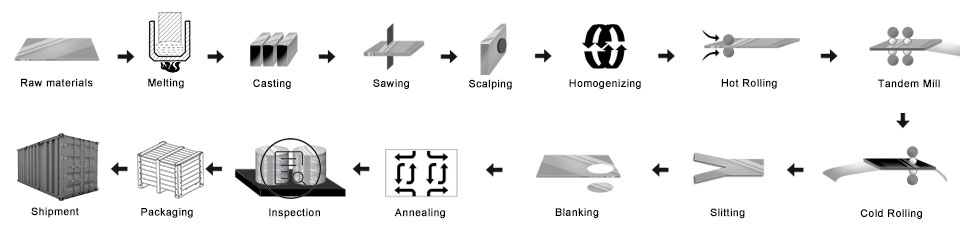
- Bereid de masterlegeringen voor
- Smeltoven: plaats de legeringen in de smeltoven
- D.C. gegoten aluminium staaf: Om de moederbaar te maken
- Frees de aluminium staaf: om het oppervlak en de zijkant glad te maken
- Verwarming oven
- Warmwalserij: de moederspoel gemaakt
- Koudewalserij: de moederspoel werd gerold in de dikte die u wilt kopen
- Ponsen proces: word de maat die je wilt
- Gloeioven: verander het humeur
- Eind inspectie
- Inpakken: houten kist of houten pallet
- Levering
Kwaliteitscontrole
Zekerheid Onderstaande inspectie zal tijdens de productie worden uitgevoerd.
- A. straal detectie—RT;
- B. ultrasoon testen—UT;
- C. Magnetische deeltjestesten-MT;
- D. penetratietesten-PT;
- e. wervelstroomfoutdetectie-ET
1) Wees vrij van olievlekken, Deuk, Inclusie, Krassen, Vlek, Oxideverkleuring, Pauzes, Corrosie, Rolmarkeringen, Vuil strepen, en andere gebreken die het gebruik hinderen.
2) Oppervlak zonder zwarte lijn, zuiver gesneden, periodieke vlek, defecten bij het afdrukken van rollen, zoals andere interne controlenormen van de gko.
Aluminium schijven verpakking:
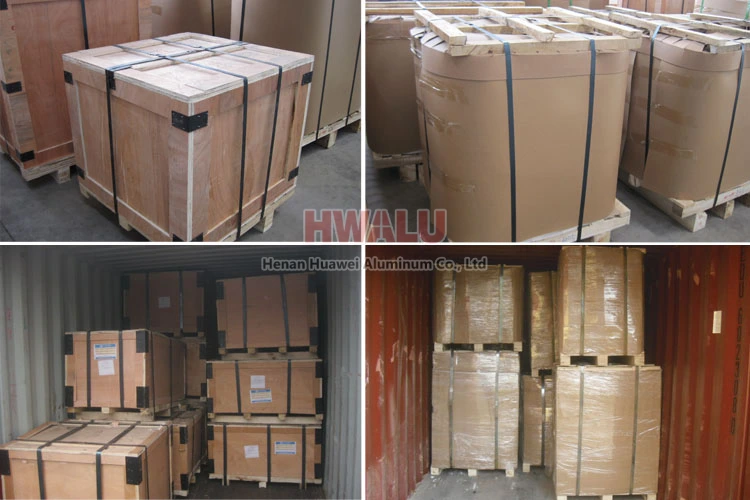
Aluminiumcirkels kunnen volgens exportnormen worden verpakt, bedekken met bruin papier en plastic folie. Eindelijk, de Aluminium Round wordt op een houten pallet/houten kist bevestigd.
- Plaats de drogers naast de aluminium cirkel, houd de producten droog en schoon.
- Gebruik schoon plastic papier, pak de aluminium cirkel in, goede afdichting behouden.
- Gebruik het slangenleerpapier, pak het oppervlak van het plastic papier in, goede afdichting behouden.
- Volgende, Er zijn twee manieren van verpakken: Eén manier is het verpakken van houten pallets, gebruik het knapperige papier dat het oppervlak bedekt; Een andere manier is het verpakken van houten kistjes, met behulp van de houten kist die het oppervlak inpakt.
- Eindelijk, leg de stalen riem op het oppervlak van de houten kist, het houden van de houten kistvastheid en veiligheid.
Aluminium cirkel van Henan Huawei Aluminium. voldoen aan de exportnorm. Plastic folie en bruin papier kunnen naar wens van de klant worden afgedekt. Bovendien, Er wordt een houten kist of houten pallet gebruikt om producten tijdens de levering tegen schade te beschermen. Er zijn twee soorten verpakkingen, die oog in oog staan met de muur of oog naar de lucht. Klanten kunnen voor hun gemak een van beide kiezen. In het algemeen, er zijn 2 ton in één pakket, en laden 18-22 ton in 1×20′ container, En 20-24 ton in 1×40′ container.
Waarom voor ons kiezen?
Om met de tijd mee te gaan, HWALU blijft de modernste apparatuur en techniek introduceren om zijn concurrentiepositie te verbeteren. Houd u altijd eerst aan de bedrijfsfilosofie van kwaliteit als centrum en klant, om producten uit de aluminium schijfcirkelserie van de hoogste kwaliteit aan alle delen van de wereld te leveren. Meer …

