Điều gì tạo nên đĩa nhôm tốt để sản xuất dụng cụ nấu nướng chống dính
Đĩa nhôm chống dính cho nồi chống dính phải đáp ứng các yêu cầu khắt khe về cơ khí, luyện kim, và tiêu chuẩn chất lượng bề mặt để đảm bảo nó hoạt động đáng tin cậy trong quá trình vẽ sâu, quay, lớp phủ, và quá trình luân nhiệt.
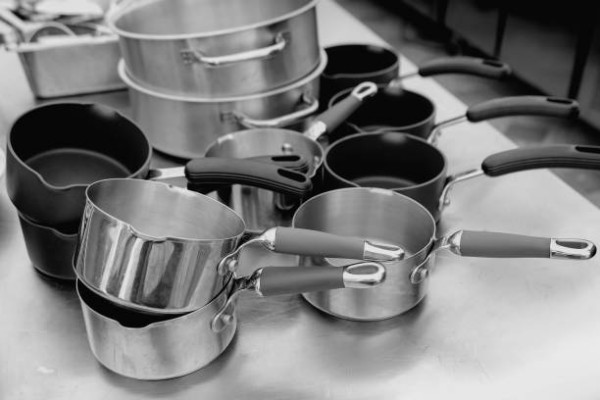 Dụng cụ nấu ăn bằng nhôm
1. Yêu cầu về thành phần luyện kim
Thành phần luyện kim của đĩa nhôm chống dính quyết định trực tiếp đến hiệu suất vẽ sâu của nó, chống ăn mòn, và độ bám dính của lớp phủ. Thiết kế đĩa chất lượng cao xem xét cả các thành phần hợp kim chính và tạp chất vi lượng.
1.1 Các yếu tố chính
- Nhôm (Al): Yếu tố chính, đảm bảo độ dẻo cơ bản và khả năng gia công.
- Silicon (Và): Thông thường ≤ 0.25% (vì 1050/1060); Si quá mức tạo thành các hạt cứng làm giảm độ dẻo và độ bóng bề mặt.
- Sắt (Fe): ≤ 0.35%; Fe dư thừa tạo ra kim- hoặc các tạp chất dạng tấm gây ra các vết nứt sâu.
- Mangan (Mn): 1–1,5% trong 3003 hợp kim; tăng cường độ năng suất mà không làm giảm độ giãn dài.
- đồng (Củ): <0.1–0,15%; cải thiện độ bền nhưng quá nhiều Cu sẽ làm tăng độ cứng và giảm khả năng tạo hình.
- Magie (Mg): Số lượng nhỏ (.10,1%) có thể tăng cường độ bền nhưng quá nhiều Mg sẽ làm giảm độ giãn dài.
1.2 Kiểm soát tạp chất dấu vết
- Các nguyên tố như Cr, Của, Zn phải được kiểm soát chặt chẽ vì chúng có thể tạo thành các hạt cứng cục bộ trong quá trình cán hoặc ủ, gây ra khuyết tật bề mặt hoặc lỗ kim.
- Nấu chảy chân không và lọc chính xác là các quy trình quan trọng để giảm thiểu tạp chất.
1.3 Yêu cầu về cấu trúc hạt
- Hạt mịn đồng nhất (ASTM 5–8) hỗ trợ độ giãn dài cao và bề mặt mịn.
- Các hạt thô hoặc không đồng đều gây ra sự thay đổi độ dày và các vết nứt sâu.
- Quá trình ủ được sử dụng để kiểm soát kích thước hạt trong khi vẫn duy trì đủ độ cứng để tạo thành.
1.4 Ví dụ thực tế
Công ty nhôm Hà Nam Huawei, Ltd đã giảm hàm lượng Fe và Si theo tiêu chuẩn công nghiệp thông qua việc kiểm soát Mn chính xác và 0.5 lọc μm, giảm đáng kể tỷ lệ lỗ kim và vết nứt cho 3003-Ô đĩa nhôm cấp dược phẩm.
2. Tính chất cơ học quan trọng để hình thành
Quá trình kéo sâu và kéo sợi đòi hỏi các tính chất cơ học rất cụ thể, Đặc biệt là các loại chảo chống dính cao cấp. Sức mạnh năng suất, sự kéo dài, độ cứng, và tính đồng nhất ảnh hưởng trực tiếp đến khả năng tạo hình và tỷ lệ khuyết tật cuối cùng.
2.1 Năng suất và độ bền kéo
- Sức mạnh năng suất (σy): 35–60 MPa (Trạng thái O 3003/1050)
- Quá thấp → mỏng cục bộ hoặc dòng chảy không đều trong quá trình vẽ sâu.
- Quá cao → các cạnh dễ bị nứt.
- Độ bền kéo (σb): 90–130 MPa
- Cung cấp sức mạnh cấu trúc tổng thể để ngăn ngừa rách.
2.2 Độ giãn dài
- Độ giãn dài ≥ 35%
- Độ giãn dài cao cho phép đĩa chịu được lực kéo sâu mà không bị nứt, đặc biệt đối với các hình dạng phức tạp như chậu cao.
2.3 Độ cứng và độ cứng công việc
- Độ cứng Brinell HB 23–35
- Độ cứng quá mức làm giảm hiệu suất kéo sợi và tăng nguy cơ hình thành các vết nứt.
- Ủ được sử dụng để cân bằng độ cứng và độ dẻo cho quá trình kéo sâu và kéo sợi.
2.4 Tính đồng nhất
- độ dày, kích thước hạt, và các tính chất cơ học phải đồng nhất trên toàn bộ đĩa.
- Độ cứng hoặc độ giãn dài không nhất quán gây ra vết nứt hoặc mỏng cục bộ trong quá trình tạo hình.
2.5 Ví dụ
Một nhà máy sản xuất dụng cụ nấu ăn ở Đông Nam Á chỉ sử dụng đĩa 24% độ giãn dài có thể làm mỏng tường và nứt cạnh. Chuyển sang đĩa 3003-O có độ giãn dài ≥ 35% giảm khuyết tật bằng cách 64%.
 Nồi nhôm các loại
3. Chất lượng bề mặt: Chìa khóa cho hiệu suất của lớp phủ chống dính
Chất lượng bề mặt của đĩa nhôm quyết định độ bám dính, tính đồng nhất, và độ bền của lớp chống dính.
3.1 Khiếm khuyết bề mặt
- Đường lăn: Để lại kết cấu trên lớp phủ, ảnh hưởng đến ngoại hình.
- Vết xước/Hố: Gây ra hiện tượng bong tróc, bong tróc lớp phủ.
- Dầu/Cặn: Dầu bị giữ lại tạo ra bong bóng hoặc tách lớp trong quá trình phủ.
3.2 Độ nhám bề mặt
- Ra ≤ 0.50 μm là lý tưởng.
- Quá mịn → độ bám dính kém.
- Quá thô → độ dày lớp phủ không đồng đều, mặc cao hơn.
3.3 Độ dày đồng nhất
- Dung sai độ dày ± 0,02–0,05 mm.
- Đảm bảo lớp phủ đồng đều và truyền nhiệt, ngăn ngừa điểm nóng.
3.4 Xử lý bề mặt
- Làm sạch sau ủ: Loại bỏ dầu lăn và oxit.
- Kiểm tra bề mặt trực tuyến: Dòng điện xoáy, CCD, hoặc quét laser đảm bảo không có vết trầy xước, hố, hoặc lỗ kim.
3.5 Ví dụ
Công ty nhôm Hà Nam Huawei, Ltd cung cấp các đĩa được ủ chính xác với khả năng làm sạch kỹ lưỡng và 100% kiểm tra bề mặt. Độ bám dính của lớp phủ đạt tiêu chuẩn ASTM 5B, vượt qua bài kiểm tra phun muối và nước sôi, giảm đáng kể khuyết tật sản xuất.
 Cửa hàng sản phẩm nhôm
4. Nghiên cứu điển hình: Công ty nhôm Hà Nam Huawei, Công ty TNHH
Công ty nhôm Hà Nam Huawei, Công ty TNHH được công nhận là nhà cung cấp cao cấp chuyên về đĩa nhôm dùng cho đồ nấu nướng. Một trong những trường hợp thành công đáng chú ý của họ liên quan đến một nhà sản xuất dụng cụ nấu nướng ở Châu Âu, người đã gặp phải các vết nứt sâu kéo dài và các vấn đề về độ bám dính của lớp phủ do cấu trúc hạt không nhất quán trong đĩa của nhà cung cấp trước đó của họ..
Giải pháp của Huawei
- giới thiệu đĩa 3003-O được ủ chính xác với kích thước hạt được kiểm soát (ASTM 6–8).
- Đã thực hiện 100% kiểm tra bề mặt bằng phương pháp quét dòng điện xoáy.
- Đĩa được giao với Dung sai độ dày ± 0,03 mm, giảm biến dạng nhiệt.
Kết quả
- Tỷ lệ lỗi giảm xuống 72% trong bản vẽ sâu.
- Cấp độ bám dính của lớp phủ được cải thiện lên 5B sau khi thử nghiệm phun muối và nước sôi.
- Tốc độ dây chuyền sản xuất tăng lên 18% do số lần từ chối giảm.
Ví dụ này minh họa cách đĩa nhôm chống dính thích hợp cho dụng cụ nấu ăn cải thiện đáng kể hiệu suất tổng thể của dụng cụ nấu ăn và năng suất nhà máy.
5. Độ dày và độ chính xác kích thước: Chìa khóa để sưởi ấm đều
Đĩa nhôm phải duy trì dung sai chặt chẽ, đặc biệt dành cho các dụng cụ nấu tương thích với cảm ứng cao cấp.
Bàn 2. Tiêu chuẩn về độ chính xác kích thước
| tham số |
Giá trị tiêu chuẩn |
Tầm quan trọng |
| Dung sai độ dày |
±0,02–0,05 mm |
Đảm bảo phân phối nhiệt đồng đều và giảm cong vênh |
| Dung sai độ tròn |
< 0.5 mm |
Quan trọng đối với các hoạt động kéo sợi và ép vừa khít |
| Độ phẳng |
≤ 0.3% đường kính |
Chống rung khi quay |
| Độ lệch trọng lượng |
≤ 2% |
Đảm bảo sự ổn định trong sản xuất hàng loạt |
6. Ví dụ về Thất bại và Phân tích
Một nhà máy sản xuất dụng cụ nấu ăn ở Đông Nam Á có kinh nghiệm sự mỏng đi của bức tường cuối Và nứt vành trong quá trình quay. Nguyên nhân được truy tìm:
- Độ giãn dài thấp (chỉ một 24%)
- Kích thước hạt không đồng đều (ASTM 4–10)
- Độ dày không đồng đều
Sau khi chuyển sang đĩa chất lượng cao với quá trình ủ được kiểm soát và dung sai chặt chẽ hơn, tỷ lệ sai sót giảm xuống 64% trong vòng hai tháng.
 Đĩa nhôm mới sản xuất
7. Đánh giá cuối cùng: Điều gì quyết định một đĩa nhôm chống dính tốt?
Một đĩa cao cấp thường cung cấp:
- Độ giãn dài cao và cường độ năng suất thấp để vẽ sâu
- Chất lượng bề mặt tuyệt vời thích hợp cho lớp chống dính nhiều lớp
- Thành phần hợp kim nhất quán và cấu trúc hạt
- Dung sai độ dày và độ tròn chặt chẽ
- Hiệu suất đã được chứng minh trong môi trường sản xuất hàng loạt công nghiệp
Câu hỏi thường gặp (Q&một định dạng)
1. Hợp kim nào được sử dụng phổ biến nhất cho đĩa nhôm chống dính của dụng cụ nấu ăn?
1050, 1060, Và 3003 hợp kim được sử dụng rộng rãi; 3003 cung cấp sức mạnh tốt hơn và khả năng chống ăn mòn.
2. Tại sao độ giãn dài lại quan trọng đối với sản xuất dụng cụ nấu ăn?
Độ giãn dài cao ngăn ngừa nứt và đảm bảo đĩa chịu được lực kéo sâu và quay.
3. Độ nhám bề mặt ảnh hưởng thế nào đến lớp chống dính?
Độ nhám kém gây ra hiện tượng mất độ bám dính của lớp phủ, phồng rộp, và ngoại hình không đồng đều.
4. Tại sao chọn trạng thái O (Ăn) đĩa cho dụng cụ nấu ăn có rãnh sâu?
Trạng thái O mang lại độ dẻo tốt nhất, làm cho nó phù hợp với hình dạng dụng cụ nấu phức tạp.
5. Cách đánh giá nhà cung cấp đĩa nhôm đồ nấu nướng tốt?
Kiểm tra tính chất cơ học ổn định, kiểm soát ủ tiên tiến, công nghệ kiểm tra bề mặt, và các trường hợp thành công của khách hàng toàn cầu.
Tính chất của vòng tròn nhôm:
Vòng nhôm phù hợp với nhiều thị trường, bao gồm cả dụng cụ nấu nướng, ngành công nghiệp ô tô và chiếu sáng, vân vân., nhờ đặc tính sản phẩm tốt:
- Tính dị hướng thấp, tạo điều kiện cho việc vẽ sâu
- Tính chất cơ học mạnh mẽ
- Khuếch tán nhiệt cao và đồng đều
- Khả năng tráng men, được bao phủ bởi PTFE (hoặc những người khác), anod hóa
- Độ phản xạ tốt
- Tỷ lệ cường độ trên trọng lượng cao
- Độ bền và khả năng chống ăn mòn
Quy trình vòng tròn nhôm
Hợp kim phôi/chủ — Lò nung chảy – Lò giữ — D.C.. bánh xe — Tấm —- Scalper — Nhà máy cán nóng – Nhà máy cán nguội – Đột – Lò ủ — Kiểm tra lần cuối – Đóng gói — Vận chuyển
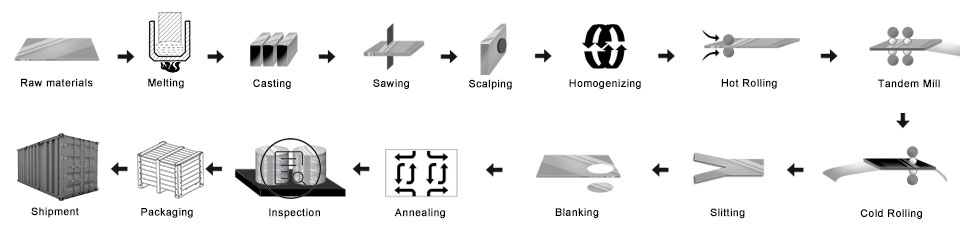
- Chuẩn bị các hợp kim chính
- Lò nấu chảy: đưa hợp kim vào lò nấu chảy
- Phôi nhôm D.C.cast: Để làm phôi mẹ
- Nghiền phôi nhôm: để làm cho bề mặt và mặt bên mịn màng
- Lò sưởi
- Nhà máy cán nóng: làm cuộn dây mẹ
- Máy cán nguội: cuộn dây mẹ đã được cán theo độ dày bạn muốn mua
- quá trình đấm: trở thành kích thước những gì bạn muốn
- Lò ủ: thay đổi tính khí
- Kiểm tra lần cuối
- đóng gói: vỏ gỗ hoặc pallet gỗ
- Vận chuyển
Kiểm soát chất lượng
Đảm bảo Kiểm tra dưới đây sẽ được thực hiện trong quá trình sản xuất.
- Một. phát hiện tia—RT;
- b. kiểm tra siêu âm—UT;
- c. Kiểm tra hạt từ tính-MT;
- d. thử nghiệm thâm nhập-PT;
- e. phát hiện khuyết tật dòng điện xoáy-ET
1) Thoát khỏi vết dầu, vết lõm, Bao gồm, Vết xước, vết bẩn, Sự đổi màu oxit, Giải lao, Ăn mòn, Dấu cuộn, Vệt bẩn, và các khiếm khuyết khác sẽ cản trở việc sử dụng.
2) Bề mặt không có đường màu đen, gọn gàng, vết bẩn định kỳ, lỗi in con lăn, chẳng hạn như các tiêu chuẩn Kiểm soát nội bộ gko khác.
Đóng gói đĩa nhôm:
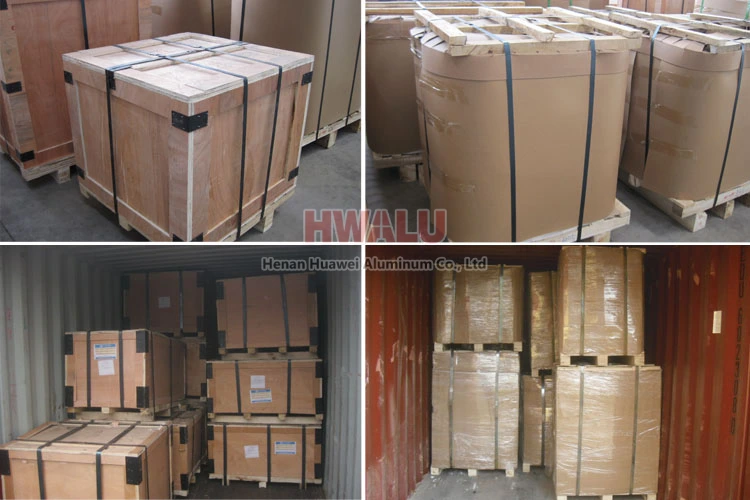
Vòng nhôm có thể được đóng gói theo tiêu chuẩn xuất khẩu, phủ bằng giấy màu nâu và màng nhựa. Cuối cùng, Vòng nhôm được cố định trên pallet gỗ/vỏ gỗ.
- Đặt bên máy sấy vào vòng tròn nhôm, giữ cho sản phẩm khô ráo và sạch sẽ.
- Sử dụng giấy nhựa sạch, đóng gói vòng tròn nhôm, giữ niêm phong tốt.
- Dùng giấy da rắn, đóng gói bề mặt của giấy nhựa, giữ niêm phong tốt.
- Kế tiếp, có hai cách đóng gói: Một cách là đóng gói pallet gỗ, sử dụng giấy giòn đóng gói bề mặt; Một cách khác là đóng gói bằng vỏ gỗ, sử dụng vỏ gỗ đóng gói bề mặt.
- Cuối cùng, đặt đai thép lên bề mặt hộp gỗ, giữ hộp gỗ bền và an toàn.
Vòng nhôm của Henan Huawei Aluminium. đáp ứng tiêu chuẩn xuất khẩu. Có thể phủ màng nhựa và giấy màu nâu theo nhu cầu của khách hàng. Còn gì nữa, hộp gỗ hoặc pallet gỗ được sử dụng để bảo vệ sản phẩm khỏi bị hư hỏng trong quá trình giao hàng. Có hai loại bao bì, mắt nhìn vào tường hay mắt nhìn trời. Khách hàng có thể chọn một trong hai để thuận tiện cho mình. Nói chung, có 2 tấn trong một gói, và tải 18-22 tấn trong container 1×20', Và 20-24 tấn trong container 1×40'.
Tại sao chọn chúng tôi?
Để di chuyển theo thời gian, HWALU liên tục giới thiệu các thiết bị và kỹ thuật hiện đại để nâng cao khả năng cạnh tranh. Luôn tuân thủ triết lý kinh doanh lấy chất lượng làm trung tâm và khách hàng là trên hết, để cung cấp các dòng sản phẩm vòng tròn đĩa nhôm chất lượng cao nhất cho mọi nơi trên thế giới. Hơn …

