Deep Drawing Quality 3003 Aluminum Discs for Durable Non-Stick Frying Pans
Aluminum discs with excellent deep drawing performance are the core raw material for high-quality non-stick frying pans. 3003 aluminum alloy is the preferred choice due to its balanced mechanical properties, superior deep drawability, good corrosion resistance and excellent heat conductivity. Deep drawing quality directly determines the forming accuracy, structural stability and service life of non-stick frying pans—defects such as cracking, wrinkling or uneven thickness during deep drawing will lead to finished product scrapping or reduced durability. This article details the core characteristics of 3003 aluminum discs, deep drawing quality requirements and testing methods, application advantages, quality control and common problems, providing professional guidance for industry practitioners.
1. Introduction: The Critical Role of 3003 Aluminum Discs in Non-Stick Frying Pan Manufacturing
Non-stick frying pans are indispensable kitchen utensils, favored for easy cleaning, low oil consumption and food-friendliness. The aluminum disc substrate directly affects their quality and service life, and unlike ordinary aluminum, it must have excellent deep drawing quality, as deep drawing is key to pan body forming.
As a non-heat-treatable Al-Mn aluminum-magnesium alloy, 3003 aluminum has advantages of light weight, good ductility, excellent deep drawability and corrosion resistance. Superior to 1050 and 5052 alloys in tensile strength and elongation, it withstands deep drawing deformation without defects, ensures uniform heating and bonds firmly with non-stick coatings, making it the cornerstone for durable non-stick frying pans.
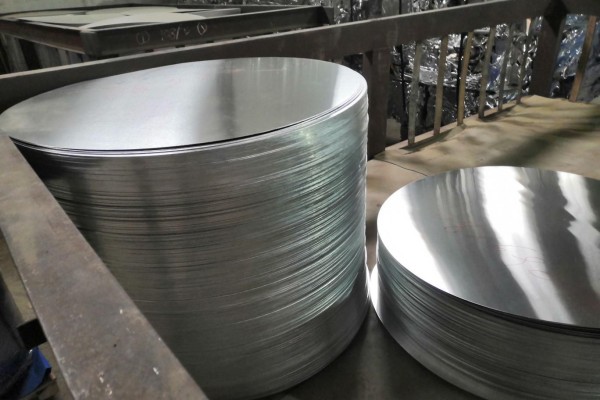 aluminium sheet circle
2. Core Characteristics of 3003 Aluminum Discs for Deep Drawing
The excellent deep drawing performance of 3003 aluminum discs is determined by their unique chemical composition, mechanical properties, and surface quality. Understanding these core characteristics is crucial for selecting suitable raw materials and optimizing the deep drawing process.
2.1 Chemical Composition of 3003 Aluminum Alloy
The chemical composition of 3003 aluminum alloy is strictly controlled to ensure its mechanical properties and deep drawing performance. Manganese (Mn) is the main alloying element, which improves the strength and ductility of the alloy without significantly reducing its formability. The following table shows the standard chemical composition of 3003
aluminum alloy (in line with ASTM B209 and GB/T 3880 standards):
|
Alloy Element
|
Content Range
|
Function
|
|
Aluminum (Al)
|
96.5 – 99.0
|
Base metal, ensuring light weight and thermal conductivity
|
|
Manganese (Mn)
|
1.0 – 1.5
|
Main alloying element, improving tensile strength and ductility for deep drawing
|
|
Iron (Fe)
|
≤0.7
|
Impurity control, preventing excessive inclusions from affecting deep drawability
|
|
Copper (Cu)
|
≤0.2
|
Auxiliary element, slightly improving strength without reducing formability
|
|
Silicon (Si)
|
≤0.6
|
Impurity control, avoiding brittle phases that cause cracking during deep drawing
|
|
Other Elements
|
≤0.15 (each), ≤0.5 (total)
|
Trace impurity, ensuring alloy uniformity
|
 Non-stick aluminum pot
2.2 Mechanical Properties for Deep Drawing
For 3003 aluminum discs used in non-stick frying pans, mechanical properties such as tensile strength, yield strength, and elongation are the key indicators determining deep drawing quality. The alloy is usually supplied in O (annealed) temper, which provides the best ductility and formability, suitable for severe deep drawing processes. The following are the standard mechanical properties of 3003 aluminum discs (O temper, in line with ASTM B209):
|
Mechanical Indicator
|
Unit
|
Standard Requirement
|
Role in Deep Drawing
|
|
Tensile Strength (σb)
|
MPa
|
110 – 140
|
Ensures the disc can withstand tensile force during deep drawing without breaking
|
|
Yield Strength (σ0.2)
|
MPa
|
30 – 50
|
Low yield strength ensures good ductility and easy deformation during deep drawing
|
|
Elongation (δ5)
|
%
|
≥20
|
High elongation prevents cracking during plastic deformation (critical for deep drawing)
|
|
Hardness (HV)
|
HV
|
30 – 40
|
Appropriate hardness balances formability and structural stability of the finished pan
|
2.3 Surface and Dimensional Quality
The surface and dimensional accuracy of 3003 aluminum discs directly affect the deep drawing effect and the bonding performance with non-stick coatings:
-
Surface Quality: The surface must be smooth, free of scratches, oxidation, stains, inclusions, and pinholes. A rough surface will cause uneven stress during deep drawing, leading to wrinkling or cracking; it will also affect the adhesion of the non-stick coating, reducing the durability of the frying pan. The surface roughness (Ra) should be ≤0.8 μm.
-
Dimensional Accuracy: The diameter, thickness, and flatness must meet strict requirements. The thickness tolerance is ±0.03 mm (for discs with thickness 1.5 – 3.0 mm, common for non-stick frying pans), and the flatness tolerance is ≤0.2 mm/m. Uneven thickness or poor flatness will cause uneven deformation during deep drawing, resulting in uneven wall thickness of the frying pan or even scrapping.
3. Key Requirements and Testing Methods for Deep Drawing Quality
Deep drawing quality refers to the ability of 3003 aluminum discs to undergo severe plastic deformation (drawing into a cylindrical or curved shape) without cracking, wrinkling, thinning excessively, or other defects. To ensure the quality of non-stick frying pans, it is necessary to formulate strict deep drawing quality requirements and adopt standardized testing methods.
3.1 Key Requirements for Deep Drawing Quality
-
No Cracking: The most critical requirement—no cracks are allowed on the surface, edge, or bottom of the disc during deep drawing (including visible cracks and microscopic cracks).
-
No Wrinkling: The surface of the drawn part (frying pan body) must be smooth, without wrinkles or waves. Wrinkling is usually caused by uneven stress or insufficient blank holder force during deep drawing.
-
Uniform Thickness: The wall thickness of the drawn frying pan should be uniform, with a maximum thinning rate of ≤15%. Excessive thinning will reduce the structural strength and service life of the frying pan.
-
Good Formability: The disc should be able to complete the deep drawing process in one or multiple passes without requiring excessive annealing, improving production efficiency.
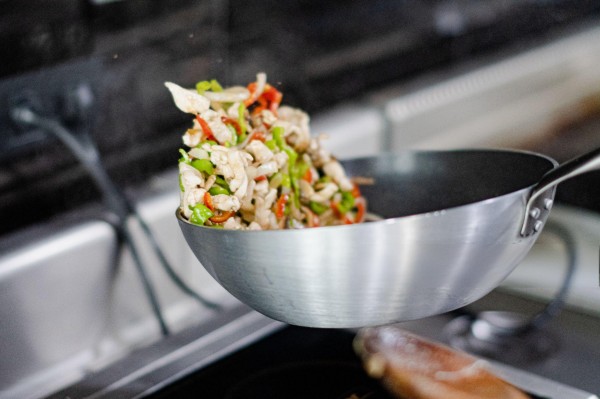 Aluminum frying pan
3.2 Standardized Testing Methods for Deep Drawing Quality
The main standards for deep drawing quality testing of aluminum discs include ASTM E2114 (Cup Drawing Test), ISO 20482, and GB/T 15825. The most commonly used methods are the Cup Drawing Test (Erichsen Test) and Tensile Test, which comprehensively evaluate the deep drawability of the discs.
|
Testing Method
|
Core Standard
|
Testing Principle
|
Evaluation Indicators
|
Applicable Scenario
|
Operation Difficulty
|
|
Cup Drawing Test (Erichsen Test)
|
ASTM E2114, ISO 20482
|
Use a punch to draw the aluminum disc into a cup-shaped part, observe whether there are defects, and measure the cup height
|
Cup height (≥35 mm for 2.0 mm thick discs), no cracks/wrinkles
|
Routine inspection of deep drawability, batch quality control
|
Medium
|
|
Tensile Test
|
ASTM E8, ISO 6892
|
Stretch the specimen until it breaks, measure tensile strength, yield strength, and elongation
|
Elongation (δ5 ≥20%), tensile strength (110-140 MPa)
|
Mechanical property verification, raw material incoming inspection
|
Simple
|
|
Bend Test
|
ASTM E290, ISO 7438
|
Bend the disc specimen 180° without cracking, evaluate ductility
|
No cracks after 180° bending (inner radius = thickness)
|
Auxiliary inspection of ductility, edge quality verification
|
Simple
|
3.3 Key Considerations for Testing
-
Sample Preparation: Specimens should be taken randomly from different batches and different positions of the disc, ensuring representativeness. The specimen size must comply with standard requirements to avoid affecting test results.
-
Environmental Control: Tests should be conducted at 23±2°C and 50±5% relative humidity, as temperature and humidity will affect the mechanical properties and ductility of aluminum discs.
-
Equipment Calibration: Regularly calibrate tensile testing machines, cup drawing testers, and thickness gauges to ensure test accuracy, and retain calibration records for quality inspection.
4. Application of 3003 Aluminum Discs in Durable Non-Stick Frying Pans
3003 aluminum discs with high deep drawing quality are especially suitable for manufacturing durable non-stick frying pans, thanks to their excellent formability, thermal conductivity, and compatibility with non-stick coatings. The following are the key application points:
4.1 Matching with Deep Drawing Process for Frying Pans
The deep drawing process of non-stick frying pans usually includes blanking, annealing (if necessary), deep drawing (one or multiple passes), trimming, and surface treatment. 3003 aluminum discs in O temper have excellent ductility and can complete one-pass deep drawing for small and medium-sized frying pans (diameter 20 – 30 cm), reducing production steps and improving efficiency. For large-sized frying pans (diameter >30 cm), multi-pass deep drawing can be adopted, with intermediate annealing to restore ductility and avoid cracking.
Key process parameters: Blank holder force (10 – 15 kN), drawing speed (50 – 100 mm/min), punch and die clearance (1.1 – 1.2 times the disc thickness). Reasonable parameters can avoid wrinkling and cracking, ensuring uniform wall thickness of the frying pan.
4.2 Compatibility with Non-Stick Coatings
The durability of non-stick frying pans largely depends on the adhesion between the aluminum disc surface and the non-stick coating. 3003 aluminum discs have good surface activity, and after proper surface treatment (such as degreasing, pickling, and anodizing), they can form a firm bond with non-stick coatings (Teflon, ceramic, etc.), preventing the coating from peeling off during use.
Note: The surface of the disc must be free of oil stains, oxidation layers, and inclusions before coating, otherwise, the adhesion of the non-stick coating will be reduced, leading to premature peeling.
4.3 Advantages in Durability and Performance
-
Durability: 3003 aluminum alloy has good corrosion resistance, which can resist the corrosion of acidic and alkaline foods, avoiding pitting corrosion and extending the service life of the frying pan. Its appropriate strength ensures that the frying pan does not deform easily during heating and use.
-
Thermal Conductivity: The thermal conductivity of 3003 aluminum is about 150 W/(m·K), which is much higher than that of cast iron and stainless steel, ensuring uniform heat distribution of the frying pan, avoiding local overheating, and improving cooking effect.
-
Light Weight: Aluminum is lightweight, making the non-stick frying pan easy to carry and use, which is more in line with modern kitchen needs.
 Aluminum pot cooking
5. Quality Control and Best Practices
To ensure the deep drawing quality of 3003 aluminum discs and the durability of non-stick frying pans, manufacturers need to establish a comprehensive quality control system covering raw materials, production processes, and finished products.
-
Raw Material Control: Select high-quality
3003 aluminum ingots that meet ASTM B209 standards, and strictly inspect the chemical composition and mechanical properties of the ingots to avoid unqualified raw materials entering the production process.
-
Production Process Control: Optimize the rolling and annealing processes of aluminum discs—control the rolling speed and temperature to ensure uniform thickness and flatness; adopt appropriate annealing parameters (350 – 400°C, holding time 1 – 2 hours) to ensure the disc is in O temper with excellent ductility.
-
Finished Product Inspection: Conduct 100% inspection of the surface quality and dimensional accuracy of finished discs; conduct random inspection of deep drawing performance (cup drawing test) and mechanical properties (tensile test) for each batch, with a sampling rate of not less than 5%.
-
Process Documentation: Maintain detailed records of raw material inspection, production process parameters, finished product inspection results, and corrective actions (if defects are found), which is convenient for quality tracing and regulatory inspection.
-
Staff Training: Train production and quality control personnel on the characteristics of 3003 aluminum alloy, deep drawing process parameters, and testing methods to avoid human error.
6. Frequently Asked Questions (FAQ)
Q1: Why is 3003 aluminum alloy preferred for deep drawing discs of non-stick frying pans instead of other alloys?
3003 aluminum balances ductility, strength and corrosion resistance, better than 1050 and 5052 alloys, with lower cost, suitable for non-stick frying pans.
Q2: What causes cracking of 3003 aluminum discs during deep drawing, and how to solve it?
Causes: non-O temper, uneven thickness, surface defects or unreasonable parameters. Solutions: use O temper, control quality and parameters, conduct intermediate annealing for multi-pass drawing.
Q3: How to ensure the adhesion between 3003 aluminum discs and non-stick coatings?
Ensure a clean, oil-free and oxide-free surface, conduct surface treatment, and control coating parameters for firm adhesion.
Q4: What is the maximum deep drawing ratio of 3003 aluminum discs for non-stick frying pans?
The maximum deep drawing ratio of O temper 3003 aluminum discs is 0.5-0.6; multi-pass drawing with intermediate annealing is needed for large depth-diameter ratio pans.
Q5: Can 3003 aluminum discs be used for high-temperature non-stick frying pans?
Yes. Its melting point (about 660℃) meets high-temperature requirements, with good thermal conductivity and compatibility with high-temperature non-stick coatings.
7. Conclusion
High deep drawing quality 3003 aluminum discs are ideal for durable non-stick frying pans, thanks to their excellent performance. Strictly controlling disc quality, adopting standardized testing and optimizing processes enables manufacturers to produce high-performance products meeting market demand.
As the kitchen utensil industry upgrades, demand for high-quality non-stick frying pans and stricter deep drawing requirements for 3003 aluminum discs grow. Adhering to quality control and process optimization promotes industry development and delivers better kitchen utensils.
About Us
We are a leading supplier of high-quality deep drawing 3003 aluminum discs, offering customized solutions worldwide. Our discs are made of premium raw materials with advanced technology and strict quality inspection, complying with ASTM B209, ISO and GB standards.
With rich industry experience, we provide various specifications of discs for different non-stick frying pans. Committed to quality and customer satisfaction, we offer competitive prices and timely delivery—contact us for more details.

