Disques en aluminium pour réflecteurs d'éclairage: Luminosité requise & Qualité des surfaces
Haute précision disques en aluminium pour réflecteurs d'éclairage sont des composants essentiels dans les systèmes d'éclairage modernes, où la luminosité du réflecteur, pureté de la surface, et l'uniformité optique déterminent directement les performances d'éclairage. Comme LED, commercial, et l'éclairage architectural continuent d'évoluer, les fabricants doivent s'appuyer sur des disques avec une finition de surface supérieure, propriétés mécaniques stables, et une réflectivité contrôlée pour obtenir une sortie optique efficace et cohérente.
Pourquoi les disques en aluminium sont largement utilisés dans la fabrication de réflecteurs d'éclairage
L'aluminium offre plusieurs avantages par rapport aux réflecteurs en acier inoxydable et en plastique:
- Haute luminosité optique après polissage ou anodisation
- Excellentes performances de formage pour l’emboutissage profond et le filage
- Résistance à la corrosion dans les environnements intérieurs et extérieurs
- Faible densité pour les luminaires légers
- Rentabilité par rapport à l'acier poli
Les performances du réflecteur dépendent en grande partie de niveau de luminosité (réflectivité spéculaire) et le qualité de surface (propreté, platitude, et taux de défauts) du disque en aluminium.
 Application de feuilles circulaires en aluminium dans les luminaires
Niveaux de luminosité requis pour les réflecteurs d'éclairage
Les réflecteurs d'éclairage nécessitent différents niveaux de luminosité selon l'application:
| Application de réflecteur |
Réflectivité requise |
Type de surface |
Alliage typique |
| Luminaires LED commerciaux |
80–90% |
Anodisé ou poli miroir |
1060, 1070 |
| Éclairage architectural |
85–92% |
Finition miroir |
1085 |
| Lampes automobiles |
90–95% |
Poli hautement spéculaire |
1050, 1070 |
| Projecteurs extérieurs |
75–85% |
Anodisé mat |
3003 |
| Éclairage décoratif |
70–80% |
Brossé ou semi-poli |
1100 |
La cohérence de la luminosité sur toute la surface du disque est cruciale pour éviter la distorsion du faisceau ou la diffusion inégale de la lumière..
Principales normes de qualité de surface pour les disques en aluminium de qualité éclairage
Pour obtenir des performances optiques constantes, disques en aluminium de qualité éclairage doit répondre à des normes strictes de qualité de surface qui déterminent directement la luminosité, uniformité, et longévité du réflecteur. Les fabricants d'éclairage haut de gamme mesurent ces normes à l'aide de méthodes de test optiques et métallurgiques professionnelles..
1. Rugosité de la surface (Râ)
La rugosité de la surface est l'un des paramètres les plus critiques.
- Les réflecteurs Premium nécessitent Ra ≤ 0.10 µm
- Les réflecteurs de milieu de gamme acceptent généralement Ra ≤ 0.20 µm
Une valeur Ra inférieure signifie un polissage plus fin et une efficacité de réflexion plus élevée. La surface du disque est généralement obtenue grâce à un laminage de précision + polissage en plusieurs étapes.
2. Exigences de réflectivité
La réflectivité détermine la quantité de lumière qui peut être redirigée par le réflecteur.
| Type de réflectivité |
Valeur typique |
Niveau d'application |
Remarques |
| Réflectivité spéculaire |
≥ 86% ~ 92% |
Éclairage commercial haute performance |
Nécessite des alliages de haute pureté + polissage miroir |
| Réflectivité diffuse |
≥ 75% ~ 80% |
Luminaires décoratifs ou doux |
Obtenu par finition brossée ou mate |
| Réflexion totale |
≥ 90% |
Systèmes LED économes en énergie |
La clé pour améliorer l’efficacité lumineuse |
Réflecteurs haut de gamme pour stades, aéroports, et les tunnels dépendent fortement de réflectivité spéculaire ci-dessus 90%.
3. Cohérence des couleurs & Uniformité
Les réflecteurs d'éclairage ne doivent pas déformer le rendu des couleurs.
Paramètres clés:
- ΔE ≤ 1.0 (limite d'écart de couleur)
- Pas de motifs arc-en-ciel ni de rayures roulantes
- Pas de jaunissement par oxydation
L'uniformité garantit que le réflecteur ne crée pas d'ombres ou de taches lumineuses anormales.
4. Contrôle des défauts de surface
Défauts courants tels que les rayures, marques de pression, lignes de rouleaux, ou des trous d'épingle peuvent réduire considérablement la luminosité.
Les normes de qualité d'éclairage exigent généralement:
| Type de défaut |
Critères d'acceptation |
| Rayures |
Aucun visible à 1 mètres en dessous 1000 lux |
| Points noirs |
≤ 3 par mètre carré, taille ≤ 0.3 mm |
| Lignes de rouleaux |
Non autorisé |
| Marques d'eau |
Non autorisé |
| Taches d'huile |
Non autorisé |
5. Épaisseur du film & Contrôle de la dureté
Les disques anodisés ou polis miroir nécessitent souvent:
- Épaisseur du film: 3–10 μm
- Dureté du crayon ≥ 3H
pour la résistance à l'usure et la protection contre l'oxydation.
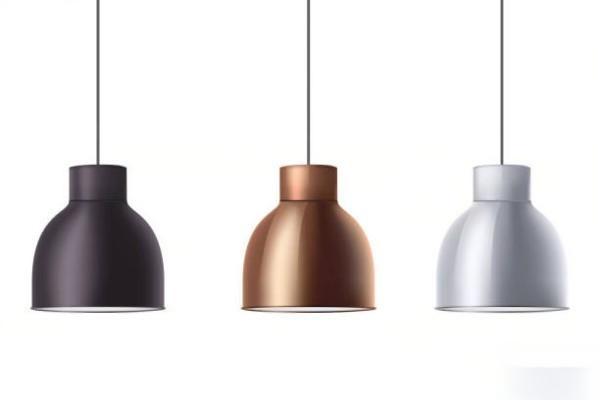 Lampes de différentes couleurs
Exemple: Henan Huawei Aluminium Co., Cas de contrôle de qualité Ltd
Une marque européenne d'éclairage avait besoin de réflecteurs avec:
- 90% réflectivité du miroir
- Ra ≤ 0.12 µm
- Exigence de zéro rayure visible
Henan Huawei Aluminium Co., Ltd fourni poli sur mesure 1050 et 1060 disques, mettre en place un système de triple inspection:
- Numérisation en ligne des surfaces roulantes
- Contrôle du polissage miroir
- 100% inspection visuelle avant emballage
Résultat:
Le taux de produits rejetés a diminué de 3.2% à 0.5%, améliorant la luminosité du réflecteur en 6%, ce qui a considérablement augmenté l’efficacité du système LED de la marque.
Ci-dessous une ventilation technique:
| Indicateur de qualité |
Exigence |
Impact sur les performances du réflecteur |
| Rugosité de la surface (Râ) |
≤ 0.20 µm (miroir) |
Détermine la clarté de la réflexion de la lumière |
| Platitude |
≤ 0.3 mm/m |
Empêche la distorsion de la lumière |
| Défauts métallurgiques |
< 5 défauts/m² |
Assure la qualité esthétique et optique |
| Résidus d'huile |
≤ 0.20 mg/m² |
Assure la cohérence de l’anodisation |
| Perte de luminosité après la formation |
< 5% |
Maintient l’efficacité du réflecteur |
Étude de cas: Henan Huawei Aluminium Co., Ltd améliore la luminosité optique pour un fabricant d'éclairage
Un fabricant européen de LED a rencontré des difficultés pour produire des réflecteurs uniformes en raison d'une rugosité de surface incohérente lors de l'emboutissage profond.. Ils se sont associés à Hénan Huawei Aluminium Co., Ltée, un producteur spécialisé de disques en aluminium haute luminosité.
La solution de Huawei Aluminium
- Fourni 1070-O disques polis miroir avec Ra ≤ 0.18 µm
- Mise en œuvre d'un nivellement de tension personnalisé pour une meilleure planéité de la surface
- Processus d'élimination de l'huile amélioré pour garantir la cohérence de l'anodisation
Résultats de performances
- Luminosité du réflecteur améliorée par 11.8%
- Taux de défauts réduit de 3.5% à 0.6%
- L'efficacité des LED du client a augmenté grâce à une réflectivité optique plus élevée
Ce cas illustre l'importance de la sélection d'alliages de haute pureté et d'un traitement de surface précis.
 Abat-jour circulaire en aluminium
Comparaison: Disques de qualité éclairage vs. Disques en aluminium ordinaires
| Mesure de performances |
Disques en aluminium de qualité éclairage |
Disques en aluminium ordinaires |
Différence |
| Réflectivité |
85–95% |
50–70% |
Amélioration majeure des performances optiques |
| Rugosité de la surface |
≤0,20 μm |
0.3–0,8 μm |
Niveau miroir requis pour l'éclairage |
| Contrôle des défauts |
Très strict |
Niveau général |
Impacte l’apparence et la consistance de la lumière |
| Emboutissage profond |
Tempérament optimisé |
Tempérament standard |
Nécessaire pour le filage et le formage |
| Pureté de l'alliage |
≥99,6 % |
Qualité industrielle standard |
Une pureté plus élevée améliore la luminosité |
Applications des disques en aluminium à haute luminosité dans l'industrie de l'éclairage
Haute luminosité disques en aluminium de qualité éclairage sont utilisés dans une large gamme de systèmes d’éclairage, en particulier là où la réflectivité et la durabilité affectent directement l'efficacité de l'éclairage et la durée de vie du produit.
1. Éclairage Commercial
Les environnements commerciaux nécessitent une forte, réflectivité stable.
Applications:
- Lumières d’affichage de magasin
- Bureaux et salles de conférence
- Centres commerciaux
- Spots d'exposition
Raisons d'utilisation:
- Un excellent rendement lumineux améliore l’apparence visuelle
- Une distribution cohérente de la lumière réduit la consommation d'énergie
- L'uniformité de la surface garantit l'absence de distorsion visuelle
2. Industriel & Éclairage pour grande hauteur
Les luminaires pour grande hauteur fonctionnent dans des environnements difficiles tels que les usines ou les entrepôts.
Avantages des disques haute luminosité:
- Résistance à l'oxydation
- Résistance aux rayures
- Réflectivité stable sous exposition thermique à long terme
Alliages typiques: 1050, 1060, 1070, 3003
3. De plein air & Éclairage public
Y compris:
- Lampadaires
- Lumières des tunnels
- Éclairage du stade
- Feux de stationnement
Pourquoi les disques en aluminium sont préférés:
- La haute réflectivité améliore la pénétration du faisceau
- La résistance à la corrosion augmente la durée de vie
- Léger, réduisant les coûts d'installation
4. Éclairage automobile
Utilisé pour:
- Réflecteurs de phares
- Réflecteurs de phares antibrouillard
- Systèmes d'éclairage du tableau de bord
L'aluminium à haute luminosité permet d'obtenir:
- Direction précise du faisceau
- Efficacité lumineuse supérieure
- Éblouissement réduit
5. LED architecturale & Éclairage décoratif
L'éclairage décoratif dépend fortement de l'apparence de la surface.
Applications courantes:
- Hôtels et immeubles de luxe
- Décoration de centre commercial
- Installations d'exposition
- Éclairage d'ambiance intérieur
Les disques au fini miroir offrent une esthétique réfléchissante élégante tout en conservant les performances d'éclairage.
Tableau de comparaison: Exigences de candidature par segment
| Segment d'éclairage |
Réflectivité requise |
Rugosité de la surface |
Recommandation d'alliage |
Remarques spéciales |
| Systèmes LED commerciaux |
≥ 88% |
Ra ≤ 0.18 µm |
1050/1060 |
Haute uniformité essentielle |
| Lampes industrielles à grande hauteur |
≥ 86% |
Ra ≤ 0.20 µm |
3003 |
Nécessite une dureté plus forte |
| Réflecteurs automobiles |
≥ 90% |
Ra ≤ 0.12 µm |
1070 |
Surface zéro défaut requise |
| Lumières architecturales |
≥ 92% |
Ra ≤ 0.10 µm |
1050 |
Finition au niveau du miroir préférée |
| Tunnel & Lumières du stade |
≥ 89% |
Ra ≤ 0.15 µm |
1060 |
Haute résistance à la corrosion |
 Emballage en tôle ronde en aluminium
Défauts courants des disques en aluminium de qualité éclairage et comment les éviter
1. Chute de luminosité après un emboutissage profond
Cause: Croissance des grains métallurgiques ou mauvaise sélection de l'état
Solution: Utilisez des disques O-temper avec des cycles de recuit contrôlés
2. Taches d'anodisation ou variations de couleur
Cause: Huile résiduelle ou inclusions de surface
Solution: Utiliser un alliage de haute pureté, huile de roulement propre, et dégraissage en profondeur
3. Rayures lors de la manipulation
Cause: Mauvais empilage ou contact avec la surface du tissu
Solution: Utilisez un film de protection PE et des doublures anti-rayures
4. Distorsion optique après formation
Cause: Mauvaise planéité ou épaisseur inégale
Solution: Appliquer un nivellement de tension et un laminage à froid de haute précision
5. Effet miroir incohérent après polissage
Cause: Variations de rugosité de surface
Solution: Contrôle strict de Ra ≤ 0.20 μm et plusieurs cycles de polissage
Foire aux questions (FAQ)
| Question |
Répondre |
| Quel alliage convient le mieux aux réflecteurs à haute luminosité? |
1060, 1070, et 1085 grâce à une grande pureté et une excellente réponse au polissage. |
| Les disques en aluminium peuvent-ils conserver leur luminosité après le formage? |
Oui, avec température O et finition de surface contrôlée. |
| Les disques polis miroir sont-ils meilleurs que les disques anodisés? |
Les disques polis ont une réflectivité plus élevée; les disques anodisés offrent une meilleure durabilité. |
| Quelle épaisseur est couramment utilisée? |
0.5–1,2 mm selon la taille du réflecteur et la méthode de formage. |
| Les disques nécessitent-ils un film protecteur? |
Recommandé pour la prévention des rayures lors de la manipulation et de l'estampage. |
Conclusion
Les systèmes d'éclairage performants dépendent grandement de la qualité de disques en aluminium pour réflecteurs d'éclairage, où la luminosité, qualité de surface, pureté de l'alliage, et la stabilité de la formation détermine l'efficacité optique. En sélectionnant des disques techniques, tels que ceux fournis par Henan Huawei Aluminium Co., Ltée—les fabricants peuvent obtenir une luminosité de réflecteur plus élevée, consistance de surface améliorée, et une fiabilité supérieure du produit.
Propriétés du cercle en aluminium:
Le cercle en aluminium convient à de nombreux marchés, y compris les ustensiles de cuisine, industries de l'automobile et de l'éclairage, etc., grâce aux bonnes caractéristiques du produit:
- Faible anisotropie, ce qui facilite l'emboutissage profond
- Fortes propriétés mécaniques
- Diffusion thermique élevée et homogène
- Possibilité d'être émaillé, recouvert de PTFE (ou d'autres), anodisé
- Bonne réflectivité
- Rapport résistance/poids élevé
- Durabilité et résistance à la corrosion
Processus de cercles en aluminium
Lingots/alliages maîtres — Four de fusion – Four de maintien — DC. Roulette — Dalle —- Scalpeur — Laminoir à chaud – Laminoir à froid – Poinçonnage – Four de recuit — Inspection finale – Emballage — Livraison
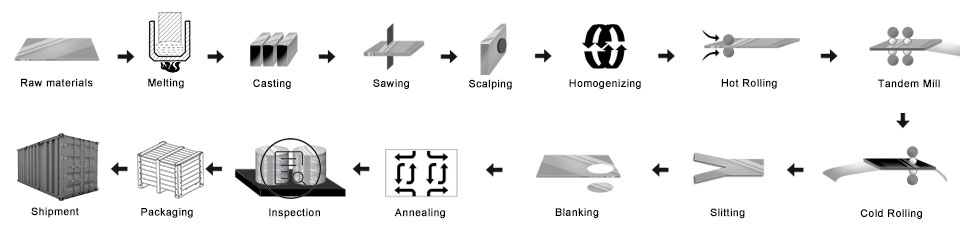
- Préparer les alliages maîtres
- Four de fusion: mettre les alliages dans le four de fusion
- Lingot d'aluminium moulé D.C.: Pour fabriquer le lingot mère
- Broyer le lingot d'aluminium: pour rendre la surface et le côté lisses
- Four de chauffage
- Laminoir à chaud: fait la bobine mère
- Laminoir à froid: la bobine mère a été roulée selon l'épaisseur que vous souhaitez acheter
- Processus de poinçonnage: deviens la taille que tu veux
- Four de recuit: changer d'humeur
- Inspection finale
- Emballage: caisse en bois ou palette en bois
- Livraison
Contrôle de qualité
Assurance L'inspection ci-dessous sera effectuée dans la production.
- un. détection de rayons—RT;
- b. test par ultrasons—Utah;
- c. Test de particules magnétiques-MT;
- d. tests d'intrusion-PT;
- e. détection de défauts par courants de Foucault-ET
1) Soyez exempt de taches d'huile, Bosse, Inclusion, Rayures, Tache, Décoloration d'oxyde, Pauses, Corrosion, Marques de rouleau, Traces de saleté, et autres défauts qui gêneront l'utilisation.
2) Surface sans ligne noire, coupe nette, tache périodique, défauts d'impression au rouleau, comme d'autres normes de contrôle interne de gko.
Emballage de disques en aluminium:
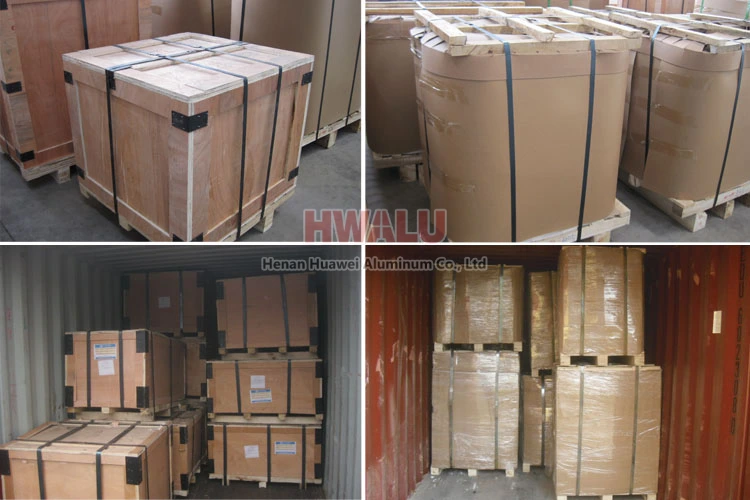
Les cercles en aluminium peuvent être emballés selon les normes d'exportation, recouvrir de papier kraft et de film plastique. Enfin, le rond en aluminium est fixé sur une palette en bois/caisse en bois.
- Placer le côté séchoir du cercle en aluminium, garder les produits secs et propres.
- Utilisez du papier plastique propre, emballer le cercle en aluminium, garder une bonne étanchéité.
- Utilisez le papier peau de serpent, emballer la surface du papier plastique, garder une bonne étanchéité.
- Suivant, il y a deux façons d'emballer: L’emballage de palettes en bois est une solution, en utilisant le papier croustillant emballant la surface; Une autre façon est l'emballage dans des caisses en bois, en utilisant la caisse en bois emballant la surface.
- Enfin, poser la ceinture en acier sur la surface de la caisse en bois, garder la solidité et la sécurité de la boîte en bois.
Cercle en aluminium de Henan Huawei Aluminium. répondre à la norme d'exportation. Le film plastique et le papier brun peuvent être recouverts selon les besoins des clients. De plus, une caisse en bois ou une palette en bois est adoptée pour protéger les produits contre les dommages lors de la livraison. Il existe deux types d'emballage, qui sont les yeux contre le mur ou les yeux vers le ciel. Les clients peuvent choisir l'un ou l'autre pour leur commodité. En général, il y a 2 tonnes dans un seul colis, et chargement 18-22 tonnes dans un conteneur 1×20′, et 20-24 tonnes dans un conteneur 1×40′.
Pourquoi nous choisir?
Pour évoluer avec son temps, HWALU continue d'introduire des équipements et des techniques de pointe pour améliorer sa compétitivité. Adhérez toujours à la philosophie d'entreprise de la qualité en tant que centre et client d'abord, fournir des produits de la série de cercles de disques en aluminium de la plus haute qualité dans toutes les régions du monde. Plus …

