Aluminum Discs for Lighting Reflectors: Required Brightness & Surface Quality
High-precision aluminum discs for lighting reflectors are essential components in modern illumination systems, where reflector brightness, surface purity, and optical uniformity directly determine lighting performance. As LED, commercial, and architectural lighting continue to evolve, manufacturers must rely on discs with superior surface finishing, stable mechanical properties, and controlled reflectivity to achieve efficient and consistent optical output.
Why Aluminum Discs Are Widely Used in Lighting Reflector Manufacturing
Aluminum offers several advantages over stainless steel and plastic reflectors:
- High optical brightness after polishing or anodizing
- Excellent forming performance for deep drawing and spinning
- Corrosion resistance in indoor and outdoor environments
- Low density for lightweight lighting fixtures
- Cost-effectiveness compared to polished steel
Reflector performance depends largely on the brightness level (specular reflectivity) and the surface quality (cleanliness, flatness, and defect rate) of the aluminum disc.
 Aluminum circular sheet application in lighting fixtures
Required Brightness Levels for Lighting Reflectors
Lighting reflectors require different brightness grades according to application:
| Reflector Application |
Required Reflectivity |
Surface Type |
Typical Alloy |
| Commercial LED fixtures |
80–90% |
Anodized or mirror-polished |
1060, 1070 |
| Architectural lighting |
85–92% |
Mirror finish |
1085 |
| Automotive lamps |
90–95% |
High-specular polished |
1050, 1070 |
| Outdoor floodlights |
75–85% |
Anodized matte |
3003 |
| Decorative lighting |
70–80% |
Brushed or semi-polished |
1100 |
Brightness consistency across the entire disc surface is crucial to avoid beam distortion or uneven light diffusion.
Key Surface Quality Standards for Lighting-Grade Aluminum Discs
To achieve consistent optical performance, lighting-grade aluminum discs must meet strict surface quality standards that directly determine brightness, uniformity, and reflector longevity. High-end lighting manufacturers measure these standards using professional optical and metallurgical testing methods.
1. Surface Roughness (Ra)
Surface roughness is one of the most critical parameters.
- Premium reflectors require Ra ≤ 0.10 μm
- Mid-range reflectors typically accept Ra ≤ 0.20 μm
A lower Ra value means finer polish and higher reflection efficiency. Disc surface is usually achieved through precision rolling + multi-stage polishing.
2. Reflectivity Requirements
Reflectivity determines how much light can be redirected by the reflector.
| Reflectivity Type |
Typical Value |
Application Level |
Notes |
| Specular Reflectivity |
≥ 86% ~ 92% |
High-performance commercial lighting |
Requires high-purity alloys + mirror polishing |
| Diffuse Reflectivity |
≥ 75% ~ 80% |
Decorative or soft light fixtures |
Achieved by brushed or matte finish |
| Total Reflectance |
≥ 90% |
Energy-efficient LED systems |
Key to improving lumen efficiency |
High-spec reflectors for stadiums, airports, and tunnels rely heavily on specular reflectivity above 90%.
3. Color Consistency & Uniformity
Lighting reflectors must not distort color output.
Key parameters:
- ΔE ≤ 1.0 (color deviation limit)
- No rainbow patterns or rolling stripes
- No oxidation yellowing
Uniformity ensures the reflector does not create abnormal shadows or lighting patches.
4. Surface Defect Control
Common defects such as scratches, pressure marks, roll lines, or pinholes can severely reduce brightness.
Lighting-grade standards typically require:
| Defect Type |
Acceptance Criteria |
| Scratches |
None visible at 1 meter under 1000 lux |
| Black Spots |
≤ 3 per square meter, size ≤ 0.3 mm |
| Roll Lines |
Not allowed |
| Water Marks |
Not allowed |
| Oil Stains |
Not allowed |
5. Film Thickness & Hardness Control
Anodized or mirror-polished discs often require:
- Film thickness: 3–10 μm
- Pencil hardness ≥ 3H
for wear resistance and oxidation protection.
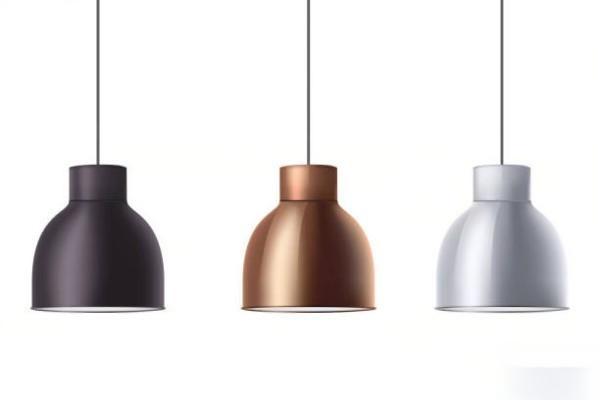 Various colored lamps
Example: Henan Huawei Aluminum Co., Ltd Quality Control Case
A European lighting brand needed reflectors with:
- 90% mirror reflectivity
- Ra ≤ 0.12 μm
- Zero-visible-scratch requirement
Henan Huawei Aluminum Co., Ltd supplied custom-polished 1050 and 1060 discs, implementing a triple-inspection system:
- Online rolling surface scanning
- Mirror-finish polishing control
- 100% visual inspection before packaging
Result:
Product rejected rate decreased from 3.2% to 0.5%, improving reflector brightness by 6%, which significantly increased the brand’s LED system efficiency.
Below is a technical breakdown:
| Quality Indicator |
Requirement |
Impact on Reflector Performance |
| Surface Roughness (Ra) |
≤ 0.20 μm (mirror) |
Determines clarity of light reflection |
| Flatness |
≤ 0.3 mm/m |
Prevents light distortion |
| Metallurgical Defects |
< 5 defects/m² |
Ensures aesthetic and optical quality |
| Oil Residue |
≤ 0.20 mg/m² |
Ensures anodizing consistency |
| Brightness Loss After Forming |
< 5% |
Maintains reflector efficiency |
Case Study: Henan Huawei Aluminum Co., Ltd Enhances Optical Brightness for a Lighting Manufacturer
A European LED manufacturer faced challenges producing uniform reflectors due to inconsistent surface roughness during deep drawing. They partnered with Henan Huawei Aluminum Co., Ltd, a specialized producer of high-brightness aluminum discs.
Huawei Aluminum’s Solution
- Supplied 1070-O mirror-polished discs with Ra ≤ 0.18 μm
- Implemented customized tension leveling for improved surface flatness
- Enhanced oil removal process to ensure anodizing consistency
Performance Results
- Reflector brightness improved by 11.8%
- Defect rate reduced from 3.5% to 0.6%
- Customer’s LED efficiency increased due to higher optical reflectivity
This case illustrates the importance of high-purity alloy selection and precise surface treatment.
 Aluminum circular lampshade
Comparison: Lighting-Grade Discs vs. Ordinary Aluminum Discs
| Performance Metric |
Lighting-Grade Aluminum Discs |
Ordinary Aluminum Discs |
Difference |
| Reflectivity |
85–95% |
50–70% |
Major optical performance improvement |
| Surface Roughness |
≤0.20 μm |
0.3–0.8 μm |
Mirror-level required for lighting |
| Defect Control |
Very strict |
General level |
Impacts appearance and light consistency |
| Deep Drawability |
Optimized temper |
Standard temper |
Needed for spinning and forming |
| Alloy Purity |
≥99.6% |
Standard industrial grade |
Higher purity enhances brightness |
Applications of High-Brightness Aluminum Discs in the Lighting Industry
High-brightness lighting-grade aluminum discs are used in a wide range of lighting systems, particularly where reflectivity and durability directly affect lighting efficiency and product life.
1. Commercial Lighting
Commercial environments require strong, stable reflectivity.
Applications:
- Store display lights
- Offices and conference halls
- Shopping malls
- Exhibition spotlights
Reasons for use:
- Excellent light output enhances visual appearance
- Consistent light distribution reduces energy consumption
- Surface uniformity ensures no visual distortion
2. Industrial & High-Bay Lighting
High-bay fixtures operate in harsh environments such as factories or warehouses.
Advantages of high-brightness discs:
- Oxidation resistance
- Scratch resistance
- Stable reflectivity under long-term heat exposure
Typical alloys: 1050, 1060, 1070, 3003
3. Outdoor & Public Lighting
Including:
- Street lights
- Tunnel lights
- Stadium lighting
- Parking facility lights
Why aluminum discs are preferred:
- High reflectivity improves beam penetration
- Corrosion resistance increases service life
- Lightweight, reducing installation costs
4. Automotive Lighting
Used for:
- Headlamp reflectors
- Fog lamp reflectors
- Dashboard illumination systems
High-brightness aluminum helps achieve:
- Precise beam direction
- Higher luminous efficiency
- Reduced glare
5. LED Architectural & Decorative Lighting
Decorative lighting relies heavily on surface appearance.
Common applications:
- Hotels and luxury buildings
- Shopping centre decor
- Exhibition installations
- Indoor ambient lighting
Mirror-finished discs provide elegant reflective aesthetics while maintaining illumination performance.
Comparison Table: Application Requirements by Segment
| Lighting Segment |
Required Reflectivity |
Surface Roughness |
Alloy Recommendation |
Special Notes |
| Commercial LED Systems |
≥ 88% |
Ra ≤ 0.18 μm |
1050/1060 |
High uniformity essential |
| High-Bay Industrial Lights |
≥ 86% |
Ra ≤ 0.20 μm |
3003 |
Requires stronger hardness |
| Automotive Reflectors |
≥ 90% |
Ra ≤ 0.12 μm |
1070 |
Zero-defect surface required |
| Architectural Lights |
≥ 92% |
Ra ≤ 0.10 μm |
1050 |
Mirror-level finish preferred |
| Tunnel & Stadium Lights |
≥ 89% |
Ra ≤ 0.15 μm |
1060 |
High corrosion resistance |
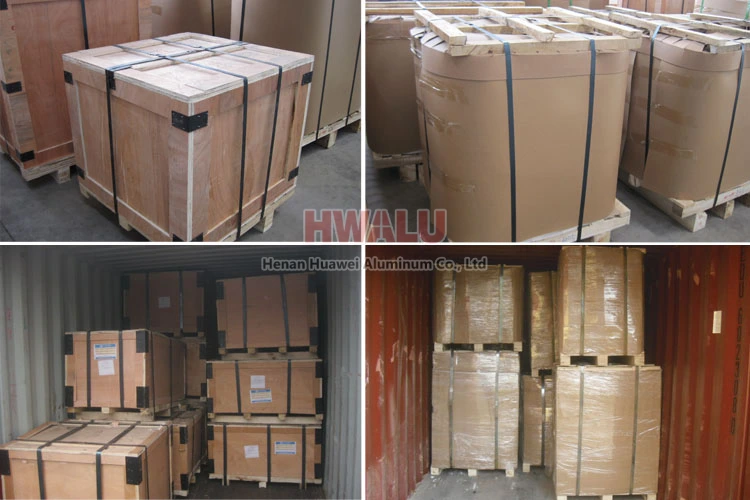
 Aluminum round sheet packaging
Common Defects in Lighting-Grade Aluminum Discs and How to Prevent Them
1. Brightness Drop After Deep Drawing
Cause: Metallurgical grain growth or poor temper selection
Solution: Use O-temper discs with controlled annealing cycles
2. Anodizing Stains or Color Variations
Cause: Residual oil or surface inclusions
Solution: Use high-purity alloy, clean rolling oil, and deep degreasing
3. Scratches During Handling
Cause: Improper stacking or fabric surface contact
Solution: Use PE film protection and anti-scratch liners
4. Optical Distortion After Forming
Cause: Poor flatness or uneven thickness
Solution: Apply tension leveling and high-precision cold rolling
5. Inconsistent Mirror Effect After Polishing
Cause: Variations in surface roughness
Solution: Strict control of Ra ≤ 0.20 μm and multiple polishing cycles
Frequently Asked Questions (FAQ)
| Question |
Answer |
| Which alloy is best for high-brightness reflectors? |
1060, 1070, and 1085 due to high purity and excellent polishing response. |
| Can aluminum discs maintain brightness after forming? |
Yes, with O-temper and controlled surface finishing. |
| Are mirror-polished discs better than anodized ones? |
Polished discs have higher reflectivity; anodized discs offer better durability. |
| What thickness is commonly used? |
0.5–1.2 mm depending on reflector size and forming method. |
| Do discs require protective film? |
Recommended for scratch prevention during handling and stamping. |
Conclusion
High-performance lighting systems depend greatly on the quality of aluminum discs for lighting reflectors, where brightness, surface quality, alloy purity, and forming stability determine optical efficiency. By selecting engineered discs—such as those provided by Henan Huawei Aluminum Co., Ltd—manufacturers can achieve higher reflector brightness, improved surface consistency, and superior product reliability.
Properties of the aluminum circle:
Aluminum circle is suitable for many markets, including cookware, automotive and lighting industries, etc., thanks to good product characteristics:
- Low anisotropy, which facilitates deep drawing
- Strong mechanical properties
- High and homogeneous heat diffusion
- Ability to be enameled, covered by PTFE (or others), anodized
- Good reflectivity
- High strength-to-weight ratio
- Durability and resistance to corrosion
Aluminum Circles Process
Ingot/Master Alloys — Melting Furnace – Holding Furnace — D.C. Caster — Slab —- Scalper — Hot Rolling Mill – Cold Rolling Mill – Punching – Annealing Furnace — Final Inspection – Packing — Delivery
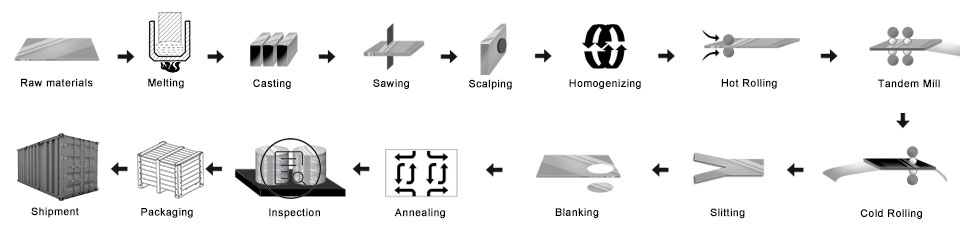
- Prepare the master alloys
- Melting furnace: put the alloys into the melting furnace
- D.C.cast aluminum ingot: To make the mother ingot
- Mill the aluminum ingot: to make the surface and side smooth
- Heating furnace
- Hot rolling mill: made the mother coil
- Colding rolling mill: the mother coil was rolled as the thickness you want to buy
- Punching process: become the size what you want
- Annealing furnace: change the temper
- Final inspection
- Packing: wooden case or wooden pallet
- Delivery
Quality Control
Assurance Below inspection will be done in the production.
- a. ray detection—RT;
- b. ultrasonic testing—UT;
- c. Magnetic Particle Testing-MT;
- d. penetration testing-PT;
- e. eddy current flaw detection-ET
1) Be free from Oil Stain, Dent, Inclusion, Scratches, Stain, Oxide Discoloration, Breaks, Corrosion, Roll Marks, Dirt Streaks, and other defects which will interfere with use.
2) Surface without black line, clean-cut, periodic stain, roller printing defects, such as other gko internal Control standards.
Aluminum discs packing:
Aluminum circles can be packed by export standards, covering with brown paper and plastic film. Finally, the Aluminium Round is fixed on a wooden pallet/wooden case.
- Put the driers side the aluminum circle, keep the products dry and clean.
- Use clean plastic paper, pack the aluminium circle, keep good sealing.
- Use the snakeskin paper, pack the surface of the plastic paper, keep good sealing.
- Next, there are two ways of packaging: One way is wooden pallet packaging, using the crusty paper packing the surface; Another way is wooden case packaging, using the wooden case packing the surface.
- Finally, lay the steel belt on the wooden box’s surface, keeping the wooden box fastness and secure.
Aluminum circle of Henan Huawei Aluminum. meet the export standard. Plastic film and brown paper can be covered at customers’ needs. What’s more, a wooden case or wooden pallet is adopted to protect products from damage during delivery. There are two kinds of packaging, which are eye to wall or eye to the sky. Customers can choose either of them for their convenience. Generally speaking, there are 2 tons in one package, and loading 18-22 tons in 1×20′ container, and 20-24 tons in 1×40′ container.
Why choose us?
In order to move with the times, HWALU keeps introducing the state of the art equipment and technique to improve its competitiveness. Always adhere to the business philosophy of quality as the center and customer first, to provide the highest quality aluminum disc circle series products to all parts of the world. More …

