3003 base de dissipação de calor em folha redonda de alumínio: A influência dos parâmetros de recozimento para alívio de tensões na deformação térmica
1. Introdução: Cenários de aplicação de 3003 Bases de dissipador de calor de disco de alumínio
3003 disco de alumínio base do dissipador de calor é amplamente utilizada em dispositivos eletrônicos (por exemplo, Dissipadores de calor da CPU, Drivers de LED) e eletrodomésticos (por exemplo, compressores de geladeira).
Notavelmente, deve sua popularidade à resistência mecânica moderada (140-160Tensão MPa), excelente condutividade térmica (150-160C/(m·K)), e vantagem de custo (20%-25% inferior a 6061 alumínio)—atributos principais que o tornam a escolha preferida para cenários de dissipação de calor de potência média.

2. Deformação Térmica: Um ponto crítico de dor
No entanto, a base do dissipador de calor requer planicidade estrita (≤0,05mm/100mm) e estabilidade térmica para transferência de calor eficiente. Mesmo pequenas deformações podem perturbar os caminhos de condução de calor.
Processamento (estampagem, Fresamento CNC) gera estresse interno. Quando aquecido a 50-100°C (temperatura operacional típica de dispositivo eletrônico), esse estresse libera, causando deformação ou depressão.
Esta deformação reduz diretamente a área de contato com componentes geradores de calor em mais de 30% e aumenta a resistência térmica em 50%-80%, prejudicando gravemente a eficiência da dissipação de calor e reduzindo a vida útil do dispositivo.
3. Papel do elemento Mn na distribuição interna de tensões
Especificamente, Mn em 3003 o alumínio desempenha um papel duplo: aumenta a resistência à corrosão e a resistência mecânica, mas também altera o comportamento do estresse interno.
Durante o processamento, Mn reage com Al para formar fases Al₆Mn (0.5-1.0μm de tamanho). Essas fases difíceis dificultam o movimento de deslocamento, levando ao acúmulo de tensão nas interfaces de fase - com pico de tensão atingindo 80-120MPa. Este estresse concentrado se torna o principal fator de deformação térmica.
4. Necessidade de recozimento otimizado para alívio de tensões
Por isso, o recozimento com alívio de tensão surge como o processo chave para eliminar a tensão interna e inibir a deformação térmica.
Ainda, seleção inadequada de parâmetros (por exemplo, superaquecimento causando crescimento de grãos, resfriamento rápido gerando nova tensão residual) pode piorar a deformação ou reduzir a condutividade térmica – prejudicando a função central do dissipador de calor.
Por isso, analisando como os parâmetros de recozimento (temperatura, tempo, taxa de resfriamento) afetar a deformação térmica é essencial para desenvolver processos cientificamente otimizados.

5. Causa raiz da deformação térmica: Estresse interno induzido pelo processamento
Fundamentalmente, o processamento gera dois tipos de tensão interna que coletivamente provocam a deformação térmica da base do dissipador de calor:
(1) Estresse Interno Macroscópico (Tipo I)
Estampagem, o processo de formação mais comum para tais discos, causa deformação plástica irregular: regiões de borda sofrem 15%-20% deformação, enquanto as regiões centrais apenas experimentam 5%-8%.
Esta tensão desigual forma uma “tensão de borda, compressão central” campo de estresse, com valores de tensão atingindo 60-90MPa. Quando aquecido, esse estresse relaxa, puxando as bordas para cima e empurrando o centro para baixo - resultando em deformação.
(2) Estresse Interno Microscópico (Tipo II)
Na microescala, Fases Al₆Mn bloqueiam deslizamento de discordância, levando ao acúmulo de luxações (a densidade de deslocamento aumenta de 1,0 × 10¹⁵ m⁻² inicial para 2,5 × 10¹⁵ m⁻² após o processamento).
Esta acumulação cria concentrações de tensão locais (tensão máxima 100-120MPa) em interfaces de fase. Quando aquecido, essas micro-tensões desencadeiam a rotação dos grãos e o deslizamento dos limites, exacerbando ainda mais a deformação geral.
6. Princípio do Recozimento para Alívio de Tensão
Para resolver esse problema, o recozimento de alívio de tensão elimina a tensão interna por meio de três estágios sequenciais - todos conduzidos abaixo 3003 temperatura de recristalização do alumínio (300-350℃) para evitar o crescimento de grãos e a degradação do desempenho:
(1) Estágio de Difusão Atômica (250-300℃)
O aquecimento energiza átomos de Al, que se difundem ao longo dos limites dos grãos e linhas de discordância.
Esta difusão alivia as concentrações de tensão nas interfaces de fase Al₆Mn, eliminando 30%-40% de tensão interna microscópica sem alterar a estrutura básica da liga.
(2) Estágio de Movimento de Luxação (300-320℃)
À medida que a temperatura aumenta, discordâncias ganham energia suficiente para superar o obstáculo da fase Al₆Mn, permitindo escorregar e subir.
A densidade de deslocamento cai abaixo de 1,2×10¹⁵ m⁻², eliminando 60%-70% de estresse interno macroscópico. Este estágio é crítico para reduzir empenamentos em grande escala.
(3) Estágio de relaxamento do estresse (Imersão)
A imersão sustentada na temperatura desejada permite a liberação uniforme de tensão em todo o disco, evitando deformação local causada por relaxamento desigual de tensão.
A taxa final de eliminação do estresse excede 80%, com tamanho de grão permanecendo estável em 5-8μm (tamanho inicial 4-6μm) e perda de condutividade térmica limitada a ≤5% – garantindo que o desempenho do dissipador de calor seja preservado.
7. Influência da temperatura de recozimento na deformação térmica
Entre todos os parâmetros de recozimento, a temperatura é a mais crítica para a eliminação do estresse. Seus efeitos variam significativamente em diferentes faixas:
| Faixa de temperatura (℃) |
Taxa de alívio do estresse (%) |
Estresse residual (MPa) |
Deformação Térmica ΔL (milímetros) |
Condutividade Térmica (C/(m·K)) |
| 250-280 (Baixo) |
30-40 |
50-70 |
0.15-0.25 |
140-145 |
| 300-320 (Ideal) |
80-85 |
10-20 |
0.03-0.08 |
150-155 |
| 330-350 (Alto) |
90-95 |
5-10 |
0.12-0.18 |
135-140 |
Especificamente, a principal conclusão é: a temperatura deve ficar entre 300-320 ℃. Esta gama garante um alívio eficiente do estresse, evitando o crescimento de grãos (que enfraquece a resistência mecânica) ou engrossamento da fase Al₆Mn (o que reduz a condutividade térmica).

8. Influência do tempo de imersão na deformação térmica
Além da temperatura, o tempo de imersão é igualmente importante para garantir a liberação uniforme do estresse. Seus efeitos na base do dissipador de calor são mostrados abaixo:
| Tempo de imersão (h) |
Uniformidade de estresse (Diferença centro-borda, %) |
ΔL (milímetros) |
Espessura do filme de óxido (μm) |
Eficiência de Produção (Lotes/dia) |
| 0.5-1 (Curto) |
15-20 |
0.10-0.15 |
0.3-0.4 |
8-10 |
| 2-3 (Ideal) |
≤5 |
0.03-0.07 |
0.5-0.6 |
4-6 |
| 4-5 (Longo) |
≤3 |
0.04-0.06 |
1.0-2.0 |
2-3 |
Notavelmente, 2-3h é o tempo ideal de imersão. Imersão curta causa alívio desigual do estresse (diferença borda-centro >15%), levando a empenamento assimétrico; longa imersão, enquanto melhora a uniformidade, aumenta a espessura do filme de óxido superficial (que aumenta a resistência térmica) e reduz a eficiência da produção.
9. Influência da taxa de resfriamento na deformação térmica
Adicionalmente, a taxa de resfriamento controla a geração de novo estresse térmico durante o estágio final do recozimento:
| Taxa de resfriamento (℃/min) |
Método de resfriamento |
Diferença de temperatura superfície-núcleo (℃) |
Novo estresse (MPa) |
ΔL (milímetros) |
Cenário de aplicação |
| 10-15 (Rápido) |
Resfriamento de ar |
30-40 |
20-30 |
0.08-0.12 |
Civil de Baixa Precisão |
| 3-5 (Médio) |
Forno + Ar |
≤10 |
≤5 |
0.03-0.07 |
Geral produzido em massa |
| 0.5-1 (Lento) |
Forno Completo |
≤3 |
0 |
0.02-0.05 |
Aeroespacial de alta precisão |
Praticamente, uma taxa de resfriamento média de 3-5°C/min equilibra o controle de deformação e a eficiência de produção para a maioria das bases de dissipadores de calor comerciais. O resfriamento rápido gera novo estresse, enquanto o resfriamento lento só é viável para alta precisão, aplicações de baixo volume devido ao seu longo tempo de ciclo.
10. Verificação Experimental: Projeto de esquema
Para validar quantitativamente as conclusões acima, experimentos foram conduzidos usando 3003 discos de alumínio (100mm de diâmetro, 5espessura mm) com uma tensão interna inicial de 70-90MPa (simulando condições pós-estampagem).
Um L9(3³) experimento ortogonal foi projetado para isolar os efeitos dos três parâmetros principais:
- Temperatura: 280℃ (baixo), 310℃ (ideal), 340℃ (alto)
- Tempo: 1h (curto), 2.5h (ideal), 4h (longo)
- Taxa de resfriamento: 2℃/min (lento), 4℃/min (médio), 8℃/min (rápido)
Os indicadores de teste incluíram deformação térmica (ΔL), taxa de alívio do estresse (ou), condutividade térmica (eu), e planicidade – tudo alinhado com os padrões de qualidade industrial.
11. Resultados Experimentais: Significância do parâmetro
A análise dos dados experimentais revelou que a influência dos parâmetros seguiu a classificação: T (R=0,18) > t (R=0,07) > v (R=0,05).
Isto confirma que a temperatura tem o impacto mais significativo na deformação térmica, consistente com a análise teórica acima. Os principais resultados experimentais são destacados abaixo:
| Exp Não. |
T (℃) |
t (h) |
v (℃/min) |
ΔL (milímetros) |
ou (%) |
eu (C/(m·K)) |
| 1 |
280 |
1 |
2 |
0.16 |
38 |
142 |
| 5 |
310 |
2.5 |
2 |
0.04 |
85 |
156 |
| 9 |
340 |
4 |
4 |
0.10 |
92 |
135 |
12. Combinação ideal de parâmetros
Com base nesses resultados, Experiência Não. 5 (T = 310 ℃, t=2,5h, v=2℃/min) foi identificado como a combinação ideal de parâmetros:
- ΔL = 0,04 mm (bem abaixo do limite industrial de ≤0,1 mm)
- h=85% (tensão residual reduzida para 10-12MPa)
- λ=156W/(m·K) (excelente condutividade térmica retida)
- Estabilidade da microestrutura: tamanho de grão 6-7μm, Tamanho da fase Al₆Mn 0,6-0,8μm (sem engrossamento ou crescimento)

13. Resultados do experimento de verificação
Para confirmar a estabilidade do processo ideal, 100 as amostras foram processadas usando os parâmetros identificados:
- ΔL médio = 0,038 mm (desvio padrão 0,005 mm), alcançar um 100% taxa de qualificação
- Taxa média de alívio do estresse = 84,5%, condutividade térmica média=155,2W/(m·K)
- A estabilidade do processo atendeu aos requisitos de produção em massa, sem flutuações significativas de desempenho entre lotes.
14. Aplicação de Engenharia: Adaptação de especificações
Em aplicações práticas de engenharia, especificações diferentes da base do dissipador de calor (grossura, diâmetro) exigem parâmetros de recozimento personalizados – devido a variações na distribuição de tensão interna e eficiência de transferência de calor:
| Tipo de especificação |
Grossura (milímetros) |
Diâmetro (milímetros) |
T (℃) |
t (h) |
v (℃/min) |
Requisito ΔL (milímetros) |
| Afinar |
3-5 |
50-100 |
300-310 |
2-2.5 |
4-5 |
≤0,06 |
| Médio |
6-8 |
100-150 |
310-315 |
2.5-3 |
3-4 |
≤0,07 |
| Espesso |
8-10 |
150-200 |
315-320 |
3-3.5 |
2-3 |
≤0,08 |
Discos mais grossos, por exemplo, requerem temperaturas ligeiramente mais altas e tempos de imersão mais longos para garantir que o estresse seja totalmente liberado de suas regiões centrais.
15. Medidas de controle de qualidade
Para garantir um desempenho consistente na produção em massa, é necessário um sistema de controle de qualidade de processo completo:
(1) Inspeção de entrada
- Tensão interna inicial de 3003 os discos de alumínio devem ser ≤100MPa (o pré-recozimento é necessário se exceder este valor)
- O tamanho do grão deve ser de 4-6 μm, e fração volumétrica da fase Al₆Mn 0.3%-0.5% (verificado via SEM)
(2) Monitoramento de Recozimento
- A uniformidade da temperatura do forno deve ser ≤±5℃ (monitorado em tempo real usando um termômetro multiponto) para evitar superaquecimento local
- Pureza da atmosfera de nitrogênio ≥99,99% para evitar oxidação da superfície (espessura do filme de óxido ≤0,8μm)
(3) Teste de produto acabado
- ΔL ≤0,1 mm (testado usando um medidor de planicidade a laser com precisão de ±0,001 mm)
- Tensão residual ≤20MPa (amostrado e testado via analisador de estresse de raios X por GB/T 7704-2019)
- Condutividade térmica ≥145W/(m·K) (amostrado e testado através do método de flash a laser por GB/T 22588-2008)
16. Equilíbrio Custo-Eficiência
Embora otimizar o desempenho seja fundamental, a eficiência de custo e produção também deve ser considerada em ambientes industriais:
- Para produção em massa: Use um forno de recozimento contínuo operando nos parâmetros ideais (310℃×2,5h, 4℃/min de resfriamento). Esta configuração atinge uma capacidade de ≥500 peças por lote e um consumo de energia unitário ≤0,5kW·h/kg – equilibrando desempenho e custo.
- Para manuseio anormal: Amostras superdeformadas (ΔL=0,12-0,15 mm) pode sofrer recozimento secundário (300℃×1,5h, 3℃/min de resfriamento). Este processo reduz ΔL para menos de 0,08 mm, com custo de retrabalho ≤15% do custo de produção original – minimizando o desperdício.
17. Conclusões: Principais descobertas
Resumindo, este estudo produz três conclusões principais sobre 3003 bases de dissipador de calor de disco de alumínio:
(1) Faixa ideal de parâmetros
Os parâmetros ideais de recozimento para alívio de tensão são temperatura de 300-320 ℃, 2-3h tempo de imersão, e taxa de resfriamento de 3-5℃/min. Dentro deste intervalo:
- Taxa de alívio de estresse interno ≥80%
- Deformação térmica ΔL ≤0,08mm
- Retenção de condutividade térmica ≥95%
(2) Mecanismo Central
As fases Al₆Mn devem ser controladas em 0,6-0,8μm para evitar concentração excessiva de tensão. Os parâmetros de recozimento devem corresponder às características de difusão do Al₆Mn para evitar o engrossamento da fase ou o crescimento de grãos - ambos os quais degradam o desempenho.
(3) Valor de engenharia
A aplicação desses parâmetros ideais reduz a resistência térmica da base do dissipador de calor em 40%-50% e melhora a eficiência da dissipação de calor em 25% a 30% – abordando efetivamente o ponto problemático da deformação térmica em dispositivos eletrônicos de potência média.
18. Direções de pesquisas futuras
Olhando para frente, duas direções avançarão ainda mais o desempenho de 3003 bases de dissipador de calor de disco de alumínio:
(1) Recozimento Rápido em Baixa Temperatura
Adicionar traço Zr (0.05%-0.1%) para 3003 alumínio refinar grãos. Esta modificação reduz a temperatura de recristalização para 280°C, permitindo um recozimento rápido em 1,5h - melhorando a eficiência da produção ao 40% mantendo o controle de deformação.
(2) Controle Inteligente de Temperatura
Combine algoritmos de IA com detecção de tensão ultrassônica em tempo real para otimizar automaticamente os parâmetros de recozimento. Este sistema ajustará a temperatura, tempo, e taxa de resfriamento dinamicamente com base na tensão inicial dos discos recebidos, alcançando controle preciso de deformação térmica (ΔL ≤0,05 mm) para aplicações de ponta.
Este estudo fornece uma avaliação quantitativa, guia prático para o processo de tratamento térmico de 3003 bases de dissipador de calor de disco de alumínio. Ao resolver a falha de dissipação de calor induzida por deformação térmica, promove a aplicação mais ampla deste material econômico em eletrônica de alta potência e novos campos de energia.
Propriedades do círculo de alumínio:
O círculo de alumínio é adequado para muitos mercados, incluindo panelas, indústrias automotiva e de iluminação, etc., graças às boas características do produto:
- Baixa anisotropia, o que facilita o desenho profundo
- Propriedades mecânicas fortes
- Difusão de calor alta e homogênea
- Capacidade de ser esmaltado, coberto por PTFE (ou outros), anodizado
- Boa refletividade
- Alta relação resistência-peso
- Durabilidade e resistência à corrosão
Processo de Círculos de Alumínio
Lingotes/Ligas Mestres — Forno de fusão – Forno de retenção — DC. Rodízio — Laje —- Escalpador — Laminador a Quente – Laminador a Frio – Puncionamento – Forno de Recozimento — Inspeção Final – Embalagem — Entrega
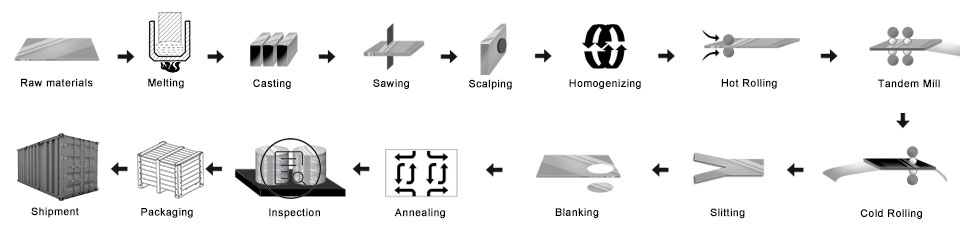
- Prepare as ligas mestres
- Forno de fusão: coloque as ligas no forno de fusão
- Lingote de alumínio fundido DC: Para fazer o lingote mãe
- Fresar o lingote de alumínio: para tornar a superfície e o lado lisos
- Forno de aquecimento
- Laminador a quente: fez a bobina mãe
- Laminador a frio: a bobina mãe foi enrolada conforme a espessura que você deseja comprar
- Processo de perfuração: torne-se do tamanho que você deseja
- Forno de recozimento: mudar o temperamento
- Inspeção final
- Embalagem: caixa de madeira ou palete de madeira
- Entrega
Controle de qualidade
Garantia Abaixo a inspeção será feita na produção.
- um. detecção de raios—TR;
- b. testes ultrassônicos—UT;
- c. Teste de Partículas Magnéticas-MT;
- d. testes de penetração-PT;
- e. detecção de falhas por correntes parasitas-ET
1) Esteja livre de manchas de óleo, Dente, Inclusão, Arranhões, Mancha, Descoloração Óxida, Pausas, Corrosão, Marcas de rolo, Listras de sujeira, e outros defeitos que interferirão no uso.
2) Superfície sem linha preta, limpo, mancha periódica, defeitos de impressão em rolo, como outros padrões de controle interno da gko.
Embalagem de discos de alumínio:
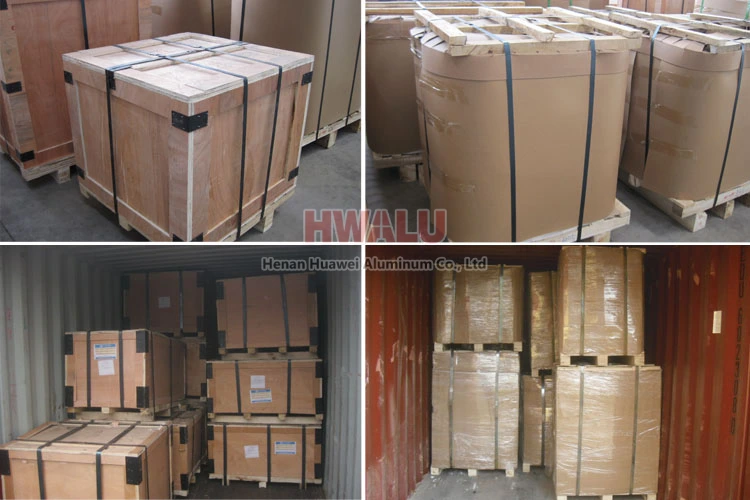
Os círculos de alumínio podem ser embalados de acordo com os padrões de exportação, cobrindo com papel pardo e filme plástico. Finalmente, a Rodada de Alumínio é fixada em um palete de madeira/caixa de madeira.
- Coloque os secadores ao lado do círculo de alumínio, mantenha os produtos secos e limpos.
- Use papel plástico limpo, embale o círculo de alumínio, mantenha uma boa vedação.
- Use o papel de pele de cobra, embale a superfície do papel plástico, mantenha uma boa vedação.
- Próximo, existem duas formas de embalagem: Uma maneira é a embalagem de paletes de madeira, usando o papel crocante embalando a superfície; Outra forma é a embalagem em caixa de madeira, usando a caixa de madeira embalando a superfície.
- Finalmente, coloque a correia de aço na superfície da caixa de madeira, mantendo a solidez e segurança da caixa de madeira.
Círculo de alumínio de Henan Huawei Alumínio. atender ao padrão de exportação. Filme plástico e papel pardo podem ser cobertos de acordo com as necessidades dos clientes. Além do mais, uma caixa de madeira ou palete de madeira é adotada para proteger os produtos contra danos durante a entrega. Existem dois tipos de embalagens, que estão de olho na parede ou de olho no céu. Os clientes podem escolher qualquer um deles para sua conveniência. De um modo geral, há 2 toneladas em um pacote, e carregando 18-22 toneladas em contêiner 1×20′, e 20-24 toneladas em contêiner 1×40′.
Por que nos escolher?
Para acompanhar os tempos, A HWALU continua introduzindo equipamentos e técnicas de última geração para melhorar sua competitividade. Sempre siga a filosofia empresarial de qualidade como centro e cliente em primeiro lugar, fornecer produtos da série de círculo de disco de alumínio da mais alta qualidade para todas as partes do mundo. Mais …

