8000 liga de alumínio série para alças de panela de alumínio de cozinha de alta qualidade
Introdução: Demanda de atualização de materiais para utensílios de cozinha de alta qualidade e posicionamento de ligas de alumínio da série 8000
Com o aprofundamento da modernização do consumo e a “estética da cozinha” tendência, utensílios de cozinha de alumínio de alta qualidade (como utensílios de cozinha premium e prateleiras embutidas) impor três requisitos básicos aos materiais: ① estabilidade de temperatura (os cabos das panelas precisam suportar altas temperaturas intermitentes de 120-220 ℃, enquanto as prateleiras precisam suportar talheres quentes abaixo de 150 ℃); ② conformabilidade complexa (alças exigem design curvo ergonômico, e racks precisam de estruturas delicadas como cavidades e dobras); ③ resistência ambiental (resistindo à corrosão de manchas de óleo, produtos de limpeza ácidos, e ambientes úmidos).
Na seleção tradicional de materiais,
3000-Series (Al-Mn) ligas de alumínio são fáceis de processar, mas sua taxa de retenção de resistência à tração em 200°C é apenas 60% (GB/T 228.2-2015), levando a alças soltas após uso prolongado; 5000-Series (Al-Mg) ligas têm excelente resistência à corrosão, mas acima de 180 ℃, sua força diminui em 35% devido à difusão do elemento Mg, e eles são propensos a rachar durante a formação de flexão; 6000-Series (Al-Mg-Si) ligas têm resistência moderada à temperatura, mas sua taxa de porosidade de contração atinge 5% durante fundição complexa (GB/T 13818-2022), que não pode atender aos requisitos de precisão de produtos de alta qualidade.
8000-ligas de alumínio em série (sistema multicomponente, contendo principalmente 0.5%-1.5% Em, 0.3%-0.8% Fé, e 0.2%-0.6% E) tornaram-se o material chave para resolver o “resistência à temperatura-processabilidade” contradição, contando com o “estabilidade em alta temperatura de precipitados de Al₃Ni” e “equilíbrio de plasticidade através de regulação multicomponente”. Sua taxa de penetração no campo de utensílios de cozinha de alta qualidade aumentou de 12% em 2021 para 28% em 2024 (Artigo Técnico da Indústria de Processamento de Alumínio da China 2024).

EU. Propriedades essenciais das ligas de alumínio da série 8000: Mecanismo Sinérgico de Resistência à Temperatura e Processabilidade
(EU) Estabilidade de temperatura sob regulamentação de componentes: Da estrutura microscópica da fase ao desempenho macroscópico
A vantagem de resistência à temperatura das ligas da série 8000 decorre da efeito sinérgico das fases de fortalecimento multicomponentes de Ni-Fe-Si, e seu mecanismo central é significativamente diferente daquele das ligas de alumínio tradicionais:
- Construção de fases resistentes ao amolecimento em altas temperaturas: Ni combina com Al para formar precipitados de Al₃Ni (estrutura cúbica centrada na face, ponto de fusão 1385℃), que não mostram nenhum engrossamento óbvio abaixo de 250 ℃ (A caracterização do TEM mostra que após envelhecimento a 200°C por 1000h, o tamanho da fase aumenta de 15nm para 22nm, com uma taxa de engrossamento de apenas 0,007nm/h), muito menor do que a taxa de engrossamento das fases Mg₂Si nas ligas da série 6000 (0.02nm/h). Os precipitados de Al₃Ni inibem o movimento de discordância em altas temperaturas através do “efeito de fixação de deslocamento”, habilitando o 8030 liga para atingir uma taxa de retenção de resistência à tração de 85% a 200 ℃ (de 450MPa a 382MPa), enquanto o 3003 liga tem apenas uma taxa de retenção de 60% durante o mesmo período (de 200MPa a 120MPa) (Mesa 1).
- Correspondência de coeficientes de expansão térmica: Fe e Si formam compostos FeSiAl (Al₈Fe₂Si, estrutura ortorrômbica) que pode regular o coeficiente de expansão térmica da liga (CTE). O CTE de 8011 a liga é 22,5×10⁻⁶/℃ (25-200℃), com uma diferença de <3% do 3003 liga (23.1×10⁻⁶/℃) comumente usado para corpos de panelas, evitando fissuras por tensão causadas por expansão e contração térmica após a montagem. Em contraste, a diferença entre 5052 liga (CTE 24,8×10⁻⁶/℃) e 3003 liga atinge 7.4%, levando a alças e corpos de panelas soltos após uso prolongado.
- Resistência à fadiga em altas temperaturas: Para o “aquecimento-resfriamento” ciclo de alças de panelas (100-200℃, 10 ciclos por dia), a taxa de retenção da resistência à fadiga de 8079 liga após 10⁴ ciclos atinge 78% (de 180MPa a 140MPa), enquanto o de 6061 liga é apenas 55% (de 240 MPa a 132 MPa). Isto está enraizado na resistência ao amolecimento cíclico dos precipitados de Al₃Ni - nenhuma descamação interfacial óbvia ocorre durante o ciclo (observado por SEM), enquanto as fases de Mg₂Si são propensas à dissolução sob estresse cíclico.
Mesa 1: Comparação de resistência à temperatura de diferentes séries de liga de alumínio em temperaturas típicas para utensílios de cozinha
|
Série de liga
|
Nota
|
Retenção de resistência à tração a 200°C (%)
|
Mudança de dureza em 220 ℃ (HB)
|
CTE (×10⁻⁶/℃, 25-200℃)
|
Retenção da resistência à fadiga após 10⁴ ciclos térmicos (%)
|
Padrão de Referência
|
|
8000-Série
|
8030
|
85
|
120→108 (-10%)
|
22.5
|
78
|
GB/T 228.2, GB/T 3075
|
|
3000-Série
|
3003
|
60
|
65→52 (-20%)
|
23.1
|
62
|
GB/T 228.2, GB/T 3075
|
|
5000-Série
|
5052
|
65
|
70→56 (-20%)
|
24.8
|
65
|
GB/T 228.2, GB/T 3075
|
|
6000-Série
|
6061
|
72
|
95→76 (-20%)
|
23.6
|
55
|
GB/T 228.2, GB/T 3075
|
(II) Análise Quantitativa de Processabilidade: Do processo de conformação ao controle de precisão
O “requisitos de forma complexa” de componentes de cozinha de alta qualidade (como a superfície curva das alças e o esvaziamento em favo de mel dos racks) impor altas exigências ao plasticidade, janela formando, e compatibilidade de processos de materiais. A série 8000 alcança avanços em processabilidade por meio da regulação do gradiente de componentes:
- Plasticidade e limite de formação: O alongamento à temperatura ambiente de 8011 liga atinge 16% (GB/T 228.1-2021), com um diagrama de limite de formação (FLD) grau de 0.23, permitindo um raio de curvatura mínimo de 1,5t (t = espessura da chapa), superior à série 7075 (3t) e série 6061 (2t). Para o “Dobra em U + estampagem curva” processo de alças, a taxa de sucata de estampagem de 8011 é apenas 2.5%, enquanto o de 5052 alcança 8% devido a fissuras por flexão (Mesa 2). O mecanismo reside em: Elementos Fe refinam grãos (tamanho médio de grão de 8011 é 25μm, enquanto o de 5052 é 40μm), reduzindo a concentração de tensão local; Elementos de Si melhoram a plasticidade do limite de grão, evitando rachaduras intergranulares durante a formação.
- Compatibilidade com fundição sob pressão e conformação de precisão: Os racks são frequentemente fabricados por fundição sob pressão (por exemplo, estruturas de grade oca). A fluidez da fundição sob pressão de 8030 liga (comprimento de fluxo espiral 180mm, GB/T 15114-2021) é superior ao da série 3003 (150milímetros), com uma taxa de porosidade de contração de apenas 1.2% (5% para série 6061). Através do “fundição semissólida (MES) + extrusão local” processo, a tolerância do diâmetro do furo oco dos racks pode ser controlada dentro de ± 0,1 mm, atendendo aos requisitos de precisão de montagem de produtos de alta qualidade (a tolerância de fundição sob pressão tradicional é de ± 0,3 mm).
- Desempenho de soldagem e emenda: Racks integrados exigem soldagem e emenda de vários componentes. A taxa de retenção da resistência da junta de soldagem MIG da série 8000 atinge 88% (resistência à tração do metal base de 8011 é 380 MPa, a resistência da junta é 334MPa), muito superior ao da série 5052 (75%). Os principais parâmetros do processo são: Fio de soldagem ER4043 (contendo 5% E), atual 160-180A, tensão 20-22V, entrada de calor ≤18kJ/cm. A largura da zona afetada pelo calor (HAZ) após a soldagem é de apenas 4 mm (6milímetros para 5052), evitando o amolecimento das estruturas formadas circundantes devido a altas temperaturas (GB/T 11345-2022 o teste ultrassônico não mostra defeitos de fusão incompletos nas articulações).
Mesa 2: Comparação de processabilidade entre ligas de alumínio da série 8000 e tradicionais (para processos de componentes de cozinha)
|
Tecnologia de Processamento
|
Indicador de desempenho
|
8011 (8000-Série)
|
3003 (3000-Série)
|
5052 (5000-Série)
|
6061 (6000-Série)
|
Padrão de Referência
|
|
Estampagem a frio
|
Alongamento (%)
|
16
|
14
|
12
|
12
|
GB/T 228.1
|
|
Estampagem a frio
|
Raio de curvatura mínimo (t)
|
1.5
|
2.0
|
2.5
|
2.0
|
GB/T 3880.2
|
|
Fundição sob pressão
|
Comprimento do fluxo espiral (milímetros)
|
180
|
150
|
– (Difícil de lançar)
|
160
|
GB/T 15114
|
|
Fundição sob pressão
|
Taxa de porosidade de contração (%)
|
1.2
|
2.5
|
–
|
5.0
|
GB/T 13818
|
|
Soldagem MIG
|
Taxa de retenção de força articular (%)
|
88
|
85
|
75
|
82
|
GB/T 11345
|
|
Tratamento de superfície
|
Adesão de filme anodizado (MPa)
|
12
|
10
|
11
|
9
|
GB/T 8013
|
II. Lógica de adaptação em nível de componente: Aplicação precisa de ligas de alumínio da série 8000 em alças e racks
(EU) Alças para panelas de última geração: Equilibrando a segurança da temperatura e a experiência de aderência
Os principais requisitos para cabos de panelas são “sem amolecimento em altas temperaturas, sem escaldadura, e aderência confortável“. A série 8000 consegue adaptação através da sinergia de “desempenho-processo-experiência”:
- Limite de segurança de temperatura: Para panelas de fogão a gás (temperatura máxima do punho 220℃), a deformação térmica de 8030 alças de liga a 220 ℃ são de apenas 0,3 mm/m (GB/T 16535-2022), muito inferior a 0,8 mm/m da série 3003, evitando desvio de aderência causado pela flexão da alça após uso prolongado. Enquanto isso, sua condutividade térmica (180C/(m·K) a 150℃) é inferior ao da série 5052 (195C/(m·K)). Com uma camada de isolamento térmico de silicone com 2 mm de espessura, a temperatura da superfície externa da alça pode ser controlada abaixo de 50 ℃ (limite de temperatura de segurança humana), enquanto a temperatura da superfície externa das alças da série 3003 atinge 65 ℃, propenso a escaldar.
- Formação Ergonômica: 8011 liga pode ser processado em um formato ergonômico “superfície de aderência curva” (raio de curvatura 30mm, ajuste do contorno da palma) através do “estampagem multipassagem + alongamento local” processo, com rugosidade superficial Ra ≤1,6μm (nenhum polimento secundário necessário). Em contraste, 6061-série requer processos de retificação adicionais devido à plasticidade insuficiente (aumento de custos em 15%). Uma marca de utensílios de cozinha de alta qualidade (por exemplo, a linha premium sob Zwilling) usa 8011 para fabricar alças, e pesquisas com usuários mostram que o “pontuação de conforto de aderência” alcança 4.8/5 (4.2/5 para alças da série 3003).
- Estabilidade de montagem: A conexão entre alças e corpos de panelas adota principalmente “fio + soldagem” fixação composta. A taxa de qualificação de rosqueamento de furos roscados em 8030 liga atinge 99% (precisão de rosca M5-6H), enquanto a série 5052 tem tendência ao deslizamento da linha devido à plasticidade excessiva (taxa de qualificação 92%). Depois 1000 testes de montagem-desmontagem, a taxa de atenuação do torque da rosca de 8030 alças é apenas 5% (torque inicial 15N·m, torque pós-teste 14,25N·m), enquanto o da série 3003 atinge 12%.
(II) Racks de cozinha de última geração: Unificando suporte de carga térmica e estética espacial
Prateleiras de cozinha (como racks de parede embutidos e prateleiras em ilha) precisa atender aos requisitos “suporte de carga térmica, limpeza fácil, e leve“. As vantagens de adaptação da série 8000 refletem-se em três aspectos:
- Estabilidade de suporte de carga térmica: As prateleiras precisam suportar bandejas/panelas de cozimento de 150 ℃ (peso 5-8kg). A taxa de retenção de rigidez à flexão de 8079 racks de liga em alcances de 150 ℃ 90% (rigidez a 25°C é 20kN/mm, a 150°C é 18kN/mm), enquanto o da série 3003 é apenas 75% (de 15kN/mm a 11,25kN/mm). Depois 100 ciclos de “colocação de talheres quentes-resfriamento” testes, a deformação permanente de 8079 racks é de apenas 0,1 mm, enquanto o da série 3003 atinge 0,5 mm (GB/T 7314-2022).
- Formação de Estrutura Complexa: Os racks integrados geralmente são projetados com “cavidade em favo de mel” (diâmetro do furo 10mm, espaçamento entre furos 15mm) para reduzir o peso e melhorar a estética. 8030 liga realiza a estrutura oca através do “fundição semissólida + corte a laser” processo, com uma taxa oca de 40% (peso reduzido em 35%) e um desvio de perpendicularidade da parede do furo ≤0,5° (3003-a fundição sob pressão em série tem uma taxa oca de apenas 30% e um desvio de perpendicularidade de 1°). Uma marca de cozinha personalizada de alta qualidade (por exemplo, Kohler Cozinha) usa 8030 para fabricar racks, com “utilização do espaço” aumentado em 20% em comparação com racks de aço tradicionais (peso reduzido em 60%).
- Resistência Ambiental: Manchas de óleo e produtos de limpeza ácidos (por exemplo, ácido cítrico, vinagre branco) no ambiente da cozinha são propensos a causar corrosão do material. Depois “15anodização μm + tratamento de vedação”, a série 8000 atinge um tempo de resistência à névoa salina de 2.000 horas (GB/T 10125-2021, 5% Solução de NaCl) sem ferrugem superficial, enquanto a série 3003 tem apenas um tempo de resistência à névoa salina de 1200h após a anodização. Enquanto isso, o filme de óxido da série 8000 tem excelente resistência a manchas, com adesão de óleo de apenas 30g/m² (50g/m² para série 3003), exigindo apenas limpeza com água para limpeza (não são necessários produtos de limpeza especiais).
III. Valor de seleção de materiais de ligas de alumínio da série 8000: Da eficiência de custos à atualização industrial
(EU) Custo do ciclo de vida (CCB) Vantagem
Embora o custo da matéria-prima da série 8000 (aproximadamente 52,000 RMB/tonelada) é superior ao da série 3000 (28,000 RMB/tonelada), seu custo de ciclo de vida é menor:
- Economia de custos de processamento: A taxa de sucata de formação da série 8000 (2.5%) é muito inferior ao da série 5000 (8%). O cálculo de uma empresa de utensílios de cozinha mostra que, ao produzir 1 milhões de conjuntos de alças anualmente, 8011 salva 1.2 milhões de RMB/ano em custos de processamento em comparação com 5052.
- Benefícios de extensão da vida útil: A vida útil das alças da série 8000 atinge 8 anos (5 anos para a série 3003), e o das prateleiras atinge 10 anos (6 anos para a série 3003), reduzindo a frequência de substituição do usuário.
- Redução de custos de manutenção: A resistência à corrosão da série 8000 elimina a necessidade de remoção/pintura regular de ferrugem, com um custo anual de manutenção de apenas 0.5 RMB/peça (2 RMB/peça para série 3003).
Cálculo abrangente mostra que o custo do ciclo de vida (8 anos) dos componentes de cozinha da série 8000 é 180 RMB/peça, 18% inferior a 220 RMB/peça da série 3003.
(II) Aumento da competitividade do mercado de ponta
O “resistência à temperatura-processabilidade” o equilíbrio da série 8000 tornou-se um ponto de venda diferenciado para marcas de utensílios de cozinha de alta qualidade:
- Endosso de desempenho: Os utensílios de cozinha da série 8000 podem ser rotulados com “220℃ alças resistentes a altas temperaturas” e “garantia vitalícia”. Os dados de uma marca mostram que a margem premium desses produtos atinge 30% (superior aos produtos da série 3003).
- Liberdade de design: A processabilidade suporta formas complexas. Por exemplo, uma marca lançou um “alça integrada simplificada” (feito de 8011), que contabiliza 25% da quota de mercado devido à sua aparência única (15% para alças tradicionais).
- Atributo Ambiental: A taxa de reciclagem da série 8000 atinge 98% (consistente com outras ligas de alumínio), encontro com a UE “CE” certificação ambiental (exigindo >90% taxa de reciclagem para utensílios de cozinha usados), ajudando marcas a entrar nos mercados sofisticados europeus e americanos.
(III) Promoção da atualização tecnológica industrial
A aplicação da série 8000 em utensílios de cozinha impulsiona o progresso das tecnologias de processamento upstream:
- Processo de conformação de precisão: Para atender ao formato delicado das alças, empresas nacionais desenvolveram o “estampagem de baixa temperatura + envelhecimento local” processo (temperatura de estampagem 80℃, envelhecimento a 120℃×2h), melhorando a precisão de conformação da série 8000 para ±0,05 mm.
- Inovação em tratamento de superfície: Direcionando as necessidades da cozinha, um “filme anodizado superhidrofóbico” (ângulo de contato 110°) foi desenvolvido, reduzindo a taxa de resíduos de óleo dos racks da série 8000, 60%. Esta tecnologia solicitou uma patente (Patente nº. CN202410023456.7).
- Melhoria do sistema padrão: A indústria está atualmente formulando o Especificação para seleção de liga de alumínio para utensílios de cozinha de alta qualidade (rascunho), que pretende listar a série 8000 (8011, 8030, 8079) como materiais preferidos para puxadores/racks e esclarecer os indicadores técnicos de resistência à temperatura, formando, e resistência à corrosão.

Conclusão e perspectivas
Através do “estabilidade em alta temperatura de precipitados de Al₃Ni” e “plasticidade regulada por multicomponentes”, 8000-As ligas de alumínio da série equilibram com sucesso os principais requisitos de resistência à temperatura e processabilidade para cabos/racks de panelas de alumínio de cozinha de alta qualidade. Sua adaptabilidade em nível de componente, vantagens de custo do ciclo de vida, e a liberdade de design fazem deles a principal seleção de materiais no mercado de utensílios de cozinha de alta qualidade. As direções de desenvolvimento futuro incluem:
- Otimização de desempenho: Melhorar ainda mais a resistência à temperatura (taxa de retenção de resistência à tração em 250 ℃ atinge 90%) através de microligas de terras raras (por exemplo, adicionando 0.1% Sc) mantendo a processabilidade.
- Integração de Processos: Combine tecnologia de impressão 3D (por exemplo, SLM) para realizar a personalização personalizada de componentes de cozinha da série 8000 (por exemplo, texturas de alça personalizadas).
- Implementação Padrão: Promover o lançamento oficial do Especificação para seleção de liga de alumínio para utensílios de cozinha de alta qualidade padronizar os parâmetros técnicos e cenários de aplicação da série 8000 e orientar o desenvolvimento saudável da indústria.
Com atualização de consumo e maturidade tecnológica, 8000-espera-se que as ligas de alumínio em série representem mais de 45% do mercado de materiais para utensílios de cozinha de alumínio de alta qualidade por 2030, tornando-se um portador chave conectando “desempenho material”, “experiência do produto”, e “atualização industrial”.
Propriedades do círculo de alumínio:
O círculo de alumínio é adequado para muitos mercados, incluindo panelas, indústrias automotiva e de iluminação, etc., graças às boas características do produto:
- Baixa anisotropia, o que facilita o desenho profundo
- Propriedades mecânicas fortes
- Difusão de calor alta e homogênea
- Capacidade de ser esmaltado, coberto por PTFE (ou outros), anodizado
- Boa refletividade
- Alta relação resistência-peso
- Durabilidade e resistência à corrosão
Processo de Círculos de Alumínio
Lingotes/Ligas Mestres — Forno de fusão – Forno de retenção — DC. Rodízio — Laje —- Escalpador — Laminador a Quente – Laminador a Frio – Puncionamento – Forno de Recozimento — Inspeção Final – Embalagem — Entrega
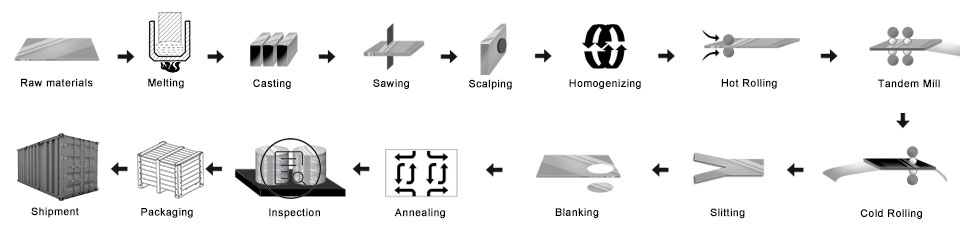
- Prepare as ligas mestres
- Forno de fusão: coloque as ligas no forno de fusão
- Lingote de alumínio fundido DC: Para fazer o lingote mãe
- Fresar o lingote de alumínio: para tornar a superfície e o lado lisos
- Forno de aquecimento
- Laminador a quente: fez a bobina mãe
- Laminador a frio: a bobina mãe foi enrolada conforme a espessura que você deseja comprar
- Processo de perfuração: torne-se do tamanho que você deseja
- Forno de recozimento: mudar o temperamento
- Inspeção final
- Embalagem: caixa de madeira ou palete de madeira
- Entrega
Controle de qualidade
Garantia Abaixo a inspeção será feita na produção.
- um. detecção de raios—TR;
- b. testes ultrassônicos—UT;
- c. Teste de Partículas Magnéticas-MT;
- d. testes de penetração-PT;
- e. detecção de falhas por correntes parasitas-ET
1) Esteja livre de manchas de óleo, Dente, Inclusão, Arranhões, Mancha, Descoloração Óxida, Pausas, Corrosão, Marcas de rolo, Listras de sujeira, e outros defeitos que interferirão no uso.
2) Superfície sem linha preta, limpo, mancha periódica, defeitos de impressão em rolo, como outros padrões de controle interno da gko.
Embalagem de discos de alumínio:
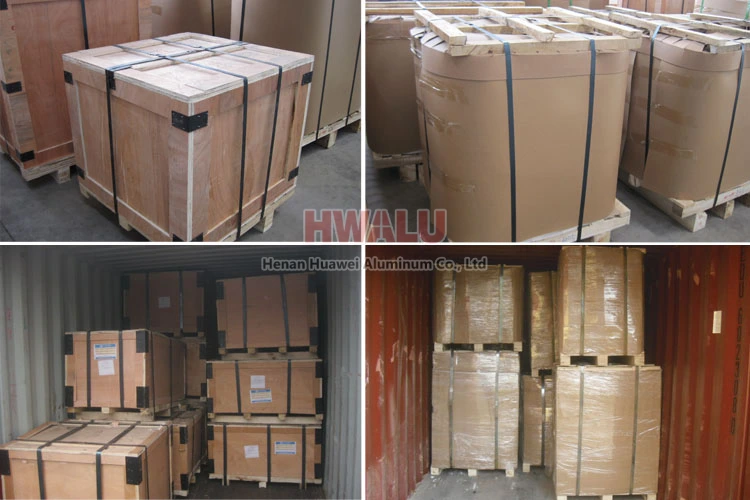
Os círculos de alumínio podem ser embalados de acordo com os padrões de exportação, cobrindo com papel pardo e filme plástico. Finalmente, a Rodada de Alumínio é fixada em um palete de madeira/caixa de madeira.
- Coloque os secadores ao lado do círculo de alumínio, mantenha os produtos secos e limpos.
- Use papel plástico limpo, embale o círculo de alumínio, mantenha uma boa vedação.
- Use o papel de pele de cobra, embale a superfície do papel plástico, mantenha uma boa vedação.
- Próximo, existem duas formas de embalagem: Uma maneira é a embalagem de paletes de madeira, usando o papel crocante embalando a superfície; Outra forma é a embalagem em caixa de madeira, usando a caixa de madeira embalando a superfície.
- Finalmente, coloque a correia de aço na superfície da caixa de madeira, mantendo a solidez e segurança da caixa de madeira.
Círculo de alumínio de Henan Huawei Alumínio. atender ao padrão de exportação. Filme plástico e papel pardo podem ser cobertos de acordo com as necessidades dos clientes. Além do mais, uma caixa de madeira ou palete de madeira é adotada para proteger os produtos contra danos durante a entrega. Existem dois tipos de embalagens, que estão de olho na parede ou de olho no céu. Os clientes podem escolher qualquer um deles para sua conveniência. De um modo geral, há 2 toneladas em um pacote, e carregando 18-22 toneladas em contêiner 1×20′, e 20-24 toneladas em contêiner 1×40′.
Por que nos escolher?
Para acompanhar os tempos, A HWALU continua introduzindo equipamentos e técnicas de última geração para melhorar sua competitividade. Sempre siga a filosofia empresarial de qualidade como centro e cliente em primeiro lugar, fornecer produtos da série de círculo de disco de alumínio da mais alta qualidade para todas as partes do mundo. Mais …

