Hot-Rolled Aluminum Discs for LED Lamp Reflectors: Comprehensive Analysis
Hot-rolled aluminum discs for LED lamp reflectors are vital in LED lighting. They enhance light output and shape reflector structures. This article explores their key traits in detail.
 Hot-Rolled Aluminum Discs
1. Chemical Composition of Hot-Rolled Aluminum Discs for LED Lamp Reflectors
Hot-rolled aluminum discs for
LED lamp reflectors use high-purity aluminum with trace additives. These additives improve specific performance aspects. The table below breaks down their chemical makeup.
|
Chemical Component
|
Material Grade
|
Content Percentage
|
Role in Performance
|
|
Aluminum (Al)
|
1050, 1060, 1100
|
99.5% – 99.9%
|
Ensures base strength and reflectivity
|
|
Silicon (Si)
|
Industrial-grade
|
0.1% – 0.5%
|
Enhances formability during processing
|
|
Iron (Fe)
|
Industrial-grade
|
0.2% – 0.4%
|
Boosts structural stability
|
|
Copper (Cu)
|
Industrial-grade
|
≤ 0.05%
|
Minimizes oxidation risk
|
|
Magnesium (Mg)
|
Industrial-grade
|
≤ 0.03%
|
Improves surface smoothness
|
Each component works in harmony. They lay the foundation for hot-rolled aluminum discs for LED lamp reflectors’ functionality. Without these precise ratios, the discs would fail to meet LED reflector demands. For example, high aluminum content ensures excellent light bounce. Silicon helps the discs bend into complex reflector shapes easily.
2. Key Parameters of Hot-Rolled Aluminum Discs for LED Lamp Reflectors
Parameters define how hot-rolled aluminum discs for LED lamp reflectors fit different LED setups. They vary based on lamp type and size. The following table lists standard and customizable parameters.
|
Parameter Category
|
Standard Range
|
Customizable Options
|
Application Suitability
|
|
Diameter
|
50mm – 500mm
|
30mm – 800mm
|
Small downlights to large floodlights
|
|
Thickness
|
0.5mm – 3.0mm
|
0.3mm – 5.0mm
|
Thin for ceiling lamps, thick for industrial lights
|
|
Surface Finish
|
Polished, Brushed
|
Anodized, Coated
|
Polished for high reflectivity, coated for corrosion resistance
|
|
Roundness Tolerance
|
≤ 0.2mm
|
≤ 0.1mm (precision)
|
Ensures tight fit with lamp housings
|
|
Flatness Error
|
≤ 0.3mm/m
|
≤ 0.1mm/m (precision)
|
Prevents light distortion
|
These parameters directly impact LED lamp performance. For instance, a 50mm diameter disc suits small LED downlights. A 300mm disc works for large LED panel lights. Thickness affects weight and durability. A 0.8mm disc is light enough for home ceiling lamps. A 2.5mm disc handles harsh conditions in industrial lamps. Surface finish matters too. Polished discs reflect over 85% of LED light. Anodized discs resist scratches in outdoor lamps.
Hot-rolled aluminum discs for LED lamp reflectors must meet these parameters. Manufacturers test each batch to ensure consistency. This ensures every disc works as intended in LED lamps.
3. Mechanical Properties of Hot-Rolled Aluminum Discs for LED Lamp Reflectors
Mechanical properties determine how hot-rolled aluminum discs for LED lamp reflectors withstand processing and use. They include strength, flexibility, and wear resistance. The table below outlines key mechanical traits.
|
Mechanical Property
|
Tested Value
|
Test Method
|
Relevance to LED Applications
|
|
Tensile Strength
|
110MPa – 150MPa
|
Universal Tensile Tester
|
Resists tearing during shaping
|
|
Yield Strength
|
70MPa – 100MPa
|
Universal Tensile Tester
|
Prevents permanent deformation
|
|
Elongation at Break
|
12% – 20%
|
Tensile Test
|
Allows bending into reflector curves
|
|
Vickers Hardness (HV)
|
30 – 50
|
Vickers Hardness Tester
|
Withstands minor impacts in use
|
|
Wear Resistance
|
≤ 0.01mm³/N·m
|
Abrasion Test
|
Reduces surface damage over time
|
These properties are critical during production. When making reflectors, manufacturers bend the discs. High elongation lets discs curve without cracking. Tensile strength ensures they don’t break during this process. Yield strength stops the discs from staying deformed. For example, a disc bent into a parabolic shape retains its form. This is key for focusing LED light.
In use, mechanical properties matter too. Outdoor LED lamps face wind and debris. High hardness prevents scratches on the disc surface. Good wear resistance keeps reflectivity high for years. Indoor lamps like ceiling lights need less strength. But even they rely on elongation for proper shaping.
Hot-rolled
aluminum discs for LED lamp reflectors excel in these mechanical areas. They outperform other materials like steel or plastic. Steel is heavy and hard to shape. Plastic has low reflectivity. Aluminum discs balance all needed mechanical traits.
 Hot-Rolled Aluminum Discs
4. Features of Hot-Rolled Aluminum Discs for LED Lamp Reflectors
Hot-rolled aluminum discs for LED lamp reflectors have unique features that make them ideal for LED use. These features set them apart from other reflector materials.
- High Light Reflectivity: They reflect 85% – 92% of LED light. This maximizes light output from LED lamps. Unlike plastic reflectors, which lose reflectivity over time, aluminum discs maintain it.
- Excellent Formability: They bend and shape easily. Manufacturers create parabolic, conical, and curved reflectors. This flexibility fits various LED lamp designs, from spotlights to panel lights.
- Good Thermal Conductivity: They transfer heat quickly. LED lamps generate heat, and aluminum discs disperse it. This protects LED chips and extends lamp lifespan.
- Corrosion Resistance: They resist rust and oxidation. Even in humid or outdoor environments, they stay in good condition. This is better than steel, which rusts easily.
- Uniform Thickness: Their thickness stays consistent across the entire disc. This ensures even light distribution. No dark spots appear in LED lamp output.
Each feature addresses a key LED reflector need. High reflectivity boosts lamp efficiency. Formability allows diverse designs. Thermal conductivity protects LED components. Corrosion resistance ensures long use. Uniform thickness guarantees quality light.
Hot-rolled aluminum discs for LED lamp reflectors combine all these features. This makes them the top choice for LED reflector manufacturing.
5. Advantages of Hot-Rolled Aluminum Discs for LED Lamp Reflectors
Compared to other reflector materials, hot-rolled aluminum discs for LED lamp reflectors offer many advantages. These advantages drive their widespread use in the LED industry.
- Cost-Effective Production: They are affordable to manufacture. Hot rolling is a efficient process. It reduces material waste and production time. This lowers overall costs for LED manufacturers. Passing savings to consumers makes LED lamps more accessible.
- Lightweight Design: They are much lighter than steel discs. A 100mm aluminum disc weighs only 50g. A steel disc of the same size weighs 150g. Lightweight discs reduce LED lamp weight. This makes installation easier, especially for ceiling or wall-mounted lamps.
- Long Lifespan: They last 8 – 10 years in normal use. Their corrosion resistance and wear resistance prevent early failure. This matches the 5 – 10 year lifespan of LED chips. Users don’t need to replace reflectors often.
- Eco-Friendly: They are 100% recyclable. At the end of their life, they can be melted and reused. This reduces environmental impact. Unlike plastic reflectors, which end up in landfills, aluminum discs support sustainability.
- Consistent Quality: They have minimal defects. Hot rolling ensures uniform structure. Each disc meets strict standards. LED manufacturers get reliable parts, reducing production delays.
These advantages make hot-rolled aluminum discs for LED lamp reflectors superior. They solve common problems with other materials. For example, plastic reflectors are cheap but have short lifespans. Steel reflectors are durable but heavy and expensive. Aluminum discs balance cost, weight, durability, and eco-friendliness.
LED manufacturers prefer hot-rolled aluminum discs for LED lamp reflectors. They help create high-quality, affordable, and long-lasting LED lamps.
6. Applications of Hot-Rolled Aluminum Discs for LED Lamp Reflectors
Hot-rolled aluminum discs for LED lamp reflectors find use in various LED lighting sectors. Their versatility fits different lamp types and environments.
6.1 Home LED Lighting
In homes, they are used in many common LED lamps.
- LED Downlights: Small discs (50mm – 100mm diameter) make reflectors. They focus light downward, ideal for living rooms and bedrooms. Their high reflectivity ensures bright, even light.
- LED Ceiling Lamps: Medium discs (100mm – 200mm diameter) shape into wide reflectors. They spread light across rooms, avoiding glare. Lightweight design makes ceiling installation easy.
- LED Spotlights: Thin discs (0.5mm – 1.0mm thickness) form narrow reflectors. They highlight art, furniture, or decor. Good formability lets them create precise light beams.
Home users benefit from these applications. They get bright, energy-efficient light. Long-lasting discs mean no frequent replacements.
6.2 Commercial LED Lighting
- LED Panel Lights: Large discs (200mm – 500mm diameter) make flat reflectors. They fit office ceilings, providing uniform light for workspaces. Thermal conductivity keeps panels cool during long office hours.
- LED Track Lights: Medium discs (80mm – 150mm diameter) form adjustable reflectors. They are used in retail stores to highlight products. Corrosion resistance handles busy store environments.
- LED Pendant Lights: Decorative discs (100mm – 250mm diameter) with brushed finishes. They add style to restaurants and hotels. Uniform thickness ensures consistent light for dining areas.
Commercial users value the discs’ reliability. They support long operating hours (8 – 12 hours daily) without performance drops. Cost-effectiveness helps businesses save on lighting budgets.
6.3 Industrial LED Lighting
Industrial settings demand tough, durable reflectors. it meet this need.
- LED Floodlights: Thick discs (2.0mm – 3.0mm thickness) make robust reflectors. They are used in factories, warehouses, and construction sites. High tensile strength resists damage from heavy machinery.
- LED High Bay Lights: Large, thick discs (300mm – 400mm diameter, 1.5mm – 2.5mm thickness) form high-output reflectors. They illuminate tall industrial spaces. Good wear resistance handles dust and debris.
- LED Explosion-Proof Lights: Specialized discs with coated finishes. They are used in oil refineries and chemical plants. Corrosion resistance prevents damage from harsh chemicals.
Industrial users depend on the discs’ durability. They withstand harsh conditions and reduce maintenance costs.
6.4 Outdoor LED Lighting
Outdoor LED lamps face weather challenges. it tackle these challenges.
- LED Street Lights: Medium discs (150mm – 250mm diameter) with anodized finishes. They resist rain, snow, and UV rays. Thermal conductivity handles temperature changes.
- LED Garden Lights: Small discs (50mm – 100mm diameter) with decorative shapes. They add ambiance to gardens. Corrosion resistance prevents rust from moisture.
- LED Security Lights: Discs with high reflectivity (≥ 90%). They provide bright light for security cameras. Durable design withstands wind and rain.
Outdoor applications show the discs’ versatility. They perform well in all weather conditions, ensuring reliable lighting.
7. Conclusion
It are essential in modern LED lighting. Their chemical composition ensures base performance. Precise parameters fit diverse lamp designs. Strong mechanical properties support processing and use. Unique features address key reflector needs. Clear advantages outperform other materials. Wide applications cover home, commercial, industrial, and outdoor use.
Every aspect of these discs is tailored to LED lighting demands. They boost light efficiency, enhance lamp durability, and reduce costs. LED manufacturers rely on them to create high-quality products. Consumers benefit from bright, long-lasting, and affordable LED lamps.
As LED technology advances, it will adapt. They will meet new design and performance needs. Their role in the LED industry will remain crucial. For anyone involved in LED lighting—manufacturers, installers, or users—these discs are a trusted solution. They represent the perfect balance of performance, cost, and versatility in LED reflector materials.
Properties of the aluminum circle:
Aluminum circle is suitable for many markets, including cookware, automotive and lighting industries, etc., thanks to good product characteristics:
- Low anisotropy, which facilitates deep drawing
- Strong mechanical properties
- High and homogeneous heat diffusion
- Ability to be enameled, covered by PTFE (or others), anodized
- Good reflectivity
- High strength-to-weight ratio
- Durability and resistance to corrosion
Aluminum Circles Process
Ingot/Master Alloys — Melting Furnace – Holding Furnace — D.C. Caster — Slab —- Scalper — Hot Rolling Mill – Cold Rolling Mill – Punching – Annealing Furnace — Final Inspection – Packing — Delivery
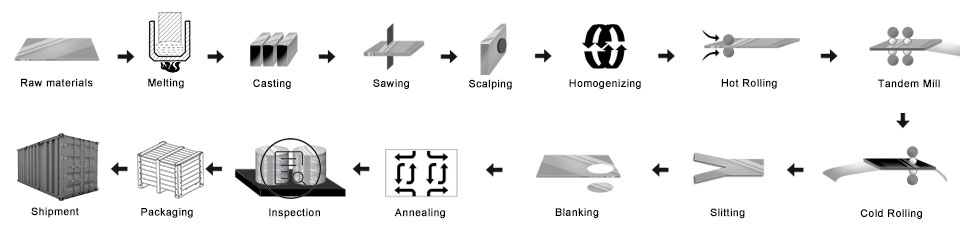
- Prepare the master alloys
- Melting furnace: put the alloys into the melting furnace
- D.C.cast aluminum ingot: To make the mother ingot
- Mill the aluminum ingot: to make the surface and side smooth
- Heating furnace
- Hot rolling mill: made the mother coil
- Colding rolling mill: the mother coil was rolled as the thickness you want to buy
- Punching process: become the size what you want
- Annealing furnace: change the temper
- Final inspection
- Packing: wooden case or wooden pallet
- Delivery
Quality Control
Assurance Below inspection will be done in the production.
- a. ray detection—RT;
- b. ultrasonic testing—UT;
- c. Magnetic Particle Testing-MT;
- d. penetration testing-PT;
- e. eddy current flaw detection-ET
1) Be free from Oil Stain, Dent, Inclusion, Scratches, Stain, Oxide Discoloration, Breaks, Corrosion, Roll Marks, Dirt Streaks, and other defects which will interfere with use.
2) Surface without black line, clean-cut, periodic stain, roller printing defects, such as other gko internal Control standards.
Aluminum discs packing:
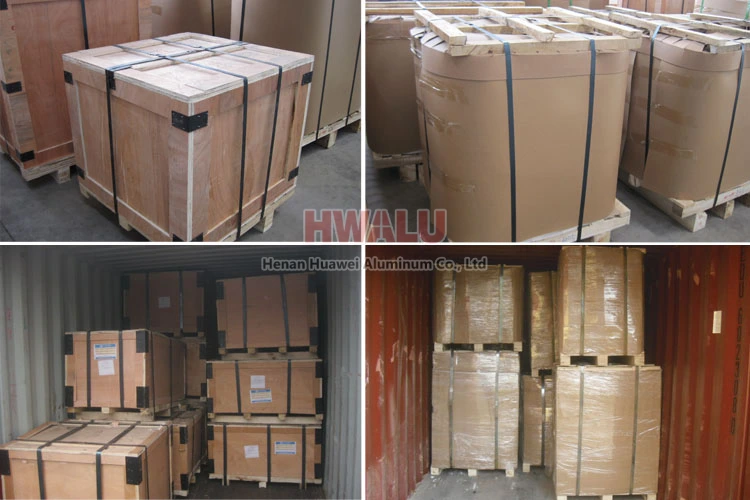
Aluminum circles can be packed by export standards, covering with brown paper and plastic film. Finally, the Aluminium Round is fixed on a wooden pallet/wooden case.
- Put the driers side the aluminum circle, keep the products dry and clean.
- Use clean plastic paper, pack the aluminium circle, keep good sealing.
- Use the snakeskin paper, pack the surface of the plastic paper, keep good sealing.
- Next, there are two ways of packaging: One way is wooden pallet packaging, using the crusty paper packing the surface; Another way is wooden case packaging, using the wooden case packing the surface.
- Finally, lay the steel belt on the wooden box’s surface, keeping the wooden box fastness and secure.
Aluminum circle of Henan Huawei Aluminum. meet the export standard. Plastic film and brown paper can be covered at customers’ needs. What’s more, a wooden case or wooden pallet is adopted to protect products from damage during delivery. There are two kinds of packaging, which are eye to wall or eye to the sky. Customers can choose either of them for their convenience. Generally speaking, there are 2 tons in one package, and loading 18-22 tons in 1×20′ container, and 20-24 tons in 1×40′ container.
Why choose us?
In order to move with the times, HWALU keeps introducing the state of the art equipment and technique to improve its competitiveness. Always adhere to the business philosophy of quality as the center and customer first, to provide the highest quality aluminum disc circle series products to all parts of the world. More …

