Application Trends of 1050 Aluminum Discs in Domestic and International Cookware Industries
1. Introduction: 1050 Aluminum Discs in Cookware Manufacturing
The cookware industry has undergone rapid transformation over the last decade, driven by rising consumer demand for energy-efficient, durable, and aesthetically pleasing kitchenware. Among the materials used, 1050 aluminum discs have become indispensable due to their superior formability, excellent thermal conductivity, and corrosion resistance.
A cookware aluminum disc market perspective is particularly relevant because these discs form the basis of deep-drawn pots, pans, kettles, and multi-layered cookware. Their usage not only influences production efficiency but also shapes global trade patterns, as manufacturers in Asia, Europe, and North America seek reliable aluminum alloys to meet diverse market demands.

2. Overview of 1050 Aluminum Alloy Properties
1050 aluminum is a commercially pure aluminum alloy with at least 99.5% aluminum content. Its purity ensures excellent ductility and corrosion resistance, making it ideal for multi-stage forming processes.
Chemical Composition (Typical Values, %)
| Element |
Si |
Fe |
Cu |
Mn |
Mg |
Zn |
Ti |
Al |
| 1050 |
≤0.25 |
≤0.40 |
≤0.05 |
≤0.05 |
≤0.05 |
≤0.05 |
≤0.03 |
≥99.50 |
Key Mechanical Properties
| Property |
Typical Value |
Notes |
| Tensile Strength |
60–100 MPa |
Depends on temper (O, H12, H14) |
| Elongation |
25–40% |
High formability |
| Density |
2.71 g/cm³ |
Lightweight for cookware handling |
| Thermal Conductivity |
~235 W/m·K |
Ensures even heating |
| Melting Point |
660 °C |
Suitable for conventional cooking methods |
These properties make 1050 aluminum discs ideal for cookware that must undergo deep drawing, spinning, and subsequent surface finishing while maintaining dimensional accuracy and surface integrity.
3. Domestic Cookware Industry Trends
3.1 Production and Consumption in China
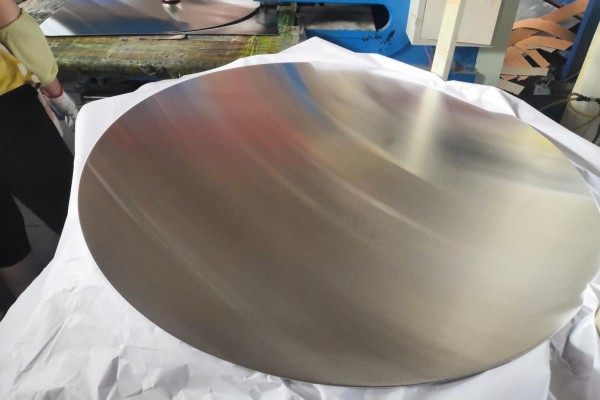
China dominates global cookware production, particularly in aluminum-based kitchenware. Rising disposable incomes, urbanization, and growing middle-class consumer segments drive demand for lightweight, corrosion-resistant cookware.
- Deep-drawn 1050 aluminum discs are extensively used for household saucepans, frying pans, and kettles.
- Domestic manufacturers are increasingly adopting CNC-controlled rolling mills and annealing furnaces to maintain high precision and consistent thickness.
3.2 Technological Upgrades
- Automatic gauge control (AGC) in rolling lines ensures tight thickness tolerances (±0.005 mm).
- Advanced deep drawing and spinning lines allow multi-stage forming without intermediate annealing, increasing productivity and reducing material waste.
3.3 Market Outlook
China’s cookware aluminum disc market is projected to grow at a CAGR of approximately 6% over the next five years, fueled by both domestic consumption and export-oriented production.
4. International Cookware Industry Trends
4.1 Europe
European consumers prioritize sustainability, recyclability, and certified food-grade materials. Aluminum cookware produced from 1050 discs aligns with these demands.
- Many European manufacturers integrate recycled aluminum into cookware discs.
- Multi-layered cookware, combining 1050 aluminum discs with stainless steel bases, is prevalent to enable induction compatibility.
4.2 North America
The North American market emphasizes lightweight cookware with efficient heat distribution. 1050 aluminum discs are preferred for frying pans and saucepans due to their even thermal conductivity and low weight.
- Demand is shifting toward premium anodized finishes for durability and aesthetics.
- Manufacturers are optimizing disc thickness and wall profiles to reduce energy consumption during cooking.
4.3 Asia-Pacific (Other than China)
Japan, South Korea, and India are significant players in high-precision cookware. The use of 1050 aluminum discs supports complex shapes for specialized cookware and enhances export potential.
- Emphasis on CNC rolling, blanking, and automated forming processes.
- Increasing integration of digital quality control and FEM simulation for defect minimization.
5. Manufacturing Process and Technological Innovations
The production of 1050 aluminum discs involves multiple critical stages:
- Melting and Casting: High-purity ingots are cast into slabs with homogenized structures.
- Hot and Cold Rolling: Slabs are rolled to desired thickness, optimizing grain structure for ductility.
- Annealing: Soft annealing restores formability for deep drawing and spinning.
- Blanking: CNC or laser blanking ensures precise diameters with smooth edges.
- Surface Treatment: Mechanical polishing, chemical etching, and optional anodizing enhance appearance and corrosion resistance.
Innovations include:
- FEM-based forming simulation to predict strain distribution.
- High-speed rolling lines with inline thickness measurement.
- Waterborne anodizing solutions to improve sustainability.
6. Comparative Advantages of 1050 Aluminum Discs
6.1 Formability
1050 aluminum has high elongation (25–40%), enabling multiple deep draws without cracking.
6.2 Thermal Conductivity
With ~235 W/m·K, 1050 discs distribute heat efficiently, outperforming stainless steel and composite alloys commonly used in cookware.
6.3 Corrosion Resistance
The natural oxide layer provides long-term protection against water, salt, and acidic foods.
6.4 Cost-Effectiveness
Compared to higher-strength alloys (3003, 5052), 1050 aluminum balances price, performance, and processability, making it ideal for mass-market cookware production.

7. Global Market Dynamics
7.1 Supply Chain and Trade Flows
- China exports a significant portion of aluminum cookware discs to North America, Europe, and Southeast Asia.
- Asia-Pacific accounts for 60% of global cookware aluminum disc market production capacity.
7.2 Price Trends
- Aluminum prices fluctuate due to global supply-demand balance and energy costs.
- 1050 discs offer a stable price advantage for manufacturers compared to high-alloy alternatives.
7.3 Consumer Preference Shifts
- Increasing demand for sustainable, lightweight, and aesthetically polished cookware.
- Rising interest in anodized or colored aluminum cookware to differentiate brands in competitive markets.
8. Key Technological Challenges
8.1 Ultra-Thin Disc Production
Discs below 0.8 mm require precise control during rolling and blanking to prevent pinholes and edge cracks.
8.2 Multi-Stage Forming Consistency
- Deep drawing and spinning processes must be finely tuned to avoid wall thinning or wrinkling.
- Intermediate annealing cycles require precise temperature and time control.
8.3 Surface Quality and Coating Adhesion
- Maintaining defect-free surfaces is critical for anodizing or polishing.
- Coatings must adhere uniformly, especially in cookware intended for high-temperature cooking.
9. Technological Innovations in 1050 Aluminum Disc Processing
The global cookware aluminum disc market has seen continuous innovation, driven by the need for high efficiency, precision, and sustainability.
9.1 Advanced Rolling Techniques
Modern rolling mills utilize automatic gauge control (AGC) and tension leveling systems to maintain uniform thickness across discs. High-precision rolling ensures minimal internal stress, enhancing deep-drawing performance and reducing rejection rates.
9.2 Computer-Aided Forming
FEM (Finite Element Method) simulations allow manufacturers to predict material flow during multi-stage drawing or spinning. This minimizes defects such as wrinkling, cracking, or wall thinning, increasing yield and consistency.
9.3 Surface Engineering
- Electrochemical polishing produces ultra-smooth surfaces for anodizing.
- Waterborne anodizing reduces chemical emissions, aligning production with environmental regulations.
- Laser marking and branding are increasingly adopted for product differentiation.
10. Recyclability and Sustainability
Sustainability is a growing priority in the cookware industry, impacting both domestic and international markets.
10.1 Energy Efficiency in Recycling
Aluminum recycling consumes only 5% of the energy required for primary smelting. Recycled 1050 aluminum discs maintain properties equivalent to primary material, supporting circular economy goals.
10.2 Environmental Benefits
- Reduced CO₂ emissions.
- Minimized industrial waste through high scrap recovery rates.
- Compliance with EU REACH, RoHS, and other global standards.
10.3 Industry Adoption
European and North American manufacturers increasingly rely on recycled aluminum discs for premium cookware lines, boosting brand sustainability credentials.
11. Forming Performance and Product Advantages
11.1 Deep Drawing and Spinning
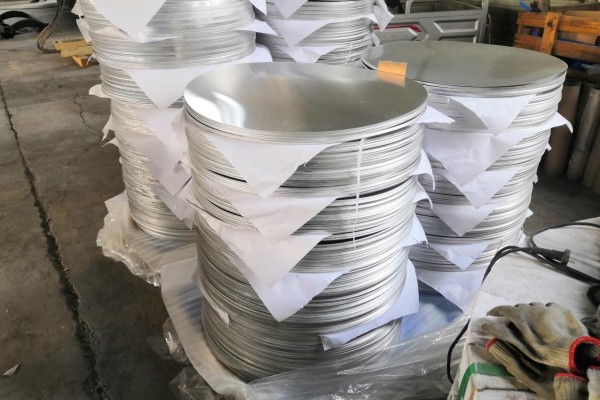
1050 aluminum discs exhibit high elongation (up to 40%), allowing multiple drawing stages without intermediate annealing. This ensures uniform wall thickness and smooth internal surfaces for pots, pans, and kettles.
11.2 Thermal Performance
Efficient heat conduction reduces cooking times and energy consumption.
Example: A 2.5 mm thick 1050 aluminum pan heats uniformly in 60% of the time compared to a stainless steel pan of equal dimensions.
11.3 Surface Durability
Post-anodizing or polishing, cookware retains corrosion resistance and scratch resistance, improving product longevity and consumer satisfaction.
12. Industrial Applications Across Markets
12.1 Household Cookware
Saucepans, frying pans, and stockpots widely utilize 1050 discs for deep-drawn bodies and anodized finishes.
12.2 Commercial and Professional Kitchens
Restaurants demand lightweight, high-thermal-conductivity cookware. 1050 aluminum discs offer consistent wall thickness and high durability, ideal for heavy-duty daily use.
12.3 Hybrid Cookware
Many brands use multi-layer constructions, combining 1050 aluminum discs with stainless steel bases for induction compatibility. The aluminum disc ensures efficient heat distribution while stainless steel provides structural rigidity.
12.4 Specialty Cookware
Examples include wok bowls, cake molds, and kettle shells, where precise shaping, smooth surface finish, and thermal conductivity are critical.
13. Global Market Trends and Comparative Analysis
13.1 Domestic Market Trends
China remains the largest producer of 1050 aluminum discs, with increasing automation in rolling, blanking, and forming lines. Domestic brands are focusing on:
- Lightweight designs.
- Anodized and colored finishes.
- E-commerce and export-oriented packaging.
13.2 International Market Trends
- Europe: Prioritizes sustainability and recycled material adoption.
- North America: Prefers lightweight, non-toxic, and premium-finished cookware.
- Asia-Pacific (other than China): Focuses on high-precision, small-batch, and export-oriented production.
13.3 Market Size and Growth
The global cookware aluminum disc market is projected to reach USD 2.1 billion by 2032, with an average CAGR of 5.8%. Growth is driven by:
- Rising disposable income.
- Demand for sustainable and lightweight cookware.
- Expansion of urban households in developing countries.

14. Challenges and Opportunities
14.1 Technical Challenges
- Ultra-thin disc production requires precise rolling and blanking control.
- Multi-stage forming consistency must be optimized using FEM simulation.
- Surface treatment must ensure defect-free anodizing and coating adhesion.
14.2 Market Opportunities
- Sustainable and recycled aluminum discs for eco-conscious consumers.
- Hybrid and induction-compatible cookware using 1050 aluminum discs.
- Digital quality control and automation to reduce scrap and increase yield.
14.3 Competitive Advantages
1050 aluminum discs offer superior formability, cost-effectiveness, and thermal performance compared to 3003, 5052, or 1060 alloys. These traits strengthen manufacturers’ ability to meet international standards and consumer expectations.
15. Conclusion: Future Outlook for 1050 Aluminum Discs in Cookware
The cookware aluminum disc market is evolving under the influence of consumer demand, environmental regulations, and technological innovation.
Key Takeaways:
- 1050 aluminum discs provide unmatched formability for deep-drawn cookware.
- Thermal efficiency and surface durability enhance cooking performance and longevity.
- Sustainability initiatives, including recycling and eco-friendly surface treatments, drive international adoption.
- Technological innovations—such as FEM simulation, automated rolling, and laser marking—improve production efficiency and product quality.
- Global trends indicate continued growth, especially in Asia-Pacific and North American markets, with premium and hybrid cookware applications leading the demand.
In conclusion, 1050 aluminum discs remain the cornerstone of modern cookware manufacturing, combining technical excellence with market adaptability. Manufacturers leveraging these advantages are well-positioned to capture market share in both domestic and international arenas.
Properties of the aluminum circle:
Aluminum circle is suitable for many markets, including cookware, automotive and lighting industries, etc., thanks to good product characteristics:
- Low anisotropy, which facilitates deep drawing
- Strong mechanical properties
- High and homogeneous heat diffusion
- Ability to be enameled, covered by PTFE (or others), anodized
- Good reflectivity
- High strength-to-weight ratio
- Durability and resistance to corrosion
Aluminum Circles Process
Ingot/Master Alloys — Melting Furnace – Holding Furnace — D.C. Caster — Slab —- Scalper — Hot Rolling Mill – Cold Rolling Mill – Punching – Annealing Furnace — Final Inspection – Packing — Delivery
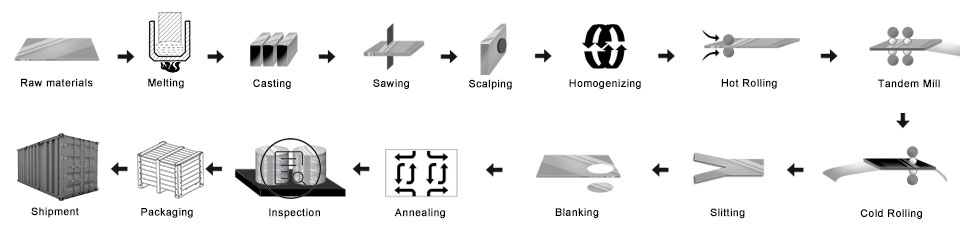
- Prepare the master alloys
- Melting furnace: put the alloys into the melting furnace
- D.C.cast aluminum ingot: To make the mother ingot
- Mill the aluminum ingot: to make the surface and side smooth
- Heating furnace
- Hot rolling mill: made the mother coil
- Colding rolling mill: the mother coil was rolled as the thickness you want to buy
- Punching process: become the size what you want
- Annealing furnace: change the temper
- Final inspection
- Packing: wooden case or wooden pallet
- Delivery
Quality Control
Assurance Below inspection will be done in the production.
- a. ray detection—RT;
- b. ultrasonic testing—UT;
- c. Magnetic Particle Testing-MT;
- d. penetration testing-PT;
- e. eddy current flaw detection-ET
1) Be free from Oil Stain, Dent, Inclusion, Scratches, Stain, Oxide Discoloration, Breaks, Corrosion, Roll Marks, Dirt Streaks, and other defects which will interfere with use.
2) Surface without black line, clean-cut, periodic stain, roller printing defects, such as other gko internal Control standards.
Aluminum discs packing:
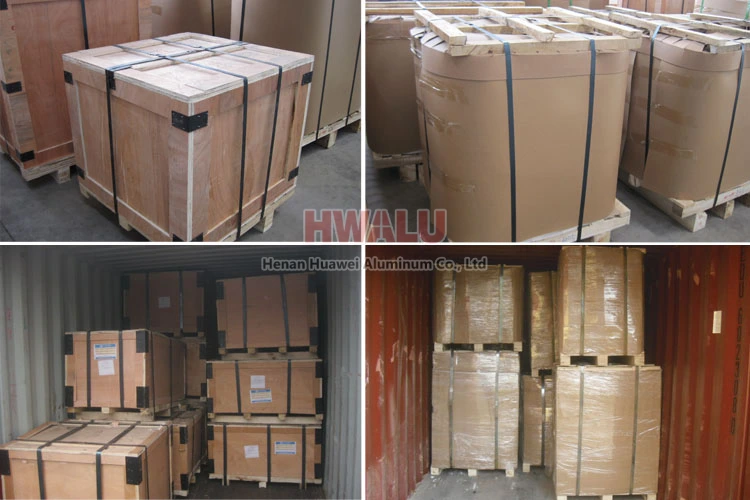
Aluminum circles can be packed by export standards, covering with brown paper and plastic film. Finally, the Aluminium Round is fixed on a wooden pallet/wooden case.
- Put the driers side the aluminum circle, keep the products dry and clean.
- Use clean plastic paper, pack the aluminium circle, keep good sealing.
- Use the snakeskin paper, pack the surface of the plastic paper, keep good sealing.
- Next, there are two ways of packaging: One way is wooden pallet packaging, using the crusty paper packing the surface; Another way is wooden case packaging, using the wooden case packing the surface.
- Finally, lay the steel belt on the wooden box’s surface, keeping the wooden box fastness and secure.
Aluminum circle of Henan Huawei Aluminum. meet the export standard. Plastic film and brown paper can be covered at customers’ needs. What’s more, a wooden case or wooden pallet is adopted to protect products from damage during delivery. There are two kinds of packaging, which are eye to wall or eye to the sky. Customers can choose either of them for their convenience. Generally speaking, there are 2 tons in one package, and loading 18-22 tons in 1×20′ container, and 20-24 tons in 1×40′ container.
Why choose us?
In order to move with the times, HWALU keeps introducing the state of the art equipment and technique to improve its competitiveness. Always adhere to the business philosophy of quality as the center and customer first, to provide the highest quality aluminum disc circle series products to all parts of the world. More …

