The Ultimate Procurement Guide for Bulk Hot Rolled Aluminum Circle: How to Choose Quality Suppliers and Reduce Costs?
In today’s increasingly competitive manufacturing landscape, the choice of raw materials directly determines product quality, cost, and market competitiveness. For industries such as cookware, lighting, automotive parts, and numerous deep drawing applications, Bulk Hot Rolled Aluminum Circle has become an indispensable core material for achieving high performance and production efficiency. Compared to traditional cold-rolled aluminum circles, the hot-rolling process endows it with unparalleled deep-drawing performance and stability, making it particularly suitable for large-scale B2B procurement.
However, with numerous manufacturers and suppliers in the market, how can you distinguish quality, and make the most cost-effective choice? This article provides an in-depth guide, comprehensively analyzing the technical core, procurement strategies, and market trends of hot-rolled aluminum circles to help you make informed decisions in the global supply chain.
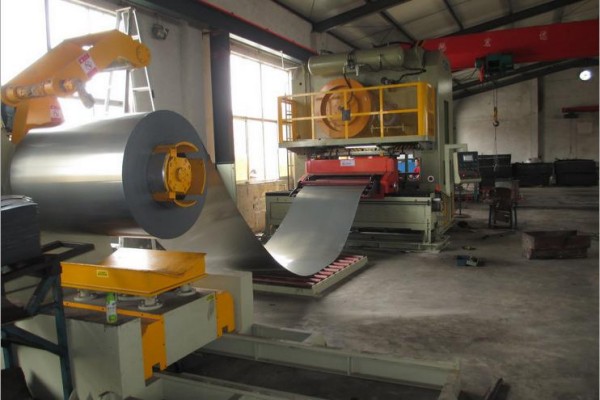 Aluminum sheet factory
Hot Rolled vs. Cold Rolled Aluminum Circle: Fundamental Differences and Selection Basis
Many buyers often confuse hot-rolled and cold-rolled aluminum circles during initial contact. Understanding their fundamental differences is the first step to correct selection.
Hot-rolled aluminum circles are produced by rolling above the recrystallization temperature (above approximately 400°C for aluminum). This process is akin to “kneading dough,” where high temperatures cause the internal grains of the aluminum to recrystallize, forming a fine, uniform, equiaxed grain structure. The result is a material with extremely low internal stress, high elongation (typically ≥30%), and low anisotropy. This means that during subsequent deep drawing and stretching, it can stretch uniformly like modeling clay without cracking, making it especially suitable for products requiring significant deformation and uniform thickness, such as pots and lamp shades.
Cold-rolled aluminum circles are rolled at room temperature, which induces work hardening. They offer higher strength, hardness, and a brighter surface finish, but have lower elongation (approx. 15-25%) and exhibit directionality. During deep drawing, they are prone to high “earing” (high earing rate), leading to material waste. They are more suitable for stamped or decorative parts requiring high strength but minimal deformation.
Simple Decision Tree: If your process involves complex deep drawing (like woks, saucepans), choose hot-rolled aluminum circles without hesitation. For simple bending or stamping where surface finish and precision are prioritized, cold-rolled circles may be considered.
Inside the Core: The Production Process Secrets of Quality Hot Rolled Aluminum Circles
A reliable supplier must possess a complete and controlled hot-rolling production line. The following are the key process steps determining material quality:
- Melting, Casting, and Homogenization: Quality material starts with high-purity aluminum ingots and precise alloy composition. Advanced melting and degassing technologies eliminate hydrogen pores, while homogenization annealing (500-600°C) eliminates casting segregation, ensuring uniformity in composition and structure from the inside out. This is the foundation of batch consistency.
- Hot Rolling: This is the “soul-forging” stage. The ingot is heated to 400-500°C and undergoes multiple passes on a large rolling mill. During this process, dynamic recrystallization occurs: coarse grains are broken and refined, fully unlocking the material’s plastic potential.
- Annealing and Finishing: For O-temper material requiring ultimate plasticity, final annealing is crucial. Subsequently, the aluminum sheet is precisely cut into circles using high-precision CNC punching or slitting lines. Top-tier manufacturers can control diameter tolerance within ±0.1mm with minimal edge burrs.
- Full-Process Quality Inspection: Every step requires data records, from spectroscopic analysis (composition), tensile and cupping tests (performance), metallographic examination (grains), to surface inspection. A traceable quality assurance system is the identity card of a premium supplier.
 1050 aluminum sheet
How to Choose the Alloy and Temper? A Complete Analysis and Quick Reference Guide for Mainstream Grades
Selecting the correct material grade is half the battle. Different alloys possess unique performance profiles suited for different applications. The table below clearly outlines the most mainstream choices for B2B procurement:
Quick-Reference Table: Performance and Applications of Mainstream Alloy Grades
| Alloy Grade |
Main Alloying Elements |
Typical Temper |
Core Characteristics |
Key Performance Advantages |
Typical Application Scenarios |
| 1050/1060 |
Al ≥99.5% |
O (Annealed) |
Commercial Pure Aluminum |
Ultimate Ductility, Excellent Thermal/Electrical Conductivity, Corrosion Resistance |
Deep-drawn cookware, utensils, signage requiring extreme formability |
| 1100 |
Al ≥99.0%, trace Cu |
O, H12-H18 |
Enhanced Pure Aluminum |
Slightly higher strength than 1050, maintaining good formability and corrosion resistance |
General-purpose stamped parts, a balance of performance and cost |
| 3003 (Mainstream) |
Al, Mn (~1.2%) |
O, H12-H18 |
Aluminum-Manganese Alloy |
Best balance of strength, formability, and corrosion resistance, excellent deep-drawing |
High-end cookware (non-stick pans, pressure cookers), appliance parts, chemical containers |
| 5052 |
Al, Mg (~2.5%) |
O, H32-H38 |
Aluminum-Magnesium Alloy |
Moderate-high strength, excellent fatigue strength, and superior marine corrosion resistance |
Automotive body panels, marine components, structural parts requiring higher strength |
- 1050/1060/1070 (Pure Aluminum Series): Aluminum content ≥99.5%. They offer the best ductility, thermal conductivity, and corrosion resistance, but the lowest strength. Suitable for products with extremely challenging deep-draw requirements. Temper O (Annealed) is the preferred choice.
- 3003 Alloy (The Market Leader): Contains about 1.2% Manganese (Mn). Its strength is approximately 20% higher than pure aluminum, while maintaining excellent formability, weldability, and corrosion resistance. It is the ideal choice for high-end non-stick cookware, pressure cookers, and appliance parts, perfectly balancing performance and cost. Temper O is for deep drawing, H14/H18 for stamped parts requiring certain strength.
- 5052/5083 (Aluminum-Magnesium Alloys): With the addition of magnesium, they possess moderate-high strength, excellent fatigue resistance, and outstanding corrosion resistance in marine environments. Commonly used in automotive parts, marine fittings, and structural components requiring higher strength.
Full Industry Application Scenarios and Precision Selection Guide
After understanding material properties, how do you accurately match them to your specific product? The following is a demand analysis and selection guide for major industries, helping you quickly identify the right fit:
Industry Application Requirements and Material Selection Guide
| Industry |
Typical Products |
Core Process Requirements |
Recommended Alloy & Temper |
Key Performance Requirements for Aluminum Circle |
| Cookware Manufacturing |
Woks, saucepans, pressure cooker inner pots |
Deep Drawing, Spinning |
3003-O, 1060-O |
Extremely high elongation, low earing rate, uniform deformation capability |
| Appliance Manufacturing |
LED reflectors, heating plates, housings |
Shallow drawing, stamping, anodizing |
1050-O/H14, 3003-H14 |
Good reflectivity/thermal conductivity, certain strength, excellent surface finish for treatment |
| Automotive Components |
Lamp covers, decorative covers, fuel tanks |
Complex contour forming, welding |
3003-O, 5052-O/H32 |
Good formability, weldability, weatherability |
| Industrial Equipment |
Chemical tank heads, filter housings |
Medium-depth drawing, welding |
3003-O, 5052-O |
Good formability, weldability, corrosion resistance |
| Architectural Decoration |
Ceiling panels, wall cladding panels |
Punching, bending, painting |
3003-H14/H16 |
High flatness, good rigidity, easy coating application |
- Cookware Industry – The Largest and Core Market: Has the most stringent requirements for deep-draw performance. 3003-O is the gold standard for cost-performance and capability.
- Appliance Manufacturing: Selects different alloys and tempers based on component function (heat conduction, reflection, structure), with high demands on surface quality.
- Automotive and Transportation: Requires further consideration of strength, weatherability, and weldability alongside formability.
- Industrial and Chemical Equipment: Focuses on material weldability and corrosion resistance for structural parts and containers.
- Architectural Decoration: Prioritizes material flatness, rigidity, and surface decorative effects.
The Four Strategic Advantages of Bulk Procurement and Supplier Evaluation Checklist
Transitioning from spot purchasing to bulk procurement (typically orders ≥5 tons) can bring tangible strategic benefits to your business:
- Significant Cost Reduction: Enjoy more competitive unit prices and spread fixed costs.
- Guaranteed Production Stability: Consistent material performance within the same batch ensures stable parameters for automated production lines, reducing waste.
- Enhanced Supply Security: Establish long-term partnerships with core suppliers for prioritized supply, mitigating market fluctuation risks.
- Optimized Operational Efficiency: Reduce material changeover and procurement frequency, enabling Just-In-Time (JIT) delivery models to lower inventory costs.
When selecting a supplier, be sure to conduct due diligence with this checklist:
- Core Capability: Does it possess its own hot-rolling production line? This is the gold standard distinguishing manufacturers from traders. Request factory videos or on-site audits.
- Quality System: Is it certified to standards like ISO 9001? Is the lab equipped with spectrometers, tensile testers, etc.? Can it provide composition and performance reports for each batch?
- Export Experience: Does the packaging meet export standards (e.g., anti-rust paper, ISPM15-compliant wooden pallets)? Can it provide complete English documentation (MSDS, CoC, Test Reports)?
- Customer Reputation: Has it served well-known end brands? What is its reputation in industry exhibitions or on B2B platforms?
- Customization & Service: Can it quickly respond to needs for non-standard sizes, special surface treatments, or traceability marking?
Market Price Perspective and Cost Optimization Strategies
The price of hot-rolled aluminum circles is primarily composed of:
- Floating Benchmark (LME/SHFE Aluminum Price): This is the largest variable, subject to international macroeconomics.
- Alloy Surcharge: 3003 is more expensive than 1060 due to its manganese content.
- Processing Fee: Covers the costs of hot rolling (high energy consumption), circle cutting, annealing, etc.
- Management and Logistics Fees.
Procurement Strategy Advice: For long-term, stable demand, consider signing an annual framework agreement with suppliers, locking in the processing fee formula to hedge against aluminum price volatility. Remember, value procurement trumps lowest-price procurement; the losses from production line downtime and low yield rates caused by inferior materials far exceed the raw material price difference.
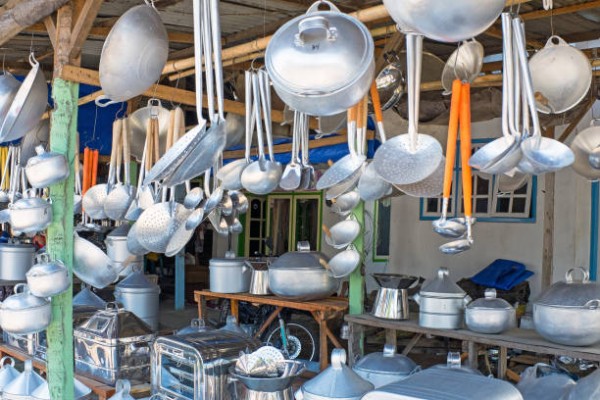 Aluminum Sheet Store
Common Quality Issue Diagnosis and Systematic Solutions
In actual production, material problems directly lead to increased scrap rates. The table below lists common issues, their causes, and full-chain solutions from procurement to production:
Common Quality Issues Diagnosis and Solutions Reference Table
| Quality Issue |
Potential Causes |
Impact on Downstream Production |
Preventive Measures (Procurement) |
Mitigation Solutions (Production) |
| Deep Drawing Cracking/Bottom Breakage |
1. Insufficient material elongation
2. Coarse/uneven grains
3. Inclusions, porosity in material |
Drastic yield drop, production halt |
1. Require supplier mechanical property reports
2. Specify elongation in contract (e.g., ≥30%) |
1. Optimize die radius
2. Adjust blank holder force and lubricant |
| Severe Earing during Stamping |
High material anisotropy (common in cold-rolled) |
Increased material waste, requires multiple trimming |
Prioritize hot-rolled products, require low earing rate (e.g., ≤3%) |
Use cross-rolled material or optimize blanking angle |
| Surface Scratches, Roll Marks |
Friction/collision during production, handling, or packaging |
Affects subsequent painting/anodizing, causes cosmetic defects |
1. Check supplier packaging standards (interleaving paper)
2. Specify protective film |
Strengthen incoming inspection, return to supplier if severe |
| Uneven Thickness, High Gauge Variation |
Poor mill precision control or roll wear |
Causes local over-thinning or wrinkling during stamping |
Specify strict thickness tolerance in contract (e.g., ±0.02mm) |
Adjust die clearance distribution, perform multi-point thickness checks on incoming material |
| Batch-to-Batch Performance Fluctuation |
Unstable melting composition or heat treatment process |
Requires frequent stamping parameter adjustments, destabilizes automated production |
Select suppliers with online spectroscopic analysis and stable annealing processes, require mill test certificates for each batch |
Perform first-article tryout and performance verification for each incoming batch |
Future Market Trends and Technology Outlook
- Driven by High-End and High-Performance Demand: As the cookware industry moves towards lighter, more durable, and healthier products (e.g., coating-free stainless steel), demands for deeper drawing limits, higher strength, and more uniform thermal conductivity of aluminum circles will increase. Higher-performance alloys (e.g., modified 3xxx series) and more precise heat treatment processes will gain attention.
- Smart Manufacturing and Consistency Requirements: With increasing automation and intelligence in downstream stamping lines, the demand for material batch consistency becomes. “Zero-defect” delivery and data-based quality prediction will become standard for top suppliers.
- Green, Low-Carbon, and Sustainable Development:
- Growing Demand for Green Aluminum: Aluminum circles produced using “low-carbon aluminum” from renewable energy (e.g., hydropower) or with high recycled content will be favored by brands, especially multinationals focused on ESG.
- Continued Lightweighting Trend: The trend of aluminum replacing steel for lightweighting in automotive and transportation persists, driving demand for high-performance aluminum circles.
- Supply Chain Regionalization and Resilience Building: Global events prompt companies to reassess supply chains, favoring shorter, more controllable channels. This creates opportunities for quality manufacturers within regions (e.g., Southeast Asia, Eastern Europe) and encourages Chinese manufacturers to set up overseas plants or warehouses.
Conclusion and Action Guide
In the manufacturing supply chain, the choice of Bulk Hot Rolled Aluminum Circle has evolved from a simple procurement activity to a strategic decision impacting core competitiveness. Its excellent deep-drawing performance enables product innovation, while its exceptional batch-to-batch consistency lays the foundation for efficient automated production.
Take Action Now: Re-examine your material specifications. Use the evaluation checklist provided in this guide to engage in a professional technical and supply chain dialogue with your potential or existing suppliers. Choose a true hot-rolled aluminum circle expert to safeguard your manufacturing advantage.

