Comprehensive Guide to Aluminum Circle Cookware Bases: The Core and Future of Modern Cookware
1. Product Overview: Definition, Value, and Core Parameters
1.1 Core Definition
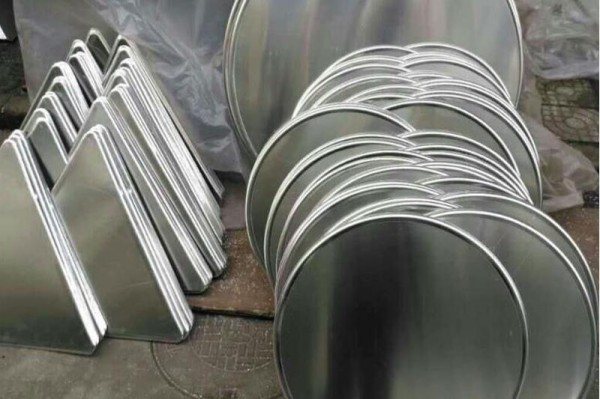
An aluminum circle cookware base specifically refers to a circular aluminum blank designed and manufactured for the bottom of cookware such as pots, frying pans, and woks. It is typically made from high-purity aluminum or aluminum-magnesium alloys (e.g., 1050, 1060, 3003, 5052 series). As the “thermal engine” of the cookware, its core function is to achieve efficient and uniform heat conduction, fundamentally determining cooking performance and energy efficiency.
1.2 Core Value and Market Positioning
The aluminum circle base addresses the pain points of uneven heating and low efficiency in traditional cookware. Compared to materials like iron and stainless steel, its exceptional thermal conductivity, lightweight nature, and cost-effectiveness make it the preferred choice for mainstream and high-end cookware manufacturers. It not only enhances the cooking experience but also aligns with the market’s ongoing demand for energy-saving, high-performance kitchenware.
1.3 Specifications and Material Selection
Base specifications are highly customized according to final product requirements. The core parameter ranges are as follows:
| Parameter |
Typical Range / Options |
Description and Application Guide |
| Common Alloy Grades |
1050, 1060, 3003, 5052 |
1050/1060: High thermal conductivity, for standard cookware; 3003/5052: Higher strength, for mid-to-high-end and commercial cookware. |
| Thickness Range |
1.0mm – 5.0mm |
Household cookware commonly uses 1.5-3.0mm; commercial woks require 3.0-5.0mm thick plates for heat capacity and strength. |
| Diameter Range |
10cm – 50cm+ |
Covers the full spectrum from small saucepans to large commercial woks. |
| Temper State |
O (Annealed), H14, H18, etc. |
O temper facilitates subsequent deep drawing; Hxx tempers provide higher rigidity for specific composite structures. |
2. Core Characteristics: Why Aluminum is the Superior Choice for Cookware Bases
The widespread application of aluminum circle bases stems from their irreplaceable combination of physical and processing properties.
2.1 Exceptional Thermal Performance
This is the most critical advantage of aluminum bases. Aluminum’s thermal conductivity (approx. 237 W/(m·K)) is significantly higher than that of stainless steel (15-20 W/(m·K)) and cast iron (~50 W/(m·K)). This means:
- Rapid Response: Heat is quickly absorbed from the source (open flame, induction hob, electric ceramic hob).
- Uniform Distribution: Heat spreads rapidly across the plane of the aluminum base, preventing large temperature differences between the center and edges of the pan. This effectively avoids localized food burning and enables precise cooking.
2.2 Excellent Strength-to-Weight Ratio
Aluminum’s density (2.7 g/cm³) is only about one-third that of iron. Using an aluminum base can significantly reduce the overall weight of the cookware (typically by 30%-50%), improving ease of handling, which is especially appreciated by elderly users. Simultaneously, through alloying (e.g., adding magnesium, manganese) and work hardening, aluminum bases can achieve sufficient strength and hardness for the vast majority of cooking scenarios.

2.3 Outstanding Formability and Processability
Aluminum has good ductility and plasticity, allowing it to be easily formed into complex shapes (like frying pan bodies with spouts) through processes like stamping, spinning, and deep drawing. It can also be perfectly integrated with stainless steel pot bodies, ceramic coatings, and non-stick coatings. This provides great design freedom for diverse and user-friendly cookware.
2.4 Remarkable Cost-Effectiveness and Environmental Friendliness
Compared to highly thermally conductive materials like copper and silver, aluminum is abundant and offers extremely high cost-effectiveness, making high-performance cookware accessible. Aluminum itself is non-toxic and harmless and is a 100% recyclable green material. The energy consumption of its recycling and remelting process is only about 5% of that for primary aluminum production, fully aligning with sustainable development principles.
3. Complete Precision Manufacturing Process Flow
The production of high-quality aluminum circle bases is a precision manufacturing chain integrating metallurgy, pressure processing, and surface science.
3.1 Overview of the Process Flow
graph TD
    A[Raw Material Selection] --> B[Melting and Casting];
    B --> C[Hot Rolling];
    C --> D[Cold Rolling];
    D --> E[Annealing];
    E --> F[Slitting/Cutting];
    F --> G[Surface Treatment];
    G --> H[Precision Inspection];
3.2 Detailed Explanation of Key Process Stages
- Melting and Casting: High-purity aluminum ingots are melted at approximately 700°C. After refining to remove impurities and gases, the molten aluminum is formed into aluminum coil stock with uniform thickness via a continuous casting and rolling process.
- Hot Rolling and Cold Rolling:
- Hot Rolling (400-500°C): The cast slab is rolled thinner, breaking down the as-cast structure and increasing material density and plasticity.
- Cold Rolling: The coil is further rolled to the target thickness at room temperature. This is the key process for achieving high dimensional accuracy, good surface finish, and flatness.
- Annealing: The cold-rolled aluminum coil is annealed at 300-350°C to relieve internal stresses and restore the material’s ductility, preparing it for subsequent deep processing.
- Slitting and Blanking/Shearing: High-precision CNC punching presses or rotary shears are used to cut the aluminum coil into circles of the specified diameter. This stage requires strict control of roundness, edge burrs, and surface scratches.
- Surface Treatment (As Required):
- Anodizing: Forms a hard, wear-resistant, and corrosion-resistant aluminum oxide layer, often used for high-end cookware with exposed aluminum bases.
- Spraying/Electrophoretic Coating: Applies an organic coating (e.g., high-temperature resistant paint) to provide color, enhance corrosion resistance, and serve as a primer for non-stick coatings.
- Cleaning and Passivation: Ensures the base surface is absolutely clean and oil-free to guarantee strong bonding with the pot body or coating adhesion.
4. Primary Application Scenarios
Thanks to their performance and cost advantages, aluminum circle bases have permeated all areas of cookware.
4.1 Household Cookware (Largest Application Market)
- Non-Stick Pans: The vast majority of non-stick pans use 3003 or 5052 series aluminum circles as the base material. Their uniform heat distribution protects the non-stick coating and extends its service life.
- Stainless Steel Clad Bottom Cookware: Aluminum circles act as the intermediate heat-spreading layer in a “stainless steel-aluminum-stainless steel” tri-ply composite structure, solving the uneven heating problem of stainless steel pots and making them compatible with induction hobs.
- Enameled Cast Iron/Ceramic Cookware: Used as the conductive layer in composite pot bottoms to improve overall thermal performance.
4.2 Commercial and Professional Cookware
Restaurant and hotel kitchens have high demands for cookware durability, heat capacity, and efficiency. Commercial woks and stock pots commonly use thickened 5052 series aluminum circles (3.0-5.0mm) to meet the demands of long-duration, high-heat cooking.
4.3 Kitchen Appliances and Specialized Cookware
- Appliance Inner Pots: Used as the base material for inner pots of rice cookers, pressure cookers, and multi-cookers.
- Outdoor Cookware: Leverages its lightweight advantage for camping pots and kettles.
- Specialized Equipment: Applied in industrial settings like food processing and laboratories that require uniform heating.

5. Development Trends and Future Outlook
The evolution of the cookware industry and shifting consumer demands are driving aluminum circle bases towards higher levels of development.
5.1 High Precision and Deep Customization
The market’s increasing demands for refined cookware appearance and consistent performance are pushing bases towards higher standards in thickness tolerance, flatness, and surface quality. Simultaneously, demand for customization is growing, including non-standard diameters, custom-shaped circles, and pre-formed bases.
5.2 Material Compositing and Functionalization
- Composite Bases: Multi-layer composite structures like “aluminum-stainless steel-aluminum” and “aluminum-copper-aluminum” are becoming mainstream in the high-end market, aiming to combine the thermal conductivity of aluminum, the durability of stainless steel, and the thermal evenness of copper.
- Functional Treatments: Developing bases with magnetic properties for higher-power induction hobs, bases with insulating outer layers to reduce handle temperature, etc.
5.3 Green Manufacturing and Sustainable Development
Adopting more environmentally friendly cleaning agents, passivators (e.g., chromium-free passivation), and promoting the use of recycled aluminum raw materials to reduce the carbon footprint across the lifecycle is an inevitable industry direction.
5.4 Integration with Smart Cookware
With the rise of smart cooking appliances, aluminum circle bases can serve as an ideal carrier for integrated temperature sensors, enabling the cookware itself to sense and provide temperature feedback. This provides the hardware foundation for precise temperature control and smart recipe execution.
6. Conclusion
The aluminum circle cookware base, with its scientifically balanced quartet of attributes—thermal conductivity, lightweight, processability, and cost—secures a central position in modern cookware manufacturing. It is not merely a simple metal component but a critical engineering element connecting the heat source to the food, determining cooking efficacy.
Facing future consumer upgrades and technological changes, the aluminum circle base industry will continue to empower the evolution of cookware products through precision manufacturing, composite material innovation, green process upgrades, and intelligent integration. It will bring more efficient, healthier, and more enjoyable cooking experiences to consumers worldwide. Its development trajectory clearly maps the trend of modern manufacturing towards high performance, sustainability, and a deep return to user value.

