Hot-Rolled Aluminum Circle/Blank: A Complete Guide to Manufacturing, Advantages, and Procurement
In high-end manufacturing, the core properties of materials directly determine the quality and market competitiveness of the final product. Hot-rolled aluminum circles/blanks, serving as the fundamental material for deep drawing applications, have become an indispensable component in modern cookware, appliances, and industrial manufacturing due to their superior processing characteristics. This guide provides an in-depth analysis of their manufacturing process, core advantages, and a practical framework for supplier evaluation.
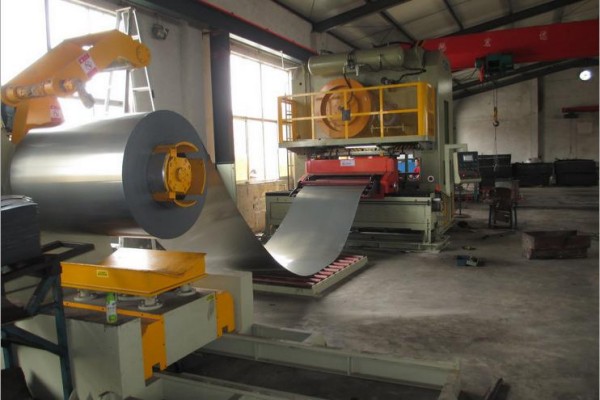 Aluminum sheet factory
1. Hot-Rolled Aluminum Blanks: Why the Preferred Choice for Deep Drawing?
Hot-rolled aluminum blanks are circular aluminum discs made from aluminum ingots that are hot-rolled into coil or sheet and then precision-cut. Compared to cold-rolled aluminum, its core advantages stem from the unique hot-rolling process: the ingot is rolled at 450-500°C, which thoroughly refines and recrystallizes the grain structure, resulting in a more uniform and dense microstructure, lower internal stress, and higher elongation and plasticity.
This makes it exceptionally effective in preventing issues like cracking, wrinkling, and uneven wall thickness during deep drawing and stamping, making it the ideal material for complex three-dimensional products such as non-stick cookware, pressure cookers, rice cooker inner pots, and lamp reflectors.
2. Lean Manufacturing: Decoding the Production Chain of High-Quality Blanks
Superior products originate from strictly controlled processes at every stage. The core workflow and key control points are as follows:
| Production Stage |
Core Process Description |
Key Control Points & Objectives |
| 1. Raw Material Selection |
Selecting aluminum ingots of specific alloy grades based on the end use. |
Controlling alloy composition to ensure baseline material properties (e.g., drawability, strength, corrosion resistance) meet standards. |
| 2. Core Hot Rolling |
Aluminum ingots are heated to 450-500°C and rolled to target thickness via multiple passes. |
Precisely controlling heating temperature and reduction per pass to refine and homogenize the grain structure, enhancing plasticity. |
| 3. Finish Rolling & Annealing |
The hot-rolled coil is cold-rolled to precise thickness, then heat-treated (annealed) to adjust the temper. |
Controlling thickness tolerance; precisely achieving tempers like O (fully soft), H12, etc., through annealing temperature and time to meet different processing needs. |
| 4. Precision Blanking |
Using high-precision punching or circle cutting machines to produce discs of specified diameter from the sheet/coil. |
Ensuring diameter and roundness accuracy, burr-free and damage-free edges, providing high-quality blanks for subsequent stamping. |
| 5. Final Inspection |
Comprehensive testing of finished products for dimensions, surface quality, and performance. |
Enforcing strict outgoing quality control to ensure consistency in thickness, surface finish, and mechanical properties for every batch. |
3. Irreplaceable Core Advantages: Hot-Rolled vs. Cold-Rolled
The advantages of hot-rolled aluminum blanks over standard cold-rolled blanks stem from their fundamental processing, as detailed in the comparison below:
| Comparison Dimension |
Hot-Rolled Aluminum Blank |
Standard Cold-Rolled Aluminum Blank |
| Grain Structure |
Uniform, equiaxed grains; denser structure. |
Elongated grains aligned in the rolling direction; presence of deformation texture. |
| Internal Stress |
Lower; more stable material properties. |
Higher; significant work hardening is present. |
| Elongation |
Very High (typically >35%); excellent plasticity. |
Relatively lower, depending on the level of cold work. |
| Deep Drawability |
Excellent; suitable for deep drawing and complex forming; resistant to cracking. |
Fair; suitable for shallow drawing or bending. |
| Primary Applications |
Non-stick cookware, pressure cookers, deep-drawn appliance liners, etc. |
Aluminum cans, nameplates, simple bent parts, etc. |
 Unprocessed aluminum plates
4. Core Application Fields & Material Selection Reference
Hot-rolled aluminum blanks are widely used in fields requiring high formability. The choice of alloy depends on specific needs:
| Application Field |
Typical Products |
Recommended Alloy(s) |
Reason for Selection |
| Cookware & Kitchenware |
Non-stick pan bodies, pressure cooker pots, woks |
1060, 3003 |
1060 offers excellent deep drawability; 3003 contains manganese, providing better strength and corrosion resistance. |
| Household Appliances |
Rice cooker inner pots, multi-clad bottom discs |
1050, 1060 |
High purity, good formability, strong bonding with coatings after surface treatment. |
| Lighting Industry |
LED lamp reflectors, shades |
1050, 1100 |
Good reflectivity and excellent formability for fabrication. |
| Industrial Components |
Chemical containers, decorative panels |
3003, 1100 |
3003 for corrosion resistance; 1100 offers a balance of strength and formability with good cost-effectiveness. |
5. Practical Guide for Buyers: How to Select a Reliable Factory
Choosing a partner should go beyond price. Focus on the following core dimensions. You can use the table below as a supplier evaluation checklist:
| Evaluation Category |
Specific Items to Assess |
Characteristics of a Superior Supplier |
Points to Consider |
| Hardware & Process |
1. Hot Rolling Line
2. Annealing Equipment
3. Blanking Precision |
Owns in-house hot rolling line; precise temperature control in annealing furnaces; employs high-precision automated punching/circle cutting lines. |
Inquire about equipment brands, age, and key process parameters (e.g., annealing temperature range). |
| Quality System |
1. Certifications
2. Testing Capability
3. Traceability |
Holds certifications like ISO 9001; has in-house lab for composition and mechanical testing; full traceability for products. |
Request sample inspection reports; check if testing equipment is complete and calibrated. |
| Product & Service |
1. Standard Capacity
2. Customization Capability
3. Technical Support |
Stable capacity to handle order fluctuations; flexible on custom sizes, tempers, pre-treatment; provides material selection advice. |
Confirm Minimum Order Quantity (MOQ), lead time for custom orders, and availability of technical support team. |
| Market Reputation |
1. Reference Clients
2. Industry Reputation
3. Customer Feedback |
Supplies to well-known brands; positive industry reputation; high repeat customer rate. |
Conduct an on-site audit if possible, or request verifiable references from key customers. |
 Aluminum pot used for cooking dishes
6. Market Trends and Outlook
The market currently shows three major trends: First, specialization of demand, with premium brands increasingly specifying hot-rolled base material for quality. Second, diversification of specifications, with growing demand for custom large sizes (>800mm) and specific tempers. Third, supply chain localization and stabilization, as buyers increasingly prefer establishing long-term strategic partnerships with core suppliers possessing comprehensive capabilities and rapid response.
Conclusion
In today’s manufacturing landscape that pursues high quality and efficiency, selecting a professional hot-rolled aluminum blank supplier is essentially building reliable “genes” into your product. One thorough factory audit is worth more than ten rounds of simple price negotiation. It is advisable for buyers to start from the fundamental performance requirements of the material, utilize the evaluation tools provided above, and conduct on-site audits of a supplier’s process capabilities and quality culture. This approach is key to establishing a supply chain partnership capable of growing together, mitigating risks, and achieving long-term market success.
Properties of the aluminum circle:
Aluminum circle is suitable for many markets, including cookware, automotive and lighting industries, etc., thanks to good product characteristics:
- Low anisotropy, which facilitates deep drawing
- Strong mechanical properties
- High and homogeneous heat diffusion
- Ability to be enameled, covered by PTFE (or others), anodized
- Good reflectivity
- High strength-to-weight ratio
- Durability and resistance to corrosion
Aluminum Circles Process
Ingot/Master Alloys — Melting Furnace – Holding Furnace — D.C. Caster — Slab —- Scalper — Hot Rolling Mill – Cold Rolling Mill – Punching – Annealing Furnace — Final Inspection – Packing — Delivery
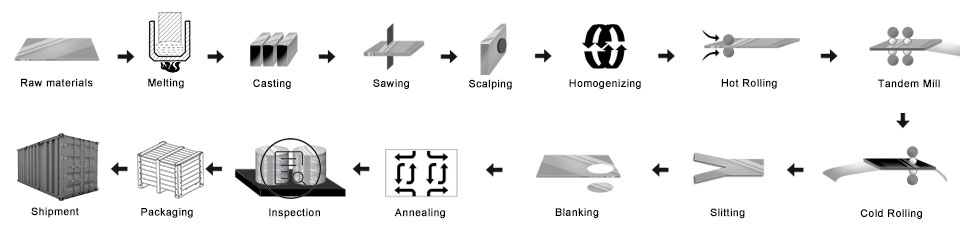
- Prepare the master alloys
- Melting furnace: put the alloys into the melting furnace
- D.C.cast aluminum ingot: To make the mother ingot
- Mill the aluminum ingot: to make the surface and side smooth
- Heating furnace
- Hot rolling mill: made the mother coil
- Colding rolling mill: the mother coil was rolled as the thickness you want to buy
- Punching process: become the size what you want
- Annealing furnace: change the temper
- Final inspection
- Packing: wooden case or wooden pallet
- Delivery
Quality Control
Assurance Below inspection will be done in the production.
- a. ray detection—RT;
- b. ultrasonic testing—UT;
- c. Magnetic Particle Testing-MT;
- d. penetration testing-PT;
- e. eddy current flaw detection-ET
1) Be free from Oil Stain, Dent, Inclusion, Scratches, Stain, Oxide Discoloration, Breaks, Corrosion, Roll Marks, Dirt Streaks, and other defects which will interfere with use.
2) Surface without black line, clean-cut, periodic stain, roller printing defects, such as other gko internal Control standards.
Aluminum discs packing:
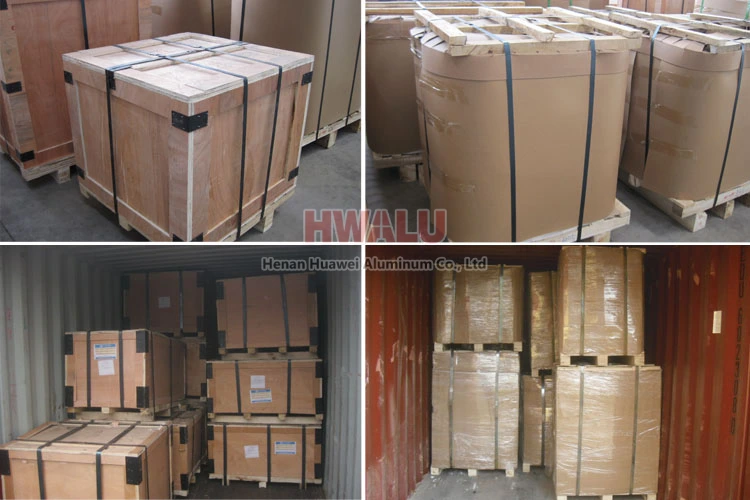
Aluminum circles can be packed by export standards, covering with brown paper and plastic film. Finally, the Aluminium Round is fixed on a wooden pallet/wooden case.
- Put the driers side the aluminum circle, keep the products dry and clean.
- Use clean plastic paper, pack the aluminium circle, keep good sealing.
- Use the snakeskin paper, pack the surface of the plastic paper, keep good sealing.
- Next, there are two ways of packaging: One way is wooden pallet packaging, using the crusty paper packing the surface; Another way is wooden case packaging, using the wooden case packing the surface.
- Finally, lay the steel belt on the wooden box’s surface, keeping the wooden box fastness and secure.
Aluminum circle of Henan Huawei Aluminum. meet the export standard. Plastic film and brown paper can be covered at customers’ needs. What’s more, a wooden case or wooden pallet is adopted to protect products from damage during delivery. There are two kinds of packaging, which are eye to wall or eye to the sky. Customers can choose either of them for their convenience. Generally speaking, there are 2 tons in one package, and loading 18-22 tons in 1×20′ container, and 20-24 tons in 1×40′ container.
Why choose us?
In order to move with the times, HWALU keeps introducing the state of the art equipment and technique to improve its competitiveness. Always adhere to the business philosophy of quality as the center and customer first, to provide the highest quality aluminum disc circle series products to all parts of the world. More …