Réflectivité, Ductilité, et performances de formage des disques en aluminium utilisés dans l'industrie de l'éclairage
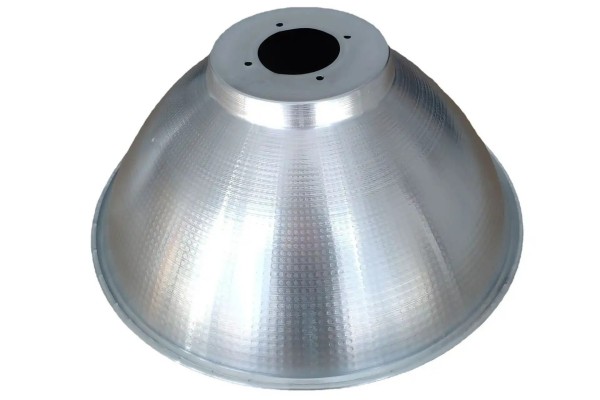
Disque réflecteur en aluminium pour l'éclairage est devenu l'une des matières premières les plus essentielles dans la fabrication de lampes modernes en raison de sa combinaison de haute réflectivité, excellente ductilité, et un comportement de formage prévisible. Ces propriétés déterminent non seulement l'efficacité optique du luminaire final, mais également la stabilité du traitement lors du filage., estampillage, ou emboutissage profond. Alors que les fabricants recherchent des structures plus légères et des performances lumineuses plus élevées, la sélection des disques en aluminium est devenue de plus en plus technique et axée sur les spécifications.

1. Réflectivité de surface et stabilité optique
La réflectivité est la caractéristique fonctionnelle essentielle pour les applications d'éclairage. Disques en aluminium, surtout ceux fabriqués à partir de 1050, 1060, et 1100 alliages, offrent des avantages optiques en raison de leur pureté et de leur texture métallurgique propre.
Facteurs clés affectant la réflectivité
- Rugosité de la surface (Râ): Une rugosité plus faible augmente la réflexion spéculaire.
- Pureté de l'alliage: Les alliages de haute pureté réduisent les micro-défauts qui diffusent la lumière.
- État du traitement thermique: L'état O améliore la cohérence pendant le polissage.
- Finition des surfaces: Polissage miroir, Anodisation, et le traitement brillant améliore l'uniformité optique.
- Qualité de la couche d'oxyde: Un film anodisé stable empêche la perte de réflectivité induite par l'oxydation.
Tableau 1. Niveaux de réflectivité typiques pour les disques en aluminium de qualité éclairage
| Alliage |
État des surfaces |
Réflectivité (Spéculaire) |
Applications d'éclairage courantes |
| 1050 |
Brillant / Anodisé |
83–87% |
Réflecteurs d'intérieur, spots |
| 1060 |
Miroir fini |
87–92% |
Réflecteurs à haut rendement, Modules LED |
| 1100 |
Traité brillant |
80–85% |
Abat-jour à usage général |
| 3003 |
Finition du moulin |
75–82% |
Réflecteurs résistants à la chaleur |
Les finitions miroir hautement spéculaires sont largement utilisées dans les lampes LED pour grande hauteur, luminaires commerciaux, et réflecteurs architecturaux.
2. Ductilité et comportement à l'emboutissage profond
La ductilité détermine si le disque en aluminium peut subir une déformation plastique importante sans se fissurer. Les boîtiers d'éclairage et les réflecteurs nécessitent souvent:
- Emboutissage profond jusqu'à 40 à 60 % de déformation
- Filage multi-passes à des vitesses contrôlées
- Répartition uniforme de la tension pour éviter les surfaces peau d'orange
Facteurs améliorant la ductilité
- État de recuit (État O):
Offre une faible dureté et un allongement élevé.
- Contrôle de la taille des grains:
Les grains fins et uniformes réduisent la concentration de contraintes localisées.
- Pureté et éléments d'alliage:
Des alliages tels que 1050/1060 avoir des ajouts d'alliage minimes, améliorer les taux de prolongation.
- Taux de réduction en roulement:
Influence la formation de la texture et l'anisotropie.
Tableau 2. Propriétés mécaniques des disques en aluminium de qualité éclairage courants
| Alliage |
Caractère |
Résistance à la traction (MPa) |
Élongation (%) |
Cote de formabilité |
| 1050 |
Ô |
60–95 |
30–40 |
Excellent |
| 1060 |
Ô |
65–100 |
28–38 |
Excellent |
| 1100 |
Ô |
70–110 |
25–35 |
Très bien |
| 3003 |
Ô |
95–130 |
20–30 |
Bien |
Ces propriétés déterminent directement si des formes géométriques complexes, telles que des réflecteurs paraboliques ou des boîtiers cylindriques profonds, peuvent être formées sans se fissurer ni se froisser..
3. Formation de performances dans la fabrication d'éclairage
Le comportement au formage des disques en aluminium est essentiel dans la production d'éclairage industriel où les composants sont façonnés à l'aide de processus tels que:
- Filature de métal
- Emboutissage profond
- Estampillage
- Hydroformage
- Formage sous pression
1. Performances de filage des métaux
Disques en aluminium à haute ductilité et répartition uniforme des grains:
- Flux fluide pendant l'essorage
- Ondulation de surface minimale
- Risque réduit de déchirure des bords
- Contrôle géométrique stable dans les formes paraboliques et coniques
Les réflecteurs d'éclairage nécessitent souvent une continuité de surface impeccable pour maximiser les performances optiques.
2. Emboutissage profond et formage sous presse
Les indicateurs de performance comprennent:
- Ratio de tirage limite (LDR) entre 2,0 et 2,3 pour l'aluminium pur
- Faible tendance à l'oreille grâce à une texture roulante contrôlée
- Récupération stable pendant le recuit
Ces qualités garantissent que le disque peut être transformé en réflecteurs profonds ou complexes sans défauts.

3. Compatibilité avec l'anodisation et le traitement de surface
Les réflecteurs d'éclairage nécessitent une apparence esthétique cohérente. Les disques en aluminium doivent fournir:
- Réponse d'anodisation de haute qualité
- Tonalité de couleur uniforme
- Résistance à la décoloration thermique
- Forte adhérence des couches éclaircissantes
Ces attributs améliorent à la fois la durabilité et la stabilité optique du luminaire..
4. Avantages de la conductivité thermique et de la gestion de la chaleur
Mis à part la réflectivité, les disques en aluminium contribuent à la gestion thermique, un facteur crucial dans l'éclairage LED.
Les avantages incluent:
- Conductivité thermique élevée (environ. 200–235 W/m·K)
- Dissipation rapide de la chaleur des puces LED
- Réduction de la déformation thermique
- Durée de vie améliorée des modules LED
Cela rend l'aluminium préférable à l'acier inoxydable ou au fer revêtu, qui offrent une efficacité thermique inférieure.

5. Applications dans le secteur de l’éclairage
Les disques en aluminium sont utilisés dans:
- Réflecteurs LED
- Réflecteurs pour downlights
- Spots et éclairage sur rail
- Réflecteurs industriels pour grande hauteur
- Luminaires architecturaux
- Boîtiers de lampes d'extérieur
- Réflecteurs paraboliques et coniques
Leur combinaison de performances optiques et mécaniques prend en charge les systèmes d'éclairage fonctionnels et décoratifs..
Conclusion
Qualité d'éclairage disque réflecteur en aluminium pour l'éclairage les matériaux offrent un équilibre exceptionnel de réflectivité, ductilité, et performances de formage. La microstructure contrôlée, haute pureté, et la compatibilité avec les processus de finition avancés rendent ces disques indispensables dans la fabrication moderne de réflecteurs et de boîtiers de lampes.. Des systèmes d'éclairage commerciaux aux réflecteurs LED à haute efficacité, disques en aluminium continuer à établir des normes industrielles en matière de performances optiques et de fabricabilité.
Propriétés du cercle en aluminium:
Le cercle en aluminium convient à de nombreux marchés, y compris les ustensiles de cuisine, industries de l'automobile et de l'éclairage, etc., grâce aux bonnes caractéristiques du produit:
- Faible anisotropie, ce qui facilite l'emboutissage profond
- Fortes propriétés mécaniques
- Diffusion thermique élevée et homogène
- Possibilité d'être émaillé, recouvert de PTFE (ou d'autres), anodisé
- Bonne réflectivité
- Rapport résistance/poids élevé
- Durabilité et résistance à la corrosion
Processus de cercles en aluminium
Lingots/alliages maîtres — Four de fusion – Four de maintien — DC. Roulette — Dalle —- Scalpeur — Laminoir à chaud – Laminoir à froid – Poinçonnage – Four de recuit — Inspection finale – Emballage — Livraison
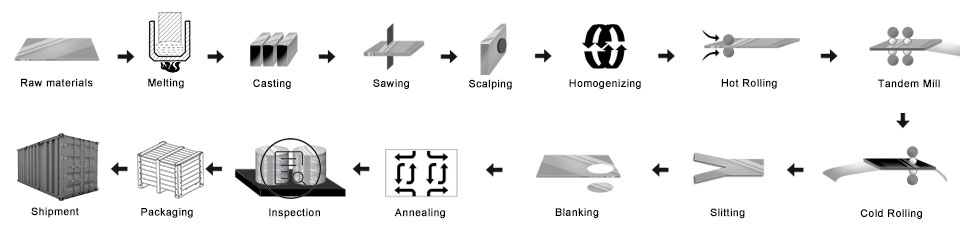
- Préparer les alliages maîtres
- Four de fusion: mettre les alliages dans le four de fusion
- Lingot d'aluminium moulé D.C.: Pour fabriquer le lingot mère
- Broyer le lingot d'aluminium: pour rendre la surface et le côté lisses
- Four de chauffage
- Laminoir à chaud: fait la bobine mère
- Laminoir à froid: la bobine mère a été roulée selon l'épaisseur que vous souhaitez acheter
- Processus de poinçonnage: deviens la taille que tu veux
- Four de recuit: changer d'humeur
- Inspection finale
- Emballage: caisse en bois ou palette en bois
- Livraison
Contrôle de qualité
Assurance L'inspection ci-dessous sera effectuée dans la production.
- un. détection de rayons—RT;
- b. test par ultrasons—Utah;
- c. Test de particules magnétiques-MT;
- d. tests d'intrusion-PT;
- e. détection de défauts par courants de Foucault-ET
1) Soyez exempt de taches d'huile, Bosse, Inclusion, Rayures, Tache, Décoloration d'oxyde, Pauses, Corrosion, Marques de rouleau, Traces de saleté, et autres défauts qui gêneront l'utilisation.
2) Surface sans ligne noire, coupe nette, tache périodique, défauts d'impression au rouleau, comme d'autres normes de contrôle interne de gko.
Emballage de disques en aluminium:
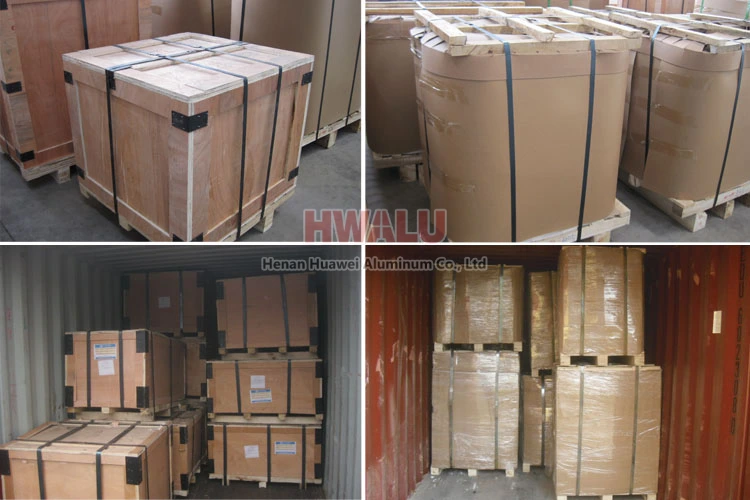
Les cercles en aluminium peuvent être emballés selon les normes d'exportation, recouvrir de papier kraft et de film plastique. Enfin, le rond en aluminium est fixé sur une palette en bois/caisse en bois.
- Placer le côté séchoir du cercle en aluminium, garder les produits secs et propres.
- Utilisez du papier plastique propre, emballer le cercle en aluminium, garder une bonne étanchéité.
- Utilisez le papier peau de serpent, emballer la surface du papier plastique, garder une bonne étanchéité.
- Suivant, il y a deux façons d'emballer: L’emballage de palettes en bois est une solution, en utilisant le papier croustillant emballant la surface; Une autre façon est l'emballage dans des caisses en bois, en utilisant la caisse en bois emballant la surface.
- Enfin, poser la ceinture en acier sur la surface de la caisse en bois, garder la solidité et la sécurité de la boîte en bois.
Cercle en aluminium de Henan Huawei Aluminium. répondre à la norme d'exportation. Le film plastique et le papier brun peuvent être recouverts selon les besoins des clients. De plus, une caisse en bois ou une palette en bois est adoptée pour protéger les produits contre les dommages lors de la livraison. Il existe deux types d'emballage, qui sont les yeux contre le mur ou les yeux vers le ciel. Les clients peuvent choisir l'un ou l'autre pour leur commodité. En général, il y a 2 tonnes dans un seul colis, et chargement 18-22 tonnes dans un conteneur 1×20′, et 20-24 tonnes dans un conteneur 1×40′.
Pourquoi nous choisir?
Pour évoluer avec son temps, HWALU continue d'introduire des équipements et des techniques de pointe pour améliorer sa compétitivité. Adhérez toujours à la philosophie d'entreprise de la qualité en tant que centre et client d'abord, fournir des produits de la série de cercles de disques en aluminium de la plus haute qualité dans toutes les régions du monde. Plus …

