Độ phản xạ, độ dẻo, và hiệu suất định hình của đĩa nhôm dùng trong ngành chiếu sáng
Đĩa phản xạ nhôm để chiếu sáng đã trở thành một trong những nguyên liệu thô thiết yếu nhất trong sản xuất đèn hiện đại nhờ sự kết hợp giữa độ phản xạ cao, độ dẻo tuyệt vời, và hành vi hình thành có thể dự đoán được. Các đặc tính này không chỉ xác định hiệu suất quang học của bộ đèn cuối cùng mà còn xác định độ ổn định xử lý trong quá trình kéo sợi, dập, hoặc vẽ sâu. Khi các nhà sản xuất theo đuổi cấu trúc nhẹ hơn và hiệu suất phát sáng cao hơn, việc lựa chọn đĩa nhôm ngày càng trở nên dựa trên kỹ thuật và thông số kỹ thuật.

1. Độ phản xạ bề mặt và độ ổn định quang học
Độ phản xạ là đặc tính chức năng cốt lõi cho các ứng dụng chiếu sáng. Đĩa nhôm, đặc biệt là những thứ được làm từ 1050, 1060, Và 1100 hợp kim, mang lại lợi thế quang học nhờ độ tinh khiết và kết cấu luyện kim sạch.
Các yếu tố chính ảnh hưởng đến độ phản xạ
- Độ nhám bề mặt (Ra): Độ nhám thấp hơn làm tăng sự phản xạ gương.
- Độ tinh khiết hợp kim: Hợp kim có độ tinh khiết cao làm giảm các khuyết tật vi mô làm tán xạ ánh sáng.
- Trạng thái xử lý nhiệt: Trạng thái O cải thiện tính nhất quán trong quá trình đánh bóng.
- Hoàn thiện bề mặt: Đánh bóng gương, Anod hóa, và xử lý sáng tăng cường tính đồng nhất quang học.
- Chất lượng lớp oxit: Một màng anodized ổn định ngăn chặn sự mất phản xạ do quá trình oxy hóa gây ra.
Bàn 1. Mức độ phản xạ điển hình cho đĩa nhôm chiếu sáng
| hợp kim |
Tình trạng bề mặt |
Độ phản xạ (đặc biệt) |
Ứng dụng chiếu sáng thông thường |
| 1050 |
đánh bóng / anod hóa |
83–87% |
Phản xạ trong nhà, đèn downlight |
| 1060 |
Gương đã hoàn thành |
87–92% |
Phản xạ hiệu suất cao, mô-đun LED |
| 1100 |
được xử lý sáng |
80–85% |
Chụp đèn thông dụng |
| 3003 |
nhà máy kết thúc |
75–82% |
Phản xạ chịu nhiệt |
Lớp hoàn thiện gương có độ phản chiếu cao được sử dụng rộng rãi trong đèn LED cao cấp, thiết bị chiếu sáng thương mại, và phản xạ kiến trúc.
2. Độ dẻo và hành vi vẽ sâu
Độ dẻo quyết định liệu đĩa nhôm có thể chịu biến dạng dẻo lớn mà không bị nứt hay không. Vỏ chiếu sáng và gương phản xạ thường yêu cầu:
- Vẽ sâu biến dạng tới 40–60%
- Quay nhiều lượt ở tốc độ được kiểm soát
- Phân bố lực căng đồng đều để tránh bề mặt có vỏ cam
Các yếu tố tăng cường độ dẻo
- Trạng thái ủ (Bang O):
Cung cấp độ cứng thấp và độ giãn dài cao.
- Kiểm soát kích thước hạt:
Hạt mịn và đồng đều làm giảm nồng độ ứng suất cục bộ.
- Các yếu tố tinh khiết và hợp kim:
Các hợp kim như 1050/1060 có bổ sung hợp kim tối thiểu, cải thiện tỷ lệ gia hạn.
- Tỷ lệ giảm khi lăn:
Ảnh hưởng đến sự hình thành kết cấu và tính dị hướng.
Bàn 2. Tính chất cơ học của đĩa nhôm cấp chiếu sáng thông thường
| hợp kim |
tính khí |
Độ bền kéo (MPa) |
Độ giãn dài (%) |
Đánh giá khả năng định dạng |
| 1050 |
Ô |
60–95 |
30–40 |
Xuất sắc |
| 1060 |
Ô |
65–100 |
28–38 |
Xuất sắc |
| 1100 |
Ô |
70–110 |
25–35 |
Rất tốt |
| 3003 |
Ô |
95–130 |
20–30 |
Tốt |
Những đặc tính này trực tiếp xác định liệu các hình dạng hình học phức tạp—chẳng hạn như gương phản xạ parabol hoặc vỏ hình trụ sâu—có thể được hình thành mà không bị nứt hoặc nhăn hay không.
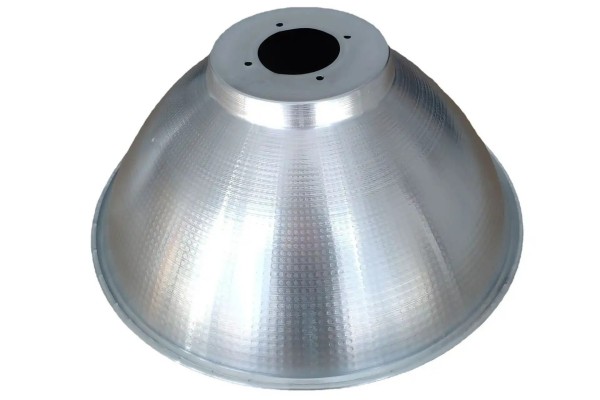
3. Hiệu suất định hình trong sản xuất chiếu sáng
Đặc tính hình thành của đĩa nhôm rất cần thiết trong sản xuất chiếu sáng công nghiệp nơi các bộ phận được định hình bằng các quy trình như:
- kéo sợi kim loại
- Vẽ sâu
- Dập
- Hydroforming
- Hình thành áp lực
1. Hiệu suất kéo sợi kim loại
Đĩa nhôm có độ dẻo cao và phân bố hạt đồng đều:
- Dòng chảy êm ái trong quá trình quay
- Độ gợn sóng bề mặt tối thiểu
- Giảm nguy cơ rách cạnh
- Kiểm soát hình học ổn định trong hình parabol và hình nón
Bộ phản xạ ánh sáng thường yêu cầu tính liên tục của bề mặt hoàn hảo để tối đa hóa hiệu suất quang học.
2. Vẽ sâu và tạo hình báo chí
Các chỉ số hiệu suất bao gồm:
- Tỷ lệ vẽ giới hạn (LDR) trong khoảng 2,0–2,3 đối với nhôm nguyên chất
- Xu hướng tai thấp do kết cấu lăn được kiểm soát
- Khả năng phục hồi ổn định trong quá trình ủ
Những phẩm chất này đảm bảo đĩa có thể được tạo thành các vật phản xạ sâu hoặc phức tạp mà không có khuyết tật..

3. Khả năng tương thích Anodizing và xử lý bề mặt
Tấm phản chiếu ánh sáng yêu cầu vẻ ngoài thẩm mỹ nhất quán. Đĩa nhôm phải cung cấp:
- Phản ứng anodizing chất lượng cao
- Tông màu đồng nhất
- Khả năng chống đổi màu nhiệt
- Độ bám dính mạnh mẽ của các lớp sáng
Những thuộc tính này cải thiện cả độ bền và độ ổn định quang học của thiết bị chiếu sáng.
4. Lợi ích dẫn nhiệt và quản lý nhiệt
Ngoài tính phản xạ, đĩa nhôm góp phần quản lý nhiệt—một yếu tố quan trọng trong chiếu sáng LED.
Lợi ích bao gồm:
- Độ dẫn nhiệt cao (khoảng. 200–235 W/m·K)
- Tản nhiệt nhanh từ chip LED
- Giảm biến dạng nhiệt
- Cải thiện tuổi thọ của mô-đun LED
Điều này làm cho nhôm được ưa chuộng hơn thép không gỉ hoặc sắt tráng, mang lại hiệu suất nhiệt thấp hơn.

5. Ứng dụng trong lĩnh vực chiếu sáng
Đĩa nhôm được sử dụng trong:
- đèn phản quang LED
- Phản xạ ánh sáng downlight
- Đèn chiếu sáng và chiếu sáng theo dõi
- Chóa phản quang công nghiệp tầm cao
- Đèn kiến trúc
- Vỏ đèn ngoài trời
- Phản xạ parabol và hình nón
Sự kết hợp giữa hiệu suất quang học và cơ học của chúng hỗ trợ cả hệ thống chiếu sáng chức năng và trang trí.
Phần kết luận
Cấp độ chiếu sáng đĩa phản xạ nhôm để chiếu sáng Vật liệu mang lại sự cân bằng đặc biệt về độ phản xạ, độ dẻo, và hiệu suất hình thành. Cấu trúc vi mô được kiểm soát, độ tinh khiết cao, và khả năng tương thích với các quy trình hoàn thiện tiên tiến làm cho những đĩa này không thể thiếu trong sản xuất chóa phản xạ và vỏ đèn hiện đại. Từ hệ thống chiếu sáng thương mại đến đèn phản quang LED hiệu suất cao, đĩa nhôm tiếp tục thiết lập các tiêu chuẩn công nghiệp về hiệu suất quang học và khả năng sản xuất.
Tính chất của vòng tròn nhôm:
Vòng nhôm phù hợp với nhiều thị trường, bao gồm cả dụng cụ nấu nướng, ngành công nghiệp ô tô và chiếu sáng, vân vân., nhờ đặc tính sản phẩm tốt:
- Tính dị hướng thấp, tạo điều kiện cho việc vẽ sâu
- Tính chất cơ học mạnh mẽ
- Khuếch tán nhiệt cao và đồng đều
- Khả năng tráng men, được bao phủ bởi PTFE (hoặc những người khác), anod hóa
- Độ phản xạ tốt
- Tỷ lệ cường độ trên trọng lượng cao
- Độ bền và khả năng chống ăn mòn
Quy trình vòng tròn nhôm
Hợp kim phôi/chủ — Lò nung chảy – Lò giữ — D.C.. bánh xe — Tấm —- Scalper — Nhà máy cán nóng – Nhà máy cán nguội – Đột – Lò ủ — Kiểm tra lần cuối – Đóng gói — Vận chuyển
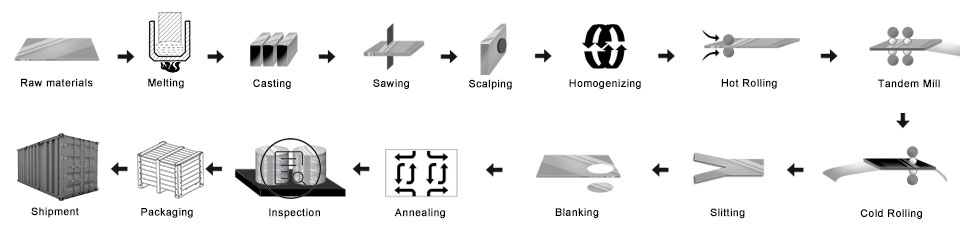
- Chuẩn bị các hợp kim chính
- Lò nấu chảy: đưa hợp kim vào lò nấu chảy
- Phôi nhôm D.C.cast: Để làm phôi mẹ
- Nghiền phôi nhôm: để làm cho bề mặt và mặt bên mịn màng
- Lò sưởi
- Nhà máy cán nóng: làm cuộn dây mẹ
- Máy cán nguội: cuộn dây mẹ đã được cán theo độ dày bạn muốn mua
- quá trình đấm: trở thành kích thước những gì bạn muốn
- Lò ủ: thay đổi tính khí
- Kiểm tra lần cuối
- đóng gói: vỏ gỗ hoặc pallet gỗ
- Vận chuyển
Kiểm soát chất lượng
Đảm bảo Kiểm tra dưới đây sẽ được thực hiện trong quá trình sản xuất.
- Một. phát hiện tia—RT;
- b. kiểm tra siêu âm—UT;
- c. Kiểm tra hạt từ tính-MT;
- d. thử nghiệm thâm nhập-PT;
- e. phát hiện khuyết tật dòng điện xoáy-ET
1) Thoát khỏi vết dầu, vết lõm, Bao gồm, Vết xước, vết bẩn, Sự đổi màu oxit, Giải lao, Ăn mòn, Dấu cuộn, Vệt bẩn, và các khiếm khuyết khác sẽ cản trở việc sử dụng.
2) Bề mặt không có đường màu đen, gọn gàng, vết bẩn định kỳ, lỗi in con lăn, chẳng hạn như các tiêu chuẩn Kiểm soát nội bộ gko khác.
Đóng gói đĩa nhôm:
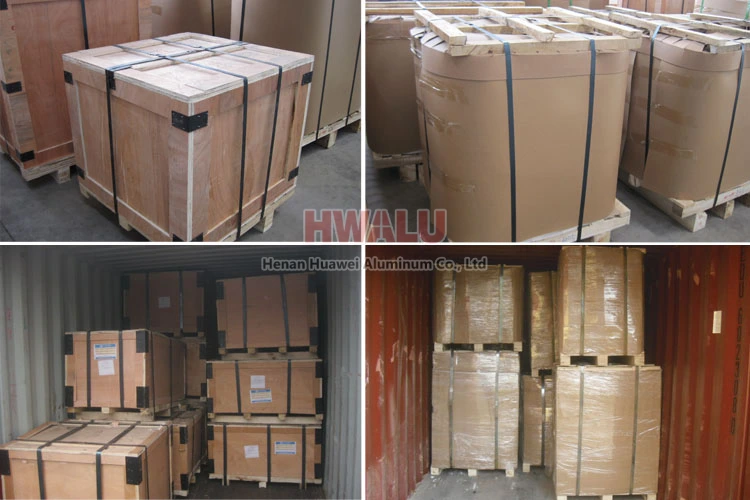
Vòng nhôm có thể được đóng gói theo tiêu chuẩn xuất khẩu, phủ bằng giấy màu nâu và màng nhựa. Cuối cùng, Vòng nhôm được cố định trên pallet gỗ/vỏ gỗ.
- Đặt bên máy sấy vào vòng tròn nhôm, giữ cho sản phẩm khô ráo và sạch sẽ.
- Sử dụng giấy nhựa sạch, đóng gói vòng tròn nhôm, giữ niêm phong tốt.
- Dùng giấy da rắn, đóng gói bề mặt của giấy nhựa, giữ niêm phong tốt.
- Kế tiếp, có hai cách đóng gói: Một cách là đóng gói pallet gỗ, sử dụng giấy giòn đóng gói bề mặt; Một cách khác là đóng gói bằng vỏ gỗ, sử dụng vỏ gỗ đóng gói bề mặt.
- Cuối cùng, đặt đai thép lên bề mặt hộp gỗ, giữ hộp gỗ bền và an toàn.
Vòng nhôm của Henan Huawei Aluminium. đáp ứng tiêu chuẩn xuất khẩu. Có thể phủ màng nhựa và giấy màu nâu theo nhu cầu của khách hàng. Còn gì nữa, hộp gỗ hoặc pallet gỗ được sử dụng để bảo vệ sản phẩm khỏi bị hư hỏng trong quá trình giao hàng. Có hai loại bao bì, mắt nhìn vào tường hay mắt nhìn trời. Khách hàng có thể chọn một trong hai để thuận tiện cho mình. Nói chung, có 2 tấn trong một gói, và tải 18-22 tấn trong container 1×20', Và 20-24 tấn trong container 1×40'.
Tại sao chọn chúng tôi?
Để di chuyển theo thời gian, HWALU liên tục giới thiệu các thiết bị và kỹ thuật hiện đại để nâng cao khả năng cạnh tranh. Luôn tuân thủ triết lý kinh doanh lấy chất lượng làm trung tâm và khách hàng là trên hết, để cung cấp các dòng sản phẩm vòng tròn đĩa nhôm chất lượng cao nhất cho mọi nơi trên thế giới. Hơn …