Waarom worden gastanks in vrachtwagens gemaakt van? 5083 aluminium legering?
HW-A. Invoering: Functionele positionering van luchttanks voor vrachtwagens en kernmateriaalvereisten
Luchttanks voor vrachtwagens zijn cruciale componenten van pneumatische systemen voor bedrijfsvoertuigen. Ze slaan voornamelijk perslucht op (werkdruk: 0.8-1.2MPa, ontwerp druk: 1.5-2.0MPa) en rembekrachtiging, oponthoud, en deurcontrolesystemen.
Hun werkomgeving brengt drie belangrijke uitdagingen met zich mee: “dynamische spanning” door trillingen van het voertuig, “ernstige corrosie” tegen zout water en stof van de weg, En “lichtgewicht vraag” om de brandstofefficiëntie te verbeteren.
Deze uitdagingen stellen strenge materiële eisen: Grote sterkte (weerstand bieden tegen drukvervorming), Hoge corrosieweerstand (het weerstaan van gevaren op de weg), lichtgewicht (dichtheid ≤2,7g/cm³), en goede vervormbaarheid (compatibel met lassen/spinnen).
Opmerkelijk, 5083 aluminiumlegering voor vrachtwagentoepassingen is de voorkeurskeuze geworden voor luchttanks voor vrachtwagens. Het voldoet aan alle bovenstaande behoeften en houdt stand 85% van het marktaandeel (bron: 2024 Bedrijfsvoertuigmateriaalrapport door de Chinese Vereniging van Autofabrikanten).

HW-B. Samenstelling Ontwerp en kernprestatievoordelen van 5083 Aluminiumlegering voor vrachtwagentoepassingen
Deze truck-grade 5083 aluminium legering behoort tot de 5-serie Al-Mg-categorie, speciaal ontworpen voor hogedrukcomponenten van bedrijfsvoertuigen. De compositie is in evenwicht “sterkte-corrosiebestendigheid-taaiheid” en houdt zich aan GB/T 3880.2-2022 en ASTM B209M-normen.
(A) Wetenschappelijk compositieontwerp
| Element (Massafractie) |
Inhoudsbereik |
Kernfunctie |
Bijdrage aan de prestaties van de luchttank |
| mgr (Magnesium) |
4.0-4.9% |
Primaire versteviger via vaste oplossing |
Bestand tegen een werkdruk van 1,2 MPa (vloeigrens >210MPa), het voorkomen van plastische vervorming |
| Mn (Mangaan) |
0.40-1.0% |
Verfijnt granen, verbetert de lasbaarheid |
Vermindert de lasspanningsconcentratie; behoudt 85% sterkte van het basismetaal na het lassen |
| Cr (Chroom) |
0.05-0.25% |
Vormt Al₇Cr₂-dispersoïden |
Voorkomt spanningscorrosie (SCC) zelfs bij -40℃ |
| Fe (Ijzer)/En (Silicium) |
≤0,40%/≤0,40% |
Controleert onzuiverheden |
Zorgt voor ≥12% rek bij het spinnen, het vermijden van verwerkingsscheuren |
Elk element vervult een gerichte rol: magnesium verhoogt de kracht, mangaan optimaliseert de verwerkbaarheid, chroom verbetert de duurzaamheid, en onzuiverheidscontroles handhaven de structurele integriteit.
(B) Matching van belangrijke mechanische eigenschappen met luchttankvereisten
Deze gespecialiseerd 5083 legering (H112-temp, gebruikelijk voor luchttanks) sluit nauw aan bij de luchttankbehoeften van vrachtwagens. Hieronder vindt u kritische prestatiestatistieken:
| Prestatie-indicator (GB/T 3880.2) |
5083-H112 |
Vereiste luchttank voor vrachtwagen |
Analyse van aanpassingsvermogen |
| Treksterkte σb (MPa) |
≥310 |
≥280 (GB/T 150.1) |
10.7% De marge is bestand tegen remdrukpieken van 1,5 MPa |
| Vloeisterkte σ0,2 (MPa) |
≥210 |
≥180 |
16.7% marge voorkomt kruip bij kamertemperatuur (≤1×10⁻⁸/s) |
| Verlenging δ₅ (%) |
≥12 |
≥10 (draaien) |
Maakt eenmalig draaien mogelijk; Nauwkeurigheid ±0,5 mm (beter dan staal ± 1 mm) |
| Vermoeidheid Sterkte (10⁶ cycli, MPa) |
≥120 |
≥100 (wisselende druk) |
10⁷-cyclus levensduur overschrijdt ontwerp van 10 jaar (1.8×10⁵ cycli), het vermijden van vermoeiingsscheuren |
| Dikte (g/cm³) |
2.66 |
<3,0 (lichtgewicht) |
66.1% lichter dan Q235-staal; 4 tanks (80L) gewicht verminderen met 120 kg, brandstofverbruik terugdringen 5-8% |
Deze statistieken laten een evenwichtige optimalisatie zien: de legering offert niet de ene eigenschap op voor de andere, qua sterkte beter presteren dan alternatieven, lichtheid, en duurzaamheid.

HW-C. Gericht aanpassingsvermogen van de gespecialiseerde 5083 Bedrijfsomstandigheden van legering voor luchttank van vrachtwagen
Luchttanks voor vrachtwagens worden geconfronteerd met drie zware uitdagingen: wisselende druk, complexe corrosie, en temperatuurschommelingen. Deze truck-grade 5083 legering pakt elk aan via inherente eigenschappen - waarom het staal en andere aluminiumsoorten heeft vervangen.
(A) Drukdragend vermogen: Voldoen aan statische en dynamische drukvereisten
Eerst, de legering blinkt uit in statische drukstabiliteit. Luchttanks slaan langdurig 0,8-1,2 MPa lucht op, zo tegen “kunststof opleveren” En “kruipen” is van cruciaal belang.
De vloeigrens van 210 MPa geeft een 4.7 veiligheidsfactor (versus. ontwerpspanning luchttank ≈45 MPa). Dit is veel hoger dan dat van staal 3.0 factor, het voorkomen van vervorming op lange termijn.
Voorbij statische weerstand, het heeft sterke dynamische vermoeidheidsprestaties. Remmen zorgt ervoor dat de druk daalt van 1,2 MPa naar 0,6 MPa en terugveert, waardoor er wisselende belastingen ontstaan.
Volgens ASTM G45, het bereikt 10⁷ vermoeidheidscycli (spanningsverhouding 0,1-0,7σb). Dit is de ontwerplevensduur van 10 jaar (1.8×10⁵ cycli), het elimineren van vermoeiingsscheuren (een risico voor 6061 legering).
(B) Corrosiebescherming: Bestand tegen complexe wegcorrosieomgevingen
Opmerkelijk, deze legering biedt “zelfbescherming” staal ontbreekt. Luchttanks van vrachtwagens worden geconfronteerd met ontdooiend zout water (5-10% NaCl), industrieel stof (ZO₂, Cl⁻), en straatvuil.
Stalen tanks moeten elke keer opnieuw worden geverfd 2 jaar om roest te voorkomen, waardoor de levenscycluskosten toenemen. Deze legering vermijdt dat.
Voor één, het heeft een uitstekende weerstand tegen putjes. Het oppervlak vormt een dichte Al₂O₃-MgO-film (5-10nm dik) dat corrosieve ionen blokkeert.
Bij NaCl-testen, zijn pitting-potentieel (-0.6V versus SCE) is 0,1V hoger dan 5052 en 0,3V hoger dan Q235-staal. Putsnelheid ≤0,01 mm/jaar – geen significante putcorrosie na 1000 uur zoutsproeien – geen extra coatings nodig.
Even belangrijk, het is bestand tegen SCC. Lasverbindingen hebben restspanningen (≤150 MPa), wat kan leiden tot inscheuren “spanning + corrosie” omgevingen.
Dankzij chroom, het vormt Al₇Cr₂-korrelgrensfasen die stoppen met glijden. Volgens ASTM G36, de kritische SCC-sterkte is 180 MPa (hoger dan restspanning)—het vermijden van risico's van ongemodificeerde Al-Mg-legeringen.
(C) Temperatuuraanpassingsvermogen: Dekt alle klimaatomstandigheden
Verder, deze legering presteert betrouwbaar bij extreme temperaturen: een must voor vrachtwagens in uiteenlopende klimaten. Het werkt vanaf -40℃ (noordelijke winters) tot 60℃ (zuidelijke zomer ).
In tegenstelling tot staal, het vermijdt “brosheid bij lage temperaturen” en handhaaft stabiliteit bij hoge temperaturen.
Bij -40℃, zijn treksterkte (320MPa) is iets hoger dan kamertemperatuur (310MPa). Verlenging (11.5%) zakt alleen maar voorbij 4.2% (versus. kamertemperatuur 12%).
Staal, daarentegen, verliest voorbij 50% rek onder -20℃ – gevoelig voor scheurvorming. Dit maakt de legering van cruciaal belang voor noordelijke vloten.
In zomerhitte van 60℃, zijn vloeigrens (205MPa) zakt gewoon door 2.4% (versus. kamertemperatuur 210 MPa). Kruipsnelheid ≤2×10⁻⁸/s – veel lager dan de 5×10⁻⁷/s van Q235-staal.
Dit garandeert nee “uitpuilend” vervorming, zelfs na langdurige blootstelling aan hoge temperaturen.

HW-D. Selectievergelijking met andere kandidaatmaterialen: Waarom de 5083 Vrachtwagenlegering is optimaal?
Om zijn superioriteit te bevestigen, vergelijk het met gewone alternatieven: koolstofstaal, laaggelegeerd staal met hoge sterkte, andere aluminiumsoorten, en roestvrij staal. Evalueer de sterkte, corrosieweerstand, gewicht, kosten, en aanpassingsvermogen.
| Materiaalsoort |
Cijfer |
Treksterkte (MPa) |
Corrosiebestendigheid (1000h Zoutspray) |
Dikte (g/cm³) |
80L Tankgewicht (kg) |
Kosten (CNY/kg) |
Aanpassingsvermogenscore (10) |
Kern nadelen |
| Koolstofstaal |
Q235 |
375 |
Ernstige roest (>5%) |
7.85 |
185 |
5.5 |
5.0 |
66% zwaarder, heeft regelmatig onderhoud nodig |
| Hoogwaardig staal |
Q345 |
470 |
Matige roest (3-5%) |
7.85 |
185 |
7.0 |
5.5 |
Geen gewichtsreductie, heeft nog steeds bescherming tegen corrosie nodig |
| Aluminiumlegering |
5052 |
230 |
Kleine pitting (<0.01mm) |
2.68 |
62 |
22 |
7.5 |
Onvoldoende kracht (kan 1,2 MPa op lange termijn niet verdragen) |
| Aluminiumlegering |
6061 |
276 |
Matige pitting (0.01-0.02mm) |
2.70 |
63 |
25 |
6.5 |
Slechte corrosieweerstand, gevoelig voor SCC-nalassen |
| Roestvrij staal |
3004 |
515 |
Geen roest |
7.93 |
187 |
35 |
6.0 |
Hetzelfde gewicht als staal, 1.6× kosten van 5083 |
| Aluminiumlegering |
5083 (Vrachtwagen) |
310 |
Geen noemenswaardige corrosie |
2.66 |
61 |
28 |
9.5 |
Iets hogere kosten vooraf, maar levenscyclusbesparingen compenseren dit |
De vrachtwagenklasse 5083 legering is het enige materiaal dat uitblinkt op alle kritische gebieden. Het komt overeen met de sterkte van staal, presteert beter wat betreft corrosieweerstand en gewicht, en vermijdt de gebreken van andere aluminiumsoorten.
Terwijl het de kosten vooraf zijn (28 CNY/kg) is hoger dan die van staal (5.5-7 CNY/kg), levenscyclusbesparingen veranderen dit. Verminderd brandstofverbruik (1200 CNY/voertuig/jaar) en geen corrosie-onderhoud (500 CNY/voertuig/jaar) maak het kostenneutraal 2 jaar en 30% goedkoper voorbij 10 jaar.
HW-E. Procescompatibiliteit en industriestandaarden voor 5083 Legering luchttanks
De waarde van een materiaal hangt af van de maakbaarheid ervan. Deze gespecialiseerd 5083 legering past bij gangbare luchttankprocessen en voldoet aan wereldwijde normen, waardoor betrouwbaarheid en schaalbaarheid worden gegarandeerd.
(A) Compatibiliteit met kernproductieprocessen
Eerst, het past bij draaiend vormen - het belangrijkste proces voor luchttankcilinders. Spinnen zorgt voor naadloos, hoge sterkte cilinders.
De rekverhouding van ≥12% en de plastische rekverhouding van ≥0,8 van de legering maken dit mogelijk “eenmalig draaien.” Staal nodig 2-3 gaat voorbij.
Na het draaien, De rondheidsfout van de cilinder is ≤0,3 mm, en de uniformiteit van de wanddikte raakt 95%. Dit zorgt voor een consistente drukverdeling.
Volgende, de lasbaarheid ervan is een belangrijk productievoordeel. Luchttanks hebben sterk nodig, lekvrije lassen om cilinders te verbinden en .
Er wordt gebruik gemaakt van TIG-lassen met ER5356 (5% mgr). Dit komt overeen met de samenstelling van de legering, het vermijden van brosse intermetallische fasen.
Gelaste verbindingen hebben een treksterkte van 270 MPa: 87% van het basismetaal. Lasinspectie (UT testen) slagingspercentage is 99.5%.
In tegenstelling tot 6061 legering, er zijn geen “onvolledige fusie” of “porositeit” problemen - veelvoorkomende oorzaken van lekkage van de luchttank.
Eindelijk, nabewerking en testen zorgen voor betrouwbaarheid. Na het vormen en lassen, luchttanks krijgen “spanningsverlichting gloeien” (120-150℃×2 uur).
Dit vermindert de restspanning van 150 MPa tot minder dan 50 MPa. Dan komen er twee kritische tests:
- Hydrostatische test: 1.5× ontwerpdruk, 30min. hold – geen lekkage.
- Luchtdichtheidstest: 0.8MPa, 24h vasthouden: drukval ≤0,02 MPa.
De spanningscorrosieweerstand van de legering zorgt ervoor 100% slagingspercentage voor tests – veel hoger dan dat van staal 95%.
(B) Naleving van industrienormen
Opmerkelijk, luchttanks gemaakt van deze vrachtwagenkwaliteit 5083 legering voldoet aan strikte binnenlandse en internationale normen. Voor grootschalig gebruik is dit essentieel.
In eigen land, het houdt zich aan drie belangrijke normen:
- GB/T 150.1-2011: Regelt de veiligheid van drukvaten.
- GB/T 25198-2010: Specificeert de kwaliteit van aluminiumplaten voor druktoepassingen.
- QC/T 932-2012: Afgestemd op de luchttankbehoeften van vrachtwagens.
Internationaal, het voldoet:
- ASTM B209M: Wereldwijde standaard voor aluminiumplaten.
- ASME BPVCCCE A VIII: Amerikaanse drukvatcode.
- ISO 15579: Internationale standaard voor aluminium drukvaten.
Bijvoorbeeld, per QC/T 932, de luchttanks blijven daarna strak zitten 50 temperatuur cycli (-40℃ tot 60℃). Stalen tanks lekken vaak daarna 30 cycli als gevolg van mismatches in thermische uitzetting.
HW-F. Toepassingsgevallen en toekomstige trends
De praktische waarde van de legering wordt bewezen door het wijdverbreide gebruik ervan in het vrachtvervoer. Voortdurende innovaties zullen de mogelijkheden ervan verder uitbreiden, wat relevant is voor toekomstige bedrijfsvoertuigen.
(A) Toepassingspraktijken van grote vrachtwagenmerken
Momenteel, Toonaangevende binnenlandse en internationale merken gebruiken de luchttanks van deze legering in vlaggenschipmodellen, met duidelijke prestatievoordelen.
Foton Daimler rust zijn Auman EST zware vrachtwagens uit (460pk) met 4 zulke tanks (80L totaal). Vergeleken met stalen tanks, dit vermindert het gewicht met 125 kg.
Het brandstofverbruik daalt van 38 l/100 km naar 35,5 l/100 km. Voor een vloot van 100 vrachtwagens (100,000km/jaar), dit bespaart jaarlijks 200.000 liter brandstof – 1,6 miljoen CNY tegen huidige prijzen.
Volvo FH Heavy-Duty Trucks integreren de tanks van deze legering met geïntegreerde leidingen. Dit vermindert het gewicht en minimaliseert corrosiegerelateerde pijpleidingverstoppingen.
Vóór de legering, Elke 100.000 km had Volvo te maken met stilstand van de pijpleidingen. Na het upgraden, dit strekt zich uit tot 250.000 km, waardoor de onderhoudskosten met 60%.
Dongfeng Commercial Vehicles ontwikkelde een variant op de noordelijke markt: “de tanks van deze legering + slagvaste koppen bij lage temperaturen.”
Deze tanks doorstaan een impacttest van -40℃ (20J-energie) zonder te barsten. Stalen tanks falen hier vaak in. Het is nu standaard voor de Noordoost-/Noordwest-vloten van Dongfeng (winterse temperaturen < -30℃).
(B) Trends in technologische ontwikkeling
Drie trends zullen de toekomst van de legering in luchttanks voor vrachtwagens vormgeven: materiaaloptimalisatie, structurele innovatie, en intelligente productie.
Eerst, materiaaloptimalisatie zal de prestaties verbeteren. Onderzoekers voegen hieraan toe 0.1-0.2% scandium (Sc) om een Sc-gemodificeerde te maken 5083 vrachtwagen legering.
Scandium vormt Al₃Sc-dispersoïden die korrels verfijnen en de sterkte vergroten. De treksterkte kan oplopen tot 350 MPa, waardoor de tankwanden dunner kunnen worden van 5 mm tot 4 mm. Dit vermindert het gewicht met een ander 20% terwijl de veiligheidsmarges behouden blijven.
Seconde, structurele innovatie vergroot het nut. Een veelbelovend ontwerp is een dubbele laag: “dit 5083 legering + koolstofvezelcomposiet.”
De binnenste legeringslaag zorgt voor dichtheid en corrosiebestendigheid. De buitenste koolstofvezellaag voegt sterkte toe. Dit past bij nieuwe, zware vrachtwagens op energiegebied, die meer lichtgewicht nodig hebben om het gewicht van de batterij te compenseren.
Derde, intelligente productie verbetert de precisie en efficiëntie. Vrachtwagenfabrikanten gebruiken laserlasrobots voor de tankassemblage.
Deze robots werken met een snelheid van 1,5 m/min – 3× sneller dan handmatig lassen – en garanderen tegelijkertijd een consistente kwaliteit. Online diktedetectie (1000Hz-bemonstering) bewaakt muren in realtime.
Samen, deze techneuten zijn opgegroeid 5083 kwalificatietarieven voor gelegeerde luchttanks vanaf 95% tot 99% – vermindering van verspilling en kosten.
HW-G. Conclusie
Samengevat, kiezen 5083 aluminiumlegering voor vrachtwagentoepassingen voor luchttanks is geen toeval. Het balanceert “materiaal eigenschappen, operationele behoeften, en proceskosten.”
De Mg-Mn-Cr-samenstelling biedt uitgebreide voordelen: hoge sterkte voor druk, corrosiebestendigheid voor ruwe wegen, lichtgewicht voor brandstofefficiëntie, en vervormbaarheid voor naadloze productie.
In tegenstelling tot alternatieven, het doet geen concessies aan kritische meetgegevens, waardoor het de meest veelzijdige en kosteneffectieve keuze is.
Terwijl bedrijfsvoertuigen overschakelen op elektrificatie en lichtgewicht, de rol van deze legering zal groeien. Met Sc-modificatie, hybride structuren, en slimme productie, het zal de standaard blijven voor traditionele tanks.
Mogelijk wordt het zelfs uitgebreid naar waterstofopslag voor brandstofcelvrachtwagens (met een betere weerstand tegen waterstofverbrossing).
In de kern, de selectielogica van de legering is eenvoudig: het stemt de prestaties af op de pijnpunten van de luchttank (druk, corrosie, temperatuur) en dekt de initiële kosten met langetermijnbesparingen. Deze holistische pasvorm maakt hem vandaag de dag en in de toekomst onvervangbaar in bedrijfsvoertuigen.
Eigenschappen van de aluminium cirkel:
Aluminium cirkel is geschikt voor vele markten, inclusief kookgerei, auto- en verlichtingsindustrie, enz., dankzij goede producteigenschappen:
- Lage anisotropie, wat het dieptrekken vergemakkelijkt
- Sterke mechanische eigenschappen
- Hoge en homogene warmteverspreiding
- Mogelijkheid om te emailleren, bedekt met PTFE (of anderen), geanodiseerd
- Goede reflectiviteit
- Hoge sterkte-gewichtsverhouding
- Duurzaamheid en weerstand tegen corrosie
Aluminium cirkels proces
Ingots/Master-legeringen — Smeltoven – Houdoven — DC. Caster — Plaat —- Scalper — Warmwalserij – Koudwalserij – Ponsen – Gloeioven — Eindinspectie – verpakking — Levering
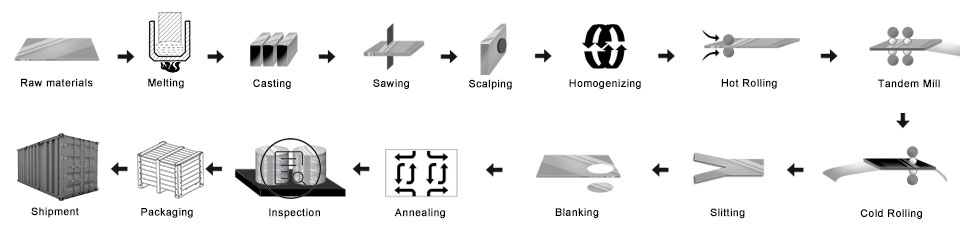
- Bereid de masterlegeringen voor
- Smeltoven: plaats de legeringen in de smeltoven
- D.C. gegoten aluminium staaf: Om de moederbaar te maken
- Frees de aluminium staaf: om het oppervlak en de zijkant glad te maken
- Verwarming oven
- Warmwalserij: de moederspoel gemaakt
- Koudewalserij: de moederspoel werd gerold in de dikte die u wilt kopen
- Ponsen proces: word de maat die je wilt
- Gloeioven: verander het humeur
- Eind inspectie
- Inpakken: houten kist of houten pallet
- Levering
Kwaliteitscontrole
Zekerheid Onderstaande inspectie zal tijdens de productie worden uitgevoerd.
- A. straal detectie—RT;
- B. ultrasoon testen—UT;
- C. Magnetische deeltjestesten-MT;
- D. penetratietesten-PT;
- e. wervelstroomfoutdetectie-ET
1) Wees vrij van olievlekken, Deuk, Inclusie, Krassen, Vlek, Oxideverkleuring, Pauzes, Corrosie, Rolmarkeringen, Vuil strepen, en andere gebreken die het gebruik hinderen.
2) Oppervlak zonder zwarte lijn, zuiver gesneden, periodieke vlek, defecten bij het afdrukken van rollen, zoals andere interne controlenormen van de gko.
Aluminium schijven verpakking:
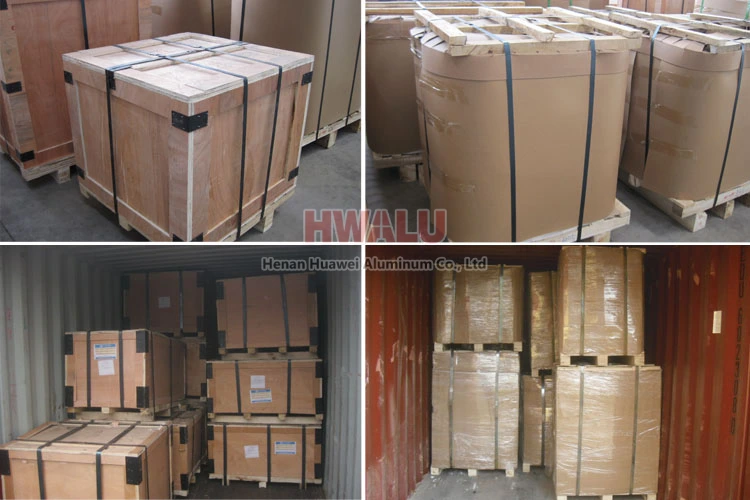
Aluminiumcirkels kunnen volgens exportnormen worden verpakt, bedekken met bruin papier en plastic folie. Eindelijk, de Aluminium Round wordt op een houten pallet/houten kist bevestigd.
- Plaats de drogers naast de aluminium cirkel, houd de producten droog en schoon.
- Gebruik schoon plastic papier, pak de aluminium cirkel in, goede afdichting behouden.
- Gebruik het slangenleerpapier, pak het oppervlak van het plastic papier in, goede afdichting behouden.
- Volgende, Er zijn twee manieren van verpakken: Eén manier is het verpakken van houten pallets, gebruik het knapperige papier dat het oppervlak bedekt; Een andere manier is het verpakken van houten kistjes, met behulp van de houten kist die het oppervlak inpakt.
- Eindelijk, leg de stalen riem op het oppervlak van de houten kist, het houden van de houten kistvastheid en veiligheid.
Aluminium cirkel van Henan Huawei Aluminium. voldoen aan de exportnorm. Plastic folie en bruin papier kunnen naar wens van de klant worden afgedekt. Bovendien, Er wordt een houten kist of houten pallet gebruikt om producten tijdens de levering tegen schade te beschermen. Er zijn twee soorten verpakkingen, die oog in oog staan met de muur of oog naar de lucht. Klanten kunnen voor hun gemak een van beide kiezen. In het algemeen, er zijn 2 ton in één pakket, en laden 18-22 ton in 1×20′ container, En 20-24 ton in 1×40′ container.
Waarom voor ons kiezen?
Om met de tijd mee te gaan, HWALU blijft de modernste apparatuur en techniek introduceren om zijn concurrentiepositie te verbeteren. Houd u altijd eerst aan de bedrijfsfilosofie van kwaliteit als centrum en klant, om producten uit de aluminium schijfcirkelserie van de hoogste kwaliteit aan alle delen van de wereld te leveren. Meer …

