The Ultimate Guide to Global Procurement of 1mm 3003 Aluminum Discs: A Comprehensive Analysis from Materials Science to Supply Chain Strategy
Introduction: Core Raw Material Strategy in the Globalized Manufacturing Landscape
In today’s world of refined and specialized division of labor in global manufacturing, the quality of basic raw materials has transcended price to become a core element determining the market competitiveness and brand value of end products. Among numerous industrial materials, aluminum alloys hold a special place due to their unique combination of properties. Within this category, 1mm thick 3003 aluminum alloy discs are the “unsung champion” material in various light industry sectors such as cookware manufacturing, lighting, electrical components, and metal packaging. Their selection and application directly impact product forming yield, service life, safety performance, and final cost.
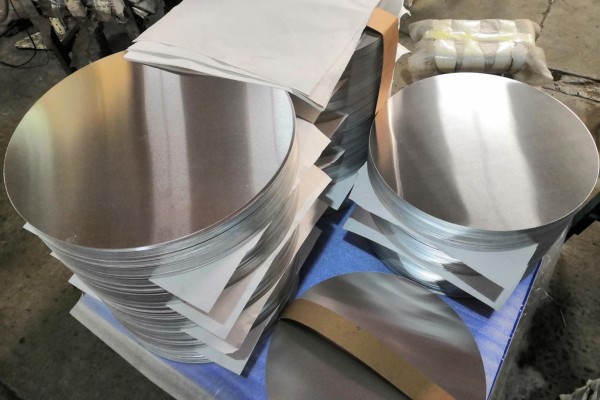 Henan Huawei Aluminum 3003 aluminum sheet
Entering 2026, with the recovery and structural adjustment of global manufacturing, the rise of emerging markets, and the pursuit of higher product quality in developed markets, the aluminum processing industry faces new opportunities and challenges. Procurement decision-makers are no longer mere price negotiators but also managers of supply chain risk, analysts of technological trends, and creators of strategic value. This article aims to go beyond traditional product introductions, providing a panoramic, in-depth guide on 1mm 3003 aluminum discs for global procurement managers, product designers, manufacturing engineers, and corporate decision-makers from five dimensions: materials science, process engineering, applied mechanics, market economics, and supply chain management. We will not only answer “what is this” and “how is it used” but also delve into strategic questions like “why choose it,” “how to choose the best,” and “what does the future hold.”
Chapter 1: Deconstructing 3003 Aluminum Alloy – The Microscopic World of Materials Science
1.1 The Alloying Philosophy of 3003 Aluminum: The Magic of Manganese
3003 aluminum alloy belongs to the internationally recognized aluminum-manganese (3XXX) series rust-proof aluminum alloy. Its design essence lies in optimizing performance by adding approximately 1.0-1.5% manganese (Mn) to a pure aluminum matrix (over 99%), while strictly controlling the content of impurity elements like iron (Fe) and silicon (Si).
- Core Mechanism: Manganese has high solid solubility in aluminum, significantly increasing its strength. Its unique solid solution strengthening effect enhances strength while causing far less damage to material plasticity and corrosion resistance compared to other alloying elements like copper or magnesium. This achieves the rare combination of “strength” and “formability.”
- Comparative Advantage: Compared to pure 1000 series aluminum (e.g., 1060), its strength is about 20% higher while maintaining excellent formability; compared to harder 5000 series alloys (e.g., 5052, containing magnesium), it has lower work hardening tendency and better ductility in complex forming processes like deep drawing and spinning.
Table 1-1: Detailed Analysis of Typical Chemical Composition and Element Functions in 3003 Aluminum Alloy
| Element |
Standard Content Range (wt.%) |
Core Role and Impact in the Alloy |
Key Control Points |
| Aluminum (Al) |
Balance |
Matrix, providing basic ductility, thermal/electrical conductivity, and corrosion resistance. |
Purity is fundamental. |
| Manganese (Mn) |
1.0 – 1.5% |
Key Alloying Element. Main contributor to solid solution strengthening, significantly increasing strength; promotes formation of fine (Fe,Mn)Al6 dispersoids, inhibiting recrystallized grain growth and refining grain structure; forms compounds with iron, mitigating its adverse effects and improving corrosion resistance. |
Content must be precisely controlled. Too low insufficiently strengthens; too high may form coarse brittle phases. |
| Iron (Fe) |
≤ 0.7% |
Common impurity, but controllable. Can form compounds with manganese and silicon. Excessive amounts form hard, brittle FeAl3 phases, severely harming formability, surface treatment quality, and corrosion resistance. |
Strict upper limit control. High-quality deep drawing stock typically requires Fe content below 0.4%. |
| Silicon (Si) |
≤ 0.6% |
Common impurity. Trace silicon improves casting fluidity, but excess reduces plasticity and can combine with manganese, consuming the strengthening element. |
Also requires strict control to ensure formability. |
| Copper (Cu) |
0.05 – 0.20% |
Trace addition, auxiliary strengthening. Slightly increases alloy strength and creep resistance. |
Precise control to avoid significant negative impact on corrosion resistance. |
| Zinc (Zn) |
≤ 0.10% |
Impurity element. Must be strictly controlled to prevent reduction in stress corrosion cracking resistance. |
The lower, the better. |
1.2 The Engineering Significance of 1mm Thickness: The Golden Balance Point
Among various thickness specifications, 1mm (1000 microns) has become the most universal and classic choice for 3003 aluminum discs. This is not accidental but an “engineering golden mean”:
- Balance of Structural Stiffness and Material Cost: 1mm thickness provides sufficient in-plane stiffness and resistance to deformation, meeting the basic strength requirements for most cookware, lampshades, and electrical enclosures, while avoiding the cost and weight penalties of overly thick material.
- Balance of Formability and Production Efficiency: For deep drawing processes, the material requires sufficient elongation to withstand severe plastic deformation. The 1mm thickness offers moderate material flow resistance during stamping, being less prone to wrinkling (compared to thinner material) and less likely to crack due to excessive local thinning (compared to thicker material), ensuring high yield rates and production efficiency.
- Balance of Thermal Conduction Efficiency and Heat Capacity Needs: In cookware applications, 1mm thickness is ideal for achieving fast, uniform heat transfer. Too thin reduces heat capacity, leading to local hot spots; too thick slows heating and increases energy consumption.
1.3 The Code of Temper: Unlocking Different Application Scenarios
The properties of aluminum alloys depend not only on composition but also on their heat treatment condition—the “Temper.” Common tempers for 3003 aluminum discs and their applications are:
- O Temper (Fully Annealed): The material is fully annealed, with internal stresses completely relieved and grains recovered, resulting in the softest condition. It features maximum elongation, minimum strength, and excellent formability. It is the first choice for manufacturing deep-drawn cookware (like woks, pots) and complex stamped parts.
- H1x Temper (Strain-Hardened): Strengthened by cold working (e.g., rolling). Common ones include:
- H12/H14: Representing 1/4 hard and 1/2 hard tempers, respectively. Achieved through light cold working on the O temper, offering increased strength and hardness while retaining good formability. Suitable for parts requiring some rigidity and shape retention with moderate forming demands, such as lamp bases, electrical enclosures.
- H18: Full hard temper. Achieves maximum strength through heavy cold working, but plasticity is significantly reduced, suitable only for simple bending or parts with minimal forming.
Chapter 2: Core Performance Advantages and Data Support for 1mm 3003 Aluminum Discs
2.1 Exceptional Deep Drawing and Formability: Let the Data Speak
Deep drawability is typically measured by the Limiting Drawing Ratio (LDR) and the Erichsen Cupping Value (IE). 3003-O temper aluminum discs perform excellently:
- Limiting Drawing Ratio (LDR) can reach 2.0-2.2, meaning theoretically a cup with a depth over twice its diameter can be formed in a single draw, enabling the production of deep pots and cylindrical parts.
- Erichsen Value (IE) is typically greater than 9.0mm, indicating excellent local formability and resistance to fracture.
- Plastic Strain Ratio (r-value) is moderate and uniform, ensuring consistent wall thickness in stamped parts and minimizing “earing.”
2.2 Excellent Corrosion Resistance: Mechanism and Applications
Its corrosion resistance stems from two aspects:
- Dense Oxide Film: Aluminum naturally forms a stable, self-repairing Al2O3 film a few nanometers thick on its surface.
- Positive Role of Manganese: Manganese raises the alloy’s electrode potential, reducing micro-galvanic corrosion effects with impurity phases. Especially in chloride-containing environments (e.g., kitchen salt, sweat), its pitting resistance is superior to many other aluminum alloys.
- Application Scenarios: Suitable for humid kitchen environments, food contact (complying with FDA, etc. standards), indoor/outdoor lighting, and containers for some mild chemical reagents.
2.3 Superior Thermal Conductivity and Workability
- Thermal Conductivity: The thermal conductivity of 3003 aluminum alloy is approximately 150-180 W/(m·K), about 3 times that of iron and over 10 times that of stainless steel. The 1mm thin-wall design further reduces thermal resistance, enabling efficient, energy-saving cooking.
- Workability: Besides stamping, it is easily processed by shearing, bending, spinning, riveting, welding (TIG, laser welding) and other mechanical processes and joining methods.

2.4 Good Adaptability to Surface Treatments
A pure, uniform matrix provides a perfect canvas for subsequent surface treatments:
- Anodizing: Can produce decorative or hard, wear-resistant anodic oxide layers in various colors.
- Painting (Powder/Liquid): Strong coating adhesion.
- Polishing/Brushing: Can achieve mirror or matte metallic finishes.
- Laminating/Printing: Suitable for branding and decoration.
Table 2-1: Summary of Core Performance Parameters for 1mm 3003 Aluminum Discs (Typical Values)
| Performance Indicator |
3003-O Temper |
3003-H14 Temper |
Test Standard Reference |
| Tensile Strength (Rm) |
110 – 145 MPa |
150 – 200 MPa |
ASTM B209 |
| Yield Strength (Rp0.2) |
≤ 40 MPa |
≥ 145 MPa |
ASTM B209 |
| Elongation (A50mm) |
≥ 20% |
≥ 5% |
ASTM B209 |
| Thermal Conductivity (25°C) |
155 – 170 W/(m·K) |
Same as left |
|
| Density |
2.73 g/cm³ |
Same as left |
|
| Typical Erichsen Value (IE) |
≥ 9.5 mm |
≥ 6.0 mm |
ISO 20482 |
Chapter 3: Comprehensive Technical Specifications and Customized Engineering Solutions
3.1 Customizable Basic Parameter Ranges
The needs of modern manufacturing are diverse. A first-class supplier should offer flexible engineering customization services.
Table 3-1: Detailed Customizable Technical Specifications for 1mm 3003 Aluminum Discs
| Parameter Category |
Standard/Common Specification |
Customizable Range |
Customization Notes & Impact |
| Thickness |
1.0 mm (±0.05mm) |
0.3mm – 4.0mm |
Ultra-thin (<0.5mm) requires very high flatness; ultra-thick (>2.0mm) requires higher stamping tonnage. |
| Diameter |
100mm, 200mm, 300mm, … (Arithmetic progression) |
20mm – 2000mm+ |
Oversized diameter (>1200mm) involves material rolling width, stamping equipment capacity, and transportation. |
| Alloy Grade |
3003 |
1050, 1060, 1100, 3004, 3005, 5052, 5754, etc. |
Different alloys have varying properties (strength, formability, corrosion resistance, weldability); selection depends on need. |
| Temper |
O, H12, H14, H22, H18 |
F, H16, H24, H26, H32, etc. |
Temper determines final properties and must match the subsequent processing. |
| Dimensional Tolerance |
Thickness: ±0.05mm; Diameter: ±0.2mm |
Higher precision negotiable (e.g., ±0.02mm) |
Higher precision means higher cost and stricter process control. |
| Edge Condition |
Natural sheared edge |
Turned/milled edge, chamfered, deburred |
Turned edges are more aesthetic, burr-free, and beneficial for subsequent assembly and safety. |
| Surface Finish |
Mill Finish |
Mechanical Polish (Mirror/Matte), Brushed, Shot Blasted, Chemical Conversion, Pre-coated, Protective Film Laminated |
Pre-treatment can enhance product added value and customer production efficiency. |
| Packaging |
Inner film + Outer steel strapping/wooden pallet |
Blister tray, coil-to-coil, vacuum packing, interleaving with anti-rust paper, custom wooden cases |
Customized based on anti-scratch level, moisture protection, and automated feeding needs. |
3.2 Special Quality Requirements and Applicable Standards
- Surface Quality: Can specify requirements like oil-free, scratch-free, roller mark-free, oxidation spot-free, no foreign material inclusion. Typically inspected according to specific grades in National (GB/T), ASTM, EN, or JIS standards (e.g., “Utensil Grade,” “Mirror Grade”).
- Cupping and Forming Limit Tests: Customized formability verification tests can be performed based on customer-provided dies or simulated working conditions.
- Chemical Composition Report: Provide third-party spectrometric analysis reports for each batch, ensuring compositional stability.
- Mechanical Properties Report: Provide tensile test reports accompanying the heat or batch.
Chapter 4: From Casting to Finished Product – An In-Depth Analysis of Modern Production Processes
High-quality aluminum disc production is a highly integrated, automated precision manufacturing chain. Taking industry leader Henan Huawei Aluminum Co., Ltd. as an example, its core processes reflect the rigor and efficiency of modern manufacturing.
4.1 Upstream Control: Raw Material Selection and Casting
- High-Purity Aluminum Ingots: Use remelted aluminum ingots meeting standards, strictly controlling harmful impurity content.
- Precise Alloying: In large melting furnaces, accurately add manganese, iron, copper, and other elements via computer control systems to ensure uniform, stable composition.
- Online Degassing and Filtration: Employ advanced SNIF rotary degassing and deep bed filtration technologies to significantly reduce hydrogen gas and inclusion content in the melt, eliminating internal defects at the source.
4.2 Pressure Forming: Hot Rolling and Cold Rolling
- Hot Rolling: Rolling the homogenized ingot into medium-thick plate at high temperature. Hot-rolled stock typically has better deep drawability than Continuous Cast (CC) stock due to its recrystallized structure, making it the preferred choice for high-end cookware.
- Cold Rolling: Rolling the plate to the target thickness (e.g., 1mm) through multiple cold rolling passes. This process causes work hardening, and the material’s mechanical properties and grain structure are precisely controlled through intermediate annealing (for O temper) or by controlling the rolling reduction (for H tempers).
4.3 Precision Blanking and Stamping
- Slitting: The wide aluminum coil is slit into narrow strips optimized for the disc diameter to maximize material utilization.
- High-Speed Precision Stamping: Using high-tonnage mechanical or servo presses paired with high-precision, long-life alloy steel dies, discs are stamped at speeds of tens to hundreds per minute. Servo presses enable flexible blanking, controlling speed and angle for optimal edge quality.
- Degreasing and Cleaning: Stamped discs undergo multiple stages of alkaline degreasing, acid activation, water rinsing, and drying to ensure a perfectly clean surface, free of residual rolling or stamping oils.
 3004 Aluminum Alloy Foil
4.4 Final Heat Treatment and Finishing
- Annealing (for O Temper): Performed in a controlled atmosphere (e.g., nitrogen-protected) annealing furnace, precisely controlling heating rate, soaking temperature, and cooling rate to achieve a uniform, fully recrystallized soft structure.
- Leveling: Using tension levelers or precision leveling machines to ensure discs achieve extremely high flatness requirements (e.g., flatness < 0.5mm/m).
4.5 Full-Process Quality Inspection System
- Online Inspection: Use of X-ray thickness gauges during rolling and machine vision systems during stamping for real-time monitoring of thickness, dimensions, and surface defects.
- Laboratory Testing:
- Chemical Analysis: Optical Emission Spectrometry.
- Mechanical Testing: Universal Testing Machine (for tensile strength, yield strength, elongation).
- Formability Testing: Erichsen Cupping Test, Deep Draw Test.
- Surface and Dimensional Inspection: Roughness tester, profilometer, optical measuring instrument, flatness tester.
- Statistical Process Control (SPC): Real-time statistical monitoring of key process parameters and quality characteristics to ensure stable, controlled processes.
Chapter 5: Diverse Application Fields and Innovation Cases
1mm 3003 aluminum discs are ubiquitous in modern life, and their application development is moving towards lighter, stronger, smarter, and more aesthetic directions.
5.1 Cookware and Kitchenware (Largest Application Market)
- Traditional and Non-Stick Cookware: Woks, frying pans, saucepans. Utilize their excellent thermal conductivity and deep drawability. High-end products often use 3003-O temper hot-rolled stock to ensure physical non-stick properties and durability without coating.
- Rice Cooker/Pressure Cooker Inner Pots: As the food-contact base material, safety and formability are key. Usually require hard anodizing to enhance surface hardness and wear resistance.
- Baking Molds and Tableware: Cake pans, baking sheets, lunch boxes. Surfaces are often treated with ceramic or fluorocarbon coatings.
5.2 Lighting Industry
- LED Lighting Components: Light panels, reflectors, heat sink housings, decorative rings. Utilize high reflectivity (over 80% after anodizing), light weight, and ease of forming complex shapes. Surface treatments are primarily bright anodizing, matte anodizing.
- Traditional Lighting: Lampshades, lamp bases. Formed by spinning, stamping.
5.3 Electrical and Electronics Industry
- Home Appliances: Motor protection covers, air conditioner fan blades, water heater liners, microwave waveguide covers.
- Electronic Devices: Speaker frames, projector housings, structural brackets for some equipment. Require high dimensional accuracy and flatness.
5.4 General Machinery and Packaging
- Signs/Nameplates: Equipment nameplates, indoor/outdoor signs. Can undergo screen printing, etching, laser marking.
- Decorative Parts: Furniture handles, trim strips, medals.
- General Containers: Simple buckets, cans, boxes. Used in chemical, daily chemical industries.
Chapter 6: Strategic Global Supplier Selection – Five Assessment Dimensions Beyond Price
In global sourcing, selecting an aluminum disc supplier is an examination of comprehensive strength. Price is just the tip of the iceberg; beneath lie more critical factors like quality, delivery, technology, service, and risk.
6.1 Dimension One: Audit of Technology and Manufacturing Capability
- Equipment Level: Assess presence of large-scale casting lines, modern hot/cold rolling mills, high-precision high-speed stamping lines (especially servo presses), controlled atmosphere annealing furnaces, automated cleaning lines, and finishing equipment. The age, brand, and automation level of equipment directly determine product precision, consistency, and capacity.
- Process Technology: Does the supplier master hot-rolled deep drawing stock production? Can they control isotropy to reduce earing? Can their cleaning technology achieve true “zero residue”? These are key differentiators.
- R&D Capability: Is there a dedicated R&D team? Can they collaborate on new material/process development?
6.2 Dimension Two: Quality Assurance System Certification and Practice
- System Certification: ISO 9001 Quality Management System is basic. Certifications for specific industries like ISO 22000/FSSC 22000 (Food Safety), IATF 16949 (Automotive) are more compelling.
- Standard Compliance: Can they consistently supply products meeting international standards like ASTM B209, EN 485, JIS H4000, or specific customer standards?
- Testing Capability: Is the in-house lab equipment comprehensive and advanced? Are testing personnel professional? Can they provide authentic, complete, traceable test reports (Material Certificates, Test Certificates)?
6.3 Dimension Three: Supply Chain Stability and Delivery Assurance
- Raw Material Source: Do they have stable supply channels for high-grade molten aluminum or ingots? Strategic partnerships with large smelters? This affects raw material price and supply stability.
- Capacity & Inventory: What is the safety stock level for standard products? Maximum monthly capacity? Ability to handle sudden large orders?
- On-Time Delivery Rate: Historical delivery record? Have they established a digital management system from order receipt, scheduling, production, inspection to logistics ensuring transparency and on-time delivery?
6.4 Dimension Four: Customization Service and Collaborative Ability
- Responsiveness: Cycle time from inquiry receipt, proposal submission, sampling to order confirmation?
- Technical Collaboration: Can they recommend the most suitable material temper and dimensional tolerances based on customer’s dies, equipment, and processes? Can they provide material parameter support for forming simulation (CAE)?
- Production Flexibility: Capability and willingness to handle small-batch, high-mix orders? Is the Minimum Order Quantity (MOQ) flexible?
6.5 Dimension Five: Sustainability and Total Cost of Ownership
- Environmental & Social Responsibility: Does production comply with environmental regulations? Commitment to energy saving and emission reduction? This reflects corporate social responsibility and long-term supply chain compliance.
- Total Cost of Ownership (TCO): Beyond unit price, calculate quality costs (defects, rework, downtime), logistics costs, carrying costs (inventory), and administrative costs. A reliable supplier helps lower TCO through high quality, on-time delivery, and good service.
Table 6-1: Aluminum Disc Supplier Comprehensive Evaluation Comparison Table
| Evaluation Item |
Average Supplier |
Good Supplier |
World-Class / Strategic Supplier |
| Quality Focus |
Meets basic national standards, relies on final inspection. |
Complies with international standards, employs process control (SPC), provides complete reports. |
Exceeds standards, zero-defect philosophy, traceable to melt batch, collaborative quality improvement. |
| Technical Interaction |
Processes drawings, passive response. |
Can provide material selection advice, solve general problems. |
Proactively participates in customer’s front-end design (DFM), joint R&D, predictive technical support. |
| Delivery Performance |
Occasional delays, poor communication. |
Mostly on-time, has early warning systems. |
On-time delivery rate >99%, capable of VMI/JIT supply, supply chain visibility. |
| Cost Composition |
Low unit price, but high hidden costs. |
Competitive unit price, controllable total cost. |
Committed to helping customers reduce TCO through tech innovation and process optimization. |
| Relationship Type |
Transactional. |
Cooperative. |
Strategic Partnership. |
Chapter 7: 2026-2030 Market Trends, Challenges, and Strategic Outlook
7.1 Global Market Demand Drivers
- Consumption Upgrade & Health Awareness: Expanding global middle class increases demand for high-quality, aesthetic, healthy cookware, driving the market for premium 3003 discs (e.g., quality hot-rolled deep drawing stock).
- Green Energy & Lightweighting: Development of new energy vehicles, photovoltaics, and energy storage drives demand for related heat sinks, enclosures, and other lightweight structural parts, where aluminum is the preferred material.
- Industrialization in Emerging Markets: Infrastructure and manufacturing development in Southeast Asia, South Asia, Africa, etc., creates huge aluminum demand.
- Smart Manufacturing Upgrade: Automated stamping and welding lines demand higher consistency and stability from raw materials, phasing out low-end suppliers.
7.2 Challenges
- Raw Material Price Volatility: Primary aluminum prices are frequently volatile, influenced by energy policies, carbon emission trading, and international trade policies.
- Rising Energy & Environmental Costs: Under global “Dual Carbon” goals, aluminum processing, as an energy-intensive industry, faces pressure for green transition, increasing costs.
- Trade Protectionism & Technical Barriers: Major importing markets may raise tariffs or set stricter environmental/quality technical barriers.
- Need for Supply Chain Resilience: Post “black swan” events like pandemics, global buyers focus more on supply chain diversification, regionalization, and resilience.
7.3 Future Technology Trends
- High-Performance Materials: Development of specialized 3003 alloy variants with higher strength, better formability, and superior surface quality.
- Digital & Smart Processes: Utilizing IoT, big data, and AI for intelligent process monitoring, predictive maintenance, and smart quality判定.
- Product Customization & Servitization: Transition from merely providing products to offering integrated “material + process solution + value-added service” models.
- Green & Sustainable: Increasing recycled aluminum utilization, developing certification and supply capabilities for low-carbon aluminum (hydro-powered, recycled), meeting downstream brands’ ESG (Environmental, Social, Governance) requirements.
Conclusion: Building Future-Oriented Strategic Procurement Partnerships
In a global business environment full of uncertainties, procuring 1mm 3003 aluminum discs has evolved from a simple commodity transaction to a complex supply chain strategic decision. Choosing a supplier is essentially choosing a long-term partner capable of growing together, resisting risks, and creating added value.
The wisest procurement decision is to find manufacturers who not only possess advanced equipment and stable capacity but also deeply understand materials science, master manufacturing processes, uphold a strict quality culture, and are willing to transparently and collaboratively face future challenges with customers. They provide not just a disc meeting dimensions, but a promise of quality, assurance of delivery, support of technology, and a contract to face market uncertainties together.
In the era of 2026 and beyond, success will belong to enterprises that can build their supply chain into a core competitive advantage. The strategic management of key foundational materials like 1mm 3003 aluminum discs is the solid cornerstone for building this advantage.
Appendix: In-Depth FAQ (Frequently Asked Questions)
Q1: How to preliminarily judge the quality of 3003 aluminum discs by appearance and simple tests?
A: 1. Look: Surface should be flat and clean, without obvious roller marks, oil stains, scratches, oxidation spots, or non-metallic inclusions. Edges should be neat, without burrs or excessive breakage. 2. Feel: Surface should be dry, not greasy. 3. Measure: Use a micrometer to measure thickness at multiple points; thickness tolerance should be within the claimed range and uniform. 4. Bend (for O temper): Try a large-angle bend by hand or simple tool; good quality material should bend smoothly without cracking.
Q2: What exactly is the difference in deep drawability between hot-rolled and continuous cast (CC) stock? Why is hot-rolled stock recommended for high-end cookware?
A: The core difference lies in the internal grain structure and texture. Hot-rolled stock undergoes high-temperature deformation and recrystallization, resulting in more equiaxed, uniform grains and weaker texture (preferred grain orientation). This leads to more uniform deformation during deep drawing, lower anisotropy, less tendency for “earing,” and better resistance to wrinkling and cracking, resulting in higher stamping yield and more durable products. CC stock has a shorter production process, and its grain structure and texture control are not as good as hot-rolled, leading to relatively inferior deep drawability. Therefore, high-end cookware with stringent forming requirements often specifies hot-rolled stock.
Q3: We often get burrs on the edges when stamping 3003 aluminum discs. Is it a material or die problem?
A: Edge burrs are most often related to die clearance and die cutting edge condition. Improper die clearance (between punch and die, too large or too small), worn or chipped cutting edges are the primary causes. Material-wise, if the material’s hardness is uneven or temper is inconsistent (e.g., partially too hard), it may exacerbate burr formation. It is advised to first inspect and re-sharpen/rework the dies, ensuring uniform and proper clearance. If the issue persists, request stricter hardness uniformity data from the material supplier or consider changing the material temper (e.g., try a different batch of O temper).
Q4: How are aluminum material suppliers responding to increasingly stringent environmental regulations (e.g., EU’s CBAM)? How does this affect procurement?
A: Leading suppliers are responding in several ways: 1. Using Green Energy: Procuring “low-carbon aluminum” produced using hydropower, solar, etc. 2. Increasing Recycled Content: Legally incorporating high-quality recycled aluminum into products and obtaining relevant certifications (e.g., ASI). 3. Process Energy Saving: Investing in energy-efficient equipment, optimizing processes. 4. Providing Carbon Footprint Data: Beginning to calculate and prepare to provide product lifecycle carbon footprint reports. For procurement, the impact is: “Low-carbon” or “zero-carbon” aluminum may become a mandatory or preferred requirement in future decisions, possibly carrying a “green premium.” Buyers need to proactively communicate with suppliers about their carbon management strategies and data transparency to prepare for future compliance and brand green claims.
Properties of the aluminum circle:
Aluminum circle is suitable for many markets, including cookware, automotive and lighting industries, etc., thanks to good product characteristics:
- Low anisotropy, which facilitates deep drawing
- Strong mechanical properties
- High and homogeneous heat diffusion
- Ability to be enameled, covered by PTFE (or others), anodized
- Good reflectivity
- High strength-to-weight ratio
- Durability and resistance to corrosion
Aluminum Circles Process
Ingot/Master Alloys — Melting Furnace – Holding Furnace — D.C. Caster — Slab —- Scalper — Hot Rolling Mill – Cold Rolling Mill – Punching – Annealing Furnace — Final Inspection – Packing — Delivery
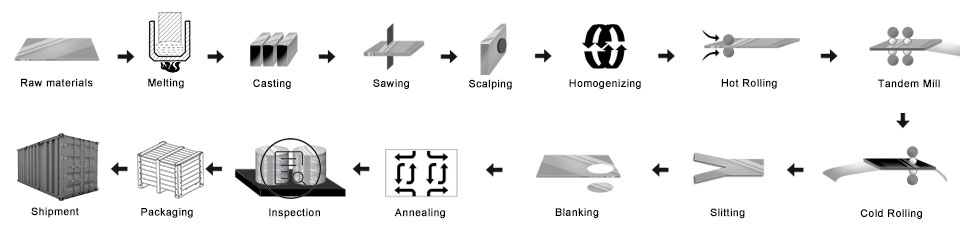
- Prepare the master alloys
- Melting furnace: put the alloys into the melting furnace
- D.C.cast aluminum ingot: To make the mother ingot
- Mill the aluminum ingot: to make the surface and side smooth
- Heating furnace
- Hot rolling mill: made the mother coil
- Colding rolling mill: the mother coil was rolled as the thickness you want to buy
- Punching process: become the size what you want
- Annealing furnace: change the temper
- Final inspection
- Packing: wooden case or wooden pallet
- Delivery
Quality Control
Assurance Below inspection will be done in the production.
- a. ray detection—RT;
- b. ultrasonic testing—UT;
- c. Magnetic Particle Testing-MT;
- d. penetration testing-PT;
- e. eddy current flaw detection-ET
1) Be free from Oil Stain, Dent, Inclusion, Scratches, Stain, Oxide Discoloration, Breaks, Corrosion, Roll Marks, Dirt Streaks, and other defects which will interfere with use.
2) Surface without black line, clean-cut, periodic stain, roller printing defects, such as other gko internal Control standards.
Aluminum discs packing:
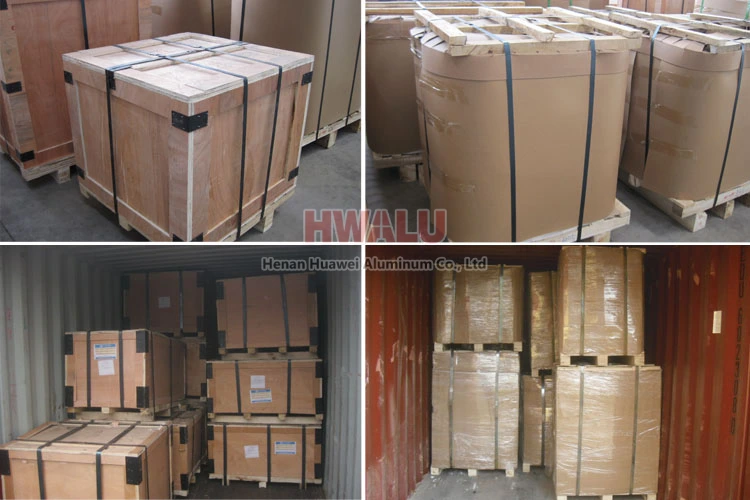
Aluminum circles can be packed by export standards, covering with brown paper and plastic film. Finally, the Aluminium Round is fixed on a wooden pallet/wooden case.
- Put the driers side the aluminum circle, keep the products dry and clean.
- Use clean plastic paper, pack the aluminium circle, keep good sealing.
- Use the snakeskin paper, pack the surface of the plastic paper, keep good sealing.
- Next, there are two ways of packaging: One way is wooden pallet packaging, using the crusty paper packing the surface; Another way is wooden case packaging, using the wooden case packing the surface.
- Finally, lay the steel belt on the wooden box’s surface, keeping the wooden box fastness and secure.
Aluminum circle of Henan Huawei Aluminum. meet the export standard. Plastic film and brown paper can be covered at customers’ needs. What’s more, a wooden case or wooden pallet is adopted to protect products from damage during delivery. There are two kinds of packaging, which are eye to wall or eye to the sky. Customers can choose either of them for their convenience. Generally speaking, there are 2 tons in one package, and loading 18-22 tons in 1×20′ container, and 20-24 tons in 1×40′ container.
Why choose us?
In order to move with the times, HWALU keeps introducing the state of the art equipment and technique to improve its competitiveness. Always adhere to the business philosophy of quality as the center and customer first, to provide the highest quality aluminum disc circle series products to all parts of the world. More …

