Hot Rolled Aluminum Discs: Comprehensive Analysis of Manufacturers, Processes, and Applications
In the metal processing and manufacturing industry, Hot Rolled Aluminum Discs are a key raw material for cookware, pressure vessels, automotive parts, lighting, and electronics due to their excellent plasticity, uniform microstructure, good deep drawing properties, and low internal stress. Compared to cold-rolled aluminum discs, hot-rolled products are less prone to cracking during deep drawing and offer higher dimensional stability, making them the preferred choice for many high-end manufacturing applications.
For global cookware manufacturers, stamping plants, and trading purchasers, choosing a professional Hot Rolled Aluminum Disc Manufacturer is crucial not only for product quality and production efficiency but also directly impacts supply chain stability and cost control. This article provides a systematic analysis of the process characteristics, core advantages, common alloys, main applications, and key criteria for selecting reliable suppliers.
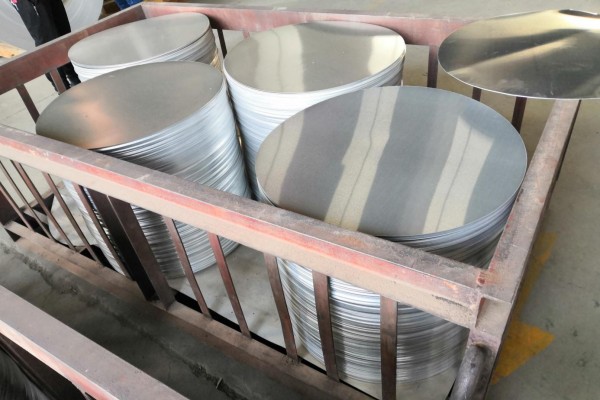 3003 aluminum circle
1. Overview of Hot Rolled Aluminum Discs
A Hot Rolled Aluminum Disc refers to a circular aluminum sheet processed from hot-rolled aluminum coils or plates through stamping or cutting. The hot rolling process is typically performed above the recrystallization temperature of aluminum, granting the metal better plasticity and formability.
| Feature |
Description |
| Excellent Deep Drawing Performance |
Suitable for products requiring multiple stretches like pots and containers; resistant to cracking. |
| Low Internal Stress |
Minimal springback during stamping, ensuring stable forming. |
| High Elongation |
Can withstand significant plastic deformation. |
| Uniform Microstructure |
Refined grain structure reduces surface defects like “orange peel.” |
| Good Surface Quality |
Facilitates subsequent treatments like anodizing or painting. |
2. Production Process Flow
Professional Hot Rolled Aluminum Disc manufacturers typically possess complete production lines and strict process controls.
1. Melting and Casting
- Uses high-purity aluminum ingots or standard alloy ingots.
- Precise control of alloy composition, degassing, slag removal, and grain refinement.
- Forms uniform aluminum slabs.
2. Hot Rolling
- Aluminum slabs are rolled at high temperature through multiple passes to the target thickness (common range: 2–10 mm).
- Refines grain structure, enhances plasticity, and eliminates casting defects.
- Provides the microstructural foundation for subsequent processing.
3. Cold Rolling and Finishing (Optional)
- Light cold rolling improves thickness accuracy and surface finish.
- Enhances plate flatness.
4. Annealing Treatment
- Eliminates work hardening, increases elongation, and improves deep drawability.
- Common tempers: O (Annealed), H12, H14, H24, etc.
5. Stamping / Cutting
- Stamping: High efficiency, accurate dimensions, suitable for mass production.
- Rotary Cutting: No press marks on the surface, suitable for thicker plates.
 Measurement of aluminum discs
3. Common Alloys and Their Characteristics
| Alloy Grade |
Characteristics |
Typical Applications |
| 1050 |
High purity, good formability, low cost. |
Light fixtures, lamp housings, signs. |
| 1060 |
Elongation >35%, excellent deep drawability, good thermal conductivity. |
High-end non-stick cookware, electrical enclosures, deep-drawn parts. |
| 1100 |
Slightly higher strength than 1060, excellent formability. |
General cookware, pressure cookers, containers. |
| 3003 |
Contains manganese, offers better strength and corrosion resistance. |
Automotive parts, building materials, pressure vessels. |
4. Main Application Areas
- Cookware Manufacturing
Deep-drawn products like non-stick pans, frying pans, and pots rely on the excellent formability and uniform microstructure of hot-rolled aluminum discs.
- Lighting Industry
LED lamp covers, reflectors, housings, etc., where the surface is suitable for anodizing or coating.
- Automotive Parts
Used for structural components, cooling systems, etc., driven by lightweighting trends.
- Pressure Vessels
Gas cylinders, storage tanks, etc., require materials with high ductility and uniform structure.
- Electronics & Home Appliances
Housings, heat sinks, etc., utilizing good thermal conductivity and workability.
5. Key Quality Control Points
Reputable manufacturers implement the following inspection items:
- Chemical Composition Analysis: Ensures alloy conforms to standards.
- Mechanical Properties: Tensile strength, yield strength, elongation.
- Surface Inspection: Scratches, oxidation spots, oil stains, flatness.
- Dimensional Tolerances:
| Inspection Item |
General Tolerance Range |
| Thickness |
±0.02 mm |
| Diameter |
±0.5 mm |
| Flatness |
≤1 mm/m |
6. How to Choose a Reliable Manufacturer
- Raw Material Source
Prefer primary aluminum ingots or hot-rolled plates from large aluminum mills. Avoid recycled aluminum to prevent performance fluctuations.
- Production Equipment
Should possess automated stamping lines, high-precision rolling mills, continuous annealing furnaces, etc., to ensure product consistency.
- Quality Certifications
ISO9001, SGS test reports, RoHS compliance, etc., are basic requirements.
- Export Experience
Familiar with international packaging, logistics, and customer needs, capable of providing stable cross-border supply support.
- Technical Service
Can provide material selection advice, process support, and customized production solutions.
 Details of the aluminum sheet
7. Market Trend Outlook
- Growth in Cookware Industry: Especially in emerging markets, driven by healthy cooking trends and kitchenware upgrades.
- Lightweighting in New Energy Vehicles: Expanded use of aluminum in battery trays, body components, etc.
- Upgrade in High-end Manufacturing: Higher demands for precision stamping, high-performance alloys, and surface treatments.
- Green Production: Stricter environmental regulations promote low-carbon aluminum and cleaner production processes.
Conclusion
As a core material for deep drawing and high-performance forming applications, the quality of Hot Rolled Aluminum Discs directly affects the performance and yield of the final product. Choosing a manufacturer with complete process control, a strict quality system, advanced equipment, and extensive industry experience is key to ensuring supply chain security and product competitiveness.
With the continuous development of industries like cookware, automotive, and new energy, the market demand for Hot Rolled Aluminum Discs is expected to grow steadily. Purchasers should evaluate suppliers from multiple dimensions—raw materials, technology, quality, and service—to establish long-term, reliable partnerships.
8. Frequently Asked Questions (FAQ)
1. What is the most important difference between hot-rolled and cold-rolled aluminum discs?
The most important differences lie in the processing method and resulting material properties. Hot rolling is performed above the recrystallization temperature, resulting in uniform grains, low internal stress, and high elongation, making it especially suitable for processes involving large deformation like deep drawing. Cold rolling is performed at room temperature, resulting in higher strength and hardness but lower plasticity. The choice depends on the final product’s manufacturing process and performance requirements.
2. How do I choose the right aluminum alloy grade for my product (e.g., a wok)?
For cookware like woks requiring excellent thermal conductivity and deep drawability, Alloy 1060 is the preferred choice due to its very high elongation (>35%) and superior deep drawing performance. If slightly higher strength is needed on a budget, Alloy 1100 is a common alternative. Alloy 3003, with its manganese content, offers better strength and corrosion resistance and is often used for pressure cookers or containers with higher strength demands.
3. When sourcing, how can I quickly assess if a manufacturer’s product quality is reliable?
Focus on these key points: First, check certifications – look for ISO9001 quality system certification and SGS test reports. Second, inquire about raw materials – verify the use of primary aluminum ingots or hot-rolled plates from major mills. Third, request specifications – ask for detailed quality control documents, paying close attention to thickness tolerance (typically ±0.02mm), mechanical properties (like elongation), and surface quality standards. Fourth, test samples – perform practical stamping or tensile tests on physical samples.
4. Besides the channels mentioned, where else can I find reliable Hot Rolled Aluminum Disc manufacturers?
Beyond industry trade fairs (e.g., China International Aluminum Industry Exhibition) and B2B platforms (e.g., Alibaba.com), you can consult the member directories of industry associations (e.g., China Nonferrous Metals Processing Industry Association). A more direct and effective method is to seek recommendations and insights from upstream large enterprises or peers within your industry, as their supply chain experience is often highly valuable.
5. What will be the key focus areas for future technological development in Hot Rolled Aluminum Discs?
Future technological development will center on two main directions: “High Performance” and “Green/Sustainable.” The first involves developing new aluminum alloys with even better deep drawability, higher strength, or special properties (like high thermal conductivity or corrosion resistance). The second focuses on upgrading production processes, such as more precise thickness and shape control, more energy-efficient annealing technologies, and the use of environmentally friendly materials like recycled or low-carbon aluminum to meet global sustainability requirements.

