1100 Aluminum Circle vs. Stainless Steel: A Comprehensive Guide to Material Properties
In metal manufacturing, particularly in the cookware, industrial components, and structural parts sectors, material selection is critical to a product’s success. 1100 Aluminum Circle and Stainless Steel are two of the most commonly used metallic materials, often placed on opposite ends of the scale for comparison. They may look similar, but their core properties are fundamentally different. The correct choice can enhance product performance, optimize costs, and boost market competitiveness. This article provides a comprehensive, in-depth comparative guide to help you make an informed decision.
 Aluminum Circle Weight
Part 1: Understanding the Two Materials: Basic Definitions and Characteristics
What is a 1100 Aluminum Circle?
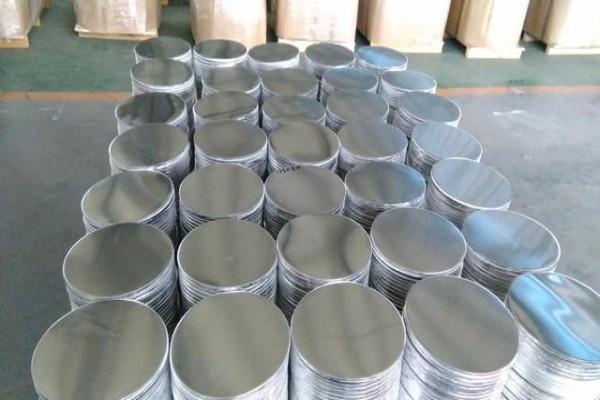
1100 aluminum alloy is a commercially pure aluminum (1000 series) with an aluminum content of over 99%. Its high purity grants it a series of outstanding properties:
- Excellent Formability: Exceptional deep drawability and stretch formability, making it easy to shape into complex forms.
- High Thermal Conductivity: Ranks among the best for thermal conductivity among metals.
- Extremely Light Weight: Low density, the first choice for lightweighting.
- Good Corrosion Resistance: Performs well in general environments, particularly resistant to atmospheric corrosion.
- Ease of Processing: Relatively easy to cut and weld.
Primary Applications: Due to its properties, 1100 aluminum circles are widely used in cookware (pots, pans), lamp reflectors, chemical containers, heat sinks, and various nameplates.
What is Stainless Steel?
Stainless steel is an iron-based alloy whose core characteristic is a minimum chromium content of 10.5%. This forms a dense, passive chromium oxide layer on the surface, providing “stainless” properties. Common types include 304 (general purpose), 316 (higher acid/alkali resistance), and 430 (martensitic).
- High Strength and Hardness: Mechanical properties far exceed those of pure aluminum.
- Superior Corrosion Resistance: Particularly resistant to chemical corrosion and high-temperature oxidation.
- Excellent Wear Resistance: Hard surface, very durable.
- Good Structural Stability: Maintains properties at both high and low temperatures.
Primary Applications: Widely used in medical surgical instruments, food processing lines, architectural cladding/structures, chemical equipment, and high-load mechanical parts.
 Extra thick hot-rolled aluminum sheets
Part 2: Core Properties Face-to-Face: A Data-Driven Comparison
To illustrate the differences more clearly, let’s start with basic physical and mechanical properties:
| Property |
1100 Aluminum Circle |
Stainless Steel (e.g., 304) |
Performance Insight |
| Density |
~2.7 g/cm³ |
~7.9 g/cm³ |
Aluminum is about 2.9 times lighter than stainless steel. Crucial for weight reduction and energy savings. |
| Tensile Strength |
90 – 120 MPa |
520 – 1100 MPa |
Stainless steel is 5-10 times stronger than aluminum, capable of bearing greater loads. |
| Thermal Conductivity |
~220 W/(m·K) |
16 – 25 W/(m·K) |
Aluminum’s thermal conductivity is nearly 10 times that of stainless steel, making it an excellent thermal conductor. |
| Melting Point |
~660 °C |
~1400 °C |
Stainless steel’s high-temperature resistance far exceeds that of aluminum, suitable for high-temp environments. |
| Corrosion Resistance |
Good (esp. atmospheric) |
Excellent (chemical, electrochemical) |
Stainless steel performs more reliably in harsh environments (e.g., acids, alkalis, salt spray). |
Summary: Aluminum stands out for its extreme light weight and excellent thermal conductivity; stainless steel holds the high ground with its unmatched strength and comprehensive corrosion resistance.
Part 3: In-Depth Analysis of Key Dimensions
1. Weight: The Decisive Factor in Lightweighting
The density difference directly determines product weight. In the automotive industry pursuing fuel efficiency, aerospace seeking thrust-to-weight ratios, and for cookware requiring frequent movement (e.g., outdoor gear), aluminum‘s lightweight advantage is decisive. It reduces transportation costs and significantly improves the end-user experience.
2. Thermal Conductivity: The “Lifeline” of the Cookware Industry
This is the fundamental reason for aluminum’s foothold in cookware. High thermal conductivity means:
 Unprocessed aluminum plates
3. Strength and Durability: The Cornerstone of Reliability
Stainless steel is irreplaceable in scenarios requiring high load-bearing capacity, high wear resistance, or long-term structural stress. Its high hardness and strength mean:
- Longer Service Life: More resistant to deformation, scratching, and wear.
- Higher Safety: Suitable for load-bearing structures and safety-critical components.
4. Processability: Production Cost and Efficiency
- 1100 Aluminum: A “dream” material to process. It is soft, highly ductile, especially suitable for deep drawing (e.g., stamping a complete pot body in one go), bending, and cutting. Tool wear is low, and processing energy consumption is minimal, making it ideal for high-volume, high-efficiency production.
- Stainless Steel: More difficult to process. Its hardness leads to high cutting resistance, rapid tool wear, and forming (especially deep drawing) requires greater pressure and more complex die processes, resulting in higher overall processing costs.
5. Cost: A Comprehensive Consideration
Cost includes both material procurement and manufacturing/processing costs.
- Material Cost: Aluminum and stainless steel prices are subject to market fluctuations, but aluminum alloy often has a cost advantage.
- Total Cost: Due to aluminum’s significant advantages in processing efficiency, energy consumption, and equipment wear, its total manufacturing cost is typically significantly lower than that of stainless steel, especially at high production volumes.
Part 4. Application Fields: Each Excels in Its Own Domain
| Application Field |
Prefer 1100 Aluminum Circle |
Prefer Stainless Steel |
| Cookware |
Pot bodies, bowls, lightweight food containers (utilizing thermal conduction, light weight, easy stamping) |
Pot handles, exterior of premium cookware, cutlery, dishwasher interiors (utilizing strength, aesthetics, wear resistance) |
| Industry & Construction |
Heat sinks, reflectors, nameplates, decorative parts, chemical storage tanks (non-harsh media) |
Structural frames, machine housings, piping, food/pharmaceutical equipment, architectural cladding |
| Others |
Lighting components, electronic component housings |
Medical surgical instruments, marine fittings, chemical industry reactors |
Part 5: How to Make the Right Choice: A Decision Flowchart
For a specific project, you can follow this thought process:
- What is the Core Requirement?
- Pursuing extreme light weight? → Choose 1100 Aluminum.
- Need excellent thermal conductivity? → Choose 1100 Aluminum.
- Have extremely high requirements for strength and durability? → Choose Stainless Steel.
- Operating in a highly corrosive environment (acids, alkalis, salt spray)? → Choose Stainless Steel.
- What are the Processing and Budget Constraints?
- Complex product shape requiring deep drawing, and aiming for low-cost, high-volume production? → 1100 Aluminum is the more economical and efficient choice.
- Sufficient budget, and processing capabilities can support it? → Consider Stainless Steel based on strength needs.
- Consider a Composite Solution: You don’t always have to choose one. In many high-end applications, a composite structure is the perfect solution (e.g., stainless steel provides the exterior finish, strength, and durability, while an embedded aluminum core provides fast, even heat conduction).
Frequently Asked Questions (FAQ)
Q: Can 1100 Aluminum Circles be used directly to make cookware?
A: Yes, it is a common material for cookware manufacturing. However, its surface usually requires treatment like anodizing or coating (e.g., non-stick coating) to enhance surface hardness, corrosion resistance, and meet food safety requirements.
Q: Which is healthier and safer, aluminum or stainless steel?
A: Both are safe food-contact materials when used correctly. Qualified aluminum for cookware is surface-treated to prevent excessive aluminum ion migration. Stainless steel (especially 304/316) is stable and recognized as a safe material. Choosing products that comply with national food safety standards is paramount.
Q: Why is adding an “aluminum core” considered a key technology for stainless steel pots?
A: This perfectly combines the advantages of both materials: the stainless steel outer layer provides an aesthetic, sturdy, durable, and easy-to-clean surface; the embedded aluminum core acts like a “superhighway,” rapidly and evenly dispersing heat from the burner across the entire pot bottom, solving the problem of hot spots common in plain stainless steel pans.
Conclusion
In the contest between 1100 Aluminum Circle and Stainless Steel, there is no absolute winner, only the hero most suited to the scene.
- Choosing 1100 Aluminum Circle means opting for extreme light weight, superior thermal efficiency, excellent formability, and more economical overall costs. It is the ideal partner for cookware, heat dissipation systems, and lightweight consumer goods.
- Choosing Stainless Steel means opting for unparalleled strength, top-tier durability, comprehensive corrosion resistance, and a premium feel. It is the reliable guarantee for environments demanding high strength, high corrosion resistance, and high safety.
Ultimately, understanding the specific physical environment, performance requirements, production costs, and market positioning of your product is the key to mastering these two excellent materials and creating a successful product.

