3003 vs 1050/1100: Performance Comparison of Rust-Proof Aluminum Discs
In various fields such as industrial manufacturing, food packaging, and architectural decoration, rust-proof aluminum discs have become indispensable core components due to their advantages of light weight, corrosion resistance, and easy processing. As the three most commonly used grades in the rust-proof aluminum family, 3003, 1050, and 1100 often put purchasers in a dilemma when selecting models — marked as “rust-proof aluminum” similarly, what are the differences in their performance and applicable scenarios? Which one is more suitable for your production needs? From a professional perspective, this article will comprehensively analyze the core performance differences between 3003 and 1050/1100 rust-proof aluminum discs, provide selection suggestions combined with actual application scenarios, help you avoid procurement misunderstandings, and accurately solve the core pain point of “choosing between 3003, 1050 and 1100”.
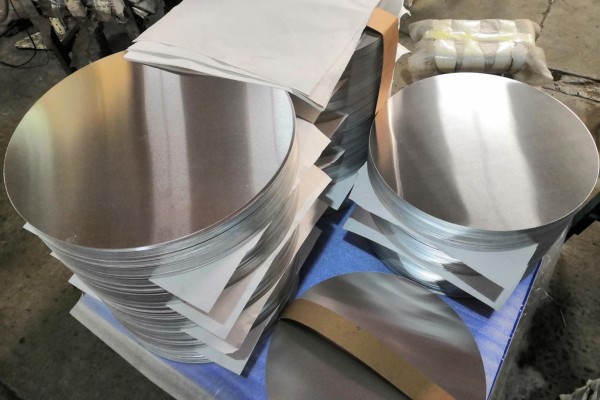 Henan Huawei Aluminum 3003 aluminum sheet
I. Core Premise: The Essential Difference Between the Three — Alloy Composition Differences
The performance differences of rust-proof aluminum originate from the different proportions of alloy compositions. Although 3003, 1050, and 1100 all belong to the category of rust-proof aluminum, they are divided into different alloy series. The differences in core compositions directly determine the differences in their subsequent key indicators such as mechanical properties and corrosion resistance, which is also a core knowledge point potentially concerned by purchasers.
1. 3003 Rust-Proof Aluminum Disc: Aluminum-Manganese Alloy, Balancing Strength and Rust Resistance
3003 belongs to Al-Mn series rust-proof aluminum, whose core composition is based on aluminum (content ≥ 98%), with 1.0% ~ 1.5% manganese added as the main alloying element, supplemented by a small amount of impurity elements such as copper (0.05%-0.20%), silicon (≤ 0.6%), and iron (≤ 0.7%), forming a stable solid solution structure. The addition of manganese is the core advantage of 3003: it not only does not significantly weaken the rust-proof performance of aluminum, but also significantly improves the mechanical strength of the material, while retaining good processability, making it a representative of “general-purpose cost-effective rust-proof aluminum” in the industrial field. In addition, 3003 cannot be strengthened by heat treatment and needs to be improved in mechanical properties through cold working (such as cold rolling and stretching). It has extremely high plasticity in the annealed state, suitable for complex forming processes.
2. 1050/1100 Rust-Proof Aluminum Disc: Commercial Pure Aluminum, Focusing on Basic Corrosion Resistance and Formability
Both 1050 and
1100 belong to 1-series commercial pure aluminum, with the core feature of extremely high aluminum content (aluminum content of 1050 ≥ 99.5%, aluminum content of 1100 ≥ 99.0%). Almost no other functional alloying elements are added, only trace amounts of impurities such as iron and silicon are contained. The difference between the two mainly lies in aluminum purity:
1050 has slightly higher purity than 1100, so it has slight advantages in electrical conductivity, thermal conductivity and corrosion resistance; while 1100 has slightly higher mechanical strength than 1050 due to slightly higher impurity content, but it still belongs to the category of “soft pure aluminum” as a whole. Its core advantages focus on excellent formability, corrosion resistance and electrical-thermal conductivity, suitable for scenarios with low requirements on strength.
 1100 aluminum disc display
II. Comprehensive Comparison of Key Performances: 3003 vs 1050/1100, At a Glance
Combined with the core needs of industrial procurement, we conduct accurate comparison of the three from 5 key dimensions: mechanical properties, corrosion resistance, processability, electrical and thermal conductivity, and cost, presenting differences intuitively with data to facilitate purchasers to quickly compare and select models.
|
Performance Dimension
|
3003 Rust-Proof Aluminum Disc
|
1050 Rust-Proof Aluminum Disc
|
1100 Rust-Proof Aluminum Disc
|
|
Alloy Series
|
Al-Mn Series (Aluminum-Manganese Alloy)
|
1 Series (Commercial Pure Aluminum)
|
1 Series (Commercial Pure Aluminum)
|
|
Tensile Strength (MPa)
|
120~178 (O态); 140~185 (H14态)
|
75~95 (O态)
|
60~110 (O态)
|
|
Yield Strength (MPa)
|
≥85 (O态); ≥115 (H14态)
|
≥35 (O态)
|
≥30 (O态)
|
|
Elongation (%)
|
4~5 (O态); ≥5 (H14态)
|
≥20 (O态)
|
≥15 (O态)
|
|
Corrosion Resistance
|
Good, close to commercial pure aluminum, stable to media such as atmosphere, fresh water, seawater and food organic acids, no obvious pitting corrosion after 48-hour salt spray test; exfoliation corrosion may occur after cold working, so the deformation amount needs to be controlled
|
Excellent, high purity, easy to form a dense oxide film on the surface, corrosion resistant to atmosphere, fresh water and neutral salt solution, no risk of exfoliation corrosion
|
Excellent, close to 1050, slightly inferior to 1050 in corrosion resistance (due to slightly lower purity), no risk of exfoliation corrosion
|
|
Processability
|
Good, can be stamped, deep drawn, bent and welded (supporting argon arc welding, resistance welding and laser welding) with high weld strength; O state is suitable for deep drawing, H14 state is suitable for conventional stamping, and the surface is easy to be anodized and sprayed
|
Excellent, soft texture and good plasticity, easy to carry out complex processing such as deep drawing, stretching and bending, with smooth surface after processing, suitable for high-precision forming; excellent weldability and good surface treatment performance
|
Excellent, close to 1050, slightly inferior to 1050 in formability, low processing difficulty, suitable for simple forming and surface treatment, excellent weldability, adaptable to various welding processes
|
|
Electrical and Thermal Conductivity
|
Good, thermal conductivity 120W/(m·K), electrical conductivity 41%IACS, suitable for general thermal/electrical conductivity scenarios
|
Excellent, electrical and thermal conductivity superior to 3003 and 1100, the preferred choice for thermal and electrical conductivity scenarios such as transformers and radiators
|
Excellent, close to 1050, slightly inferior to 1050 in electrical and thermal conductivity, superior to 3003, suitable for medium and low requirement thermal/electrical conductivity scenarios
|
|
Cost
|
Medium, due to the addition of manganese, the raw material and processing cost is higher than 1050/1100, about several hundred to two thousand yuan per ton higher than 1-series pure aluminum
|
Low, high purity but no alloying elements added, simple production process, cost lower than 3003, slightly higher than 1100 (due to higher purity)
|
Lowest, slightly lower purity, simple production process, the most cost-effective model among the three, suitable for mass low-cost procurement scenarios
|
III. Summary of Core Differences: Key Points for Selecting 3003 and 1050/1100
Through the above comparison, it can be found that the core differences between 3003 and 1050/1100 focus on the balance between “strength” and “formability”. Combined with the frequent selection questions of purchasers, 3 core points are summarized to help you quickly lock in the suitable model:
1. 3003: “All-Rounder”, Balancing Strength and Practicality
The core advantage of
3003 is “balance” — on the basis of rust resistance close to 1050/1100, its mechanical strength is increased by 10%-20%, which can not only meet the requirements of conventional stamping and forming, but also bear a certain load, avoiding deformation and damage during use. At the same time, it has excellent weldability and good surface treatment effect, and meets the food contact standard (GB 4806.9-2016) with low aluminum ion dissolution, which can directly contact food. The recycling rate is over 95%, meeting the needs of green manufacturing. It is suitable for scenarios with certain requirements on strength, corrosion resistance and processability, and is one of the most widely used rust-proof aluminum disc models in the industrial field.
2. 1050/1100: “Refined Type”, Focusing on Formability and Low Cost
The core advantages of 1050 and 1100 are “softness, easy formability and low cost”, with excellent corrosion resistance and no risk of exfoliation corrosion, suitable for scenarios with low requirements on strength but focusing on forming accuracy and surface smoothness. Among them, 1050 has better electrical and thermal conductivity due to higher purity, suitable for scenarios requiring heat and electrical conduction (such as radiators and electrical enclosures); 1100 has the lowest cost and good formability, suitable for mass production of simple parts with low precision requirements (such as decorative covers and simple stamping parts). Both can be anodized to improve surface wear resistance and aesthetics, adapting to the needs of decoration, light industry and other fields.
3. Minor Differences Between 1050 and 1100: No Need to Overthink
For most procurement scenarios, the performance difference between 1050 and 1100 can be ignored — both are commercial pure aluminum, with basically the same rust resistance, formability and processability. The core difference lies only in aluminum purity and slight differences in strength, electrical and thermal conductivity. If the scenario has high requirements on electrical and thermal conductivity and surface precision, 1050 is preferred; if pursuing extreme low cost and mass procurement, 1100 is sufficient. There is no need to overthink the difference between the two, and the key is to distinguish their strength difference from 3003.

IV. Comparison of Actual Application Scenarios: Accurate Matching, Avoiding Procurement Misunderstandings
Combined with the actual application needs of different industries, and compared with the performance differences of the three, specific selection suggestions are given to help you quickly match your own scenario and avoid “choosing the expensive one” or “choosing the wrong one”.
1. Scenarios Where 3003 Rust-Proof Aluminum Disc is Preferred
-
Food Packaging Field: Can bodies, food sealed cans, food transportation tanks (meet food contact standards, good corrosion resistance, sufficient strength, can be deep drawn and formed);
-
Kitchenware Field: Wok lids, steamer lids, pressure cooker lids (good formability, strong corrosion resistance, surface can be anodized, easy to clean);
-
Industrial Container Field: Chemical containers, small oil storage tanks, refrigeration system pipelines (stable corrosion resistance, sufficient strength, can bear a certain pressure, excellent welding performance);
-
Architectural Decoration Field: Aluminum gusset discs, curtain wall decorative parts, ceiling modeling parts (light weight and high strength, atmospheric corrosion resistance, surface can be sprayed and anodized, balancing aesthetics and practicality);
-
Automotive Parts Field: Automobile air conditioning pipeline discs, interior decorative parts (outstanding lightweight advantage, strength meets vehicle-mounted requirements, high and low temperature corrosion resistance, adapting to automotive industry environmental protection standards).
2. Scenarios Where 1050 Rust-Proof Aluminum Disc is Preferred
-
Thermal and Electrical Conductivity Field: Transformer radiators, electrical equipment enclosures, thermal conductive discs (excellent electrical and thermal conductivity, can quickly conduct heat/current, adapting to the lightweight needs of electrical equipment);
-
Precision Forming Field: Precision instrument accessories, small decorative nameplates, high-precision stamping parts (excellent plasticity, smooth and flawless surface after forming, high dimensional accuracy, suitable for scenarios with strict requirements on appearance and precision);
-
Food Light Industry Field: Small food can lids, kitchenware handle decorative parts (excellent corrosion resistance, no harmful element precipitation, meet food contact standards, good formability, can be made into complex curved shapes);
-
Electronic Field: Electronic component enclosures, small heat dissipation discs (soft texture, easy to process and form, excellent electrical and thermal conductivity, can adapt to the precision installation needs of electronic equipment).
3. Scenarios Where 1100 Rust-Proof Aluminum Disc is Preferred
-
Low-Cost Mass Scenarios: Civil hardware decorative covers, simple stamping gaskets, mass-produced small aluminum discs (lowest cost, good formability, can meet basic rust-proof and forming needs, adapting to mass procurement cost control needs);
-
Simple Packaging Field: Ordinary gift can lids, small metal packaging bases (corrosion resistance sufficient to cope with daily atmospheric environment, low processing difficulty, can be mass-produced quickly, reducing packaging costs);
-
Decorative Auxiliary Field: Wall decorative gaskets, furniture decorative aluminum rings (no need for high strength, focusing on low cost and basic decoration, surface can be simply sprayed, adapting to civil decoration scenarios);
-
Temporary Protection Field: Temporary sealing discs, simple protective covers (soft texture, easy to cut and form, low cost, suitable for one-time or short-term use protection scenarios).
V. Common Procurement Misunderstandings to Avoid: Avoid These, Select More Accurately
Combined with the frequent questions of purchasers, 4 most common procurement misunderstandings are summarized to help you avoid losses, accurately match needs, and balance practicality and professionalism.
Misunderstanding 1: Only Focus on Price, Ignore Strength Requirements
Many purchasers blindly choose 1100 with the lowest price to control costs, but ignore the strength requirements of the scenario — for example, if 1100 is used for discs of industrial containers and automotive parts, its insufficient tensile strength is likely to cause deformation and damage, which will increase the later maintenance and replacement costs instead. Correct approach: First clarify whether the scenario needs to bear load, then consider the price.
Misunderstanding 2: Confuse the Corrosion Resistance of the Three, Think “All Rust-Proof Aluminum Are the Same”
Some purchasers mistakenly believe that the corrosion resistance of 3003, 1050 and 1100 is completely the same, but in fact there are slight differences: 3003 may have exfoliation corrosion after cold working, so the deformation amount needs to be controlled; 1050/1100 has no such risk and more stable corrosion resistance. If used in harsh corrosion environments such as salt spray and humidity, 1050/1100 is preferred; if used in conventional environments, 3003 can fully meet the needs.
Misunderstanding 3: Excessively Pursue Purity, Blindly Choose 1050
Some purchasers think “the higher the purity, the better”, and choose 1050 regardless of scenario needs, which actually causes cost waste — for example, in scenarios such as simple decorative covers and mass stamping gaskets, the requirements for electrical and thermal conductivity and precision are not high, and 1100 can fully meet the needs with lower cost and higher cost performance.
Misunderstanding 4: Ignore the Adaptability of Processing Technology
If the scenario requires deep drawing and high-strength welding, blindly choosing 1050/1100 will lead to processing difficulties (such as cracking during drawing and insufficient weld strength); if the scenario requires precision bending and high-precision surface polishing, choosing 3003 is not as good as 1050 in forming effect. Correct approach: Match the processing advantages of the corresponding grade according to the processing technology.
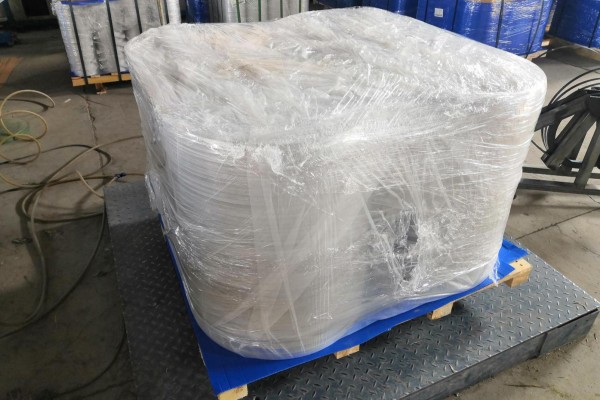 1050 aluminum round sheet packaging
VI. Summary: 3003 vs 1050/1100, Core Logic for Selection
In summary, there is no “superior or inferior” among 3003, 1050 and 1100 rust-proof aluminum discs, only “adaptability difference”. The core selection logic revolves around the four dimensions of “strength requirements, forming accuracy, cost budget and service environment”. Accurate matching can maximize cost performance:
1. Pursue “balanced adaptation”: If the scenario has certain requirements on strength, corrosion resistance and processability, and no extreme cost control is needed, 3003 is preferred (the first choice for industrial general use, adapting to most complex scenarios);
2. Pursue “high precision + thermal and electrical conductivity”: If the scenario focuses on precision forming and excellent electrical and thermal conductivity, and has low requirements on strength, 1050 is preferred (the first choice for precision electrical and high-end decoration);
3. Pursue “low cost + mass production”: If the scenario has no high requirements on strength and precision, and focuses on mass procurement cost control, 1100 is preferred (the first choice for civil and simple scenarios).
It is hoped that the comprehensive comparison and selection suggestions in this article can help you completely solve the core pain point of “choosing between 3003, 1050 and 1100”, avoid procurement misunderstandings, help enterprises select models efficiently and reduce procurement costs.
VII. About Henan Huawei Aluminum Co,Ltd
As a source manufacturer deeply engaged in the field of rust-proof aluminum products, Henan Huawei Aluminum Co,Ltd has been focusing on the R&D, production and sales of various rust-proof aluminum discs since its establishment in 2012. With more than ten years of experience in the aluminum processing industry, it has not only invested in building an exclusive aluminum disc production factory, but also taken 3003, 1050 and 1100 models of rust-proof aluminum discs as its core products, accurately adapting to the needs of food packaging, architectural decoration, industrial containers, electrical equipment and other fields. Its products are exported overseas, with an export volume of 100 million yuan in 2021.
Upholding the values of “diligent, focused and altruistic”, the company strictly controls product quality. Relying on mature production technology and a professional technical team, it can provide customized products, accurate selection guidance and perfect after-sales guarantee according to customers’ specific scenario needs. From raw material procurement to production and processing to finished product delivery, it strictly controls quality throughout the process, helping customers maximize cost performance and being your reliable partner for purchasing rust-proof aluminum discs.

