Yaya juriya na matsawa 3003 Zafafan zanen gadon aluminium mai zafi don kwantena abinci?
A fannin hada kayan abinci da masana'anta, “aminci” kuma “karko” su ne ko da yaushe ainihin bukatun. Aluminum kwantena abinci, musamman, fuskantar gwaje-gwajen matsin lamba na digiri daban-daban a kowane mataki-daga cika samarwa, sito stacking, da sufuri zuwa ƙarshen amfani. Matsin lamba a tsaye yayin tarawa, girgiza da tasiri a lokacin wucewa, matsa lamba na inji yayin cikawa, kuma ko da matsin lamba yana canzawa yayin haifuwar zafi mai zafi duk suna sanya buƙatu masu tsauri akan juriya na matsi.. The 3003 diski na aluminum mai zafi, azaman kayan tushe da aka fi so don masana'antar kwantena abinci, ba ya cimma wannan juriya na matsin lamba ta hanyar haɗari. A maimakon haka, sakamakon sakamakon hadewar kayan abu ne, fasahar sarrafawa, da tsarin tsari. Yau, za mu zurfafa cikin juriya na matsin lamba 3003 kwantena kayan abinci na aluminium mai zafi da kuma tattauna dalilin da ya sa ya zama “ƙwararren mai juriya” a cikin masana'antar shirya kayan abinci.
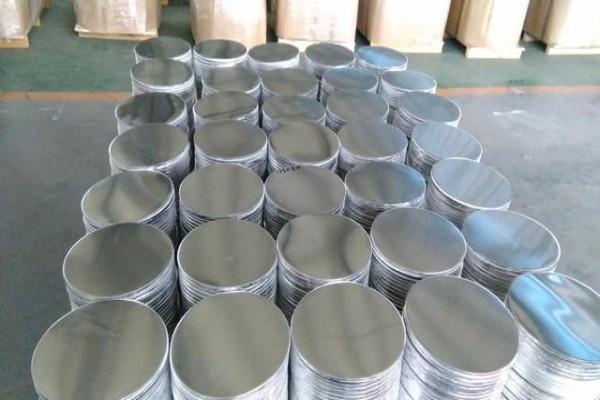 Extrain kauri mai kauri na aluminum zanen gado
I. The Core Material: 3003 Faifan Aluminum Mai Zafi, Gidauniyar Da Ya dace da Hali don Juriyar Matsi
Don fahimtar juriyar juriyar kwantena, dole ne mu fara da kayan tushe. 3003 aluminum gami nasa ne na aluminum-manganese jerin. Da aluminum (97.0%-99.0%) a matsayin tushe, ya ƙunshi 1.0% -1.5% manganese (Mn) a matsayin babban alloying kashi, wanda aka ƙara shi da ƙananan adadin sauran abubuwan ganowa kamar jan ƙarfe (Tare da) da baƙin ƙarfe (Fe). Wannan abun da ke ciki yana ba shi fa'ida ta musamman wajen daidaita ƙarfi da filastik, aza harsashi don juriyar juriyar kwantena.
Idan aka kwatanta da tsantsar aluminium ko sauran allunan aluminium, core amfani da 3003 faifan aluminum mai zafi yana kwance a cikinsa “cikakkiyar ma'auni na rigidity da sassauci”:
- Ingantattun Ƙarfi da Tauri: Bugu da ƙari na manganese yana inganta ƙarfin kayan aiki da taurin. Ƙarfin ƙarfinsa zai iya kaiwa 210-250 MPa, kuma ƙarfin yawan amfanin sa yana daga 130-160 MPa, wakiltar wani 10% -20% karuwa idan aka kwatanta da tsantsa jerin aluminum kamar 1060. Wannan yana tsayayya da lalacewa da lalacewa ta hanyar matsa lamba na waje.
- Babban Filastik (M): A elongation yawanci ≥15%, kuma yana iya wuce gona da iri 20%. Wannan yana nufin kayan zai iya tarwatsawa yadda ya kamata kuma ya sha makamashi ta hanyar nakasar filastik a ƙarƙashin matsin lamba, guje wa karaya kwatsam.
- Kyakkyawan Aiki da Kwanciyar hankali: Wannan gami yana ba da tsari mai kyau kuma ana iya ƙara taurare ta hanyar aikin sanyi. Yana nuna kyakkyawan juriya na lalata, ya kasance barga a cikin mahallin hulɗar abinci, kuma ya bi ka'idodin aminci na abinci na gida da na duniya.
Wadannan kaddarorin suna yin 3003 Fayafai na aluminium mai zafi mai zafi mafi kyawun zaɓi don kwantena abinci kama daga gwangwani na abin sha da tiren abinci zuwa abubuwan dafa abinci., samun kyakkyawan daidaito tsakanin ƙarfi, tsari, da aminci.
II. Mabuɗin Abubuwan Da Ke Tasirin Juriya
Ayyukan juriya na matsi na akwati da aka yi daga 3003 Fayafai na aluminium masu zafi shine haɗuwa da sakamakon tsari, zane, da abu. An taƙaita mahimman abubuwan da ke tasiri a ƙasa:
Tebur 1: Mabuɗin Abubuwan Da Suka Shafi Juriya na Matsi na 3003 Kwantenan Faifan Aluminum Mai Zafi
| Factor mai Tasiri |
Takamaiman Bayani |
Gudunmawa ga Juriyar Matsi |
| 1. Tsarin Material Tushen |
Idan aka kwatanta da simintin gyare-gyare, zafi-mirgina yana samar da wani abu tare da mafi kyawun hatsi, more uniform microstructure, da ƙarancin lahani na ciki. Simintin simintin gyare-gyare ya fi dacewa da aikace-aikacen da ke buƙatar babban aikin zane mai zurfi tare da ƙananan buƙatun juriya. |
Tsarin mirgina mai zafi yana ba da ƙarin rarrabuwar damuwa iri ɗaya da taurin gaba ɗaya, samar da mahimmancin garanti don juriya na matsa lamba na manyan kwantena. |
| 2. Ƙayyadaddun kauri |
Na kowa kauri don kwantena abinci kewayo daga 0.5-4.5mm (e.g., abin sha iya jiki: 0.3-0.5mm, abubuwan dafa abinci matsa lamba: >1.0mm). |
Kauri shine jigon “mai nuna alama,” kai tsaye ƙayyadaddun kauri na bango da ƙarfin ɗaukar nauyi. Dole ne a zaɓi ta a kimiyance bisa takamaiman aikace-aikace (e.g., matakin matsa lamba, abun ciki Properties). |
| 3. Tsarin Tsarin & Samar da |
Zane-zane kamar jikin iya cylindrical, domed gindi / murfi inganta inji tsarin; daidai zane, tafiyar matakai na seaming tabbatar da tsarin mutunci. |
Zane na kimiyya da inganci yana rarraba matsa lamba, guje wa maida hankali na gida; daidaito forming tabbatar uniform kauri bango, kawar da maki masu rauni. Wannan shine mabuɗin zuwa “zane kayan ƙarfafawa.” |
| 4. Material Haushi |
Ana gyara kaddarorin da farko ta hanyar hardening mai aiki mai sanyi (e.g., H14, H18 zafi) da annealing (Sa fushi). H hasashe yana ba da ƙarfi mafi girma, Haushi yana ba da mafi kyawun ductility. |
Zaɓin zafin da ya dace dangane da ƙaƙƙarfan akwati da buƙatun ƙarfin amfani na ƙarshe yana ba da damar ingantaccen aiki da daidaita farashi.. |
Nazari Mai Zurfi: Tasirin Haɗin kai na Tsari da Zane
- Zurfafa nutsewa: Hot-Rolling vs. Simintin gyare-gyare: Tsarin mirgina zafi yayi kama da “ƙirƙira” karfe, tarwatsa ƙaƙƙarfan tsarin simintin gyare-gyare. Wannan ba wai kawai yana kawar da lahani ba kamar pores gas da raguwar porosity ba amma kuma yana ba da damar ƙarin rarraba iri ɗaya na manganese.. Wannan microstructure na bai ɗaya shine ginshiƙin kwanciyar hankali na juriya. Da bambanci, yayin da kayan da aka yi birgima suna ba da ingantaccen samarwa da fa'idodin farashi, saurin ƙarfafawar sa yana haifar da ɗan ƙaramin ƙanƙara mara nauyi, mai yuwuwar haifar da ɗan ƙara girman jujjuyawar aiki ƙarƙashin matsananciyar matsatsi ko tasiri.
- The “Amplifier” Tasirin Tsarin Tsarin: Dole ne a haɓaka aikin kayan aiki ta hanyar ƙira. Misali, kasan abin sha mai siffa mai siffar kubba shine ainihin tsarin siriri-harsashi ƙarƙashin matsi axial. Yana juyar da matsatsi na tsaye da kyau zuwa damuwa mai kewaye a bangon gwangwani, cimma matsakaicin matsa lamba tare da ƙaramin abu. Hakazalika, Ƙarfafa haƙarƙari da gefuna masu lanƙwasa a kan gefuna na trankunan abinci na rectangular suna haɓaka lokacin tsaka-tsaki na inertia ta hanyar sauye-sauye na geometric na gida., muhimmanci inganta lankwasawa da matsawa juriya. Madalla zane damar da matsa lamba-resistant m na 3003 aluminum da za a cikakken gane.
 Aluminum takardar masana'anta masana'anta
Iii. Gwaji Data: Yadda Ƙarfin Ƙarfin Ƙarfin Ƙarfin Ƙirar Ƙarfi da gaske?
Masana'antu suna tabbatar da juriya na matsa lamba ta hanyar gwaje-gwaje masu dacewa. Hanyoyin gwaji daban-daban suna kwaikwaya yanayi daban-daban na damuwa, tare da mahimman bayanai kamar haka:
Tebur 2: Bayanan Gwajin Juriya na Musamman da Matsalolin Aikace-aikace don 3003 Kwantenan Abinci Na Aluminum Mai Zafi
| Gwajin Abun |
Gwajin Daidaitaccen Magana |
Halin Simulated & Hanyar gwaji |
Ayyukan Samfur Na Musamman (Misali) |
Muhimmancin Ayyuka |
| Axial Load (Tari) Gwaji |
ISO 2234, GB/T 4857.3 |
Yana kwaikwayi stacking rumbun adana abubuwa da yawa. Yana amfani da matsi na tsaye zuwa saman kwandon har sai an kai ga murkushe ko ƙayyadadden nakasu. |
Ruwan ruwa na 330 ml (kauri jiki ~ 0.28mm) zai iya jure wa nauyin axial na 1500-2500N, a amince 8-10 yadudduka na stacking. |
Kai tsaye yana nuna ƙarfin ɗaukar kaya a tsaye da kwanciyar hankali. |
| Matsin ciki (Fashewa) Gwaji |
Saukewa: ASTM D4577, GB/T 9106.1 |
Yana kwatanta matsin lamba na ciki daga abubuwan sha masu ɗauke da carbonated ko haifuwar zafi mai zafi. Yana matsawa wani akwati da aka rufe har sai ya fashe. |
Gwangwani na abin sha na carbonated yawanci suna buƙatar juriya na ciki na ≥0.9 MPa; Tukwane na ciki na aluminum yana buƙatar fashewar matsa lamba na ≥600 kPa. |
Yana tabbatar da kwandon baya fashe a ƙarƙashin matsin ciki, tabbatar da aminci. |
| Gwajin Matsi na bango |
GB/T 18454 |
Yana kwatanta murkushewa ta gefe yayin sufuri. Yana amfani da matsi zuwa gefen gwangwani don kimanta juriyar haƙora. |
Ƙwararren abin sha na gefen bangon gefen ƙayyadadden matsi dole ne ya kasance ƙasa da ƙayyadaddun iyaka, hana lalacewar juna a cikin lamuran. |
Yana nuna juriyar kwantena don murkushewa da tasiri yayin jigilar kaya da nunin kan shiryayye. |
| Matsin zagayowar / Sauke Gwaji |
Saukewa: ASTM D5276, GB/T 4857.5 |
Yana kwatanta tasirin maimaitawa daga sarrafawa da lodawa / saukewa. Ya ƙunshi saukowa da yawa ko hawan hawan matsi. |
Bayan kammala ƙayyadadden adadin faɗuwa ko hawan hawan matsi, kwandon kada ya zube ko ya sami lahani na tsari. |
Yana ƙididdige juriyar gajiyar akwati da tsayin daka na dogon lokaci. |
Wasiƙa: Takamaiman bayanan gwaji sun bambanta dangane da ƙirar kwantena, kauri, da tsari. Teburin da ke sama yana nuna jeri na masana'antu gama gari. Dole ne masana'anta su gudanar da madaidaicin gwaji bisa ga takamaiman ƙa'idodin samfur.
Kimiyya Bayan Gwaji:
A cikin gwaje-gwajen nauyin axial, Yanayin gazawar kwantena galibi yana haifar da rashin kwanciyar hankali maimakon kayan da ake murkushe su. Wannan yana ba da haske game da halayen sifofi masu katanga kuma yana jaddada tasirin ƙira mai mahimmanci. (e.g., siffar kasa, iya girma-zuwa diamita rabo) akan sakamakon juriya na matsin lamba. Gwajin matsa lamba na ciki da farko suna ƙalubalantar ƙarfin ainihin kayan da amincin walda/kabu.. Gwajin kimiyya ba wai kawai yana ba da izinin wucewa / gazawa ba amma har ma, ta hanyar nazarin maki gazawar da layukan nakasassu, yana ba da tallafin bayanan kai tsaye don inganta kayan aiki da ƙira.
IV. Aikace-aikacen Cikakkun Rayuwa: Yadda Matsi Matsi ke Kare Tsaron Abinci
Rashin juriya na 3003 Kwantena fayafai na aluminum mai zafi yana fassara zuwa aminci mai ma'ana da fa'idodin tattalin arziki a cikin matakai daban-daban na aikace-aikacen:
1. Matsayin samarwa da Cikowa:
Akan manyan layukan cikawa, kwantena dole ne su yi tsayayya da matsa lamba na inji daga cika kawunansu da canjin matsa lamba daga vacuuming ko zubar da nitrogen. Babban juriya na matsin lamba yana tabbatar da kwantena ba su lalace ko matsi akan layi, bada garantin santsi, m hatimi, samar da shinge na farko don abun ciki.
2. Warehouses da Logistics Stage:
Wannan shine ɗayan manyan ƙalubalen juriyar matsin lamba. Wuraren ajiya na zamani yana amfani da manyan tarkace tare da yadudduka masu tarin yawa, ɗora nauyi mai mahimmanci akan kwantena na ƙasa. A lokacin dabaru, girgiza, kumbura, kuma tasirin bazuwar yana haifar da hadaddun runduna masu ƙarfi. 3003 aluminum kwantena, da karfinsu da taurinsu, yadda ya kamata yayi tsayayya da matsa lamba mai tsayi da tasiri mai ƙarfi ta hanyar nakasawa na roba, yana rage yawan lalacewar sufuri da rage asarar samfur da haɗarin amincin abinci.
3. Ƙarshen Amfani da Matsayin Ajiya:
- Retail: A kan shelves, kwantena suna buƙatar jure wa 挤压 daga wasu samfura da tasirin tasirin masu amfani.
- Gidan gida: Kwantena suna fuskantar ma'ajiya mai yawa a cikin firji, maimaita buɗewa / rufewa, da yuwuwar saukar da bazata, duk suna buƙatar kyakkyawan gida 抗压 da juriya mai tasiri.
- Gudanarwa na Musamman: Don abincin da ke buƙatar haifuwa mai zafi mai zafi (e.g., gwangwani abincin rana nama) ko firiji/daskarewa, kwantena dole ne su yi tsayayya da bambancin matsa lamba da ke haifar da matsanancin canjin yanayin zafi. A barga da thermal fadada coefficient da kyau low-zazzabi tauri na 3003 aluminum gami yana tabbatar da amincin sa a cikin kewayon zafin jiki mai faɗi.
 Aluminum zagaye guda don kayan dafa abinci
4. Kalubale a cikin Aikace-aikace masu tasowa:
Tare da tashin abincin da aka shirya, abinci mai dumama kai, da kuma abincin dabbobi masu daraja, Ana sanya sabon buƙatun juriya na matsa lamba akan marufi. Misali, fakitin dumama kai suna haifar da matsin lamba, ana buƙatar kwantena don kiyaye mutuncin tsari na ƙayyadadden lokaci; Abubuwan da ake buƙata na rubutu don abincin dabbobi na iya buƙatar kwantena waɗanda zasu iya jure ƙarin hadaddun tasirin jiki. 3003 fayafai na aluminum masu zafi, ta hanyar daidaita kauri, ingantaccen sutura, da tsarin tsari, suna ci gaba da dacewa da waɗannan sababbin buƙatun.
V. Ƙarshe: The “Mafi kyawun Magani” don Juriya da Matsi da Tsaro, da Future Outlook
Aikace-aikace na 3003 Fayafai na aluminium masu zafi a cikin kwantena abinci sun ƙunshi cikakken ma'auni na ƙarfi, na teku, tattalin arziki, da aminci. Amfaninsa mai jure matsi ya samo asali ne daga zurfin haɗakar kimiyyar kayan aiki, tabbatar da tsari, da kuma tsara hankali:
- Gidauniyar – Abu: Ƙaƙƙarfan bayani mai ƙarfi daga Al-Mn gami da haɓakar haɓakar hatsi yana ƙarfafa tsarin jujjuyawar zafi yana samar da uniform., mai karfi, da tushe mai tauri.
- Daidaiton – Tsari: Daidaitaccen sarrafa kauri, samar da fasaha, kuma yanayin zafin da ya dace yana fassara yuwuwar abu zuwa aikin samfur.
- Da Hazaka – Zane: Tsarin tsari kamar silinda, gidaje, da ƙarfafa haƙarƙari sun cimma matsakaicin tsauri na tsari tare da ƙaramin nauyi.
Daga gwangwani na abin sha a ko'ina zuwa masu dafa abinci masu buƙata, 3003 fayafai na aluminum masu zafi, tare da ingantaccen aiki mai jurewa matsa lamba, kiyaye amincin abinci da inganci a duk tsawon rayuwar marufi. Kamar yadda masana'antu ke buƙatu don ɗaukar nauyi, dorewa, da karuwar hankali, bincike a cikin matsa lamba juriya na 3003 aluminum gami da kayayyakinsa za su ci gaba da zurfafa.
Abubuwan Gabatarwa da Shawarwari
- Ga Masu masana'anta: Bayan inganta kauri da kafa matakai, bincika haɗe-haɗe da rayayye tare da fasahar sutura (e.g., ƙarfafa suturar ciki) kuma yi amfani da kayan aikin dijital kamar Ƙididdiga Element Analysis (FEA) don inganta tsarin kwantena a cikin mahallin kama-da-wane, ba da damar ingantaccen tsinkaya da haɓaka juriya na matsa lamba.
- Ga Ma'aikatan Masana'antu: Ƙaddamar da ƙarin fahimtar tsari-juriya na matsa lamba shine tsarin aikin injiniya na tsari wanda ya ƙunshi “Zaɓin darajar kayan abu → ƙayyadaddun hanyar tsari → aiwatar da ƙirar tsari → ingantaccen gwajin gwaji.” Zurfafa fahimtar hulɗar tsakanin kowanne shine mabuɗin zaɓin kayan kimiyya da sarrafa inganci.
- Masana'antu Trend Outlook: A cikin mahallin tattalin arzikin madauwari, da kyau kwarai recycability na 3003 aluminum gami yana da mahimmanci kamar juriya na matsa lamba. Zuwa gaba, 3003-jerin gami ta amfani da mafi girman kaso na aluminum da aka sake fa'ida (yayin da har yanzu cika ka'idojin aiki) zai zama muhimmin alkiblar ci gaba, rage sawun carbon yayin kiyaye juriya. A lokaci guda, tsarin haɗin gwiwar juriya da nauyi don keɓancewa, kananan marufi na abinci kuma za su kasance wuri mai zafi don ƙirƙira fasaha.
Abubuwan da'irar aluminum:
Aluminum da'irar ya dace da kasuwanni da yawa, ciki harda kayan girki, masana'antun kera motoci da haske, da dai sauransu., godiya ga kyawawan halaye na samfur:
- Ƙananan anisotropy, wanda ke sauƙaƙe zane mai zurfi
- Strong inji Properties
- Babban kuma daidaituwa zafi watsawa
- Ability don enameled, rufe da PTFE (ko kuma wasu), anodized
- Kyakkyawan tunani
- Babban ƙarfi-zuwa nauyi rabo
- Dorewa da juriya ga lalata
Tsarin Da'irar Aluminum
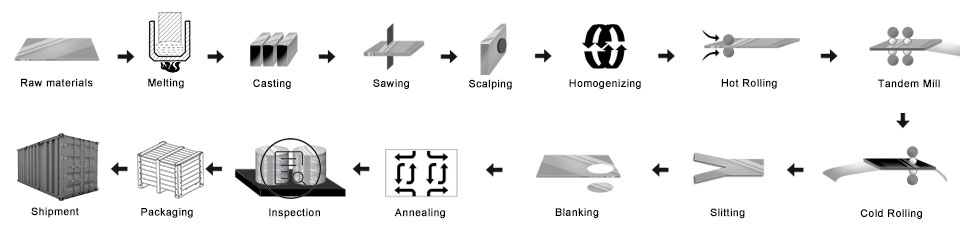
Ingot/Master Alloys — Narka wutar makera - Riƙe wutar makera — D.C. Caster — Wuri —- Scalper — Dandalin Rolling Hot - Mill Rolling Mill - Punching - Annealing Furnace — Binciken Ƙarshe - Shiryawa — Bayarwa
- Shirya babban allo
- Narka wutar makera: sanya gami a cikin tanderun narkewa
- DC watsa aluminum aluminum: Don sa uwar ingot
- Rufe murfin aluminum: don yin farfajiya da gefen santsi
- Tanderun dumama
- Abin birgima: ya sanya uwar murɗa
- Colding mirgina niƙa: an mirgine murfin uwa azaman kaurin da kuke son siyan
- Tsarin bugun: zama girman abin da kuke so
- Ƙona wutar makera: canza yanayin
- Binciken ƙarshe
- Shiryawa: akwati na katako ko pallet na katako
- Bayarwa
Ikon Kulawa
Tabbatarwa da ke ƙasa dubawa za a yi a cikin samarwa.
- a. gano hasken haske—RT;
- b. ultrasonic gwaji—UT;
- c. Gwajin Magnetic Barbashi-MT;
- d. gwajin shiga-PT;
- e. Gano aibi na yanzu-ET
1) Ka zama 'yanci daga Tabon Mai, Haushi, Hada, Scratches, Tabo, Discoloration Oxide, Karya, Lalata, Roll Marks, Datti Streaks, da sauran lahani waɗanda zasu kawo cikas ga amfani.
2) Surface ba tare da layin baki ba, yanke tsafta, tabo na lokaci-lokaci, nadi bugu lahani, kamar sauran ka'idojin Gudanar da ciki na gko.
Aluminum fayafai shiryawa:
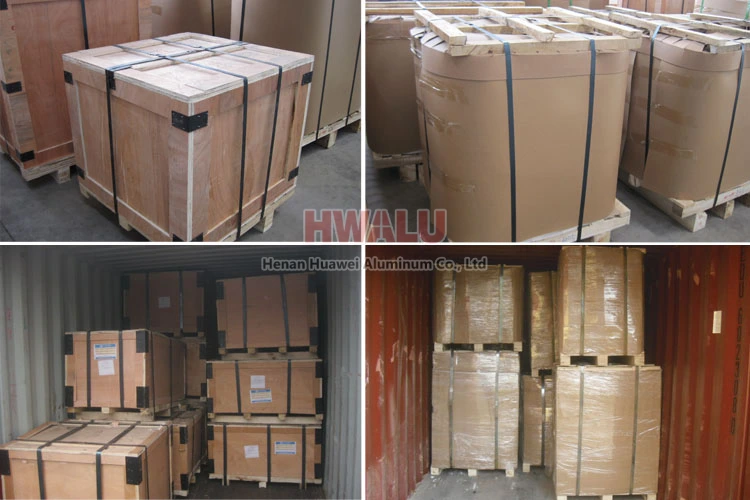
Za a iya tattara da'irar aluminium ta ma'aunin fitarwa, sutura da takarda mai launin ruwan kasa da fim ɗin filastik. Daga karshe, An gyara zagaye na Aluminum a kan katako na katako / katako.
- Sanya driers gefen da'irar aluminum, kiyaye samfuran bushe da tsabta.
- Yi amfani da takarda filastik mai tsabta, shirya da'irar aluminum, kiyaye hatimi mai kyau.
- Yi amfani da takardan fatar maciji, shirya saman takardar filastik, kiyaye hatimi mai kyau.
- Na gaba, akwai hanyoyi guda biyu na marufi: Hanya ɗaya ita ce marufi na katako, ta amfani da ɓawon burodin da ke tattara saman; Wata hanya ita ce marufi na katako, ta yin amfani da akwati na katako shirya farfajiya.
- Daga karshe, sanya bel na karfe a saman akwatin katako, kiyaye akwatin katako da sauri da tsaro.
Aluminum da'irar Henan Huawei Aluminum. hadu da fitarwa. Za a iya rufe fim ɗin filastik da takarda mai launin ruwan kasa a bukatun abokan ciniki. Menene ƙari, ana ɗaukar akwati na katako ko pallet na katako don kare samfuran daga lalacewa yayin bayarwa. Akwai nau'i biyu na marufi, waxanda suke ido da bango ko ido ga sama. Abokan ciniki za su iya zaɓar ɗayansu don dacewarsu. Gabaɗaya magana, akwai 2 ton a cikin fakiti ɗaya, da loading 18-22 ton a cikin akwati 1 × 20., kuma 20-24 ton a cikin akwati 1 × 40..
Me yasa zabar mu?
Domin tafiya da zamani, HWALU yana ci gaba da gabatar da yanayin kayan fasaha da fasaha don haɓaka gasa. Koyaushe riko da falsafar kasuwanci na inganci azaman cibiyar da abokin ciniki na farko, don samar da mafi kyawun samfuran da'irar diski na aluminum zuwa duk sassan duniya. Kara …

