The Complete Guide to Hot Rolled Aluminum Circles for Cookware: From Material Science to Procurement
In the modern cookware manufacturing industry, which pursues high performance and quality, material selection is the first cornerstone determining product success. The hot rolled aluminum circle, serving as the core substrate for non-stick pans, rice cooker inner pots, and various types of cookware, has become the industry’s recognized premium choice due to its exceptional deep-drawing formability, stable structure, and outstanding thermal conductivity. This article will systematically break down its process secrets, core advantages, selection strategies, and supplier evaluation methods, helping you establish a competitive advantage starting from the material source.
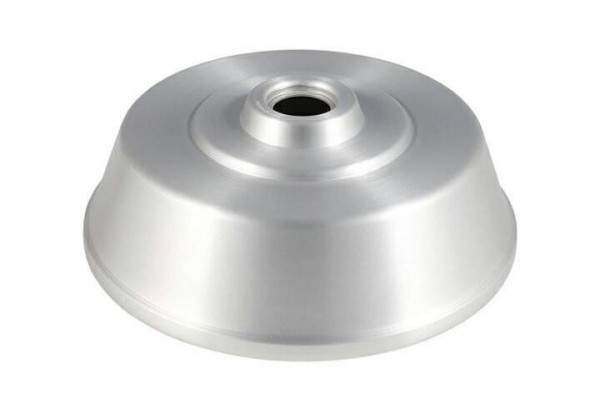 Lampshade cover
1. Core Definition: Why “Hot Rolled”?
A Hot Rolled Aluminum Circle for Cookware is a circular aluminum material specifically designed for the stamping and forming of kitchen utensils. The key lies in the “hot rolling” process—where the aluminum ingot is rolled above its recrystallization temperature (typically 400-500°C). This process is like “remodeling the skeleton,” effectively eliminating casting defects and refining the grain structure, thereby giving the material better plasticity, lower internal stress, and more stable performance.
The fundamental difference from cold-rolled aluminum circles lies in the processing temperature. Cold rolling is performed at room temperature, which can increase strength and surface finish but causes “work hardening” in the material, reducing ductility. Therefore, for complex pot shapes requiring deep drawing or spinning (like deep soup pots or woks with pronounced curvature), hot-rolled aluminum circles are the essential choice to avoid cracking and ensure high production yield.
2. Five Irreplaceable Advantages: A Data-Driven Perspective
The advantages brought by the hot rolling process are systematic, specifically reflected in the following five dimensions:
| Advantage Dimension |
Principle & Performance |
Value for Cookware Manufacturing |
| 1. Superior Deep-Drawing Performance |
High-temperature softening and grain restructuring significantly improve material elongation (e.g., O-temper 3003 alloy can achieve over 20% elongation). |
Enables production of deeper, more complex pot shapes, reduces stamping steps, and significantly lowers scrap rates from cracking and wrinkling during production. |
| 2. Excellent Thermal Conductivity & Uniformity |
The uniform and dense metal structure allows for fast and even heat conduction. Aluminum itself has high thermal conductivity (~237 W/m·K). |
Achieves energy-efficient, rapid heating and even cooking without food sticking, enhancing the cooking experience and product selling points. |
| 3. Perfect Coating Substrate |
The surface is clean, free of “rolling oil stains” and significant flaws, with controllable roughness. |
Ensures extremely strong adhesion for non-stick coatings (Teflon/ceramic) and hard anodized layers, extending product lifespan. |
| 4. Excellent Thickness & Performance Uniformity |
Full-surface thickness tolerance can be controlled within ±0.05mm, with stable performance across batches. |
Provides a foundation for automated, continuous stamping production, increases efficiency, and stabilizes product quality. |
| 5. Good Anti-Aging Stability |
Proper annealing after hot rolling minimizes internal stress, resulting in good shape stability of the formed cookware, resistant to deformation. |
Ensures the finished cookware maintains its shape during long-term thermal cycling, preventing sagging or warping. |
3. How to Select Material Scientifically: Comparison of Main Alloys & Application Guide
Choosing the correct aluminum alloy grade is key to matching product design with performance requirements. Below is a detailed comparison of the three mainstream alloys in the cookware industry:
| Alloy Grade |
Main Composition Characteristics |
Core Performance Advantages |
Typical Applications |
Procurement Suggestion |
| 1050 / 1060 |
High-purity aluminum with ≥99.5% Al, minimal trace elements. |
Excellent thermal conductivity, lower cost, good machinability and formability. |
Ordinary pots/pans with low strength requirements (saucepans, steamers, hot pots), or as the thermal conductive layer in clad bottoms. |
Prioritize for projects focusing on ultimate heat conduction and cost control. |
| 3003 (Most Common) |
Aluminum-Manganese series alloy, containing ~1.0-1.5% Mn. |
The King of Balanced Performance: Perfect balance of strength, formability, and corrosion resistance. Exceptionally good deep-drawing properties. |
The majority of mainstream premium cookware: non-stick pans, woks, pressure cookers, saucepans. |
The first choice when deep-drawability and overall durability are required. |
| 5052 |
Aluminum-Magnesium series alloy, containing ~2.5% Mg. |
Higher strength and better fatigue resistance than 3003, excellent corrosion resistance (especially to salt water). |
Suitable for cookware with special structural strength requirements or harsher working environments. |
An upgrade option when 3003 strength is insufficient, though formability is slightly lower. |
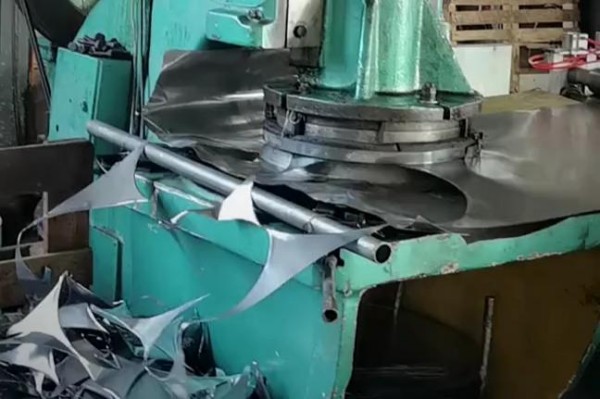 1050 aluminum sheet stamping
4. Supplier Evaluation & Practical Procurement Checklist
Choosing a reliable supplier is as crucial as selecting the right material. Here is an actionable evaluation checklist:
| Evaluation Dimension |
Key Inspection Points & Questions |
Performance of an Excellent Supplier |
| Technical Capability & Certification |
1. Does it possess a complete hot rolling production line?
2. Is the annealing process controllable (able to provide various tempers like O, H24)?
3. Can it provide authoritative third-party material reports (e.g., SGS)? |
Owns stable, large-scale hot rolling mills, precise annealing furnace temperature control, and can provide complete certifications and test reports upon request. |
| Quality Control System |
1. What is the thickness tolerance control standard? (e.g., ±0.05mm is excellent)
2. How are surface quality grades classified? (Coating-grade should have higher requirements)
3. Is a Material Test Certificate (MTC) provided for each batch? |
Has strict internal standards (often exceeding national standards), uses online monitoring equipment, provides full traceability for each batch, and MTC data is complete. |
| Service & Collaboration |
1. Can it provide nesting optimization solutions to reduce scrap?
2. Can it offer material formability advice for new mold development?
3. Are lead times stable? Is the Minimum Order Quantity (MOQ) flexible? |
Equipped with technical sales teams capable of providing value-added cutting and stamping process advice, supports sample provision and small-batch trial production. |
| Industry Reputation |
1. Is it a qualified supplier for well-known domestic/international cookware brands?
2. What is its history and years of focus in the industry? |
Has long-term case studies serving leading clients, focuses specifically on the cookware aluminum material field, and has a good reputation. |
5. Frequently Asked Questions (FAQ)
Q1: We want to make premium non-stick cookware. Which alloy and temper should we choose?
A: The primary choice is 3003-O temper material. The 3003 alloy offers the best balance of strength and formability, while the O-temper (fully annealed) ensures optimal forming results and the highest production yield during the deep-drawing process before the non-stick coating is applied.
Q2: How can we preliminarily judge the quality of an aluminum circle?
A: You can perform a “Three-Look, One-Test” check: First, look at the surface—it should be smooth, uniform, free of severe scratches, and oil stains. Second, look at the label—information (alloy, temper, batch number) should be clear and traceable. Third, look at the edge—the cut should be neat and burr-free. Finally, conduct a simple bend test (take a small sample)—a high-quality soft-temper aluminum piece should be able to bend back on itself without cracking.
Q3: What are the future trends for hot-rolled aluminum circles?
A: Three main trends: First, high-performance cladding, such as developing aluminum-stainless steel-aluminum multi-layer composites for induction compatibility. Second, greener and more sustainable, increasing the use of Post-Consumer Recycled (PCR) aluminum. Third, functionalized surfaces, pre-treating the substrate surface to better adapt to new-generation ceramic, diamond, and other environmentally friendly, wear-resistant coatings.
Conclusion
In the field of cookware manufacturing, which blends traditional craftsmanship with modern technology, a deep understanding of core raw materials is the starting point for innovation. A hot-rolled aluminum circle is far more than just a sheet of metal; it carries the efficiency of heat transfer, the potential for perfect cooking, and the foundation of product reliability. From understanding the essence of the “hot rolling” process, to scientifically selecting alloy grades like 3003, to rigorously evaluating suppliers with a detailed checklist—each step builds competitiveness into the final product.
Wise material selection begins with scientific knowledge. May this guide serve as a solid first step in crafting your next generation of star cookware products.

