1050 vs. 3003 Aluminum Circle: Which One is Better for Your Cookware Production?
Choosing the right aluminum alloy grade for cookware production is critical to reducing scrap rates and controlling manufacturing costs. The performance of aluminum circles directly affects the durability, processing difficulty, and market positioning of the final cookware products. As a professional aluminum circle manufacturer, we frequently assist kitchenware producers and procurement managers in selecting the most suitable materials. This article provides an in-depth comparison between 1050 and 3003 aluminum circles—two of the most commonly used alloys in the industry—to help you make an informed decision.
Core Differences Between 1050 and 3003 Aluminum Circles
Table 1: Mechanical & Chemical Properties Comparison
| Property Category |
1050 Aluminum Circle |
3003 Aluminum Circle |
| Chemical Composition |
Aluminum (min. 99.5%), Iron (≤0.40%), Silicon (≤0.25%), other impurities ≤0.05% |
Aluminum (remainder), Manganese (1.00-1.50%), Iron (≤0.70%), Silicon (≤0.60%), Copper (0.05-0.20%) |
| Tensile Strength (O Temper) |
110-130 MPa (Lower strength) |
180-210 MPa (Approx. 30% higher than 1050 due to Manganese) |
| Elongation (O Temper) |
20-25% (Good ductility, ideal for simple forming) |
15-20% (Balanced ductility and strength) |
| Corrosion Resistance |
Excellent natural resistance; high purity forms a dense oxide film |
Good resistance; Manganese enhances performance in acidic/alkaline cooking environments |
| Thermal Conductivity |
Approx. 235 W/m·K (Outstanding) |
Moderate (Lower than 1050, but sufficient for cookware needs) |
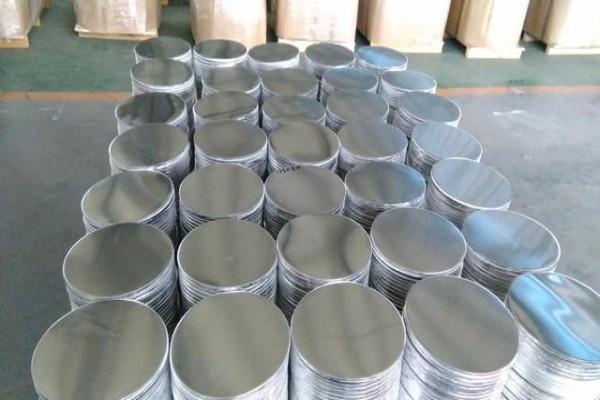 Extra thick hot-rolled aluminum sheets
Deep Dive: 1050 Aluminum Circle
The 1050 aluminum circle belongs to the 1xxx series of commercially pure aluminum alloys, featuring a minimum purity of 99.5% and exceptional thermal conductivity (approx. 235 W/m·K). Due to its simple chemical composition, it offers stable processing performance and low production costs, making it a highly cost-effective choice for budget-friendly cookware.
Advantages:
The primary strengths of 1050 aluminum circles are their superior formability and affordability. They are easy to stamp, bend, and shape without cracking, which significantly reduces scrap rates during simple manufacturing processes.
Limitations:
Its relatively low strength limits its use in pressurized or heavy-duty applications. It is best suited for basic, entry-level cookware where structural rigidity is not the primary requirement.
 1050 aluminum circle
Deep Dive: 3003 Aluminum Circle
The 3003 aluminum circle is an Al-Mn alloy (3xxx series) with Manganese as its primary alloying element. The addition of Manganese significantly increases strength and hardness compared to the 1050 grade while maintaining excellent ductility. Its deep drawing performance is superior, meeting the stringent requirements for complex forming processes defined in standards like YS/T 688-2024, particularly regarding cup-draw values and earing rate control.
Advantages:
A key advantage of 3003 aluminum is its compatibility with non-stick coatings. Its surface texture provides enhanced adhesion for PTFE (Teflon) or ceramic coatings, extending the lifespan of the cookware. With balanced mechanical properties, it resists deformation under high heat and pressure, making it the preferred material for high-performance kitchenware.
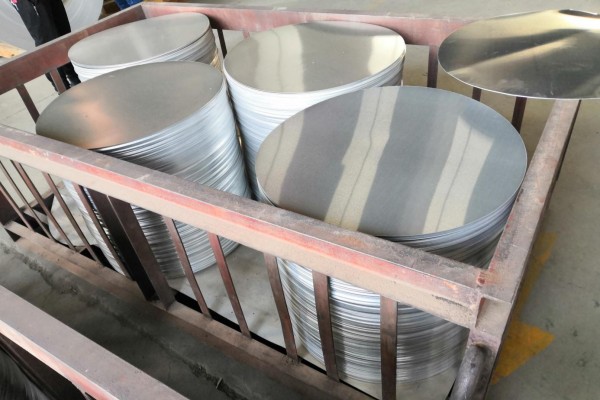 3003 aluminum circle
Application Scenarios
Table 2: Application & Processing Adaptability
| Item |
1050 Aluminum Circle |
3003 Aluminum Circle |
| Suitable Products |
Household basins, milk pots, small soup pots, lids, disposable tableware, lamp shades |
Premium frying pans, woks, pressure cookers, non-stick pans, bakeware, capsulated bottom pots |
| Recommended Thickness |
0.8mm – 1.5mm |
1.5mm – 2.5mm |
| Processing Adaptability |
Ideal for stamping, bending, and simple forming (low scrap rate) |
Excellent for deep drawing and complex forming (compliant with YS/T 688-2024) |
| Coating Compatibility |
Basic compatibility (suitable for simple coatings) |
High compatibility; bonds tightly with PTFE/Ceramic coatings (superior adhesion) |
Summary & FAQ
Table 3: Cost and Decision Factors
| Decision Factor |
1050 Aluminum Circle |
3003 Aluminum Circle |
| Cost Level |
Low (Cost-effective for budget products) |
Medium (10-15% higher than 1050; high value for performance) |
| Core Advantages |
Competitive price, high purity, stable simple processing |
High strength, pressure resistance, excellent deep drawing |
| Limitations |
Low strength; not suitable for pressure cookers |
Higher cost; slightly lower thermal conductivity |
| Market Positioning |
Budget-friendly, basic cookware |
High-end, durable, professional cookware |
| Food Safety |
Compliant with ASTM B209 & GB/T 3880-2012 |
Compliant with ASTM B209 & GB/T 3880-2012 |
Conclusion:
The choice between 1050 and 3003 depends on your market positioning and budget. For low-cost, simple-structured items, 1050 offers the best ROI. For durable, high-end products requiring deep drawing or pressure resistance, 3003 is the superior investment.
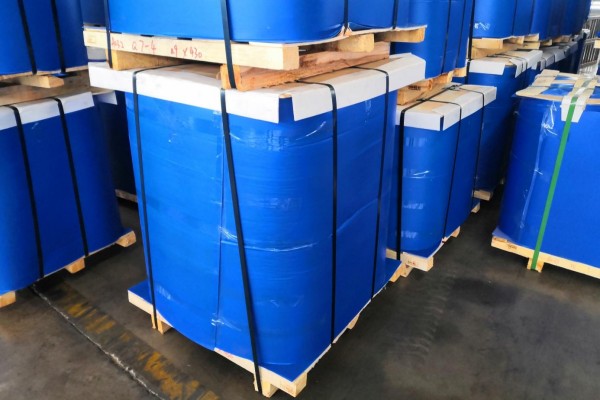 Aluminum circle sheet packaging
FAQ
Q1: Can 1050 aluminum be used for deep drawing?
A: It is only suitable for shallow drawing. Due to its lower strength, it has poor shape retention and a high risk of cracking in deep-draw processes. For complex shapes, 3003 is recommended.
Q2: Is 3003 aluminum best for non-stick pans?
A: Yes. Its surface properties and mechanical stability ensure stronger adhesion for non-stick coatings, preventing peeling during use. It is the industry standard for non-stick cores.
Q3: Do 1050 and 3003 comply with food safety standards?
A: Both are food-grade materials when processed correctly. Their natural oxide layer prevents metal migration, and they meet international standards like ASTM B209 and GB/T 3880-2012.
Get a Free Quote
As a professional aluminum circle manufacturer, we provide customized 1050 and 3003 discs with thicknesses from 0.3mm to 6.0mm and diameters up to 1600mm. Whether you need an economical solution or premium materials, our team will tailor the perfect plan for you.

