Aluminum Stamping Parts
In the wave of manufacturing transformation towards lightweight, precision, and intelligence, Aluminum Stamping Parts have become indispensable key components in various fields such as automotive, electronics, new energy, and aerospace due to their excellent comprehensive performance.
I. Definition and Core Processes
As the name suggests, Aluminum Stamping Parts refer to the general term for parts of specific shapes, sizes, and precision processed from aluminum and aluminum alloy sheets (among which aluminum discs are one of the most commonly used raw materials) through stamping processes under the action of molds and presses. Its core process is not simply “pressing”, but a systematic process integrating materials science, mold design, and precision control, mainly including blanking, bending, drawing, forming, flanging and other processes, which can realize mass and efficient production from simple thin sheets to complex special-shaped parts.
Compared with other metal stamping parts, the unique advantages of aluminum stamping parts come from the characteristics of aluminum itself — low density, high strength-to-weight ratio, corrosion resistance, excellent electrical and thermal conductivity, as well as good ductility and plasticity, which make it easy to form through stamping processes. At the same time, its performance can be further improved through surface treatment (such as chemical coating, spraying, anodizing, etc.) to adapt to more harsh scenario requirements. It is worth noting that as the core raw material of aluminum stamping parts, the material, specification and precision of aluminum discs directly determine the quality and service life of the final aluminum stamping parts, which is the core logic for us to focus on the aluminum disc field and layout this keyword.
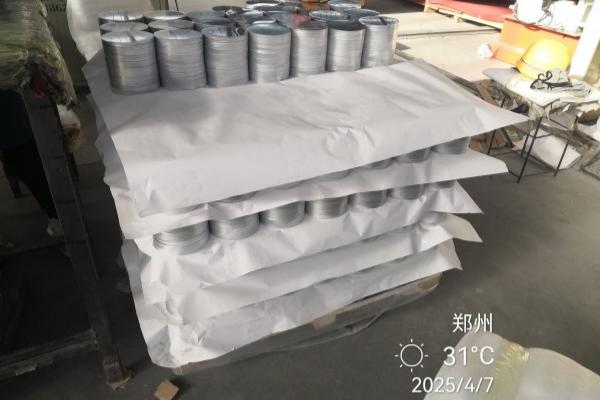 aluminum-stamping-parts
II. Guide to Core Raw Material Selection
For the production of aluminum stamping parts, raw material selection is the foundation. With the versatility of its circular structure and convenience of processing, aluminum discs have become one of the most mainstream raw materials for aluminum stamping parts, especially suitable for various circular and annular stamping parts (such as cookware bases, lamp housings, automotive wheel trim, electronic component housings, etc.).
1. Alloy Series Adaptation: Select on Demand, Balance Performance and Cost
Aluminum stamping parts in different industries have great differences in performance requirements, and the corresponding aluminum disc alloy series also need to be accurately matched.
|
Aluminum Disc Alloy Series
|
Material Properties
|
Core Characteristics
|
Suitable Aluminum Stamping Parts Scenarios
|
|
1060 Series
|
Pure Aluminum (Purity ≥ 99%)
|
Soft texture, excellent ductility, corrosion resistance, good thermal conductivity, and low cost
|
Cookware, decorative parts, simple electronic housings and other products with low strength requirements
|
|
3003 Series
|
Aluminum-Manganese Alloy (Rust-Proof Alloy)
|
Higher strength than 1060 series, excellent corrosion resistance and processing performance
|
Road signs, hardware accessories, radiator housings and other products used in outdoor/humid environments
|
|
5052 Series
|
Aluminum-Magnesium Alloy
|
High strength, good toughness, excellent corrosion resistance, suitable for high-end scenarios
|
Automotive structural parts, marine components, stamping parts related to new energy vehicle battery packs
|
|
6061 Series
|
Aluminum-Magnesium-Silicon Alloy
|
Can be strengthened by heat treatment, high strength, good welding performance, and relatively high cost
|
Aerospace components, automotive chassis parts, precision mold accessories and other high-end customized parts
|
2. Specification and Precision Control: Details Determine Stamping Qualification Rate
It is recommended that aluminum discs suitable for
aluminum stamping parts strictly control the following specification parameters:
Thickness range: 0.2mm-10.0mm (0.5mm-3.0mm for conventional stamping parts, 3.0mm-10.0mm for thick-walled structural parts), thickness tolerance controlled within ±0.03mm to avoid stamping part deformation caused by uneven thickness; Diameter range: 10mm-1200mm, customizable, diameter deviation ≤ ±0.1mm, qualified flatness, no warpage or scratches, ensuring uniform force during stamping. The specific specification adaptation is shown in the following table:
|
Type of Specification Parameter
|
Conventional Range
|
Tolerance Requirement
|
Suitable Stamping Part Type
|
|
Thickness
|
0.2mm-10.0mm (0.5mm-3.0mm for conventional)
|
Within ±0.03mm
|
Thin type: electronic housings, decorative parts; Thick type: structural parts, bases
|
|
Diameter
|
10mm-1200mm (Customizable)
|
≤ ±0.1mm
|
Small diameter: electronic components; Large diameter: cookware, automotive decorative parts
|
|
Surface Flatness
|
No warpage, no scratches
|
Meet industry standards
|
All precision stamping parts, especially decorative and electronic products
|
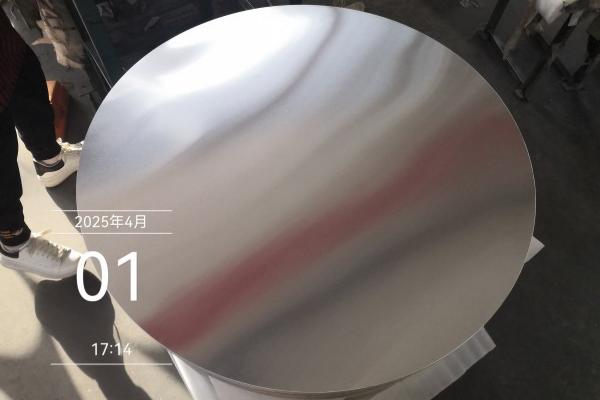 aluminum-stamping-parts-1
3. Surface State Selection: Adapt to Subsequent Processing Needs
The surface state of aluminum discs should be selected according to the subsequent processing and application scenarios of aluminum stamping parts: rough-surface aluminum discs can be used for ordinary stamping parts with low cost; for products requiring high surface smoothness (such as decorative parts, electronic housings), mirror-finish or anodized aluminum discs can be selected, which can meet the surface texture requirements without additional processing; for aluminum stamping parts that need further spraying or electroplating, pre-treated aluminum discs can be selected to improve coating adhesion and reduce subsequent processing costs.
III. Core Application Fields: Covering Multiple High-Potential Industries
The following are the specific application scenarios in each field, accurately matching the adaptability of aluminum disc raw materials, helping practitioners identify target customer groups:
1. Automotive Industry (Highest Proportion, Fastest Growth Rate)
With the advancement of the automotive lightweight trend, aluminum stamping parts have gradually replaced traditional steel stamping parts and become one of the core components of automobile manufacturing. Among them, stamping parts processed from aluminum discs are widely used: such as automotive fuel tank caps, wheel trims, engine end caps, battery pack housings (new energy vehicles), heat sinks, etc. These stamping parts require raw materials with lightweight, high strength, and corrosion resistance. 3003, 5052, and 6061 series aluminum discs are the mainstream choices, which can not only reduce automobile fuel consumption but also improve the service life of parts.
2. Electronics and Consumer Electronics Industry
The core demand for aluminum stamping parts in the consumer electronics field is precision, miniaturization, and aesthetics. With excellent forming precision, aluminum discs have become the ideal raw material for this field: such as LED lamp housings, capacitor housings, mobile phone/tablet middle frames, 5G base station heat dissipation fins, etc. These products usually use 1060 and 3003 series aluminum discs, requiring high surface smoothness and dimensional precision (tolerance ≤ ±0.01mm) to adapt to precision stamping processes.
3. Home Appliance and Daily Necessities Industry
This is the most basic application field of aluminum stamping parts, and also one of the scenarios with the largest consumption of aluminum discs. The products are mostly consumer goods with stable demand: such as cookware (pot, kettle) bases, rice cooker inner pots, trash cans, hardware accessories, etc. These stamping parts have high requirements for the cost performance of raw materials. 1060 series aluminum discs dominate due to their low cost and good formability, and some high-end home appliances choose 3003 series to improve durability.
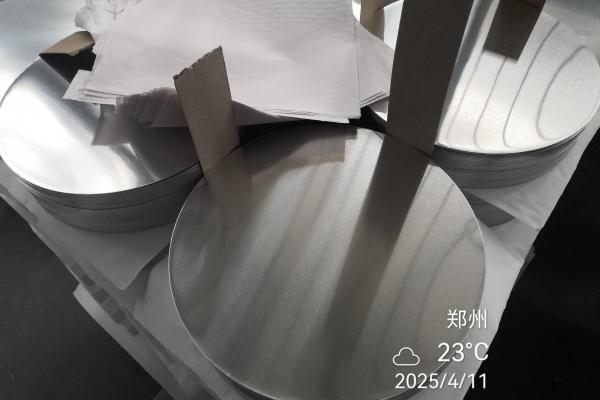 aluminum-stamping-parts-2
4. Aerospace and Industrial Fields
The high-end industrial and aerospace fields have extremely strict performance requirements for aluminum stamping parts, which need to have high strength, high temperature resistance, and corrosion resistance. The corresponding aluminum discs are mainly high-end alloys: such as aerospace components, industrial robot joint parts, precision instrument brackets, etc., most of which use 5052 and 6061 series aluminum discs, and have extremely high requirements for the purity and precision control of raw materials, belonging to high-value-added application scenarios. The core adaptation summary of each application field is shown in the following table:
|
Application Field
|
Core Requirements for Aluminum Stamping Parts
|
Suitable Aluminum Disc Alloy Series
|
Core Advantage Matching
|
|
Automotive Industry
|
Lightweight, high strength, corrosion resistance
|
3003, 5052, 6061 Series
|
Reduce automobile fuel consumption and improve the service life of parts
|
|
Electronics and Consumer Electronics Industry
|
Precision, miniaturization, smooth surface
|
1060, 3003 Series
|
High forming precision, suitable for precision stamping, and controllable cost
|
|
Home Appliance and Daily Necessities Industry
|
High cost performance, easy forming, durability
|
1060 Series (3003 Series optional for high-end)
|
Low cost, good formability, meeting the needs of mass consumption
|
|
Aerospace and Industrial Fields
|
High strength, high temperature resistance, high purity
|
5052, 6061 Series
|
Excellent performance, suitable for high-end harsh scenarios, with high added value
|
IV. Why Become the Industry First Choice?
Combined with industry data and purchaser feedback, the core competitiveness of aluminum stamping parts is mainly reflected in the following 4 points, which are also the key selling points we highlight in blog and website operations to help improve conversion:
-
Significant lightweight advantage: The density of aluminum is only about 1/3 of that of steel. Aluminum stamping parts processed from aluminum discs can greatly reduce the weight of end products, especially suitable for weight-sensitive fields such as automotive and aerospace, and can also reduce transportation costs.
-
Lower comprehensive cost: Although the unit price of aluminum disc raw materials is higher than that of ordinary steel, aluminum stamping parts have low processing difficulty, high forming efficiency, and do not require additional rust-proof treatment (a natural oxide film will form on the aluminum surface), which can reduce labor and processing costs; at the same time, aluminum can be 100% recycled, in line with the environmental protection trend, and has higher cost performance in long-term use. Compared with stainless steel, copper and other materials, aluminum stamping parts achieve a better balance between cost and performance.
-
Strong performance adaptability: The ductility, electrical and thermal conductivity, and corrosion resistance of aluminum are better than most metals. By selecting different alloy series of aluminum discs, it can adapt to the performance requirements of different scenarios, covering from ordinary daily necessities to high-end industrial components.
-
High processing flexibility: Aluminum discs can be processed into various shapes such as circular, annular, and special-shaped through various stamping processes such as blanking, bending, and drawing, with high mass production efficiency, which can meet the customized needs of different customers and adapt to small-batch trial production and large-batch mass production.
V. Summary: Market Potential and Layout Core of Aluminum Stamping Parts
With the continuous advancement of manufacturing towards lightweight, environmental protection, and precision, the market demand for Aluminum Stamping Parts will continue to rise, and aluminum discs, as their core raw materials, will also usher in a broader market space.
Properties of the aluminum circle:
Aluminum circle is suitable for many markets, including cookware, automotive and lighting industries, etc., thanks to good product characteristics:
- Low anisotropy, which facilitates deep drawing
- Strong mechanical properties
- High and homogeneous heat diffusion
- Ability to be enameled, covered by PTFE (or others), anodized
- Good reflectivity
- High strength-to-weight ratio
- Durability and resistance to corrosion
Aluminum Circles Process
Ingot/Master Alloys — Melting Furnace – Holding Furnace — D.C. Caster — Slab —- Scalper — Hot Rolling Mill – Cold Rolling Mill – Punching – Annealing Furnace — Final Inspection – Packing — Delivery
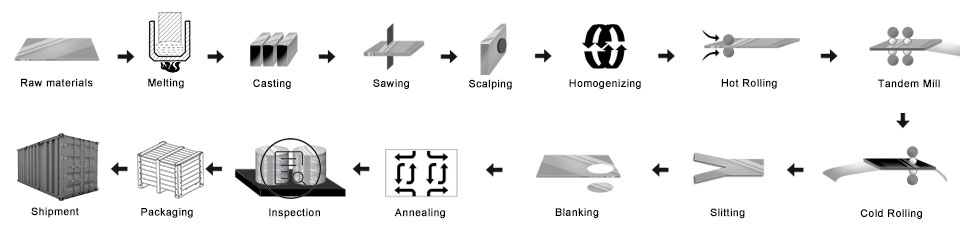
- Prepare the master alloys
- Melting furnace: put the alloys into the melting furnace
- D.C.cast aluminum ingot: To make the mother ingot
- Mill the aluminum ingot: to make the surface and side smooth
- Heating furnace
- Hot rolling mill: made the mother coil
- Colding rolling mill: the mother coil was rolled as the thickness you want to buy
- Punching process: become the size what you want
- Annealing furnace: change the temper
- Final inspection
- Packing: wooden case or wooden pallet
- Delivery
Quality Control
Assurance Below inspection will be done in the production.
- a. ray detection—RT;
- b. ultrasonic testing—UT;
- c. Magnetic Particle Testing-MT;
- d. penetration testing-PT;
- e. eddy current flaw detection-ET
1) Be free from Oil Stain, Dent, Inclusion, Scratches, Stain, Oxide Discoloration, Breaks, Corrosion, Roll Marks, Dirt Streaks, and other defects which will interfere with use.
2) Surface without black line, clean-cut, periodic stain, roller printing defects, such as other gko internal Control standards.
Aluminum discs packing:
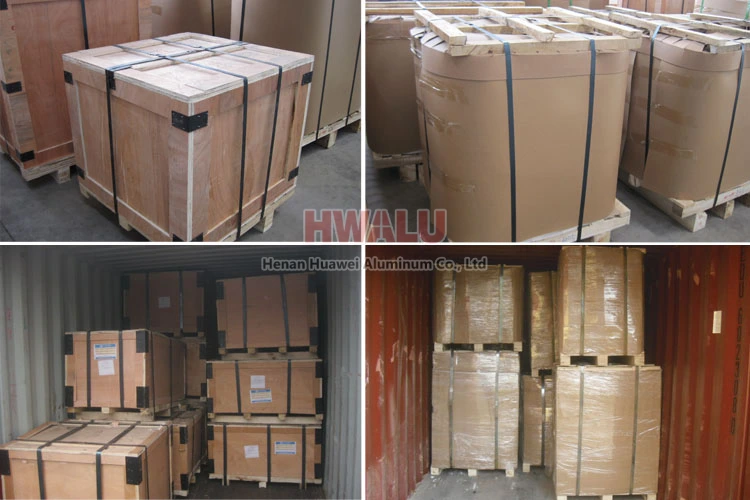
Aluminum circles can be packed by export standards, covering with brown paper and plastic film. Finally, the Aluminium Round is fixed on a wooden pallet/wooden case.
- Put the driers side the aluminum circle, keep the products dry and clean.
- Use clean plastic paper, pack the aluminium circle, keep good sealing.
- Use the snakeskin paper, pack the surface of the plastic paper, keep good sealing.
- Next, there are two ways of packaging: One way is wooden pallet packaging, using the crusty paper packing the surface; Another way is wooden case packaging, using the wooden case packing the surface.
- Finally, lay the steel belt on the wooden box’s surface, keeping the wooden box fastness and secure.
Aluminum circle of Henan Huawei Aluminum. meet the export standard. Plastic film and brown paper can be covered at customers’ needs. What’s more, a wooden case or wooden pallet is adopted to protect products from damage during delivery. There are two kinds of packaging, which are eye to wall or eye to the sky. Customers can choose either of them for their convenience. Generally speaking, there are 2 tons in one package, and loading 18-22 tons in 1×20′ container, and 20-24 tons in 1×40′ container.
Why choose us?
In order to move with the times, HWALU keeps introducing the state of the art equipment and technique to improve its competitiveness. Always adhere to the business philosophy of quality as the center and customer first, to provide the highest quality aluminum disc circle series products to all parts of the world. More …

