Aluminum Disc Manufacturing Process: From Raw Material to Precision Components
Aluminum discs (also known as aluminum circles) are fundamental semi-finished materials widely used in cookware, lighting, pressure vessels, automotive parts, and various industrial components. Their performance and consistency are directly determined by the manufacturing process. A standardized, well-controlled production flow is essential to ensure dimensional accuracy, mechanical stability, and surface quality.
This article provides a detailed explanation of the complete aluminum disc processing workflow, highlighting key technical considerations at each stage.
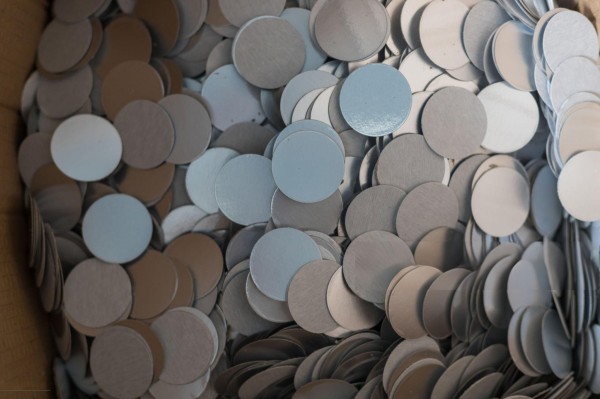 aluminium sheet circle
1. Material Preparation
The manufacturing process begins with the selection of appropriate aluminum materials. Common grades include 1050, 1060, 1070, 1100, and 3003, chosen according to application requirements such as formability, corrosion resistance, and thermal conductivity.
Key parameters defined at this stage include:
- Alloy grade and chemical composition
- Temper condition (O, H12, H14, etc.)
- Thickness tolerance
- Target diameter and flatness
Accurate material selection ensures downstream forming stability and minimizes scrap rates. In large-scale production environments, experienced manufacturers such as Henan Huawei Aluminum Co., Ltd. typically align material selection with end-use performance standards and international specifications (ASTM, EN, GB).
2. Sheet Cutting (Blanking Preparation)
Aluminum sheets or coils are converted into circular blanks through cutting processes. Depending on production volume and precision requirements, the following methods are commonly used:
- Mechanical shearing
- CNC cutting systems
- High-speed blanking lines
The objective at this stage is to obtain round blanks with minimal burrs, controlled edge quality, and consistent weight. Proper cutting accuracy directly affects stamping performance and die life.
 Aluminum plate cutting
3. Surface Pretreatment
Before forming, aluminum discs undergo surface pretreatment to improve surface uniformity and reduce forming defects. Typical processes include:
- Mechanical polishing
- Brushing or sanding
- Shot blasting or fine sandblasting
This step removes oxide residues, rolling marks, and minor surface imperfections, ensuring smooth metal flow during stamping or deep drawing operations.
4. Stamping and Forming
Stamping is a critical step where aluminum discs are shaped into specific geometries using presses and precision dies. Depending on the final product, forming operations may include:
- Flat stamping
- Deep drawing
- Multi-stage forming
Process control focuses on preventing cracking, wrinkling, or uneven thickness distribution. Proper lubrication, die design, and material temper selection are essential for achieving stable forming results.
5. Heat Treatment
Heat treatment enhances mechanical properties and relieves internal stresses introduced during forming. Typical treatments include:
- Annealing for improved ductility
- Stress relief heating
- Controlled cooling to maintain grain structure
This step is particularly important for cookware and industrial applications where repeated thermal cycling or pressure resistance is required.
6. Precision Machining
After heat treatment, aluminum discs may undergo secondary machining to meet tight dimensional tolerances. Common precision processes include:
- Hole drilling or punching
- Thread cutting
- Edge trimming and chamfering
Precision machining ensures compatibility with assembly requirements and guarantees functional accuracy in final applications.
7. Final Surface Treatment
To improve corrosion resistance, appearance, and functional performance, finished aluminum discs often receive surface treatments such as:
- Anodizing
- Powder coating
- Spray painting or protective film application
Surface treatment selection depends on the working environment and aesthetic requirements of the end product.
 Measurement of aluminum discs
8. Inspection and Packaging
Quality control is conducted throughout production, with final inspections focusing on:
- Dimensional accuracy
- Surface finish
- Mechanical properties
- Visual defects
Only qualified aluminum discs proceed to packaging. Standard packaging methods include wooden pallets, moisture-proof wrapping, and protective interlayers to prevent damage during transportation.
Conclusion
The aluminum disc manufacturing process is a multi-stage, technically demanding workflow requiring strict control at every step. From raw material selection to final inspection, each process directly influences product performance, service life, and application reliability.
Manufacturers with mature production systems and process optimization experience—such as Henan Huawei Aluminum Co., Ltd., which has long been engaged in aluminum circle processing for cookware and industrial markets—are better positioned to deliver stable quality and consistent specifications for global customers.
Frequently Asked Questions (Q&A)
Q1: What aluminum alloys are most commonly used for aluminum discs?
The most widely used alloys for aluminum discs are 1050, 1060, 1070, 1100, and 3003.
Pure aluminum grades (1xxx series) offer excellent ductility and thermal conductivity, making them ideal for cookware and lighting applications, while 3003 provides improved strength for industrial forming requirements.
Q2: Why is surface pretreatment necessary before stamping?
Surface pretreatment removes rolling marks, oxides, and micro-defects on the aluminum surface.
This step improves metal flow during stamping, reduces the risk of cracking or wrinkling, and enhances the overall consistency of formed products, especially in deep-drawing applications.
Q3: Does aluminum disc production always require heat treatment?
Not all applications require heat treatment, but it is highly recommended for:
- Deep-drawn components
- Pressure-bearing products
- Applications involving repeated thermal cycling
Heat treatment improves ductility, relieves internal stress, and stabilizes mechanical performance.
Q4: How is dimensional accuracy controlled during production?
Dimensional accuracy is ensured through:
- Precise blank cutting and weight control
- Optimized die design during stamping
- Secondary precision machining where required
- Multi-stage inspection throughout the production process
Experienced manufacturers typically integrate in-process quality monitoring to minimize deviation.
Q5: What surface finishes are available for aluminum discs?
Common surface finishes include:
- Mill finish
- Polished or brushed surface
- Anodized finish
- Painted or coated surfaces
The selection depends on corrosion resistance requirements, appearance expectations, and end-use conditions.
Q6: What quality inspections are performed before shipment?
Final inspection typically covers:
- Diameter and thickness tolerance
- Flatness and edge quality
- Surface defects and cleanliness
- Mechanical property verification (when required)
Only products that meet specified technical standards are approved for packaging and shipment.
Q7: Can aluminum discs be customized for specific applications?
Yes. Aluminum discs can be customized in terms of:
- Alloy grade
- Diameter and thickness
- Temper condition
- Surface treatment and packaging

